
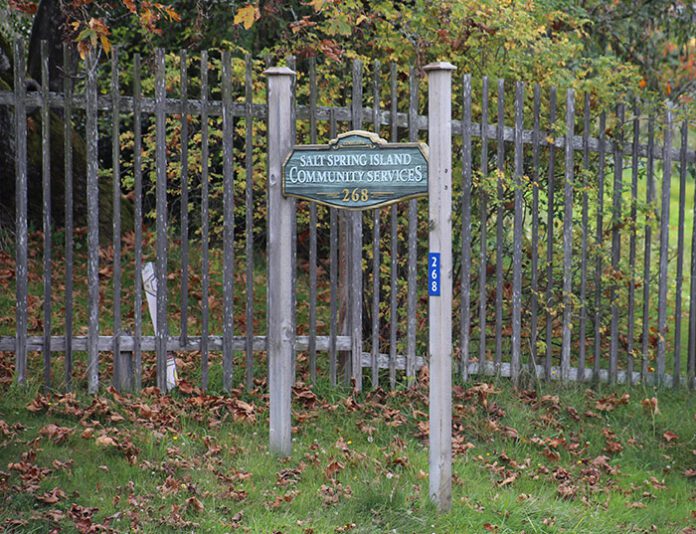
For the first time in more than a decade of counting, a Salt Spring nonprofit’s data suggests that the population comprising the island’s most vulnerable residents may be shrinking.
Island Community Services (ICS), formerly Salt Spring Island Community Services, released numbers from its 2025 Point-in-Time (PiT) count of the homeless population, finding 47 “sheltered” and 90 “unsheltered” people, totalling 137 — the lowest number of people experiencing homelessness counted on the island since 2018, according to the nonprofit.
The last time ICS released numbers from a count in 2023, it had said there were 56 “sheltered” and 106 “unsheltered” people, a total of 165.
While this year’s March 20 count suggests a roughly 17 per cent decrease from 2023 — the first time numbers have fallen since ICS began its count — the nonprofit warned that number still exceeded available shelter accommodation on Salt Spring. ICS operates Salt Spring’s Emergency Shelter, which has a year-round capacity of 30 people and as many as 40 through the Extreme Weather Response Program.
PiT counts are conducted across British Columbia, and are meant to provide a snapshot of people experiencing homelessness; they are generally considered an undercount by the province and ICS, representing only individuals identified during a specific 24-hour period. Provincially funded counts released in October showed eight communities with a decrease in the total number of people identified as experiencing homelessness, and 12 communities with an increase compared to a previous count in 2023.
For the purpose of homeless counts conducted in those communities, a person was defined as experiencing homelessness if they did not have a place of their own where they paid rent and could expect to stay for at least 30 days. Those programs defined “sheltered” as anyone who stayed overnight on the night of the count in homeless shelters, including transition houses for women fleeing violence, and youth safe houses, and people with no fixed address staying temporarily in hospitals, jails or detox facilities.
“Unsheltered” homeless included anyone who stayed outside in alleys, doorways, parkades, parks and vehicles, or people who were staying temporarily at someone else’s place (couch surfing) and/or those using homelessness services.
ICS, which conducts its count independently, has in previous years defined sheltered as “living in emergency or transitional situations” and unsheltered as living in “tents, vehicles, derelict boats and other temporary and makeshift shelter situations.” This year, ICS’ definitions aligned with those for provincially funded communities. ICS does not release its methodology.
According to ICS’ annual report from its September AGM, among the “unsheltered” population, 62 reported sleeping in a car, boat or RV; 18 said they slept in a tent or on the street, with the rest reporting “couch surfing” or sleeping in shacks or sheds.