
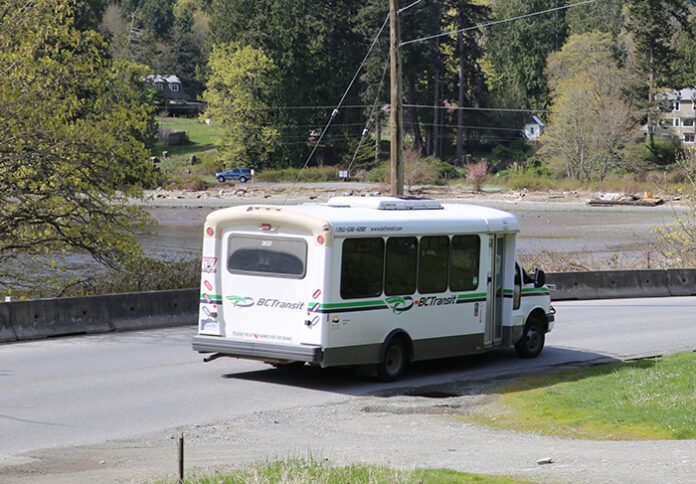
The price to ride the bus on Salt Spring Island will likely rise from $2.25 to $3 sooner or later, officials agree, but local riders — and Salt Spring’s Local Community Commission (LCC) — will have a chance to weigh in on how quickly it should happen.
BC Transit was back before the LCC Thursday, Nov. 20, this time delivering details on a fare review process that after nearly five years couldn’t be held off any longer. Business development advisor Midhat Malik explained to commissioners that Safe Restart funding restrictions had kept price increases off the table since the start of the pandemic in 2020, but with the lifting of those restrictions Salt Spring’s bus system fares were ripe for review — the first such review since 2017.
“And the last time there was a fare increase was actually in 2012,” said Malik, “when the single-ride fare went from $2 to $2.25.”
Three options were presented Thursday: a gradual increase in fares over the next three years, an immediate increase and something in between. While planning was still preliminary, options commissioners seemed to favour included structuring around discounted passes and having single-rider tickets take the brunt of the immediate increases, hopefully targeting tourists more than locals.
BC Transit’s review process is designed to reward regular bus riders, Malik said, with a set target ratio between all products — from single-ride fares to monthly passes — trying to balance affordability with opportunities to maximize ridership — and revenue. BC Transit also hopes Salt Spring’s pricing structure can be brought into better alignment with that across the rest of the system; for example, the 10-ticket purchase elsewhere is typically a slightly better deal over buying 10 tickets individually.
Notably, according to BC Transit’s report, Salt Spring’s 20 per cent discount for students and seniors is five per cent higher than the fare strategy targets; all three fare increase options suggested to the LCC on Thursday included a recommendation to reduce that discount to 15 per cent.
Malik said BC Transit would present options to the community at an open house, currently set for Jan. 23, after which their engagement summary would be brought back to the LCC in February to seek the commission’s approval for whatever structure seems most appropriate. With a marketing campaign after that to make riders aware of the upcoming changes, the timeline would put implementation of the new fares into May or June — aligning, she noted, with the seasonal service change.
The transit system is cost-shared between the CRD and BC Transit; in addition to fare revenues, island property owners are currently taxed 7.6 cents per $1,000 in assessed home value for the service. That figure is similarly expected to rise, although a service expansion planned for next year has been postponed.
Salt Spring’s LCC will likely discuss options at their next meeting on Dec. 11.