
Home Blog Page 100

Letters to the Editor

0

As published in the Nov. 13, 2024 issue of the Driftwood.

Riches at every turn

“Astoundingly rich diversity!” exclaim Nature Salt Spring club members as they marvel at what Baker Beach has to offer for nature outings.

We have had shoreline seine pulls on other Salt Spring beaches, but nothing compares to those on Baker Beach where the eelgrass beds abound. Pipe fish, flat fish and an eclectic array of other species excited both children and adults on an outing last summer.

During the 2023 Christmas Bird Count our birders were astonished by the hundreds of western grebes and surf scoters, to name a few of the species observed just off the beach. These congregations of water birds weren’t just riding out stormy weather on the east side of the island that day but were diving to feed and fuel up on the wealth of life below the surface.

In early summer the beach is alive with kingfishers, oystercatchers, great blue herons and, of course, our emblematic bald eagles fishing to fill the hungry mouths of their nestlings. B.C.’s renowned eagle expert David Hancock informs us that 80 per cent of the bones found in eagle nests around the Salish Sea are from the plainfin midshipman, a remarkable species of fish that itself nests on these beaches.

Now this fall, to see signs posted along the beach that a few citizens living on properties above are requesting alteration of the foreshore for bank stabilization is very disturbing!

Baffling too are assertions of the Aurora Professional Group green shoring company engaged by these residents that the delivery of barge loads of rocks, gravel and sand will not harm the beach and that the works will prevent future storms and king tides from further eroding the slope on which their houses are perched, all the while simultaneously preserving critical habitats for wildlife! This is magical thinking and ecologically unsound. Our members know these actions will bring irreparable harm to a magnificent ecosystem. This is not a beach to be tampered with.

Kathleen Maser, David Denning, Pat Miller, Peter McAllister, Jean Wilkinson, Giselle Paque, Gail Bryn-Jones,

Nature Salt Spring members

Censor to avoid censure

Per the “Trust pulls meeting recording” headline in the Nov. 6 issue of the Driftwood:

As explained, the September Trust Council meeting was so divisive and acrimonious that members of the Islands Trust Executive Committee opted to shield the public from access to the spectacle. Evidently, we citizens/ratepayers are too frail — too sensitive — to be exposed to the antics of our elected representatives. Better to self-censor than to allow us to know which people are appropriately deserving of our censure.

That some of the “trustees” are engaging in behaviour that is disrespectful of staff or of their fellow trustees brings disrepute to the office they hold. Hiding this behaviour from view of their constituents is not the proper response.

Julia Lucich,

Salt Spring

The Circle supports island youth

As a former child psychologist with 50 years of experience in Manitoba and the Northwest Territories, I worked directly with over 4,000 children who faced neglect, abuse and other challenges. While my one-on-one sessions were impactful, I often felt limited in my ability to create broader change.

That’s why I am attracted to the work The Circle Education does. Their programs teach essential skills that would have benefitted my young clients or helped prevent their situations from worsening. Facilitators create a safe environment where kids learn to regulate emotions, set boundaries, advocate for themselves, recognize harmful situations and reach out for help.

The best aspect of The Circle Education programs is that they occur in schools, where kids spend a significant portion of their formative years. While I saw one child at a time, The Circle Education reaches multiple classes year after year, creating immense potential for impact.

The organization is now accepting donations as part of its annual giving appeal. I urge you to support our island youth and consider The Circle Education in your charitable giving this year.

Dr. Eric Ellis,

Chair, The Circle Salt Spring Education Society

Lost opportunity

Just outside my gate, the road-crews are working nicely along; the rumblings of excavators and dump trucks took over the usual birdsong, but the result will be a big improvement from the overflowing ditches we’ve experienced since we got here 34 years ago. Ganges Hill has costly ditches that need maintaining and grooming every year. Over time, this new stormwater culvert will save a lot of road-maintenance money and grief.

One unfortunate part to this moment is how the hospital foundation, who will be developing the old Seabreeze Inne on the hill for staff housing, has apparently abandoned their original decision to tie into the downtown sewer system because of unforeseen costs. Maybe they’ll now be required to enlarge and upgrade the existing septic field to accommodate the number of units going in, probably at a high cost when all is said and done. Their large septic field will therefore use up valuable land space, if the need arises, to add more livable space in the future. It’s a very convenient location along an existing bus route.

This decision could be a lost opportunity within our community, when we look back five years from now. The main sewer line installed up the hill, some years ago, was terminated at the community centre but turns right there to also serve the Bishops Walk development. To reach the old motel would have required the pipe to continue just a short distance further south, then cut across the road. This simple engineering process of extending the service would have also allowed a whole row of neighbours to tie into the same pipe on our side of the road at each driveway, at minimal cost. Is the use of septic fields preferred over a contained and monitored system? Is this progressive or regressive thinking?

If we need to ensure close-to-town affordable housing, why not be more imaginative with the present work in progress, doing it right the first time?

One last word is one of appreciation to the road and traffic control crews. Drivers should show patience and kindness to the flaggers as we all get through this together. Instead of running late, maybe leave earlier?

Peter Haase,

Ganges

Artist sells work for health treatment

Tyler Wallace is an amazing artist specializing in watercolours. I am very familiar with watercolours as a medium as my aunt Josh Partridge was a professional water colourist. That’s how I know how great Tyler’s work is.

Normally a painting by Tyler would cost $800. But two lucky people can have a custom watercolour painted by Tyler for $350. This is because Tyler requires some natural medicine for a health condition which has caused him serious hardship and this will allow him to pay for it.

Tyler lives on a boat. As a wise elder he does an amazing job teaching younger, less experienced community members how to be safe on their boat, as well as when rowing to and from town.

If you are interested, please reach out to me via email willieonsaltspring@gmail.com. If you decide you would like your own custom watercolour you can send me a photograph that will be turned into a painting, as well as a deposit. Thank you for your consideration.

Will MacPherson,

Peer Support Outreach Worker,

SS Mental Wellness Initiative 

Sink beach plan

I am deeply concerned about the application to manipulate the natural shoreline along the beautiful and wild Baker Beach, in the collective effort of property owners to portray concern for the environment.

If you dig beneath the surface of this plan, you will find their research is scientifically flawed and counterintuitive. This plan to usurp public land, Mother Nature, like kings at court, should be left to sink at sea.

Mona Fertig,

Ganges

Ganges sewer extension plan nixed

0

The Ganges Sewer System will not be expanding to include a connection to a healthcare housing project, as the Lady Minto Hospital Foundation (LMHF) has withdrawn its application and will instead improve that property’s existing septic system. 

Over the summer, the Capital Regional District (CRD) board approved a bylaw to expand the Ganges Sewer District to include the parcel at 101 Bittancourt Road — the former Seabreeze Inne property fronting Fulford-Ganges Road, purchased by LMHF and slated for conversion into 17 units to house healthcare workers. 

CRD staff had said the sewer system at Ganges has more than enough capacity to accept potential outflows from the Bittancourt property, as well as from any future connections along the line between it and the existing system boundaries.  

And LMHF had hoped they could coordinate the new connection with the current Ministry of Transportation and Infrastructure (MoTI) roadwork along Fulford-Ganges Road. 

But the foundation’s cost was ultimately going to be too high. 

“All in, they didn’t like the price tag,” reported Salt Spring CRD engineering manager Dean Olafson, responding to a question Thursday, Nov. 7 from members of the Ganges Sewer Commission. “So they decided to go back and renovate or rejuvenate their septic field and use that instead.” 

LMHF board members confirmed the project’s manager had been directed to not proceed with the 300-metre connection project, despite what was characterized as “positive collaboration” with MoTI and CRD staff, Northridge Excavating Ltd. and MoTI’s consulting team for the Fulford-Ganges Road improvement project. 

The expected cost grew significantly, according to foundation correspondence, due to several project parameters Northridge would have been required to follow, with the cost of making the connection growing from five per cent of the total project cost to more than 20 per cent. 

Trust working on user-friendly bylaw enforcement process

0

An effort to make the Islands Trust’s bylaw enforcement process clearer and more open has hit some snags, as trustees grapple with the complexity of the process –– and with balancing provincial requirements, such as that dispute hearings be held in public, with the best interests of leery islanders. 

The land use authority is reviewing how it handles bylaw enforcement, with the goal of “restoring public confidence” in response to a series of well-aired public concerns that ramped up in 2023, ultimately resulting in the B.C. Ombudsperson’s Office issuing a list of recommendations to the Islands Trust last fall. 

One of those recommendations surrounded transparency, suggesting the Islands Trust have an enforcement policy that the public could easily understand. To that end, on Friday, Nov. 8 the Regional Planning Committee (RPC) received a first draft of a new “plain language” best practices manual –– highlighted by a friendly visual flowchart. 

That draft graphic –– the “bylaw enforcement pathway,” bylaw compliance and enforcement manager Warren Dingman said –– is a first step in a broader attempt to make current policy a little more user-friendly. 

“To take out the acronyms,” Dingman said, “take out the ‘inside baseball’ terms that the general public is not going to understand.” 

Policies and procedures currently available were really created for staff to use internally, he explained; producing the forward-facing public document was proposed by the RPC and endorsed by the broader Trust Council, and trustees were largely quite happy with the draft. Denman Island trustee David Graham said that while there would likely be necessary “tweaks” before a final version, it was a great start. 

“I think our public will really appreciate how clear this is,” he said. “And they’ll really start to understand how bylaw enforcement works.” 

Committee members related stories of being approached by worried islanders who were either concerned they might be out of compliance on their property, or knew they were and wanted to figure out what to do about it. Local trustees felt it was important to put themselves into that new public-facing document, and officially into the “flow” for their residents. 

“As a trustee, I would hope that we would be able to be one of their first steps in determining how to come into compliance,” said Denman trustee Sam Borthwick. “I want to help them get through that process in a way that’s helpful and good, and does not feel scary; there’s a tremendous amount of fear and anxiety around that for some people.” 

And planning services director Stefan Cermak suggested that could even be extended to planners. 

“I’m a community member on Salt Spring, and I’ve been with the planning department for quite some time now,” said Cermak.  “A lot of questions I get are, ‘Hey, I have this illegal thing, what do I do?’” 

Cermak said just like trustees, planners don’t feel like they’re out there looking for things to enforce against –– but agreed that sometimes inquiries are vague, with islanders fearing the worst. 

“Some people are quite cagey, because they’re like, ‘I won’t tell you where I am because therefore, you’re going to enforce,’” he said. “But that’s never been the case that I’m aware of. We’re here to help them get where they need to go –– and perhaps that’s a cultural thing that we need to be better at sharing.” 

While a kinder, gentler bylaw process may be the goal, some of the procedures are set in provincial law, Dingman said. One that seemed to surprise trustees was a legal requirement that enforcement hearings be open to the public, per the Local Government Act. Notably, Dingman explained, there was no corresponding legal requirement for notice to the public. 

“So the parties involved –– the bylaw officer, the respondent and complainant and of course the adjudicator –– are notified,” said Dingman. “There are sometimes community members who have concerns, and they contact me and they get a link [to a Zoom-facilitated hearing] and they can observe.” 

Saturna Island trustee Mairead Boland suggested that relying on non-official channels might leave the public feeling excluded from the process. 

“If I don’t know what I don’t know, I’m not going to find out,” said Boland. “Am I [as a member of the public] going to send you a letter every week asking if there’s a hearing?” 

But trustees also worried about the consequences for more vulnerable islanders in publicly amplifying what could often feel like very private disputes. 

“For someone who is really feeling that they’re being oppressed by the Local Trust Committee,” said Graham, “I don’t want to broadcast that.” 

“We can’t go against what the law is, what the act says,” said Dingman, “that we have to make our boardroom here in Victoria open to the public, from whatever means.” 

Boland suggested removing part of the draft language noting that members of the public could request hearing information, and leaving it vague. More broadly, Salt Spring trustee Laura Patrick worried too many unclear steps in what was meant to be a simplified version of the process risked alienating islanders –– and possibly was even premature, given bigger plans to revamp the process itself. 

“The Ombudsperson report said our policy needed to be designed to speak to the public,” said Patrick. “Perhaps we’re jumping steps. We’re not going to issue a new manual publicly if we’re about to update the policy?” 

Ultimately, the committee felt the topic needed its own meeting for more discussion and asked staff to schedule a special one just for the purpose of discussing both the manual and enforcement policies. Trustees plan to have that meeting in January, in time to put any changes into place before the RPC’s Feb. 7 meeting.  

That timeline would likely put the policies before the Trust Council for consideration at that body’s meeting in March –– one year after the review process officially launched.  

Contemporary dance explores world after dark

BY KIRSTEN BOLTON

For ArtSpring

With the days becoming shorter and shorter, what happens in the dark is very much top of mind this time of year.

This is the theme of Shannon Litzenberger’s imaginative dance work World After Dark, which explores what comes to life when nightfall comes and the world transforms into something very different than by day.

Billed as a contemporary, multi-media, multi-sensory experience with “a unique type of dance that resists familiar labels,” World After Dark invites audiences into a world of mystery and wonder.

The inspiration for creator and choreographer Litzenberger was the award-winning, non-fiction book Acquainted with the Night, written by prized Canadian author and poet Christopher Dewdney. The book is a series of essays — each one representing a different hour of night between 6 p.m. and 6 a.m. as if he was looking to explain the concept of night to people from another planet where it did not exist.

From the science of the cosmos to the neon birth of nightlife, from the biology of nocturnal creatures to the mythology of the night sky, Dewdney’s compelling poetic musings about the mysteries of the night are brought to life in Litzenberger’s evocative mix of dance, theatre and poetry.

World After Dark premiered at Harbourfront Centre Theatre in Toronto in 2019 to rave reviews and continues to be recognized on its Canadian tour.

With roots originally in rural Saskatchewan, award-winning Litzenberger has become known for creating imaginative performances at the intersection of dance, theatre, and literary and visual art. She has also become known as an experienced facilitator who designs workshops on movement, creation, collaboration and leadership within the artistic, educational and corporate sectors.

Following the World After Dark experience on Saturday, Nov. 23, she and co-facilitator Marie-Josée Chartier are remaining on Salt Spring to offer two community workshops at ArtSpring.

On Monday, Nov. 25, the lively “Leadership as Practice” is aimed at helping leaders develop more awareness about themselves and the connection between conscious leadership choices and creating more aligned working cultures. The workshop is limited to 25 registrants. It is free to attend with a donation encouraged.

On Tuesday, Nov. 26, artists and creatives in any field will benefit from “Strategies for Creation Through Embodied Movement and Voice.” This workshop will explore embodied practice, collaborative play and improvisational strategies to break artistic defaults and slumps to imagine new possibilities.

Tickets are available online and through the box office.

World After Dark is proudly sponsored by Joan Farlinger and Salt Spring Coffee.

Neighbours Feeding Neighbours program underway

0

By GRACE WAMPOLD and HEATHER PICOTTE 

NFN Co-coordinators

Neighbours Feeding Neighbours (NFN) is a new initiative on Salt Spring Island focusing on food sovereignty to strengthen our community’s food security in times of emergency.

Food sovereignty means having control over the food we produce, access and consume. Practices that increase food sovereignty empower local farmers and communities to decide how to grow, share and manage food. Launched in May 2024, NFN is working to connect local farms with community members and develop strategies to ensure access to food during emergencies, such as floods, fires or storms.

Our changing climate brings more extreme weather, from longer, hotter dry seasons to intense atmospheric rivers. Many of these disruptions can be linked to industrial agriculture, which depletes soil, pollutes water and degrades the air we breathe. Salt Spring Island has felt the impact of record-breaking heat and rainfall. However, practical steps can increase resilience at home and in our neighbourhoods.

At Home: Growing and Storing for Emergency Food Security

One way to prepare for emergencies is to grow versatile foods that can be stored long-term. Growing your own food supports food sovereignty by giving you more control over what you eat.  Start small — focus on a few of your favourite plants that do well in your space. Beans are an excellent choice for beginners because they enrich the soil and don’t require extra fertilizers, as they naturally add nitrogen. If you can’t garden due to location or physical limitations, don’t worry — Salt Spring Island is home to many skilled farmers growing food for the community.

Drying is one of the best ways to preserve foods — it retains their nutritional value while making them lightweight, easy to store and long-lasting. Beans and other legumes (like lentils and peas) are easy to dry and can be used in multiple ways: soaked and cooked, ground into flour, sprouted into greens, or saved as seeds for future planting. During stressful times, having nutritious food on hand is essential — legumes also help balance stress levels to keep us healthy in a crisis. Buying beans from the store is also relatively inexpensive, given their excellent nutrition. In an emergency, a simple pantry stocked with beans, rice and clean water could mean the difference between hunger and survival.

In the Community: Sustainable Farming for Health 

Local small-scale farmers lead the way in sustainable practices, growing nutritious food while regenerating the environment. An NFN survey found that over 70 per cent of local farmers regularly test their soil and water to ensure quality. Nearly all of the 13 surveyed farmers have implemented soil conservation techniques to prevent erosion during extreme weather, and over half use water catchment and drip irrigation systems for their crops. These efforts are essential to keeping our food system strong, especially in the face of climate challenges.

Organic, small-scale farming improves soil health by increasing organic matter, which stabilizes the soil and reduces the risk of disasters like landslides or wildfires. It also creates habitats for wildlife, contributing to a more balanced ecosystem. This approach forms a positive cycle: the more we grow and eat local plants, the healthier our environment becomes, and the better prepared we are for unpredictable events.

It’s easy to overlook the challenges our local farmers face in supporting the community’s food needs. Small-scale organic farming is an investment in the health of the soil, the environment and consumers but often comes at the expense of farmers’ own financial stability. There’s a saying: “Do you know how to make a small fortune as a small farmer? Start with a large fortune.” By choosing to eat more locally grown produce, we can support small-scale farmers and contribute to a more resilient food system that benefits everyone.

Learn More, Get Involved

To learn more, visit the NFN website at nfnsaltspring.org, where you can explore a farm map and database organized by neighbourhood, helping you connect with nearby farms practicing regenerative agriculture.

NFN also encourages community members to participate in farm visits and neighbourhood assessments to improve emergency preparedness and foster relationships with the local food system. NFN project coordinators aim to assess and enhance emergency preparedness in our community, both locally and on farms. The goal is to build relationships, highlight good farming practices, and increase the overall preparedness of our community by promoting food growing, preserving and storing in every neighbourhood, so we all have access to food and water in emergencies.

By working together, we can build a more resilient, sustainable and sovereign food system that will serve us well now and in the future.

This article is part of Transition Salt Spring’s Lighter Living Initiative.

Transition Salt Spring invites you to sign up for more free access to Lighter Living content at tinyurl.com/Lighter-Living. Learn how to take low-effort actions that feel good, benefit our community and help the planet.

BAINE, Susan Catherine

2

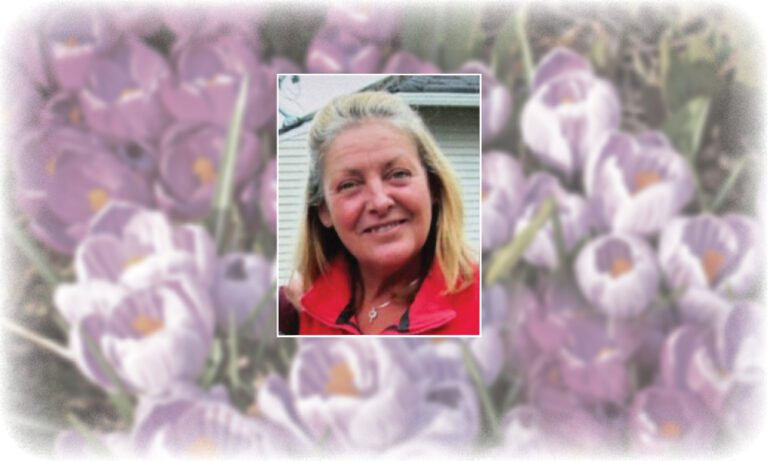
Susan Catherine Baine passed away peacefully on Monday, October 7, 2024.

Known for her laughter, sunshine, and joy, Sue created lasting connections for 20 years through her flower stand on Park Drive. In 2012, she earned the Agricultural Farm Business of the Year award, but it was the friendships she nurtured that meant the most to her. Sue cherished life’s simple pleasures: early morning swims, picking daffodils in the rain, and maintaining a perfect tan. A kind and giving soul, she was always there for others, even through her own struggles. Sue’s friends are deeply grateful to the staff at Lady Minto Hospital and her home care nurses for their care and kindness. In keeping with her wishes, there will be no formal funeral. Instead, Sue would love for friends to celebrate her life by raising a glass, planting a dahlia, and laughing. Sue’s legacy of joy, sunshine, and the dependable Suzuki Samurai that never let her down will live on. Live fully, cherish the little things, and remember Sue’s sunny spirit.

Santa’s Workshop needs head elf apprentice now to prepare for next season

0

By SANTA’S WORKSHOP VOLUNTEERS

Santa’s Workshop volunteers come together for about one month every year to work to provide toys, books, groceries, clothes and other supplies to on average 60 needy families and 120 children every Christmas.

It has been in operation for almost 40 years. First, repairing toys out of one man’s garage, now it has grown to the distribution of items specially chosen by parents from the basement of the Baptist Church. It has been supported by many organizations, businesses and individuals over the years. Currently this includes the Toy Run (motorcycle group), the Salt Spring Island Women’s Institute, the Salt Spring Cruisers classic car group, Salt Spring Island Fire Fighters Association, Country Grocer and other businesses who donate in-kind gift certificates. Many individuals have donated cash and toys over the years. Now the future of the workshop may be in jeopardy.

The current coordinator of the group, Wendy Eggertson, who has been involved for over 10 years, is unable to continue past this year. She will be leading Santa’s Workshop for one final year. She has a very good and dedicated group of volunteers — just no one to lead the group. The actual workshop takes place Nov. 24 to Dec. 14. The first two weeks are spent collecting the items and setting up the Baptist Church basement in preparation for the distribution, which takes place the last week. Parents/guardians come in and “shop” for their children, choosing those items that are appropriate for their children and their living situation.

Santa’s Workshop therefore requires an individual or group that is prepared to coordinate the effort. It is limited in time frame every year. The coordinator’s preparations start Nov. 1 and end mid-December. The volunteer coordinator position includes organizing volunteers and their times to work, receiving and disbursing funds, working with another core volunteer, who receives and collects all the applications, providing oversight at the church regarding preparation of the shop space (in past this has been Monday, Wednesday and Friday mornings from 10 a.m. to 12 noon) and disbursement of the gifts (Monday, Dec. 9 from 10 a.m. to 2 p.m., Wednesday, Dec. 11 from 4 to 8 p.m. and Saturday, Dec. 14 from 10 a.m. to 2 p.m.)

This Individual or group would work with Wendy hand in hand this year to understand the scope of work required. It is a very rewarding volunteer position with a limited time frame, and flexibility to develop the program as appropriate.

“The appreciation and relief shown by the parents fills my heart,” says Wendy. “Being able to accomplish the workshop over the years has been one of the most fulfilling aspects of my life. This volunteer position only requires organization and communication skills, and the desire to help one’s community.”

We are always looking for other volunteers to help with moving items to and from our preparation space at the Baptist Church, helping to set up the space in preparation for shopping, helping parents choose the gifts for their children, picking up and organizing gift certificates, distributing and picking up gift collection boxes from merchants, and drivers to provide transportation to recipients.

Santa’s Workshop also requires a 10×10-foot dry space in which toys can be stored from one year to the next. Our group of volunteers would pick up these items mid- November and replace them with new items mid-December every year.

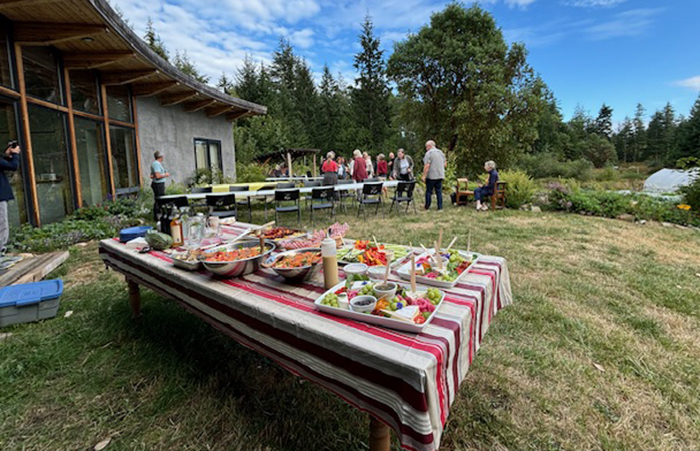
If you or your group is interested in the Santa’s Workshop volunteer coordinator position, other volunteer positions, or have a space in which to store the toys, please contact Wendy Eggertson at 250-221-2381. Come out and meet our group at a potluck hosted by Wendy on Sunday, Nov. 17.

Georgeson storytelling part of Vetta concert

Vancouver-based Vetta Chamber Music is known for its world-class and innovative concerts. Since 2016, Salt Spring Islanders have been treated to Vetta offerings each season.

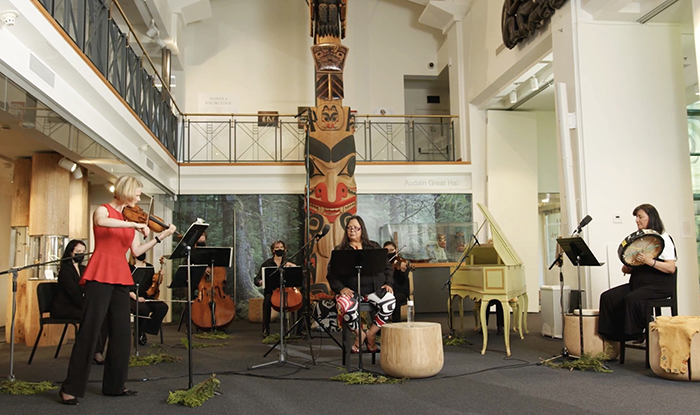
This Monday, Nov. 18 at 2:30 p.m. at ArtSpring, Vetta presents an extra special event called Land and Sea that combines chamber music with storytelling from Coast Salish/Sahtu Dene artist Rosemary Georgeson, who grew up on Galiano Island and is still strongly rooted to both the land and the sea of our region.

The concert’s first half consists of chamber works related to the land and the stories that come from it, from Sibelius to Bloch, to Carmen Braden’s The Raven Conspiracy. The second half sees music by Vancouver composer Jeffrey Ryan and Georgeson’s storytelling in Seasons of the Sea.

Georgeson said storytelling came naturally to her through her experience of fishing on the B.C. coast.

“I’m an old fisherman. My father was a fisherman. I grew up on the boats with him. All my family does it, and we’re all storytellers. So I grew up listening and hearing stories all my life from some of the best storytellers around. I never, ever thought of myself as one. I just kind of carry on that way of being.”

But Georgeson is clearly a compelling storyteller.

In 2014, Vetta artistic director Joan Blackman and husband and viola player Larry Blackman approached Georgeson about collaborating after they heard her speak on the radio. At that time she was storyteller in residence at the Vancouver Public Library and so they met downstairs at the library, where they pitched an idea of a Gulf Islands “seasons” theme with music written to accompany her stories.

“I was intrigued,” she said.

While Georgeson said she had heard of classical works such as Vivaldi’s Four Seasons, as a Galiano girl she had been more inclined to listen to Patsy Cline, Elvis and ZZ Top.

“It’s interesting that music can make words come to life in a way that I can’t do as a storyteller. That’s the beauty of working with Joan and what Jeffrey composed,” she said.

She gives an example of talking about being on the water in the show “as Joan makes it come to life with the music. It’s so incredible how I can feel the sparkles on the water on that hot summer day in August, sockeye fishing with my Dad, because she brings it to life with her violin.”

She added: “Through this process, I’ve developed a much deeper appreciation for this style of music and what it carries in it. And I think it’s been interesting for Joan too, because she’s learned how to riff under my words. So we have both been through this learning experience with each other and we formed an amazing friendship, and we always have lots to laugh about and talk about. It’s been a such a pleasure doing this piece with Vetta.”

There’s also an extremely serious purpose to Georgeson’s storytelling.

“Through times changing in the last 25 years, there’s been a deeper passion to share these kinds of stories, to kick the crap out of the misconception that I would say the government has always let everyone believe about us as Indigenous people . . . this racist rhetoric out there that we were just lazy people that take from the government and all that kind of crap.”

“If my storytelling helps to turn that even just a little bit, that’s what I’ll do it for, and I’ll keep doing it.”

Joan Blackman spoke about the impact of their collaboration in her newsletter to subscribers:

“Ever since the premiere of Seasons of the Sea at ArtSpring, (May 2016) when Elder Augie Sylvester attended with his many grandchildren and other students from Penelakut Island, we have known this was an important work that needed to be shared widely. It is not only the piece, which weaves Western contemporary music and First Nations Storytelling with themes of living by the sea, climate change and building understanding of Coast Salish cultures, it is the very process of collaborating. And we have also heard the voices of Elders who have attended and led talking circles, or given the welcome dance, say how powerfully it speaks to them. They have said it is ‘Reconciliation in Action,’ that they can feel the heartbeat of the sea in the music, and that it speaks to the soul.”

For the Land and Sea concert, Joan Blackman will be joined on stage by members of the Vetta Chamber Players Mentorship Orchestra.

Tickets for the Nov. 18 show are available through ArtSpring’s box office and online at artspring.ca.

Water main work set for Sunset Drive

0

North end residents feeling left out of Salt Spring Island’s roadwork will get a traffic adventure of their own, at least temporarily, as work begins around Vesuvius Bay Road and Sunset Drive on Monday, Nov. 18. 

About three weeks of traffic disruption is expected, according to officials at the North Salt Spring Waterworks District (NSSWD), who announced Vancouver Island-based Coastal Wolf Construction had been awarded a contract to replace a section of water main at the intersection.

Vesuvius Bay Road will see one-lane alternating traffic during construction, and a detour for Bayview Road’s local traffic — via Langley and Goodrich roads — will be made available.  

“It’s quite a detailed project,” said NSSWD operations manager Ryan Moray, updating the district’s board of trustees at their meeting held Thursday, Oct. 24. Moray said there would be several sections of aging asbestos cement water main replaced with thicker PVC pipe.

“That area has been prone to a number of recurring leaks, which has been somewhat problematic for downstream property owners, so we wanted to get on that,” he added. 

A dedicated temporary service bypass will be in place, according to NSSWD, which should ensure continuous water supply to customers for the duration of the project.

Details and maps are available at northsaltspringwaterworks.ca/projects/vesuvius-bay-sunset-drive.

Rachel Notley next Salt Spring Forum guest

0

By SALT SPRING FORUM

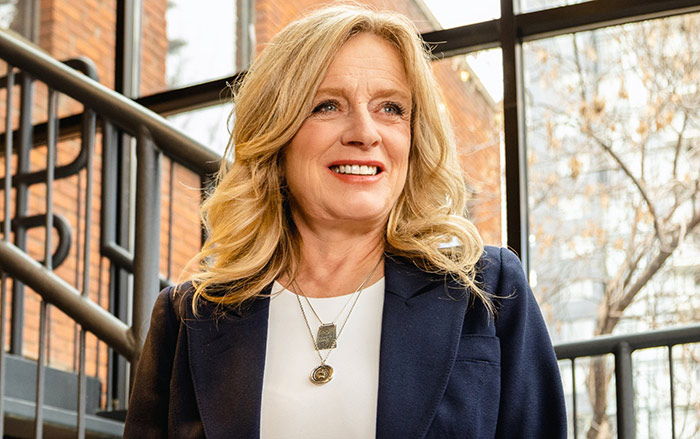
The Salt Spring Forum welcomes former Premier of Alberta Rachel Notley to Salt Spring to join a conversation on the state of provincial politics, and the similarities and differences between B.C. and Alberta.

As Premier of Alberta, Notley persuaded Prime Minister Justin Trudeau to buy the Trans Mountain Pipeline. And yet, for the first time ever in Alberta, her cabinet contained an equal number of women and men, and most of her policies – on the environment, economy, health care, education and Indigenous relations – now look remarkably progressive, especially in comparison to her successors Jason Kenney and Danielle Smith.

Many in B.C. and Alberta see the two provinces as opposites, with different economies, priorities and ways of doing things.

However, the policies of the BC NDP – which moved rightward during the recent election campaign – are not that different from the Alberta NDP.

And the largest migration flows for both provinces are consistently between each other.

Is the grass really greener on this side of the mountains? Or do we have more in common with our neighbours than we realize?

Notley was a lawyer before entering politics. She focused on labour law, and advocated for the health, safety and fair compensation of workers.

She was elected as MLA for Edmonton-Strathcona in 2008 and became party leader in 2014. In 2015, the Alberta NDP won the provincial election, with Notley becoming the first non-Conservative premier of the province in 80 years.

In keeping with all Salt Spring Forum events, the main part of the evening is devoted to questions from the audience, allowing for conversations to develop and move into unexpected and intriguing areas.

Notley will be at Fulford Hall on Saturday, Nov. 16, starting at 7:30 p.m. Tickets are available from saltspringforum.com or by paying cash at the door.