Home Blog Page 101

Vehicles crash, one burns on weekend 

0

Two wet-weather crashes in as many days on Salt Spring’s busiest road brought traffic to a temporary standstill –– and have island officials reminding drivers to take extra care as the rainy season begins in earnest. 

Both took place as the long weekend began, and happened along Fulford-Ganges Road, according to Salt Spring Island Fire Rescue (SSIFR) officials, who said an SUV off the roadway Saturday, Nov. 9 was followed by a two-vehicle collision Sunday, Nov. 10.  

Drivers and passengers from both incidents were able to exit the vehicles on their own, according to SSIFR incident reports. 

Saturday’s crash involved a single SUV and brought six firefighters and two apparatus, along with police and the BC Ambulance Service. No occupants were transported by the ambulance, according to SSIFR, although Salt Spring Island Towing and Recovery removed the vehicle and helped clear the scene. 

Hours later, a two-vehicle crash Sunday morning near the Fulford Fire Hall left a pickup truck burning on the roadway –– and a second vehicle with “significant” front-end damage from the impact, according to SSIFR. The truck burst into flames after the collision, and firefighters said the fire was “well established” and burning in both engine and passenger compartments when they arrived. 

That fire was extinguished, thanks to nearly a dozen firefighters and four apparatus; again, according to SSIFR, both the ambulance and RCMP members were on scene along with Salt Spring Island Towing and Recovery. 

“The incident commanders of both incidents were able to communicate directly with BC Ferries to provide advance notice of the situations,” according to SSIFR. “BC Ferries crews significantly reduced traffic congestion by providing travellers with incident information and suggesting alternate travel routes.” 

SSIFR suggests islanders take extra precautions during rainy weather, including: 

• Slow Down: Wet roads reduce traction, increasing stopping distance and risk of hydroplaning. 

• Increase Following Distance: Leave extra space between you and the vehicle in front to allow for longer braking time. 

• Check Your Tires: Worn tires are especially dangerous in wet weather, as they reduce grip. 

• Use Headlights: Ensure you’re visible to others by keeping your headlights on in rainy or low-light conditions. 

Struck pedestrian dies from injuries 

0

A man struck by a vehicle on Rainbow Road has died at hospital, according to officials, and a Victoria family are raising funds to complete funeral arrangements. 

Relatives have organized a fundraiser on gofundme.com for Salt Spring Island resident Bruce Twentyman, announcing he had passed surrounded by friends and family on Oct. 29, as a result of injuries sustained in a car/pedestrian accident.  

“He will be greatly missed by all,” wrote sister Nicole Twentyman, noting the family had “dropped everything” to travel to be with Bruce at the hospital.  

Salt Spring RCMP Sgt. Clive Seabrook confirmed a pedestrian was airlifted for medical care on Monday evening, Oct. 28, later succumbing to his injuries. Seabrook added the driver had remained at the scene, and had cooperated with investigators. 

“There is no criminality involved in this tragic accident,” said Seabrook, adding police would not be releasing further details. 

The fundraiser hopes to cover travel expenses, lost wages and final arrangements “to ensure Bruce is put to rest the way he wished to be,” according to the web page. To donate, visit https://gofund.me/74cc9668

There were 11 crashes involving pedestrians on Salt Spring Island from 2019 to 2023, according to the most recent data available from ICBC; of those, two were on Rainbow Road. 

Editorial: Course of conduct

0

Given global events, it’s indeed quite a time to tender a call for civility. 

But here we are; and with the Islands Trust’s Executive Committee (EC) now echoing the Governance Committee’s concerns about the way trustees choose to interact with one another –– and with staff –– during public meetings, one might ask how many warning flares need to hit the skies before we send in help. 

September’s meeting of the Islands Trust Council might have had its particularly toxic moments, but they were nothing if not predictable; the glide path down from respectful dialogue into quarterly harangue has been well-charted for months, if not years –– and by trustees themselves. 

The EC is now investigating whether it can call for a moderator-led facilitated discussion among all trustees about the body’s Code of Conduct –– what it expects currently, and perhaps how it can be updated to address the increasingly dispiriting conduct in meetings. 

The proposal to bring in a professional facilitator and all island trustees for what is essentially an education session on civil behaviour will have its detractors; knowing each day of a Trust Council meeting costs about $10,000, one might argue the money is better spent elsewhere. 

And the mere act of lamenting the state of public discourse can be an indiscriminate cudgel, with a long history of being used dishonestly to tamp down unpopular opinion under the pretense of promoting civility.  

But that does not seem to be what is going on among trustees. They truly need help, as one trustee put it, with the practice of speaking to issues rather than personalities. 

The ability to respectfully disagree is a critical skill for all elected representatives –– a muscle that needs exercise, lest it atrophy. And if our local body needs a professional tune-up, we support a special facilitated session to get them back on track.

Who knows — the outcome or results may end up acting as a model for all of us as we try to buck the unfortunate trend towards uncivil and disrespectful behaviour in person and online.  

Trust pulls meeting recording due to ‘safe workplace concerns’

0

Citing a “respect for safe workplace concerns,” Islands Trust staff have been directed to remove recordings of the September Trust Council meeting from the body’s official website –– and to fast-track plans for a trustee education session on meeting conduct. 

Near the end of a wide-ranging Executive Committee (EC) agenda that included several in-camera discussions, trustees agreed the audiovisual record of the most recent public meeting of Islands Trust Council (ITC) should no longer be offered online.  

Without elaborating during the public sessions, the EC voted unanimously, directing staff to remove nearly 14 hours of recordings. By the next day, links to videos of three days of sessions Sept. 24-26 were gone from the meeting’s page, although at press time the recordings themselves were still accessible to any who had saved the link. 

Minutes for that meeting were not yet available, although delays for official minutes –– particularly for larger, longer meetings –– are common; draft minutes for Trust Council’s Sept. 25 and Oct. 3 Committee of the Whole meetings were online at press time. 

Trustees spent much of the Oct. 30 meeting discussing an approach to a growing incivility noted in meetings, pointing to the September ITC meeting as particularly onerous –– if not necessarily unique –– and pondering plans to revisit a code of conduct discussion before the next meeting slated for December.  

“Some action is needed,” said Gabriola Island trustee Tobi Elliott. “A way to address the conduct from September’s Trust Council in the December meeting is necessary, because if we don’t, then it looks like that behaviour is OK –– and it’s not.” 

Committee members had previously called September’s meeting a particularly toxic one between side chatter, disrespect for the chair, speakers and staff –– and what Elliott characterized as “tearing it apart and then asking ‘why does it not function properly?’” 

EC also unanimously directed staff to continue to investigate a facilitated code of conduct session for a future Trust Council meeting –– an issue ironically deferred from the September meeting –– “as soon as practicable,” and committee members discussed whether to make time during the upcoming December ITC meeting or to host a special session in the spring. 

“There are risks associated with [delay],” said ITC chair and Thetis Island trustee Peter Luckham. “I think we need to acknowledge that there are people that feel these meetings are unsafe, and that there’s a lack of respect.” 

Staff noted a packed December agenda, and the reality that despite the EC’s responsibility for training trustees, given their already busy schedules it could prove difficult to find a date for a special session all could attend. 

“I can see both sides,” said Mayne Island trustee David Maude. “A standalone session, I think, would be way more valuable. But I also understand logistically that you might get a lot of trustees not attending because of that.” 

In a roundtable review at the EC’s Oct. 9 meeting, Legislative Services director David Marlor had warned trustees that name calling or otherwise attacking staff was a violation of provincial workplace rules, and the risk existed that staff could begin an action against the Islands Trust for allowing bullying or intimidation in that workplace. 

“We need to raise the bar with how we conduct ourselves, the language that we use,” said Elliott Oct. 30, “[realizing] what effect some of our behaviour is having on the workplace.” 

Elliott added that if there were complaints coming forward, a review committee struck, and “whatever disciplinary action or mediation” is required, she would support a standalone workshop over some statements at the beginning of December’s ITC meeting. 

“We can send a strong message,” said Elliott. “And I would be prepared to be a personal bearer of the message, of the impact that poor behaviour, poor use of language and poor workplace practices are having on me as a trustee –– and staff could perhaps speak to it as staff.” 

Ultimately the EC agreed Luckham should address code of conduct expectations at the beginning of December’s ITC meeting –– where Luckham may, as Maude put it, “read [trustees] the riot act,” although the agenda item will be along the lines of “conduct that supports better decision-making.” 

“At the very start of it is the very best time,” said Lasqueti Island trustee Tim Peterson. “And then run a tight meeting.” 

Luckham agreed, saying putting off at least addressing the problems to March’s ITC meeting would be “far too late.” 

“If we survive December Council,” added Luckham. “I’m sure we will, but whether or not all of us survive is the question in my mind –– and that’s at a staff level, as well as at a trustee level.”


Two hospital projects dropped from Island Health/CHRD plans

0

Two anticipated healthcare projects for Salt Spring Island have been knocked off the 10-year plan, as regional officials shifted in response to “reprioritization” at Island Health. 

A special meeting of the Capital Regional Hospital District Board (CRHD) was held Wednesday, Oct. 30 to discuss that body’s 10-year capital plan. It’s an annual exercise that lays out CRHD’s financial support for capital projects and healthcare equipment –– a list that came from Island Health’s priorities, explained Kevin Lorette, the Capital Regional District (CRD) general manager of planning and protective services. 

Removed from this year’s list were two projects previously planned at Lady Minto Hospital: a second phase of redeveloping the emergency department’s imaging suite –– budgeted at $5 million, with a CRHD share of $1.5 million –– and a 50-bed long-term care project also at the hospital, budgeted at $50 million with a CRHD share of $15 million. 

CRHD typically contributes 30 per cent of the funding for major capital projects, according to staff reports. That contribution over the next 10 years –– technically from 2025 to 2034 –– for “planned or possible” Island Health projects is $412 million. That’s $29 million less than the CRHD board approved in March, which staff said was the result of the health authority’s reprioritization of projects.  

At the Oct. 30 meeting, Island Health’s capital management executive director David Boychuk characterized the removal of the 50-bed long-term care project particularly as a “long-term temporary” deferral for Salt Spring. 

“The reasoning there, to be quite frank, is that we currently have three long-term care projects in planning,” said Boychuk. “We don’t foresee the ability for the province to approve a project in the near term in the South Island [region], given that we have 753 beds’ worth of long-term care projects in the planning phase now.” 

Boychuk added that while Island Health was looking to match projects to “areas of greatest need,” they also were looking to support projects they felt the B.C. government would greenlight. 

“At this time, we don’t feel that we’ll get support bringing a long-term care facility [on Salt Spring Island] forward to the province,” he said. “We believe we have a low probability of success, in terms of securing provincial approval; we don’t want it sitting on the 10-year plan until such time as we think it has a reasonable prospect of success.” 

Funding for the creation of 50 long-term care beds at Lady Minto was anticipated in last year’s version of the 10-year plan to begin funding in 2029; Phase 2 of the imaging suite was slated for 2028. 

Salt Spring’s CRD director Gary Holman bristled at the changes, noting that of three projects removed from the 10-year plan, two had been on Salt Spring. Holman asked if a recently discussed needs assessment from Island Health staff had been completed, and if it supported the rationale that additional long-term care beds on the island were not necessary. 

Boychuk said that needs assessment remained “underway,” noting the requirement to consider needs across all of Island Health’s communities. 

“I don’t think I would share the view that it’s not necessary,” said Boychuk. “It’s simply that we do have to balance demand for services with scarce capital.” 

While Lady Minto Hospital’s 29 current extended care units might be showing their age –– the most recent review by Accreditation Canada took place in 2014 –– there’s little question Salt Spring’s growing population is trending older.  

Last year the Islands Trust contracted with Statistics Canada to localize census data, finding that as the island’s population grew –– 49.9 per cent between 1991 and 2021 –– 7.2 per cent of Salt Spring residents were people age 85 and over, up from 3.8 per cent in 2016. In addition, nearly 35 per cent were at least 65 years old –– up from just over 30 per cent.  

Salt Spring’s median age during that same period shifted from 55.4 to 56.8. 

Holman later said he has requested a meeting with CRHD, Island Health and Lady Minto Hospital Foundation representatives to discuss the issue.

Salt Spring Island Foundation marks 40 years of giving

0

Whenever something positive takes place on Salt Spring, there’s one group that likely played a part in making it happen.

It could be the purchase of a 10-acre parcel of land for the Stqeeye’ Learning Society’s Coming Home campaign; a major contribution to an off-road trail; and donations to causes as diverse as choral music workshops and youth sports subsidies.

Then there are the Vital Signs surveys and reports undertaken every five years; the Living Wage reports; its Foundation of Youth program; and reconciliation with Indigenous peoples through specified funds.

The group is the Salt Spring Island Foundation (SSIF) and it is arguably connected to more groups and impacts more individuals than any other body on the island.

It’s an organization that grew from a single $10,000 bequest from islander John C. Lees, who died just days before SSIF was created as a trust with co-founders Colin Mouat, Alan Pierce and Richard Toynbee, to having an endowment of more than $18 million, 135 different named funds and a software program to help manage them.

The remarkable SSIF story will be celebrated at a 40 Years of Giving anniversary event at ArtSpring on Saturday, Nov. 16 from 1 to 3:30 p.m. In addition to live music and delicious food, it will provide a colourful picture of the projects the organization has funded through more than 1,000 grants totalling some $5.9 million and see some recipient groups share the impact of those grants. Briony Penn will talk about one islander – Nancy Braithwaite – whose estate provided $4 million to SSIF last year, with more to come in future. (That bequest, along with $2,588,200 from the Marianna Middleberg Estate, has elevated the foundation to a new level of capacity.) Bob Rush, who led the foundation during a critical period in the 1990s, is also scheduled to speak.

Shannon Cowan is the foundation’s executive director, who says it’s an exciting time to be involved with SSIF.

“For the first 20 to 30 years, we were building endowment, and now we’re building community. There’s been a mindset shift, although the heart is the same.”

Cowan said it’s hoped that revenue from the SSIF endowment “will continue to be able to put a million dollars a year out the door into the community. Then we’re also freed up to do more with flow-through funds and campaigns and fundraising and build ourselves to a point in capacity as an organization where we can be more responsive and do what we did in Covid, on the regular.”

Cowan is referring to how SSIF stepped up big time during the pandemic with a campaign that quickly raised more than $250,000 in “emergency” funding for urgent community needs, including providing Country Grocer gift cards to families in need.

In light of the recent major bequests, Cowan said, “I think we’re going to see more cause-based and quick spend actions from the foundation. It is going to be a leverage point for some of the really tough challenges on Salt Spring right now.”

The whole community is invited to the Nov. 16 celebration to learn more about the foundation’s role on Salt Spring Island and how to contribute to it.

Forum audience hears concerning violence news

0

A difficult subject was given its due at a Salt Spring Forum event on Friday, Nov. 1 when Angela Marie MacDougall of Battered Women’s Support Services (BWSS) in Vancouver was the guest at Mahon Hall.

In introducing MacDougall, forum board chair Michael Byers said he had learned so much from her when she was an online event guest during the pandemic that he wanted to bring her to the island for an in-person discussion.

Gender-based, intimate-partner violence is both endemic and an epidemic, said MacDougall, who is executive director of BWSS.

“It is, I believe, one of the most pressing social issues of our time,” she said.

In 2018, Statistics Canada found that 44 per cent of women aged 15 and up had experienced intimate partner violence, whether physical, sexual or emotional.

Alicia Herbert, executive director of Islanders Working Against Violence (IWAV), moderated and contributed to the discussion. She shared that in 2023, IWAV fielded 600 crisis line calls from women experiencing some form of violence, and provided shelter for more than 50 women seeking safety. Ten per cent of those women identified as Indigenous.

“Those are big numbers,” said Herbert, “and I think it’s important to say those numbers out loud, because people often think that we’re an idyllic community that maybe is insulated from these issues.”

MacDougall said the root of gender-based violence is the belief that women are the property of men — their fathers, brothers or husbands — a practice that was brought to North America by European colonizers.

“We often look to other parts of the world and see how gender inequity and sexism and misogyny and violence against women is happening there, and forget that it is a reality right here for so many and for so many generations, and it’s something that we continue to unpack and want to address and redress.”

MacDougall reported that the Covid lockdown period led to increased incidents of domestic violence due to the resulting isolation and stress. As well, it accelerated the number of men and boys accessing high-profile individuals online who presented themselves as helping males concerned about livelihood, intimate partner, health and fitness issues.

“But you don’t have to scratch very far beyond that to see that a lot of it has to do with mistrust of women, and a real dehumanizing and objectifying kind of messaging about women,” said MacDougall. “That has always been there, but it’s kind of on steroids right now in particular circles. And so we’re seeing more and more boys that are saying really horrible things about girls. I mean, I think it’s been like that, but we had a moment in time where it was changing, but it’s gotten much worse.”

In answer to an audience member’s question about the impact of pornography, MacDougall first noted that young women and men are accessing online porn in equal numbers, and said she has seen a huge increase in reports of strangulation used in sexual acts, which can be traced to its use in pornography.

“For many youth, their first kind of exploration on sexuality is to see that violence and so there are lots of impacts around that, in the sense of how people can have healthy sexuality. Nobody’s talking about it. It’s something that’s absolutely not discussed now, and so we don’t have a pathway to help change that right now.”

MacDougall told the forum audience that part of the BWSS mission is “a recognition that battering doesn’t happen between two people in isolation, but happens in a social context, where some groups of people are able to oppress others; and that is such an important framing, because it puts the people in it also in a context. It’s not just about two people; it’s also about a whole bunch of other things. And that is, I think, a very vital way of looking at the problem and therefore looking at solutions.”

“The elimination of violence” was also installed in the BWSS mission when it was formed in 1979 by its founders, including Salt Spring’s Maggie Ziegler, who MacDougall acknowledged at the event.

“They were clear that it was important to have that as a mission, so as to be not just about social service, but also about social change.”

She said that in addition to services provided to survivors, her group’s work “is also about getting at the roots of violence and digging up those roots, in the sense of looking at them and saying, ‘What can we do to make this a healthier place?’”

The next Salt Spring Forum guest is former Alberta premier Rachel Notley, who will speak and take questions from the audience at Fulford Hall on Saturday, Nov. 16 beginning at 7:30 p.m. Tickets through Eventbrite or at the door.

MELLOR, Donald George

1

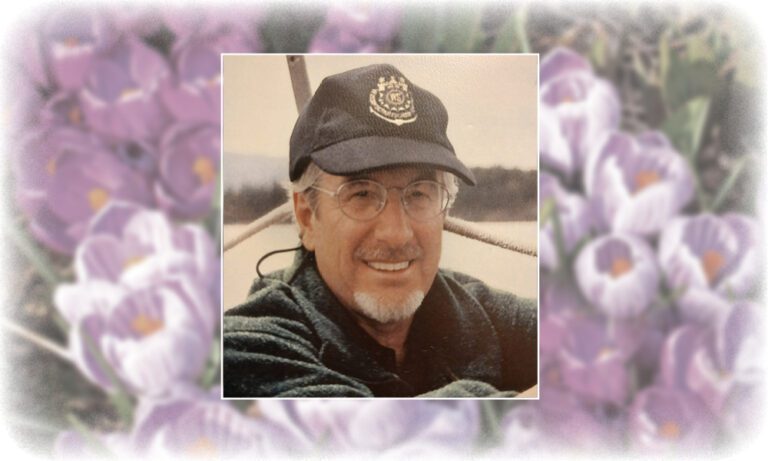
Donald George Mellor, (Don) 81, dedicated partner, beloved brother, favorite uncle, great uncle, and friend, passed away suddenly September 9, 2024 due to a severe stroke. Don was born in Montreal and grew up in St. Eustache. He was the first-born son of Donald James Mellor and Nancy Mellor (nee Agnes Coupar).

An adventurous soul, with a dream in his heart he moved to the BC coast in his 20s. He was a master sailor and fulfilled his dream by building a beautiful 42-foot yacht, L’Orenda. Don was well known on Salt Spring Island as he had a successful touring business where many enjoyed the pleasure of sailing with Captain Don through the Gulf Islands. He was always active, biking, walking, and sailing, a disciplined spiritual person who meditated daily. Intelligent, generous, a thoughtful creator of beautiful poetry, his presence had a special quality we all appreciated.

Don’s commitment to peace work was a central part of his life. He would talk about how peace wasn’t just an emotional, social, or intellectual concept but was a fundamental feeling underlying everything we do, from taking a breath to helping others. Don was co-founder of the SSI Peace Class.

He will be deeply missed by his partner, Jessica Garceau, his brother David, sisters Wendy and Laurie, his nephews and nieces, Jessica, Emilie, Etienne, Jasper, Katherine, James and many friends.

As Don requested, his ashes will rest with his parents Don and Nancy Mellor, on Mount Royal, Montreal. A celebration of Don’s life will take place in Montreal in the spring, and on Salt Spring Island in November.

Celebration of life on November 16 All Saints by the Sea 3- 4 pm

COOKE, Robert (Bob) William Joseph

0

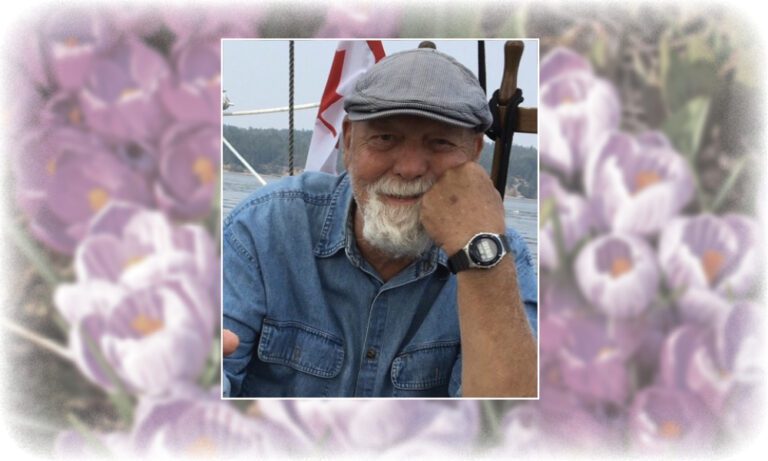
Robert (Bob) William Joseph Cooke was born on August 2, 1940, in Edmonton to Gladys and Murray Cooke, the first son of a family of six children. He loved the outdoors from a young age, often telling stories of chasing giant pollywogs in the slaughterhouse runoff creek. As a young teen, he ran a trap line northwest of Edmonton, catching ermine and mink to sell to the furriers. Early “jobs” included helping the milkman deliver milk on his block (earning him a small pint of chocolate milk as payment) and driving the bread delivery wagon, where he was one of the few who wouldn’t jump off when the horses bolted.

Bob met his future wife, Judy, in junior high. He was active at Vic Composite High School, participating in football, student government, and track. After high school, he graduated with a degree in Chemical Engineering from the University of Alberta, where he also played varsity football for the Golden Bears and briefly joined the semi-pro Edmonton Wildcats. He spent summers working at uranium mines in Eldorado near the Arctic Circle and as a surveyor near Medicine Hat.

Upon graduation, he and Judy married and headed east to Sarnia, Ontario, in their VW bug, where he took his first engineering job in petrochemicals. Later, the call of the sea led him to the University of Rhode Island for graduate studies in Oceanography. Their first daughter, Janice, was born in 1965, followed by Jillian in 1969.

The family moved west to Issaquah, WA, where Bob led a pioneering ocean mining project with INCO, raising valuable manganese nodules from the Pacific Ocean seabed. Certified for SCUBA while on board, he cherished diving among California’s kelp beds with otters. When the project ended, Bob shifted his focus to art, becoming a self-taught bronze sculptor with pieces in private and public collections worldwide, often depicting nature and wildlife.

Bob was also an avid skier, recalling heliskiing in the Bugaboos, New Year’s at Whistler, and patrolling at Alpental east of Seattle. Driving back to Edmonton for Christmas and summer holidays, he earned the nickname “Joe Edmonchuk” for his ability to drive 14 hours straight through Rocky Mountain storms.

As part of an ocean expedition, Bob helped locate the sunken WWII Japanese submarine I-52 in the Pacific, rumored to be filled with gold bars. This endeavor later became a National Geographic TV special and the book ‘Operation Rising Sun’.

Bob and Judy built a cottage on Salt Spring Island, BC, spending their retirement years between there and Green Valley, AZ, enjoying camping, bird watching, racquetball, golf, tennis, hiking, and even kayaking whitewater rivers. Their travels took them to places as diverse as Iceland, Malta, Japan, Portugal, Australia, the Galapagos Islands, and beyond.

Known to friends, family, and colleagues as a man with vision, Bob lived true to himself, embraced great adventures, and walked to his own drumbeat. Facing health challenges, he and Judy moved to assisted living in West Vancouver in 2021 to be closer to family. He passed away on October 30, 2024, at the age of 84 after a long battle with vascular dementia.

He is survived by his beloved wife of over 62 years, Judy; daughters Jillian and Janice; granddaughters Kate, Elizabeth, and Sarah; brothers Ken (Karina), Alan (Vicky), and Don (Jill); and sister Lynne (Jim).

Celebrations of life details to follow. In lieu of flowers, donations to Alzheimer’s or Dementia research foundations are welcomed. May he sail smooth waters and ski deep powder forevermore.

Veteran photos anchor Remembrance week exhibition

0

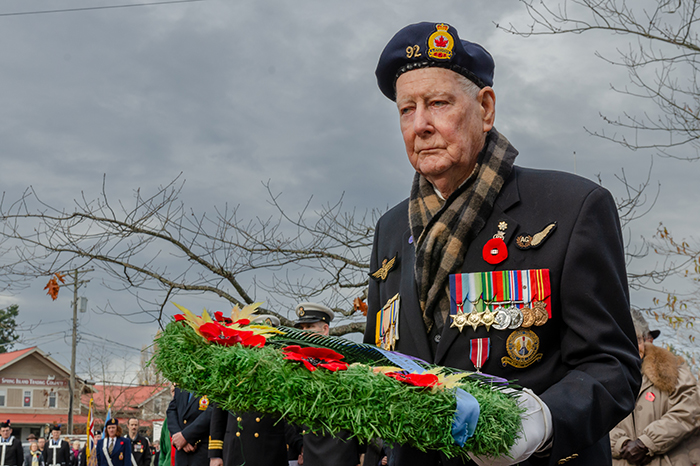
Salt Spring Island’s annual Remembrance Day ceremony continues to attract large crowds every year, even as the number of veterans in attendance has declined.

That so many people take time to watch the parade, listen to speakers and music, and honour the two minutes of silence at 11 a.m. is a testament to the desire to not forget the sacrifices made by individuals, families, communities and countries in past wars.

Now, an exhibition of photography highlights the poignancy of the local ceremony and veterans from a broad time period.

What These Eyes Have Seen: Witness to War features a collection of large colour portraits of veterans taken over the course of 14 local Remembrance Day events by Salt Spring Island photographer and filmmaker Alan Bibby, along with photographs from veterans’ years of service and other memorabilia. The exhibition will be in the ArtSpring gallery from Wednesday, Nov. 6 through Tuesday, Nov. 12, 10 a.m. to 4 p.m. daily.

“It’s a debt of thanks to those who have passed and current vets who are still in the parade or sitting at the benches, plus those who are still serving,” Bibby explained as he was in the final stages of gathering material in late October.

He first started taking the Remembrance Day photos in 2009, thinking he would create a documentary record of the events and participants. But as time went on he realized he should narrow his gaze, “so I went from wide angle to close-up, or ECU — extreme close-up” — and felt strongly moved by his photo subjects.

“What I saw over the years was, I thought, etched in their faces. You know, their experience, especially in their eyes.”

He said it wasn’t hard to imagine what those eyes had witnessed, even if the individuals had not been immersed in heavy-duty combat.

Veterans photographed have served not only in World War II but in more recent conflicts too.

“They’ve been stored away all these years, and it was very recently when I thought, ‘This cannot just sit in boxes or on a hard drive.’”

Bibby had a natural interest in the project because his father and extended family members served during the Second World War, and he has done extensive reading about military history. As well, among Bibby’s many films created in the past four decades is War in the Mind, about veterans and post-traumatic stress disorder. The film includes interviews with high-profile military personnel such as Lieutenant-General Roméo Dallaire (retired), who led the tragic United Nations peacekeeping mission during the Rwandan genocide of 1994, and other vets in Canada and the U.S.

Bibby is grateful for exhibition assistance provided by Royal Canadian Legion Branch 92 members, the Salt Spring Island Archives, the Salt Spring Island Museum and veterans’ family members. The compilation will include a number of physical items along with the photographs. World War I Memorial Plaques, also known as the Dead Man’s Penny, uniforms and medals are among pieces that will help tell the stories.

A book of the photographs is also in the planning stages.