
Home Blog Page 117

ADU subsidy project in the works

0

Regional officials may soon sweeten the pot for landowners on Salt Spring interested in operating a long-term rental suite –– but who can’t pencil out the finances to make it worthwhile. 

The Capital Regional District’s (CRD) pilot Rural Housing Program envisions stacking more dollars in forgivable loans atop the existing $40,000 similarly offered from the provincial government, according to Southern Gulf Islands CRD manager Justine Starke –– possibly as much as another $40,000. That money is technically not yet allocated in the CRD’s budget, but is receiving a lot of board support.  

Back in May, BC Housing launched its Secondary Suite Incentive Program (SSIP), centred on a forgivable loan meant to offset as much as half the cost of creating a new secondary suite or accessory dwelling unit (ADU) on a property already zoned for it. In exchange for having as much as $40,000 in loans forgiven, homeowners participating in SSIP agree any unit built (or renovated) with that money will be rented below market rates for a minimum of five years. 

Already considering something along similar lines, CRD staff and consultants had looked at building permit data, Starke said, and have spoken to builders and landowners throughout the Southern Gulf Islands to determine where the needle might move for incentivizing more housing here. Not unlike the conclusion drawn by the province, the biggest bang for the CRD’s limited buck seemed to be in working to convince landowners already zoned for secondary suites to create them — because so far, there aren’t a lot. 

Nowhere is underutilized zoning more apparent than on Salt Spring, where a 2013 bylaw allowing secondary suites on hundreds of island properties has resulted in just 10 building permits. Starke said that poor uptake had a lot to do with people simply not wanting to be landlords, but for many it was just as much the dollar amounts attached; building or renovating costs money, and upon completion breaking even would require charging higher monthly rent than many workers on Salt Spring could afford. 

The provincial program defined “affordable” rent as 30 per cent of the median income for an area; BC Housing sets that amount on Salt Spring Island using the median for Victoria, around $70,000. That’s higher than the median income on this island, Starke admitted, so there might be some shift in that number for the CRD’s program — and even then, it might not be affordable for every island worker. 

But any new unit that’s rented for less than current market-driven rates is an improvement. 

“I’m not going to sit here and tell you this program is going to solve our housing crisis,” said Starke. “It’s a small piece of the solution. But we think it can help.” 

The coordination of the pilot program needs staff –– who will draw a paycheque at least partly from funds contributed by the Southern Gulf Islands Tourism Partnership, using some revenue from the short-term accommodation tax. 

For the forgivable loan funding itself, the CRD Board meets next in mid-September, and approval — and program specifics — could come as early as the fall. Starke said perhaps the most important part of building out the program is the establishment of a function within the CRD that’s specializing in rural communities’ housing needs –– and that needs input from those communities.  

A significant public engagement effort will be launching this fall. Visit getinvolved.crd.bc.ca/crd-rural-housing-program for more information on the program and to be notified of updates. 

Horse show participants encouraged

BY PATRICIA LOCKIE

for GIHA

One of the reliable crowd pleasers at the island’s Fall Fair (running Sept. 7-8 this year) is the horse show.

Organized by the Gulf Islands Horse Association (GIHA), together with the Salt Spring Farmers’ Institute, the horse show is a popular attraction. Spectators love to see the horses perform, and get a chance to chat with riders and handlers. For participants, the show is a low-key affair that emphasizes sportsmanship and horse welfare more than competition. It’s meant to be a fun event for all levels – and ages – of riders and handlers. Everyone is welcome provided they have current Horse Council of BC membership.

This year, there’s a broad range of riding and handling classes, including Showmanship, English and Western Pleasure, Ranch Horse, Lead Line, Best of Breeds, barrel racing and an obstacle course. For fun and laughter, there’ll be an egg and spoon race, a ride-a-five where the winner takes all, riding bareback while trying to hang on to a $5 bill under their thigh or knee (no adhesives allowed!), a costume class in which exhibitors may lead or ride their horses at a walk only, and a hobby horse class specially for juniors who have a favourite hobby horse to show off through a series of obstacles and jumps.

Other special events on Sunday include a combined dance and musical ride performance, directed and coached by Susan Gordon. Officially called a quadrille, the small but enthusiastic team of riders will perform a pattern of movements set to the music of the Beach Boys’ Good Vibrations. Dancers Nomi Lyonns, Sue Newman and Leah Ostlund will be performing to another Beach Boys hit “I Can Hear Music.” It’s definitely a ‘60s vibe, so look out for the tye dye. Times of performances are noon and 3 p.m. (approximately).

Throughout the day on Sunday, visitors will be invited to “meet and greet” the horses at their corrals.

Deadline for horse show entries is Aug. 31. The entry form is on page 41 of the Fall Fair Catalogue and may be dropped off at Foxglove Farm and Garden. Entry fee is $6 per class. Entry forms are also available via email: giha.saltspring@gmail, and on the Salt Spring Farmers’ Institute website at ssifi.org.

Please help us put on a successful show by entering your horse, and supporting your local equestrian community. We look forward to seeing you at the Mouat Park riding ring for a wonderful weekend showcasing our beautiful and talented island horses.

Message from SSI Toy Run Santa

This was my last run as Santa. I want to thank all those people who made our charity toy run on the Aug. 16-18 weekend a success. All proceeds go to the good people at Santa’s Workshop.

As Santa I was quite visible but am only the tip of the iceberg. It takes about 40 volunteers and months of planning to put this event on. The majority of the people work behind the scenes. The organizers and doers, the volunteers and workers. Without them there would be no event.

I also want to thank the community-minded businesses who support us each year.

The bands usually give us a break on their fee, as every dollar taken away is not taken from the event but from the kids.

The flaggers are another important part of the event. They make the run smoother and safer.

I also thank the members of the public who allowed the ride to pass without disruption.

Lastly, but very importantly, I want to thank all the riders and their families who showed up and supported the event. Ultimately they, and the children, make all the hard work worthwhile.

— Kerry Butler

Santa (retired)

Enjoy some scenes from the 2024 SSI Toy Run, with photos taken by Rob Lowrie, in the gallery below.

Draft Portlock Park plan approved

0

After multiple rounds of public engagement, and several trips back to the literal drawing board, Salt Spring’s Portlock Park has an approved draft plan, one officials say includes both a senior ball field and a large oval track –– and, hopefully, reflects the needs of the community within the physical constraints of the island’s available park land. 

“I just want to start with saying I’ve been given a four-seater car and asked to put six people in it,” laughed Salt Spring Island administration acting senior manager Dan Ovington, who brought the plan once again before the Local Community Commission (LCC) Thursday, Aug. 15. 

But following months of consultation, the draft master plan has seemingly found support among not only the LCC, who voted unanimously to advance it, but the various stakeholder groups –– from runners to walkers to pickleball players to baseball teams –– who weighed in. 

Part of that solution stemmed from an awareness, to continue Ovington’s metaphor, that there were other cars available to drive; approving the master plan for Portlock Park came alongside amending one for the Rainbow Recreation Centre site, specifically removing the planned covered multisport court there and adding six pickleball courts instead. 

“Pickleball was very enthusiastic as long as they had six courts,” said Ovington. “It didn’t matter as much to them where they were.” 

And, Ovington pointed out, the loss of the covered multisport court will be less impactful given the existence of the Salt Spring Island Multi Space (SIMS).  

“When that plan was developed, we didn’t have SIMS, we didn’t have an indoor gym,” he said. “I’d argue we’ve already created an indoor multisport court that accommodates all those users and more –– we have kinder gym, basketball, indoor pickleball; we have badminton, floor hockey, soccer uses. The list goes on and on.” 

The approval of a master plan is important, Ovington said, not only because it offers direction but also shows community support that can be demonstrated to potential funding partners.  

In addition to the senior ball field and oval track, the draft as approved adds storage and field lighting at Portlock Park.  

As for other park properties –– the other “cars” on Salt Spring Island –– Ovington reported islanders would see some work happening this fall at 160 Rainbow Rd., the so-called hydro field, although mostly some levelling of the field and removal of excess material. The field is slated for upgrading for ball field sports.  

“There’s a bit of a drastic lift there where we want to put the ball field, so that needs to be brought down,” said Ovington. “And we’re discussing what material we want to use to bring things up; there’s not water irrigation, so sand’s not the best solution, even though there’s a drainage issue there. So it’s a balance.” 

Funding is in place for that project, between a $300,000 donation and $50,000 in capital reserve funding allocated –– a “tight” budget for what’s planned, Ovington said, but certainly doable. 

“But that’s why we’ve been going somewhat slow,” he said, “to get the most that we can for what we have.” 

There had previously been funding set aside for detailed drawings for the field at Fernwood Elementary School, but it was redirected when a private donation came in specifically for the hydro field. Once that project advances, Ovington said, staff plan to revisit detailed designs for the field at Fernwood. 

Lighter Living: Reducing our ‘foodprint’

SUBMITTED BY TRANSITION SALT SPRING

Part of the Lighter Living series

How many of us cringe at the thought of cleaning out the crisper drawer in the fridge? Perhaps there might be a mouldy cucumber, slimy spinach, shrivelled carrots, or maybe leftovers from last week that you promised yourself to use up.

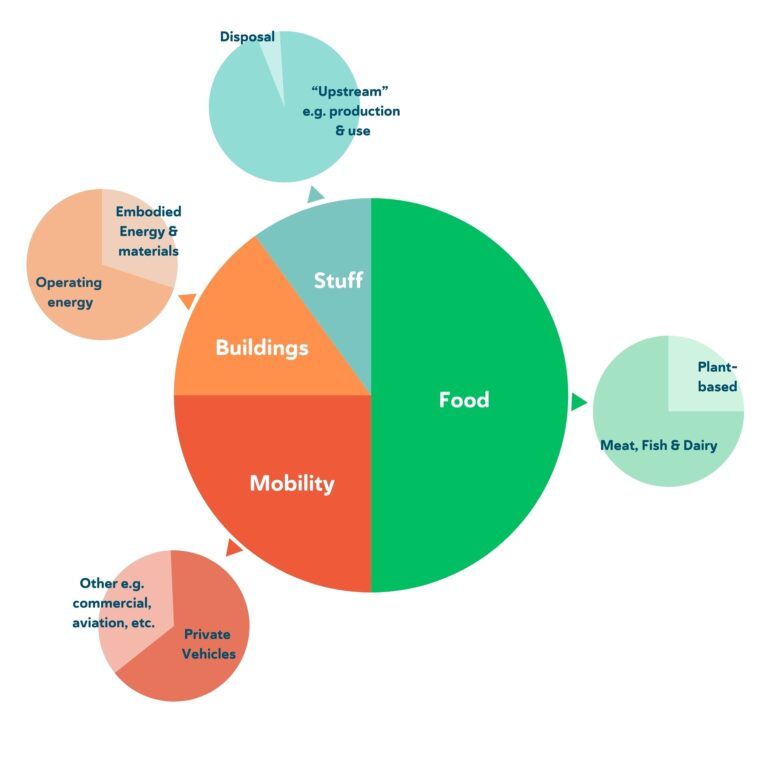
Recent research shows that a whopping 50 per cent of our ecological footprint in southwest B.C. is tied to food (mobility 25 per cent, buildings 15 per cent, and stuff 10 per cent). This 50 per cent figure includes all the energy and resources that go into growing, producing, packaging, transporting, distributing and disposing of food. The choices we make every day related to what we eat or don’t eat have a significant impact on our “foodprint.”

According to recent research (UN Environment, One Earth, 2021), the most effective action individuals can take to reduce their carbon footprint as it relates to food is to reduce the amount of wasted food at home. Approximately 40 per cent of our landfill is made up of food waste, with each household in the Capital Regional District throwing away around $1,500 worth per year. The most commonly discarded foods, in descending order, include vegetables, fruit, snacks and staples, leftovers, bakery items, dairy and meat.

The Canadian Zero Waste Council reported that 63 per cent of the food we throw away could have been eaten. Some food waste is unavoidable, such as parts that generally can’t be sold or eaten, like bones, vegetable peelings, egg shells or coffee grounds. Avoidable food waste refers to edible food that ends up in the compost or garbage because we bought too much, cooked too much, didn’t like it or didn’t store it properly.

There are plenty of reasons for all this food waste at home, including food getting “lost” inside people’s fridges, consumers misinterpreting food date labels, impulse buying, poor planning before shopping and a general lack of awareness about the need to reduce food loss. Eating the food we purchase or grow should be a top priority when it comes to preventing waste. Fortunately, there are plenty of great ideas, tips and tricks to address the underlying drivers of all this waste. None of these steps are particularly difficult or cumbersome.

SaveFood Canada suggests three simple steps and provides plenty of details regarding their “Plan it Out, Use it Up and Keep it Fresh” method, including an encyclopedia of food storage best practices. Several behavioural scientists suggest organizing our fridges completely differently, recommending a Feng Shui approach. “Best by” and “use-by” dates are not the same thing, and neither necessarily means that a product is no longer good.

Unfortunately, when we throw away edible food, we not only lose the energy, time and resources that went into getting the food from seed to table but also contribute to methane gas production in landfills. Methane is 28 times more powerful than carbon dioxide at trapping heat in the environment when food decomposes.

Many islanders are keen composters, each with a method that works for them. For example, Alicia Herbert invites two of her neighbours to contribute their food scraps to her large plastic bins, sharing surplus bounty from her garden in return. Patti Wardlaw loves her Speedibin composter, designed and built in B.C. from galvanized metal, which allows composting all food waste, including meat scraps, without pest problems. Deborah Miller swears by trench composting, dumping all food waste into pre-dug 30-centimetre-deep trenches in fallow beds. Barbara Dempster uses a digester for non-plant-based scraps, Nancy Deas feeds scraps to the family flock of hens and Andria Scanlan divides food scraps between a standard plastic composter and worm bins.

The good news is that small choices can make a big impact, especially when we work together. A number of excellent resources are available for free to islanders who love food but hate waste. The Salt Spring Island Farmland Trust (SSIFT) offers a Harvest Share program for those with fruit trees they are unable to harvest, sending trained volunteers to do the work and sharing the harvest equally among landowners, volunteers and partner organizations supporting food-insecure individuals. also hosts a Food Exchange program every Sunday afternoon, encouraging surplus food from gardens in exchange for produce one does not grow; leftovers are donated to partner organizations like food banks. They also offer workshops, including ones on composting and vermiculture. For more information on all their offerings, visit ssifarmlandtrust.org.

To learn more about how to waste less food, Transition Salt Spring invites you to sign up for free access to Lighter Living Salt Spring content at tinyurl.com/Lighter-Living. Learn how to take low-effort actions that make you feel good, benefit our community, and help the planet.

Commission seeks lease at former Phoenix school

0

Salt Spring’s largest elected body hopes to take on the lease at a former school owned by the Gulf Islands School District (SD64) and has directed staff to express its interest in the building and facilities at 163 Drake Road –– the shuttered Phoenix Elementary School property. 

The Salt Spring Island Local Community Commission (LCC) rose from a closed meeting Thursday, Aug. 15 to report it would be responding to SD64’s request for proposals at the Phoenix site, which last saw students in 2023. Phoenix Elementary closed due to declining enrolment and had been operating at a budget deficit, according to district officials. 

The LCC’s plan is to preserve the use of the building for various community groups without over-taxing their individual resources, commissioners said. Despite a large interest in the space, the ability for any of Salt Spring’s smaller organizations to handle consistent rent to the district for the entire property had been seen as a challenge. LCC chair Earl Rook told the Driftwood over the weekend that commissioners viewed the Phoenix property as being much like the Salt Spring Island Multi Space (SIMS) –– the former middle school now operated by the CRD as a community centre.  

“It’s a valuable community asset that has become surplus to the needs of the school district,” said Rook, “and the CRD has the resources to manage it in a way that makes it available to the community for multiple uses.” 

Rook said there would be extensive discussion on options to best use the space should the district agree to enter into a lease agreement with the CRD –– and noted commissioners were still in “very early stages” of development for the project. 

“While a number of ideas have arisen, we will be seeking input from community groups before any final decisions on use are made,” he said, noting the Phoenix parcel’s extensive outdoor space and limited indoor area –– a contrast to the SIMS property. “Stay tuned.” 

In Response: History and beliefs distorted

0

By ANTHONY ISSA

Last week’s “Local Gaza protesting decried” piece by Hannah Brown defamed Palestinians, Arabs and Islam. The piece perpetuated many harmful tropes and distorted the history of Palestine.

Brown’s narrative is unfortunately not unique. It is part of a wider effort to erase the historical struggles of the Palestinian people to undermine their legitimate claim to their lands. I will focus here on addressing her ahistorical claims and remarks that constitute anti-Palestinian racism, as defined by the Arab Canadian Lawyers Association.

To begin, Brown misleadingly claims that the Qur’an does not mention Palestine, while the Christian New Testament is set in Israel and the Hebrew Bible is filled with references to Israel and Judea. However, the term “Palestine” has a long history in the region. Its earliest recorded use dates to 1150 BCE in Egyptian hieroglyphics, where the land was referred to as “Peleset.” In fact, contrary to Brown’s beliefs surrounding Christian canon, the King James Bible translated the term Peleset to Palestina.

The historical ties to the name go even deeper. In the 5th century BCE, Herodotus referred to a district of Syria called “Palaistinê.” During the Mutasarrifate of Jerusalem in the late Ottoman period, the area was also commonly referred to as Palestine. During the British Mandate of Palestine, the term was officially revived and used to denote the territory under British administration following the collapse of the Ottoman Empire. The issuance of coinage, stamps and passports bearing the name “Palestine” during this period further solidified its geographical significance. Despite the absence of a formal administrative region called Palestine under Ottoman rule, the term was widely used to describe the region inhabited by Palestinians. The name has also been used by various civilizations, including the Greeks, Romans and Ottomans, to describe the region encompassing modern-day Israel, the West Bank and Gaza.

It should be clear that “Palestine” is not a modern invention but a historical term that has existed in the region for a good part of recorded human history. Hannah Brown’s imaginative geography and armchair analysis of history and religion seems to construct the region of the Levant and the Holy Land not as it is but rather in a way that is sympathetic to the modern, colonial State of Israel — and to be clear, colonization was the preferred word of many of the fathers of Zionism, including Vladimir Jabotinsky, who said, “Zionism is a colonization adventure.”

I take particular issue with Brown’s use of biblical stories to justify Israel’s ongoing occupation and system of apartheid against Palestinians in occupied territories. Using misleading interpretations of the Bible to downplay Israeli military actions in the almost 11-month-long siege of the Gaza Strip that has killed over 40,000 Palestinians is both morally repugnant and intellectually dishonest.

By the 20th century, Palestinian identity rose dramatically. Palestinians sought self-determination in response to colonialism and the rise of Arab nationalism. The UN Partition Plan of 1947, although never fully realized, recognized the Palestinian people’s right to statehood, a right that continues to be obstructed primarily by the ongoing occupation of Israel and international reluctance on the issue.

On the question of anti-Palestinian racism, Brown portrays Muslims as inherently violent, and Israel and its Western allies as inherently peaceful. Her statement questioning whether those killed by the Israeli military in the strip are truly civilians stereotypes Palestinians as deceitful and inherently violent, as well as not deserving of basic human rights protections. This blatant dehumanization also suggests that Palestinian civilians are indistinguishable from terrorists, rationalizing the collective punishment of the Gazan population who are under a brutal siege.

In short, Brown’s article is a clear example of anti-Palestinian racism, dismissing the severity of the violence inflicted on Palestinians and denying their suffering. I implore her and others who prescribe to this distorted belief of the region and its history to engage with balanced narratives in the region rather than perpetuate the age-old Orientalism used against a marginalized community.

The writer is a Montreal-based journalist and media analyst at Canadians for Justice and Peace in the Middle East.

Tochecha (an offering of revolutionary love for Tu b’Av, 5784)

1

By EVA PESKIN

I submit this writing as a practice of Tochecha (loving rebuke). I invoke this Jewish name for a concept shared by many traditions of offering critique when someone is missing the mark as an act of radical love.

In fact, according to Vayikra (Leviticus) 19:17, I am obligated to provide feedback when I perceive wrongdoing by none other than HaShem (the ineffable expression of the divine conversation among self, earth and cosmos often represented in English as “God”). As James Baldwin put it, “If I love you, I have to make you conscious of the things you don’t see.”

Every day for the last 10 and a half months, I have seen parents rocking in grief over the bodies of their children wrapped in small white shrouds. I have seen children trembling in hallways of hospitals in shock from airstrikes, screaming as their limbs are amputated without anaesthesia, thousands now carrying the horrific designation “WCNSF” (Wounded Child-No Surviving Family). Over the weekend, the Gaza Health Ministry reported the first confirmed case of polio in a 10-month-old child after Israel’s utter destruction of Gaza’s health, hygiene and waste management infrastructure has produced the conditions for an epidemic.

This is only a tiny fraction of the devastation currently unfolding as the so-called civilized Western world will not stop sending the perpetrators of these atrocities weapons, nor implement the ruling of the International Court of Justice, which on July 19 declared Israel an apartheid state, illegally occupying Palestinian territory, and demanded that all states party to the court cease supplying Israel material support immediately.

Meanwhile, self-described Zionists on Salt Spring and around the world antagonize and demean those of us who take a public stand against this nightmare. Maybe you did not see me at the Pride march a few weeks ago. Maybe your attachment to Zionist outrage prevented you from entertaining the possibility that there might be Jews chanting “Intifada, revolution!” and “Land Back” alongside our Palestinian and Indigenous comrades. (Intifada is an Arabic word that means to shake off one’s oppressor, the same word used in Arabic to describe the Warsaw Ghetto Uprising.) Maybe the propaganda upon which Zionism is built has confused you about the distinction between Zionism and Judaism, such that you cannot see how (dare I say) antisemitic it is to erase Jews who don’t conform to your worldview. 

But Zionism is not Judaism. Judaism is a pluralistic, multi-thousand-year-old religious and cultural tradition with a wide variety of expressions throughout a diaspora that spans every continent. Zionism originated among European Christians in the 16th century, based in the belief that Jews who refused to convert and assimilate needed to be expelled from Christian Europe. Currently, the largest demographic of Zionists are Evangelical Christians, who believe Jews must be returned to the holy land to usher in the apocalypse, when all the heathens burn in hell on earth while the true believers ascend to heaven in the rapture. Just ask Pastor John Hagee, president of Christians United For Israel, a U.S.-based organization boasting more than 10 million members (there are only about 15.5 million Jews of all political/theological persuasions worldwide). Hagee has said that Jews caused the Holocaust and Hitler was sent by God to help create the state of Israel. He was celebrated as a keynote speaker at the “March For Israel” rally in November in Washington, D.C.

Zionism caught on as a Jewish nationalist movement in the late 19th century in reaction to European antisemitism. Founders of the Zionist political project openly described their aims in terms of colonization, explicitly predicated on the dispossession of Palestinians from their land with the help of Western imperial powers, summed up by Israel’s first Prime Minister David Ben-Gurion in his diary in 1937: “the compulsory transfer of the Arabs from the valleys of the projected Jewish State . . . We have to stick to this conclusion the same way we grabbed the Balfour Declaration, more than that, the same way we grabbed at Zionism itself.” The Balfour Declaration of 1917 was the arrangement by the British ruling class to seize the land of Palestine and “give” it to the Zionists to colonize. Notably, the only Jewish member of parliament at the time, Edwin Montagu, decried the declaration as antisemitic, a means to isolate and expel Jews from Britain.

But there was another conversation happening among European Jews at this time, anchored in the concept of doikayt, a Yiddish word that translates to “hereness.” Opposed to the “thereness” of Zionism, doikayt was a rallying cry for the Bundists, the Jewish labour movement which believed that their home was where they lived and their struggle was against fascism alongside their neighbours who were also oppressed by capitalism and imperialism. Doikayt meant pride in Yiddish culture and language, joy in welcoming the stranger, and determination to stand up for the most vulnerable. Zionism sells Jews a self-annihilating story: You are small, weak, alone. Your neighbours will turn on you and no one will come to rescue you. You must destroy your enemies before they destroy you.

My commitment to opposing Zionism is unshakeable, as it comes from the deepest self-love. I believe we can choose to be on the side of life, standing with the people of the global majority, fighting to end oppression, taking responsibility for what is ours to repair. I believe we all belong in Olam Haba, the world to come.

The writer is a Salt Spring Jewish community member who has a Ph.D. and experience as a teacher, movement researcher and community-based art maker.

Petition launched by aspiring Green candidate

0

A Salt Spring Island resident who was disqualified from the BC Green Party candidate nomination race in the Saanich North and the Islands (SNI) riding is demanding she be reinstated on the ballot and another vote held.

Amy Haysom was one of three individuals nominated to run for the Greens’ SNI position in this fall’s provincial election. In a press release issued Monday, Haysom said she had garnered significant support when her name was removed from the party ballot less than an hour before voting began on Aug. 2, “with the party citing unspecified complaints” having been received about her.

Robert Botterell of Pender Island was ultimately named the SNI candidate after receiving more votes from local riding Green Party members than North Saaanich resident Stuart MacKinnon, and after Haysom’s appeal of the decision was denied.

Haysom has launched a petition to recall the candidate nomination contest, reinstate herself on the SNI ballot and hold another vote by or before Sept. 6. She said if the petition is not successful she may consider legal action against the party.

“This experience has been incredibly disheartening, not only for me but for the many supporters who believe in the principles of the Green Party,” Haysom stated. “Participatory democracy is a core principle of the BC Greens, but there has been no explanation to me, or to the voters, as to the reasons, and puts in question the integrity of the political process. Simply, voters feel disenfranchised.” 

Haysom said a “Green Party of Canada Supporters” Facebook group is hosting discussion of the issue. 

In an Aug. 12 statement, the BC Greens said, “The disqualification arose as a result of new confidential information being brought to the attention of the Returning Officer that resulted in a reconsideration of the party’s willingness to support Ms. Haysom as a potential candidate. The decision was made in accordance with the party’s MLA Candidate Selection Rules. It is unfortunate that disqualification occurred at this late stage, but the party was not in control of the timing of the information that was brought forward,” and added that “The Returning Officer was satisfied the disqualification was appropriate.”

LCC eyes harbour services

0

Salt Spring’s elected officials are taking a hard look at delivering services to liveaboards in Ganges Harbour –– or, at a minimum, getting a better understanding of what services they already provide. 

Local Community Commission (LCC) member Brian Webster brought a report to the group Thursday, Aug. 15 on his participation in an April workshop called Collaborative Action to Resolve Boat-Related Issues in the Capital Region, put on by the Capital Regional District’s (CRD) Environmental Protection Division. 

For regional officials, that mouthful of a meeting linked the proliferation of mooring buoys to the growing number of derelict vessels within the CRD, and prompted directors to start considering whether a regional harbour service –– and tax –– might be warranted.  

But on Salt Spring, Webster argued, local government is already providing services for people who live on moored vessels, particularly in Ganges –– and might do more. Webster noted the CRD, through services delegated to the LCC, already provides some services to those living on the water in Ganges Harbour –– although indirectly, through the Parks and Recreation service. Webster pointed to the washroom and water fountain at Centennial Park, which are available to anyone, including liveaboard residents who come ashore. 

“We have a dock for small boats for people who go back and forth,” he said, referring to the Rotary dock, “and despite some claims on social media, we also have garbage facilities –– although limited and less at some times of year than others –– in Rotary and Centennial parks.” 

Webster proposed the LCC assess whether those services would be “more appropriately” funded through the commission’s relatively unknown Small Craft Harbour Facilities Service, one of several brought under LCC jurisdiction when it was established in 2023. That service is most commonly called the “Fernwood Dock Service,” referring to the 400-foot no-services transient dock on the northeast side of Salt Spring Island. 

“For whatever reason, we’ve quite carefully constrained it to only talk about the Fernwood Dock,” said Webster. “But in fact, service potentially could go way beyond that.” 

Indeed, while the establishment bylaw for the Small Craft Harbour Facilities Service sets a maximum annual requisition of 5 cents per $1,000 property value tax rate –– or $162,800, whichever is greater –– the service in recent years has reflected a fraction of that cost, with $53,000 set aside in the CRD’s 2023 final Salt Spring Island Electoral Area Capital Plan.  

And, Webster argued, even without increasing the tax burden, allocating dollars appropriately is better governance; he told commissioners he would likely argue at a minimum for shifting some funds from Parks and Recreation to the Small Craft Harbour Facilities Service –– “putting more dollars in that budget so it can actually contribute toward the services Parks and Rec were already providing.” 

Webster gave notice he would be making a motion to get discussion of the topic onto the agenda for a future meeting, likely in October. 

“We need to talk about it and see if we can find some kind of consensus –– because if we don’t, the CRD machine is going to just roll on,” said Webster. “We are the CRD, but we are CRD Salt Spring; if we want to make sure that our community’s needs and priorities are fully accounted for, we need to have conversations about it.”