
Home Blog Page 119

Wilding Foundation and SSNAP team up for new grants program

SUBMITTED BY SALT SPRING NATIONAL ART PRIZE

In a significant boost to the local arts community, the Salt Spring National Art Prize (SSNAP) has announced the launch of its new Catalyst Grants program.

This initiative, made possible through the generous support of The Wilding Foundation, aims to empower visual artists in the Southern Gulf Islands by providing them with essential financial resources to complete ongoing projects and explore new creative ideas.

Over the next three years, SSNAP will allocate $100,000 annually to fund these grants, with individual awards ranging from $3,000 to $10,000. The program is designed to support a diverse range of artistic practices, giving local artists the flexibility to pursue their creative visions without the financial constraints that often accompany artistic endeavours.

In addition to offering financial support, the Catalyst Grants also serve as a stepping stone for artists aspiring to participate in future SSNAP events. Grant recipients will have the opportunity to develop and refine their work for submission to upcoming SSNAP competitions or contribute to SSNAP-related community activities. This initiative not only supports the growth of individual artists but also strengthens the broader artistic community within the Southern Gulf Islands.

Ethan Wilding of the Wilding Foundation explained the rationale for creating the Catalyst Grants program. Not only is the foundation deeply committed to nurturing the arts and creativity within the Salt Spring community, he said, but its members recognize “the profound impact that the arts have on our society.”

“However, we also recognize that many talented artists often face significant financial barriers that can hinder their ability to fully realize their creative projects,” said Wilding. “Through the Catalyst Grants program, The Wilding Foundation aims to alleviate these challenges by providing substantial financial support. This $100,000 annual grant to the Salt Spring National Art Prize is designed to empower artists, giving them the essential resources they need to bring their visions to life and share them with the wider community.”

“By investing in the arts, we are investing in the heart and soul of Salt Spring Island, ensuring that it remains a vibrant, dynamic place where creativity can flourish,” he added. “This initiative is just one of the ways The Wilding Foundation seeks to make a lasting impact, encouraging artistic growth and excellence in our community.”

Wilding said the foundation hopes to see several key outcomes from the grant program. Those include promotion of artistic excellence, enhanced visibility for artists, community engagement, economic impact and sustainability of the arts.

“Overall, The Wilding Foundation views its support of SSNAP through the Catalyst Grants as a crucial investment in the cultural and economic vitality of the community,” he said.

The introduction of the Catalyst Grants program underscores SSNAP’s ongoing commitment to fostering creativity and innovation in the visual arts. The Wilding Foundation’s support has been instrumental in making this program a reality, reflecting their dedication to enriching the cultural landscape of the region.

A full program description and application form will be made available on the saltspringartprize.ca website.
Photosynthesis presents 24th exhibit

SUBMITTED BY THE PHOTOSYNTHESIS GROUP

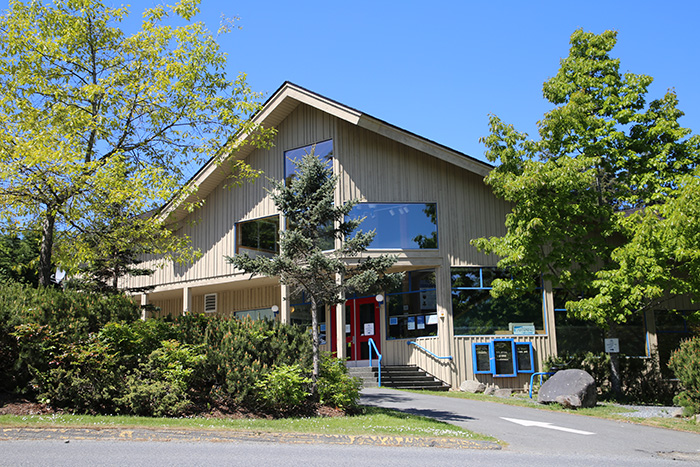
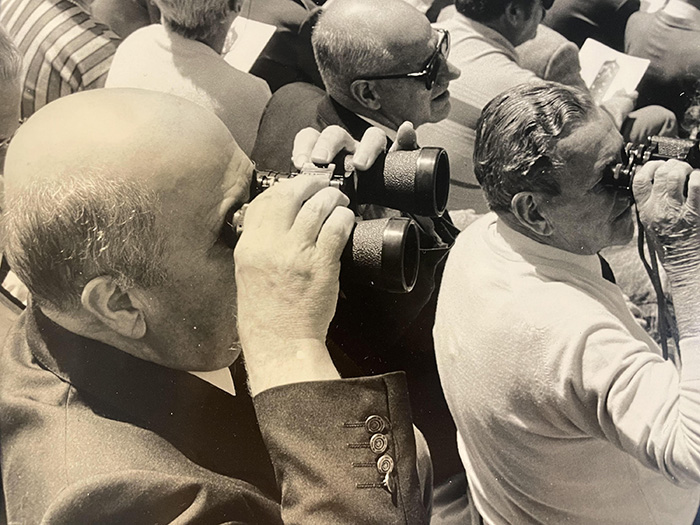
Next Thursday, Aug. 22 will see the opening of the 24th annual Photosynthesis exhibition at ArtSpring, making it the longest continuous photography show in British Columbia. 

The Photosynthesis group is composed of 20 local photographers whose visual interpretations represent a wide range of subject matter. The core of the group has been together over the 24-year span expanding their skillful vision and techniques through practice and experience. Each year, two or three guests are invited, as well as a student photographer from Gulf Islands Secondary School, as a way to inject new energy into the group. Some of the most outstanding works of photographic art have been placed on the walls of the ArtSpring Gallery, attracting visitors from near and far.

Here is an opportunity for lovers of the image to experience new and challenging visual art. Photosynthesis’ lasting partnership with ArtSpring is a testament to the vision and purpose of our island’s great arts centre resource.

This year’s group includes: Birgit Freybe Bateman, Alane Lalonde, Seth Berkowitz, Bernadette Mertens-McAllister, Alan Bibby, Larry Melious, John Denniston (guest artist), Amy Melious, Nirmal Dryden, Pierre Mineau, Howard Fry, Colton Prevost (guest artist), Christina Heinemann, Brian Purcell, Susan Huber, Anette Schrage, Avril Kirby, Julianna Slomka, Susan Kronick (guest artist), Michael Wall, Doug McMillin and Sophie Hermann (student artist).

An opening reception is set for Thursday, Aug. 22 from 5 to 7:30 p.m. The show will run daily from 10 a.m. to 4 p.m. through Tuesday, Sept. 3.

Editorial: Smart arts funding

0

Two recently announced local arts funding initiatives are something to celebrate. 

Firstly, the Island Arts Centre Society (IACS), which operates ArtSpring, has shared news about an endowment fund created earlier this year. 

Thanks to the generosity of a bequest of stocks made by former IACS board chair George Ehring, who died suddenly in 2020, the fund was initiated on a firm footing. ArtSpring reports that five other major donations have already been added to the fund, which will be managed by the Victoria Foundation, putting it close to its initial $1-million target. However, some $30,000 is still needed to attain that goal, and ArtSpring’s board and staff encourage donations of any size to ensure a successful campaign by the end of August. 

Establishing an endowment fund has a secondary benefit of qualifying for matching funds through Canadian Heritage, a federal government agency. Once the fund grows to its ultimate $5-million level, it is expected to bring in $250,000 in revenue annually, which will go a long way to ensuring fiscal stability for the arts centre. 

The second news item about funding for the arts comes from the Salt Spring National Art Prize (SSNAP) Society. Again thanks to the generosity of community members who appreciate the arts and their positive impact, some $100,000 per year for three years will be made available for Southern Gulf Islands visual artists through SSNAP’s Catalyst Grants. Funding comes from The Wilding Foundation, a Salt Spring-based entity that supports other charities, with encouraging “skill development through the creative interplay of technology and art” being one area of focus. The foundation has supported the Salt Spring Public Library’s FabLab, the high school robotics club, Graffiti Theatre and Salt Spring Arts. Foundation spokesperson Ethan Wilding said the Catalyst Grants are seen as “a crucial investment in the cultural and economic vitality of the community.” Individuals are also welcome to donate to The Wilding Foundation. 

ArtSpring, SSNAP, Salt Spring Arts and other artistic entities contribute immeasurably to our quality of life. Individuals and foundations willing and able to provide financial resources to local groups deserve our appreciation and support.

Viewpoint: Don’t politicize the market

0

By TOBY FOUKS

Let’s not turn a joyful market experience into a political arena (“Censoring sign policy in limbo,” Aug. 7 Driftwood).

The market experience for those who attend should be joyful, not fraught with concerns about situations either far away over which we have no influence, or close to home.

We all have the right to have opinions and to express them in an appropriate way in an appropriate location. We certainly live in a time in which as a result of social media people have grown accustomed to shouting their views out into the digital atmosphere and engaging with others for good or for ill because of those opinions and beliefs.

The space a vendor rents at the Saturday Market is not one of those appropriate places. It is not a public square and it is not a collection of personally owned pieces of territory.

To be clear, this is not about the rights of vendors who insist they should be able to publicize their political or religious opinions in their market stall (or on the cement walkway), it’s about the kind of atmosphere that our Saturday Market requires if it is to remain a pleasurable venue, not a space punctuated by opinions and discussions unconnected to its purpose. It’s what visitors to the market, on whom vendors depend, have the right to expect.

The market should be a place where people can enjoy and appreciate (and we hope purchase) products grown, baked or made and sold by Salt Spring vendors. Such a space should be neutral — free of politics and religion. These fall into what can be highly charged emotional territory which always brings discomfort when there’s disagreement. Our market should be a kind of haven in that way — where visitors are free from troubles for a short while — small, large and quite honestly horrendous — in places near and places far from here — troubles both personal and those affecting others, often causing great suffering.

Vendors have every right to express their opinions in a public square but the market is not a public square. Vendors are renting space and that space comes with conditions. It’s a kind of community bound by common goals.

I am curious about why anyone would feel they must express opinions in that way in a market stall or scrawl graffiti all over the cement or march through in a group chanting at us that “Salt Spring market must not hide.” Do people think that they are going to influence anyone else’s opinion? They are not. Why would a vendor think that it was important that everyone be informed of his/her political views? The market is not about the vendors, or what any vendor thinks or believes. It’s about the products that are made available to visitors in a pleasant, welcoming atmosphere. If anything it can be an escape from worry for a short period of time.

People’s opinions do matter a lot to them and to their associates, but making sure that countless others know what those opinions are should be accomplished not by a poster at a market stall or a march through a market, but possibly a letter to the editor of the Driftwood. Of course, that does take more time and thought.

The writer is a Salt Spring Saturday Market vendor.

Local Gaza protesting decried

0

By HANNAH BROWN

I want to address the elephant on Salt Spring Island: land ownership in Israel, genocide in Gaza, cries for intifada and revolution on Salt Spring Island.

In the Koran, do you ever see a reference to Palestine?  Not one reference.  Do you see references to Israel in the Christian New Testament? Oh yes, it’s set in Israel.  Do you read references to Arabs there?  Once, in the case of an Arabian man; the rest talks about Jews, Christians and Romans. What about the Hebrew Bible?  Is it filled with references to Israel and Judea (modern day West Bank). Yes, and to Gaza, which was called by its Hebrew name Azza, which was a well-established city that had abundant commercial dealings with Egypt.  In later years and up until 1967, Egypt was the administrator of Gaza and Jordan “ruled” the West Bank. Many Biblical stories are known by most of you about the Jews in Israel . . . I refer to the Sarah and Abraham story, Joseph and his coat of many colours, Joseph who saved Egypt from the seven years of drought, Moses and the Hebrews in the desert after escaping from slavery in Egypt . . . and on and on.

Where did Muhammad have his revelation about Islam? On Mount Hira in Saudi Arabia. Other important countries mentioned in the Koran are Iraq, Madina (Saudi Arabia), Yemen, Jordan and once Jerusalem, when Muhammad was taken there on his Night Journey to the Jewish temple where Muslims believe he met with Abraham, Jesus, Moses, etc. and led them in prayer.

On Oct. 7, 2023, five Palestinian terrorist groups joined Hamas and entered Israel in the very early hours of the morning, killing many people in their beds, beheading others, raping and killing young people at a music concert, and pillaging and burning people alive in their homes in kibbutzim built near the Gaza border. The kibbutzim were built there with the intent of helping Palestinians and furthering the cause of peace. Kibbutz Be’eri was constantly organizing peace conferences and daily taking Palestinians to Israeli doctors and hospitals. Vivian Silver, a well-known peace activist, was burnt alive in her home. Members of this kibbutz continually arranged jobs in Israel for thousands of men who came in daily to work in construction, farming, etc.

Hamas started this war with 30,000 in their army. If they were not lying to us, then how many of the “civilians” in Gaza have really been killed? Are the Israelis really killing civilians and letting these “lovely peaceful” terrorists live? Over two million people are still living in Gaza. This is not a “genocide.”

And yes, we all feel badly for the children. For some of you it’s the children in Gaza and for some of us it’s the children in Gaza and in Israel where 160,000 have been displaced because of danger and daily rocketing.  I teach English to wonderful Arab and Jewish high school students in my Zoom  room every week. Ask me for their stories next time we meet up. Ask me about these teenagers running with their iPads in the middle of our class . . . running to a bomb shelter. Several thousand rockets have come into Israel since last October.

Israel has the capability of wiping out Gaza. Instead, young Israeli men and women, Bedouin, Druze, Jewish, Christian soldiers are dying  in Gaza in hand combat, often in the booby-trapped tunnels as they search for the hostages and for weapons that are stored in hospitals, schools, homes. Entrances to tunnels are under carpets in many homes.

“Intifada, and we are the revolution!” was continuously screamed in Ganges at the Pride Parade on July 27. We all know the horror of an intifada. I would like to know why people were not asking this crowd to stop screaming this horror.  Why did they just walk on by? Why did only a dozen of you give me support with a thumbs up or by standing with me?  Why was this group allowed to lead the Pride Parade — a parade that is meant for celebration of the legality and legitimacy of gay love?

The Syrian government gassed many of her people and millions have left the country as refugees. The lovely Syrian families we hosted on Salt Spring Island never got to see people with signs in Ganges protesting the Syrian government.

Darfur has women being raped and killed each day and children dying of starvation, but not one peep about this on Salt Spring. Why not? What is the missing link? I submit to you that the missing link is the Jewish connection, for all of the reasons that have always been and I’m sorry to say exist today. I am even sorrier to say they exist on my island.

The difference today is that a large number of us who are Jews know that if we keep silent it won’t go away. We have learned our lessons. Many on this island are saying, in a negative way, that we are “Zionists.” You can be sure we are! We have a right to a country that is ours . . . the same as Canadians, Mexicans, Irish, Brits, etc. have a “mother” country to call their own. Millions of Jews would not have been murdered in Europe before and during the Second World War if Israel had existed.

Two local provincial election candidates named

0

The B.C. Green Party is putting forward a Gulf Islander in the upcoming fall provincial election, following MLA Adam Olsen’s decision not to seek re-election. 

BC Greens announced one-time Bowen Island trustee and current North Pender resident Robert Botterell would be the party’s candidate for the Saanich North and the Islands riding, chosen during a final nomination event held Tuesday evening, Aug. 6. Botterell was chosen over Stuart MacKinnon, a North Saanich resident, retired secondary special needs teacher and former Vancouver Parks Board commissioner.

Botterell was born and grew up in Victoria, according to his campaign materials, and recently formed an informal group of 800 waterfront owners known as Southern Gulf Islanders for Collaboration and Reconciliation to work with the government of B.C., First Nations, the Islands Trust and others to address waterfront access issues. 

He joins the MLA race with Conservative candidate David Busch, who was announced by his party in June. Busch ran for the Conservatives in the Saanich-Gulf Islands federal electoral riding in 2019 and 2021, hoping to unseat MP Elizabeth May and finishing both contests with roughly 20 per cent of the vote. 

Other parties have yet to formally announce additional candidates. A spokesperson for BC NDP said it has a contested nomination meeting to decide its candidate set for Thursday, Aug. 22. 

Standing nominations can be filed with Elections BC at any time before Sept. 21. 

The Driftwood will be co-sponsoring a candidates’ debate with the Salt Spring Forum Wednesday, Oct. 9; look for more information about that event in the coming weeks. Election day is set for Saturday, Oct. 19. 

TURNBULL, Joan

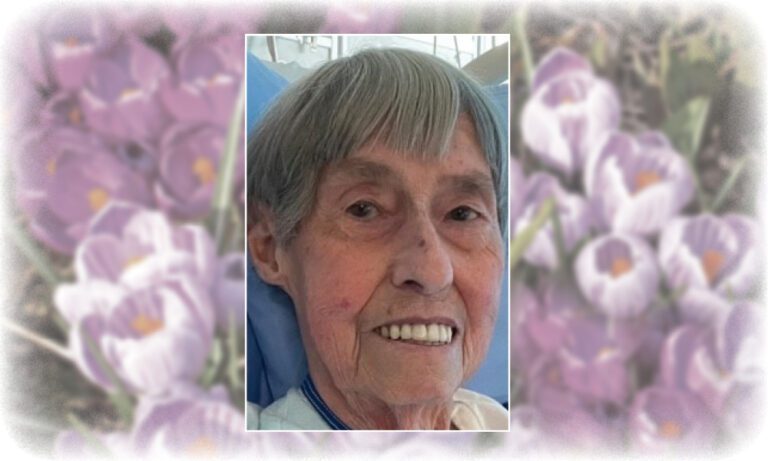
With heavy hearts, we say farewell to Joan Turnbull, beloved wife of 65 years and best friend to her husband, Don.

Joan passed away peacefully on August 1, 2024, at Lady Minto Hospital on Salt Spring Island, B.C., where she lived for over forty years. Born in Montreal, Quebec, Joan was predeceased by her husband. She leaves to mourn her sister Wendy McDonald of Calgary, Alta.; her brother Bill Phillips of Delta, B.C.; sister-in-law Bev Phillips; her nieces Catharine Uitto of Delta, B.C. and Bonnie Phillips of Surrey, B.C.; her nephews Liam McDonald of Lethbridge, Alta. and Cody McDonald of Calgary, Alta.; and her Salt Spring Island, B.C. community.

Joan was loved by all who knew her. We take comfort in knowing that those who live in our hearts are never truly gone and will remain with us forever.

WHITELAW, Dr. William (Bill) Albert

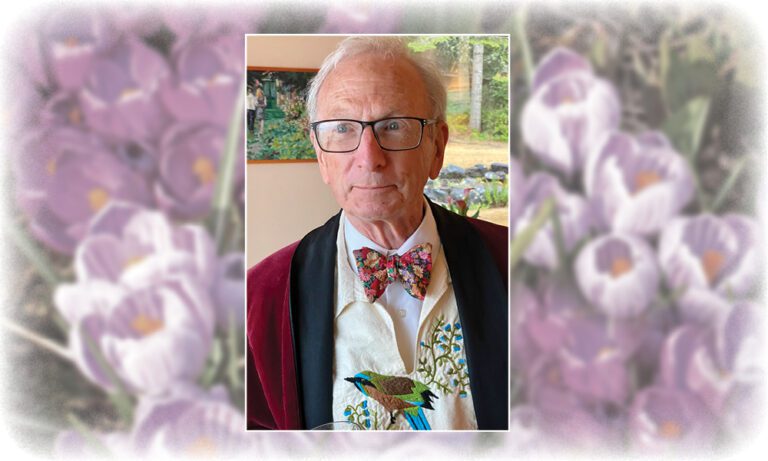
“Bill will remain in my memory for as long as it lasts as a most kind, gentle, loving, funny, witty, and brilliant person who, for me, exemplifies what it is to be a friend, a gentleman, and a marvellous human being with well-chosen and steadfast priorities that made him so beloved by everyone who knew him.” – Tim Yates

Bill Whitelaw died peacefully on Sunday, July 7, 2024, at the Extended Care Unit of the Lady Minto Hospital on Salt Spring Island, BC, following a struggle with dementia. Predeceased by his wife Jenny in 2018, he will be missed by his son Peter and daughter-in-law Helen, his son John and daughter-in-law Tracie, and their daughters Emily and Claire, as well as his brother John’s family, his brother Bruce and family, and his many lifelong friends.

Bill was a self-effacing, softly (sometimes too softly) spoken man who was fun-loving and serious, principled and independent, an intellectual and a lover of farce. He was known as a prankster and a supreme storyteller, an adventurer, and a lover and collector of classical music and books. Endlessly curious, Bill dove into birdwatching, mushroom hunting, and wildflower collecting.

He left an indelible mark on those around him. To his children and grandchildren, he was deeply caring and supportive. Despite working long hours, he refused to let his young boys go to bed without reading to them, and each year he concocted a treasure hunt with devious riddles that had to be solved to find their Easter baskets. When his sons were older, he encouraged them to pursue their hearts’ desires, as long as they worked hard. Later in life, he welcomed news of his granddaughter’s gender transition by cracking a bottle of champagne.

Colleagues and students praised Bill as a wise mentor, a great teacher, and a researcher driven by insatiable curiosity. He was also a merry soul. He was infamous around the medical school for his amusing selection of bow ties, which led to the Dr. Whitelaw You May Be Funny But Your Mother Sure Dresses You Funny award given annually by the medical students. The joy with which he shared news of this “honour” among his friends and colleagues showed that his ego never got in the way of anything he did. One colleague said that “few people have influenced my career and hence my life as much as [Bill],” a sentiment echoed by many.

Bill was born on September 3, 1941, in Halifax, Nova Scotia, where his father was stationed during World War II. The family then moved to Vancouver, where he attended Maple Grove, Point Grey, and Magee schools, and made the first of the many lifelong friends he collected throughout his life. He finished high school at Trinity College School in Ontario, after which he returned to Vancouver to attend the University of British Columbia. After a year, he was accepted to the University of Toronto Honours Math, Physics, and Chemistry program. He thought of this as one of the most challenging academic experiences of his life and was quietly very proud to have graduated from “MPC.” After graduation, he attended medical school at McGill University in Montreal, specializing in Internal Medicine.

While at McGill, Bill noticed the beautiful Jenny Mann in the Dean’s office and summoned the courage to ask her out. In spite of an inauspicious first date in which he slept through a movie, he secured a second date and survived her opening gambit: a water-bomb ambush. The two fell quickly in love and married on May 16, 1970. Their shared sense of adventure took the couple around the world. The first stop was Uganda, where Bill practiced cardiology and tropical medicine and learned firsthand the reality of life under the dictatorial rule of the ruthless Idi Amin. He and Jenny also learned the pain of loss when their daughter Emma died in a terrible accident, an event which affected them deeply for the rest of their lives.

They returned to Montreal in 1972 so Bill could work on a PhD in Respiratory Physiology. Despite their loss, they had two more children, with the births of Peter and John bringing joy back into their lives. After his PhD, the family moved to Edinburgh, where Bill completed postdoctoral studies in 1975-76.

Following a brief return to Montreal, Bill joined the new Faculty of Medicine in Calgary. During his tenure, he led the Division of Respiratory Medicine from 1978 to 1997, helped start the Foothills Medical Centre Sleep Lab, and was instrumental in achieving Royal College of Physicians and Surgeons of Canada approval for the division’s training program. He was co-founder of the Calgary History of Medicine Program, which he chaired until 2007.

During their years in Calgary, Bill’s sense of adventure and love of nature inspired many outdoor activities. A place he especially loved was his parents’ off-grid cabin in BC’s interior, which he visited as often as possible, bringing the family up for three weeks every summer. He led Cub Scouts trips, took up whitewater canoeing, hiked regularly, and walked extensively.

Bill and Jenny retired to Salt Spring Island in 2007. Not content to sit on his laurels, Bill joined the Trail and Nature Club, sat on the Lady Minto Hospital Board, and was a Christmas Bird Count section leader. Unfortunately, Jenny suffered a long, slow descent into dementia, and Bill made every arrangement to keep her home and happy as long as possible. When she moved to the nearby Greenwoods assisted living home, he visited every day and often took her for walks and social outings.

After Jenny’s death in 2018, Bill continued to stay fully engaged, joining a group of men called “The Old Codgers” for weekly lunches, traveling to visit friends and family, gardening, and reading extensively. Bill also struggled with dementia, so John and his family moved in with him in 2020 so he could stay at home. He was delighted to live with his granddaughters, taking great interest in their activities and pride in their achievements. In early 2024, his health deteriorated, and he was admitted to the Extended Care Unit at the Lady Minto Hospital, where he died peacefully on July 7th.

Bill and Jenny were lifelong supporters of social and environmental causes. Regular and generous donors to many charities, they also traveled to Nepal, the Philippines, Laos, and China to teach new doctors and help build capacity at local medical schools. Anyone wishing to honour Bill is asked to make a donation to their own favourite charityand to raise a glass in his memory.

CLIBBERY, James Brett & PACKWOOD, Sarah Justine

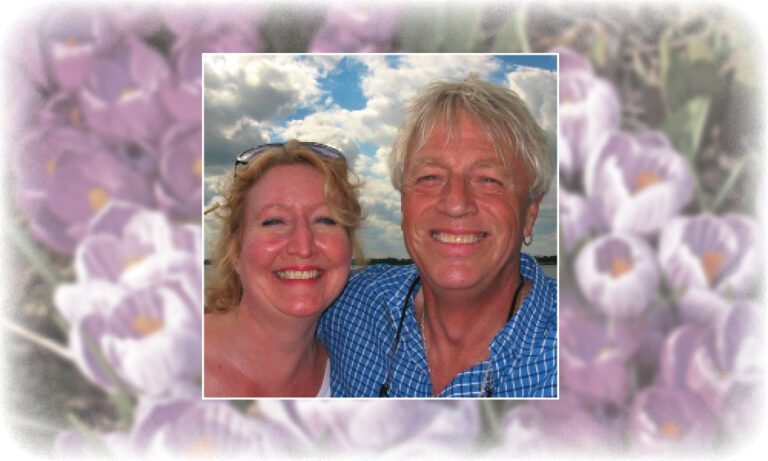
Two months ago, I spoke to my father of 39 years. He talked about his upcoming journey with his wife, Sarah. They were planning the first leg of their trip around the world. The duo said their goodbyes and promised to visit on their way back through. That was the last time I spoke to them. Their journey ended together on July 10th when they were discovered deceased on Sable Island.

Brett lived a full life. Retired for 17 years, but never stagnant. After 25 years with CP Rail, my father worked many jobs—from scuba instructor to sailing instructor to BC Ferries employee—always striving to improve the lives of those around him.

With Sarah by his side, they had many adventures. First meeting at a bus stop in the UK, they quickly discovered they shared a love for adventure. Together, they completed three Camino routes and worked to build a home on Salt Spring Island.

The pair were always on the front lines of social justice, from decrying the genocidal actions of countries around the world to supporting many social action movements. My father believed this country could change. With enough people standing up, anything was possible. His work ethic and intelligence allowed him to make a difference in every corner he encountered.

He was actively involved in politics his whole life. Campaigning for Pierre Trudeau in his youth, he always supported the people he believed in. Once, while campaigning in Thunder Bay, Ontario, he was unable to win a seat as alderman but managed to place second. His later years saw a shift in his political beliefs, striving to make the world a better place for everyone. He joined protests for freedom and rights for all and took direct action by engaging with elected officials, often in direct conflict with them.

The friends he made around the world grieve his loss. One of his best friends, Pat Brett from his youth, recalls what Brett was like as a kid and young adult:

“As a kid, Brett was loved and respected by everyone who knew him, male and female alike. As a young teenager, Brett hung out with a group of similarly aged friends. He was one of our leaders because he had access to a car. It was a 1950s-60s Ford Falcon, and boy, did we have fun. He was an exceptional driver for his young age. We could fit six to eight people and spent hours cruising dirt roads around all the sand and gravel pits in Kenora. In fact, we were four-wheeling before four-wheeling became cool. Didn’t need a four-by-four when Brett was at the wheel!

Brett had the travel bug as a young man and made the most of it to go everywhere. When he was old enough to drive, he and his friend ‘Beefy’—Rick Holiday—packed a packsack, picked up four cartons of smokes, and blew out of town to work for CPR as section men. Forty below, fixing railroad tracks between Dryden and Thunder Bay. He went out to Edmonton to live with ‘Granny Maluish.’ His grandfather lived in a little house on the creek. He had a charge account at Smith’s Grocery store, which Brett made good use of. Grandpa would ask Brett to pick up some groceries for him, and he would add a couple of cartons of smokes. As an older teen, he spent a couple of years in Winnipeg as roommates with me, Pat Brett, when I was entertaining all over the city. Brett had no problem telling people where I played that he was my manager. Back in Kenora one morning, Brett’s sisters gave him a perm complete with cute little blonde kiss curls. The boys were gathered around the kitchen table at Dan Donnelly’s house when Brett charged in, all thrilled with his new hairdo. The boys got on his case bad, but by the end of the conversation, he was so cute that we christened him ‘Rosie,’ and it stuck with him for life. And he liked it so much he got a rose tattoo.

Brett’s friends all really admired him as the guy who had a dream of sailing the world and made a point of seeing it through. Unfortunately, his journey was cut short. To those who knew them, it was abundantly clear that Sarah was really good for Brett, and they were so happy together. All along, he made a point of staying in touch with all of us whenever he was coming through Kenora to visit his mother, Peggy. He will be missed by his family and friends around the world.”

Only our love for you is left. Smooth skies and steady winds are what I wish for you.

Forever missed, never forgotten.

Sarah Justine Packwood was born in 1970 to Sean and Kate Packwood. She grew up in the quiet Warwickshire village of Long Itchington, England. Her horizons started to expand when she left home for university in Durham to study biology, after which she went on to obtain an MSc from Bangor University in Wales. Those horizons never really stopped expanding. Sarah chose a career in international aid work and worked on the ground with many different aid agencies in places such as Kosovo, South Sudan, Tanzania/Rwanda, Haiti, India, Namibia, and Papua New Guinea. She faced many hardships and witnessed more trauma than many of us will in a lifetime, but she always persevered and somehow never became hardened by her experiences. When she eventually chose to work closer to home, she continued to work on projects that enabled her to pass on her knowledge to the next generation of aid workers and improve disaster response effectiveness, including working for the UK government Department for International Development (now the Foreign, Commonwealth and Development Office).

One time she was urgently called in to work and, after a ruined weekend in the office, eventually escaped and waited at the bus stop to go home. She got chatting to one Brett Clibbery, and the rest, as they say, is history. Sarah’s mum was terminally ill when she met Brett, and Brett’s sister was in need of a kidney donation from Brett. They each supported the other, and their friendship quickly deepened. After her mum’s death in 2015, Sarah walked the 500-mile pilgrimage route of the Camino de Santiago (the Way of St. James) in the French Pyrenees and northern Spain in her memory. This sparked a passion for Camino walking that she then shared with Brett (they did three Camino routes together and were planning to revisit one this year). Brett, in turn, shared his passion for sailing, and they embarked on sailing adventures on board Brett’s sailboat, Theros. They married in Canada on Theros in 2016 and followed it the next spring with a traditional dawn handfasting ceremony at Stonehenge in England.

Sarah embraced what she called “free-range living”: balancing part-time consultancy work, helping Brett build their home on Salt Spring Island, travelling and adventuring with Brett, pursuing her interests in spirituality, nature, music, and songwriting in the bardic tradition, and documenting it all as an enthusiastic budding videographer. That consultancy work involved using her extensive humanitarian aid work experience to help NGOs and international organisations such as UNHCR become more inclusive and effective. She shared her and Brett’s experiences of building their off-grid home from scratch in the ‘Two Blondes on a Build’ YouTube series, joining other Two Blondes projects including: ‘on a boat’ (sailing on Theros) and ‘on a walk’ (their three Caminohiking expeditions).

As a singer/songwriter/bard, her creativity was blossoming: her first single, ‘Meet Me at Table,’ about the friendships made on the Camino, was released last year and had won her recognition as a new songwriter and podcast appearances. Like Brett, Sarah never failed to make friends wherever she went. Her gentleness, kindness, creativity, and positivity touched and inspired many lives around the world, and she will be sorely missed.

ArtSpring launches endowment fund

SUBMITTED BY ARTSPRING

In what has been a banner year for ArtSpring’s 25th anniversary, board president Sandra Heath took to the stage at July’s donor appreciation event to announce the launch of ArtSpring’s first-ever endowment fund, with proceeds already nearing $1 million. The organization’s goal is to reach that figure by end of August.

Thanks to the extraordinary bequest of stocks from former ArtSpring board member George Ehring, who died in 2020, ArtSpring’s dream of securing greater financial stability in the future has been set in motion.

Like many arts organizations, ArtSpring has expressed being vulnerable throughout its history and particularly through the pandemic, which saw the closure of both small and renowned institutions around the world. The economy, increasing costs, shifting audiences, changing volunteer patterns and the unpredictability of annual community fundraising efforts have all been cited as contributors to ArtSpring’s uncertain financial position each season.

ArtSpring maintains surprisingly little of its budget is supported by government funding. In 2023, it accounted for approximately 10 to 15 per cent, with the vast majority coming from facility rentals, ticket sales and donations, which fluctuate year to year.

“This position impacts operations, programming, community learning and accessibility programs,” said executive and artistic director Howard Jang. “It also impacts our ability to keep this remarkable facility and asset to the community functioning and thriving, at a time when the arts are more important than ever in fostering empathy, bringing people together and creating lasting impacts.”

As an added advantage, establishing an endowment fund now qualifies ArtSpring to apply for matching funds from the federal Department of Canadian Heritage, multiplying the impact of each donation dollar. Since the Ehring donation, five other significant donations have joined the fund, which currently sits only $30,000 short of reaching its goal by end of August.

“George’s transformative donation spotlights the importance and impact that planned giving can have as a legacy and tax strategy,” said Jang. “However, donations of all sizes are crucial towards our short-term and long-term sustainability as a community arts centre.”

Reaching the $1-million threshold marks the important first phase of ArtSpring’s longer-term campaign of raising $5 million in upcoming years. The fund, managed by the Victoria Foundation, will direct the portfolio’s annual investment income back to ArtSpring to help support operations, people and diverse programming on a permanent basis. Attaining a $5-million endowment will translate into approximately $250,000 of secure funds per annum.

“This does not replace the ongoing annual need to raise funds for operations, artists and capital improvements, but it provides a more secure starting platform,” said Jang.

At the same time the legacy endowment fund was announced, a new list of donor benefits was rolled out in what is being called a pilot project.

Eight donor categories, distinguished by name and donation level, are now matched with a corresponding set of benefits ranging from acknowledgement credits to “first-to-know” status, VIP events to backstage tours, artist meet-and-greets to season’s tickets.

“Escalating donor benefits are common in larger centres but haven’t significantly been introduced yet on Salt Spring,” said Kirsten Bolton, communications and donor engagement manager. “The intent is to recognize, encourage and engage our donors with value-added experiences that make giving about more than just a tax receipt. It’s a relationship.”

For more information about donating, visit artspring.ca/donate where funds can be directed to legacy fund, operations or Theatre Angel programs. For larger gifts or planned giving, contact Howard Jang at ead@artspring.ca or 250-537-2125.