
Home Blog Page 122

Islands Trust advances First Nations protocol agreement

0

The Islands Trust is moving forward with developing a protocol agreement with Quw’utsun (Cowichan) Nation, representing perhaps the most significant and collaborative effort yet by trustees hoping to fulfill commitments made through its 2019 Reconciliation Action Plan. 

Through a unanimous vote Wednesday, July 24, the Trust’s Executive Committee have tasked staff with developing the agreement in cooperation with the five member nations of Quw’utsun Nation –– Cowichan Tribes, Stz’uminus, Penelakut Tribes, Halalt First Nation and Lyackson First Nation. 

The process stems partly from a follow-up meeting in June –– characterized by staff as “overdue” –– addressing a 2021 letter from Quw’utsun Nation to Salt Spring Island staff. Islands Trust staff met with Cowichan Tribes staff –– as they were among signatories to the letter –– and they learned that rather than individual protocol agreements with each of the five member First Nations, a collective agreement was preferred. 

“It was a great meeting,” said Trust planning services director Stefan Cermak. “We listened and learned a lot.” 

Currently, Quw’utsun Nation and the province have a government-to-government agreement, and the Islands Trust has the authority to enter into its own agreements under Section 9 of the Islands Trust Act, according to Trust legislative services director David Marlor.  

Protocol agreements with First Nations were among several steps Islands Trust Council (ITC) committed to in its Reconciliation Action Plan; the Islands Trust does have a current protocol agreement with Lyackson, although according to a staff report that has not been referenced or implemented in years. Staff said it was expected that agreement would be rescinded in favour of any broader agreement with Quw’utsun Nation. 

Lasqueti Island trustee Tim Peterson, who also chairs Salt Spring Island’s Local Trust Committee (LTC), said he hoped there would be some consideration for making the work of LTCs “a bit more nimble” when local committees want to meaningfully engage with First Nations. 

“When we look at the interest of Local Trust Committees wanting to do relationship building,” said Peterson, “I think we’ve all experienced fairly long timelines in things that on the surface look fairly straightforward, such as letters.” 

Marlor noted that while ITC has not delegated the authority to enter into agreements to local committees, they likely could, to a point. 

“The process right now is a committee could ask staff to begin the work,” said Marlor. “However, it would be a Trust Council bylaw to enter into an agreement.” 

Executive Committee chair and Thetis Island local trustee Peter Luckham seemed optimistic. 

“We’re often criticized as being slow at these things,” said Luckham. “If we had a mechanism to do that, that might be a good way to go. Clearly, we’ve had difficulty with the management of existing protocols, and existing conversations with nations, right down to the individual letter level.” 

But, he added, that has largely been a problem caused by lack of resources –– specifically an excess of staff vacancies. 

“We have now allocated resources to specifically handle that level of communications, and manage protocol agreements and meetings and the like,” he said. “Presumably, we’re not going to make those mistakes again.” 

Next steps will be a letter from Luckham as ITC chair to chief and council of Quw’utsun Nation. If they express interest, Trust staff will meet and work with Quw’utsun Nation staff and legal counsel to develop a draft agreement for Trust Council’s consideration and forwarding to the municipal affairs ministry for approval. 
MURRAY, Kim

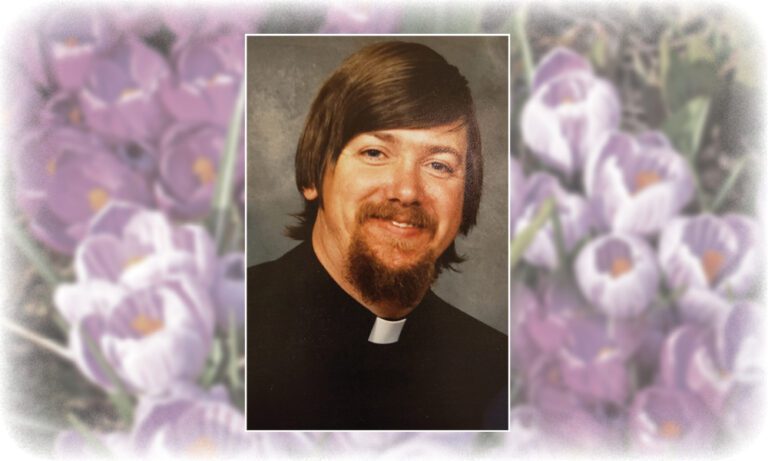
Father Kim Murray died on July 6, 2024, shortly following admission to Victoria Hospice, after a six-month struggle with congestive heart failure while living at home. Born with cerebral palsy, Kim spent his last four years wheelchair-bound after one fall too many.

After earning an M.Div. from Trinity College, Toronto, Kim began his church ministry at St. John’s Anglican Church, Edmonton. He married Janet in 1979, and a year later, they started the parish of St. Margaret’s, Edmonton, which is still going strong.

Kim completed his Ph.D. in church history from Durham, UK, while working at St. John’s the Divine, Victoria. Subsequent postings in BC included Parksville and Salt Spring Island. Kim is survived by his wife Janet of 44 years, and their greyhound, Shadow. He will be deeply missed by his many relatives, friends, and parishioners.

Taking early retirement in 2008 enabled the Murrays to continue their love of travel, mainly with repeated trips to New Zealand, and to pursue volunteer work. Kim was a great cook and storyteller, usually at the same time. While living on Salt Spring Island, Kim volunteered at the weekly free community meal “Soups On!”, as well as at the Visitor Information Centre on Saturday mornings. He was a stalwart supporter of the local gay community, GLOSSI, now called DAISSI.

A Requiem Mass celebrating Kim’s life will be held at St. Barnabas Anglican Church, 1525 Begbie St., Victoria, on September 6 at 2 p.m.

In lieu of flowers, donations may be made to the BC Cancer Agency: 2410 Lee Avenue, Victoria, BC V8R 6V5. Condolences may be offered at www.mccallgardens.com

Nobody Asked Me But: Hoping the e-gods smile on you

0

This could happen to anybody. Your computer screen goes blank. Your phone won’t charge. Your freezer is stuck on defrost. Your cable TV will only play if the sound is set on mute.

You get the picture. You have become the helpless victim of a technology that points a mocking finger at you and kicks sand in your face.

What are you going to do about it? Like most of the rest of us, you waste valuable time and effort trying to fix the problem yourself. Of course, nothing works and all your efforts only succeed in compounding the original malfunction. Finally, after you’ve been frustrated to the infinite degree, you decide to throw in the towel and seek help.

This is where the “tech support” comes into the picture. You dial the toll-free help line and wait for a knowledgeable professional to pick up. And wait and wait and wait. The very best you can do at this point is get a recorded voice message informing you that all agents are tied up helping other clients and will gladly come to your assistance as soon as is humanly possible. You are reassured that the company appreciates your patience and will play some horrible Muzak in your ear while you remain on hold.

An eternity later, you hear a voice asking how they can help you. You sigh in relief and begin to describe your particular technical issue. The voice cuts you off almost immediately and informs you that you have reached sales and marketing and not technical support. Before you can say a single word, you hear a “click,” which tells you that your call has been transferred to some other department.

More ringing, more voice message, more hold, more terrible Muzak. Just as you are about to give up this useless exercise and disconnect, a voice comes on the line. A human voice!

Well, sort of. The voice seems to be coming from a long distance away. It could be coming from somewhere inside a massive warehouse or even an airplane hangar. The voice echoes at times and occasionally fades in and out. You can’t help but notice that there seem to be hundreds of other voices chattering away everywhere in the background.

“Hello, my name is Jonny. How can I help you, please?” The voice comes with a far-off accent or dialect. Uganda? Sri Lanka? Calgary, maybe? You realize immediately that you are dealing with a tech support service that has been out-sourced. This is going to be tricky.

You begin to describe your problem, but your techie cuts you off because there appears to be some inexplicable need to verify your identity. Let’s say you’ve forgotten your email password and want to retrieve it or replace it with another one. The techie tells you that a six-character code has been sent to your email to make sure you are who you say you are. You try to suppress the anger that is bubbling up inside, and explain that you cannot get into your email to retrieve the code because you don’t have the password and that is why you called in the first place.

Let’s try another scenario. This time you are just updating all your important financial files and managing all your computer codes and passwords when suddenly your screen goes blue, there is a loud beeping noise, and all your devices freeze up. A voice from inside your computer informs you that you have just been hacked and all your information will go public unless you pay the hackers a ransom.

Instead, you call your computer’s customer service tech support department. After 17 dialings, 23 transfers to another department, and 57 minutes on hold listening to rap music played on sitar and tablas, you get through to someone in Mumbai who might be able to save the day.

Unfortunately, once you have described your computer crisis, your technician explains that this is a very serious problem and will need a supervisor’s expertise to avoid disaster. When you ask for the supervisor to be notified, you are informed that this is not so simple because the super works out of Calgary and phone connections are extremely dicey from Mumbai. You are ready to explode but manage to maintain your sanity and persevere.

You somehow get through to the supervisor in Calgary. The supe leads you through a flow chart of computer fixes. Is your computer plugged in? If yes, unplug it. If no, plug it in. Does the fan turn on at regularly spaced intervals? If yes, turn the screen off. If no, turn the screen off and then on three times. Do you know how many fingers I am holding behind my back? No, that’s not part of the flow chart, but it might as well be for all the help it does.

You are still stymied and the supervisor tells you that you will now be transferred to the chief supervisor who is stationed in, you guessed it, Mumbai. Just as you are about to describe your computer predicament yet again one more time, your screen flashes suddenly and comes to life. Maybe your computer fixed itself. Perhaps the e-gods have smiled down on you. Or maybe all those virtual trips to and from Mumbai have created an electro-magnetic field that restored your computer to an earlier incarnation. Maybe you’ve watched too many Star Trek episodes.

Before you sign off, you are asked if you would like to complete a customer satisfaction survey questionnaire that will take only 45 minutes of your time. You beg off diplomatically with the promise that you will gladly fill one out the next time you are in their virtual neighbourhood.

Nobody asked me, but don’t knock tech support, especially if it has been outsourced to the far corners of the planet. It puts you in touch with different cultures, introduces you to people whose paths you would otherwise not cross, and influences your musical tastes for the time you are made to linger on hold.

And occasionally it may even solve your technical problem.

Roly Poly String ensemble performs

SUBMITTED BY MUSIC MAKERS

The island’s music lovers are sure to be enchanted by the upcoming concert in the Tea à Tempo series in All Saints by-the-Sea on Wednesday, July 31.

Roly Poly String Trio will be returning to offer music played on an unusual combination of instruments – classical guitar, Celtic harp, and Koto. The name Roly Poly comes from the family business of Japanese rice balls, now well known on Salt Spring and beyond. Their music making is also a family affair and, on this occasion, played by Aki, Akiko, and Anika and Aoi Otsu. The delightfully eclectic program includes music with a flavour of Japanese and other world influences.

Aki Otsu learned to read music as a teenager and started playing guitar during those years in Japan. He was soon playing an electric guitar with various bands, which continued as a hobby for 40 years. He learned to play classical guitar in Vancouver after moving to Canada in 2004. 

Akiko Otsu began to play the koto, the Japanese harp, at the age of 10 in Japan. After a hiatus during her high school years, she continued her studies in Vancouver. The Koto, the national instrument of Japan, is a beautiful stringed instrument made of Paulownia wood, about 180 centimeters in length and with 13 strings, strung over 13 moveable bridges. The strings are plucked using three finger picks. One of the highlights of the annual Blossom Festival on the island is Akiko playing the Koto. 

Anika Otsu began playing the Celtic harp seven years ago, on Salt Spring Island. following in the footsteps of her older sister, Anju. The Celtic harp has a wonderful acoustic sound. The instrument is distinguishable by the lever mechanism to change the pitch, and with its 26 strings, it takes dedication to master. This gifted young musician has done just that.

Adding a little rhythm and spice to portions of the program will be Aoi Otsu, the youngest member of this talented family. Aoi is not only a keen sailor and baseball player, but also an aspiring drummer and percussionist. 

Patrons should note that the cooling system in All Saints makes it the perfect place to be during these hot summer days.

Music by donation begins at 2:10 p.m. followed by tea and treats at a cost of $5. Donations provide the honoraria for performers and contribute to the running of the Tea à Tempo series.

Grace Jordan IS Shirley Valentine

It was 20 years ago on Pender Island when Grace Jordan first thrilled audiences with her embracing of the role of Shirley Valentine in an outdoor summer venue.

For people unfamiliar with the award-winning play by Willy Russell, it centres on a middle-aged woman who is discontented with her housewife role in life, and who transforms as a result of taking a trip to Greece with a friend. While the theme is a serious one, the play is full of humour.

After performing as Shirley Valentine a number of times in a variety of venues since her Pender debut, Jordan is mounting the show one last time, from Thursday, Aug. 1 through Monday, Aug. 5, at her family’s beautiful Stonewell Farm property at 1852 Fulford-Ganges Rd. on Lee’s Hill. (Parking and the gate entrance is at the top of the driveway next door at 1860 Fulford-Ganges Rd. Follow the signs.) The gate opens at 5:30 p.m. and people can get into the spirit of the play by purchasing Greek tapas, desserts, wine and other beverages, with the show beginning at 7:30 p.m.

The Jordan production is unique in its intimacy and charm: put on by a family-run theatre company hosted outside on their own farm property and with homemade treats as well.

Tickets are available online through eventbrite or at the door. People should bring lawnchairs, blankets and cushions, although some bench seating with cushions is also available.

The event is also a benefit for Islanders Working Against Violence.

Ganges Hill work gets start date

0

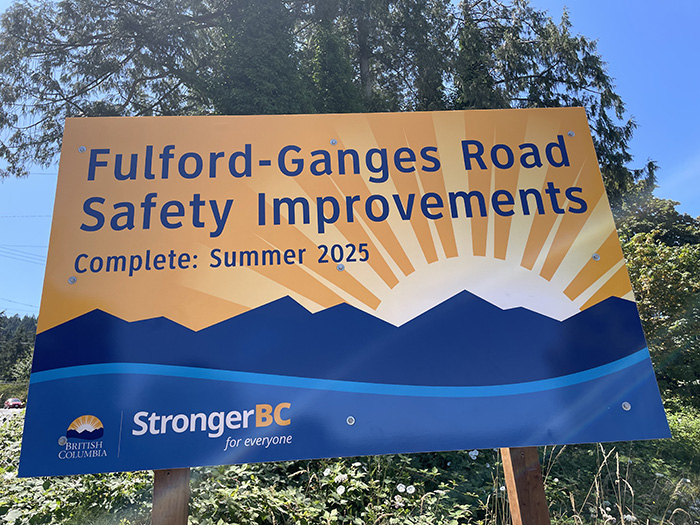
UPDATED JULY 30th: A provincial announcement has pegged a start date to improve Salt Spring’s busiest road, just meeting an announced goal to begin work this summer on what is now a $22.9-million project. 

Ministry of Infrastructure and Transportation (MoTI) officials said construction on a 1.6-km stretch of Fulford-Ganges Road from Seaview Avenue to Cranberry Road — known locally as Ganges Hill — will begin after the Labour Day weekend, meaning crews could arrive as early as Tuesday, Sept. 3.

The contract for the extensive improvements has been awarded to Northridge Excavating, according to an announcement made Wednesday, July 24. The Victoria-based company was the lowest bidder, according to unofficial tender documents from procurement hub BC Bids, and was awarded the $17.2-million contract through a competitive process. 

The remaining $5.7 million from the total budget, according to an MoTI response to Driftwood inquiries, covers all other costs associated with the project outside the construction contract value, such as engineering design, construction supervision and property acquisition. Plans included with early MoTI tender documents suggested some of the newly widened sections of roadway would need to be constructed –– at least partly –– on what had been privately held land.  

During construction, single-lane-alternating traffic will be in effect while the contractor is working, according to MoTI, and delays through the project site could be as long as 20 minutes. The 50 km/h speed limit will be reduced throughout construction to 30 km/h. 

Officials said Fulford-Ganges Road would likely be closed for short periods during construction, although MoTI confirmed any closures would be diverted to a temporary detour and none would take place within 20 minutes of a ferry arrival at Fulford Harbour. Transport trucks and wide loads will not be permitted to leave the main route, MoTI said, so all are being encouraged to “plan ahead.” 

“The ministry’s contractor will avoid work during peak travel times to minimize traffic disruption where possible,” according to MoTI. 

Contractors will be resurfacing and widening the two-lane rural road, with improvements including paved shoulders for pedestrians and cyclists — 1.2-metre-wide shoulder heading north (or downhill into Ganges) and 1.8 metres in the southbound direction, according to MoTI tender documents –– as well pedestrian crossings and refuge areas.  

Additional work at the Beddis/Charlesworth intersection with Fulford-Ganges Road calls for relocating a notorious utility pole there and removing the island that sits in the middle of the first few metres of Beddis Road. Fresh white lines to indicate to cross traffic where to stop, combined with a narrowing of Beddis Road at the turn, should clear up long-time disagreements about whether southbound traffic turning left onto Beddis should turn before or after drivers turning right off Beddis onto Fulford-Ganges — with “after” prevailing, as the former option will no longer be present. 

Ministry officials believe the work will be completed in summer 2025. To learn more about the project, visit gov.bc.ca/fulfordganges

Editorial: Keep fire hall project moving

0

For several weeks, Salt Spring Islanders have been asking, “What’s the reason for the delay on the new fire hall?”

Honestly, to us, the delay did not seem inordinately long. Have we not all accepted that almost everything takes twice as long as expected these days?

But there is justifiable anxiety about Salt Spring’s most expensive local ratepayer-funded public building getting off track with its timeline and costing more than promised as a result. So that’s why it was helpful to hear the reasons for the delays articulated at the July 15 fire trustees’ meeting. In addition to advancing the business of the fire district, those meetings are for sharing of information between staff and trustees, and the public.

One reason for the delay discussed by trustees and staff was a suggestion that due to recent BC Building Code changes, an elevator could be required by the Capital Regional District Building Inspection department to access the second story portion of the building. That kind of change would not be straightforward, nor inconsequential to the budget.

Fortunately, it appears that common sense has prevailed. If the second storey was to be routinely accessed by members of the public — and the elevator stipulation is all about accessibility — that would be one matter. But since the space is essentially used by the firefighters — with the island’s 24/7 staffing model requiring a sleeping area and kitchen facilities — it seems ludicrous to require an elevator. If a pizza needed to be delivered, for example, surely it could be picked up from the lower floor.

An issue regarding the hose tower not being constructed to post-disaster standards also appears to be on its way to being resolved, with the structure to now be separated from the main building.

Fire district chief administrative office Rodney Dieleman confirmed on Monday, July 22 that work on the foundation can now proceed.

Kudos to all parties for getting past that round of hurdles. Still to be acquired is a highway access permit from the Ministry of Transportation and Infrastructure.

No project with this level of complexity is going to unfold without encountering some kind of obstacle or any number of unforeseen circumstances. Hopefully they will be handled with a similar level of professionalism and success as the elevator issue.

New fire hall work resumes

0

As officials mark a spending milestone, the metaphorical sound of crickets at the future site of Salt Spring’s new fire hall is coming to an end. 

With the first million dollars of the $12.5-million project spent, per a report to Salt Spring Island Fire Protection District (SSIFPD) trustees, CAO Rodney Dieleman said Monday, July 22 the Capital Regional District (CRD) was issuing the foundation permit for the new core fire hall, and work was set to start “within the next day or so.” 

Money spent thus far has been allocated to design, drawings and engineering for the new facility, Dieleman told fire board trustees at the district’s July 15 meeting, as well as paying the first two invoices for civil work –– everything contractors could complete without the issuance of building permits from the CRD. 

The delay in getting that permit was visibly frustrating for trustees, who said they were fielding questions from the public on what was going on at the site since the CRD building inspector first received plans at the beginning of April; the building permit process was expected to take six to eight weeks and is now marking week 13. 

“The full building permit is expected to take a couple more weeks,” said Dieleman. “CRD staff and our team have been collaborating on solutions for accessibility and the construction of a hose tower.” 

Project owner’s representative Hans Hazenboom told trustees there had been requests for clarifications on several aspects of the fire hall plans, which he admitted seemed a little “onerous” even compared to other major Salt Spring projects he’d been a part of over the years. 

“In any case, we have to answer the questions that are being raised,” said Hazenboom. “That has been done over time, six different iterations.” 

Construction, Hazenboom explained, is being held to the newly released building code, which is updated every few years and tends toward improving accessibility in public buildings –– a good thing generally, he agreed. But questions had cropped up on whether the 2024 building code would necessitate an elevator to reach the second storey of the new fire hall, or whether some other accommodation could satisfy accessibility requirements.  

Hazenboom told trustees he was hopeful for a “common sense” solution, given the second floor was envisioned as a workplace accessed only by active firefighters; the new hall’s sleeping quarters, exercise equipment and kitchen will fill that floor, he said, likely behind a secured door with no public access. 

The building code also imposes stricter requirements for post-disaster construction, Dieleman said, and the CRD is specifying the tall hose tower –– despite not being an inhabited part of the structure like the core fire hall building–– should also be built to that standard. Dieleman said the district is proposing relocating the tower away from the main facility, separating the structures during a seismic event. District consultants are submitting those revised hose tower designs to meet the building inspector’s concerns, he said, which involves some re-design and review time. 

“Staff and the consultants are working with the CRD staff to obtain the building permits,” Dieleman told trustees. “And we’re going through different negotiations and alterations. It’s frustrating, but that is the process.” 

Trustee Robin Williams made a point of noting Salt Spring’s CRD director Gary Holman had taken the time to get involved and had been supportive of the district’s positions.  

“My comment would be about the CRD,” said Williams. “The CRD has kind of an unwritten policy where they pretty well totally shut down in August. So again, the timing is really of the essence.” 

But, Dieleman said this week, he is pleased the foundation work would be progressing, and confident the rest of the process would play out well. 

“The district values the professional review conducted by the CRD building inspector,” said Dieleman. “The community will benefit from a well-designed fire hall that meets post-disaster standards in 2024.” 

The project still faces what seems to be an administrative delay for the fire hall’s highway access permit from the Ministry of Transportation and Infrastructure. Hazenboom said ministry staff had told him their application was “on the engineer’s desk.” 

Meanwhile, and perhaps demonstrating their optimism, SSIFPD staff included move-out expenses in the coming year’s proposed budget –– a $40,000 one-time allocation that will include decommissioning pumps, compressors, radios and electrical work as well as transporting equipment out of the old fire hall and into the new one.  

That 2025 draft budget was received and a taxation bylaw approved for first reading by trustees this month, with a projected total $5.65 million in expenditures, up 9.88 per cent from 2024. That first reading is just the beginning of the public engagement process, according to board chair Rollie Cook, who said trustees were continuing with the long-running tradition of presenting the draft budget to attendees at a town hall for their input.  

That town hall is set to take place at 7 p.m. on Monday, Sept. 9 at the fire hall in Ganges. 

Mazacote up next in park series

SUBMITTED BY SALT SPRING ARTS

Next week marks the third concert of Salt Spring Arts’ six-week long Summer Outdoor Concert Series (SOCS), presenting live music for free in Centennial Park every Thursday until Aug. 22, in collaboration with Salt Spring Country Grocer and Island Savings, a division of First West Credit Union.

The Aug. 1 concert, running from 6 to 8 p.m., features JUNO-nominated world/Latin band Mazacote with support from Pender Island duo Peach & Quiet.

Mazacote is a hard-hitting band with deep roots in the music of Colombia, Mozambique and Venezuela. Inspired by Afro-Caribbean percussion and tropical party sounds, they play brass-heavy Latin dance beats with a message. Their new politically charged album PATRIA, on Justin Time/Nettwerk Music, draws upon themes of identity, immigration and resistance, reflecting on the plight of those escaping violence and corruption in Latin America and around the world.

Mazacote performs across the globe at music festivals and concerts, bringing their world party vibes to audiences of all ages! Highlights include headlining the Vancouver International Salsa Festival with salsa legend Jimmy Bosch as well as multiple appearances at Townsite Jazz Festival, Carnaval de Sol, the Vancouver International Jazz Festival, the Winterruption Arts and Culture Festival, Edmonton Jazz Fest, Victoria Jazz Fest, Saskjazz Festival, Winnipeg Jazz Fest and more.

Three years ago the Pender Island-based duo Peach & Quiet, a.k.a. Jonny Miller and Heather Read, came out with their debut album, Just Beyond the Shine. In a few short months, that record topped the folk and roots music charts in North America and had airplay around the world.

As detailed in last week’s Driftwood, the Thursday, July 25 concert features Jocelyn Pettit Trio with Sóley Ella May.

ArtSpring fair yields more than funds

BY KIRSTEN BOLTON

For ArtSpring

The big story for ArtSpring last week may have been the record-breaking $127,000 outcome of its most important fundraiser of the year, but behind-the-scenes stories have since been trickling in about how 2024’s Treasure Fair was a nexus of lucky coincidences, intersections, and connections that contributed to its success and brought people together.

The donor who contributed the Porsche 365 Speedster replica did so because he saw an article in the Driftwood about the 2023 Treasure Fair. He wanted to remain anonymous.

The man who won was looking for this exact car, having owned one 30 years ago. When Treasure Fair organizer Catherine Griffiths contacted the vintage car restoration company in California to confirm the specs, she asked if there was anyone in Canada looking for this car. The chatty receptionist identified this person, who lives in Sidney. After a few competitive bids, now he and his son co-own the vehicle. The anonymous donor of the Porsche went on to be the winning bid on the $10,000 custom wooden kayak.

Artist Diana Thompson stormed into ArtSpring upon seeing her work up for auction. She dropped her errands in favour of coming to Treasure Fair to see who was selling unauthorized prints of her work and to submit a “buy it now” bid. Upon inspection, it had been mislabelled. It was not a print but rather her original pastel of a purple iris in blossom that was sold 30 years ago in the Salt Spring Art Gallery above the post office in Ganges.

With her bid, she had just purchased back her own original art. Three minutes later, the donor of the pastel and avid gardener Pauline Maughan came to bid on a rug, and she confirmed she was the purchaser of that pastel years ago. The two women now plan to connect over coffee.

“I’m very happy to have the pastel back and so pleased that it is in such good condition,” said Thompson. “The show was August 1985. It was my first solo show, I was 26 years old, and all these years later, I’m thrilled to be reunited with it because of all this!”

Salt Spring artist Diana Thompson at her first solo art exhibition, held when she was 26 years old in the gallery space above the Ganges post office in 1985.

Griffiths couldn’t be happier. “In the end, all this effort, all this time, is about local people, the arts and community coming together.”

In what will be her last year as coordinator, Griffiths led a team of 50 volunteers over four months, from soliciting donations to inputting into the website, setting up the displays to manning the event and helping with tear down. From newcomers to veterans, the team included volunteer Patricia Ayton, who comes from Ireland each summer to help, and Laurel Lemchuk-Favel, who took on the challenge of accepting, curating and hanging the large art collection this year.

Questions often arise about what happens to items that don’t receive bids. On Sunday, anyone who has the winning bid is expected to pick up their items in person, and the parking lot is a stream of cars and trucks with helpers ready to assist. The secret is that items with no bids are available at the opening bid value with no competition. This year, a solid wood china cabinet hutch went for $50, and similar below-value deals occurred for an upscale couch, two curio glass display cabinets, dishware and art.

On the Monday, after certain items are held back for the 2025 Treasure Fair or returned to owners, representatives from local charities Transitions Thrift Store and Lady Minto Hospital Auxiliary Thrift Shop are invited to select items for their respective stores to ensure donated treasures are not wasted and find a home.

Responding to what sounds like a windfall fundraiser, ArtSpring’s executive and artistic director Howard Jang puts things into perspective.

“We couldn’t be more pleased by the support for and outcome of this fundraiser in our 25th anniversary year, and we are grateful to our volunteers, donors and bidders,” said Jang.

Funds are invested into operations, local and visiting artist programming, accessible Theatre Angel and subsidized youth tickets, and capital projects such as the replacement of 25-year-old carpeting.

Donations of $25 and $250 for the new carpet fund are still being accepted at treasurefair.artspring.ca until the end of August.