Home Blog Page 16

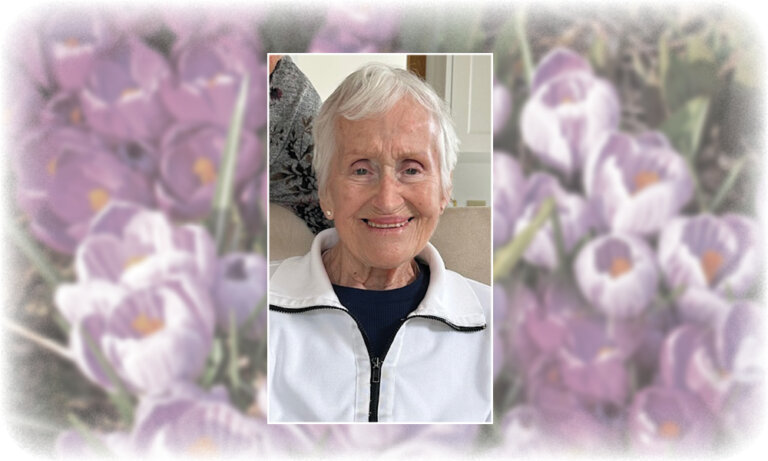
WTTEWAALL VAN WICKENBURGH, Eileen Alma (neé McGhan)

0


November 2, 1932 – February 5, 2026

Our Mom passed away peacefully at Berwick House Retirement Home in Victoria, British Columbia, at the age of 93.

Eileen deeply enjoyed daily walks and writing her memoir. She followed world events closely and remained dedicated to her lifelong commitment to environmental and social justice activism. She will be greatly missed by the wonderful staff at Berwick House and by the many friends she made there, whose companionship meant so much to her. As a family, we extend our heartfelt thanks to her dedicated healthcare team, who supported her with compassion through heart and knee challenges in recent years.

Eileen was predeceased by her beloved husband Gus, her partner of nearly 49 years, as well as her sisters Viola, Reta, and Joyce, and her brother Alfred.

She is lovingly remembered by her three children, Alma Goodwin (John), Kevin Wttewaall (Soraya), and Coreen Cherry (David); six grandchildren, Jenaveve Goodwin (Eric), Katelynn Pederson (Richard), Alex Goodwin, Noah Wttewaall- Arteaga, Brian Cherry (Jenna), and Analise Cherry; and her great-grandson, Aries Goodwin.

Born in Edmonton, Alberta, Eileen later moved to British Columbia with her family. Teaching and lifelong learning were central to her life. She began her career in the 1950s, teaching in both northern and southern British Columbia, and later taught art through the 1970s and 1980s in Kamloops. After retiring, Eileen and Gus taught abroad—three years in Zambia and two years in China.

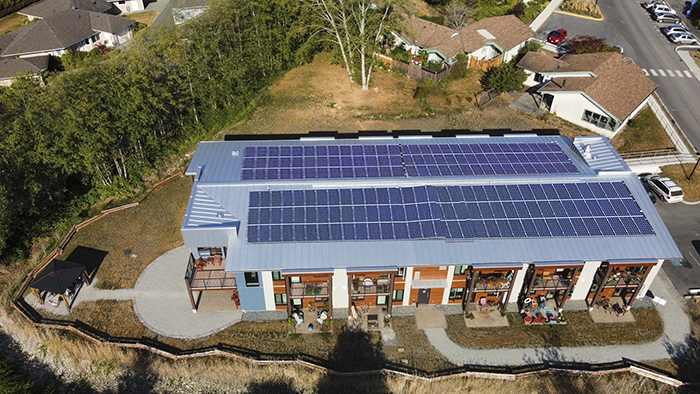
Eileen held a Master of Art Education and had a deep love for painting and playing the piano, carrying creativity into every aspect of her life. Together, she and Gus built their home on Salt Spring Island, stone by stone and plank by plank. She was especially proud of their passive solar home, reflecting her deep respect for the natural world.

Eileen cherished her Salt Spring Island community and the many conversations they shared about environmental protection, social justice, and the well-being of humanity.

A memorial service celebrating Eileen’s life will be held at Broad View United Church in Victoria on Monday, February 16, 2026, at 2:00 p.m. A family interment will follow on Tuesday, February 17, 2026, at 1:00 p.m. at the Salt Spring Island Natural Cemetery.

O”DONNELL, Marguerite Victoria “Peggy”

0

May 14, 1936 – December 31, 2025

Marguerite Victoria “Peggy”, O’Donnell, 89 years of age, passed away after a brief illness on December 31, 2025, in Victoria, BC, Canada.

Peggy was born in Lachute, Quebec May 14, 1936. Her family relocated to Salt Spring Island in her early years.

Peggy then attended nursing school at Saint Joseph’s school of nursing in Victoria BC, graduating in 1958.

Peggy was preceded in death by her parents, Anna and Thomas O’Donnell and siblings, Paul Lynch – Victoria, BC, Betty Beanland – Langley, BC, Barbara Callendar – Carnation, Washington, Garth Lynch – BC, Ted O’Donnell – Victoria, BC and Tim O’Donnell – Fulford Harbour, BC.

She was a cherished mother and is survived by her daughters, Anna Michele McCue – Prince George, BC, Diana Elaine Morgan – Byron Bay, Australia, Annette Renee Godwin – Palm Springs, California.

We are comforted in knowing that Peggy has gone home to Anna and Tom.

We will miss your presence but will always carry you in our hearts forever and a day.

A celebration of life will be planned in the future.

Obituary also published on Legacy.com

Eagle-eyed interveners push back on solar rate shift

0

What appears to have been a major math error may undermine a BC Hydro plan to devalue “homemade” solar energy in its new rate design, according to local renewable energy advocates, who say the utility’s arguments in favour of lowering the credit customers receive for energy sent back to the grid have fallen apart under scrutiny.

Salt Spring’s Kjell Liem, representing the Community Solar Coalition (CSC), has been taking part in the BC Utility Commission’s public hearing on the electric utility’s proposed Net Metering Rate Design — an electricity billing switch that renewable energy advocates say would drastically reduce the amount of new solar installations in B.C. 

A grassroots alliance that grew out of the 2016 Community Solar Summit on Salt Spring, the CSC and Liem acting as interveners told commission regulators that BC Hydro’s initial numerical model failed to fully account for several positive solar impacts — including reduced strain on the local electrical grid, lower transmission line losses and the conservation of hydroelectric reservoir capacity during sunny periods.

What’s more, BC Hydro’s proposal may have double- or triple-counted the benefits to non-solar customers in switching from an equal kilowatt-hour credit to the fixed 10-cent scheme. 

The utility had argued early on that an increasing level of participation in what was initially a “small and relatively niche” program threatened to burden anyone not producing their own solar energy with higher prices — a so-called “cost-shifting” theory that posits solar customers avoid paying their “fair share” of fixed grid maintenance costs through buying less electricity.

“Which is so strange,” said Liem. “If you’re going to say that’s a cost to the utility, it’s like saying to a gardener, ‘why don’t you buy tomatoes in September, because you’re costing my grocery store money?’” 

In its December submission, BC Hydro told regulators it was indeed “the precise issue” of cost-shifting that had led it to seek an update to the net metering service “so that its continued growth is sustainable and fair for all.”

Over Christmas, Liem said, CSC dug into the report’s tables and found what he called “weird numbers,” showing that cost-shifting was a far smaller number than even they’d imagined.

“So they’d overstated it by almost three times,” said Liem. “And that wasn’t even caught until after a whole year of bickering and discussing this ‘horrible cost shift.’ We wrote that up and put it in our final argument.”

After revising the data, BC Hydro acknowledged that the actual savings delivered by the policy change would be significantly smaller than initially reported. By Jan. 28, after the math had been corrected, the utility wrote in its reply argument that it had been third-party consultants — not BC Hydro — who suggested the inclusion of an analysis of cost-shifting, and that net billing would simply “align the value customers received for net generation with the value of that energy to the BC Hydro system.”

Regardless, if the devaluation of “homemade” electricity is approved, Liem said the impact on solar adoption would be severe. An updated industry analysis indicates the proposed rate change could reduce new solar installations in B.C. by roughly 25 per cent without any other factors. Liem said at issue was whether British Columbians — and solar energy producers on Salt Spring Island — could continue to produce clean power and be treated fairly for providing that value.

The corrected projections on benefits, as well as counter arguments and a “final word” from BC Hydro, are all in front of regulators, who are expected to make a decision on the proposed structure within weeks. 

Liem said no matter the outcome, he hoped the process would at least help islanders recognize there was a path forward to increasing energy resiliency — if not outright independence.

“We understand that sort of thing for food really well on Salt Spring,” said Liem. “I mean, we live on an island and we get it. But we can also make energy here, and store energy here. That’s what we’re about.”

Measha Brueggergosman-Lee ArtSpring residency set to thrill

By MEGAN WARREN

FOR ARTSPRING

ArtSpring is set to become a hub of world-class artistry next week as it welcomes the legendary Measha Brueggergosman-Lee to take over the stage.

This week-long engagement offers the community a rare opportunity to connect with an internationally acclaimed artist whose career truly defies categorization. Born in Fredericton, NB, and raised in her father’s church choir, Brueggergosman-Lee has evolved into a powerhouse soprano and a fierce advocate for social change. While her transcendent soprano vocals have won her acclaim in the classical and opera worlds, her jazz and contemporary compositions fuse intricate instrumentalism, fiery poetics and her classic aria-style resonance to create a sound so fresh as to be almost futuristic. 

Her ArtSpring residency showcases the full breadth of this versatility, beginning with a deep dive into Zombie Blizzard, a groundbreaking seven-movement song cycle created in collaboration with her longtime friend, literary icon Margaret Atwood. Drawing from Atwood’s 2020 poetry collection titled Dearly, the project unflinchingly tackles themes of sexism, gender inequality and grief through an otherworldly blend of playful jazz and aria stylings. The Zombie Blizzard concert on Feb. 17 features Salt Spring’s own Foothills Brass Quintet.

The energy shifts on Feb. 20 as Brueggergosman-Lee returns to her gospel roots for a stirringly joyful celebration of spiritual music. While she is renowned for her work in the opera and classical worlds, her gospel performances are soulfully poignant with roof-raising power and fearless authenticity. This performance, expected to be a highlight of the residency, is already nearing a sell-out.

Beyond the footlights, local performers will have the chance to learn from Brueggergosman-Lee one-on-one. On Feb. 22, she will lead an exclusive masterclass, coaching six selected local artists through an excerpt of their choosing. This rare educational opportunity is open to performers of all disciplines, including singers, dancers, actors and beyond, offering invaluable guidance from an internationally celebrated performer who has commanded music’s most renowned halls.

Tickets for this residency are available now at purchase.artspring.ca.

Viewpoint: Trust leadership needed to enact mandate

0

The following forms part of a Galiano resident’s letter to Islands Trust trustees and staff and sent to the Driftwood for publication.

By AKASHA FOREST

On the subject of “unique amenities,” I suggest the Trust has wrongly included development in its working definition of unique amenities. 

Please list my opposition to the 2023 working definition:  will “include, but not be limited to, housing livelihoods, infrastructure, and tourism.” I base my opposition on an excellent Trust discussion paper, cited below, that includes the history of First Nations’ curating of the Trust’s unique amenities.

Simply put, development activities are not unique amenities. Every community across the country has economic, development, tourism and housing infrastructure amenities and/or needs for them. Each Trust island has land use bylaws that provide opportunities for meeting islanders’ needs for housing and economic activity, which can be updated without the need to erase the meaning of unique amenities.

The Islands Trust Discussion Paper – The Islands Trust Object, Past, Present and Future – from March 2021 clearly delineates the unique amenities of the Trust Area. The last sentence: “Residential, commercial or tourism development appropriate to the services and lifestyle of the islands can, in this way, be steered to the most suitable areas” in fact advises ‘steering’ development to areas that will not damage the unique amenities.

The unique amenities of the Trust Area are its natural environment, curated since time immemorial by First Nations. 

The 2021 discussion paper further illustrates how far afield the Trust has deviated from its primary task.

“At the time of the formation of the Islands Trust in 1974, the government of the day recognized the importance of the unique ‘amenities’ of the lands and waters. There was understanding that the environment of the area was fragile and could be greatly impacted by development and resource extraction or overuse. However, it was not acknowledged or understood that this unique environment was the result of thousands of years of active cultivation and stewardship by Indigenous peoples.”

Throughout its 47 years of preserving and protecting the Trust Area, the Islands Trust has consistently failed to recognize or acknowledge resource gathering areas, spiritual places, medicinal plant areas and culturally significant species. The Islands Trust has managed the Islands Trust Area with a disconnected, single-species view of the ecological landscape versus a relational, interconnected acknowledgement of what truly makes the Islands Trust Area unique. Indigenous ways of knowing are not only important to reconciliation efforts but also to the effective stewardship of these lands and waters.

In 1992, the Islands Trust encapsulated the views of the public in a summary report on the Islands Trust public forums called These Islands of Ours . . . Framing Our Common Future. At the public forums, people listed “history and archaeological heritage” and “archaeological record” as key attributes they valued about the Trust Area.

At a time of rapid climate change, in a time of recognition that reconciliation requires stewardship and restitution of First Nations’ largely unceded lands, and in a time of development pressures that have existed in the Trust Area since before the formation of the Islands Trust in 1974, the Trust must find leadership to enact its mandate of “preserve and protect.”

Editorial: Industry standard falls short

0

The road to hell is almost certainly paved with “best practices.” 

We might pick on BC Ferries for rolling out a “what we heard” document mentioning the Vesuvius homeporting issue months after a decision had already been made, but the islander’s eternal torment — of being defined by the interpretations of others, rather than by our own authentic selves — comes indeed from all sides.

As we watched the rocky “harmonization” of public notice policies among our delightfully varied Islands Trust area communities, it struck us: in many of our important moments, we are beginning to substitute completion of a standardized process for understanding or support of an issue.

It is to our collective detriment. The idea that Trust-wide “best practices” could be happily dragged from one island to the next was a manifestation of perhaps the purest optimism — and should charitably be praised for its attempt at frugality. 

But it reflects a wider tendency toward substituting standards for legitimacy, and it demeans the individuality of each island. 

Keeping islanders informed is so vitally important that our legislation prescribes very specific means by which it should be done.

And we can agree that times change, and processes should meaningfully change with them, but under the mantle of modernization and austerity, that sliver of public engagement is being — explicitly — whittled down to the minimum needed to survive a lawsuit.  

The use of standardized community engagement as reputation management could perhaps be expected in BC Ferries’ case — the power dynamic between a handful of islanders and the vast province-wide system is apparent to anyone who can count — but it is far more disappointing to see our Islands Trust reduce policy to risk management.

Being able to say there has been “a thing” has become more important than what that thing is meant to accomplish; a public notice process crafted to frugally meet legal minimums is as saddening as “best practice” engagement set too late in a timeline for islanders’ input to be meaningfully incorporated — and as doomed as a presumption that one island’s needs could be met in precisely the same manner as every other’s.  

Like any process, there is likely a way to improve public notice policy. But we doubt it will be found within a framework of legal minimums, austerity or homogenization.

Heritage Week marked with Feb. 16-22 museum opening

0

SUBMITTED BY SALT SPRING HERITAGE FOUNDATION

Each year, Heritage BC celebrates Heritage Week in mid-February. This year the event is focusing attention on food — and the sharing of food — with the theme of Stir the Pot.

Food brings us together. It links us to the land and to traditions, ties us to our families and ancestors, and connects cultures and communities. This year’s Heritage Week theme is an open invitation to celebrate food as a form of heritage that is both deeply personal and widely shared. From heirloom seeds and traditional cooking and harvesting methods to community feasts and intergenerational recipes, food reflects who we are and where we come from.

As well, the Stir the Pot theme suggests advocacy. It is a call to spark conversation, to bring overlooked stories to the surface and to address issues of food security, cultural recognition and access. By stirring the pot together, we not only honour traditions but also create space for dialogue and discussion.

As a celebration of this year’s theme, the Salt Spring Heritage Foundation has focused its planned activities on What’s in the Pot: A celebration of Salt Spring Island’s farming tradition. The foundation is providing an open invitation to the people of Salt Spring Island and beyond to visit the Salt Spring Island Museum to learn about the impact of agriculture on the island’s history. The museum on the Salt Spring Island Farmers’ Institute grounds on Rainbow Road will be open daily from 11 a.m. to 3 p.m. from Monday, Feb. 16 through Sunday, Feb. 22.

Museum exhibits provide an opportunity for visitors to learn about island farming traditions; to discover the forgotten stories of people, families and communities and discover little-known facts about Salt Spring’s amazing food harvests.

Along with its extensive collections, the museum will be displaying some key facts and information regarding agricultural production between 1860 and the 1950s. Volunteers will offer tours and answer questions at the family-friendly event. Drop-ins, school tours and youth are all welcome to stop by.

Admission to the museum is free, but donations to support museum activities are always welcome.

Holman: CRD leads on climate action, but more to do

0

The Capital Regional District (CRD) Board declared a climate emergency in 2019. The CRD Climate Action service (to which the average Salt Spring Island residential property contributes about $8 per year), inventories greenhouse gas (GHG) emissions throughout the region every two years. This data shows that per-capita GHG emissions have declined significantly over the 2007-2024 period by 30 per cent regionally and 23 per cent on Salt Spring, but decreased less in absolute terms by 11 per cent and 6.5 per cent, respectively, due largely to population growth.

Worldwide emissions are not declining significantly, if at all. Unless the largest emitting countries commit to more aggressive action, significant climate impacts, already occurring, will grow worse: greater frequency of summer droughts, winter flooding, wildfires, life-threatening heat domes and disease.

Smaller jurisdictions have an obligation to allocate resources to reduce emissions, but there are significant co-benefits, such as reducing the cost of energy and car dependency, or preserving forests that protect our drinking water. It is even more important for smaller jurisdictions to prepare for climate impacts that will be occurring regardless of our emission reductions.

Over the past two terms, the CRD and partner agencies have undertaken a number of initiatives that address climate change directly and indirectly, some of which include:

• Initiating and providing gas tax funding to support the update of the Salt Spring Climate Action Plan (CAP 2.0).

• Providing gas tax and other funding to support climate-related education and information, and energy and water saving measures such as heat pumps and water storage tanks. This includes such measures at local facilities including ArtSpring, Core Inn, Rainbow Road pool, Fulford Hall, and Croftonbrook and Salt Spring Commons housing projects. CRD also provided gas tax funding to upgrade the library geothermal system to establish it as a cooling centre

• Increasing funding for staffing and resources for the local CRD Emergency Program, which coordinates inter-agency preparedness and provides support for 65 neighbourhood “pods” on the island. The Emergency Operations Centre has been moved from a basement location to the SIMS building and discussions are underway regarding co-location at the new fire hall, which also received gas tax funding of $1 million that will help support improved wildfire protection on Salt Spring.

• Developing sea level rise and heat vulnerability mapping for the region and securing grant funding for EV charging stations throughout the CRD. This includes new chargers at several local parks, supporting one of the highest per capita EV ownership levels in B.C. The CRD also continues to electrify its regional and local vehicle fleets.

• Contributing $3.7 million for our new emergency room at Lady Minto Hospital that will provide essential medical assistance during a major event.

• Enhancing local food security by establishing a new voter-approved Foodland Access service, and providing gas tax and other grant and operational funding for the Burgoyne composter, and gas tax funding for construction of The Root.

• Creating new regional and local parks and a new voter-approved Biodiversity service with a focus on invasives management.

• Securing millions in grant and other funding in collaboration with the Ministry of Transportation and Transit (MOTT) and Island Pathways, to build miles of sidewalks and cycle lanes around Ganges and develop the Ganges Active Transportation Plan. CRD active transportation planning and advocacy resulted in MOTT repaving of Ganges Hill with wider shoulder lanes for pedestrians and cyclists and greatly improved stormwater infrastructure. Funding for the Salish Sea Regional Trail is now regional and also included in CRD capital plans.

• Maintaining and improving our local transit service (one of the most successful in rural B.C.) throughout Covid, including free fares for youth 12 and under, and securing funding for the design and construction of bus shelters.

• Reducing waste by banning construction materials and increasing methane capture at the Hartland landfill, and renewing another five years of funding for the Rainbow Road recycling facility.

Other agencies are also doing their part, including BC Hydro’s storm responses; MOTT’s Blackburn bridge construction, and other major storm repairs; the fire district’s new post-disaster fire hall; NSSWD’s new drinking water plants and securing funding to increase St. Mary Lake water storage. The unprecedented scale of public investments in infrastructure and other services on Salt Spring in recent years will pay climate resiliency dividends for years to come.

The Trust has also declared a climate emergency and can play a key role by retaining strong OCP policies supporting compact, less car-dependent settlement patterns and protection of drinking water, sensitive ecosystems and farm land. In considering rezoning proposals, the Trust can ensure that our very limited community drinking water and sewage system capacity is prioritized for affordable housing and community amenities. SSIWPA, the inter-agency organization with a mandate to promote protection and conservation of our drinking water, should be reinstated.

There is much that the CRD and other agencies can do to address climate change. The good news is that these investments not only strengthen Salt Spring’s climate resiliency, they improve our quality of life right now.

Teamwork key in rescue and evacuation by sea

0

A multi-agency response to an injured Ruckle Provincial Park hiker ultimately brought by boat to Ganges and then Lady Minto Hospital was a demonstration of “incredible teamwork and collaboration,” say rescuers.

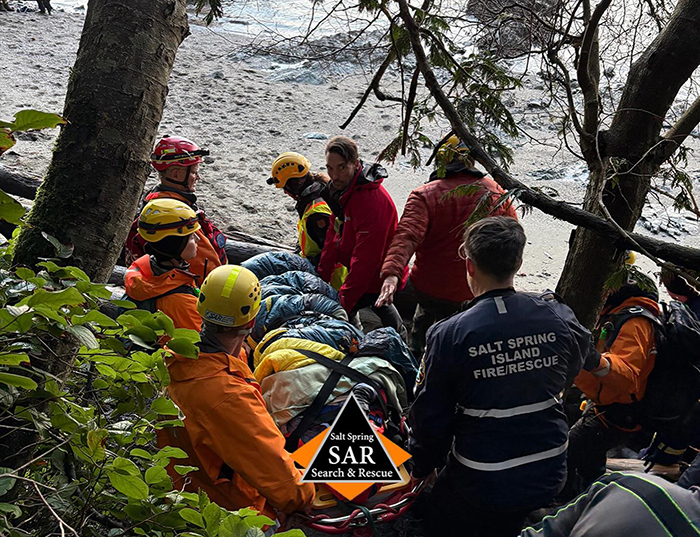
Salt Spring Island Search and Rescue (SSISAR) was tasked by BC Emergency Health Services to assist Thursday, Feb. 5 in a technical evacuation of an injured hiker at Ruckle Provincial Park. The person had slipped on wet rocks along a trail, according to officials, sustaining injuries that required a stretcher-based extraction over challenging terrain.

At Ruckle, ground teams joined Salt Spring Island Fire Rescue personnel, who had provided initial medical care at the scene. After a joint medical assessment, SSISAR’s medical team determined an evacuation by sea from a nearby beach would be safest for the patient — and the most comfortable way to get to the hospital.

“The injured subject was repackaged in a vacuum spine board and Ready Heat blanket,” according to SSISAR, “for better hypothermia and injury control.”

After administering additional pain relief, the patient was stretcher-carried by rescuers and firefighters to the awaiting Royal Canadian Marine Search and Rescue Station 20 vessel from Pender Island. The patient was then transferred to BC Emergency Health Services paramedics in Ganges and transported to the hospital in stable condition.

“This response demonstrated the incredible teamwork and collaboration between multiple agencies,” according to SSISAR, “all working together to help an individual in need . . . This call highlights the fantastic working relationships we have on Salt Spring and the Gulf Islands.”

Rescuers also extended their gratitude to bystanders who assisted at the scene, and reminded islanders there is no cost for rescue on Salt Spring Island.

‘Red flag’ raised over accessibility, Facebook role in public notification

2

The Islands Trust Council is preparing a public discussion on plans to shift notice distribution to Facebook and its website, as concerns over accessibility — and U.S.-owned social media — have dogged attempts to “harmonize” policies on individual islands.

The current proposal to eschew local print newspapers, advanced by the Executive Committee in December, will be on the next Trust Council agenda, according to staff, the latest expression of a “model” public notice bylaw intended for Local Trust Committees (LTCs) and adopted by the 26-member council last summer. 

Previously, when public notices were required by the Islands Trust Act and Local Government Act, the default notification laid out by the Community Charter was publication in two editions of a newspaper, once each week for two consecutive weeks. And while a provision also allows local governments to adopt their own notification schemes with some legislative guardrails, the new online-centric “alternate public notice bylaw” sent to LTCs — while applauded for frugality — has been met with mixed reviews.

Adoption at the local level has been less than harmonious, with the effort thus far yielding a patchwork of different standards for public notification among LTCs, reflecting the different needs of individual islands. The Gambier-Keats LTC, for example, joined Mayne, Saturna and North Pender Islands in adopting the model bylaw as-written, while Denman Island and larger Gabriola and Salt Spring Islands voted to keep the “status quo” — i.e. the legislative default.

Thetis Island added its local “E-Spokes” newsletter to the model bylaw, with Galiano Island adding its Active Page — and Hornby Island amended language to keep the Islands Trust website for notifications, but use “a local print weekly newspaper” instead of Facebook. 

Islanders have expressed trepidation over reliance on U.S.-owned Facebook for the distribution of public notices; the Islands Trust’s Executive Committee meeting Wednesday, Feb. 4 discussed correspondence urging it reconsider using the “social media behemoth” to that end, with one letter writer lamenting the cost of supporting “engagement-maximizing products that hijack attention, erode agency and creep people out through surveillance and manipulation.” 

“I do understand the sentiment around the social media company,” said Lasqueti Island trustee Tim Peterson, whose own LTC chose not to include Facebook in its adaptation of the model bylaw, substituting “a newspaper that publishes at least once a month on Lasqueti Island.” 

“And it’s a sentiment that I’ve heard from plenty of others,” he continued. “I don’t know that we’re in a position to effectively get the same reach through another platform at this time.”

At a recent meeting of the Islands Trust’s Accessibility Committee, member Theresa Burley said the online-only scheme had caught the attention of concerned islanders who had read about Trust Council’s plans in a Victoria newspaper. The committee has not yet had a chance to assess the Trust’s website for accessibility, and shifting public notices fully online “leaves out a lot of people,” she said — “particularly if our website is not up to snuff yet.”

“That’s a bit of a red flag,” said Burley. “Usually you want to have things as available — and in as many formats — as possible, unless the cost is completely prohibitive.”

Legislative and Information Services director David Marlor told that committee it was a balance Trust Council needed to consider.

“From our understanding, with the exception of the Driftwood on Salt Spring, the readership of newspapers in the islands is really quite low, and it’s getting lower because of social media and the internet,” he said. “And then of course the logistics of tying [multiple newspaper publications] all together in staff time, it becomes quite expensive for a fairly low number of people.”

“Just because numbers are low, many are probably older folks where you will have more people with disabilities among them,” said Burley. “We should keep in mind not to discount them, just because there’s not many.”

Marlor reiterated Trust Council could choose to use print media for any reason if the situation seemed to suit it — the policy scheme, staff have said, is intended simply to free them from being required to. 

“I think generally, with the exception of age issues, most people are looking to websites for that [meeting schedule information],” said Salt Spring Island trustee Laura Patrick, who as Trust Council chair sits ex officio on the Accessibility Committee. “I mean, that’s how I look. ‘When is Bowen Island Municipality meeting?’ I go to their website and look at it.”

The Accessibility Committee chose not to make a motion at its Jan. 15 meeting, and does not sit again until April — by which time the decision on Trust Council notices will presumably have been made. Trust Council’s next quarterly meeting in Duncan begins Tuesday, March 10.