Home Blog Page 183

Islanders invited to Aug. 7th March for the Children

0

By PHIL VERNON

In 2021 news of the discovery of 215 unmarked graves at the site of the Kamloops Residential School generated widespread shock and soul-searching within non-Indigenous Canadian society.

In First Nations communities the repercussions were profound: while the disappearance and deaths of children at the schools was no secret, the media focus triggered traumatic memories for many who had attended the schools, opening old wounds and heartbreak for the families and communities whose children never came home. 

On Penelakut Island, just north of Salt Spring, the Sulxwe’en (Elders Group) of the Penelakut Tribe decided to release preliminary findings of 160 unmarked graves associated with the Kuper Island Industrial School, which was operated by the Catholic Missionary Oblates of Mary Immaculate from 1889 to 1975.

They decided the time was ripe to reach out to the wider society, envisioning a memorial walk through the town of Chemainus to begin the process of healing and reconciliation for survivors and tribal members as well as friends and supporters.

For the first March for the Children, over 1,500 people arrived from up and down Vancouver Island, from Salt Spring and beyond, filling the streets of the village and gathering at Waterwheel Park to hear songs, prayers and testimonials from survivors of the school. It was a powerful event, truly a day to remember. The Penelakut organizers were visibly moved by the overwhelming response.

It felt good, too, that many Salt Spring Islanders were present that day, continuing connections between our island communities dating back to the fight to protect the ancient burial ground at S’yuhuye’men (Walkers Hook) when a fish farm was set up there.

This year, the Penelakut Tribe has invited us back for the Third Annual March for the Children, to take place Monday, Aug. 7 in the village of Sunuwnets (Chemainus). Gather at 9 a.m. at the Salish Sea Market next to the ferry terminal, winding up the hill to a gathering at Waterwheel Park.

Please consider attending. Carpooling: if you have room in your car, or for a ride, contact Tom at tommymitchell@shaw.ca.

Soul singer Dos Santos next outdoor concert guest

SUBMITTED BY SALT SPRING ARTS

With summer in full swing, Salt Spring Arts presents the third week of this year’s Summer Outdoor Concert Series.

Audiences are invited to gather together again in Centennial Park on Thursday, Aug. 10 at 6 p.m and enjoy a picnic with loved ones with live music and Ganges Harbour sparkling in the background.

Emerging Salt Spring Island artist Salome Cullen will be opening the show with his signature roots sound. His unique performance is authentic and raw, with a classic country twang and rich storytelling through song. Cullen released his debut eponymous album in 2023, featuring a breath of neo-classic fresh air in a genre full of cookie-cutter remakes.

The headliner for SOCS’ third concert is Krystle Dos Santos, a two-time Western Canadian Award-winning singer/songwriter and performer living on the land of the Halkomelem-speaking peoples in B.C. From singing on stage with Stevie Wonder and Michael Buble, Dos Santos’ magnetic charm, powerful vocal prowess and eclectic style drive her live performances. From the sultry, syncopated funky rhythms to the classic soul and R&B infused instant classics, her writing pays tribute to her heroes and influences while exploring fresh new vistas of urban soul.

Music lovers should also be sure not to miss this week’s concert with Logan Staats and Sarah Smith, starting at 6 p.m. on Thursday, Aug. 3.

For more information about the concert series, visit saltspringarts.com/socs.

Series marquee presenters are Salt Spring Country Grocer and Island Savings, a division of First West Credit Union.

Water district moves to enforce restrictions

0

As the region enters its most severe drought condition — and as another wildfire milestone is passed, with 1.5-million hectares burned in B.C. — Salt Spring Island’s largest water provider is putting customers on notice that it will be enforcing its watering restrictions this summer. 

Trustees at the North Salt Spring Waterworks District (NSSWD) voted to engage the Capital Regional District’s (CRD) planning department to establish a one-month contract for bylaw enforcement of NSSWD’s watering restrictions, a pilot project aimed at conserving water used for drinking, watering and — in emergencies — fire protection. 

The East Vancouver Island Basin, which includes the Gulf Islands, sits at Drought Level 5 — a condition where adverse impacts from low water availability are “almost certain,” according to the province. And as Environment Canada’s forecasting indicates yet another warming trend without any hints of rain, July 2023 ended ranking among the driest in Salt Spring’s history.   

The two days of much-appreciated rain last week dropped just 17mm of precipitation onto St. Mary Lake, according to NSSWD operations manager Ryan Moray — welcome for sure, but not enough to bend the curve.  

“That’s not going to be enough to carry us through,” said Moray. “We’re still in a drought condition.” 

And while lake levels have been lower at this time in some recent years, that dryness is having an impact on the rate of depletion. The speed at which reservoirs are drained has a lot to do with how much rain is — or isn’t — falling at a particular moment, Moray said; when there’s less rain, people water more.  

That needs to change, according to district officials, and an experiment with enforcement began Monday, Aug. 7 — three days after the district enters Stage 4 of watering restrictions, its highest level. 

“It’s a fairly comprehensive outdoor water use ban,” said financial officer Tammy Lannan, who outlined the basics at the district board’s July 27 meeting. “So no car washing, no lawn watering, no parks, no fields. No filling pools, no topping-up a pool. Literally all you can do is water your garden — and you can’t sprinkle, you can only hand-water and micro-drip. And it’s only for two hours, every second day.” 

Enforcement will start out emphasizing education, according to Lannan, and will initially be aimed toward high-consumption residential customers. Those users — many with bills reflecting 30,000 gallons of water or more in a single bimonthly period — can expect to be contacted, but the idea is not to start handing out fines for every infraction, she said, as much as to get everyone on the same page, water-conservation-wise. 

“The bylaw officer will spend maybe 30 minutes with them to discuss their habits and watering uses,” said Lannan, “and try to work with them one-on-one to help ensure they’re following the watering restrictions.” 

District manager Mark Boysen said NSSWD is part of the Capital Regional District (CRD) drought management working group, which is having weekly meetings “from an emergency operations perspective.” 

“And they’re aligning the CRD restrictions for the island to ours,” said Boysen. “They’re going to put their highest restriction level — which is Stage 3 for them — in place Aug. 4.” 

This has been the fourth year of the last six where the district has gone to Stage 4 restrictions, added Boysen. 

“There’s this ‘emergency’ component of communications we’re seeing right now from the regional district,” said Boysen. “But it’s actually part of our reality from year to year already.” 

The district board also directed staff to review and propose updates for next summer’s water use restrictions by the end of this year, with a supporting conservation — and communication — strategy behind them. 

“If we see you using water outdoors when it’s not your permitted day, or using a sprinkler when we’re on Stage 4 restrictions, you can be fined, or we can turn your water off,” said Lannan. “But we don’t want to go there. We’re hoping this will help educate people, perhaps to realize that they might not need to use potable water for their gardens and lawns.” 

A full explanation of watering restrictions — alongside charts showing when they are triggered — is available online at northsaltspringwaterworks.ca

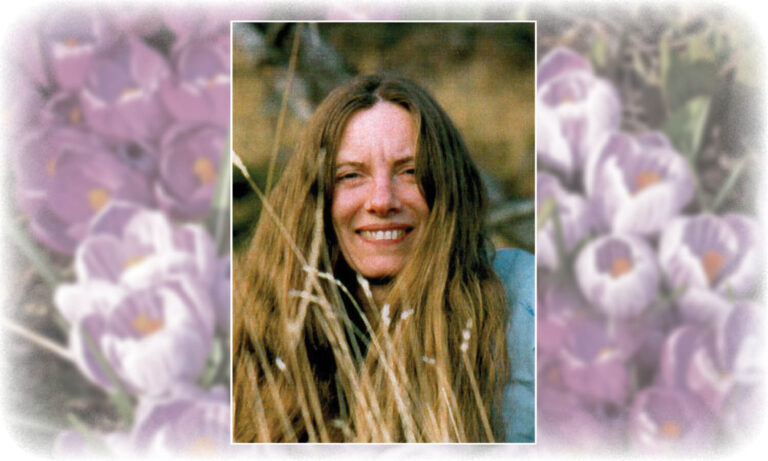
CRAN, Deborah Leslie

We are saddened to announce the death of longtime Saltspring resident, Deborah Leslie Cran on Tuesday, June 27th 2023.

Deborah grew up in Vancouver and moved to Toronto as a young woman. There she had her fi rst, child, Sean, before returning to the West Coast, meeting and marrying Chris, having Sascha, becoming a step mother to Riah, and moving fi nally back to Saltspring Island in 1985 where she first lived in 1977.

She was an accomplished gardener, and delighted in the magic of nature. She spent countless hours growing and preserving food – her fruit leather was legendary. Deborah also studied and practiced herbal healing, often making her own remedies from plants she grew. She was known for her beautiful dancing, was a great support to her friends and family, always willing to lend her hand in a crisis and, as her husband says, “Everybody knows she’s the brains behind pa” (Bob Dylan). When she was in the company of children her own child-like nature was revealed and she brought to them a sense of magic. Deborah was not one for the spotlight but had many quiet accomplishments that were only later revealed. Moments like when she anonymously delivered Christmas to families in need demonstrate her kindness, helpfulness, sensitivity and generosity of spirit.

Deborah is survived by her husband, Chris Anderson, son, Sean Cran (Deanna), daughter Sascha Rackemann (Peter), step-daughter Riah Hoechsmann (Alex), niece, Zoe Antonik (Scott), step-son Bill Boertjes (Milena), sister Roby and grandchildren Chloe, Ava, Maia, Tristan, Lucas and Adriana.

According to her wishes, Deborah was buried at the Saltspring Island Natural Cemetery in a private ceremony on July 8th. Her family grieves this immense loss and welcomes those who knew her to join in a memorial in Deborah’s honour on August 3rd at 3pm at the home of Chris and Deborah.

In lieu of flowers, please be kind to one another. Share your struggles, fears, and joys with open hearts and minds. Be present and patient in each other’s journeys.

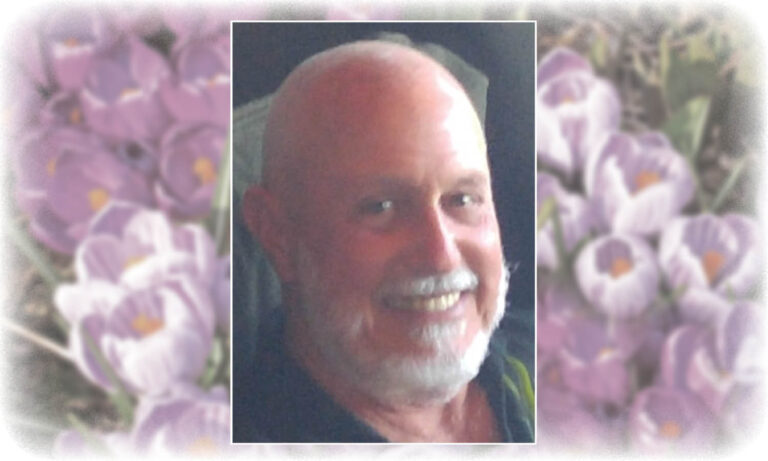
DARLING, Samuel Taylor

On Monday, May 22, 2023, Samuel Taylor Darling, an advocate for those in need and father of five, passed away at 76 after a brief and valiant fight against lung cancer. 

Sam was born on August 8th, 1946 in Colon, Panama, to Mary and Dashwood Darling. His formative years were spent in Central America and Marin County, CA. He attended the Grace Cathedral School for Boys where he sang in the choir, snuck cigarettes in the rafters, and developed a lifelong appreciation for music. He then graduated from Lick Wilmerding High School, shipped out as a Merchant Marine to support himself and see a wider world, and attended UC Berkeley, before becoming a caretaker for the Steep Ravine cabins.

Sam moved to Guatemala in 1973 with his future wife, Sharee (Darling) Anderson, where they started an herb tea farm in partnership with Celestial Seasonings. They used profits from this long-standing business venture to teach and fund small-scale agricultural projects that could be easily replicated – hand-building terraces on the steep slopes, constructing simple water systems, and de-worming sheep – to help reduce disease and improve nutrition of the Mam indigenous people of the Cuchamatan Mountains where they lived. He described this time as the most meaningful and best years of his life. A trailblazer, with a strong sense of joie de vivre, Sam’s adventures took him next to the north shore of Kauai in 1981 where he farmed ginger, battled hurricanes, and founded Garden Island Foods, a pioneering gourmet foods company with Julia Child’s stamp of approval. 

A skilled sailor and lover of the sea, Sam returned to west Marin County, with his second wife, Jane Arny, settling in Inverness. He sailed Tomales Bay with his kids, immersed himself in writing and recording original music, crafted short stories, built a successful food company while managing his tea farm in Guatemala, and raised his family within a vibrant community of artists, musicians, nature lovers, critical thinkers, and passionate democrats.

Sam, Jane and Dash immigrated to BC in 2004. He felt most alive when giving back, amongst kind and generous spirits, and surrounded by beauty. To that end he spent his final years on Salt Spring Island, devoted to developing NOMO, his small non-profit foundation with a big ambition: to reduce the suffering caused by malaria and other insect-borne diseases. On SSI, Sam was surrounded by those he held dear, in the home and place he loved. 

Sam was preceded in death by his parents, Dashwood and Mary Darling. He is survived by his five children – Heidi, Noelle, Taylor, Holly, and Dash; seven grandchildren- Isabelle, Layton, Liv, Ellis, Ada, Keola, and Charlotte – his sister Mary Peyton Lloyd, husband Tom and their children Meredith and Peyton, and his dear friend, Jane. In lieu of flowers please consider donating to NOMO or the Union for Concerned Scientists.

Editorial: LCC in motion

1

Just over a year ago in this space, we wrote with optimism concerning the then-aspirational Local Community Commission (LCC).

We predicted that, despite our initial skepticism that the LCC could deliver little better than the status quo, its unique — and necessarily broad — perspective, spanning what were then multiple commissions, could pave a path to real action on Salt Spring issues by eliminating the “silos” inherent in separate commissions each having their own independent mandates.  

It is premature to issue a “report card” on the new LCC after just three meetings, but we note with satisfaction those silos have seemingly vanished already, and our commissioners, speaking so far with unanimity, are certainly interested in action.  

As examples, we watched the commission receive a report on improving active transportation, immediately moving to get balls rolling on the “to do” list it proposed. We listened as they considered the plan options presented for Portlock Park’s renovation, and approved putting them out for public consideration without sending them back for additional revision. 

And we heard as they laid out plans to use whatever authority they may have to combat the affordable housing crisis, including putting pressure on the government of B.C. to include Salt Spring in its speculation and vacancy tax. 

They’ve politely, but insistently, pressed for two monthly meetings instead of one. They’ve pressed to schedule one of those meetings in the evening, rather than always during the work day. They are seeking authority to re-design the agenda format to include a proper public comment period. And they’ve asked CRD staff to explore how the commission can expand its delegated authority to include services not thus far on the LCC’s administrative plate. 

This new commission is acting its age, in all the best ways. Young things “ping” their surroundings, searching out — and pushing against — the boundaries of their worlds. It is, to extend the metaphor, developmentally appropriate for the LCC to seemingly test the patience of the broader district and indeed the province to whom it advocates on behalf of Salt Spring Island.  

It would seem that our optimism has so far been well-placed. We look forward to seeing what these actions may deliver. 

Viewpoint: Preserve Ganges parking spots

By MAXINE LEICHTER

I was dismayed to learn that the Active Transportation Plan that has been before the Salt Spring Island Local Community Commission (LCC) proposes to remove between 31 and 42 parking spaces from the Ganges core to make room for wider sidewalks and outside seating. Part of the stated intention is to improve access for the disabled.   

If they had asked someone who is disabled, like myself, they would have heard that wheelchairs and walkers likely come to town in a car and that many disabled persons manage by walking slowly, or using cane or crutches.

As it is, I mostly visit town in the early morning or late afternoon when parking is more plentiful.  If close-up parking is substantially reduced, the options for me and others will be even more limited.

The plan also ignores the needs of Ganges businesses that are already disadvantaged by a lack of parking. That is why just turning more regular spots into handicap spots is not a solution.

The suggestion was made that substitute parking could be created in the upper ArtSpring parking lot on Seaview Avenue.  But how are we going to get able-bodied persons to fill up the far-away lot to leave the places in town for the disabled?

I was a commissioner on the Salt Spring Island Transportation Commission when this plan was commissioned. It was part of an attempt to rectify lack of accessibility like curb cuts and crosswalks in the area between the post office, Thrifty Foods and Mouat’s. Yet the plan completely ignores this area.

Throughout the public consultation, little if anything was stated about removing parking spaces from town. People will not complain if they don’t know there is a threat, although I have often heard non-disabled persons wishing for a “car-free” Ganges.

The plan does have some good suggestions, such as slowing traffic through town. But the commission was told the study was needed to apply for grants to various improvements such as more curb cuts, better sidewalks and possibly more crosswalks.  

Although no specific plans are yet in place, please do not wait to express your concerns until parking places are being ripped up. You can speak at the LCC meeting on Tuesday, Aug. 22 at the former Salt Spring Island Middle School (SIMS).  Warning: that location is not disabled-friendly because of limited parking nearby or a steep climb uphill from Rainbow Rd. 

If you cannot attend, you can email the Local Community Commissioners at saltspring@crd.bc.ca or drop off a note at the CRD office on McPhillips Avenue — if you can find a place to park.

Nobody Asked Me But: Forest to desert scenario no longer comedy material

0

Forest to desert scenario no longer variety comedy sketch material

Mel Brooks and Carl Reiner were a very popular comedy duo who worked the clubs and television variety shows over 50 years ago. In one of their sketches, Reiner interviews Brooks, a 2,000-year-old man who has been around since biblical times. Brooks reminisces about the good old days when he was still young and how he used to run around freely and play hide and go seek in the Sahara Forest. Reiner corrects him with “You mean the Sahara Desert,” to which Brooks replies, “NOW it’s a desert.”

As we chug along towards the end of July 2023 and watch each scorching day become a Xerox photocopy of the day before, we must be starting to suspect that we are living out the punchline of the aforementioned joke. Aren’t we supposed to be the human inhabitants of a rainforest? Isn’t the joke supposed to be how June should be called “June-uary” on account of the fact that the sun rarely makes an appearance during that month and gumboots are usually the way we make our footwear fashion statements?

Let’s face it; we’re in the midst of a severe drought. If I was less sensitive to the feelings of other mammals, I would say that it’s drier than a camel’s fart out there. It doesn’t really matter whether we have totally bought into the climate change disaster scenario and believe that it’s already too late to take any kind of reparative action, or whether we deny the whole planet warming theory and view it all as a government conspiracy to control the population, in the end we are all going to be riding in the same lifeboat. The only question will be whether we will still have any oars or paddles left to allow us to move in any particular direction.

Fire, of course, is the biggest fear. Even as the writer of a supposedly mildly entertaining humour column, it’s hard to treat the subject of wildfires lightly. A look around the province, the country and the globe in general demonstrates the havoc and destruction caused by these infernos, which are at least partially the result of our lack of rain. If it wasn’t for the devastation resulting from floods, landslides and mudslides, we could almost rejoice at the thought of reliving the times of Noah’s ark when the rain came down for 40 days and 40 nights. I can almost imagine the rainwater pounding down in those 18.9-litre blue-tinged plastic bottles and bouncing along as they hit the ground.

Brooks and Reiner may not have been too far off the mark with their 2,000-year-old man sketch. Perhaps an enormous green Sahara oasis did exist way back then. Research has shown that natural phenomena known as the Milankovitch cycles affect changes in the earth’s orbit every 40,000-100,000 years and result in a planetary wobble, which causes the tilt of its axis to get all confused to the point that it doesn’t know which way it’s supposed to point. (I know about this because my wobble has quite often caused my personal axis to be thrown out of kilter.) It’s quite possible that these drastic alterations in weather patterns and the resulting rainfall may be the reason why the 2,000-year-old man had a forest in which to play instead of the parched desert that exists today.

Meanwhile, the leaves of our tomato plants curl in a desperate attempt to conserve the evaporation of precious drops of water, as our spinach and chard crops grow bitter and bolt to seed mere seconds after they’ve popped up out of the ground. Those lovely ponds that we had dug to provide summer swimming holes as well as year-round water reservoirs have now been reduced to muddy wading pools.

It’s all turning topsy-turvy. Glaciers are melting and large chunks are breaking off to form icebergs floating as if their sole purpose was to chill an ocean of Scotch. Whales are beaching themselves for no apparent reason and confused great white sharks are migrating to our northern neighbourhood in search of more familiar sea water temperatures.

Pity the poor salmon, which are desperately scrambling to make reservations for assured loading this coming autumn upon those sorry-looking fish ladders presently poking out from dry streams and parched river beds. Will they not feel like stranded tourists who have had their travel plans dashed by yet another ferry sailing cancellation? Right now, a salmon’s chances of reaching its happy spawning grounds are about as likely as the odds of survival for an upside-down crab at low tide.

How dry can it still get? It seems like each passing day brings a new record for high temperatures and low water levels. Municipalities and regional districts are racing each other to enact more stringent rules and regulations restricting water usage for wasteful behaviours such as lawn sprinkling and Super Soaker wars. 

The lack of rain here on the West Coast even accelerates the wear and tear on our public roads as potholes and washboards are left behind after the dust has been sucked up and blown away by those of us driving or cycling along. The deteriorating scene reminds us of “the Dirty Thirties,” when drought conditions during the Depression caused thousands upon thousands of acres of fertile farmland topsoil from the American Great Plains to be scooped up and blown away, leaving nothing but barren dirt behind.

Nobody asked me, but I think I’m ready for this endless summer to take a time out. I will gladly accept a few days without any beach time or a dip in the lake in exchange for a nice little downpour that would help to revive our shrivelling environment. It might just be a drop in the bucket, but I’m willing to do my part to turn back the clock to the days of the Sahara Forest.

After all, maybe it’s time we stop burying our heads in the sand and begin to realize that we can’t see the forest for the lack of trees.

Umbrella Society offers wide range of services

0

Members of a Victoria-based non-profit society made a presentation on Salt Spring Island Friday, July 21, hoping to spread the word about supports they offer for individuals experiencing substance use. 

Umbrella Society’s training and education manager Evan James said the organization was in its 22nd year of offering a range of programs aimed at addressing substance use issues and their concurrent mental health challenges. Umbrella facilitates transitional housing sites in Victoria, a model known as Housing Overdose Prevention Peer Support (HOPPS) that includes general support, advocacy and addiction resources alongside training and education for and with residents.  

On Salt Spring, Umbrella has been the housing operator and support team for residents at the Kings Lane transitional housing site since October 2022 — now nearly at its 18-bed capacity, according to staff — through a partnership with BC Housing, and with intake through that agency’s registry. But the group’s central focus from the start has been client-centred care, according to James — to help guide and advocate for people as they move through the recovery process. 

“Originally our introduction to Salt Spring Island came with some funding from Island Health,” said James. “They recognized there was a need for people over here who were struggling with substance use issues.” 

Umbrella offers one-on-one outreach and counselling on-island every Tuesday, sometimes in a structured format but often through a more informal check-in with clients’ progress. 

“Sometimes we facilitate referrals for getting people over to Victoria to a treatment centre, or whatever needs may arise,” said James. “Sometimes it’s just having coffee and supporting them, helping them set goals for the next week.” 

On days — and evenings — when an outreach worker isn’t on Salt Spring, Umbrella offers a host of regular online Zoom groups both on a pre-registered and drop-in basis. 

“We try to remove as many barriers [to getting help] as possible,” said James. “It’s not a discriminatory illness, it affects all walks of life.” 

Many of the groups have a more general focus, such as a weekly check-in for people at various places in their recovery, and some are targeted to specific groups; the “Hammer Time” Zoom group, for example, provides those working in the trades with a specifically tailored opportunity for connection, support and education. 

Umbrella’s counselling services for people with substance use issues are available both in-person and online, and are free; James said often new clients can be seen within a week or two, sometimes sooner. 

“The referral process is super easy,” said James. “You just call — or text — our office, and our admin people will figure out what your needs are and guide you in the right direction.” 

For information, call or text 250-380-0595, or send email enquiries to wecanhelp@umbrellasociety.ca

Treasure Fair fundraiser breaks previous record

By KIRSTEN BOLTON

FOR ARTSPRING

With a goal of raising $55,000, ArtSpring’s recent Treasure Fair announced a record-breaking total of $67,346, making it the most successful Treasure Fair in the organization’s 23-year history of hosting the popular fundraising event. Organizers could not be more pleased.

“As a charitable arts centre that relies heavily on donations to support daily operations and sustain, develop and grow programming for our community, this flagship fundraising event is absolutely key in our calendar,” said executive and artistic director Howard Jang. “We couldn’t be more thrilled and grateful for the turnout, the positivity and the engagement this year.”

It is a sentiment that long-time Treasure Fair committee chair Catherine Griffiths shares. “There was a lot of excitement this year,” she said. “So many visitors, much less COVID anxiety, people wanting to be social and the quality of the donated items this year was extraordinary. It all factored in to build momentum.”

Noticeable elements that made a difference included the pre-bid gala event with the auction site going live at 6 p.m. in the evening rather than in the morning. The well-attended Saturday concert performed by charismatic Juno-nominated folk group The Fugitives reportedly added to the buzz, and an uptick in “Buy It Now” deals, where bidders pay 150 per cent of the stated value to lock down a favourite item, happened faster and more substantially than ever before.

Big ticket items, experiences and smaller special pieces were curated so there was something for everyone at any price point. The spotlight item this year was the baby grand piano evaluated at $12,000, selling to a bidder and now going to a loving new home. Trips, accommodations, concert experiences and wine collections all went quickly. High value outdoor furniture sets, interior furnishings and quirky décor items and collectables all found their audiences.

More than 140 donors of these treasure items and experiences stepped up this year. Each will receive a tax receipt for the winning bid on their donation. Griffith’s tireless volunteer committee, which has not rebounded to full capacity since the pandemic, invested hundreds of hours receiving, cataloguing, moving, storing, packaging, presenting and manning the website and exhibition space.

For the first time, the local Girl Guides manned the concession station as a fundraiser, offering visitors home-baked items and refreshments to enhance their Treasure Fair touring experience. This level of grassroots community connection is a priority to Jang.

“There are some misperceptions out there that ArtSpring shouldn’t need to organize fundraisers like this because we have massive government support, grant support or tax support to facilitate us bringing in off-island artists, and that’s simply not the case,” he said. “The majority of what we do is to facilitate community groups and local artists in presenting their work year round, and to bring artists from all over the world to engage and inspire our community. Our annual budget is very tight compared to similar community art centres in other jurisdictions, so everything helps.”

Some of the items that did not sell are stored and will be re-presented at next year’s Treasure Fair in hopes of connecting with the right buyer.

“On top of the money that was raised, we had people come back multiple times and genuinely express how much fun they were having,” said Griffiths. “Our committee worked hard but also had plenty of laughs too, which makes the Treasure Fair a winner across the board.”

With the results tallied, this year’s Treasure Fair surpassed 2022’s fundraiser by just $850.