Home Blog Page 192

WEBBER, Patricia June nee Burritt

Patricia June Webber nee Burritt

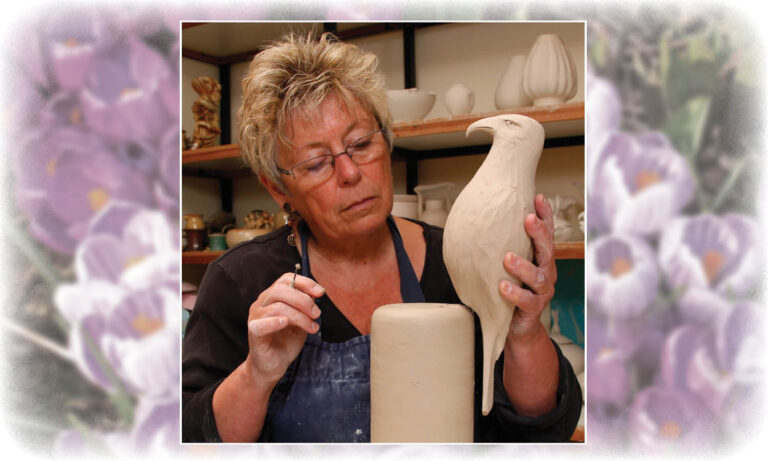
Born March 25, 1945, died June 6, 2023 at Lady Minto Hospital, Salt Spring Island, after a lengthy journey with cancer and associated illness. Pat was born in Vancouver, BC and is survived by her husband, Joe, two sons, Timothy and Michael, daughters in-law Lori and Jennifer, two grandchildren Oscar and Ruby and three siblings Lee McAleese, Arlene Dashwood and Harvey Burritt. She was particularly excited about the developing interests of Oscar in psychology and Ruby in music. Pat studied ceramic arts while Joe attended graduate school at Oregon State University, and expanded her pottery skills as an artist and teacher when she moved to Victoria in 1973, and finally at their Stewart Road property in 1996. Pat was a lifelong member of the United Church, was involved as an elder, and helped guide the church with her many roles, as a board member, chair of the board and in the choir. Her compassion and generosity for all was punctuated with her never ending smile and robust laughter. She was deeply interested in natural systems and became an advocate for all plants and animals which was reflected in her animated pots featuring, among many, her soul creature, frogs. A celebration of Pat’s life is being planned for the last week in July.

Re-kindled underground fire startles Beddis neighbourhood 

0

A report of a smoky smell brought fire trucks to a waterside property near the end of Beddis Road on Monday, May 29, with more than a dozen firefighters working for hours to contain a previously extinguished fire that had re-ignited. 

Seven trucks, 14 firefighters, 1,500 gallons of water and “a lot of digging” ended the creeping grass fire, which ultimately burned a 30- to 40-square-foot area, according to Salt Spring Island Fire Rescue (SSIFR) Assistant Chief Mitchell Sherrin, who said the call from a concerned neighbour came in around 2:30 p.m. 

Sherrin said investigators believed the source of the blaze was likely a campfire that, despite appearances, had not been fully extinguished and had been “simmering” — burning beneath the ground surface — for about a week. 

“Somebody had attempted to extinguish it,” said Sherrin. “But one thing that’s really important for people to understand is that fire can go underground, especially if you’re burning in an area that’s kind of rocky.” 

Small gaps between dirt and rocks beneath the surface can hold pockets of air, roots and dust — just enough fuel and oxygen for the fire to keep alight. 

“And that’s what it looked like it had done,” said Sherrin. “It had slowly burned quite deep underground, in amongst the roots of some trees. And then, you know, with a little bit more warmth and a little bit more wind, it broke out and started to spread into a grass fire.” 

Firefighters worked until 6 p.m. digging up a large area around the grass fire to ensure all the burning roots beneath were fully extinguished. Sherrin said while these root fires were startling, they were not entirely uncommon; he recalled a fire on Salt Spring that had sprung from a supposedly extinguished winter burn pile. That fire had “overwintered” underground, he said, and rekindled several months later with the arrival of warmer spring weather. 

SSIFR recently announced conditions had necessitated a shift to the “high” fire danger level on-island, and restrictions in place since May 18 have banned most burning across the region. 

Campfires are still allowed for now — with a free permit, which can be obtained at saltspringfire.com — but extra vigilance is key, according to Sherrin. 

“The grass fire was obviously serious and concerning for us, particularly now that we’re into the high fire risk,” said Sherrin. “Fire can start and spread pretty easily right now, so people need to be mindful.” 

Sherrin said the first thing anyone planning a campfire should do is select the right site for it — being especially careful to burn on a non-combustible surface, and away from anywhere there might be roots. 

“If you can see a canopy of trees above you, that means there’s going to be roots underneath,” said Sherrin. “Make sure you’re not burning on tree roots or on thick dust — that soft, springy ground — because fire can definitely go underground, especially if it gets hot enough.” 

“And,” he added, “make sure it’s fully extinguished before you leave.” 

NIELSEN, Harry

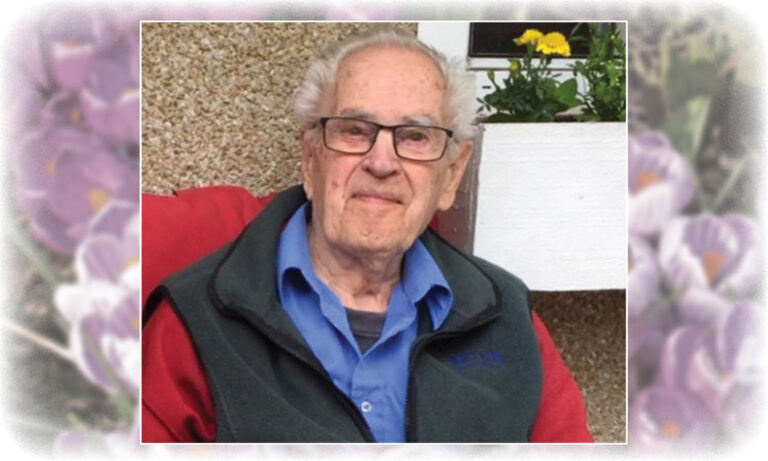
Harry Nielsen passed away on April 11, 2023 surrounded by his family on Salt Spring Island. He was 7 weeks shy of 97. Harry was born in Odense, Denmark to Mads Nielsen and Laura (Poulsen) Nielsen, the youngest of two brothers and three sisters. He became an apprentice, then journeyman and finally master carpenter. He survived World War II in occupied Denmark, then travelled to Sweden and Norway to find work.

While in Bergen, Norway, he asked a lovely young Norwegian woman directions to the Carpenters’ Union office. He and the woman, Anna-Margrethe, began to date and she eventually moved with him to Denmark where they married in 1948. They had a daughter Marianne followed by a son, Tore. In 1957 the family immigrated to Canada, settling in Brooks, AB, where Harry had several relatives and an immediate job offer, and where youngest daughter Vivian was born. Harry worked long hours saving money to buy land and build their home on Seventh St. W. When it was completed, the family moved into their very own Harry-built home.

Harry was well known and respected in Brooks and throughout the County of Newell for his excellent craftsmanship, witty humour, and humility. ‘Hi Harry!’ was heard wherever he went, and he was constantly complimented for the beautiful kitchens, custom cabinets, and quality furniture that he’d built. In his early years in Brooks he focused full-time on house building, and worked part-time as Building Inspector for the Town of Brooks Low-Cost Housing division. He spent some years building and finishing houses with Oscar Jacobsen and then started his own business, Nielsen’s Cabinets. Word of mouth about the excellent quality of his work spread and he was busy even without advertising. Once established, he felt comfortable taking time for other pursuits like Sunday family picnics at Lake Newell, summer trips to BC, or Sunday afternoons at one of the various farms in the County, visiting fellow Danish families. He also began creating beautiful intarsia pieces and other wooden works of art on the lathe in his workshop. After long work days, Harry did not hesitate to help his friends, neighbours and acquaintances with furniture repairs and custom projects—often for free. In his retirement, he gave his time and skills freely to build shelving units, display cases, and custom cabinets for local organizations, like the Brooks Public Library and the IGA. He showed kindness, respect and generosity to everyone.

After his beloved Grethe died in 2006, Viv and grandson Noel became Harry’s constant companions. In 2015, the three of them moved to Salt Spring Island, BC, where Harry once again enjoyed living close to the ocean. He never completely hung up his hammer, spending his days building prize-winning wooden artworks in his workshop, helping Viv with house renovations and repairs, and contributing wood projects to their beautiful garden. Bursting with pride, he could also be found cheering on Noel at his concert performances. Harry kept himself mentally sharp: he did daily sudokus and avidly read newspapers, biographies and novels. He enjoyed TV sports, especially hockey, curling, and tennis. His sense of curiosity remained strong, as did his love of learning, and he maintained an enviable focus on health and wellness. Harry reveled in nature, primarily walks by the ocean and in lush coastal forests. As an avid birder, he enjoyed his hummingbirds and other assorted feathered friends at the feeders. He and Viv spent many mornings by their pond watching tadpoles grow into frogs, surrounded by flowers he had a hand in tending. Harry loved his animal companions, most notably their sweet dog Lego, and their cats Eli, Ollie and Eva.

Harry is predeceased by his wife Grethe, his brothers Johannes and Anton, his sisters Karen, Maria (Misse) and Lisbeth, and his best friend Abe Giesbrecht. He is survived by children Marianne (Larry Gould) of Flagstaff, Arizona, Tore (Dominique Petit) of Montreal, and Viv (Ken Milligan) of Salt Spring Island; by granddaughter Sabrina of Montreal and grandson Noel of Salt Spring Island; and by nieces, nephews and cousins in Denmark, Norway, the USA, and Canada. To us, and to many others, Harry was a great man. He will be missed. Deeply. There will be a family gathering in June on Salt Spring Island to honour and celebrate this wonderful man.

Farvel og tak Dad/Morfar/Farfar.

Harry’s family would like to express appreciation to the Lady Minto Hospital staff. Thank you especially to Zac, Amy, Jackie, Brent, and Dr. Gummeson. Dr. Gummeson, you were highly regarded by our dad and he enjoyed your regular clinic visits. For anyone wishing to donate to a cause that Harry supported, please consider the Brooks Animal Protection Society (BAPS) (https://www.bapsociety.com/), or the Cats of Salt Spring Rescue Society (https://catsofsaltspring.com/).

Tent caterpillars return to island trees

0

If you’ve been outside in the past few weeks, you’ve seen the webs and the millions of tent caterpillars crawling up — and munching on — tree leaves.

The fuzzy visitors have been seen on every Gulf Island and across much of Vancouver Island, intriguing young children and alarming backyard plant lovers. 

And while apple growers on Salt Spring Island say the infestation is significant, they agree it’s too early to say if the year’s apple harvest will be severely affected — and that the island’s diversity in production and terroir, combined with quick action from orchardists, will be what saves the season. 

South-ender Harry Burton, at his Apple Luscious operation, said it seemed to be worse mid-island — and grower Bob Weeden said the scene at his north end Whims Farm orchard “looked like a war zone.”  

It’s not the first time, nor likely the last, Salt Spring will be beset by caterpillars — not an invasive species, according to experts, but certainly one that can wreak havoc in large numbers. 

“In 2012 we cancelled the Apple Festival, they were so bad,” said Burton, who said he’d seen a “medium infestation” at his orchard this year. He said he was largely able to control the caterpillars with the usual lopping-off of nests at branch ends with a pole pruner.

“They tend to go up to the ends of the branches, making it very easy to cut off, if you get them early when they’re concentrating up at the top.” 

At this point in the caterpillars’ life cycle, lopping is the preferred method, according to Health Canada, which notes the outbreaks are unlikely to happen on an exact schedule, because of the wide variation in environmental and biological factors that lead to large populations. Salt Spring’s garden and entomology expert Linda Gilkeson actually recommends checking in January for egg masses in branches — an early warning that it might be a caterpillar-filled spring. Gilkeson’s extensive advice can be found at lindagilkeson.ca. 

Burning is not recommended for anyone looking to remove tents, particularly during the current weather-triggered ban on most backyard burning. Contravening fire prohibitions can result in fines up to $1,150, according to provincial officials — and well into six and seven figures should the burning result in a wildfire. 

Meanwhile, Burton said it remained to be seen how Salt Spring’s apple orchards will weather the storm. 

“I’m sort of on top of it here,” said Burton, who was ready to move past the caterpillars and into growing season. “Right now my trees are thinking of apples, they’re not thinking of caterpillars.” 

Nobody Asked Me But: AI just part of evolutionary tale

Considering all the debate and posturing these days about the benefits and dangers of Artificial Intelligence, or AI for short, you must be asking yourself if you really feel threatened by high-functioning machines and computer programs that seem on the verge of taking over the planet and replacing its present landlords: you and me.

Are robots really out to get us? Maybe it hasn’t reached the point where they are planning to destroy our species, but they are getting to be extremely annoying. Take the robot test, for instance.

You know the feeling. You’re trying to get to a website in order to take care of a very important matter and you get side-swiped by an idiotic dialogue box that demands that you tick off the little square next to the statement “I am not a robot.” And just to make certain that you are not indeed a robot that has been programmed to lie about its mechanical orientation, you are subjected to completing a small test to prove that you are flesh and blood and not some machine language algorithm.

What does this test look like? Sometimes there is a grid of nine photos of intersections and you are asked to identify which of them contains a traffic light. Or, you might be asked to pick out chimneys in a grid of skyline pictures. If this seems too difficult, and you keep failing the “not a robot” test, you may be shown a series of alphabet letters and numerals that have been depicted in a cursive style comparable to a Salvador Dali surrealist masterpiece. When you fail to recognize even one of these distorted characters, you begin to question your humanity and doubt creeps in as to whether or not you may indeed be a robot.

In all actuality, Artificial Intelligence is a bit of a misnomer. Expecting a robot to disqualify itself because it cannot pass a test that most humans fail miserably as well is idiotic. Perhaps we should call it Artificial Stupidity, or more fittingly, Artificial Stupidness.

Science-fiction novels and movies have long played upon our fears that the very same machines that we have created to serve us will someday seek to supplant us. In the 1951 classic The Day the Earth Stood Still, the eight-foot-tall robot Gort is just about to destroy humanity for harming its master when it is calmed by the words “Klaatu barada nikto,” which is space alien for “just chill.” In 2001: A Space Odyssey, the HAL 9000 computer which runs everything onboard the spaceship attempts to dispose of the human crew when it senses that they are about to decommission it for faulty decisions. Even in the Star Wars saga, the two robots C-3PO and R2-D2, although benevolent and eager to serve, often get their humans into dire circumstances because of their limitations. In contrast, Robocop and the Terminator wreak havoc on any humans who stand in the way of their missions.

As you can see, AI is nothing new; it’s been around for almost forever. Devices such as the abacus, the slide rule and the calculator have been our friends since the time we first had to figure out how much 15 per cent of the total bill at a restaurant was so we could leave the proper tip at the table without seeming too chintzy or overly extravagant.

The next giant leap in robotics came with self-directed robot vacuum cleaners, which do an adequate job at removing dust from carpets, but whose main aim is to scare the living daylights out of house cats while occasionally ingesting the odd pet hamster.

At about the same time, there arrived the dawning of the computer age. You may remember those massive mid-20th century early analog models that took up about four floors of an office high-rise building although all it could practically do was add up numbers and round off the sum to two decimal places. Much later came the introduction of more compact digital machines which could solve such complex computations as amortization problems where you can discover in a matter of nanoseconds that you’ve spent half your life paying the mortgage on your house but all you’ve really paid off is the interest on the interest and you still owe the entire original amount.

If AI continues its march towards domination, how long can it be before robots wanting access to vital data will have to take the “I am not a human” test. If they succeed at being able to assemble IKEA shelves by following the printed directions, or are able to program an ancient VHS recorder using the remote (which no human over the age of 10 could ever figure out), then they will be receive a passing grade and be granted entrance to the protected site. However, if they flit about from site to site while taking the test, simultaneously checking sports scores, weather forecasts, Instagram, Twitter and TikTok postings, and a myriad of other distractions, then for certain they will show themselves for the impostors that they are.

There are strong arguments being made on both sides of the AI debate. On one hand, supporters are quick to point out that the ability of AI to analyze and learn from mistakes far outstrips the human learning curve. Humanity will receive the benefits from the advances made by AI. Taking a look at the medical research field, there are so many treatments and life-altering medications that have been made available because of AI involvement. At this very moment there are over a half million research papers published about AI discoveries and 350,000 AI projects shared in open source.

On the other hand, pundits such as Geoffrey Hinton, a University of Toronto scientist who is recognized by many as the “Godfather of AI” because of his founding intellectual research and development, fears there will be a computer takeover and it is unavoidable that humans will be superseded by AI. Just recently, Hinton left his lofty gig with Google’s AI program because he felt obligated to publicize the danger that in a few years, machines may become significantly more intelligent than we humans.

Nobody asked me, but perhaps it’s all a matter of Darwinism and the theory of natural selection. Our species of humans, Homo sapiens, squeezed out the less intelligent humanoids, the Neanderthals, because we were more able to adapt to increasingly taxing conditions. They must have looked down on the Neanderthals the way that we perhaps dismiss robot vacuum cleaners.

Is it possible that AI machines will look at us as dumbed-down creatures who need feeding and looking after similar to how we treat our pets? If this is the case, I hope I don’t get mistaken for a hamster.

Viewpoint: Mental Wellness Initiative fundraiser underway

By DAVID NORGET

for Mental Wellness Initiative, Salt Spring Health Advancement Network

There is no health without mental health.” — World Health Organization

Salt Spring Island is changing, and what is clear is the need to reaffirm and acknowledge the powerful interconnected and interdependent nature of our island ecosystem. This interconnection is being felt on every level, from housing availability, workforce shortages, health-care accessibility challenges, inflationary pressures and a general struggle to make ends meet and have certainty about future stability. Furthermore, these strains are creating increased fear, stigma, culture clashes and a deepening resentment for the challenges many face.

The Salt Spring Health Advancement Network (SSHAN) Mental Wellness Initiative (MWI), in partnership with the Salt Spring Community Health Society is looking for financial assistance! Please see our article, “Mental Wellness Initiative team provides update and appeals for funds” in the May 2 edition of the Driftwood. For the past three years we have operated entirely from grant funding and are looking to expand our flexibility and support through this community fundraising campaign until July 31.

We are happy to announce that we have received two anonymous donations from angel funders. These donors will each match funds up to $5,000, meaning that there is potential for $10,000 in matching funds to support our vision of “co-creating a community of caring and belonging.” In addition, if you donate during the month of June through CanadaHelps, every $1 donated gives the MWI the chance to win $20,000. The more that’s donated, the greater the chances of our winning. (See canadahelps.org/en/givingchallenge/).

We see our community’s strength being dependent on the positive forces of connection and compassion for the health of all islanders. If as a community we embrace the belief that the way forward is together, then we measure the success of our island home through the lens of how we take care of each other.  

If you have a thought of making a difference in our community, now is the time to donate to this very worthy cause. Here’s how:

• Cash: contact David Norget (davidnorget@gmail.com) or Martha Taylor (marthataylor02@gmail.com).

• Cheque: payable to Salt Spring Community Health Society. Mailing address: 181 Booth Canal Rd., Salt Spring Island, B.C., V9K 2N2.

• E-transfer: donations@saltspringcommunityhealth.ca. (Please specify “SSHAN – Mental Wellness Initiative” in the message section of your transfer.)

• Online: CanadaHelps.org. Search for Salt Spring Community Health Society. (Please specify “SSHAN – Mental Wellness Initiative” in the note section.)

We thank Harlan’s Chocolates and Salt Spring Coffee for contributing chocolate and coffee to support our appeal.

Editorial: New era with LCC

0

Salt Spring’s first-ever Local Community Commission (LCC) election is now in the books.

Gayle Baker and Brian Webster, the two candidates with past experience on Capital Regional District (CRD) commissions, topped the polls with almost identical vote counts. Earl Rook finished in a solid third place, and Ben Corno came fourth.

Voters’ top-three picks mirrored the recommendation of Positively Forward, the group that initiated discussions on the Local Community Commission (LCC) concept following the resounding rejection of incorporation in a 2017 referendum. Corno was one of the younger candidates who made himself familiar to those outside his circles by running for Islands Trust last fall and whose positive demeanor was among the brighter spots of both campaigns.

An extremely diverse set of candidates made the courageous decision to compete for the four available LCC spots. We applaud all of them for being interested enough to do some research about the LCC and CRD and run the sometimes harsh gauntlet of public scrutiny. The demands to earn votes were high, with candidates fielding questions directly from voters and groups with specific interests — even some organizations that are not directly connected to or receiving funding from the CRD. In fact, much of the discussion during the election period was not about LCC-specific matters, but it did result in some worthwhile public conversations.

Ultimately the election outcome is a good one for the island. Baker and Webster already know how the CRD system works, giving them a head start in navigating the bureaucracy. All four individuals are diplomatic, have relevant experience, lots of energy and wide networks in the community. That’s not to suggest the other candidates lacked those qualities, but as Rook said on Monday, this particular group has “the skills and motivation to work together in a constructive way for the benefit of the community.”

While the LCC has nowhere near the powers of a municipality, it should be an improvement on the status quo by reducing silos and increasing coordination in delivery of some CRD services. Having five elected individuals instead of only one involved in public consultation and decision-making will also be a big plus.

Let the era of a new form of Salt Spring governance begin.

Student-led ‘Wrinkle in Time’ set to enchant crowds

“Step into a world where time is a mere concept, and the power of love and bravery knows no bounds,” writes student publicist Elisabeth Innes. 

And as the Gulf Islands School of Performing Arts (GISPA) prepares a student-led production of Madeleine L’Engle’s novel A Wrinkle in Time, it’s clear audiences will indeed find themselves transported. The student-led production of the enduring classic — with the gentle direction of educators Michelle Footz (music), Sonia Langer (dance) and Jason Donaldson (theatre) — is perhaps itself a fitting metaphor for the long-running program, having nurtured so many young, diverse artists on Salt Spring over the years. 

“The book is very ‘GISPA’,” said Grade 12 dance strand student Jane Holmes. “It has a lot of the elements we use in terms of different worlds — different dimensions, the portals through them. Dynamics and magic.” 

“And each world has a very different feeling to it,” added Raiven Hamer Garton, a GISPA theatre strand student in Grade 11. “Like the program here; we’re able to showcase our talents in each world. This year in particular has been one of the most integrated shows I’ve been in — or heard about.” 

The storyline of “Wrinkle” — the tale of Meg Murry, her brother Charles Wallace and their friend Calvin racing across worlds to rescue family — is moved along by each of the GISPA strands, said Hamer Garton: acting, music and dance. The production features a host of student artists, including nine actors, four dancers and nine musicians, moving between their own worlds and blurring strand boundaries — imagine actors helping with choreography, or musicians in dance pieces.  

“There’s a lot of that crossover,” said Grade 12 musician Cedar Lopateki. “There are people in the musician group who have experience acting or dancing; there are dancers who have experience acting.” 

And even as audiences can expect actors on stage surrounded by music and dance — an integration inherent in GISPA’s performance philosophies — Holmes points out the experience isn’t “musical theatre,” at least as one might expect. 

“There’s a distinction, I feel, between what GISPA does and what musical theatre does,” said Holmes. “GISPA [productions] have a more serious message revolving around the play, not just the cheeriness you see in musicals. I think we have a very mature way of building the show — for a group of high school students.” 

That maturity shows up in the choices the student leaders made for script — jumping-off, Holmes said, from an existing adaptation and stage notes — as well as in score, choreography and even set. All the music and every dance in the show is original, largely a collective creation from the cast members, and the set is innovative and multi-functional; less is often more for the small group, who all pitch in to handle scene changes. 

“It’s a unique challenge,” said Lopateki. “We had to make things seem full. To do the big ideas, we had to do it smaller — we had to fill the stage, and create a deeper meaningful image with less.” 

Many of the ideas were inspired by other productions seen off-island; Lopateki said GISPA students get the occasional opportunity to travel to see shows elsewhere, broadening their horizons — and stashing away ideas for later.  

“It’s important, on this small island and community to bring in new ideas,” agreed Holmes. “Sometimes you might stagnate, in our instinct to stay in what’s familiar. But reaching out into the world for those new ideas is so important to being an artist.” 

Hamer Garton gestured to set pieces built specifically for the production.

“Just these three door frames, adding or taking away some extra space, help create four or five different planets,” said Hamer Garton. “Rather than trying to make the set speak for the piece, it allows the audience to focus on the artists.” 

Audiences can nonetheless expect a “visually stunning spectacle,” according to Innes, with imaginative lighting effects transporting viewers from the Murry family’s humble home to far-flung planets and mystical realms. 

“In this performance, witness the extraordinary power of human connection, the triumph of good over evil and the unwavering strength of the human spirit,” writes Innes. “Prepare to be swept away on a breathtaking journey, filled with wonder, danger and heartwarming moments that will leave you inspired and believing in the extraordinary.” 

Performances run three nights at ArtSpring, with curtain at 7:30 p.m. on June 7, 8 and 9.

Tickets are on sale through artspring.ca

Bike ride and rally advocate for Salish Sea Trail Network

BY ISLAND PATHWAYS

More cars on Salt Spring, or fewer cars on Salt Spring?

Of course, probably everyone can agree that the island doesn’t need more traffic congestion, more speed or more people fearful to get between home, school, shopping, and the ferry terminals outside the protection of a vehicle.

It seems that only the most experienced and fearless among us are willing to ride a bicycle for everyday travel, an otherwise logical commuting choice (one would think) for rural islanders.

It’s also the mode promoted by the B.C. government; just four years ago, as part of a joint “CleanBC” strategy between the transportation and environment ministries called Move Commute Connect, the province set a goal of doubling the number of cycling and walking trips by 2030.

Today, with car traffic levels returning to (and seemingly exceeding) pre-COVID levels — and Salt Spring year-round residency and seasonal visitation numbers rising — one thing seems certain: the number of cars being used on the island for everyday use probably won’t stay the same. Things are changing one way or another, so how do we make the change work for all residents and visitors?

On Friday, June 2, in conjunction with province-wide GoByBike Week celebrations, Minister of Transportation and Infrastructure Rob Fleming will come to Salt Spring to meet with the Salish Sea Trail Network (SSTN) Working Group to discuss the situation on Salt Spring and try to answer that question.

Members of SSTN — which includes MLA Adam Olsen, MP Elizabeth May, CRD director Gary Holman, Islands Trust staff and trustee Laura Patrick, a Salt Spring Island Ferry Advisory Committee representative, and local NGOs Transition Salt Spring and Island Pathways — have called on the provincial government to complete a 20-kilometre trail across Salt Spring Island from Fulford to Vesuvius as part of the Salish Sea Trail, which would be a 250-km-long cycling circuit from Victoria through the Saanich Peninsula and the Cowichan Valley.

Connecting the existing Lochside, Galloping Goose, Cowichan Valley Regional and E&N Railway trails, this active transportation network would provide safe and climate-friendly access through some of the most populated and scenic parts of coastal British Columbia. And, it’s 92 per cent complete, save for the stretch on Salt Spring that connects Swartz Bay to Crofton.

A recently published cycling safety review commissioned by the province highlights many safety improvements that could help encourage more Salt Springers and visitors to choose cycling and walking over driving, but it would take bolder investments to complete the Salish Sea Trail and provide safe connectivity and commuting options for all.

You can advocate for Salt Spring to receive some of the same investments in infrastructure improvements, pathways and education being provided to other communities across the province to encourage more cycling, make walking safer and help achieve those audacious CleanBC goals.

Join Island Pathways members, MLA Olsen and others for a public, “all ages and abilities” group bike ride from Fulford to Ganges that morning — Friday, June 2, starting at 9 a.m. at Fulford Harbour — or join in at 9:30 at the Cusheon Lake Road intersection to show your support for safe cycling.

The group ride will culminate in a family-friendly rally at 10 a.m. at Lions Bike Park in Mouat Park, complete with scoot bikes for little ones, bicycle blender smoothies, prize giveaways and an opportunity from 11 a.m. to 1 p.m. to speak with Minister Fleming at an ASK Salt Spring meeting about making cycling safer for everyone.

You can also show your support for safer walking and cycling infrastructure on Salt Spring Island by joining Island Pathways with a $10 lifetime membership: IslandPathways.ca/membership-signup/.

For more information about GoByBikeBC Week and events happening on June 2, visit gobybikebc.ca/salt-spring-island/.

Salt Spring trustees set Bylaw 530 ‘open house’ events

0

Plans to amend Salt Spring’s land use bylaw to allow accessory dwelling units (ADUs) are soldiering on, and the community will have yet another chance to listen and be heard. 

Salt Spring’s Local Trust Committee (LTC) is hosting a pair of open house events in early June to bring the public up-to-speed on Bylaw 530, a recently recategorized “minor project” that seeks to increase the housing stock by allowing ADUs on a number of properties across the island.  

The new categorization is a little confusing, trustees admitted, but is meant to ensure an administrative slot in the project list for the long-considered bylaw.  

“It’s because there’s major [projects] and there’s minor, and we’re allowed [room] to do a minor,” said LTC chair Tim Peterson at the May 18 LTC meeting. “If we make 530 ‘minor,’ we can work on it. I know it’s a little weird, but there we go.” 

The first open house will take place Tuesday, June 6 from noon to 3 p.m. at the Salt Spring Island Public Library. The second is being held Saturday, June 10 from noon to 3 p.m. at Meaden Hall at the Salt Spring Island Legion.  

An ADU is defined as a distinct and separate unit from a principal dwelling structure, with its own cooking and washroom facilities and its own entrance. The current version of Bylaw 530 would add ADUs as a permitted use in limited and specific zoned areas — three residential zones (R7, R8 and R9), rural (R), rural uplands zones (RU1 and RU3), the rural islet zone (Ri), a comprehensive development zone (CD3) and a forestry zone (F1). ADUs in these zones would be subject to further restrictions before being approved; in addition to needing to satisfy all code requirements for a building permit, ADUs will be limited in size — 56 square metres on lots less than 1.2 hectares and 90 square metres on larger lots — and cannot be located within a Community Well Capture Zone.  

Current language in the bylaw specifically excludes recreational vehicles and dwellings on wheels; moreover, any ADU to be located within a community water system needs in-writing confirmation from the operator that the site has sufficient water capacity to supply it.  

These and a host of other regulations suggest not every property within the referenced zones may find itself eligible for an ADU should the bylaw pass. Trustee Laura Patrick has called the measure “low-hanging fruit” in the discussion of ways to increase affordable housing on Salt Spring, and questions remain about how many property owners would pursue the opportunity — and how much new housing the bylaw would actually create. 

Regardless, public engagement is — once again — the next step, according to trustees, who hope for robust attendance at the open houses. Notably, despite numerous engagement events and a hearing last year, a new formal public hearing will be required prior to the bylaw’s final approval. That hearing has not yet been scheduled.  

Bylaw 530, originally crafted at the urging of the Housing Action Program Task Force and shaped through several public events and LTC amendments, is meant to help ease Salt Spring’s rental supply crunch by permitting a new housing option.

The combination of substantial public concern and direct opposition from Tsawout First Nation seems to have been pivotal in the LTC’s decision last year to pause its process.

While acknowledging the broader housing crisis, Tsawout First Nation representatives wrote it believed the proposed referral would significantly change the “environmental trajectory” of Salt Spring Island by pushing the living capacity past the standards originally outlined in the island’s official community plan.

“The island does not have the capacity to increase living conditions without threatening the environmental stability of our traditional territory,” read the letter.

Staff reports, public correspondence, the current text and other information about Bylaw 530 are available online at islandstrust.bc.ca/island-planning/salt-spring/projects/.