
Home Blog Page 197

Director talks costs, benefits of CRD taxes

BY GARY HOLMAN

A question being raised in the Local Community Commission (LCC) election is whether Salt Spring Island is getting fair value for Capital Regional District (CRD) tax dollars.

This concern is heightened in part because decisions about taxes are currently not very transparent. Establishment of the LCC will bring such decisions out into the open. However, at this time, some additional information and perspective for voters and candidates might be helpful.

Cost of CRD Services 

The 2023 CRD requisition for Salt Spring, including local, sub-regional and regional services (but excluding Salt Spring-area-specific sewer and water services), was about $7.6 million. Over the past five-year period, this represents a 20.8 per cent increase, or 3.9 per cent per year, compounded. Statistics Canada’s inflation rate for Victoria over this period was 13.5 per cent. The CRD requisition per “average” residential property on Salt Spring (currently assessed at $1.2 million) amounts to about $97 per month.

In addition to cost inflation, other factors beyond local CRD control include increased BC Transit fees for our just-replaced local buses, higher increases in assessed values than for CRD as a whole, resulting in a higher share of regional service costs, and higher fees for liquid waste hauling and disposition. Note also that some tax increases result from voter-approved initiatives (e.g., historically the library, swimming pool, transit, arts funding), which most recently included establishment of the LCC, and regional voter approval of requisition increases for CRD’s Regional Housing First, climate action and geese management programs.    

The Benefits of CRD Taxes

The CRD requisition, plus user fees for some amenities, pays for a wide range of services, including: affordable housing, local/regional parks, recreation/arts facilities and programs, library, local/regional health facilities, grants in aid, building inspection, liquid waste disposal, free residential recycling, transit, pedestrian/cycling infrastructure, emergency planning/communications, fire dispatch, economic development, search and rescue, livestock injury compensation, Fernwood dock, climate action and elections. 

In considering value for money over the past five years, voters should also take into account improvements in services and amenities made possible in whole or in part by CRD taxes over this period, including:

• Leasing the middle school, providing 25,000 square feet of affordable rental space for a number of local organizations, including the CRD Emergency Program.

• Acquisition of 75-acre Maxwell Mountain Community Park and Ganges fire hall property.

• Centennial Park drainage, new washroom and boardwalk repairs.

• Construction of miles of sidewalks and pathways in and around Ganges.

• Replacement of our transit fleet, expansion of service to the Beddis area, and free transit for 12 and under.

• Detailed designs for the Harbourwalk; the Harbourside, Rainbow Road and Merchant Mews pathways; parks and rec maintenance centre and bus storage/charging site, all underway. 

• Construction of new Lady Minto Hospital Emergency Room.

• Completion of Croftonbrook affordable housing project.

Staff costs often come up in value-for-money discussions. While elected officials make the key funding decisions for projects, CRD staff bring them to fruition. Also, in the last term alone, staff secured tens of millions of dollars in senior government funding for a number of the above projects, as well as supported housing on the CRD Drake Road site, repaving of Ganges hill, replacement of Maliview waste treatment plant, Salt Spring’s first large-scale composting facility, and shared recreation/daycare space at the Rainbow Road pool site. Salt Spring has accomplished much over the years with relatively few staff who are dealing with literally dozens of projects at a time.

Good Governance Addresses Community Needs Cost-Effectively

There are areas where cost savings can and should be pursued. One of the most significant is transportation of our liquid waste off-island. An options study of measures such as dewatering on the Burgoyne site will be underway soon and could reduce these costs substantially. Co-locating local government offices (now paying commercial rents) in the Salt Spring Island Multi Space could move toward a “one-stop-shop” for residents. Partnerships with other agencies and our amazing non-profit groups can also further community objectives more cost-effectively. 

The CRD, as with any local government, should always strive to deliver services as efficiently as possible. But we also need to continue improving our local services and amenities, as well bearing in mind that our aging physical infrastructure requires upgrading and eventual replacement. 

All of this requires some increase in CRD taxes, the staff necessary to implement projects and secure senior government funding, and a partnership approach to governance. I am committed to work with any successful LCC candidates. But I urge us all to avoid the temptation in these difficult times to succumb to the politics of resentment, and to demand clarification from those seeming to dwell on the cost of everything but the value of nothing. 

Gary Holman is CRD Director for the Salt Spring Island Electoral Area.

Opinion: Should the Port of Vancouver be granted jurisdiction in islands?

BY CHRISTOPH ROHNER

Transport Canada is inviting public opinion via email (tc.anchorages-ancrages.tc@tc.gc.ca) by May 14 regarding the question of whether the Port of Vancouver should be given management of Southern Gulf Islands industrial anchorages. There are compelling reasons why this should not be allowed. 

The overflow parking here of ships from Vancouver (some 500 vessels in 2022, with the largest proportion by coal ships) has caused massive air pollution with greenhouse gas emissions, noise and light pollution, and damage to sensitive marine ecosystems. If the port authority had employed a vessel arrival system as used in ports elsewhere, the anchorages would be unnecessary. 

Some argue the proposed change will allow collection of fees for the use of these anchorages. The problem is that already some $30 million are paid annually as penalties for delayed loading and this has not changed the planning by commodity exporters.  Another problem is that charging user fees for specific anchorages may cement the rights of users instead of finding alternatives. A better solution for fees would be charging international ships coming to port for total turnaround time between entering and leaving the Salish Sea.

Is the proposed change a solution by bringing enforcement of a code of conduct for anchored ships? The problem is that existing codes of conduct have helped very little, for example because ships cannot simply turn off their generators. Possible improvements of codes require regulatory powers that are available only through Transport Canada.  Their current Interim Protocol could be adapted for enforcement and testing of more effective codes.

Rather than turn jurisdiction of sensitive Gulf Islands waters over to an industrial port authority, governments should honour their environmental mandates and work cooperatively toward elimination of the anchorages. This includes the province (which owns the seabed), Environment Canada, Fisheries and Oceans Canada, and Indigenous Services Canada.  A management plan for the National Marine Conservation Area Reserve for the Southern Gulf Islands, which the federal government has been working on for 20 years, is long overdue and would be a better alternative.

Further information is available at marineaffairs.ca, nofreighteranchorages.ca, and at Transport Canada’s website.

Christoph Rohner, PhD, is a Salt Spring resident with a background in environmental sciences.

Editorial: Sparking Action

0

It was easy to be encouraged at times during the past weekend’s Electrify Salt Spring! festival events. 

There was Harbour Air’s spiffy new battery-powered floatplane to admire. There was a round-up of all the things Salt Spring Community Energy (SSCE) has done in the past 10 years to facilitate increased solar use, like the array on our high school gymnasium and at the latest phase of Croftonbrook housing complex, and other carbon-lowering activities. There was an enlightening, funny and hopeful presentation by Bob McDonald of CBC’s Quirks and Quarks, author of The Future is Now: Solving the Climate Crisis With Today’s Technologies.    

While the purpose of the Electrify Salt Spring! festival has been to educate the public, bringing them up to speed on how use of fossil fuels is being reduced and how they can be part of that change by incorporating solar energy into their home and other practical actions, Saturday’s panel discussion made it clear that some lobbying needs to be done and pressure put  on government agencies. 

For example, Harbour Air received some funding through the provincial government’s CleanBC initiative, but equivalent federal government support has not been forthcoming to date. And if improving the environment was not important to Harbour Air’s owner, Greg McDougall, it could be business as usual for the largest seaplane fleet operator in North America. Harbour Air made a carbon-neutral pledge way back in 2007. That company’s actions are making a tangible difference. 

BC Ferries needs to hear from us that using the electric-propulsion capabilities of its new Island Class ferries is important and not just a pipedream. BC Hydro needs to be pressed to make required changes in order to service higher demands of an electrified transportation system as soon as possible.

Senior levels of government need to know that the public isn’t satisfied with hearing how X number of dollars have been earmarked for the transition to a low-carbon future. We want to see those funds being spent on tangible projects. 

McDonald made it clear that Canadian companies are deeply involved with developing new technologies that can help reduce the emissions that are driving catastrophic climate change. They need as much support as can be mustered, without wasting tax dollars, of course, to start bringing down emissions numbers not just in B.C. or Canada but around the world. 

Dogs in the Moonlight set to howl

Members of the Good Company Entertainment Group know how to have a good time. 

Anyone who saw their previous shows at ArtSpring — such as Time Piece in 2019 and Peter on the Brink in 2015 — will attest to that. 

And they’re set to do it again with their 2023 production, called Dogs in the Moonlight: A Thematic Rock Concert and Homage to Alan Watts. It runs at ArtSpring on May 12 and 13, and then from May 17 to 20 at 7 p.m.

Suzanne Rouger and Karen Arney are again leading the magic as co-producers. Rouger wrote the play and is both director and choreographer, while Arney is executive producer and co-music director  with Rouger’s son Marcel.

The show’s genesis came from a conversation between Rouger and Arney at Moby’s Pub one night a few years ago. A certain tune came up on the playlist and it made Arney say, “Gee, it would be fun to do another show sometime.” They’re not sharing the name of that song, which is in the show, but it immediately prompted them to think about a Seven Deadly Sins show theme. 

“So we went into this frenzy of listening to tunes to find out what would fit into the Seven Deadly Sins. It was so fun,” said Arney.

“And so silly,” added Rouger. “We’re silly people.” 

But silliness aside, Rouger also developed a whole plotline, said Arney, and it’s one that carries a positive message.

Rouger explained that the plot revolves around a news team pitching the idea of a reality show that focuses on people’s sins: “So they want to go out into the world and just get examples of people’s sins.” 

Four elements of Alan Watts — four different actors Rouger calls “the four Als” — watch the process and decide to go back on the road as “philosophical entertainers,” which is what Watts called himself, in Betty’s Travelling Circus of Ideas. Opposing forces try to find some common ground, with the ultimate message that “we’re all in this together . . . The whole point of the show is that we have more in common than not.” 

“So there’s an arc to the story and resolution and all that, and we want people leaving the show feeling good,” Arney said. 

Dogs in the Moonlight has a cast of some two dozen actors, musicians and singers.

“We have a super cast,” said Rouger. “They are really wonderful people, and people that the community all knows.” 

Arney said some are stalwarts from past shows and others are new discoveries. 

“It’s a mix. And a lot of them have done so much character development, and some of them are really funny.”

The four Alan Watts roles are filled by Brian Box, Dion Hackett, Bruce Grey and Martin Thorn, and Suzanne Gay plays Betty in the circus. The news team consists of Dustin Bragg-Van Wyck, Megan Colgan and Moonie Garner, while the city dwellers are Shyla-Rae Lloyd-Walters, Swapnika Chander, Christie Roome, Liam Hackett, Wendy Beatty and Wyatt Floerke.

The musical score consists of 22 well-known rock songs executed by the group’s strong band, led by Marcel Rouger. Thorn, Grey and Dion Hackett are also part of the band at times, along with guitarist Jim Shultz, Patrick Byrn on saxophone, Dayve Dah’veed Dayviday on drums, Arney on keyboards and her son Ben Arney on electric and upright bass. Marcel Rouger plays guitar and violin.

Meriel Galloway, a retired veterinarian and physician who is passionate about costume design, has been an invaluable addition to the team. 

“She does costumes like she would do a surgery. It’s that precise. It’s that good. Every single costume is a piece of artwork,” said Rouger. 

Many more hands and hearts are hard at work in preparation for opening night this Friday at 7 p.m. 

Tickets for Dogs in the Moonlight are on sale through ArtSpring

Festival panel outlines challenges to electrification

0

People attending a panel discussion called Electrifying Issues for Salt Spring and B.C. at the high school on Saturday got an intimate look at specific challenges of the transition to electric buses, planes and ferries, as people doing the work to make it happen shared the state of affairs in their industries.

As part of the Electrify Salt Spring! festival organized by Salt Spring Community Energy (SSCE), two Harbour Air reps talked about the company’s fully electric “ePlane,” which flew from the mainland to Ganges Harbour on Thursday, and then went to Victoria on Sunday. Engineer Erika Holtz said the six-seater craft runs on lithium ion batteries, which power a 750-horsepower motor created by the Washington-based magniX company. The seaplane’s body is a retrofitted De Havilland Beaver, since no companies are manufacturing the beloved workhorse any longer. 

Shawn Braiden is vice president of maintenance for Harbour Air and intimately involved with the electrification project. He graduated from Gulf Islands Secondary School in 1996 and knew then he wanted a career in the aviation industry. Braiden shared an anecdote that illustrated how much he and his cohorts learned in building the first ePlane, which was completed in 2019 and had its first test flight in 2021, and how the industry is evolving. 

“We got version one built, put it all together and did its first flight. Everything worked. Everything was great. Everybody was happy.” 

Then all the engineers involved were asked, “If we had to build it again, what would you change?” 

The answer was just about everything.

“It’s one of those things where we’ve learned so much. You would never have been able to do it by just doing this as a project on a whiteboard.” 

Harbour Air is now working on version two, which is also a Beaver. 

“The fuselage is already painted that green colour, the wings are painted, the tail feathers, it’s all sitting on racks in the hangar, we’re waiting on the motor and we’ll be starting building as soon as we can to get version two going.”

But Harbour Air is challenged by federal government regulators not yet certifying battery technology, or creating specific goalposts or targets for the company to reach, explained Holtz. The hope is that those targets will be set by the middle of next year. 

As technology changes, each new plane will incorporate the latest battery innovations, she said. 

“We fully believe once the goalposts are erected . . . we can be in the position to roll out new technology every three to six months.” 

Flying times and passenger limits would also change, beginning with maybe two to three passengers travelling 30 minutes, rising to four passengers six months later; then four passengers accommodated on an hour-long flight. 

“Once we actually have a goalpost to shoot at, the incremental change can come fairly quickly once they know where we’re going.” 

Panel moderator Kjell Liem of SSCE asked Braiden whether solid-state batteries could be used in future Harbour Air ePlanes. 

Braiden said some of the technology his group has seen is not yet applicable.

“They can store [the energy], they can get the weight down, but we can’t get the energy [in or out of them] fast enough,” he said. 

Holtz said NASA is working on that challenge, and in partnership with magniX. 

Things are more straightforward for BC Transit. Warren Boyle, who is program manager for the Low Carbon Fleet Electrification and Facilities department, said BC Transit is striving to have an all-electric bus fleet by 2040.

“Our first project is underway in Victoria and there will be 10 buses there sometime this fiscal, which is  really exciting,” he said.

But BC Transit does not yet have smaller electric-bus options for rural areas like Salt Spring. 

“The industry that we would normally tap to supply those buses hasn’t created a product that has the range for us to deliver transit service yet.”

He described the various ways electric buses can be charged, from onboard chargers, to DC fast chargers (which is what the Victoria system will use), overhead pantograph charging units and induction charging, which is a relatively immature technology. 

BC Ferries electrical project engineer Babak Manouchehrinia said BC Ferries currently has six Island Class ferries that are able to run solely on electricity but with their diesel engines still being used. More Island Class ferries are planned for the future, including two for use on the Vesuvius to Crofton route. 

While each mode of transportation has different needs, the representatives from BC Transit, Harbour Air and BC Ferries all described how charging infrastructure is a missing piece of the electric transportation puzzle. 

A light panel joke was that the ePlane could only make the trip to but not back from Salt Spring in the same day. 

But Holtz countered, “It wasn’t that we couldn’t fly here and then potentially fly back the same day, except that we were charging on a seven-kilowatt charger down at the dock. So 16 hours later, we’re about ready to go.”

“So charging infrastructure is something that we spend a lot of time on that is a challenge,” she said. “None of the ports have the kind of power that we need available. So we’re having to develop that at the same time as we’re developing the aircraft, and we are a very small crew.”

Manouchehrinia said shore infrastructure “is a big, big challenge for BC Ferries.” The corporation initially hoped to run all six of its current Island Class vessels on electricity, he said, but has discovered that is not possible at this time.

For starters, to charge a vessel for a 20-minute run requires a 3.7-megawatt charger at each terminal. 

“That is massive,” he said. 

Using that 10 or 20 times per day would have an impact on the BC Hydro system, he said, “and they need to plan ahead of time . . . and they are slow in terms of getting it done.” 

Manouchehrinia also said finding an appropriate shore charger in the current industry market is not easy. 

“There are lots of criteria that you need to make sure it would have, especially for the environment that we’re working in here.” 

The different configurations of various terminals is one factor, he cited. Using a big bank of Tesla-type batteries has been investigated, he said, but space at some terminals is limited, for example. 

And since safety and reliability are of primary concern to BC Ferries, diesel engines would be maintained in their otherwise electricity-powered vessels.

Risa Smith, a founding director of the Galiano Conservancy Association who summed up the discussion, concluded with the need for public participation in the process to accelerate change. 

“We as the public have to push for this, if we want it. It has to happen at all different levels. And so that’s a message to us to keep pushing for it at the political level, and to get support for being innovative.”

This article has been updated to correct the anticipated size of chargers required for ferries.

RAPOSO, Mason Charles Vincent

Mason Charles Vincent Raposo
October 12, 1993 ~ April 1, 2023

Mason Charles Vincent Raposo of Salt Spring Island, BC cherished son, brother, nephew, cousin and friend entered into rest on April 1, 2023. Mason was born on October 12, 1993 at Victoria General Hospital to Dianne and John and big brother Myles.
Mason was always a very kind, gentle and loving soul. He was a deep thinker and a lover of animals; especially his beloved pets Trinket and Daisy-Mae. He had a big heart and a smile for everyone. Mason was very passionate about collecting video games, comic books, Magic cards, Warhammer novels and other collectables of this type. He loved to share this passion with friends and would regularly meet up to play with his buddies or play online with his brother Myles.
Mason graduated from Gulf Islands Secondary School in 2010. He worked on the BC Ferries and most recently for his father John and lifelong friend of the family James Cameron. He was a hard worker and always showed up ready to take on any task. His ability to learn fast was evident as he displayed talented results in his work, both in landscaping and hardwood flooring that can still be found in many homes all over this island.
Mason was predeceased by his grandmothers Maria and Audrey, his Uncle Leo and cousin Cody. Mason is lovingly remembered and will be forever missed by his parents John and Dianne, his brother Myles, his aunts, cousins and friends.
A service to celebrate Mason’s life will be held on June 3, 2023 at The Community Gospel Church from 11:30am to 1:00pm. This will be followed by food and drinks at the Legion from 1:00pm to 7:00pm.

PAGE, Robert

1939~2023

Bob is survived by his wife Gabrielle (Gabe) and three children, Laura Lea (Doug), Blair (Lisa) and Andrea, and five grandchildren. After retiring  early Bob and Gabe moved to Salt Spring Island and have spent 30 happy years here. He worked at several part time jobs over those years and made many friends in the community. 

Our thanks go out to the health care workers who helped Bob stay at home for as long as possible and to Dr. Ron Reznick for all his care.

HODGES, Margaret (Meg) nee Wilson

July 4, 1932 ~ May 8, 2023

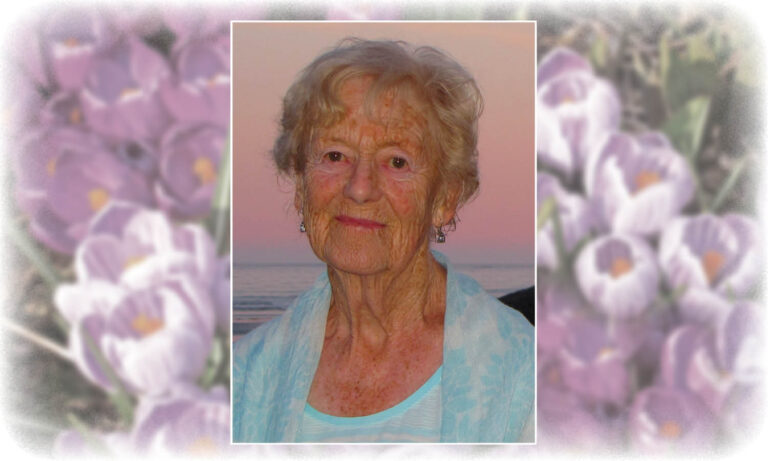
Margaret (Meg) Hodges née Wilson. Born 4th July 1932 in Linton, Cambridgeshire, England. Died 8th May 2023 on Salt Spring Island, BC, Canada. Daughter of Hugh and Nora Wilson.
Educated at the Perse School, Cambridge and Reading University, but Meg would say she has never stopped learning, being especially interested in history, literature, philosophy, and theology, but also learning some science from her parents and sons.
Meg loved Salt Spring Island, which in some ways reminded her of her dearly loved Linton. Her interest in nature had been awakened by her father who used to take his children on long cycle rides in the beautiful Cambridgeshire countryside.
Meg was predeceased by her brother, Edward Hugh Wilson. She leaves 5 dearly loved children – Lindsay, Kathy, Robin, Fraser, and Alastair, as well as 13 precious grandchildren and 2 great-grandchildren.
A celebration of life will be held at All Saints by the Sea Anglican Church on May 18th 2023 at 2pm.

FROST, Kurt Hans Hugo

Kurt Hans Hugo Frost
April 18, 1935 – April 20, 2023

I had known Kurt for over 31 years here on Salt Spring Island. He was a mentor, a teacher but most of all a very good friend.

His life reads like an adventure/travel novel and here I’ll try to do it some justice.

He was born and raised in Rangsdorf, Germany in 1935; by 1945 that had become a part of Communist East Germany. His desire to travel began at the early age of 3-4 years.

Having completed his trade in boat building, he departed the East in 1954-55 and headed for the West. His travels eventually took him halfway around the world to Australia, mostly on a moped. Along the way be passed through Switzerland, France, Spain, Morocco, the Belgian Congo, Uganda, Kenya, South Africa, India and Southeast Asia, before reaching Darwin, Australia. He met and married his wife Pat in Johannesburg, South Africa.

In Sidney, Australia, he/they built their first boat — a 36’ ketch, “Safari Two” — and sailed back to England over a period of two years, stopping at Durban, South Africa to work, and crossing the Atlantic twice on the way. After arriving in England, the boat was sold to another couple who became lifelong friends. They had owned the boat for about 47 years.

Kurt built another ketch, the 50’ “Desert Flower” in Germany, and continued travelling the Mediterranean, Atlantic, Caribbean and the Pacific, landing in Victoria, B.C. in 1975. After separating he moved to Salt Spring in 1987. His adventures continued sailing the local water in his sloop “Merry Trotter”, hiking and canoeing in the wilderness of Northern B.C. and the Yukon with friends and his dog. In later years he travelled to New Zealand and Germany, but his heart was always in the wilderness.

As a wood worker he excelled, building his own home and most of the furniture in it. He turned his talents and creativity to wood turning, creating beautiful pieces in his shop and displaying and selling them in his tiny studio.

He was a good man, and I’ll miss our 3 p.m. Sunday coffees. In his last year or so he struggled with the onset of dementia, ending up in hospital on Salt Spring and spent his last days at Sidney All Care Residence, Sidney.

I would like to thank a few people, of the many, who helped Kurt and myself immensely in getting through this period. Christa of Salt Spring, a very good friend, visited Kurt constantly at Lady Minto and Sidney; Angelika, a niece from Germany came to help with the house with Helmut; Angela of Lady Minto Hospital, who patiently helped guide me through the system, and Nick, LPN from Sidney All Care, who always wrote back to me and answered all my questions. Kurt seemed to respond to his voice most days. Thank all of you again for your help and kindness. ~ Roderick Macdonald

Blossom Picnic and Ruckle Heritage Farm Day on Sunday, May 7

Sunday, May 7th sees two fun events for all ages unfolding on Salt Spring.

Ruckle Heritage Farm Day will run from 10 a.m. to 3 p.m. at Ruckle Provincial Park in the historic farm buildings area. Activities include demonstrations in sheepdog herding, blacksmithing, seed-saving, sheep shearing and log sawing, plus lots of fun for the kids, animals on display, music, food, farming talks and historic films. The Lions Club members will also hold their famous BBQ.

From 11 a.m. to 2 p.m., the 12th annual Blossom Picnic will take place in Heiwa Garden in Peace Park. Featured entertainers are the Uminari Taiko drum group from Vancouver and Bon Odori dance. The day will also include martial arts demos, paper airplane making and flying, plus other games and fun for children. Japanese food, such as okonomiyaki, omusubi rice balls and home-style inari sushi, will also be sold. People can pre-order lunch by calling 250-653-0099 or emailing heiwagardensaltspring@gmail.com.

The event is organized by the Salt Spring Japanese Garden Society and the island’s Japanese community.

The Uminari Taiko drum group from Vancouver performs. They will be part of the entertainment at the 12th annual Blossom Picnic in Heiwa Garden in Peace Park on Sunday, May 7 from 11 a.m. to 2 p.m. Other features are Bon Odori dance, martial arts demos, paper airplane making and flying, plus other games and fun for children. Japanese food, such as okonomiyaki, omusubi rice balls and home-style inari sushi, will also be sold. The event is organized by the Salt Spring Japanese Garden Society and the island’s Japanese community.