An islands-wide basketball showdown is spinning up thanks to Phoenix Elementary School, an effort that will bring together Grade 6 and 7 students from all across the district to vie for top honours.
The round-robin tournament will take place Tuesday, April 18 at the Gulf Islands Secondary School (GISS) gymnasium, according to Phoenix Elementary School principal Dan Sparanese, who added that the competitive structure would likely see a final game between the top two teams at around 3:15 p.m.
Sparanese said that with how the SD64 schools have been reconfigured — and with each elementary school having added a complement of energetic sixth and seventh graders — the schools thought it would be fun to get them all together at one event.
“There was a lot of interest [in basketball] across the district at that age level,” said Sparanese. “So each school entered at least one team, with some entering multiple teams. It’s a bit of a showdown, for sure,” he said.
Some 80 students are expected to participate, with players from Phoenix, Fernwood, Fulford and Salt Spring elementary schools, as well as from Pender Island School. The individual elementary schools are distributing information to their respective parent communities, said Sparanese, and the GISS gym will be split in half to facilitate running two games at a time, so there will be plenty of spectator opportunities over the course of the day.
“I think there’s going to end up being about 18 games,” said Sparanese. “We’re hoping to make it a community event.”
The weather forecast is looking up and while there will be plenty of days marked by April showers, a number will be sunny and inviting for people who want to get some exercise while helping to clean up the island.
This year it looks like many beaches will be getting cleaned up thanks to community members volunteering for this campaign. One individual doesn’t want the recognition that goes with participation, but will be looking after beaches from Cape Keppel to Musgrave. Claire Sicherman and family always do a great job of removing trash and rotting float and wharf debris from Baker Beach, and marine biologist and area resident Anne Parkinson is again spearheading a clean-up of the Fulford estuary — from Hamilton Beach to the ferry terminal — with help from her friend Maureen Stephenson.
Tangachee Goebl is also taking care of several south-end beach-shore areas again this year. Thank you, Tangachee!
Removing plastics and other garbage from beaches is especially crucial to help protect the marine environment and the creatures who rely on it. A number of beach areas are still available for adoption this year.
Just email us at driftwood@gulfislandsdriftwood.com or phone 250-537-9933 to sign up for beach or roadside areas.
Thank you to everyone who has committed to helping so far, and don’t forget to send us photos!
Our running list of participants as of Monday is:
• Sicherman family — Baker Beach.
• Michelle Grant & Steve Coopman — From Epron Road, up North End, down North Beach to Fernwood.
• Robert Steinbach — Kitchen Road, and Fulford-Ganges Road from Kitchen to Horel.
• Elizabeth Hayes — Byron Road.
• Ranji Bhimji — End of Isabella Point Road to Mountain Road.
• Tangachee Goebl — South end beach shores: Beaver Point, Ruckle, Fulford Harbour.
• Nancy Johnson — Beddis Road from Fulford-Ganges Road to the sailing club.
• Gail Sjuberg — Cranberry Road from Fulford-Ganges Road to Blackburn Road.
• L.& L. Fraser — Long Harbour Road from Upper Ganges Road to Eagle Ridge Drive.
• Anuradha from Salt Spring Centre of Yoga, and the Heron Class of Salt Spring Centre School — Blackburn Road.
• Mark & Tim Hiltz — Salt Spring Way East, Castle Cross Road, Barker’s Place, Arnell Way, east side of Fulford-Ganges Road between Arnell Way and Salt Spring Way.
• Ken Jackson & Friends — Baker Road – all of it.
• Amanda McLeod — North End Road from top of North Beach to Southey Point Road.
• Anne Parkinson & Maureen Stephenson — Fulford Bay from Hamilton Beach to the ferry terminal.
Two days out from the opening of Salt Spring Arts’ 16th Annual Spring Art Show at Mahon Hall, executive director Yael Wand and co-curators Richard Steel and Patrick McCallum adjust final details to the new international visual arts exhibition Archipelago: Contemporary Art of the Salish Sea.
The exhibition, framed as “twelve artists, six mediums, three exhibitions, two countries, one sea,” is a collaboration between the creators and communities of the Southern Gulf Islands and the San Juan Islands, two of North America’s most feted art communities. The partnering organizations and venues are Salt Spring Arts, ArtSpring and the San Juan Islands Museum of Art, each hosting different elements of the exhibition.
Salt Spring Arts displays the works of six artists from the Southern Gulf Islands April 14-30, while ArtSpring features six artists from the San Juans April 22-May 24 (opening on the evening of April 21), with a 10-day overlap with Mahon Hall. The San Juan Islands Museum of Art opens its exhibition Sept. 22, where curator Peter Lane will welcome the Canadian artists.
“What is so interesting about our cross-border group of twelve is, even with several of the local Gulf Island artists, they have shown and are known across the country, but haven’t often shown on Salt Spring, if at all,” says Steel. “That artists who could work anywhere in North America yet choose to live and work in the Salish Sea is fascinating to explore and a wonderful opportunity for the community.”
Visitors to Mahon Hall will see the work of established Salt Spring installation artist Anna Gustafson, textile artist Jane Kidd and painter John Macdonald, along with newer artists like Salt Spring born-and-raised photographer Sam Montalbetti and Coast Salish carving artist Temoseng Chazz Elliott. Pender Island’s fabric artist Joanna Rogers rounds out the B.C. contingent.
Detail from The Fog Warning by Anna Gustafson, one of the pieces in the Southern Gulf Islands segment of Archipelago: Contemporary Art of the Salish Sea.
How the unique sense of place in the Pacific Northwest affects the artists’ work, perspectives and values will be front and centre in the conversation. A theme shared by many of the local artists are bold and beautifully crafted statements on the natural world, including the vulnerability of our environment.
The youngest artist in the group, Elliott intertwines the knowledge of both his mother, a blanket weaver and his noted artist father along with the ways of Coast Salish art and W̱SÁNEĆ teachings. His art focuses on the history, stories, legends and knowledge of his peoples.
“My form of art was born and bred directly from these lands, waters, plants, and animals over thousands of years of our people studying this territory,” says Elliott. “We developed this style of art like a language; it’s a form of documentation and a means to express a message.”
Montalbetti, who now lives in Montreal studying photography at Concordia, is interested in exploring the medium’s technical sleight-of-hand to elicit emotion and change perceptions. In his current work, instead of focusing on the larger sculptural forms of water, he dives into the Salish Sea to capture tiny particles and backscatter. The light and lens produce an optical phenomenon revealing eerie orb-like shapes.
“While they have a cosmic look to them, the pictures are from a smaller world lying outside of human perception, revealed to us by photographic optics, water and light,” he says. “I see my work as a form of psychedelic magic.”
Meanwhile, accomplished artist Macdonald is known for his large-scale, lush, colourful approach to painting scenes from his natural environment and personal experience. From sunbathers at the lake to firefighters in the forest, his endeavour is to create social situations, involving the viewer as the silent third party, caught in the act of looking.
Macdonald has been collected and exhibited nationally and internationally for over two decades with paintings at External Affairs in Ottawa, Toronto Dominion Bank and The Grand Pacific Hotel.
John Macdonald oil on board painting and mixed media piece titled Pause (Canadian version), part of the Archipelago exhibition at Mahon Hall.
For other artists, it is less about representational expressions of the coastal environment but rather submitting an ideological sensibility about it, namely human impact on the natural world and concerns for its preservation — be that climate change, pollution, garbage and threats to wildlife.
A Governor General’s Award-winning artist who has exhibited in solo outings and over 60 group exhibitions across Canada, the United States, Japan, Poland and Australia, Kidd is renowned for infusing meaning through her masterful textiles and tapestries. Her tapestries in Archipelago are from two ongoing series: “Inheritance” and “nothing is indifferent to us.”
“I see this current work as a warning of environmental disaster. A call to pay attention and recognize our complicity in environment carelessness,” Kidd affirms. “I also offer the opportunity to celebrate the skill and value of the handmade object, encouraging the viewer to look closely and pay attention; actions that have a parallel value in our relationship with the world around us.”
Her fabrics are complex stories of pattern and colour inspired by objects like rusty metal, industrial garbage, beach refuse or small natural phenomena like mold, lichens, shell middens and moss.
Born to an Italian/Guatemalan mother and Swedish father, installation artist Gustafson uses common objects to explore the intersection between the natural world, human behaviour and technology. Showing since 1974, she is known for her limited palette and restricted vocabulary of natural materials and found objects.
“For the past eight years I have been enshrouding discarded small appliances and single-use plastic containers in linen, just as we once prepared our dead for burial,” she says.
Gustafson believes we best remember information and events through our senses and associated emotions. With a strong sensory component, her work aims to be a catalyst for deep emotion and conversation.
Another artist who incorporates found objects into her work, fabric artist Rogers unveils a new series entitled “What Once Was (The Apocalypse is Now.)” Working with six new shift dresses as well as copes and armour that were started 25 years ago, which she loves to keep embellishing, she is drawn to traditional surface design techniques such as hand dying, shibori, hand weaving and sensory connections between fabric and its maker.
With its opening reception on April 14, Wand of Salt Spring Arts is also excited about the additional events and programming that will support the Archipelago theme.
“We’ve aimed to embrace the magic that happens when different creative disciplines come together,” she says. “Whether the focus is music, literature, film, even the ecology of the region, the Spring Art Show aims to ignite collaboration and community engagement all in one space.”
With a Salish Sea authors panel, a film screening and panel about the Salt Spring Seals swimming group, a poetry and music event, artist talks by exhibiting Gulf Islands artists and a curation panel, Salt Springers will have many opportunities to participate.
See saltspringarts.com for more on Mahon Hall exhibitions and events for Archipelago.
What exactly is the Salt Spring Trail and Nature Club (SSTNC)?
Charles Kahn, a well-known island author of, among many others, the book Hiking the Gulf Islands, is one of the club’s most active members. In the history he recorded for the club, he states that “for half a century it was the largest interest group on the island.”
Formed in 1973, the club has promoted walking and hiking for over 50 years. They encourage and enable hiking our island’s natural areas in the broadest sense of the word. Volunteers from SSTNC work in cooperation with different levels of government — such as CRD and BC Parks — maintain and improve trails but also help to acquire new land or access.
Other volunteers keep the club running by serving on the Board, collecting membership dues and chairing meetings. And throughout the years it is volunteers who lead walks, offering an opportunity to anyone to enjoy company while hiking a trail.
Some of the earliest trails on Salt Spring Island date back to before cars came to the island. And many still exist thanks to generous landowners willing to share access to private property. Some of the first instrumental members of the club who have since passed away are commemorated through memorial benches placed along the very trails they built or hiked.
Three different levels of hikes are offered each Tuesday, from September to June: Ramblers, Walkers and Hikers.
The most laid-back level is Ramblers, who walk without pressure and often stop for breaks to take a photo or spot a bird. Ramblers often end their walk at a local coffee shop.
Walkers go at a leisurely pace, stopping to smell the roses along the trail. They generally walk less than eight kilometres at a time and avoid long, steep climbs, but do need sturdy footwear.
Hikers will go on longer, strenuous hikes and often gain altitude. They need to be in general good shape. Of course, participants can switch between groups to find their personal level of comfort. Hikers also go out on Sunday afternoons, meeting at 1 p.m. at ArtSpring.
Besides these weekly walks, the club organizes bird watching, archaeology walks, as well as guest speakers on botany, travel and much more. Once a month, hikers and walkers can participate in an off-island trip to explore trails elsewhere. Carpooling is coordinated for these and local events. Check out the website for schedules and other details: saltspringtnc.ca.
If you would like to join a group of like-minded outdoor enthusiasts for an easy-going ramble, a leisurely walk or an energetic hike, you are welcome to join the club’s activities. You can attend three times before committing to the annual membership fee of $30.
As the nomination period opens, the first potential candidates for Salt Spring’s newest governing body have hit the ground running.
Three islanders announced plans this week to run for four positions on the new Salt Spring Island Local Community Commission (LCC). Gayle Baker, Earl Rook and Brian Webster were first to declare intentions to run for election Saturday, May 27; candidates have until 4 p.m. Friday, April 21 to submit nomination materials.
Baker has served as founder and facilitator of ASK Salt Spring, commissioner and chair of two Capital Regional District (CRD) commissions, chair of the LCC Advisory Committee and director of various boards, including the Salt Spring Island Chamber of Commerce.
Prior to moving to Salt Spring 18 years ago with her husband Howard, Baker was the dean of Santa Barbara City College, where she oversaw a $6-million budget and 600 staff. Earning her doctorate while juggling the demands of raising three children taught her the need for perseverance, commitment and a good sense of humour. Baker said she believes in “transparency, not mysteries” when it comes to the often-complicated budget reports currently used by CRD and its former commissions.
“It’s time to lift the veil of obscurity on the CRD budget process, and to fully and openly champion the efforts of volunteers to do things that staff cannot accomplish,” said Baker, adding she believes in volunteerism instead of an over-reliance on overstretched CRD staff resources to provide good value and maximize the efforts of the island’s talented and engaged citizens.
“We need collaboration and openness to address our housing crisis, fix our transportation challenges, build our pathways, maintain our parks and enhance our sense of well-being,” said Baker. “I know I can be a voice of reason to ensure that the LCC is open to input and not afraid to push when necessary to get priority projects done.”
Baker said results matter, so it will be crucial for the LCC (and the broader CRD) to develop a comprehensive set of measurements for all initiatives and track progress each year.
“Prioritization, not paralysis through planning,” said Baker. “Delegating and overseeing groups of volunteers and setting realistic action targets should be one of the first tasks of the new LCC.”
Baker said she would be stepping away from her role on the Chamber of Commerce during the campaign.
Rook has lived on Salt Spring Island as a full-time resident since 2015.
“I love the natural beauty and quirky culture of this island,” said Rook. “I’m an avid gardener, serious birder and musician. This island has become home, and I want to do everything I can to support and protect it in trying times.”
Before retiring to Salt Spring, Rook spent 25 years with the Minnesota Department of Health, working in finance, administration and facilities management. He spent the preceding decade in the private sector as a manager and comptroller. He holds a BA in music and a master’s degree in management. On Salt Spring he is president of the Salt Spring Garden Club, serves as treasurer for the Bandemonium Music Society and Island Wildlife Natural Care Centre, and is on planning committees for two other non-profit organizations. This is Rook’s first time seeking elected office.
Rook said he considers the formation of the LCC an essential step in gaining greater local control over government services on our island.
“I am committed to making the LCC a success for this community through thoughtful prioritization, evidence-based decision-making and attentiveness to our residents,” said Rook. “My years of experience in government operations, budgeting, policy development, planning and project management will allow me, as a new commissioner, to get up to speed and get to work quickly.”
He also thinks it is important that the LCC look beyond its current mandate and work to reduce fragmentation in the delivery of public services to Salt Spring. He sees the most serious challenges facing our community — such as adapting to climate change, providing workforce housing and ensuring a quality water supply — as complex and cross-jurisdictional.
“I’d really like to see the LCC take the lead in advocating for cooperative intergovernmental action with the Trust, the CRD Board and other involved organizations to make meaningful progress on our biggest problems.”
Webster is a farmer, small business owner and former Parks and Recreation Commission (PARC) commissioner. He and his partner have owned and operated an organic apple orchard and nursery on Salt Spring since 2011, opening a cidery on their farm property in 2019.
“Our community faces serious issues and the LCC can play an important role in addressing them,” said Webster. “It’s important for the LCC to be effective from the start and I believe my knowledge, experience and commitment to act decisively could help it fulfill its potential.”
Webster currently sits on the boards of Salt Spring’s Agricultural Alliance, Community Market Society and Saturday Market Society. Previously, he was self-employed as a writer/editor and communications consultant. B.C.-born, he has lived on the south coast since early childhood.
Webster brings extensive local government experience to the campaign, having served seven years on PARC. He also worked for more than five years to help develop a proposal for the LCC, serving as lead writer for the Community Alliance Governance Working Group’s 2018 report Where to From Here: A Discussion Paper on Salt Spring Island Governance, and again as lead writer for the 2022 discussion paper A Local Community Commission for Salt Spring Island: Options and Recommendations. This latter paper served as the starting point for the proposal that was approved by voters in last October’s referendum to approve establishing the LCC.
“It’s time for Salt Spring to move beyond divisive governance debates and get to work actually improving local government services,” said Webster. “Establishing the LCC is great, but it’s only a first step. We need to do more to break down decision-making silos and take action on pressing issues. That requires broadening the LCC’s authority, working with our two large improvement districts and exploring neglected areas such as housing for working families.”
The new LCC will have administrative authority over several CRD services, including parks and rec and transportation/transit, as well as economic development, liquid waste disposal — specifically the receiving stations and storage at Burgoyne — street lighting, determination of compensation for livestock injury by dogs, the Fernwood dock and approval of grant-in-aid applications. Commissioners will also act in an advisory role to “review and recommend” budgets for Salt Spring services that receive CRD funding, such as ArtSpring, the public library, and search and rescue.
The Circle Education is hosting its biennial spring fundraiser this coming week: the Purses With Purpose online auction. Over 90 new or gently used, high-quality purses, satchels and handbags are auctioned off between Thursday, April 13, and Sunday, April 16.
The auction features a broad collection of designer bags, around-town bags, backpacks, evening purses and even some celebrity bags. MP Elizabeth May has donated one of her purses to the auction and Canadian shoe designer John Fluevog contributed his fabulous Fluevog shoe purse. There is also a purse that travelled to London for a centenary Royal Garden party at Buckingham Palace!
The Circle Education delivers innovative, evidence-based social-emotional programs for children and youth on Salt Spring Island as well as the other Gulf Islands. All the proceeds will support the organization’s in-school and after-school programming.
Why Purses With Purpose? When working with young people, the facilitators talk a lot about identity, and the type of bag we carry is a perfect metaphor! Both the outside and the inside reveal a whole lot about who we are. We can ask ourselves: why do we choose the bags that we choose? What do they say about our style/personality? As for our inner selves, what do the contents of our purse tell us about what is important to us and what we need to feel comfortable when away from home. What does it symbolize about where we are at in our life, the responsibilities we carry, the passions that we hold?
Raincoast Conservation Foundation and the Pender Islands Conservancy recently announced the success of their second joint land acquisition campaign in the last two years. The KELÁ_EKE Kingfisher Forest campaign was completed six months ahead of schedule, protecting 45 acres of Coastal Douglas-fir (CDF) forest and associated habitats on S,DÁYES (Pender Island), W̱SÁNEĆ Territory.
Our organizations should have spent the early months of 2023 in celebration. After all, CDF habitats are among the rarest and most threatened in B.C., and due to high rates of development and extent of private land, there are limited opportunities to protect remaining large tracts of land in this region. Undoubtedly, perpetually safeguarding this land is a conservation win. But, for land trusts and other conservation practitioners, for every conservation win there is often an ecological loss.
Prior to launching the Kingfisher campaign, Raincoast and the Conservancy visited an eight-acre forested property upland from Medicine Beach (E,HO,) Nature Sanctuary on Pender. This property was identified as having high conservation value due to its connection to Medicine Beach and neighbouring intact habitats and other ecological features like known nesting trees. But as news of imminent development plans on the land now known as Kingfisher Forest spread through the Pender community, our organizations had to make a choice; we couldn’t protect both.
Just over a year later, a significant portion of the forest we were forced to pass over for protection has been hauled off the land on the back of a logging truck. The trees that remain stand as a living testament to the failures of local environmental protection policy throughout the range of the CDF zone.
Working in land conservation in one of the most expensive regions of the country is riddled with these sorts of decisions. Unlike the rest of B.C., where the majority of land (95 per cent) is under public management, 80 per cent in the CDF is privately owned.
But, when property prices are too high to protect these places via purchase, can we count on public policy tools to safeguard CDF forests from further degradation?
Experience has suggested we cannot.
Consider the District of Saanich: in 2017, district council voted 5-4 to rescind a suite of environmental development permit areas (EDPAs) designed to protect ecologically sensitive areas, just five years after their initial implementation. This decision was based on two years of pressure from three per cent of the property owners impacted by their implementation. Most of these property owners argued that the implementation of the EDPAs 1) adversely impacted property values (despite a local study and a body of peer-reviewed literature proving this to be untrue) and 2) followed imprecise mapping due to some EDPA boundaries intersecting structures.
In a zone as rare and threatened as the CDF, even sensitive ecosystems that have been impacted by human activity are worthy of protection and meaningful process to inform decision-making. And that is what local policy tools like bylaws and EDPAs have been designed to do: encourage meaningful process. They are not completely restrictive. Rather, they ask property owners to stop and consider the natural ecosystem values they are fortunate enough to have under their care prior to proceeding with development plans.
Zoning, EDPAs and bylaws can all be effective tools to protect ecosystems within the CDF, but they must be embedded within a wider framework of conservation policy, properly enforced and have the support of local residents who understand that the land they own is representative of a globally rare collection of plants and animals. Both the province and local governments in this region have avoided accountability, lobbing the political hot potato of ecological protection back and forth. Each time they drop the ball it is the imperilled ecosystems of the CDF that get burned.
As the climate continues to change, the need for functioning ecosystems will become increasingly apparent. Though councils from across the CDF region, including the District of Saanich and the Islands Trust, have made Climate Emergency declarations, little meaningful action has materialized when it comes to protecting what’s left of the CDF zone.
Ultimately, the province needs to create enabling conditions for local governments to adequately protect local ecosystems, as they did with the implementation of the Riparian Areas Regulation under the Fish Protection Act in 2004. Local governments should be at the forefront of making change on the ground, but without the support of the province and local residents the future resilience of CDF forests and associated habitats is increasingly uncertain.
The writer is forest conservation program director for the Raincoast Conservation Foundation.
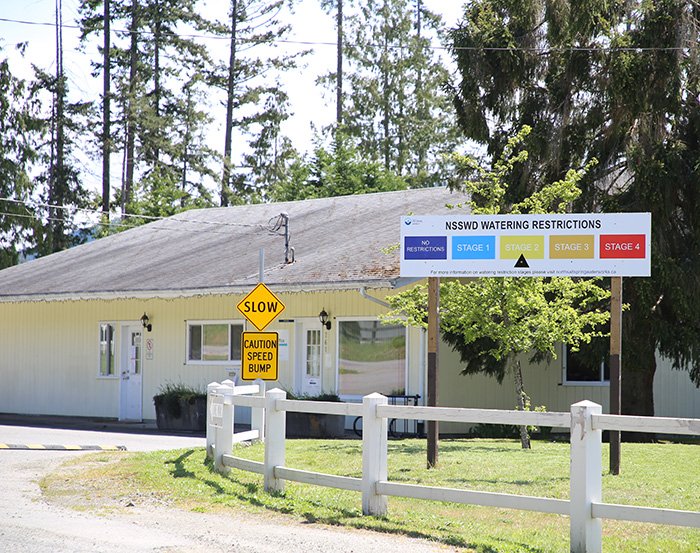
Four candidates are in the running for two North Salt Spring Waterworks District (NSSWD) board of trustee seats. Qualified voters should have received ballots in the mail by now, but people can also vote in person at Community Gospel Chapel (CGC) on Thursday, April 27 from 2 to 6 p.m. The NSSWD annual general meeting will begin at 6 p.m. at CGC that day, with an online AGM link via Microsoft Teams also available. For details about voter eligibility and other details — only landowners within the NSSWD can vote, for example — contact the NSSWD, or see advertisements in the Gulf Islands Driftwood newspapers of March 29, April 5 and 12.
The four candidates are Gary Gagné, Leigh Large, Steve Lam and Elizabeth FitzZaland. Their answers to the three following questions posed by the Driftwood (who mandated a maximum word limit) are printed below and also in the April 12 issue of the Driftwood newspaper.
1. What motivated you to run for a NSSWD trustee position, and what do you bring to the table?
2. What steps, if any, do you think the NSSWD should take to increase the amount of available water in its system?
3. Do you support the NSSWD remaining independent of the CRD? Why or why not?
GARY GAGNÉ
Gary Gagné
1. As a current trustee and vice-chair of the board, I am committed to the continued improvements in our relationship with the ratepayers. I am keenly aware of the burden of higher taxes and will continue doing all I can to find access to grants in order to help pay for the new treatment plant and the replacement of our aging pipes. I endorse Elizabeth FitzZaland as a new trustee to the board.
2. The first step is to have the new treatment plant on Maxwell Lake built. We will then have the ability to transfer water between the two systems, which may result in a more efficient use of the water we do currently have available. Another increase will arise as the restoration of the Maxwell watershed benefits the water table resulting in increased underground and sediment-free flows into that lake even during the dry summer months. Education around water conservation is already having a positive effect on the amount of available water as well as the new toll rate structure.
3. All decisions about water must be made on the island by islanders. We already have too many examples of botched take-overs by the CRD that are costing those districts enormous sums of money to correct. NSSWD currently has the cheapest overall rates of any district on the island. We are being very proactive in helping the province see the wisdom of supporting this improvement district.
LEIGH LARGE
Leigh Large
1. Our water system is a $50-million asset. I’d like to see supplemental business acumen and financial understanding around the table to ensure we are doing the best we can to look after our water system. I like dealing with issues openly and honestly. This approach has always served me well. We have a huge structural problem in the system – leakage of an estimated 25 per cent of our clean water is lost every day. That must be fixed with no additional costs to ratepayers.
We also have a potentially catastrophic lawsuit lingering in the background pertaining to water supply commitments made to Channel Ridge. This paralyzes our ability to plan. I’m confident we can find a way to put this behind us.
2. In addition to fixing the very serious leak problem, we have many water-saving tools available to us. They just haven’t yet been implemented on a wide enough scale. Rainwater capture, low flow toilets, grey water plumbing in our houses — these are all powerful water-saving strategies. A program to switch out toilets to low flow could easily be funded by the private sector.
If we start saving water we can then re-allocate some of this precious resource within the existing infrastructure with no extra costs. This would lead to more workforce housing and provide a brighter future for our children who otherwise may not be able to stay on Salt Spring.
3. This is a very complex question that requires further dialogue so we can arrive at a Salt Spring-centric solution. There are many issues entwined with the idea of NSSWD becoming part of CRD, both pro and con. We need to sort out pending litigation, many years of deferred maintenance and our inability to currently access funding for our aging water system. I expect that creating stronger ties to all levels of government will allow us to find more innovative solutions to the management of our water system.
STEVE LAM
Steve Lam
1. When I saw the ad in the Driftwood asking for nominations, my immediate reaction was that I can bring a fresh perspective to the critical issues around water for our community and really make a difference.
I bring to the table years of professional experience in the water industry. Having been involved in building over a dozen water treatment plants around the world, I know how water systems are designed, built, maintained and operated. My customers deal with similar issues facing NSSWD, including water shortages, increasing demand, aging infrastructure and budgetary constraints.
2. Looking at available data, we typically withdraw about 30 per cent of the reservoir water that we are licensed for from Maxwell and St. Mary lakes. If we want to increase the available water we would need to assess the risk of withdrawing more water from our reservoirs, or work together to consume less. Small changes make a difference. It may not seem like a lot but a one per cent increase in what we withdraw could provide water for about 20 new parcels or 60 people.
3. First, I believe that NSSWD is well managed and provides some of the best water on the island. NSSWD is owned by the ratepayers, and all ratepayers have a say. However, if we look at past election results, voter turnout is low. As such, perhaps the ratepayers would prefer our water to be managed differently. The CRD’s mandate is to provide essential services and water is an essential service. There are significant benefits that can be realized if water was managed under the CRD, including economies of scale, and the ability to receive funding from the federal and provincial governments. Ratepayers in CRD districts pay significantly less for water compared to Salt Spring Islanders. As such, if the opportunity arose for the CRD to take over the management of NSSWD, I would support it because I believe it would ultimately lead to lower water costs.
ELIZABETH FITZZALAND
Elizabeth FitzZaland
1. I want to ensure islanders always have safe and affordable water. There are challenges threatening this essential service, including deteriorating infrastructure, escalating costs, climate risks, and the moratorium and pending litigation. I believe NSSWD is at a critical moment. The decisions the board makes in the next few years will either significantly benefit or harm ratepayers and the broader community. I am ready to contribute my experience in project management and community development to help find fiscally and environmentally sound solutions based in science and supported by ratepayers.
2. a) Fix the leaks. NSSWD must fix the significant leaks in the system. Data shows that an estimated 25 per cent of treated water never reaches taps. That’s 25 per cent more capacity right there.
b) Increase conservation. NSSWD residential users consume up to five times the daily average of some of the other local systems. NSSWD needs to provide more education and financial incentives to encourage conservation and uptake of alternatives like rainwater catchment.
c) Revise rate structure and policies. Treated potable water should be prioritized for human consumption, not filling pools or watering rhododendrons. Paired with the steps above, NSSWD should revise policies to rein in excessive use and support water-efficient development.
d) Best practices and advocacy. We need to use science and reasonableness to ensure the metrics and rules we use for water planning are sound. NSSWD must make or advocate for needed change. Let’s replace bad math with good math to support problem-solving.
3. Senior governments fund up to 70 per cent of infrastructure upgrades in B.C. Only municipalities and regional districts are eligible for this vital funding. While I understand there is a history of dissatisfaction with the CRD, NSSWD simply cannot remain viable without this funding when it has identified at least $24 million of necessary upgrades. Let’s elevate the conversation from “independent or CRD” to how a constructive partnership that protects ratepayer interests can be crafted. Ratepayers deserve to be part of the discussion, review pros and cons, and weigh in on the best path forward.
In the W̱SÁNEĆ 13-moon calendar, mid-February to mid-March is the WEXES (frog) moon. It is a time of sacredness and purification, and the time to gather food and medicine. The days grow longer, and the sunshine begins to warm the earth.
The frog, as witness and messenger, awakens from hibernation and announces the coming spring, the sacred season of plenty. This is the exciting time of re-birth and renewal.
It is in this spirit that I renewed in-person public engagement by hosting six community meetings across the riding. I invited my local government colleagues from the Capital Regional District and Islands Trust to join the conversation as we work closely on cross-jurisdictional issues.
We heard how each community is unique, and also the many similarities in the challenges facing the Southern Gulf Islands. They include all forms of transportation, suitable and affordable housing, and access to primary and urgent healthcare. Another similarity is the hundreds of incredible volunteers and administrators who dedicate countless hours for critical non-profit societies.
March 17 was a busy day in Ganges when we arrived. The day started with meetings with constituents to discuss primary health care delivery and clean energy production, followed by our regular monthly Salish Sea Trails Network meeting, and increased financial support for the local abattoir.
I am thankful that both CRD director Gary Holman and Islands Trust trustee Laura Patrick joined the discussion at Fulford Community Hall. I extend the invitation to my local government colleagues because so much of our advocacy requires the collaboration of all the elected representatives.
The first issue we were asked about is an excellent example of the ongoing cross-jurisdictional issues we face in our riding. Specifically, the increasing use of anchorage sites for bulk carrier ships awaiting their cargo at the Vancouver port, and more generally the regulation and enforcement of the marine environment. Your elected officials at all levels continue to strongly voice concerns to Transport Canada about the lack of environmental and social impacts of the anchorages.
A constituent asked about the now infamous Bill 36: Health Professions and Occupations Act. I shared that I feel passing that law by time limiting and closing the debate was a mistake. With more than 600 clauses, rushing it through the legislature has created more questions than the health minister has given answers. Unfortunately, my support of the BC NDP’s process served to further undermine trust and confidence in the government. It was an important learning lesson for me, and I will not be taking part in votes where the government unnecessarily limits the debate.
We discussed the availability of affordable housing, an issue that is challenging in all communities in my riding. The conversation centred on BC Housing’s Drake Road project, the Seabreeze, homelessness, belonging, well-being and the need for a range of housing options available in the community.
It was wonderful to connect with so many people who are passionate about their community. While each community in Saanich North and the Islands is unique, in each community we learned about how elected officials and governments can be more effective in our advocacy, and we heard about frustrations with bureaucratic, administrative and multi-jurisdictional gridlock.
We are committed to working together to represent Salt Spring Island. If you have questions, concerns, ideas, or opportunities please don’t hesitate to contact my office at 250-655-5600 or email Adam.Olsen.MLA@leg.bc.ca.
In what’s shaping up to be a busy spring for elections, Salt Spring’s fire district won’t need to hold one after all.
Three nominations for Salt Spring Island Fire Protection District’s board of trustees were received by the April 6 deadline, according to chief administrative officer Rodney Dieleman — and there are three seats to fill. Returning trustees Rollie Cook and Mary Lynn Hetherington, who have both been on the board since 2017, will be joined by new trustee David Courtney to be elected by acclamation.
Each will begin a three-year term in office at the district’s annual general meeting, which is being held at 7 p.m. on Monday, April 24 at Lions Hall, 103 Bonnet Avenue.