Home Blog Page 203

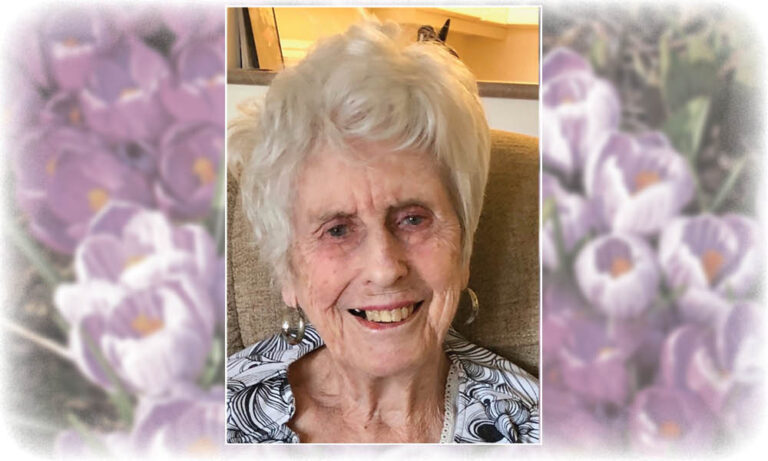
NORTHEAST, Trevor

1935 ~ 2023

Trevor Northeast passed away early on February 28th at the age of 87. Trev, as he was known to most, was born in 1935, in Tredegar, South Wales. He came to Salt Spring Island in 1982 and married the love of his life, Margaret. He quickly fell into the rhythm of island life and became known to many through his job on the ferries and his commitment to the Legion. Margaret and Trevor spent many happy years together, devoted to family, friends, and their beloved dogs. Margaret’s passing in 2017 was a terrible loss for Trevor, yet he continued to be active in the community and was a regular volunteer at the Legion. According to his wishes, Trev lived at home as long as it was possible (and even a little longer). He did this with the support of Dr. Reznick, Island Health and his incredible friends. Trevor is survived by his step-son, David Marsh and his wife Debbie, his step-daughter, Ceri and her husband Ben Rahn, and his grandchildren, Dylan and Gareth Marsh, and Esme and Julian Rahn. A celebration of life will be held at the Legion on May 13th from 3 to 5 p.m.

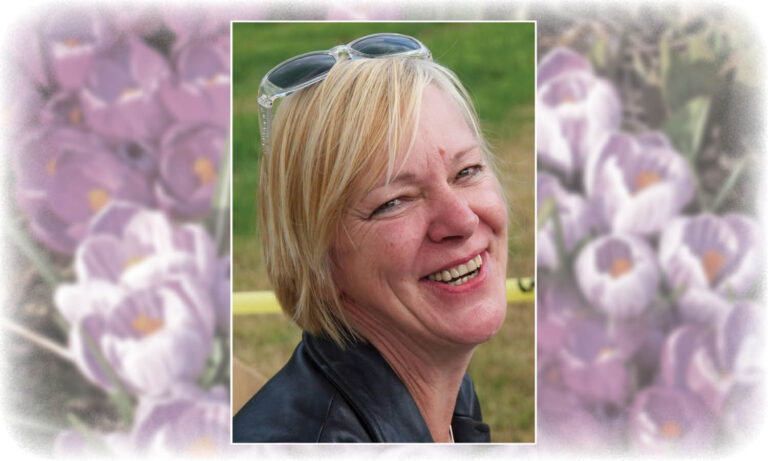
DOSCO, Elizabeth (Betsy)

Elizabeth (Betsy) Dosco

On June 27, 2022 Elizabeth (Betsy) Dosco passed peacefully at the age of 62. She leaves a huge hole in the hearts of her family and friends who were always entertained by her stories and hilarious sense of humor.

Betsy was always making sure everyone around her was not only being looked after, but having a blast. She will be remembered for her extra tight hugs, swift kicks in the arse and her infectious laugh.

A celebration of life will be held on April 23rd, at 1:00pm at 191 Byron Road.

Commissioners’ duties laid out by CRD staff

0

Potential candidates for Salt Spring’s newest governing body got an earful from Capital Regional District (CRD) personnel, as a dozen or so met online March 30 to learn a little more about what they might be signing up for. 

Island voters this past October approved the creation of the Salt Spring Island Local Community Commission (LCC), which will be comprised of four community members to be elected on May 27, and a fifth member — the Capital Regional District’s (CRD) Salt Spring Island electoral area director, a position currently held by Gary Holman. The five commissioners will have their first meeting Monday, June 19, each having one vote to bring Salt Spring’s desires to the CRD as once voice, on matters ranging from parks and recreation to transportation and transit. 

But first, they have to get elected. CRD senior staff members and deputy election officers Karla Campbell and Marlene Lagoa tag-teamed a Zoom presentation followed by a brief Q&A last Thursday, telling potential commissioners about the range of responsibilities and time commitments should they take office.  

The LCC’s meeting schedule is proposed to be once a month, every third Tuesday, according to Campbell, adding that staff expected those meetings to run between two and three hours. 

 “We’re not recommending any meetings during July, August and December,” said Campbell. “However there will be time available for special meetings as required.” 

In addition to parks and rec and transportation/transit, the LCC’s administrative authority extends to economic development, liquid waste disposal — specifically the receiving stations and storage at Burgoyne — street lighting, determination of compensation for livestock injury by dogs, the Fernwood dock and approval of grant-in-aid applications — as well as an advisory role to “review and recommend” budgets for Salt Spring services that receive CRD funding, such as ArtSpring, the public library, and search and rescue.

In addition to a CRD email address — and an iPad to administer electronic agendas and relevant documents — commissioners will receive $10,000 annually, with some limited expenses being eligible for reimbursement. Director Holman has said the remuneration number was, to a certain extent, arbitrary, but it had a rational foundation. Holman said in neighbouring municipalities of similar population, such as Sidney and North Saanich, members of those seven-member councils receive between $15,000 and $17,000. But, he added, they have larger budgets and more responsibilities. 

“They’re responsible for land use management, and here we have [Islands Trust] trustees do that,” said Holman. “They’re also responsible for roads and policing. So [remuneration] was scaled back accordingly.” 

The term of office will be until October 2026, after which it will be an even four years; the late election will shorten the first LCC’s term by a few months.  

Nomination packages will be available online at www.crd.bc.ca/ssi-vote. Prospective candidates must be nominated by at least two eligible voters from Salt Spring’s electoral area, and must themselves be Canadian citizens aged 18 and older on general voting day (May 27, 2023) and residents of British Columba for at least six months immediately before filing nomination documents.  

“Surprisingly, you are not required to be a Salt Spring Island resident to be eligible,” said Lagoa. “The requirement is your nominators be eligible to vote here.” 

The nomination period begins on Tuesday, April 11 at 9 a.m. and ends on Friday, April 21 at 4 p.m. More information about the LCC is available at crd.bc.ca/ssi-vote

Greenwoods refreshes for 2023

0

Anyone walking into the Greenwoods Eldercare residence for the first time in a few years might be surprised by what they see. 

They would notice brightly painted residence hallways — named Willow Lane and Fern Lane — with new hand rails in place, and that each resident’s door has a different colourful look and identity. 

A former boardroom has been transformed into a staff room with a view of the ocean out one window. The previous staff room has become a family lounge.

Aletha Humphreys has been the executive director of Greenwoods Eldercare Society for almost five years, and along with the society’s board and dedicated staff steered the facility through the pandemic period, which led to some of the recent changes. 

For example, fundraising for another bus had been in the works, Humphreys said, but it struck everyone during the pandemic that some people don’t actually ever leave the facility. 

“So we thought, ‘let’s make their home environment as home-like as possible.’” 

That led to the hallway refurbishment project, which cost $150,000. 

“All of that money came from the [Greenwoods] Foundation, which would have represented years of giving from the community,” said Humphreys.

Before making the changes, Greenwoods reached out to the Department of Gerontology at Simon Fraser University. That led to being introduced to a decal product that gives the door to each resident’s room a unique look. Each door was also painted a different colour. 

Greenwoods is also working with SFU to determine what sort of artwork or interactive displays could go on the newly painted white walls. 

“[Some things] might look pretty to us but could be overwhelming to someone with dementia,” said Humphreys. 

The family lounge addition was a suggestion from a Greenwoods resident’s son, who observed that visiting people in their bedrooms seemed strange, so having a separate gathering area made more sense. The resulting spacious room has a round dining table and four chairs, two living room chairs and a love seat, and an area to make tea and prepare snacks. A door also opens up to the garden area. 

A generous donation from someone who had a connection with Greenwoods but wants to remain anonymous for now made that change possible. The room will be dedicated to a former Greenwoods board member. 

“We are waiting to do the full opening of this room once we are through respiratory [illness] season,” said Humphreys. “Then we will have a celebratory tea with the person it was dedicated to and invite the families.” 

Greenwoods family members have traditionally been asked for input on an informal basis, but a new family council system brought in by the B.C. government last year will see that change too. Humphreys is grateful that two people stepped up to be co-chairs of the council.

Another major change has occurred in the governance realm. Greenwoods Eldercare Society has been supported by the Greenwoods Foundation since 2002. That entity existed to raise funds for the Greenwoods and Braehaven residences, but the boards of both groups made the decision last year to dissolve the foundation and bring the fundraising aspect back under the society. 

Volunteer capacity was a major factor. 

“We are incredibly fortunate to have an extremely competent board,” said Humphreys. “But we’re struggling to get our volunteers back. We realized it’s wonderful to do a garden bench raffle and it’s wonderful to do an annual campaign, but it doesn’t raise enough.” 

The Greenwoods building is 43 years old and will require significant investment in coming years, she said. 

“I don’t want the plumbing to crash, I want to look at replacing the plumbing . . . We need to keep this building viable and then we can put our efforts towards a new build, which is so desperately needed here.” 

Greenwoods owns an adjacent lot where another facility could be built.  

Humphreys refers to the plumbing because of a failure in a pipe in the kitchen that occurred on Feb. 23. 

She said the contractors dealing with the issue — Miller Plumbing, Fiberlock and Nick Pringle — “were incredible” and the repairs were completed in the shortest possible time — three weeks. 

“Thank goodness we have Braehaven [assisted living facility next door],” she said. “The team had to put all the dishes onto carts and wash and sanitize them at Braehaven and bring them back.”

But of course that wasn’t the only challenge to overcome. 

“Over those three weeks we had snow, so [Greenwoods operations manager Trish Staicesku and her husband Greg] were shovelling a path between the two places.” 

Then, as soon as they plugged in the dishwasher after the three-week hiatus, it broke. A required part was ordered and was supposed to be on the first ferry the next day. But then the morning Crofton-Vesuvius ferries were cancelled. But Irene Lundy, Greenwoods’ support services supervisor and main maintenance person convinced the courier to take the part down to the ferry dock. It was given to a friend of Lundy’s on the ferry and the dishwasher was working by 6 p.m. that night. 

Another reason to fold the Greenwoods Foundation into the society was to eliminate confusion about the two organizations. 

Humphreys said the society also wants to build community engagement and emphasize to people that “we are not part of the Lady Minto Hospital Foundation” and so anyone wanting to support Greenwoods should donate directly to Greenwoods Eldercare Society. While donations are appreciated at any time to help with costs such as the plumbing and rehabilitation repair, a giving campaign is planned for June 5-11 this year during Seniors’ Week. 

Like all health-care institutions, Greenwoods still has staffing challenges and some rooms are without residents as a result. 

“We have been at 43 to 45 [residents]when we should be 50 plus respite.” 

The Health Care Access Program, which provides financial support to people wanting to train to become health-care aides, has been helpful, Humphreys said, and other roles are being filled. 

“It will take us a few years to build up core staff again and not having to be relying on agency staff,” she said. 

For more info about Greenwoods or to donate, visit the greenwoodseldercare.org website or email Humphreys at aletha.humphreys@greenwoodseldercare.org.


Salt Spring Arts nominated for award

Salt Spring Arts has been recognized for its work toward reconciliation with local First Nations by a nomination for the 2023 B.C. Multiculturalism and Anti-Racism Awards.

The nomination, submitted by Jennifer Iredale of Mayne Island, was for a Breaking Barriers Award, which is “provided to an outstanding organization or individual for their work in tackling systemic or institutional racism and reducing barriers for marginalized communities.” As Iredale wrote in her nomination, she believed Salt Spring Arts has been doing exactly that type of work in its efforts to bring Indigenous artists, elders and knowledge keepers into regular arts council programs.

The three-year Artcraft Indigenous Pilot Program was the focus of the nomination. Started in 2021, the program seeks to reduce barriers that would prevent Indigenous artists in the region from participating in the annual Artcraft gallery and its exhibitions. Residency in the Southern Gulf Islands is normally a requirement for participation, but colonial policy and historic racism have meant the SENĆOŦEN and Hul’q’umi’num’-speaking nations were largely divided into reserve lands based on Vancouver Island village sites. As a result, few of the Indigenous peoples who count the islands as part of their unceded territory actually live here today.

The Artcraft pilot project therefore removed the residency requirement for Indigenous participants and eliminated all registration fees and sales commissions. Support for transporting artworks to and from Salt Spring was incorporated, along with technical support for artist statements, photos and directory listings.

Working with Indigenous curator Rose Spahan, Salt Spring Arts introduced a total of 12 regional Indigenous artists to Artcraft and its Showcase exhibition program over the first two years of the project. Positive results that Iredale enumerated include “sales and exposure for Indigenous artists who would not otherwise have had access to that venue; shifting a public misunderstanding of local history that erased Indigenous culture; creating a more multicultural environment on Salt Spring in the present day; and most importantly, building meaningful connections and relationships between Indigenous and settler communities in the Salish Sea region.”

The organization is still working to create new relationships with regional Indigenous artists. Visitors to Artcraft this summer can expect to see work by another six to eight new Indigenous participants. 

The resounding success of the JSIṈSET ŚW̱ELO₭E Exhibition in 2022, curated by Spahan and featuring the Elliott family, has meanwhile encouraged plans for more Indigenous-based Showcases.

Salt Spring Arts also continues to strengthen and build on connections made. Both Spahan and W̱SÁNEĆ cultural advisor J’SINTEN John Elliott will be back on Salt Spring this April for events happening during the Spring Art Show. Philip Kevin Paul, an award-winning poet and SENĆOŦEN language champion, will headline a Salish Sea authors night at another Spring Art Show event set for April 18.

Trustees represent more than communities

By SUSAN YATES

I wish to respond to John Money’s In Depth column in the March 29 edition. I would refute a number of his criticisms but will focus on only two which are important to me.

First, let me state that I respect Mr. Money’s long-time, dedicated community work on Saturna Island; for about 10 years (between 1986 and ‘96) I was a trustee from Gabriola while he was a Saturna trustee, and I always enjoyed his company and wise words at the council table.

Money says, “Many of the trustees have no true understanding of their mandate. This should be spelled out clearly.” I have two responses to that assertion: first, while following the Islands Trust election campaign last fall, it was clear to me that some candidates ran on platforms that did not support the Trust mandate, but rather other community or perhaps personal goals. Second, there are trustees who do not avail themselves of the comprehensive and carefully planned program of education developed specifically in order to bring new trustees up to speed on the Trust mandate, policies, procedures and the job of a trustee locally and on council.

Mr. Money also contends that “The Executive Committee has moved into a position of power and seeks to control the trustees that have been duly voted in to represent the people.” That is far from what I have observed from reporting on and watching Trust Council for several decades, and definitely not true with the current Executive Committee, all of whom were voted in fairly and I believe thoughtfully at the November council meeting. The current committee has three members who are brand new to the executive and one who is new to council; they are well-respected by their fellow trustees and certainly do not bring any a priori agendas regarding the control of other trustees.

The Executive Committee makes decisions and prioritizes council work at the behest of Trust Council; when the majority of council asks the Executive Committee to work with staff and get something done, that is how the work proceeds. There is no other instigation for the Executive Committee’s work.

Trustees are elected to represent their community. That is clear when the votes are counted at election time. But their job also includes supporting Trust Council and making decisions to support the Islands Trust, not just for the benefit of fellow citizens, but for the benefit of the province. That is why it is called a Trust and that is why the province deemed it so in 1974.  

The writer is one of two trustees for Gabriola Island.  

ICET gets one-time funding

0

A rural economic trust that benefits the Southern Gulf Islands will be funded again this fall, according to the province — but at a fraction of what was hoped for by local officials, who fear dwindling dollars signal an end to B.C.’s support for small cultural and economic projects.  

The Island Coastal Economic Trust (ICET) will receive $10 million through legislative amendments to be introduced in late 2023, according to Brenda Bailey, Minister of Jobs, Economic Development and Innovation. It’s a one-time injection of cash rather than a self-funding endowment as exists in some other regional economic trusts. Saanich North and the Islands MLA Adam Olsen said ICET dollars support important community projects up and down the coast, and that he’d called on the BC NDP to explain “why this government is allowing this fund to die out.” 

“ICET has been advocating for a permanent fund of $150 million for months,” said Olsen, explaining that an endowment would allow projects to be funded indefinitely. “Similar trusts in the Interior and North have long-term financial instruments that they use to leverage investments in their communities. Instead, this government offers $10 million to come in late 2023 or early 2024 following amended legislation.” 

Salt Spring Island’s Community Economic Sustainability Commission (CESC) lobbied for years to be eligible as a non-municipality to apply for ICET funding, and in 2021 was finally included — along with the rest of the Southern Gulf Islands. ICET grants support new infrastructure, enhance small-business opportunities and support Indigenous economic development, and have helped fund several regional projects on Salt Spring; the recent murals in Ganges were supported by grants from ICET’s new THRIVE Small Capital Program.  

CESC chair Francine Carlin agreed the one-time funding wasn’t sustainable, and unless the province changes course, similar future projects would likely go unfunded. 

“A sinking fund is like having the sword of Damocles hanging over the heads of our communities,” said Carlin. “The government’s decision not to establish an endowment fund is a siloed, one-off approach that will not contribute to sustaining islands and coastal community economic development.” 

ICET was created by the province in 2005 with a $50-million funding base; it was modelled after the Northern Development Initiative Trust, which had been funded the previous year with $135 million sourced from BC Rail sale proceeds. In 2018, ICET was recapitalized with another $10 million — and that’s running out, according to Olsen. 

“The BC NDP have chosen to kick the can down the road,” said Olsen. “It will only be a matter of time before ICET is at risk of closing once more.” 

Olsen said he’d tabled amendments to lift the cap on ICET funding and to “top up” to what ICET had requested, and called on Minister Bailey to bring them to debate. For more information about ICET projects, visit islandcoastaltrust.ca

Final CRD budget rests with 5.6% increase

0

Last-minute CRD-wide housing fund proposal not passed

The Capital Regional District (CRD) Board finalized its 2023-24 budget last Wednesday, with the resulting property tax increase being higher than in recent years for Salt Spring landowners.  

This year Salt Spring will contribute $7,640,928 for all regional and island-wide CRD services and to support the Capital Regional Hospital District. That amount is $407,376 or 5.6 per cent more than the previous year. The average increase in recent years has been 3.9 per cent.

“The single most significant driver in that budget was the vote to approve the Local Community Commission (LCC),” reported Salt Spring CRD director Gary Holman to the Salt Spring Island Transportation Commission at its March 27 meeting. “The election is going to cost $60,000 to $70,000.”

A half year of stipend and laptops or iPads for newly elected commissioners also contributed to the higher amount, he said.

An additional $66,551 in transit maintenance costs, and increases of $216,024 to the parks and recreation budgets were the other significant hikes. Holman said impacts of COVID were still being felt in lower revenues from the pool and market vendor fees, for example, so the parks and rec requisition was raised to make up the difference. Operating costs for the new Salt Spring Island Multi Space is another factor. 

Owners of an average-assessed residence of $1.1 million will pay $97 per month in property taxes for CRD services, which is five dollars per month more than in 2022.

People in specified service areas, such as the various CRD water and sewer districts, will pay additional amounts. 

The CRD Board had received a late proposal to add $3.6 million to the regional Land Banking and Housing requisition this year. Holman said he was among board members not supporting the proposal, which would have bumped taxes up significantly. 

The CRD’s consolidated operating budget for 2023-24 is $398 million. A further $292 million is earmarked for capital projects. 

More than 432,000 people live in the CRD area.

LUNDY, Mary

August 23, 1922 – March 29, 2023

Mary died peacefully on March 29th in her room at Greenwoods surrounded by photos of those she loved and with her beloved daughter-in-law, Christine Mauro, at her side. She is survived by her granddaughter, Sarah, who was the source of so much joy. Sadly, her only son, Derek, had predeceased her last August — one of the downsides of living to 100!

Until she caught Covid about a week before her death, Mary was blessed with remarkable health and a joyous heart. She had managed the move from Braehaven to Greenwoods at the end of December with remarkable ease. In her brief time at Greenwoods the staff had already fallen in love with her just as the staff and residents at Braehaven had done during her seven-year stay there. Few could resist Mary’s Irish charm, her generous compliments about one’s apparel or one’s hair, her frequent expressions of gratitude.

Mary was born in Belfast, Northern Ireland in 1922. She became engaged to Alex Lundy just before he headed off to join the Royal Navy at the start of World War II. Soon after Alex’s return at the end of the war, the family, which now included one-year-old Derek, moved to England and in 1958 immigrated to Canada. While she and Alex moved frequently because of Alex’s work, St. Catharine’s, Ontario was their most stable home and the place where they formed many deep and lasting friendships.

After 50 years of marriage, in 1995 Alex died. Two years later, at the age of 75, Mary was blessed to connect with another wonderful man of the same age, Richard Gilman. She and Richard enjoyed 18 rich years together. In 2009 at the age of 87, they moved from St. Catharine’s to Qualicum Beach, BC so that they could be closer to their respective families. It was after Richard’s death in 2016 that Mary moved to Salt Spring Island.

On Salt Spring, Mary thrived. She was nourished not only with the frequent visits and love of her family but also with the close relationships developed with her wonderful companions Geraldine, Nadine and Amy. They sang together, shared stories, went for drives together — such generous beings.

Throughout her life, Mary loved people and people loved her. She offered those she met her joy and her care and received the gift of their care in return. Mary’s life was indeed a life full of blessings.

Little Pockets of Defiant Beauty intrigues

By Cicela Månsson

Special to the Driftwood

The masses crowded in on Saturday, April 1 during the Little Pockets of Defiant Beauty opening in the gallery rooms at ArtSpring. Viewers were greeted by a true experience: impactful art, DJ Matsya’s ambient abstract music, artful food by Country Grocer and Vivezza Vineyards’ chardonnay and pinot noir.

The seven artists are: Seth Berkowitz, Stefanie Denz, Ella MacQueen-Denz, April Cooke Mackey, J. Robert Moss, Anette Schrage and Michela Sorrentino. Berkowitz conceived of the collaboration, deliberately choosing the artists though not curating the art. The exhibit continues daily through April 10 from 10 a.m. to 4 p.m.

Pieces comprising this exhibit use a multitude of media: photography on metal, photography on paper, oils on canvas, oil on impermanent materials, layered mediums, watercolour on paper. These diverse pieces hang as a cohesive exhibit that surprises and delights. The use of the word “pockets” may suggest that the works live in their own space quite separate from one another. But there are relationships here too . . . mother/daughter, friends, colleagues. There are repeated images of bridges. One artist whose work hangs in this show created the graffiti that appears in another collaborator’s work. There is the detritus of everyday life, car wreckages, injecting human interference upon a beautiful landscape, and here too is another bridge in the distance. Strangely the bridges don’t lead anywhere.

Denz’s beautiful and story-full work is painted on impermanent transparent sheets or food packaging. The impermanence is bothersome but it gives a sense that the work is fleeting and ephemeral.

Berkowitz presents difficult scenes of the panhandling homeless juxtaposed against forgotten and forlorn buildings. The negative exposure exacerbates the brittleness in the images and underlines the situation in which the underhoused find themselves.

Digital composites and photographs of a dark graffiti-filled hallway, wrecked cars and thrown-out bicycles at the local dump are the raw materials through which mixed-media artist Schrage tells stories. It leaves one standing and wondering what happened.

Textile and graphic design influences figure large in Sorrentino’s work. Large, bold and multi-layered there is an organic and brash feeling to her work.

Intense dreamlike images bordering on cartoon-art are the domain of MacQueen-Denz. These aren’t large pieces but one can stand and look at them forever making up all kinds of story lines of her intense watercolours.

Mackey takes the common-place found in all of our homes — the leftovers of breakfast — and creates beautiful oils in joyful spring palettes that so jump off the canvas you can almost taste them.

Both beautiful and ugly landscapes by Moss are overlayed with images that suggest the problem of human acts: a plastic storage bin in front of an oil refinery, a beautiful landscape with an outline of two nudes. The two portraits suggest that the sitters are somehow held hostage, one exhausted and the other full of worry.

There is an undercurrent of questioning sadness in the exhibit. It is commentary on the challenges many face in this world, but there are pockets as well — little pockets of defiant beauty. Life is hard for many, so keep and nourish the pockets where you find them.

For more information about the artists and the show’s art work visit www.defiantbeauty.ca.