Home Blog Page 207

Earthquake expert is next Forum speaker

By GEORGE SIPOS

Some 40 years ago my wife and I lived in Kew, a suburb of London under the main flight-path to Heathrow. In addition to all the normal jets headed toward the airport, once every afternoon the British Airways Concorde flew over our street.

I guess the plane was a novelty at the time, but to us the roar of its passage was a daily annoyance. It stopped conversation, rattled dishes in our kitchen cupboards, and most days woke the baby from her nap.

In the context of the recent enormous earthquake in Turkey and Syria, I should blush even to mention the Concorde. What, after all, is the annoyance of having our house shaken for a few minutes every day compared with the apocalyptic devastation of 46,000 people killed under collapsed rubble, thousands of buildings destroyed, millions of survivors left shelterless in the cold of winter?

And yet, the comparison provides an avenue to grasping some sense of the meaning of earthquakes. One minute the earth is solid, our houses are safe, our lives are unfolding predictably; and the next minute that solidity vanishes. Roads crack open, trees sway, furniture marches across the floor, ceilings collapse.

Nor is it just a matter of damage (whether our crockery falls out of the kitchen cupboard, whether our house has fallen off its foundation). What shocks us profoundly is the sudden wrenching away of what should be normal, solid, dependable. And should that wrenching involve the death of our loved ones, all the more appalling.

And yet we have no choice but to live with such catastrophes when they happen — whether predictably as with the Concorde’s daily schedule, or once every few hundred years when the Earth’s tectonic plates suddenly shift.

What can help us live with such events is knowledge, understanding and a degree of preparedness. Once we know Concorde’s schedule, we can at least close the window in the baby’s room so she can keep sleeping. If we have some understanding of how earthquakes happen, what aftershocks are, what our safest immediate responses can be and how best we can respond to the damage of the aftermath, we can at least be spared the unexpected vertigo of unforeseen calamity.

It is with this in mind that the Salt Spring Forum has invited John Cassidy, senior research scientist with Natural Resources Canada and leader of the Geological Survey of Canada’s national Assessing Earthquake and Volcanic Geohazards Project, to help us understand earthquakes, our own susceptibility to them on the West Coast, and our best responses, both by way of preparedness and available strategies for mitigating any aftermath.

As with all Forum events, this will be less a lecture and more an opportunity for the audience to ask questions and have a conversation with our expert guest. The aim is not to frighten anyone but to ease fear, since what is understood is easier to live with than what surprises.

Cassidy’s event will be at ArtSpring starting at 3 p.m. on Sunday, March 26. Forum events normally last an hour and a half. Tickets may be purchased from the ArtSpring box office or online via ArtSpring’s or the Forum’s websites.

As with all events in the ArtSpring theatre, the wearing of masks is strongly encouraged in the interests of public health.

The writer is an author and the Salt Spring Forum’s treasurer.

Editorial: Time to re-think waste practices

0

It’s one thing to ‘waste not want not,’ but quite another to just create less waste.

Through our 5Rs of Waste Management feature, this week’s paper puts the spotlight on ways to reduce the amount of garbage islanders produce and send to the Hartland Landfill in Saanich.

Operated directly by the Capital Regional District (CRD) since 1985, the end of the landfill’s “life” is in sight: at our current rate of use, it will be full by 2045. One focus of the CRD’s 2021 Solid Waste Management Plan is to shrink the waste stream so that Hartland can be used until 2100. (Who knows what “garbage” will look like at that point in time?)

A CRD study estimates each person in the regional district, which includes the Gulf Islands, is currently responsible for 400 kilograms (880 pounds) of waste that ends up in the landfill each year. That per-capita amount has steadily increased in the past few years. As much of the material is wood and other demolition waste, the active real estate market in the CRD area and resulting renovations is identified as a major factor.

But perhaps even more relevant is that when the waste composition was examined, more than 60 per cent of Hartland Landfill deposits could have been dealt with in other ways, such as through composting and recycling.

The CRD has so far taken action itself by raising tipping fees to incentivize diversion, expanding bans on certain materials and facilitating access to viable alternatives, and upping regulatory enforcement where required. But another way the CRD is tackling the waste stream issue is through its Rethink Waste community grants program, which provides up to $3,000 to individuals and groups for projects that reduce the amount of waste going to the landfill.

The Salt Spring Printmakers Society is one beneficiary of a Rethink Waste grant, and islanders can see the extremely creative results at the community-wide art show called Re-Imagined: Making Art From Waste, on from March 14 to 27 at ArtSpring. Like all the best artwork, the show’s pieces should make its viewers think — and in this case hopefully rethink — what they consume, waste, throw out, and why.

Garden club welcomes bee expert Cyr

If you’re interested in improving your fruit and vegetable yields through pollinators, the Salt Spring Island Garden Club has a guest speaker for you. 

Gord Cyr will be speaking Wednesday evening, March 22 at Meaden Hall, as a guest of the club. Cyr and his family have operated their business Bee Canadian on Vancouver Island for more than 15 years, earning multiple awards for both sustainable business practices and as pollinator advocates. 

Cyr and his family raise Mason and leafcutter bees, sell bees and bee boxes, and offer a bee kit rental program that provides bees in their boxes to gardeners in the spring — and picks them up at the end of the pollination season, cleaning and storing the bees until the following season. 

“If you garden, Mason bees are strongly recommended,” said Cyr. “They will do more for you than any other single item you could purchase.” 

The presentation will include information about harvesting, storage, life cycle, parasites and best practices for providing bees a safe and successful life in your garden. Cyr will bring some samples of his bees, boxes and bee boxes for sale; anyone already wishing to order ahead can contact him directly prior to the meeting via his website masonbeecentral.com. 

Doors for next Wednesday’s meeting at Meaden Hall will open at 6:45 p.m., with social time and the opportunity to talk to Cyr and check out his display and products prior to his talk at 8 p.m. 

Islands Trust Council abandons attempt to get tree-cutting authority from province

8

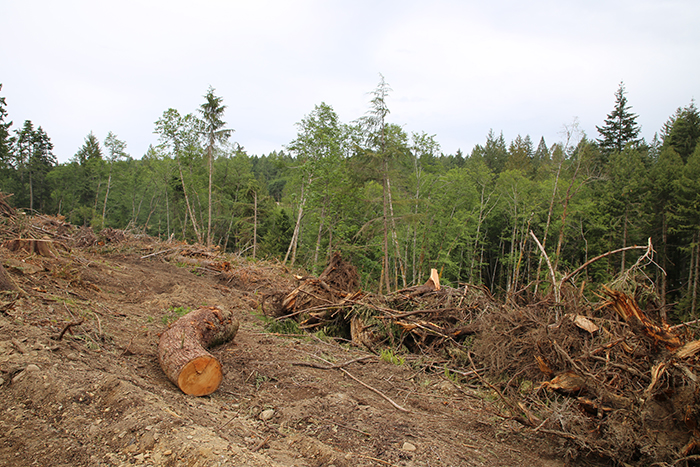
Islands Trust Council (ITC) has voted to abandon earlier efforts seeking provincial authority to let individual islands enact tree-cutting bylaws. 

The majority action, from a motion brought by Salt Spring Island trustee Jamie Harris, directs ITC chair Peter Luckham to “promptly inform the province that it no longer wishes to proceed” — and directs staff to remove the task from ITC’s follow-up action list altogether. 

The move took place Thursday, March 9, and is a wholesale reversal of the previous council’s initiative, which began in late 2020 when it voted to request the province “enhance the Trust’s jurisdiction over tree-cutting bylaws to make its jurisdiction equal to that of municipalities” under Section 8 of the Community Charter. The response from the province has been arguably slow, and perhaps unenthusiastic; ITC chair Peter Luckham noted little movement on the topic since the Trust first reached out.  

“This is a difficult ask,” said Luckham, a Thetis Island trustee. “Indeed, the province has asked for a lot of clarity.”  

Pace notwithstanding, a concern over the potential for the Islands Trust being granted authority to regulate tree cutting was central to Harris’ candidacy — and has been a steady point of focus for him during his time in office.  

“It’s one of the reasons I’m sitting here today,” said Harris, a B.C. certified tree faller. “On Salt Spring, we’re talking about thousands of people’s livelihoods that were, you know, made to feel unsecure.”  

Although 2021 Statistics Canada census for Salt Spring Island showed just 320 members of the labour force classified themselves as working in the “agriculture, forestry, fishing [or] hunting” industries, Harris was likely including the downstream effects on construction or other activities. And however large the number of islanders impacted, trustees agreed they had heard much from their communities on both sides of the issue. North Pender trustee Deb Morrison admitted to being torn. 

“The issue for us is that we are getting a lot of cutting on private land, and nobody seems to have jurisdiction over that, or a way to regulate it,” said Morrison. “I am swayed by what you say, [but] I’m going to vote against.” 

“I recognize some of the concerns that the Salt Spring trustee has about his island,” said Gambier Island trustee Kate-Louise Stamford, “but this is encompassing all the islands.” 

“I have been listening for decades,” said Gabriola trustee Susan Yates, “not just years, decades — to people on my island and other islands begging for the Trust to find some tools to support the [Islands Trust preserve and protect] mandate. This is one little tool that would.” 

Also arguing against the motion, Bowen Island trustee Sue Ellen Fast told fellow trustees that tree-cutting bylaws can be “tailored to the need” of a community, and that each island could choose for themselves once the authority had been granted.  

“You can have a tree cutting bylaw for just a little area, you can have one that says just trees over a certain diameter, height, whatever you want to specify,” said Fast, adding that if the Islands Trust received jurisdiction, it would be up to each local Trust committee to decide whether they adopt a bylaw and how it would be structured. 

Harris’ fellow Salt Spring trustee Laura Patrick spoke with the majority in favour of rescinding the request for the tree-cutting bylaw authority, for her part on the grounds that the process hadn’t been part of a focused plan. 

“There is a valid reason to look at what we need to do going forward,” she said, “but I think this needs to be swallowed into the strategic planning exercise for this term, and clarified as to what we hope to achieve, if anything is to be considered. Because we just sort of barrelled down this approach, without taking time to say what we really want to achieve — which did aggravate and make people who rely on forests concerned, because we weren’t clear. We can revisit it in the strategic planning exercise.” 

“I honestly don’t think that the request as it stands is going to get any action from the province,” said Lasqueti’s trustee Tim Peterson, who also chairs Salt Spring Island’s LTC. “I think if we want to think about targeted tree-cutting regulation, we need to do it in a much better thought-out manner.” 

Luckham said he supported the desire to control the impacts of development, but added, “I’m not convinced that this is the right tool; it will be an ongoing, costly, time-consuming project. We need to refine the ask.” 

New ferry app released 

0

BC Ferries invited customers to try the first iteration of their new mobile app this week, saying it was ready for use — and that more features and functionality were on the way. 

The eponymous free app is available for download through the App Store and Google Play. According to BC Ferries, the app will make it easier to make bookings, manage trips, check-in at the terminal and find travel information — with a functionality to save travel preferences, check schedules and current conditions, and “express book” next available sailings. 

“The app is about giving customers the tools needed to enhance their trip-planning experience through their mobile device,” said Janet Carson, marketing and customer experience vice president. “The BC Ferries app is the latest enhancement to our online services following the rollout of the new website in 2020 and a new Saver fare structure in 2021.” 

Ferry riders can create an account that allows them to pull up their booking barcodes at the terminal during check-in, which should make for a smoother process, according to BC Ferries, as well as enable notifications for personalized reminders and service notices for delays and cancellations. 

For more information, visit the website bcferries.com/app 

Little change in local deadly drug deaths

0

News of another deadly month from illicit drug toxicity in B.C. came alongside granular data showing little change year-over-year in such deaths within the Southern Gulf Islands Local Health Area. 

January saw 211 deaths province-wide according to a report released Tuesday, March 7 from the B.C. Coroners Service — 39 of which occurred on Vancouver Island. Among municipalities, Nanaimo’s 12 deaths placed it behind only Vancouver (61) and Surrey (24) in total number of January deaths. 

Due to a relatively small population, monthly figures were not released for the Southern Gulf Islands, but detailed data tables released alongside last week’s report noted annual deaths from suspected illicit drug toxicity broken down by Local Health Area show two deaths in total for 2022 — the same number as were recorded in 2020 and 2021. A single death each year in 2018 and 2019, none reported in 2017, and two in 2016 suggest a relatively steady number of deaths in the 7 years included in the report. In fact, as the region’s total population has crept up in those years, the number of deaths by population has technically decreased — although the change is likely not significant.  

An apparent conflict between these figures and earlier reporting — as many as three toxic drug deaths were reported on Salt Spring Island in October of 2022 alone — may be the result of suspected causes of death being different from that ultimately determined by coroners. A statement made by Salt Spring RCMP Sgt. Clive Seabrook at the Feb. 24 ASK Salt Spring session suggested that could be the case in one of the October deaths.

The provincial numbers equate to an average of 6.8 deaths from suspected illicit drug toxicity each day in B.C., according to the service. By place of injury, 55 per cent died at private residences, with 29 per cent at other “inside residences” — such as social and supportive housing, shelters, and hotels — and 15 per cent at outdoor locations including parks and vehicles. More than three-quarters (77 per cent) of the deaths identified as male.  

The 211 deaths represent a two per cent decrease over the number of deaths in January 2022, and a two percent increase over the number of deaths in December 2022, according to the service.  

Viewpoint: Don’t ignore lessons of history

By COLIN ROSS

I am shocked and disappointed that the Green Party of Canada has decided we should not provide lethal support to the Ukraine. They believe we should encourage a negotiated settlement to the conflict.

This must be music to the ears of Vladimir Putin. Deny the people of Ukraine the means to defend themselves against a brutal, unprovoked attack, and hope the Russian dictator will stop the war and withdraw from their country. Good luck. Fortunately, this shameful attitude is not shared by the vast majority of democratic governments in the world, especially the member states of NATO.

Vladimir Putin is a monster, cut from the same cloth as Adolf Hitler. History should guide our response to his aggression. Before war broke out in September of 1939, Adolf Hitler tested the resolve of the European democracies. He occupied the Rhineland in March 1936 with no military consequences from France, even though the French army was many times larger than the German army at that time. Emboldened by this success, he occupied Austria in March 1938, again without consequences. This led to the occupation of the Sudetenland and subsequent dismemberment of Czechoslovakia in September 1938, when Neville Chamberlain appeased Hitler and sold the Czechs down the river, to Britain’s everlasting shame. War broke out one year later when Germany attacked Poland.

The tragic irony of this process became apparent after the war when a number of German generals testified at the Nuremburg Trials that, had the allies stood up to Hitler in the Rhineland, and later in Czechoslovakia, the German army would have had to withdraw and Hitler may well have been forced to resign. Bullies like Hitler and Putin thrive on weakness and only back down when faced with strength and resolve.

In 2014, Putin took the Crimean peninsula from Ukraine and declared it Russian territory. The European democracies and the United States did nothing to stop this, apart from protesting at the United Nations and instituting ineffective economic sanctions. Is it any surprise that Putin, emboldened by his success in the Crimea, decided to take all of the Ukraine when he launched his attack one year ago on Feb. 24?

No doubt the heroic resistance of the Ukrainian military has surprised Putin and earned the admiration of the free world. We must not abandon these people in their desperate fight for freedom and democracy. In the dark days of the Second World War, when Britain and her commonwealth stood alone in the fight against Naziism, Winston Churchill asked President Roosvelt: “Give us the tools and we will finish the job!” The parallel today is obvious. When President Zelensky asks for military aid from us, we should certainly provide all the lethal support he needs to end the conflict and return his nation to freedom.

The Green Party of Canada is a pathetic example of how well-meaning people often ignore the lessons of history: we should reject their shameful policy of appeasement and redouble our material support for the Ukraine. Isn’t it obvious?

The writer is a Salt Spring resident and former teacher.

Guest column: Where might WHUs be built on Salt Spring?

By ERIC BOOTH

Third in a series

In Parts 1 and 2, I looked at the magnitude of the housing crisis, and, the challenges of densifying Ganges, both of which beg the question: “If not Ganges . . . then where?”

Salt Spring has thousands of acres of residential, rural and rural upland zoned property. Current residential zoning, on average, allows for four principal dwellings per acre, rural zoning allows for one per five acres, while rural upland is restricted to one per 20 acres.

It is clear from our requirements for workforce housing units (WHUs) that areas of Salt Spring, other than Ganges, need to be densified if we are going to solve the crisis. And, unless that densification occurs in a “blanket-wide rezoning” it will be doomed to the proverbial “death by a thousand paper cuts” due to NIMBYism.

Our island’s official community plan (OCP) supports the “redirect[ion] of the island’s future pattern of settlement from one of ‘modest overall density’ to one that includes clusters of development interspersed with large areas of open space, protected areas and resource lands.”

Designs of development “that reduce road construction and encourage non-automotive travel . . . [and] . . . proposals that cluster development . . . in about 20-30 per cent of the parcel . . . provide internal walking or bicycling routes, and recognize existing public transit routes are especially encouraged.”

Thus, one of the solutions already supported in the OCP is the rezoning of residential, rural and/or rural upland property to a higher density.

Unfortunately, in the last OCP review (2008), and in spite of the 2005 housing report I had spearheaded (tinyurl.com/mru7jvbj), neither the magnitude or the economics of the housing crisis were contemplated and, as a result, only broad brush strokes of potential solutions were painted.

Logically, development can only occur where there is sufficient space and services available. Using the OCP’s clustering recommendation, the following is one example scenario of increasing density on a rezoned, rural upland, 20-acre property:

A non-profit organization purchases the property with an existing home for $1,500,000. A clustered building strata project is planned with 19 WHUs on three acres, the principal residence on 10 acres, and seven acres of common green space/garden areas. When the project is complete, the 10 acres with the principal residence are sold back onto the market for $1,500,000, which means the basic land cost for the 19 WHUs is near zero. This means the price at which the WHUs could be sold is the cost of construction/development. At a $400-per-square-foot cost, a 1,000-square-foot WHU could be provided to a qualified worker for $400,000, while a 600-square-foot apartment would be $240,000. 

That simplified example underlines the importance of reducing land costs per unit to make WHUs affordable.

I am sure the first knee-jerk reaction to densifying rural areas of the island for WHUs will be met with the challenge of servicing issues, such as water, septic, roads, hydro, etc.

And so, in Part 4 of this housing crisis series — How WHUs Can Be Serviced — we will look at those challenges.

Eric Booth is a long-time Salt Spring resident and island realtor. The above is the third piece in a series.

Salt Spring Elementary class earns “kindest class” honours

0

A group of Salt Spring Elementary School students has been named among Canada’s kindest, according to teacher Fanny Wightman — who never had any doubt about the matter. 

Along with fellow teacher Christina Novak and education assistant Sue Ann Donaldson, Wightman’s class submitted their entries to advocacy group Depths of Comfort in February, alongside classes from all across Canada. The Salt Spring class was the only winning classroom in the province.  

The search, according to contest organizers, was for the “Kindest Classes in Canada” to be recognized for prioritizing kindness at school — and that piqued Wightman’s interest the moment she learned about it. 

“I thought it sounded a lot like our class,” said Wightman. “That’s us! We’re the kindness class!” 

Students in Wightman’s class range from Grade 5 to 7, she said, and in addition to accolades will also be receiving a pizza party courtesy of contest organizers. Entries were judged by a panel of “Canadian Kindness Captains” that included noted public figures and celebrities like Superstore actor Lauren Ash, musician k.d. lang and 90210 actor Jason Priestley. 

“The kids were looking at the list and going, ‘Who is that?’” laughed Wightman. “You probably have to be older to know who some of them are.” 

Wightman said students brainstormed and wrote a group letter on why they should win, and some students wrote individual letters about what made the class special. How the pizza party — sponsored by Pizza Hut — will take place on an island without that franchise is uncertain, she added, but she was confident they would work something out. 

“Maybe we can do a field trip,” she laughed, again praising the class. “They’re all so sweet together, and really good to each other.” 

Laundromat gift program one way to help community

By CLARK SAUNDERS

for SSI United Church

It would be hard to find anyone who would deny that the Salt Spring Laundromat, operated by the Wagon Wheel Society, is a great asset to the community.

For people who lack their own laundry — or even shower — facilities, it provides washers, dryers and showers for use at a relatively modest cost.

But what if you are a single-parent family struggling to make ends meet in these inflationary times? What if you are a single person living rough in the cold winter months? Meeting the cost of keeping your clothes clean and providing for your own self-care can be a real challenge. 

Last year, recognizing a need, the Social Justice Committee of Salt Spring Island United Church initiated a program that provides gift cards for people who have trouble meeting these expenses. Distributed at the discretion of community peer support workers and the laundromat staff, the cards have a value of $25 and can be used for any of the services the laundromat provides. Depending on the size of the load, use of a washer can range from $5 to $15, with laundry soap provided. Dryers begin at a rate of one dollar for five minutes. And showers can be set for five, 10 or 15 minutes, at a rate of a dollar per minute. 

For people who have trouble affording the facilities available at the laundromat, the gift cards offer more than practical assistance. They provide the means of achieving a sense of well-being and dignity. And how good does it feel to step out of a hot shower and into some clothes fresh from the dryer?

The Social Justice Committee of the United Church has been engaged in a number of projects that are intended to improve the quality of life for our neighbours on Salt Spring. Supporting the food bank and Family Place and collecting and distributing socks and warm winter clothing are among them. More recently, the United Church has become the venue of a Friday mid-day meal program. The food is supplied and prepared by Community Services and served by volunteers from the Anglican, Unitarian, and United Churches and the Church of Jesus Christ of Latter-day Saints.

The Salt Spring Laundromat gift card program is another effort to help meet the needs of people in the community. Last year individuals in the congregation donated $1,100 to the project. Support from others in the wider community is welcome.

Cheques should be made out to “Salt Spring Island United Church” with “Laundromat” on the memo line and can be sent to Salt Spring Island United Church at 111 Hereford Avenue, Salt Spring Island, B.C., V8K 2T3 or handed in at the office during office hours: Tuesday to Friday, 1:30 to 4:30 p.m.