Home Blog Page 22

TWA, Heidi May

3

Dec. 4, 1968 – Nov. 7, 2025

Heidi May Twa passed away after a long hard journey with Huntington’s Disease.

Born on Salt Spring Island, Heidi travelled across Canada after graduation, settling in Ontario where she received her teaching degree. Heidi met & married Robert House in 2003 & in 2007 their son Aries was born.

Sadly, Heidi was diagnosed with Huntington’s in 2015, after returning home to Salt Spring to reside with her family.

Heidi was known for her vibrant, creative spirit, a woman that brought people together with music, art & laughter.

She is survived by her son Aries House, mother Linda Koroscil, father Norman Twa, stepmother Sheila Twa, sister Amy Twa, brother Jackson Twa & nieces Maria & Brianna Wilson.

The family extends heartfelt gratitude to Robert House, close friend Roberta Temmel & the staff of ECU at Lady Minto Hospital for their years of compassionate care.

JUTRAS, Michel Louis

4

Sept. 10, 1946 – Dec. 10, 2025

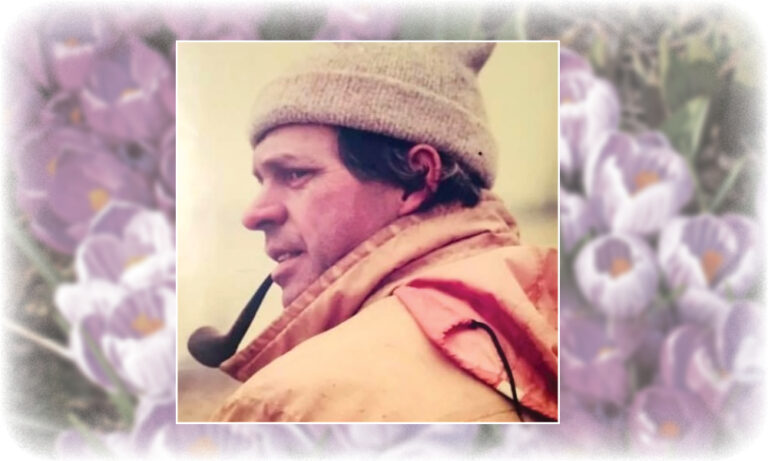
Michel Louis Jutras passed away on Dec. 10, 2025, at his home in Qualicum Beach, B.C. He was born Sept. 10, 1946, to Cyrille Jutras and Bernadette Lepage in Saint-Cyrille-de-Wendover, Que.

After attending seminary as a teenager, Michel ventured across Canada and discovered a taste for life out west. He later explored central Canada, the east coast and Central America, finding adventure both on land and at sea, before returning to B.C. in the late 1960s.

He earned a Bachelor of Arts degree with a double major in anthropology and French literature from The University of British Columbia. Initially on track for an academic career, the call of the ocean proved irresistible. Michel spent the next 40 years fishing B.C. coastal waters while living in West Vancouver, Tsawwassen, Victoria and Salt Spring Island, where he settled in 1979. He moved to Qualicum Beach in early 2025.

Michel was happiest on his boats — Blue Venture, Dad-Son, Princess Cherie, Heather Isle and Silver Dawn I — primarily fishing salmon and later roe herring, food herring, roe-on-kelp, krill and pilchard. A lifelong learner, he continued his education throughout his maritime career, completing the Canadian Securities Course and the Certified Financial Planner program, and completing numerous maritime certifications.

His seafaring credentials allowed him to broaden his work to include scientific research charters and small ferry operations in the Northern Gulf Islands. In his early seventies, he obtained his advanced polar waters certification and worked in the Arctic until retiring at 75.

A self-made man with an insatiable curiosity, Michel lived life on his own terms. His idea of light reading was Proust while in the bath. Over the years, he enjoyed skiing, swimming and cycling, and he loved to travel, including trips to Europe, multiple family visits to Quebec and winters in Mexico.

Michel was predeceased by his siblings Michel and Denise (both in infancy), Jean-Marc, Marcelle and Gaston, and was survived for a short time by his sister Pauline. He is lovingly remembered by his siblings Rosaline (Norman), Gerald and Yvon (Claire); his children, Claire, Tristan (Stephanie) and Selena; his beloved grandson Ernest; many nieces and nephews; and his sweetheart of over a decade, Maureen.

He was deeply loved and will be dearly missed by all who cherish stories of his passion for the sea, his appreciation of books and music, his interest in challenging films and competitive games, his sense of humour and his gift for spirited conversation.

A funeral Mass will be held Saturday, Jan. 31, at 11 a.m. at the Catholic Church of the Ascension, 887 Wembley Rd., Parksville, B.C., with a reception afterward at 1 p.m. at Off The Hook (at Qualicum Beach Memorial Golf Course), 469 Memorial Ave., Qualicum Beach, B.C. In lieu of flowers, donations in Michel’s memory may be made to The Salvation Army or to a charity of your choice.

“When the sun sets on the ocean blue,

remember me, as I will always remember you.

As the sun rises, go live life as full as can be.

Apart — you and me — but at peace, for I am free.”

Editorial: Bring on the voices

0

Gulf Islands residents who want electoral reform in B.C. probably don’t need to reach out to their own MLA to show their support.

Saanich North and the Islands MLA Rob Botterell is, if not leading the charge on the issue, certainly at the front line. Botterell joined fellow advocates on a webinar for supporters Wednesday, Jan. 7, hoping to seize the opportunity presented after an all-party committee recommended a citizens’ assembly be created to knock around the particulars of how we all vote. Botterell and company think the timing is right to push the province toward proportional representation — and we agree.

We’ve seen what happens to the diversity of voices when the stakes of an election seem higher; in a winner-take-all system, voters naturally gravitate toward candidates more likely to win, rather than simply picking the candidate that best represents their values. No one wants to imagine they’d cast a vote and receive no representation in return, yet that’s precisely what seems to happen to every voter in the minority in such elections. The landscape thus inevitably slides toward two parties during crises — which seem to come one after another lately — and voters become discouraged, acutely feeling their own lack of representation. Fewer voters and fewer parties is a familiar-sounding path we would do well to avoid.

Proportional representation voting systems are designed so that the seats comprising a legislature closely reflect the popular vote. There are several flavours of “PR,” but the idea is to set up representation such that nearly every voter can be assured someone representing their interests holds office by the end. If a party gets X per cent of the vote, the system should deliver X per cent of the seats to them.

It should come as no surprise that a newspaper might support efforts to increase the number of voices in the legislature; we prefer a lively debate and compromise to a done deal. But Botterell pointed out that in a nearly unimaginable moment for any all-party committee, this one saw 93 per cent of the submissions on electoral reform specifically calling for proportional representation.

PR for our province is a compelling notion, and at minimum deserves to be hashed out by a citizens’ committee.

Island’s ‘foodways’ explored in two-part series

BY ANDREA PALFRAMAN

Salt Spring Island Farmland Trust

Salt Spring Island’s foodways have sustained people for thousands of years. Yet today, the majority of the food consumed on the island is imported. A new two-part public series hosted by the Salt Spring Island Farmland Trust (SSIFT) invites the community to explore how this shift occurred — and what the island’s agricultural past can teach us about building a more resilient food future.

Hosted as part of SSIFT’s Root to Bloom Centre, the series brings together leading researchers and local historians to examine the full arc of Salt Spring’s food systems, from Indigenous land stewardship to settler-era farming and beyond.

Both events take place at the Salt Spring Centre of Yoga, with the sessions also available via Zoom.

Part One: Indigenous Food Systems

Tuesday, Jan. 20, 6 to 8 p.m.  

The first event features Chris Arnett, historian, archaeologist and author, who will guide participants through the deep history of Indigenous food systems on Salt Spring Island and throughout the Gulf Islands.

Drawing on Coast Salish oral traditions (snuwuyulh), archaeology and collaboration with local nations’ knowledge keepers and elders, Arnett explores how Indigenous peoples thrived in this ecosystem for millennia. Topics include clam gardens, camas cultivation, controlled burning to support deer populations and plant growth, and the laws, teachings and stories that governed sustainable land use.

The presentation also examines how settlers later appropriated landscapes that had been carefully managed for generations, often without understanding the seasonal patterns and relationships that sustained families and communities. Using physical evidence such as shell middens, burial sites and rock art, Arnett brings familiar island places to life with layered stories of connection, conflict and continuity.

Arnett holds a PhD in anthropology from the University of British Columbia and is widely respected for his work on the Indigenous and colonial histories of the Gulf Islands. He is the author of The Terror of the Coast and Two Houses Half-Buried in Sand.

Part Two: Farming, Settlement and Agricultural Change

Tuesday, Jan. 27, 6 to 8 p.m.

The second event, A History of Farming on Salt Spring, shifts the focus to settler agriculture and the evolution of farming on the island. Led by Usha Rautenbach and Charles Kahn, this evening explores the food systems introduced by settlers — including Hawaiian, Japanese and Black farmers — and how their labour, skills and crops shaped Salt Spring’s agricultural landscape.

Drawing on archival research, lived experience and the foundational work Farms Farmers Farming 1859–1939 by agricultural historian Mort Stratton, the presentation traces Salt Spring’s transformation into a regional agricultural hub by the turn of the 20th century. During this period, the island earned a reputation as a breadbasket of the province, with orchardists shipping thousands of 40-pound boxes of apples annually.

Rautenbach played a key role in bringing Stratton’s manuscript to publication, meticulously indexing the work and providing essential historical context. She approaches agricultural history as living knowledge, illuminating both what was recorded and what was often left out.

Kahn, author of Salt Spring: The Story of an Island and former president of the Salt Spring Island Historical Society, brings decades of research and community involvement. His work situates farming within broader social, economic and environmental forces, helping connect historical land-use decisions to present-day challenges around food security and land access.

Together, these two events offer a rare opportunity to understand Salt Spring Island’s foodways as a continuum — from Indigenous stewardship practices that sustained life for thousands of years, through settler farming systems that reshaped the land, to the challenges facing local food systems today.

As Salt Spring Island grapples with food sovereignty, climate resilience and access to farmland, this series invites community members to reflect on the lessons of the past and consider how they might inform a more just and sustainable future.

Registration is through ssifarmlandtrust.org.

­

Victoria Baroque and The Fretless on tap

SUBMITTED BY ARTSPRING

ArtSpring’s January lineup is all about breathing new life into classic musical traditions, and Victoria Baroque and The Fretless are kicking off the year with groundbreaking concerts that offer a rare glimpse into the future of “traditional” music. These two ensembles, while distinct in genre, share a common thread: they refuse to let musical history stand still. 

Victoria Baroque with Mireille Asselin & Jesse Blumberg

As is our January tradition, Victoria Baroque is returning to the ArtSpring stage. This Saturday, Jan. 17 at 2:30 p.m., Victoria Baroque invites audiences to step out of the winter chill and into a world of celestial passion with their latest program, Of Gods & Lovers. This epic journey through mythological love stories reinvigorates ancient romances through the music of Baroque masters Handel, Rameau and Purcell, plus a striking new composition from Canadian composer Danika Loren.

At the helm of this performance are two of the opera and early music worlds’ most versatile voices. Soprano Mireille Asselin, hailed as a “treasure” by the Toronto Star, has sung five seasons with the Metropolitan Opera and performed with Canadian operas and orchestras from coast to coast. Beside her, “golden-toned baritone” Jesse Blumberg lends his profound expertise in early music. Blumberg has charmed early music audiences the world over; his extensive touring resume includes international stages ranging from the Minnesota Opera to the Château de Versailles to London’s Royal Festival Hall. Together, the pair navigates a demanding repertoire that spans the heartbreaking lament of Henry Purcell’s opera Dido and Aeneas to the fiery, unyielding pursuit of Apollo and Daphne.

Victoria Baroque has evolved into one of the region’s most vital cultural gems. Now celebrating its 15th season, this ensemble of early music experts specializes in creating innovative performances that embody the richness of Baroque music traditions. Delivered on 18th-century instruments, their sound is rhythmic, dance-driven and intensely personal. This matinee promises more than just a concert; it is a vivid exploration of romance, tragedy and the enduring power of music to bridge the gap between the mortal and the divine.

The Fretless with Madeleine Roger

The Fretless members are no strangers to the ArtSpring stage. Following their phenomenal ArtSpring Presents performances in 2017 and 2022, this singularly euphoric string quartet returns on Friday, Jan. 23 at 7:30 p.m. with singer-songwriter Madeleine Roger to perform highlights from their latest album, Glasswing. 

The Fretless are uniquely poised to revolutionize the folk world. Through a process of deconstruction and transformation, the quartet draws upon fiddle traditions from around the world to create an intricate, high-energy sound that transcends genre while honouring its traditional roots. Since their debut in 2012, the ensemble has steadily ascended into the global spotlight, racking up accolades including a Juno Award and three Canadian Folk Music Awards. Their career has taken them from intimate pubs to the world’s most prestigious stages, such as Scotland’s Royal Glasgow Concert Hall and Ottawa’s National Arts Centre, proving that their music is as at home in a classical chamber hall as it is at a muddy bluegrass festival.

This return to ArtSpring marks a particularly soulful chapter for the group. Glasswing is their most introspective album to date, blending the band’s signature chamber-folk arrangements with the hauntingly honest songwriting of Madeleine Roger. A celebrated artist in her own right, Roger’s unflinchingly raw lyrics garnered rave reviews for her most recent solo album, Nerve. Having spent years touring the international festival circuit — from the Shetland Islands to the Winnipeg Folk Festival — she serves as the perfect vocal foil to the quartet’s rhythmic complexity. 

The collaboration represents a meeting of minds that defies easy categorization. One thing we can say for certain, though, is that this show’s audience won’t stay seated for long. With the quartet’s rhythmic drive and Madeleine Roger’s emotional lyricism, this evening promises a performance with the sensibility of a chamber quartet and the foot-stomping spirit of a kitchen party. Whether you are a longtime folk enthusiast or a newcomer to the genre, this is an invitation to witness the boundaries of traditional music being pushed further than ever before. Don’t miss this chance to see why The Fretless remains one of Canada’s most essential and exhilarating musical exports.

Tickets for ArtSpring Presents performances are available through purchase.artspring.ca, or the box office, which is open from 10 a.m. to 2 p.m. Tuesdays through Fridays.

Appeasing a mountain in Everest Dark

BY STEVE MARTINDALE

Salt Spring Film Festival Society

Salt Spring Search and Rescue joins the Salt Spring Film Festival at ArtSpring on Wednesday, Jan. 21 to present the award-winning documentary Everest Dark, depicting the breathtaking beauty of Mount Everest through the eyes of the Sherpa people who worship the mountain as Chomolungma, the sacred Mother Goddess of the World.

Everest has become a frozen graveyard in the seven decades since Edmund Hillary and Tenzing Norgay first summited the world’s highest peak, with over 200 bodies trapped in ice and snow — one third of them Sherpas. When 15 more climbers perished in traffic jams in 2019, the Sherpas became convinced that the mountain was angry for having been further desecrated.

As climate change reveals the location of some of the previously missing human remains, Everest Dark follows national hero Mingma Tsiri Sherpa — considered one of the best high-altitude climbers of all time — as he leads an elite team of fellow Sherpas in an audacious attempt to pacify the mountain by retrieving one frozen body at a time from Everest’s unpredictable and hostile Death Zone, so that they can be repatriated and laid to rest.

With over 20 years of experience making films in some of the world’s most unforgiving environments, B.C. filmmaker Jereme Watt was named Best Director at the Montreal International Film Festival for Everest Dark, which was also named Best Canadian Feature at Toronto’s Planet in Focus International Film Festival and Best Film on Mountain Culture at the New Zealand Mountain Film and Book Festival.

The Best of the Fests series continues on Feb. 11 at ArtSpring with the provocative documentary Marlee Matlin: Not Alone Anymore, about the deaf actor whose breakout performance in the 1986 film Children of a Lesser God earned her an Academy Award, followed by the annual Salt Spring Film Festival at Gulf Islands Secondary School from Feb. 27 to March 1.

Veteran broadcaster launches sleep aid program

0

If gentle meditations, “rainsong” on rooftops or whispered storytelling aren’t your thing for falling asleep to, a former national news anchor living on Salt Spring has a solution.

“I’m the opposite,” laughed Dallas Kachan, whose new sleep podcast might just be the prescription for what ails people’s busy brains today: pure, structural boredom.

Kachan’s “Deeply Unimportant” podcast series features a growing collection of recordings to combat sleeplessness, repurposing the veteran broadcaster’s gravitas-laden voice into a force to help listeners nod off. Kachan said the deliberately unengaging content functions as a “cognitive anchor,” perfect for that portion of listeners who find their own racing thoughts keep right on racing through other sorts of seemingly relaxing material.

“They don’t need a fairy tale,” said Kachan. “They need a structural metronome for their brain. They need to know that someone is in control so they don’t have to be.”

A sample track, titled “The 1972 International Convention for Safe Containers,” invites listeners to “achieve deep rest in the immutable strength of the standardized box, as we contemplate the steel corrugated wall and the structural laws that govern its construction.”

Structurally boring, indeed.

It’s all quite the pivot; before he was presenting the finer points of acceptable maritime standards to the sleep-deprived, Kachan wrote and anchored hourly newscasts carried live on hundreds of radio stations with Broadcast News, the broadcast division of the Canadian Press national news service. He voiced documentaries and audiobooks, including a 19-hour read of his own bestselling travel and adventure novel about a round-the-world flight in a futuristic airplane.

Away from broadcasting for more than two decades, Kachan said he moved with his family to Salt Spring near the beginning of the pandemic, and found he wanted to do something with his voice again. The market for sleep-related programming had been growing, and he saw a gap.

“There seemed to be nobody else with my sort of deep, authoritative sound and inclination for structure and order,” said Kachan. “There is a segment of the audience — specifically those with ADHD or high-stress careers — who find traditional ‘bedtime stories’ or ‘relaxing rain sounds’ either too juvenile or too repetitive.”

Kachan set up a little recording nook in his home office — no booth, no soundproofing, no engineers, just a boom stand, his three-decade-old favourite instrument microphone, and a voice for the ages.

“I can only record at night, when Harbour Air isn’t flying,” said Kachan. “And when it’s not raining.”

Deeply Unimportant’s first “sedations” include eight-hour readings of technical manuals, municipal codes and administrative data — the 1922 Western Softwood Lumber Grading Rules, NASA’s Man-Systems Integration Standards, a 1954 Singer Sewing Machine Manual — all presented through Kachan’s flat, professional delivery and available on Apple Podcasts, Spotify and wherever else podcasts are found. For listeners seeking uninterrupted, ad-free “all-night” episodes and other exclusive content, Kachan said a premium feed is available at deeplyunimportant.com.

“For years, my job was to make people lean in,” he said. “Now, my job is to make them drift off.”

Islander Raffi promoted within Order of Canada

0

Salt Spring Island’s most celebrated children’s entertainer is being promoted within the Order of Canada, according to a New Year’s Eve announcement from the office of the Governor General, naming singer-songwriter Raffi Cavoukian as a Companion to the Order.

“A beloved songwriter and entertainer, Raffi has dedicated his life to championing children’s rights and well-being,” according to the office of Gov. Gen. Mary Simon. “His songs have impacted generations with his message of love, environmental stewardship and social responsibility. As the creator of the Raffi Foundation for Child Honouring, he has shaped our modern discourse to ensure a safe future for the children of the world.”

“It’s such a great honour to be promoted to Companion, the highest rank in the Order of Canada,” he told the Driftwood after the announcement was made. “My work with the Raffi Foundation For Child Honouring joins my musical offerings in advancing a world fit for children and thus for all of us. It is my privilege to live in Canada and an honour to be of service to the greatest good. I deeply appreciate this recognition.”

Companion is the highest level of the Order of Canada; Cavoukian was invested as a member in 1983 and also to the Order of British Columbia in 2001.

He has several tour dates planned for this summer, and frequently performs locally and participates in events such as Neighbourhood Story Time at the library, which he did just before Christmas.

Cavoukian recently released a new song called “ABC Democracy,” promoting democratic literacy throughout the world and for all ages.

Enthusiastic growers wanted for farm training program

0

After visiting Daria Zovi at her Quarry Collective farm on a sunny last afternoon of 2025, I spent the rest of the day wishing I was 10 or 20 years younger and ready for a career change.

I was there to interview Zovi about the Neighbourhood Farm Program (NFP), with a farmer training session being one of the key components. It will see a small group of learners trained at her group’s farm — also the site of Chorus Frog Nursery — from April to September with curriculum developed in collaboration with the Institute for Sustainable Food Systems at Kwantlen Polytechnic University (KPU). Crop planning and delivery, soil and plant health will be covered, along with how to develop a neighbourhood farm program, which Zovi and others have recently done. Trainees would then begin growing food for a neighbourhood site the following year.

Hearing Zovi’s passion for the whole NFP and the farmer training program made me want to sign up right away.

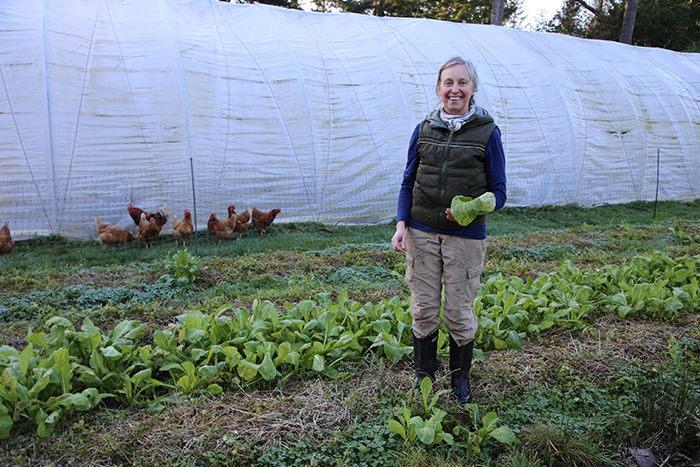
Quarry Farm has been a pilot for the neighbourhood farm concept, which gives new potency to the term “locally grown” and is part of fostering resiliency in the face of climate change impacts. Last year members of the Stewart Road pod of Salt Spring’s emergency program were invited to become part of the Chorus Frog Neighbourhood Farm (CFNF), contributing funds, labour and ideas to the initiative based at the certified organic farm that was created from an old quarry site. It saw 30 neighbourhood households sign up and meet before the growing season to determine what they would like the farm to grow, contribute whatever amount of money they wanted to the venture and then drop by the farm to pick up produce as it was harvested or processed. Some people also volunteered or contributed in other ways. Residents with excess produce from their own gardens were invited to bring it to the farm. While each family was asked to write down items they took from the cooler, they didn’t have to tally the value, although those calculations were done by Zovi’s team to provide data to the program.

“The thing that was super interesting is I put in the cooler $20,000 worth of produce, and we got $20,000 worth in money and time and exchange — and it all went — but there is no formula for that. That is complete randomness.”

Funds covered costs such as the land lease, seeds, potting mix and fertilizers. While some people were concerned about Zovi being paid for her time, she said that was adequately covered by what the farm makes by selling produce to wholesale customers.

At their end-of-season meeting last fall, the consensus was that the program had worked so well that it should run the same way in 2026.

“It’s very emotional for me to see how people are so grateful and how appreciative they are,” she said about the collective’s participants. “Food is a very deep-seated emotional thing.”

Replicating the CFNF model in other Salt Spring pod areas is Zovi’s inspired vision, and she is willing to provide all kinds of support to make it happen. But flexibility is obviously needed to make a program work for those involved.

“Other neighbourhoods could set up something completely different. They could say, ‘Let’s do a veggie box program.’ That’s fine.”

Anyone wanting more information about any aspect of the NFP can visit ssiagalliance.org/nfp or contact Zovi at nfp.saltspring@gmail.com. In addition to people for the farmer training program, individuals who have land that could be farmed are needed, as are neighbourhoods interested in supporting a farm program. Registration deadline for the farmer training program is Jan. 31.

The whole NFP is a collaborative effort between Island Natural Growers, the Salt Spring Island Farmland Trust, KPU and the Quarry Collective. Other supporters include the Salt Spring Island Foundation, the Capital Regional District and the province of B.C.

Pender firefighters’ social media messages get noticed

0

Social media darlings Pender Island Fire Rescue (PIFR) enjoyed a Christmas Eve interview with Chicago-based Nexstar Media Group affiliate WGNTV, highlighting the department’s success at promoting fire safety messages online.

Capt. Todd Bulled, who spearheaded the rural fire department’s now-viral awareness efforts, appeared via remote on U.S. television with Assistant Chief Adrian Hanson and Capt. Jon Grelik, thanking his “Gen Z secret weapon” son, the humour instincts of comedy-straight-man Fire Chief Mike Dine and award-winning actor and Pender Island resident Bruce Greenwood — who Bulled said helped refine their videos and even made a cameo appearance.

Bulled was also interviewed earlier this month for CBC Radio’s The Current. 

With a peak of 1.3 million likes for their Nov. 12 smoke-detector-themed parody of the Twilight movie franchise, the PIFR’s Instagram profile @penderfire now has more than 73,400 followers — or nearly 14 times more than the Capital Regional District (@crd_bc), which contracts with the Pender Islands Fire Protection Society to provide service to North and South Pender islands.