Home Blog Page 239

Susan Benson establishes new fund for artists

SUBMITTED BY SS ARTS

A new fund for visual artists has been established by Susan Benson and Salt Spring Arts.

Artists in need living on Salt Spring Island can apply for grants, with preference given to female artists who are committed to building their creative careers.

Benson first announced her intention to establish the fund during her acceptance speech at the 2021 Salt Spring National Art Prize awards ceremony, when her Parallel Art Show piece The Meaning of Symbols: The Meaning of Memories was awarded both First Place Peoples’ Choice Award and the Juror’s Choice Award, Honourable Mention. As part of the speech, she recalled that during her training at art college during the late 1950s, women were told they would not become artists.

Benson is well known for her portraiture and painting, with numerous exhibitions on Salt Spring and across Canada. She has a portrait in the permanent collection of the National Portrait Gallery of Canada, and was a semi-finalist in the prestigious BP Portrait Award in London, England. Benson was elected to the Royal Canadian Academy of the Arts in 1986.

A total of $5,000 in grants will be available between 2022 and 2024 and awarded with the regular Salt Spring Arts grants and awards cycle (Oct. 31 and April 30).

Full details and the application form will be available online as of Sept. 1 at www.saltspringarts.ca.

Benson’s exhibit titled We are Such Stuff as Dreams are Made on is on the Artcraft Showcase Exhibition stage through Aug. 22.

Editorial: Trust uses available tools

0

The scene at last week’s Salt Spring Local Trust Committee meeting was a familiar one.

The room was filled with people hoping to convince trustees to take a specific course of action. In this case they wanted trustees to deny a development permit to the Vortex project in Fulford.

But as trustee Laura Patrick pointed out at the beginning of the discussion, the LTC is constrained by the fact that the property is zoned for tourist accommodation and a restaurant. Local land-use authorities such as the Islands Trust cannot stop a property owner from using their zoning, whether it allows a single-family home or a 17-unit resort. Or they can’t stop it without inviting a lawsuit.

Unfortunately, most of the opponents did not remain in the hall to hear that explanation or anything else trustees, staff or property owner David Fullbrook, who lives a couple of kilometres away from the Vortex site, had to say.

One thing they would have heard is that the septic system is state of the art (and no doubt of less impact to the receiving environment than old septic fields of properties along Fulford Creek) and that new development permit conditions add extra layers of groundwater protection.

It’s easy to say that any development is bad and shouldn’t take place. But it is not a realistic position to take without amendments to private property law, and it always comes from a place of hypocrisy to some degree if expressed by a person who has already exercised the zoning potential of their own property.

Transformation of the former Fulford Inn property into a park and rehabilitation of the creek and estuary would be wonderful, of course. That would start with a purchase of the property and need commitment from the provincial government after that. Fullbrook said last week that no one had reached out to him about buying the property for preservation purposes.

The Islands Trust mandate and reason for its creation almost 50 years ago saddles it and its elected officials with an unrealistic public expectation that they have special powers to “stop” environmental degradation and development of private property. In fact, they have no more practical tools to do that than any other local government in this province.

What Islands Trust staff and trustees did last week in ensuring the septic system is as low-impact as possible and facilitating a better location for it was an example of using those tools in a responsible way.

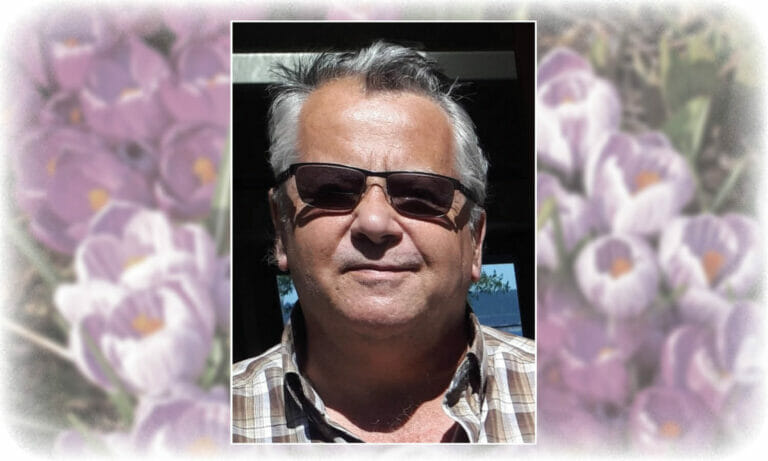
BRANSON, Dennis James

DENNIS JAMES BRANSON
April 28, 1957 to June 21, 2022

With deep sorrow for dreams left unfulfilled, the Branson family announces the passing of Dennis James Branson on June 21st. Dennis passed away unexpectedly, at the young age of 65, at the family home on Salt Spring Island. He was predeceased by his father, Cecil O.D. Branson, Q.C in 2015. Dennis leaves behind his mother June Branson of Salt Spring Island, son James Branson of Ontario (Amanda and their family), daughter Jasmine Purpura (Joey and their family), sister Leslie Goldammer and nephews Chris and Kyle Goldammer of Kelowna, his extended family of aunts and cousins (the Willis Clan) and his fiancé Sosima Inolino of the Philippines.

Dennis grew up in Victoria and following in the footsteps of his dad attended St. Michaels University School, then just known as University School. He loved the ocean, dogs, boats and loved to scuba dive and sail as a young man. Dennis lived in Ontario for years before returning to Kelowna BC. His dream was to live out his retirement on a beach in the Philippines with Sosima.

At his request, Dennis’ ashes will set sail from Salt Spring Island to the Pacific Ocean.

BRAAK, Henry

Henry Braak
June 17, 1962 – Sept. 2, 2022

Predeceased by Henry Sr. who was the rock that his home was built on. Survived by his mother, Wilhelmina, the most caring, loving woman any man would hope for. Brother Jacob (Jack) whose support was unwavering. Bother Robert, his wife Deidre, children Holly and Spencer who remain the apple of my eye. There are too many relatives to name. I say thank you to them. I made the choice when to leave this world. The cancer treatment was horrible and the cancer had spread. To my thirty years within the school, I ask the entire staff to forgive me whenever I put things away the wrong way. To the entire student body I thank you for all you taught me. Take care and God bless.

We are extremely sad to say goodbye on September 2, 2022 to our son and brother, Henry Braak. He passed away peacefully at his home on Salt Spring Island with the help of Doctor Slakov.


Henry loved golf and attempted it almost every day. He fought to maintain his independence never wanting to feel like he was a burden to anybody. He somehow played his last round of golf on Thursday September 1st.

Henry was born in Powell River on June 17, 1962 (Father’s Day). He had a love of sports and particularly enjoyed playing soccer and golf. His schooling took him to Malaspina College in Naniamo, the University of Victoria and the University of Prince George.

There are so many people that went out of their way to visit, share kind words and do the things that made the last year better. Thanks for caring so much.

Upon request, there will be no memorial service or celebration of life.

LTC approves Vortex permit with conditions

0

The Vortex project at the head of Fulford Harbour received development permit (DP) approval from the Salt Spring Local Trust Committee (LTC) on Aug. 9, despite a number of public pleas for the Trust to halt the project due to environmental concerns.

In opening the elected officials’ discussion about the controversial development, trustee Laura Patrick made it clear that refusing a permit was not in the cards from a legislative standpoint.

“Development permits are such that the conditions of a development permit will not prevent a property from being used as the local zoning bylaw allows, so those are the little boxes that we’re in.” She said that despite people’s desire to “erase all this and go back to some other time . . . we have to start with the rules that we have, which is the zoning that’s in place.”

The property consists of two titles totalling two hectares (five acres) in size. The former Fulford Inn site is zoned Commercial Accommodation (CA) 2 and the adjacent parcel is split zoned CA 2(b) and Rural. The lands were purchased in early 2018 by Merchant House Capital, whose CEO David Fullbrook lives in the south end of Salt Spring. The proposal is for 17 units of tourist accommodation, a restaurant, three accessory spaces and an outdoor plaza.

One of the main points of contention was eliminated the day before the meeting when Trust staff accepted a septic system location move to outside of the 30-metre setback area. That meant the LTC had only to consider a couple of lot line setbacks in issuing the development variance permit.

As for the overall development permit, which covers issues ranging from building form and character to landscaping and septic and stormwater management, the plan was given LTC approval with conditions after a number of permit amendments. One of those specified the need for “a metering and monitoring plan that enables ongoing evaluation of the sewage disposal system performance and receiving environment condition.” Another requires “confirmation from a qualified hydrogeologist that upon [sewage disposal] system operation, including any relief and interception drainage, pre- and post-development groundwater flows to Fulford and Soule Creeks will remain constant.”

In introducing the project at the Aug. 9 meeting, Trust planner Jason Youmans said the proposal was generally consistent with land use bylaws and development permit area guidelines, but that staff still wanted a comprehensive groundwater study to be done.

“Where staff continue to hang our hat is on this issue of whether or not sufficient study has been done of the potential polluting impacts of development on the site, particularly as it relates to the septic field and its impact on groundwater hydrology, and ultimately on the nearby streams as well,” he said.

But Fullbrook pointed out that to get the kind of meaningful data envisioned by Trust staff through such a study could take up to three years.

“You’re talking about a really significant scientific undertaking that because of the data sets that are required would take an extensive amount of time, far beyond what any development permit would ever typically require.”

Permit amendments related to sewage disposal system monitoring were meant to address the concerns about potential pollution.

The amended permit also includes a clause recognizing “the proponent’s commitment to maintaining an ongoing working relationship with the Tsawout First Nation in regard to further development-related approvals, design, construction and operation.”

Fullbrook reported on First Nations engagement to date. While other nations were consulted, he explained that Fulford Harbour is acknowledged as being traditional Tsawout First Nation territory and a working relationship has been developed with the Tsawout.

“Through critical review we have determined that the proponent meets and exceeds the environmental standards for the project,” states a July 27 letter to the Trust from Tsawout First Nation lands manager Casey Dick-Wyatt providing conditional approval. “The proponent has satisfied our initial request to have our cultural monitors present for archeological work within the project area, and we no longer have concerns of the project’s impact to archeological sites and local water ways.”

The Salt Spring Island Advisory Planning Commission also recommended DP approval.

Seventeen members of the public spoke against the project in the delegations and town hall portions of the meeting. Some suggested the proponent undertake a smaller development on the upper part of the property and restore the lower seaside lot as much as possible.

“I propose that the LTC engage with the developer in pursuing a vision that is more in keeping with the official community plan and the tenets of the [Islands Trust’s] declared climate emergency,” said area resident John FitzGibbon.

Many described visions of restoration of Fulford and Soule creeks and the estuary. Retired professional biologist Anne Parkinson said the estuary was currently “bone dead,” which was “the result of decades of illegal dumping of fill, followed by building a very tight short bridge.”

She explained how replacing the bridge with a longer one that would restore the natural flow of watercourses was key to rehabilitation.

“The estuary in the marine environment would thrive,” she said.

Following the LTC’s permit approval decision, Parkinson told the Driftwood, “It is difficult to comprehend why a motel on stilts in a flood zone with no community access or water is given a permit, with variances, to further compound historic damages to the Fulford estuary. How does the profit of a few take precedence over the life of salmon, eelgrass meadows and the health of the bay without proper study?”

The project still needs a building permit from the Capital Regional District (CRD), water supply approval envisioned through expansion of the CRD Fulford Water Service Area and further work with First Nations.

According to permit terms, construction will need to begin within three years.

In speaking to the Driftwood later in the week, Fullbrook thanked Trust staff and trustees for their hard work on the file, even though he said it was “a very frustrating and painful exercise.”

He also elaborated on visions for Tsawout involvement in the project, including possible plans for eco-tourism activities.

“For the Tsawout it’s really about establishing their presence and their legacy within the harbour, and how that is going to occur is really the conversation we are interested to have.”

He also said he hopes that the general public conversation about the Vortex will now “change a little bit towards less acrimony and divisiveness and more about how can we work together and really create meaningful stewardship for Fulford Harbour.”

He said he spoke to some of the project opponents at the LTC meeting and said, “We have an interest in the kinds of things that you’re interested in. And there’s an opportunity here to do something that is, I think, an example of thoughtful, balanced development.”

The LTC also wants to see more collaboration. Another clause added to the DP “encourages the proponent to consider establishing a local advisory group to provide local knowledge on environmental issues related to the design, construction and operation of the project.”

An audio recording of the Aug. 9 meeting will be available through the Salt Spring page of the Islands Trust website.

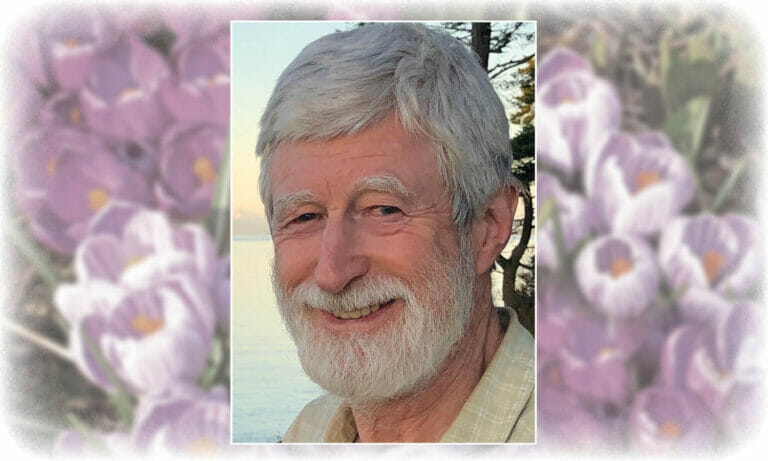
LUNDY, Derek

DEREK LUNDY
December 14, 1946 – August 21, 2022
 

Derek died peacefully on August 21, 2022, in the palliative suite at Lady Minto Hospital. His wife Christine and daughter Sarah were at his side. It was the culmination of an intense three month journey from a healthy man planning a significant sailing voyage, to someone experiencing lung congestion, to an eventual cancer diagnosis and all that that entailed. He is survived by Christine and Sarah and his mother, Mary, who turned 100 this month. 

Derek was born in Belfast, Northern Ireland. Coming from a land where intolerance and violence were woven into the fabric of daily life seemed to engender in Derek deep values of tolerance and respect for diversity. He strongly believed that no position, no matter how right, should be imposed on anyone through force. 

Derek’s parents, Alex and Mary, moved with him to England while he was still an infant. They emigrated to Canada in 1958 when Derek was 11 years old. As a teen growing up in St. Catharine’s, Ontario, Derek discovered a love of sailing that would remain throughout his life.

Derek obtained both a master’s degree in history and a law degree from the University of Toronto. At law school, he met Christine, who was to become his wife and his love. In Christine, Derek found another lover of the sea and sail. In 1987 they both quit their jobs and headed out on the high seas for two years in a small sailboat. The voyage included crossing the Atlantic Ocean to the Virgin Islands and sailing as far south as Venezuela. 

A few years after completing their sailing adventure, Derek and Christine embarked on what proved to be an even more satisfying adventure with the arrival of their daughter, Sarah. Derek also found a new vocation — that of a writer. He began with legal journalism but soon was writing books. In 1998, Godforsaken Sea: Racing the World’s Most Dangerous Waters, was published and rose to the top of the national bestsellers’ list. This success allowed him to devote his time fully to writing creative non-fiction. Often stretching genres and writing styles, he explored topics which included the lure of the sea, the complex history of Northern Ireland and the notion of borders as they form between lands and people. 

The success of Godforsaken Sea also allowed Christine to quit her job as a lawyer which meant the family could move permanently to Salt Spring Island in 2002. On Salt Spring, Derek found a deep sense of community and formed many circles of friends. He was on the boards of ArtSpring, the library and the Salt Spring Forum. He continued to write and took great joy in navigating the coastal waters on Gertrud, his beloved Bristol Channel Cutter.

People often talk about a person’s relationship to cancer as being a ‘battle’ — a fight that they either win or lose. Those words do not describe Derek’s response. Derek met each bit of bad news with courage and acceptance. Throughout the period of his illness, Derek’s heart continued to open and expand to the kindness of people and to the love around him. There was often a tear in his eye — not from pain but from being touched by how kind people were. He treasured the time he was able to have with his daughter Sarah, to hold her and tell her what happiness she had brought him.

In the final weeks of his life, it was the many, many people who mattered to him who became the focus of his attention and reflection. He asked that we share a quotation from a favourite poet of his, W.B. Yeats:

Think where man’s glory most begins and ends,
and say my glory was I had such friends.

Upcoming toy run in search of helping hands

0

Among well-loved island traditions returning this year after a pandemic-forced break is the Salt Spring Toy Run, which benefits the island’s Santa’s Workshop program.

According to the workshop’s “head elf” Wendy Eggertson, the run first took place in 1996 under the leadership of Lil Irwin, with some 10 to 15 local bikers raising money for charity through a group run around the island.

The toy run eventually grew to be a multi-day event held at the Farmers’ Institute, with many off-island motorcyclists attending. 

“We recently had a turnout of 130 bikes and did dinners for over 200 people,” said long-time run participant and “Santa” Kerry Butler. 

This year the event will take place for one day only, on Saturday, Aug. 27. 

One thing that is definitely needed is more volunteers to help with planning, organization and all-important flagging duties. 

“The flaggers control traffic and pedestrians and help things go smoothly and provide safety for everyone,” said Butler. 

About 40 people are needed, he said.

This year’s run starts from the high school parking lot at 1 p.m. sharp. It will go through Ganges and down to Fulford via Cusheon Lake Riad, arriving at about 1:20 p.m. It then goes back through Ganges and on to Fernwood, arriving there at about 1:45 p.m. Riders  will then go up Malaview to North End Road and across Stark Road, arriving at the Royal Canadian Legion at about 2 p.m. 

“The bikes will be travelling a little below the speed limit all the way,” explained Butler, “all dependent on traffic, of course.”

Everyone is welcome to enjoy a barbecue and live music at the Legion, with all proceeds benefitting Santa’s Workshop. 

“We provide about 95 per cent of their funding,” said Butler. “We also provide some funds for islanders in the Special Olympics program.”

More information is available at saltspringtoyrun.com. Anyone wanting to volunteer can email ssitoyrun@gmail.com. 

Salt Spring youth follow road to baseball gold

Two Salt Spring Island youth concluded an exciting season of baseball with a gold-medal win at the B.C. Summer Games.

Flynn Shugar and Sisaye Patterson started playing baseball together at age 10 with the Salt Spring Island Minor Baseball Association and that is where their love and passion for the game began.

One of their best memories from the early years was winning the U11 AA provincial championships with the Salt Spring A’s. Last year the boys began travelling off island to play ball for the AA U14 Mustangs out of Ladysmith where they had a strong season and made it to the finals of the provincial championships.
In September of 2021 the boys trained with and played fall ball for the Nanaimo Pirates and then tried out and made their Premier Baseball League (PBL) U15 team. The PBL is the most competitive baseball league in B.C. The boys’ strong skills, speed, effort and great attitudes quickly earned them starting positions on the team at second base, shortstop and third base. Their Pirates team had a strong season, narrowly missing a berth in provincials.

Shugar and Patterson have had a number of exciting highlights to their season. At spring break the boys travelled to Phoenix, Ariz. with a Big League Experience select team of players from across B.C. and Alberta for a week to train and compete in the West Coast Premier Tournament. Their team played spectacular baseball throughout the tournament against teams from Washington State, Colorado and Oregon and earned a silver medal against a very strong Southern California selects team. A bonus of the trip was they got to check out some MLB spring training games with their team, which was an unforgettable experience for both of the boys.

Another incredible highlight was their recent gold medal win with their Vancouver Island and Central Coast team at the B.C. Summer Games in Prince George. In May Shugar and Patterson tried out for the Summer Games team with 90 other boys and ultimately made the team of 16 players from Nanaimo, Victoria, Parksville and Sidney. The team flew to Prince George where they joined 3,000 athletes in an incredible opening ceremony and then competed in a three-day tournament against some of the best players in B.C.

Vancouver Island finished 3-1 in their pool with some very close one-run games and this gave them a berth in the semi-final against Fraser Valley. The semi was a nail biter that went to two extra innings with Vancouver Island prevailing with a 8-7 win and earning a spot in the final against Vancouver Coastal A. From the first pitch to the last, Vancouver Island played their best ball of the tournament. They had outstanding pitching, fielding and hitting from the get go.

With Shugar starting at third base and Patterson at second with quick gloves, excellent batting and speed on bases, the Salt Spring boys helped their team dominate Vancouver Coastal A with a 5-0 score and capture gold.

The boys would like to thank the Salt Spring Island Minor Baseball Association, all of the coaches they have had over the years and their parents for all of their support.

The environmental and social merits of ADU Bylaw 530

0

By RHONAN HEITZMANN 

Salt Spring Solutions + Housing Action Program Task Force

I am writing this article to hopefully clear up any confusion about the environmental and social merits of Bylaw 530, permitting accessory dwelling units (ADUs) for full-time occupancy on more properties on Salt Spring Island. 

First of all, everyone I know advocating for this solution recognizes that this is not the only answer to our complex housing problems, but merely one important step to address a portion of the wide spectrum of desperate need for housing on our island. Allowing full-time dwelling suites not only within principle residences, but also accessory buildings such as garages, shops, studios and even as small cabins or cottages is standard planning practice that is often adopted as a first step to address housing shortages in communities all over North America, and indeed in our region and islands. 

For me this is well framed by being a featured solution in the Islands Trust’s own 2003 commissioned report, Options for Affordable Housing: New Solutions to the Housing Crisis in the Islands Trust Area, by Normandy Daniels. 

She writes: “Perhaps the most readily available, and inexpensive, source of rental housing stock would be that created within existing buildings and residences on private land throughout the islands. As in larger or more urban communities (where legalization of suites is becoming more popular), secondary suites, garden suites, garage apartments, and the like are a way to increase human density without increasing development pressure on the land or requiring additional infrastructure.”

The environmental benefit of ADUs are: They are low impact, small footprint, make use of existing buildings or doubling the use of planned buildings. It is cheaper to retrofit existing buildings than build new ones, requiring less new raw resources and energy to operate. No new subdivisions, no new roads or clear cuts required. Secondary infill is the opposite of rural sprawl, it adds a layer of flexible, low impact housing within existing infrastructure without changing the character of properties and neighbourhoods.

Housing locally the people needed to serve our community is necessary for community resilience. We need to be less reliant on a commuting workforce…and, for those of us concerned about climate change, this reduces the significant and growing carbon impact of commuters, not to mention the strain on our already overburdened ferry system.

Water: sufficient water must be proved for occupation permit: no water no ADU. Rainwater harvesting is an option but there is an extra cost associated so still represents a barrier. Long-term occupants of small dwellings use less water, especially compared with vacationers, irrigation and the waste leakage of community water systems’ failing infrastructure.  A recent Salt Spring Island Watershed Protection Alliance study showed that average household use in Salt Spring’s community water systems is around 230 litres per day. That is approximately the volume of a 50-gallon rain barrel. Please end the fear that allowing a few extra small dwellings is going to somehow drain our aquifers dry. 

I have a unique perspective being the person people call when they have a water shortage. I can tell you that no one has ever ordered water because their well has been negatively affected by a neighbours tenant’s use. We need to be careful in some areas, yes, but no one is more acutely aware of protecting their groundwater than those who have a low yielding well. Full-time occupants living with limited volume systems are the most frugal and conscientious users. It is unconscionable to try to place the burden of protecting our aquifers on the backs of the young families we need to support our community.  

The merit of ADUs as a part of the solution to our housing crisis is proved by the fact that hundreds if not thousands are already housed by suites and cabins of some sort all over this island, despite the current nonconforming status. Smart planning recognizes what people are already doing to solve a problem, and we should empower this solution to be more broadly accepted and safer. If nothing else this bylaw will protect those that are already housed this way, and this is significant.  

It is true that the cost of building will limit the creation of new rentals, and not everyone wants to be a landlord. This is why in order for this type of permission to be successful it should be extended broadly to all properties equally, in order to capture all those who are willing and able to participate. We need to end the fear that this bylaw will result in an environmentally destructive overrun of our population capacity. We would be lucky if we achieved 10 per cent uptake of new units over time. In order to be a more effective solution, we as a community, can also encourage more uptake of this style of housing once it is legally permitted by supporting would-be but nervous landlords with a landlord tenant matching service (to help support positive landlord tenant relationships) and advocating for the return of the right for landlords to have a fixed lease so that they can see how their relationship with a tenant goes before being essentially locked in forever.  This is a significant barrier to the creation of private rentals that is often underestimated. We need to advertise publicly, engage our friends and neighbours that we are in a deep crisis and we need everyone to pitch in if we have any hope of salvaging a functional and resilient community capable of serving our own needs.

If we were to be included in the STV tax area, the stick of the tax could now legally become a carrot to incentivize vacant property owners to save thousands of dollars per year by housing someone legally in a “caretaker” ADU. Additionally, we could advocate for a tax credit incentive for property owners who provide a long-term rental.

Also often overlooked is the fact that ADUs are not only about providing rentals but also allow for multi-generational living, and retiring and downsizing in place on one’s own beloved property. They are also mortgage helpers that assist a family on the verge of home ownership to be able to afford to get into the market.

Speaking of affordability, there seems to be concern that ADUs will not offer “truly” affordable rentals. Let’s clarify this point. Affordability is a relative term that, according to CMHC, is defined by 30 per cent of gross household income towards shelter. On Salt Spring Island, every household earning under $200,000 per year is in the same boat of not being able to qualify for a mortgage on an average starter home. This means there are plenty of working families, who can afford to pay higher rents, but there is next to nothing available, which puts pressure downwards on the whole spectrum of housing needs. Encouraging private owners to rent out a space is not meant to equal government subsidized housing for the lower income part of the spectrum. This is market housing, and in order for market housing to be more affordable there needs to be sufficient supply to meet the demand. If we have enough adequate housing there will be less profiteering of outlandish rents for substandard housing.  

The proposed bylaw clearly states that these ADUs cannot be used for short-term rental, so the fear that this will somehow further add to the proliferation of illegal STVRs is unfounded. Regulating legal B&B businesses with a licence system would greatly ease the efforts of enforcement against illegal vacation rentals and will allow us as a community to decide how many beds we want to have rented out for tourists on a given peak day, an important control for those concerned about the impacts of vacationers on water use and infrastructure, while still sustaining a reasonable amount of tourism for the economy.

Permitting ADUs is just one first step of many recommendations to be proposed by the Housing Action Program Task Force, which together are designed to find a balance of housing a diverse and healthy population with minimal impact per capita on the environment. This is not achieved by arbitrary figures of how many people someday may live here, but by transforming how we all live so that collectively we live with a smaller ecological footprint.

We also need multifamily purpose built rentals close to village centres. But the challenge is that we don’t have any local government agency taking responsibility for building such complexes. We depend upon non-profits who have been putting in valiant efforts to recently bring the Salt Spring Commons and Croftonbrook projects to fruition. But these efforts have taken a long time and are very costly. At the rate of less than 10 units per year of effort, it would take over 60 years to fulfill the housing need of 600 Units identified in the CRD 2020 housing needs assessment (based on 2016 Census data, thus already sorely out of date). 

Please recognize the small but essential contribution that Bylaw 530 might have to contribute desperately needed housing options to our community. Please email the Islands Trust at ssiinfo@islandstrust.bc.ca and express your support.

Chamber Music Festival returns to ArtSpring

After a two-year hiatus, ArtSpring is pleased to announce the return of the Salt Spring Chamber Music Festival for two nights of inspired and moving music.

The last gathering was in July 2019, and artistic director David Visentin has been reflecting on the pause.

“The passing time between 2020 and 2022 has been nothing but extraordinary. And as artists we work to make creative meaning from everything happening around us — the nostalgic, the good, the tragic, the magical, the painful and the transcendent.”

This summer will focus on the festival’s tremendously talented faculty — Kai Gleusteen (violin), Hiroko Kagawa (viola), Paula Kiffner (cello), Amy Laing (cello), Catherine Ordronneau (piano) and Visentin (viola). Visentin has programmed the two concerts around our recent collective experience.

“Coming back to an audience that knows us well meant that we couldn’t return with lighter fare repertoire that didn’t take into account the overwhelming meaning of the last two years. I want to take our audience on a sonic pilgrimage.”

The concerts — Friday, Aug. 12 and Saturday, Aug. 13 — are best experienced together.

“Our Friday concert starts with the exotic soundscapes of Debussy’s Estampes, then we descend deeper into a world of stark contrasts and ghostly longing in Alfred Schnittke’s 1985 String Trio.”

The concert ends with Molto Adagio from Beethoven’s Op. 132 String Quartet in A minor. The continuation into Saturday night features two works, starting with Shostakovich’s monumental string quartet dedicated To the Memory of the Victims of Fascism and War.

“This tremendously unsettling and iconic work could not be more resonant with this period of time in the world,” Visentin said.

Saturday concludes with Brahms’ Piano Quintet in F minor.

“This dark and mighty work of tremendous scope is the perfect close to this introspective journey, drawing together so many of the elemental and spiritual themes heard and experienced over the two nights.”

“We are tremendously excited to be bringing these two concerts to share with our ArtSpring audience,” said Visentin.

Both concerts begin at 7:30 p.m.

Tickets are available through ArtSpring.