Home Blog Page 242

Trust housing bylaws open house this Thursday

0

Salt Spring Islanders will be hearing more about two proposed bylaws meant to increase options for rental housing and housing on farmland at an open house this Thursday.

The meeting, to be held virtually from 4 to 6 p.m. on July 21, will delve deeper into a new bylaw on accessory dwelling units and a separate bylaw on farmworker housing.

Allowing accessory dwelling units (ADUs), which includes secondary suites in homes as well as detached units such as cottages or mobile homes, was a recommendation made by the Housing Action Program Task Force in 2021. One of several recommendations made to address the island’s rental housing crisis, the Local Trust Committee (LTC) instructed Islands Trust staff to draft a bylaw that would allow would-be landlords to either rent out existing ADUs or construct new ones.

The result was Bylaw 530, which received first reading by the LTC in April and is open for public comment, which has so far come in the form of delegations to LTC meetings as well as 22 letters. 

To make the bylaw more impactful, the housing task force recommended allowing ADUs in all zones and scrapping minimum lot size restrictions for detached ADUs.

“That’s based on the idea that there’s already protection for water and for waste management, it’s already built into the process,” said task force chair Rhonan Heitzmann at a July 12 LTC meeting. Planner and Salt Spring Solutions board member Elizabeth FitzZaland agreed, telling the LTC at a June 14 meeting that having a minimum requirement for lot size would make the bylaw “largely ineffective.”

The first draft of Bylaw 530 included a minimum lot size for detached ADUs of 1.2 hectares. The current draft of the bylaw allows for detached ADUs in lots under 1.2 hectares, provided they have a floor area of 56 square metres or smaller. 

Some residents opposed to the proposed bylaw urged, in letters to the LTC, the focus to remain on protecting the natural environment.

“The mandate of the Islands Trust is to [preserve] and protect!,” wrote Eddy and Jan Jang. “It would seem that this has been forgotten. Having lived on Salt Spring Island . . . we can see and feel the erosion of our way of life.”

Others urged the LTC to focus their efforts elsewhere, including enforcing the island’s short-term vacation rental bylaw and developing mixed use rental buildings in Ganges. 

A number of residents questioned whether the ADU bylaw was in alignment with the island’s official community plan. “To have such a bylaw on the books in perpetuity, in contravention of the official community plan (OCP) requirements for ‘few and minor’ exceptions, will threaten the future of this island. This island has a carrying capacity and it needs to be recognized,” wrote Mavis MacMillen.  

Heitzmann addressed the fears of some islanders about this bylaw contributing to more density. Referencing a 2003 Trust report on affordable housing, he said that accessory dwelling units are secondary infill.

“It’s not adding urbanization, it’s adding a layer of flexibility to an already existing development that’s already happened,” he said. “It’s saying, ‘It’s okay for you to build a single family house for a family of eight. Why can’t we have some flexibility so you have two people in the house and two people in some other dwelling?’” 

The real impact on the environment, Heitzmann said, is the rural sprawl resulting from land being carved up for single family dwellings and the driveways, roads and other associated infrastructure that go in. This kind of future build-out will be unaffordable for working-class people, and anyone in the younger generation, he added. 

“Some opponents suggest that allowing ADUs will create some sort of rush on development, doubling or tripling the density and population of our island, devastating our water resources. This simply isn’t fact based,” said FitzZaland.

She noted that the uptake of these dwellings is “very gradual and not widely embraced by most property owners.”

According to research commissioned by BC Housing, communities the size of Salt Spring see an uptake of under 10 per cent. 

The cost and difficulty of building housing and the fact that not everyone wants to be a landlord are some reasons why many won’t opt to build new ADUs, Heitzmann explained, yet many people are already housed in these kinds of dwellings on Salt Spring.

“A new ADU bylaw isn’t going to double our population and it also isn’t going to solve our housing supply issue. But it will provide a legal avenue for the existing non-conforming ADUs to be legalized, which would empower tenants and landlords to come out of the shadows,” said FitzZaland.

Bylaw 526 was drafted to allow farmworker units on properties zoned Agriculture 1 and 2 on Salt Spring, complying with new provincial regulations for Agricultural Land Reserve (ALR) lands. 

The bylaw’s definition of a farmworker’s dwelling unit as an accommodation for “farmworkers employed in that farm business or for immediate family” is too restrictive, said president of the Salt Spring Island Farmers’ Institute Marguerite Lee at a July 7 special LTC meeting. The definition also isn’t clear on whether the housing can be used for agri-tourism, she said, an activity which could include housing participants in a farm workshop, for example.

A letter from the Salt Spring Island Agricultural Alliance requested the bylaw change be extended to all lots on the island where commercial farm businesses are operating, rather than as currently written restricted to ALR lands. This is problematic, said co-owner of Salt Spring Apple Company/Ciderworks Brian Webster, as half of the island’s farmland gets excluded.

In a letter to the Trust, Matt Cecill noted Bylaw 526 is more restrictive than provincial Agricultural Land Commission regulations. In a July 2021 announcement about the proposed changes, the agriculture ministry stated the additional residence could be used for “housing extended family, agri-tourism accommodation, housing for farm labour or a rental property for supplemental income. There is no longer a requirement that additional residences must be used by the landowner or immediate family members.”

To join Thursday’s virtual open house, visit https://islandstrust.bc.ca/event/ssi-ltc-open-house-526-530/ and click on the “join meeting” button.

The Trust added that should residents want to meet with a planner, they are available by phone or Zoom on Thursdays from 10 to 11 a.m. and 1 to 2 p.m. Reserve a meeting time by emailing ssiinfo@islandstrust.bc.ca.

Ferry cancellations cause chaos for travellers

0

A spate of ferry sailing cancellations left Salt Spring virtually without ferry service for part of Sunday.

All 12 afternoon/evening Fulford Harbour-Swartz Bay (Route 4) sailings were cancelled, starting with the 1:50 p.m. from Fulford. Four Crofton-Vesuvius Bay (Route 6) evening sailings were also cancelled due to crew availability, except for the 10 p.m. final sailing from Crofton, which ran on schedule. The final two evening sailings between Tsawwassen and Long Harbour also did not run. 

Water taxis were brought in on routes 4 and 6 to transport foot passengers, with the Crofton-Vesuvius route serviced by a 10-person vessel and Fulford-Swartz Bay by a 45-person vessel. BC Ferries executive director of public affairs Deborah Marshall stated via email that as per her understanding, the water taxis were sufficient to move those who wanted to use this option to travel. 

“Yesterday could have been a lot worse, it was bad enough as it was,” said Salt Spring’s volunteer ferry advisory committee (FAC) chair Harold Swierenga, who visited the Fulford terminal Sunday afternoon to observe ferry crew assisting walk-on passengers and cyclists aboard the water taxi. “I think it was fairly well-handled.” 

BC Ferries stated that the decision to cancel the sailings came after they had exhausted all options to find crew, including looking for replacement workers and offering overtime pay.

Marshall confirmed that the crewing issue aboard one ship was COVID-19-related, yet did not have further details regarding the crew absent from the other two vessels. 

The crewing shortage “wasn’t centralized to just captains, there was deck, engineering issues as well, and that exacerbated a problem of short staff already,” said BC Ferry and Marine Workers’ Union president Eric McNeely. 

There is little flexibility when it comes to how many crew a vessel needs to sail with. Compared to ferry corporations in Washington State, for example, which are governed by local coast guard regulations that tend to be “a little bit more elastic,” Swierenga explained BC Ferries is governed by tight rules set by Transport Canada. 

“We certainly apologize to our customers for the inconvenience that was caused by these unforeseen cancellations yesterday,” Marshall stated, adding that less than one per cent of all BC Ferries’ sailings are cancelled due to crewing issues. 

While Sunday was characterized by Swierenga as a “perfect storm for Salt Spring” and by McNeely as “part Swiss cheese lining up,” both agree that the ferry staffing issue goes much deeper. 

On Salt Spring, all three ships that service the three terminals are home-ported on the island, where the labour pool is not huge. But Swierenga and McNeely both added that cancellations have been seen across the Gulf Islands as well as major mainland to Vancouver Island routes. 

Swierenga explained that staff hired during major ferry expansions in the late 1970s and early 1980s are now going into retirement. The ferry union estimates 900 people could retire in the next five years. 

Marshall noted BC Ferries has hired hundreds of new staff, as well as seeing around 100 of the employees on leave due to the now-scrapped COVID-19 staff vaccination policy coming back to active duty. McNeely noted over 1,000 people have been hired or re-hired since January. 

“We’re hopeful that will provide some additional relief or capacity . . . so our members can even just take their time off of, their vacation, and not just work on overtime to keep the vessels running and get their neighbours and friends back and forth,” McNeely said. 

With crewing shortages set to continue, he asked for travellers to have patience with frontline staff.

“The people that the public interact with, they’re the ones making the boats go back and forth, they’re the ones queuing up traffic and whatnot, not the ones setting the rates or causing the disruption.” 

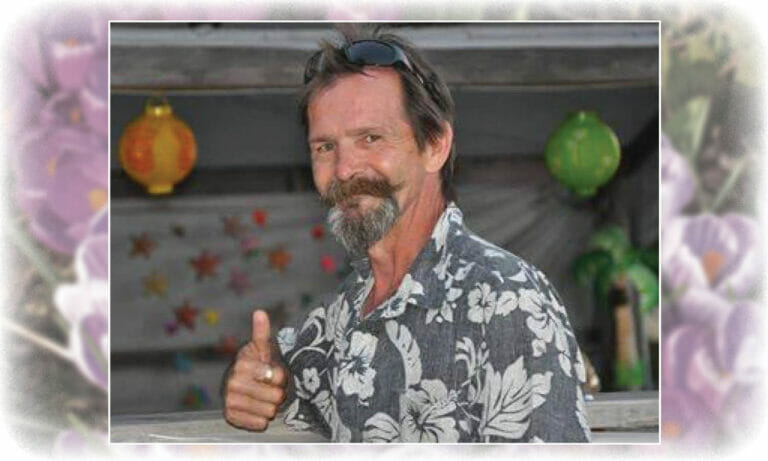
ROLAND, Anthony Lawrence

Anthony Lawrence Roland
January 28, 1958 ~ April 21, 2022

Tony Roland was a caring son, brother, uncle, and friend. He left this world suddenly on April 21, 2022. He was predeceased by his Mom and Dad.
Tony was born in the Old Lady Minto Hospital on Saltspring Island. He was raised on Saltspring and spent most of his life here except for a few years when he was in Hedley, B.C. where he worked in the mines and loved being a Volunteer Fireman for the Hedley Fire Department.

Back on Saltspring, Tony continued his many professions. He was a talented painter and painted many homes and businesses on Saltspring. He was also an owner/operator for DHL. One of his favorite jobs in later-life was as a support worker with G.I.F.T.S (Gulf Islands Families Together Society), supporting folks with disabilities in the community. Susie was his favorite – he shared a story of how she was a force to be reckoned with, like a wild horse. They made each other laugh and he had a forever bond with her family.

Tony was known by many to be a kind soul who was a great worker with a fantastic sense of humor. He would give you the shirt off his back. Like our Momma, he would ask for less than he needed and give more than he had. Through the struggles of life and getting his ducks in a row Tony yearned for the simple life. He dreamed of boats, babes, and bikes (and we can’t forget the sidecar for his best friend Jake). He had many hobbies such as wood carving and carving wax molds for biker rings.

Tony spent a lot of time here on Saltspring with our grandparents, Jack and Laura Roland. He was like a little brother, of sorts, to the Roland Boys. Spending time with grandpa who taught him the art of fishing, digging clams, tending to the pit or cooking on the spit, is a gift that lasted throughout Tony’s life.

He would often say fairweather friends are there for you depending on what happens. An all weather friend is there no matter what happens and he was proud to be an all weather friend.

Aloha to our big brother Tony! We miss you very much – until we meet again.

On behalf of his brothers and sisters, nieces and nephews, great nieces and nephews, aunties and uncles, and many cousins we invite you to celebrate Tony’s life with us at the BIg Tent, Royal Canadian Legion, 120 Blaine Rd, SSI on August 7th, 2022. There will be a cash bar and some of our brother’s favorite foods provided.

TRUDEL, Elizabeth

ELIZABETH TRUDEL
February 24, 1929 ~ July 13, 2022

Orphaned at 2yrs old, Mom was raised at the Sacred Heart School in Yorkton Sask.

At 18 she struck out on her own and graduated in 1952 from the Misericordia Hospital in Edmonton as a RN. Shortly after, in 1953 Mom and Dad were married. Mom was always active and loved to go on cruises with Dad. She loved to walk, ski and with some fellow retirees from the U of A did precision skating and gymnastics.

A few years after our Dad passed Mom moved to Salt Spring and took up residence at Heritage Place. She still walked with her friend Monica and often stopped at The Salt Spring Inn or Moby’s for “refreshments”. Mom was very strong willed, with a sense of adventure and a wicked sense of humour.

Many thanks to Dr. Kalf for his care, the Lady Minto staff, and most of all, the kind and compassionate care of Sandy and the staff of Heritage Place.

Mom is survived by her children, Debbie, Rhea, Paul (Lynn), Grandchildren Tracy (Kaj) Tammy (Brad). Predeceased by her 7 siblings.

Mother’s Mass will be on August 27 2022 at 11:30am at Our Lady of Grace Catholic Church on Drake Road with a Celebration of Life from 1:30pm-4:00pm at #2052-135 Brinkworthy Road.

Trust Council chair makes Islands Trust review request

0

Following a decision of Islands Trust Council made last month, council chair Peter Luckham has asked Municipal Affairs Minister Nathan Cullen in a letter to bring council’s request for a provincial review of the Islands Trust mandate, governance and structure to the attention of Lieutenant Governor Janet Austin.

According to a July 15 Islands Trust press release, “Trust Council’s decision in June 2022 to request a provincial review comes after much debate and discussion around the policy statement review process and a governance review conducted by external consultants earlier this year.”

“Over the past few years, we have heard many different viewpoints around how to best carry out our special mandate to preserve and protect the unique amenities and environment in the Islands Trust Area,” said Luckham. “However, we can’t do this work alone. As an agency of the province, we require provincial leadership, direction, and support to ensure that we are honouring the preserve and protect vision, while also addressing the new realities and challenges facing the Islands Trust Area today.”
Trust Council also established a new standing governance committee at its June 2022 meeting, comprised of seven elected members. This new standing committee will begin an in-depth review of the recommendations laid out in the governance review by external consultants. It will also be well placed to assist a provincial review process, should the province accept Trust Council’s request.
The governance committee trustee members are Alex Allen, Kees Langereis, Lee Middleton, Laura Patrick, Timothy Peterson, Tahirih Rockafella and Kate-Louise Stamford.
New members will be elected when the 2022-2026 new term Trust Council convenes in November.
It has been nearly 50 years since the Islands Trust Act was initiated and 35 years since it was last meaningfully reviewed by the Province. The Islands Trust Area is located within Coast Salish territory. The Trust states that “Working closely together with First Nations to align Islands Trust’s governance model, structure, and mandate with the Declaration on the Rights of Indigenous Peoples Act will be key to fulfilling Islands Trust Council’s (and the Province’s) commitments to reconciliation, and to the effective stewardship of this culturally and ecologically significant region.”

Deputy fire chief position filled by department veteran

1

Salt Spring Island Fire Protection District (SSIFPD) has announced the appointment of Dale Lundy to the position of deputy fire chief as of July 1.

“Deputy Chief Lundy has served our community with Salt Spring Island Fire Rescue for 30 years,” states a press release about the appointment, “most recently as assistant fire chief and executive training officer. As the longest-serving active member of the fire department, deputy chief Lundy brings a wealth of experience to the management team. Deputy Chief Lundy has been a strong advocate for first responder mental health within the department and he will be a key part of the human resource team. He will continue to champion critical mental health initiatives in his new role, to ensure our members receive the support they need.”

SSIFPD says that with the hiring of CAO Rodney Dieleman earlier this year, last November’s appointment of Jamie Holmes to the fire chief position and now Lundy appointed deputy chief, “the board is confident that there is a capable, competent management team prepared to lead the future of emergency services on Salt Spring Island.”

Fundraising underway to secure new Mount Maxwell park

0

The expression “many hands make light work” is a truism being proven by the many people coming together to create the first park established on Salt Spring Island in 15 years.

While gathering the last $350,000 needed to purchase a Mount Maxwell property for a future park is perhaps not the lightest work, those involved have already succeeded in fundraising the bulk of the property’s $850,000 purchase price. To secure the 75-acre property as a public park, the remaining funds need to be in hand by the end of this year.

The property is located on the northeast slope of Mount Maxwell. Should its 75 acres be successfully protected, it will be part of the largest contiguous tract of protected land on the Southern Gulf Islands. This includes the adjacent parks, ecological reserve and North Salt Spring Waterworks District lands around Maxwell Lake. The last multi-use park established on the island was Burgoyne Bay Provincial Park.

The park will have many benefits and fill a critical gap on the island, said Elizabeth FitzZaland, a member of the Salt Spring Solutions group spearheading the effort. Horseback riding, mountain biking, disc golf, hiking and outdoor learning can take place there, she said.

The park will have the added benefit of deterring people from recreating in other more fragile areas.

Salt Spring naturalist and writer Briony Penn agreed.

“We have a lot of areas that are endangered, high sensitivity and really not very compatible with recreational use, but this is perfect. It’s got views, it’s got wonderful trails, it’s got places for people to have picnics,” she stated on the project website.

The story of this land started much earlier, with the 1999-2000 Texada Land Corporation protests. At the time, FitzZaland explained, activist Andrea Collins’ family purchased a swathe of land with the intent to preserve it.

Protecting the land from logging and development is also a goal of the park project, and the reason why FitzZaland got involved in 2019, when a larger parcel in the area was for sale at $2.3 million.

“I saw how vulnerable the land was, in that it was zoned for forestry and under that zoning you’re allowed to clear all of the land, and you’re also then allowed to subdivide and build estate developments.”

At the time, the land was being used by many for recreation.

Several groups got together at that point and quickly secured a $1-million pledge, yet before they were able to find a community entity to be the park owner, the land sold to a private party. However, the new owners were willing to work with the groups involved to find a middle ground. Wanting to remain anonymous, the family supported the park effort by discounting the appraised value of the 75-acre property by $900,000.

“We are pleased to have been able to work in collaboration with the local community groups and the CRD to establish a new park for the long-term benefit of the community,” they stated in a news release.

The donor with the original pledge has stayed involved with the project and gave $250,000, which was matched by $250,000 from the CRD’s Salt Spring Island Park Land Acquisition Fund.

“It’s one of the larger contributions we’ve made since the acquisition of the pool,” said parks and recreation manager Dan Ovington, adding that the fund has around $800,000, putting this substantial contribution into perspective.

In addition to the landowner and community support, he said, “We looked at what all the user groups were that would benefit from this acquisition, and that’s where the commission supported us making this larger contribution.”

It’s a unique effort, FitzZaland explained, due to the variety of groups and interests involved in making the park happen, including new people who haven’t traditionally been involved in island conservation efforts.

“Some of the groups are really most interested in keeping the forest intact and sequestering carbon . . . other groups are really focused on having a place where there’s sanctioned trails for things like equestrian use, dog walking and mountain biking . . . Some of the groups are really interested in protecting where the top of the watershed is, going down into the valley bottom.”

Salt Spring Solutions is most known for its housing advocacy on the island, yet the park has been a large-scale effort for two years.

“Part of that is planning ‘where’s the right place to put development that’s important and required for the community,’ and then the other part is, ‘where shouldn’t it go? What should be protected?’”

Salt Spring Solutions’ intention and hope, FitzZaland said, is to have Indigenous communities involved in planning and management of the land. The Hul’q’umi’num name for Mount Maxwell is Hwumet’utsum.

The forest on the property includes mature third growth, as well as mature second growth and some regenerating third growth.

“It’s really important, obviously, for us to protect as much old-growth and older forest as possible,” FitzZaland said. “But it’s also good to look at these regenerating forests and these forests that are younger and say, ‘Okay, in 80 years, these are going to be 100-year-old forests.”

“These are our old forests of the future, and if we can get more of that type of land protected now, then future generations are going to benefit from that along with the whole ecology.”

“Having a new park that’s multi use and being part of something that’s so grounded in collaboration . . . I hope a lot of people feel compelled to support it financially, and then also engage in what will follow,” FitzZaland said.

Should the park purchase go through, the CRD will manage the land.

Ovington said some calls have come in from concerned neighbours, adding that he’s been emphasizing that a management plan will include consultations with all surrounding neighbours and user groups.

“That helps us determine what level of activity we’re going to support in the park, what level of development, what types of trails. Are these . . . back country trails, are they going to be more urban? But there’ll be lots of consultation once it goes through before we actually do any construction or assessments up there,” he added.

A CRD news release noted should the land be acquired, it would be accessed from Seymour Heights and, in the future, a trail from Wright Road.

People interested in donating to the park acquisition will get a tax receipt from the Salt Spring Foundation, which is involved in coordinating the fundraising with Salt Spring Solutions. Visit communitypark.ca/ for more details and to donate.

Local community commission bylaws released by CRD

0

What Salt Spring governance would look like with a local community commission (LCC) has become a bit more clear with release of two bylaws from the Capital Regional District (CRD).

Bylaws 4507 and 4508 — which would establish the LCC and delegate CRD powers to it — are expected to receive three readings at the CRD Board meeting today (July 13). Voter approval this fall will be needed to make the change.

An LCC format would see islanders vote for four LCC commissioners plus the CRD director. It would eliminate four current island-wide CRD commissions and then manage the services they are currently responsible for, along with other miscellaneous services. Bylaw 4507 lists 14 services from several different areas: parks and recreation, transportation and transit, liquid waste, economic sustainability, Fernwood dock, street lighting, grants-in-aid, livestock injury compensation, and the CRD financial contributions for ArtSpring, the library, and search and rescue group.

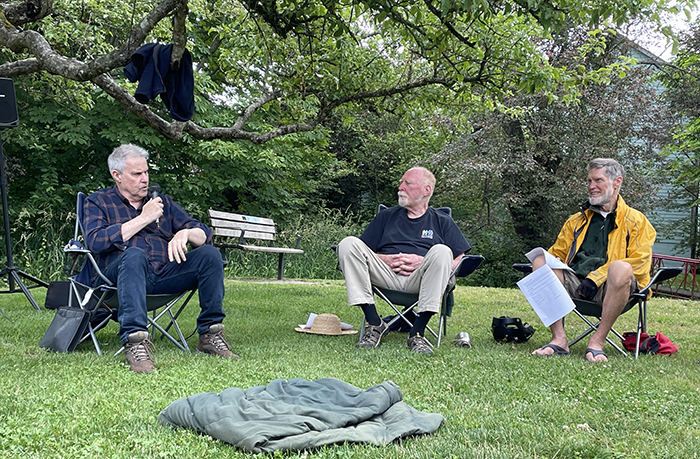
“All of those services will be delegated to the LCC,” explained CRD director Gary Holman, who supports the change, at a public ASK Salt Spring gathering in the United Church Meadow Friday. “The [Salt Spring electoral area] director will be part of the LCC and the LCC will have the same authority as the director now has regarding most services.”

The LCC will have a purely advisory role in some areas, said Holman, and cannot, by law, fetter the discretion of the director when it comes to voting at the CRD Board on certain issues. The same situation exists for municipal councils that have a representative on the CRD Board.

Bylaws 4507 and 4508 were created following release of a discussion paper on the topic authored by former Parks and Recreation Commission member Brian Webster, assisted by past Islands Trust CAO Linda Adams, and Richard Kerr, a previous alternate director to Holman. Input was also provided by an LCC advisory committee chaired by transportation commission chair and ASK Salt Spring organizer Gayle Baker.

“As a general statement, I would say not everything necessarily recommended in that [discussion] paper or recommended by the LCC Advisory Committee was taken up by CRD staff for various reasons,” said Holman. “But on the whole, this bylaw represents the fundamental approach recommended in that discussion paper and by the advisory committee.”

Other people at Friday’s meeting seemed pleased with the bylaw contents, and especially with the extent of the authority being delegated by the CRD.

Webster assessed the bylaws as not perfect, but said he believed “unreservedly” the LCC they enabled was “a step forward” for island governance.

“Personally, I’ve been pretty focused on the local community commission as a mechanism to make things work a bit better in our community. I’m convinced that it can, and having just looked at the [delegation] bylaw I’m convinced that this bylaw meets the test of doing that. Is it everything I want it to be? No. Would I add some additional services to the 14 services that are listed here? You bet I would. This is not perfection. But this is significantly closer to it than I thought CRD staff and Victoria could possibly come up with.”

Darryl Martin, who is president of the Salt Spring Chamber of Commerce and the LCC Advisory Committee vice chair, recited part of the “administrative authority” section of Bylaw 4508, noting it authorized an LCC to “enter into agreements respecting the undertaking, provision and operation of the district’s works and services,” and to identify and create “strategic plans and priorities, and service-specific operational policies.”

“To me, that’s significant authority,” said Martin.

For Holman, broadening of the decision-making process is one of the biggest benefits of an LCC.

“Many of the decisions now made by the director are going to be made in open public meetings and subject to a majority vote.”

As an example, Holman said, instead of a $5,000 grant-in-aid being given to a particular community group at the sole discretion of the director, “it’s going to have to be debated in a public meeting about whether that’s a good idea. And the same with all those other services that are designated.”

“The decision making will become a little more complicated, but so it should be. That’s what democracy is about.”

Maxine Leichter, who sits on the transportation commission and pays close attention to local government issues, expressed her positive opinion.

“My thought is that, yes, there are problems with the LCC, but there are problems with any kind of government. And so the real question should be, is this an improvement or not? And to me, it’s more democratic, so it’s an improvement.”

She said she has long been concerned about the CRD director having sole discretion over how a large amount of money is spent.

The bylaw states that the LCC must meet monthly, but Holman said that didn’t mean it couldn’t meet more often if needed.

The CRD estimates a change to an LCC system would add $168,610 to the annual budget, including 1.2 full-time-equivalent extra staff ($106,110 in the first year) and remuneration for commissioners at a suggested $10,000 level. Holman said he wasn’t convinced that an LCC would demand that much more staff time.

A referendum on whether or not to adopt the LCC governance format will be held in conjunction with local government elections on Oct. 15. If the referendum passes, elections for the four commission members will be subsequently held.

Bylaws and details are in the agenda package for the July 13 CRD Board meeting on crd.bc.ca.

Softball girls earn bronze at provincials

The Salt Spring Storm U17 girls fastpitch team came home from level-C provincial softball championships in Kamloops with a bronze medal.

Eleven girls from the team travelled to the interior to compete in the event on the Canada Day long weekend.

“They played six games against the strongest teams in the province,” reported coach Bruce Dunbar.

He said the Storm placed in the silver bracket after four games of round-robin play. They then played against the Port Coquitlam Base Runners and beat them 10-7 after being behind in the first two innings.

The second game pitted Salt Spring against the Port Alberni Blazers. The Storm found themselves behind 8-1 in the second inning, but rallied back to within three runs — 13-10 — in the fifth inning. However, they could not continue the comeback and settled for a 17-10 loss in that game.

But Dunbar said the outcome did not detract from their achievements.

“Their coaches could not be more proud of them,” he said. “They are true champions.”

“These girls played their hearts out, made many new friends and had a boat load of compliments on their new hot pink uniforms,” he added. 

Dunbar also thanked sponsors Sidney Bakery and Buzzy’s Luncheonette.

Log collision ends Salt Spring team’s R2AK bid

A Salt Spring team racing in a trimaran met a rapid and disappointing end to a no-engine race that stretched from Victoria to Alaska.

The team, made up of 75 per cent Salt Spring Islanders and one Vancouverite, signed up to take part in the Race to Alaska (R2AK), a solely human and wind- powered race to Ketchikan, Alaska. Team Pturbodactyl was composed of John Tulip, John Hillier, Terry Bieman, Graham Harney and the Corsair F31R trimaran they were racing in. The trimaran, and John, had previously partaken and finished the 750 coldwater mile race to Alaska in 2017 in 13th place. 

Pturbodactyl made it through the first stage of the race, the so-called “proving ground” from Port Townsend, Wash. to Victoria, finishing fourth on June 13. Of the 49 teams racing, one trimaran team capsized and another trimaran’s mast came down amidst the large standing waves in Stage 1.

On day two of Stage 2, “To the Bitter End,” Tulip and his crew were according to the race’s field reporters one of the three fastest teams whose races came to an end as a result of logs in the water. “Team Pturbodactyl was first, hitting a family of would-be 2x4s with enough force that it damaged their amas and endangered its connection to their main hull,” an R2AK field report stated. The ama is the outrigger on the trimaran that provides stability to the vessel. Pturbodactyl were forced to detour to Gibsons and bow out of the race on June 17.

“The boat’s in getting fixed and we’re hoping it’ll be back on the water in a couple of weeks,” Tulip reported. Luckily, none of the crew were injured in the collision.

“It was a disappointing end to the preparation and all the work that went into it,” Tulip said.

The team spent around nine months preparing the peddle drives, preparing the boat and the final push of race logistics with moving the boat to the U.S. and securing provisions.

According to YouTube channel Sailing Tips, the wet spring likely contributed to the amount of logs in the water. 

The R2AK is the longest human and wind powered race in North America and one which Tulip, who has parttaken in many area races, calls “a great race.”

“The idea of the race, the way that it’s organized, the cause that it’s for,” to support Port Townsend’s Northwest Maritime Center, and the people it brings together all combine to make this a very special event. 

“People from a huge, wide range of experience come to do the race. A lot of them are really experienced . . . a wide range of experience from sailing through rowing,” he said. “It’s a really interesting race from that perspective, you see a lot of interesting people, you see a lot of interesting boats out there.”

Vessels include rowboats, sailboats, kayaks and rowcruisers. 

For the first time this year, teams could choose whether to make their way to Alaska past the inside of Vancouver Island or out of the Juan de Fuca strait into the Pacific Ocean. While Tulip’s trimaran is qualified to take this route, Tulip remarked that that stretch is a very serious sailing undertaking and looking at the weather for the race the decision was made to stick to the inside route. 

A total of 17 teams finished the second stage of the race, with team Pure & Wild in a Riptide 44 Monohull sailboat nabbing the first-place prize of $10,000 U.S., and Elsewhere, racing in a Soverell 33 Monohull sailboat, coming in second with a prize of a set of steak knives as is the R2AK tradition. Team Fashionably Late, who said they named their team to indicate their approach to the race as well as to add in some humour, took third place.