Home Blog Page 243

Editorial: LCC bylaws look promising

1

Bylaws to create a local community commission (LCC) for Salt Spring have been released and they are better than expected.

That seems to be the consensus of some islanders intimately involved with the process, and so far we must concur. We were skeptical about CRD LCC bylaws delivering anything substantially better than the status quo, but the level of delegated authority and the areas covered are significant.

One LCC benefit that is hard to evaluate unless you’ve attended umpteen-thousand commission meetings (as Driftwood staff have) is the elimination of the “silos” caused by separate commissions having independent mandates. Take the housing crisis, as one example. It can land in the lap of the parks and rec commission just because the commission can hold land on behalf of the CRD, but housing is not the commission’s mandate, so it is hard to justify cross-mandate action on their part. An LCC could look at the broader picture.

The CRD has suggested an extra 1.2 full-time-equivalent staff would be needed to support the LCC, but CRD director Gary Holman said he does not see that much extra time being required.

Budget efficiencies could even be realized. A detailed examination of how Salt Springers’ property tax dollars are spent could perhaps find savings to help cover the additional estimated cost of an LCC. Something else apparent at current commission meetings is that proposed initiatives come with a price tag based on required staff time, as if the commission is purchasing services from external contractors rather than paying an employee’s salary and benefits from a predetermined budget. As well, once debt authorized for a specific purpose by a past CRD referendum is paid off, the annual debt-payment amount remains in the budget and is used for other purposes. Perhaps a five-member LCC with broader accountability to the electorate would be more inclined to rein in costs and ultimately make CRD services less expensive for taxpayers.

Following two decisive rejections of incorporation in 2002 and 2017 referenda, the province will not fund another incorporation study for Salt Spring in the near future. It is pointless to harp on incorporation as a feasible governance option. The LCC option as presented at least addresses some of our current governance deficiencies.

We look forward to the public discussion unfolding between now and Oct. 15 when a referendum on the issue is held.

The Blue and Gold headline July 14 concert

SUBMITTED BY SALT SPRING ARTS

On the evening of Thursday, July 14, people are invited to bring a blanket and a picnic to Centennial Park at 6 p.m. for great music in the beautiful setting of Ganges Harbour.

Warming up the evening will be John Gogo, who Victoria Times Colonist writer Joseph Blake called “ne of the most talented singer songwriters this area has ever produced.” A folksinger, songwriter and actor, Gogo hails from a large musical family in Snuneymuxw (aka Nanaimo) on Vancouver Island. Gogo has carved out a niche for himself with his songs about the people, places and events of Western Canada, the islands and coast in particular. Several have themes of his family’s coal mining past and history in logging, including his own.

The headliner for the night, The Blue and Gold, is a musical collaboration between Juno-nominated and WCMA Blues Artist of the Year Ndidi O and folk-roots guitarist and banjo player Trish Klein (from The Be Good Tanyas, Frazey Ford, Po’ Girl), which celebrates the musical artistry and legacy of pioneering female blues musicians.

Ndidi O and Trish Klein were established Canadian roots music artists when they met in Paris while both going through turbulent times in their lives. In Parisian street cafes, alley-way bars and hammams their friendship was fused, and the idea of collaboration first began.

Island Savings, a division of First West Credit Union, is the marquee presenter for the 2022 season. We are also grateful to the Gulf Islands Driftwood, Harbour House Hotel, Country Grocer, BC Ferries, the Capital Regional District and the Province of British Columbia for supporting this program.

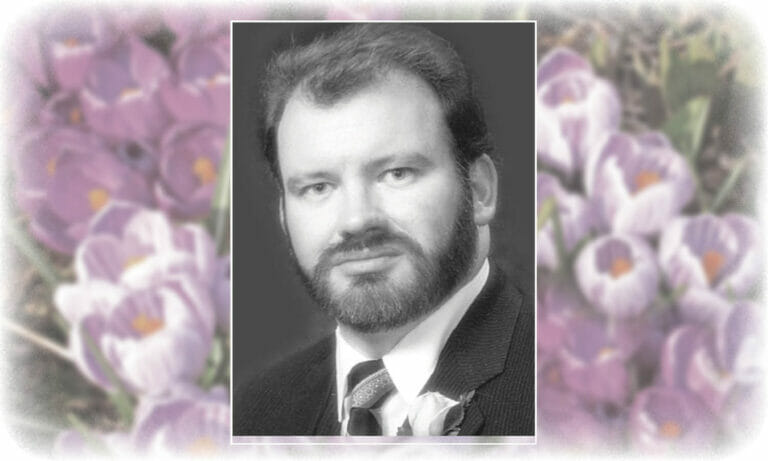
HELSET, Leonard James (Jim)

Leonard James (Jim) Helset
April 19, 1953 – July 23, 2022

Sadly, we have lost our big bear of a husband, stepdad, stepgrandpa, brother, uncle, papa and friend to a tough battle with sepsis. Middle child of Torbjorn (Ted) and Jenny Helset, he was known to many “Salters” as a darned-good architectural designer. He’ll be missed by wife Carol, “kids” Jeff, Diane and Matthew Gow, sisters Clara Ritcey and Ellen (Kelly) Ferguson, brothers Roy and Harold (Judy) Helset, brother-in-law Bob (Angele) Black, sister-in-law Barbara (Don) Ausman, many nieces & nephews, and his special family, the McArens.

Jim was raised in the Clearwater, B.C. area – not too far from Helmcken Falls – where his Dad was a well-known big game guide. He had an interesting childhood – disappearing for days, on horseback, to hunt and to fish. His first 5 years of schooling were in a one-room school house, and for the remainder of the years, he was bussed to Clearwater.

 Jim spent a year at Cariboo College, Kamloops, in an accelerated architectural drafting and design certificate program. There were no architectural jobs available upon his graduation, so he moved to Calgary where, for several years, he worked as a contract draftsman in the energy sector specializing in high-pressure piping systems. He then joined Gemini Engineering, initially as a contract draftsperson but shortly became a full-time employee. He advanced to the role of Chief Draftsperson and was instrumental in building a talented and well-performing drafting department. Jim was able to use his technical expertise, practical viewpoints and infectious smile to get his points across. He also worked to advance their skills into the computer age and developed computer-aided drafting systems. A highlight for several years was his filling in for Santa Claus at the Children’s Christmas parties. 

Jim and Carol moved to Salt Spring in 1991, had a major house fire in 1993, rebuilt, and Jim worked out of there – as Helset Design – until his passing. As a testament to his abilities, he was never without work throughout those 31 years. 

Jim was a great cook, and when time permitted, he dabbled in the arts – sculpting in soapstone, metals and woods. He and Carol spent 14 years manufacturing metal spiderwebs – as Webs n’ Things – often selling at the Saturday Market and at Artcraft.

Jim was especially proud of his long-time Rotarian membership. He made some wonderful friends, there, and loved working on their various projects. He spent many an enjoyable hour helping to create our waterfront mermaid, Nerissa.

Jim’s friends often commented on his wealth of knowledge and his ability to retain trivia. It was not uncommon for him to surprise his doctors with his knowledge of all things medical. He was kind and strong, and he loved to laugh.

Jim would want to thank his wonderful doctor and hero, Ron Reznick, and Ron’s “boss” Jean for all of their over-and-above care through the years.

No flowers by request, please, but donations in Jim’s memory would be welcomed at our SPCA at P.O. Box 522, Salt Spring Island, B.C., V8K 2W2.
— Wait for me on The Far Side Banks of Jordan, Jimmy. —

Linda Gilkeson shares resilient gardening info

Transition Salt Spring (TSS) is thrilled to be starting a collaboration with renowned gardening expert and island resident Linda Gilkeson.

Gilkeson will be presenting her most recent insights and learnings about climate change in a Zoom event called Resilient Gardens for a Changing Climate. She will talk about how people can enhance their food growing and landscape gardening success while taking climate action.

“I think it was easier to grow food and tend to landscapes years ago than it is now,” said Gilkeson. “It does take a bit more knowledge and skill to be successful, but it isn’t difficult to make your garden more resilient and productive all year round.”

Food gardens are becoming more important than ever due to climate change, notes TSS in a press release.

“Discover the important role gardeners can play in mitigating greenhouse gas emissions, including designing landscapes to capture carbon,” the group states.

This event will be held via zoom on Wednesday, July 13, from 6:30 to 8:30 p.m.

People can register at www.tinyurl.com/TSSresilientgardens on a pay-what-you-can basis.

For more information about Gilkeson, visit www.lindagilkeson.ca.

Suspicious Rainbow Road fire being investigated

0

Salt Spring Island Fire Rescue (SSIFR) got a call about a vehicle fire in the 400 block of Rainbow Road at 1:24 a.m. on July 2. Arriving six minutes after the call came in, firefighters found a fire blazing in a vehicle, which had ignited a nearby garage and house.

SSIFR’s assistant chief Mitchell Sherrin credited the actions of the first firefighters to arrive for saving the home from the flames. Capt. Warren Nuyens and firefighter Clayton Akerman “laid a water-supply line down the driveway, and then deployed a deck gun, and stretched a hose line to catch the fire before it got deep into the building — all in the span of a couple of minutes,” Sherrin stated in a news release. “Without their outstanding work in those first few minutes, the house would’ve been lost.”

Two people in the house were evacuated without injuries. While the vehicle was destroyed, the garage suffered moderate damage and the residents were able to return home that same morning.

Eight firefighters and four firefighting apparatus stayed on scene until 5 a.m., using a water-tender shuttle to supply the 2,250 gallons of water needed as well as monitoring for safety and investigating the fire. The RCMP and the BC Emergency Health Services ambulance crew also attended.

The investigation has deemed the vehicle fire suspicious, and SSIFR personnel are working with the RCMP on their police file.

Island youth connects with diverse family history

This is the last interview in the Connecting the Dots series to celebrate World Day for Cultural Diversity for Dialogue and Development. In the weeks that bookend this important day, The Circle Education talks with young people to celebrate different backgrounds. Through our youth, we hope to offer a look at the world from different perspectives. In this way, we begin to open up horizons, providing our societies with connection and making them more inclusive. All articles in the series can be read on The Circle website.

By MARCIA JANSEN

The Circle Education

Max Akerman is part of a family that has been on Salt Spring Island for generations. His forefathers left England and Ireland in the mid-1800s to seek a better life in North America. Max’s great-granddad Bob Akerman wrote a book about the family history in 2005, the same year Max was born.

“I was the last Akerman who was added to the family tree in the book. I just made the deadline,”says Max, who has two younger sisters.

Everyone who lives on Salt Spring Island has probably heard of the name Akerman. Max, 16, is the oldest child of Ken and Brenda Akerman, who live in the Burgoyne Valley.

“When I introduce myself, people often ask me who I am related to or if I know a certain Akerman. I might have heard of the name, but my family is so big, that I don’t know everyone personally. I am very close, though, with my uncle George and my aunt Dawn, their children, and my grandparents Ted and Donna, who live just across the street from us.”

Max admits that he didn’t read all of The Akerman Family. Growing Up With Salt Spring Island, which his great-granddad Bob wrote.

“I read parts of it, I am not a big reader, but my granddad has told me a lot of stories about our family history. I know my family has been on Salt Spring Island since the 1800s. My great-great-grandfather Ted was one of the first white babies born on Salt Spring.”

The Akerman family, who settled in the Burgoyne Valley, has a farming background.

“Mostly livestock,” says Max. “My granddad had cows in the past and even now he is older, he still has sheep, does haying and sells firewood. He really enjoys being out on the field, it always has been his life. I like to help him in the summer, but I don’t see myself being a farmer.”

The Akermans are traditionally introduced to hunting and fishing at a young age. According to his book, Bob Akerman learned to shoot pigeons from his dad when he was five. His son Ted Akerman has been passing his hunting and fishing skills on to the younger generation as well.

“Last week my granddad took me and my cousin out for fishing on Stowel Lake. I caught a very small rainbow trout, so I released it. My granddad caught three of them that were big enough to eat and he gave both me and my cousin one to take home. Fresh fish tastes so much better than store-bought fish.”

Since he was 10 years old, Max was allowed to come hunting once a year with his granddad and dad.

“We hunt on my granddad’s property, mostly for deer. There are a lot of them on Salt Spring Island. I shot my first one when I was 10. When I hunt, I use a crossbow — I’ve never shot a gun — and I am naturally good at it. I have a steady hand. I enjoy the process, being out there in nature, and I like deer meat. We try to use as much as possible, so nothing is wasted. We make sausages and pepperoni, and I love a venison steak. It has a unique taste.”

Although he is more familiar with the settler’s background of his family, he is also interested in the Indigenous part. His great-great-grandfather Ted married Ellen Gyves, whose mother was the daughter of a Cowichan First Nation chief.

“I do feel that I am part of the Indigenous culture. I don’t know everything about Indigenous traditions, but I am constantly learning new things as I grow older. At GISS there is extra support for Indigenous students and we went on field trips to Burgoyne Bay and Cowichan Bay to meet with elders who talk with us about the history and practices of native people. It is very interesting to learn more about that.”

Max just finished Grade 11 and starts his final school year at GISS after the summer. He doesn’t know exactly what he wants to do after he graduates.

“I don’t like school that much and I don’t see myself going to college or university. I would rather start my own business, but I am not sure in what direction that will take me.”

After more than a hundred years since Joseph Akerman set foot on Salt Spring Island in the 1800s, the Akerman name is still very common.

“I don’t plan on staying on Salt Spring. I like a change of pace, I would love to live in the city, or maybe go outside of Canada to learn about other cultures. I know other family members have left, like my father who went to Vancouver for a few years, but a lot of them came back. So, if you look at the past, there is a good chance that I will end up on Salt Spring again.”

Impressions 7 exhibit, with July 9 demos, at library

SUBMITTED BY SS PRINTMAKERS

The Salt Spring Printmakers’ annual show, on now at the library, is once again delighting visitors with colourful intriguing prints and a display of the many different kinds of plates used to make them.

Artists will be in attendance on Saturday, July 9 from 10:30 a.m. to 1:30 p.m. to talk about the secrets of printmaking and offer demonstrations of different techniques. Visitors, especially children, will be able to try their hand at making a print.

In other news, the group has been allocated a space for a dedicated printmaking studio at the former Salt Spring Island Middle School. The studio will open in early September and printmakers are planning how to create a professional print studio that will serve its members and the community. To raise funds for a new press and to furnish the studio, an online print sale has been extended to July 8 at www.ssiprintmakers.ca.

Impressions 7 is open during library hours, when the program room is not in use, until July 30.

Viewpoint: Ferry issues updated

The following is a summer update from David Courtney of the Patrons of Route 6 group.

Raising Awareness

1. April 3, 2022: MLA – Adam Olsen graciously tabled the Fix for Route Six petition in the BC Legislature on our behalf. Approximately 2,100 people (and counting) have signed the petition,

2. May 3, 2022: Brian Anderson, BC Ferries vice-president, strategy and community engagement, came with eight other BCF employees to meet with the Salt Spring Island Ferry Advisory Committee. We were given five minutes to speak at the end of their meeting. First time on Salt Spring Island in quite some time.

3. June 22, 2022: BC Ferries board of directors met for two and a half days at the Harbour House Hotel. It was a first for Salt Spring Island and the first time the board has met in person in almost three years due to the pandemic. The board sponsored a meet and greet for those closely concerned about our ferry issues. The presidents of the Chemainus, Duncan and Ladysmith chambers of commerce were on hand to engage the BC Ferries board and CEO at our request.

Route 6 provides all the dangerous goods to the island as well as a vital link for goods and services. It was a great evening to discuss the issues in a casual environment. The interim chair, a Gulf Islands resident, and other members were curious and genuinely concerned. Most had taken an excursion on the MV Quinsam earlier that afternoon on Route 6 to Crofton and return.

Commitments to date

BC Ferries is having issues ramping up from the global pandemic and is not alone in that plight in the transportation sector. The next four-year budget runs from April 1, 2023 to March 31, 2027. There has been a commitment to construct the new ferry terminals at Crofton and Vesuvius Bay. These are expensive projects and take time to build.

We continue to campaign for the little things that make a difference. Most recently a joint venture with the Exchange in having a camera mounted at the Crofton toll booth pointing up Chaplin Street to the turn onto Crofton Road, and no parking lines at the entrance to residential driveways on Chaplin Street. We now have a new porta potty next to the toll booth for use after 6 p.m.

One request is a similar facility for the foot passenger waiting area on the wharf, similar to what we have at Vesuvius Bay. Moving the 7:55 p.m. sailing up to 7:20 p.m. at Crofton would be appreciated greatly by all heading home after a long day.

The issue of moving the dangerous goods times on Monday and Thursday to the evening hours during the long days of summer doesn’t appear to be an issue for our dangerous goods providers. However, the issue has been discussed by BCF and FAC for a very long time with no resolve.

Route 4 – Fulford Harbour to Swartz Bay

The current parking lot was created on landfill decades ago. Is it reasoned to think that if you can’t acquire property in the vicinity of the terminal that fill is the only option? Landfill adjacent to current parking lot to create a 140 to 160-vehicle containment area in order to take vehicles off the roadway and restore the Fulford village is a very viable option and, yes, expensive. During an election year this would be a great time to discuss the issue with our candidates, in time for BC Ferries’ upcoming four-year budget.

Fire hall referendum passes

0

The referendum to approve borrowing for a new Ganges fire hall has passed by a 75 per cent margin.

Results saw 2,608 ballots in favour and 864 ballots against borrowing $9.7 million for a new fire hall.

Some 7,588 people are on the Salt Spring Island Fire Protection District voters’ list, which makes the voter turnout level 45.7 per cent.

Spoiled or rejected ballot numbers were not provided on Saturday afternoon.

“It’s a wonderful day for the community,” said SSIFPD board chair Rollie Cook.

“It puts aside the negativity of the last few years where people thought nothing can get done on Salt Spring . . . We owe a big debt of gratitude to the Salt Spring community.”

Total project cost is $13.7 million for a 11,500-square-foot building to be located on Lower Ganges Road between Brinkworthy Estates and the Kutatas winery. Twenty per cent of the cost is for contingencies, and inflation costs of eight, five and five per cent in the three building years are also included in the total.

Approximately $3 million dollars of the required funds are already in reserves. A further $1 million in Community Works Fund (federal gas tax) money was contributed by the Capital Regional District, as recommended by electoral area director Gary Holman.

A mail-in ballot process was used, with a June 30 deadline.

The existing Ganges hall was built in 1959. Previous attempts to gain voter approval for a new hall or a land purchase were not successful.

See the July 6 issue of the Driftwood newspaper for more on this story.

Salt Spring, Galiano islanders among Community Stewardship award winners

0

Salt Spring and Galiano islanders were celebrated with community stewardship awards this year, for decades of sustained commitment to their communities and the environment. 

Celebrated this year were six individuals and one organization working in the areas of “land conservation, trail network development, forest restoration, community service, collaborative stewardship, public outreach and education, and advocacy work.” Salt Spring’s Kees Ruurs and Ruth Waldick were recognized, as was the Salt Spring Island Natural Cemetery. From Galiano Island, Jeannine Georgeson and Keith Erickson also received awards. 

Salt Spring’s Kees Ruurs was recognized for 14 years of community service, including his time as a volunteer warden and board member for several island non-profit organizations. In his professional capacity as a Capital Regional District Parks and Recreation manager, Ruurs “helped expand and promote protected public trail networks,” an awards information sheet stated. Kees spend five years on the Salt Spring Island Conservancy board and is currently volunteer warden of the Howard Horel Nature Reserve. “Through this role, he has removed invasive species, installed trail signage, and planned and developed an extensive trail network, making the reserve accessible to the general public,” Islands Trust stated. 

Ruurs also served nine years on the Salt Spring Island Foundation board, three as chair of the board, where he helped lead key initiatives, including “water preservation projects, new pathways, a solar panel development and new school gardens.” Ruurs is currently a board member and vice chair of the Salt Spring Trail and Nature Club, where establishing and maintaining hiking trails is in his purview. 

Fellow islander Ruth Waldick was recognized for her leadership and championing of an ongoing project to build watershed resiliency and forest fire resistance in the Maxwell Lake watershed.

“With her leadership, the joint project has attracted world-class researchers and scientists, many of whom are donating their time, and has received federal government funding, as well as a donation from a private donor,” the Trust stated.

In late 2021, the project received $100,000 in federal funding.  

The project began with in December 2021 with fieldwork teams working on techniques and templates they will later apply to other areas of the island this year and into 2023. The work will involve first experts walking the land to identify areas that could receive treatment, which could include green fire breaks, berms or recovering the forest understory using fencing. Experts from across Cascadia will consult on the various options for treating the forest.

Fire risk and mitigation strategies have not yet been studied in the Gulf Islands’ unique forest ecosystem, which includes Garry oak meadows, coastal Douglas-fir and hemlock forests, arbutus forests and areas with western red cedar. As this research is groundbreaking, Waldick has also set up a knowledge-transfer strategy, which will see results shared with among others “conservation groups, local government, First Nations, and large private and public landowners/managers from across the region.” 

Waldick was also a volunteer with the effort to create the Climate Action Plan 2.0 for Salt Spring, and was lead author on the action plan’s chapters on forests. The work in the Maxwell Lake watershed supports the implementation of the action plan, the Trust stated.  

The 5.5-hectare Salt Spring Island Natural Cemetery in the Burgoyne Valley was recognized with a stewardship award. The first certified green burial cemetery to open in Canada has since it opened in 2020 had 18 burials. “No chemicals are used in the bodies, caskets, urns, or landscaping. Only biodegradable materials are put into and on top of the ground,” the Trust stated. “Engraved fieldstones are used as headstones. Native plants are used in the natural restoration of burial areas, to support local biodiversity.”

Jeannine Georgeson of Galiano was recognized for her extensive volunteer work leading collaborative stewardship on the island on protection of the Salish Sea, local history and conserving cultural practices. 

“In August 2020, Jeanine began working with the Spirit of the Sxwo’le (SOS) Coalition to develop participatory mapping practices that weave together biodiversity, ecosystem mapping, and Indigenous perspectives to deepen ecological literacy and cultural relationships with place,” the Trust stated.

This project involved bringing together diverse organizations, from local conservation associations to research organizations and Indigenous-led NGOs. 

Georgeson is also coordinating an upcoming exhibition called The Water We Call Home, to open at the Yellowhouse Art Centre in July. The exhibition and related gatherings will focus on education of island residents in the areas of “environmental justice and Indigenous sovereignty.” 

Keith Erickson, also of Galiano, was awarded for his two decades of ecosystem-based land stewardship. As a field biologist and later executive director of the Galiano Conservancy, Erickson worked on restoring and protecting among others Laughlin Lake, the Great Beaver Swamp, Finlay Lake, Vanilla Leaf Land and Cable Bay.

Erickson was also instrumental in acquiring the 78-hectare Millard Learning Centre, which has become an education hub for the island and the region. Erickson helped in the development of the Nuts’a’maat Forage Forest at the Millard Centre, where Penelakut First Nations Elders and youth worked to document plants with cultural value and share traditional knowledge. 

Erickson also served on the boards of the Galiano Island Forest Association and a number of other committees and commissions on the island.

The annual awards celebrate and acknowledge the commitment of “time, energy and ingenuity” of community members in helping to preserve and protect the Trust Area, Trust Council chair Peter Luckham stated. The awards celebrate initiatives that further the mandate, also called the object, of the Islands Trust, which “is to preserve and protect the Trust Area and its unique amenities and environment for the benefit of the residents of the Trust Area and of British Columbia in cooperation with municipalities, regional districts, improvement districts, First Nations, other persons and organizations and the government of British Columbia.” 

Also awarded this year were Will Husby of Bowen Island for his three decades of environmental stewardship work. The award was also given posthumously to the late Chris Straw of Gabriola Island for his advocacy against freighters anchoring in the Salish Sea. 

Some changes were recently made to the Stewardship Awards program. It will now be offered once per elected term with the next nominations opening in March 2026, and has been updated to better align with the Trust’s reconciliation declaration.