Home Blog Page 254

Criminal investigation ongoing into Stewart Rd. Crash

0

A criminal investigation is ongoing into a serious SUV crash on Salt Spring Island in early April, meanwhile an Independent Investigations Office of British Columbia (IIO) investigation into police involvement in arresting the driver has been concluded.

Police attended a “serious, single-vehicle collision” just after 3:30 p.m April 2 in the 200 block of Stewart Road an RCMP press release stated. In an April 27 update, Salt Spring detachment commander Sgt. Clive Seabrook explained a red SUV had gone down an embankment, a collision so severe that it resulted in the engine of the vehicle being torn from the chassis.

Witnesses reported that the SUV was being driven “in an unsafe manner” prior to the crash, according to RCMP.

Police, firefighters and ambulance personnel attended the scene. Witnesses identified a man at the scene as the driver, who police believed to be intoxicated.

“Shortly after arriving on scene, officers learned that the driver had outstanding warrants for his arrest, was prohibited from driving, and believed that his ability to operate a motor vehicle was impaired by alcohol,” the RCMP stated. “The man resisted arrest and required three officers to safely arrest him.”

The man was transported to hospital by police, and was later moved to another hospital to treat what the IIO stated were serious but not life-threatening injuries.  

An IIO investigation was opened to determine whether police played any role in the injuries the man sustained. A civilian-led police oversight agency, the IIO is tasked with investigating all incidents of death or serious harm where these outcomes could have been the result of action or inaction of an on- or off-duty police officer. 

“​​Independent witnesses who spoke to the male driver before police arrived observed that he had serious injuries and said he had been in a collision,” the IIO stated. “The witnesses confirm that police arrived a short time later, and there was a brief struggle while the officers took the man into custody.” 

The head of the IIO, the chief civilian director, confirmed April 26 that the investigation has been concluded and determined that “police actions did not cause serious harm.” In the course of their investigation, the IIO reviewed statements from the driver, witnesses and police. 

“The independent civilian witnesses confirm that the man was injured in the collision prior to police attendance, and the limited use of force employed to take the man into custody did not cause the serious injuries he sustained,” the IIO stated.

The RCMP continue to investigate the crash as a criminal matter, and are asking anyone with further information to contact the Salt Spring detachment at 250-537-5555.

Serious incidents such as this can greatly impact those directly involved in the collision as well as first responders,” Seabrook stated. “We would like to thank Salt Spring residents for your unwavering community support as we supported our officers in this difficult time.

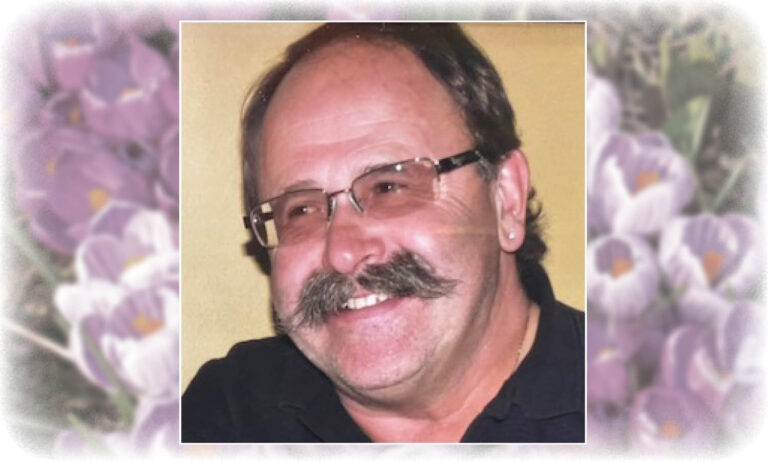
DOUGLAS, John Donald (Donnie)

John Donald Douglas (Donnie)
February 8, 1948 – April 15, 2022

Donnie was a keeper of memories and memorabilia. He treasured his friends, old and new, and was always ready to laugh at his foibles or share a story. Loyal and generous to a fault, Donnie was a sensitive man who loved deeply.

Born in Calgary, Alberta, Donnie lived in Red Deer most of his life. From an early age, he worked in the family business with his parents and elder brother. As a young adult, he toured Europe with his lifelong friends Wendy and Tony Purnell. For the next 25 years, Donnie was employed by Border Paving. This work took him throughout Alberta. During this time, he earned his machinist, heavy duty mechanic and millwright certificates.

As his parents’ health deteriorated, Donnie became a devoted caregiver during their last years.

He then sold the family home and moved to Salt Spring Island in 2011 to be closer to family.

Employed by Mouat’s Hardware for several years, Donnie retired in 2014. Membership in the Lions Club offered Donnie a strong sense of community, and he was grateful for their support and encouragement. He resided in Pioneer Village and often mentioned how much he appreciated his neighbours and his home.

In the past year, Donnie struggled with declining health. His favourite outing was to catch a bus and tour the island, making friends along the way. As his mobility lessened, Donnie could often be seen sitting on his walker watching the comings and goings in Ganges.

Donnie was predeceased by his parents Bill and Vi Douglas and his brother Robert. He is survived by his sister Joan of SSI and her partner Rob Lowrie as well as nieces Catherine and Kirsten, nephews Daniel and Robbie, great nieces Fern and Imogen, great nephews Dallas, Taliesen and Finn. Uncle Don was much loved by his family.

Thanks to the Lady Minto Hospital staff who knew Donnie well; to Drs Gummeson, Mommsen-Smith and Voyer, & to nurse Israel Cohen for your concern and care. Thanks also to the ICU staff at Royal Jubilee Hospital for your expertise during Donnie’s last days.

A memorial for family and friends will be held at a later date.

Out of the Fire book launch set for Steffich Fine Art

People who enjoyed Pirjo Raits’ 2018 book called Out of the Woods – Woodworkers Along the Salish Sea will be excited to know she has followed that successful format to put the spotlight on the region’s artists working in metal.

Out of the Fire – Metalworkers Along the Salish Sea has just been published by Heritage House Publishing and includes several Salt Spring Island metal artists: Seth Burton, Jacob Burton, Peter McFarlane, Carl Sean McMahon, Nycki Samuels, Alvaro Sanchez, and Alison and Jeri Sparshu. The others reside between Sooke and Qualicum Bay on Vancouver Island, and the Vancouver area and Roberts Creek on the mainland.

A book launch event is set for Friday, April 29 at 7 p.m. at Steffich Fine Art in Grace Point Square, where work by some of the metalworkers can be found. A Victoria launch is at Bolen Books on April 30 at 7 p.m.

As with the woodworkers book, Raits teamed up with photographers Dale Roth and Michele Ramberg to capture stunning images of the artists, their creations and work spaces to illustrate the author’s text derived from visiting each one.

The 24 artists work in fields ranging from sculpture to blacksmithing to jewellery making, showing the diversity that results when metal meets fire through skilled hands.

“Everyone approaches it so differently,” Raits observed, which was one of the interesting facets for her as a writer.

“What I tried to do is get as many different types of makers in there,” she said, adding that “flame is the common denominator.”

Otherwise the criteria for inclusion was simply that the individual was making a living at their chosen craft and they were passionate about it.

“Most of the people interviewed for Out of the Fire are the ultimate recyclers,” Raits writes in the book’s introduction. “They are dumpster divers, scavengers, thrift-store and garage- sale devotees. Someone’s trash is their raw material. Piles of scrap metal, cutlery, car parts, bicycle wheels, tire rims, and brass candlesticks are stashed in hidden corners or lie in plain sight around their shops and forges, all of it grist for the flame and the imagination.”

She said Salt Spring resident Peter McFarlane epitomized the book’s subjects. Not only is he a “total recycler” but he also went to art school, is intensely creative and makes statements about society through his work.

Then there is Alison and Jeri Sparshu of Thistle Rock Forge. They are certified journeymen farriers with a mobile unit to provide their services, blacksmiths and metalworkers.

“We had a great afternoon shoeing a horse,” Raits said about her visit to their south-end property.

“Horseshoeing is an art, a science, and labour,” Jeri Sparshu is quoted as saying in the book.

Raits is an award-winning, editor, journalist and freelance writer, whose own artistic background, especially in fabric arts, informs her writing about the work of artists. She was the editor of the Sooke News Mirror for 10 years before retiring in 2015.

Raits praised publisher Heritage House and everyone who contributed to Out of the Fire.

“The book designer did her part, the photographers did their part and I did my part,” she said in describing the successful team effort that went into the process. “You just have to let creative people be creative.”

Raits also acknowledged assistance with the project from the BC Arts Council and Saskatchewan Arts Board.

Loss of emergency shelter facility confirmed

0

BC Housing says it is committed to ensuring no one ends up on the streets once a supportive housing development is built on Salt Spring, but Rob Grant says its decision to also close the existing emergency shelter will be problematic for the community.

Grant is executive director of Salt Spring Island Community Services (SSICS), the organization that operates the In From the Cold emergency shelter at 268 Fulford-Ganges Rd. While BC Housing has hinted at some shelter capacity at the planned supportive housing building on Drake Road, they have made clear that the current shelter will close. When these plans are finalized, Grant said there will still be an unmet need in the community.

“Nothing around the new housing on Drake Road is going to change the need for shelter capacity. The need will still be very high,” he said. “All the data shows that, and our experience as well.”

There is a “years-long trend on Salt Spring Island in rising homeless counts far outpacing the services available,” SSICS program director Annika Lund stated in March. A 2021 point-in- time count conducted by Community Services on Salt Spring found 146 people experiencing homelessness, with 37 of those sheltered and 109 unsheltered.

To meet some of this need, BC Housing plans to erect a building of up to 28 units of supportive housing at the 161 Drake Rd. Capital Regional District (CRD) property.

The province is proceeding with urgency on the build, hoping to have the development ready by late summer and using its powers under the Interpretation Act to fast-track the project past the normally required development approval processes.

The urgency was prompted by a positive development on the housing front, as the Lady Minto Hospital Foundation purchased the Seabreeze Inn to renovate it into between 14 and 20 apartments to house healthcare workers. Yet one positive development became a crisis for the around 18 residents temporarily housed at the Seabreeze during the COVID-19 pandemic.

After months of waiting, BC Housing announced their plans for Drake Road, which is meant to house people from the Seabreeze and the shelter, which will be closed when the Drake Road housing is available.

“Not only will these new supportive homes be higher quality, they will also be co-located with additional services that can help people experiencing homelessness on Salt Spring Island connect to permanent housing solutions,” BC Housing communications specialist Laura McLeod stated. 

McLeod added that BC Housing recognizes the concerns around the future of the shelter and the need for additional temporary spaces for people experiencing homelessness.

“There will be shelter spaces at this site, but the exact number is still being determined,” she confirmed by email. Requests for an interview about the project were not granted.  

“As such, we are exploring the option of having a very limited number of double occupancy units at Drake Road be used as ‘bridge to housing’ beds,” she stated.

These are different from temporary shelter beds, and people wanting to access them would need to apply in advance. 

While he supports the construction of supportive housing, Grant said that there will be no additional housing capacity coming out of the Drake Road building.

The In From the Cold shelter had been built up in terms of capacity over the past few years. Before 2015, the shelter was only open during extreme weather as part of BC Housing’s extreme weather response program. Between 2016 and 2019 it operated seasonally between Nov. 1 and April 1. After this, the shelter began operating year-round, yet was only open overnight, and it was only in April last year that the shelter became a full-time operation. Rob confirmed that BC Housing funds the shelter’s entire $900,000 annual operating budget, with the largest costs being double staffing 24 hours a day and a food program supplying three meals a day.

There are now 30 spaces maximum at the shelter, Grant confirmed: 22 beds and eight mats on the floor. During the COVID-19 pandemic shelter capacity was brought down drastically, which prompted SSICS to rent rooms at the Seabreeze Inne with 18 rooms currently occupied. Some of those are funded by BC Housing, some by Community Services and some on a subsidy model with individuals paying what they can and having the rest subsidized. 

BC Housing has argued that there won’t be a reduction in housing spaces in the community as a result of the Drake Road plans. If the extra temporary spaces available at the Seabreeze during the pandemic are not counted, this may be technically true as the 30 spaces at the shelter will now transition to 28 spaces of supportive housing plus a few shelter spaces. Yet, as Grant points out, “It’s not a reduction in actual beds, but it’s an elimination of a certain kind of service.”

People access an emergency shelter for a variety of reasons, he explained, including midnight discharges from hospital or from police, stormy weather preventing people from accessing their boats, and so on.

“With no shelter I don’t know where these people are going to go,” he said of what might be a reality as early as this fall.

McLeod added that there are no plans to relocate people from the island in order to secure housing for them. In addition to Drake Road, where the most vulnerable and high-need people would find housing, BC Housing is looking at Croftonbrook’s Phase 2, 34-unit apartment building, currently under construction.

“In addition to this building and rent supplements, we are working with Island Health to provide suitable housing for seniors who require more robust medical supports,” she stated. 

McLeod noted the contingency funding available for extreme weather and winter shelters, which Community Services could apply for. Yet opening such spaces just for the coldest nights of the year would not be feasible, Grant said.

“An emergency weather response means extra beds. You typically add them onto a shelter.”

Having an appropriate site and qualified staff on call and ready to work only for the nights of the year when extreme weather response is activated would be nearly impossible, he explained, especially as the weather fluctuates during winters on Salt Spring.

“We have tried that in the past, and it was a challenge to operate and did not meet the need very well.”

Grant said he has urged BC Housing to talk to others in the community about the need, the angst that cropped up around the Seabreeze changing hands and the establishment of a warming space in community parks, both of which are issues connected to housing and homelessness.

“Without having an emergency shelter, it’s back into the parks, back into Ganges, back into the camps and all the places that have been problematic in the past,” he said. 

Community Services’ position, Grant stated, is that a year-round 24-hour emergency shelter is needed for the health and safety of people facing homelessness and for the community.

“Emergency shelters always have, and will be, a necessary component of an effective continuum of service in a community with a homeless population of the size that exists on Salt Spring,” he stated. 

Both Grant and McLeod confirmed that their organizations are continuing to work together on this issue.

In a fact sheet, BC Housing stated they will hold a community information session closer to the opening of the Drake Road building. To get in touch directly with BC Housing, email communityrelations@bchousing.org.

Six Decades in the Making: The Process of Designing a New Fire Hall for Salt Spring

In June, nine years after the last attempt, Salt Spring property owners will be asked to vote on whether to approve construction of a new fire hall, a vote that is required even though the project can be completed without increasing taxes. This article describes the process that led to the proposed design. 

By BRUCE CAMERON

President, Return On Insight

In 1959 when Fire Hall #1 was completed in Ganges, archive photos show that it sat alone at the entrance to a road leading to Mouat’s and the coast guard dock, with the harbour beach on either side.

In front of the fire hall, work would soon begin to fill in the harbour and level the ground in preparation for construction of what is now called Gasoline Alley. Behind the fire hall, truckloads of rock from excavation of the proposed Long Harbour ferry terminal were being deposited to create the commercial area where Thrifty’s, Shipstones and the Tree House Café now sit.

The contours of Ganges Harbour may have changed, but other things have not. Tourists are still drawn to our idyllic laid-back island for its markets and menagerie of colourful characters. We are still debating how we should be governed all these years later. And the need for a firefighting force remains as strong as ever.

The island has changed dramatically over six decades, but the island’s emergency response centre has remained headquartered in a building that has steadily become insufficient to the task. The need to build a new modern fire hall has been recognized for many years, but although plans were proposed in 2013, gaining community support for construction of a new facility proved elusive.

The board of trustees of the Salt Spring Island Fire Protection District (also known as Salt Spring Island Fire Rescue or SSIFR) took the lessons learned from the unsuccessful referendum of 2013 to heart, initiating a public review process starting with convening a Fire Rescue Advisory Committee in 2018. That committee took the first steps toward the goal of building a new fire hall, commissioning an independent third-party expert to assess the state of the current fire hall. The FireWise Consulting report in March 2018 concluded that, based on operational challenges, space requirements and the location of the old fire hall in a seismically threatened area, which becomes congested at times (think Saturday market days), “the SSIFR move immediately to . . . develop a new fire hall.”

Internally, the SSIFPD board began to put plans in place to build for tomorrow, setting aside reserve funds to enable construction of a new fire hall, and initiating discussions with the Capital Regional District to monetize the value of the old fire hall location. By 2021, architects, planners and consultants were engaged to provide the necessary expertise to bring to life practical plans for a new fire hall that the whole community could support.

But what will Salt Spring support? That is where market research comes in. My firm, Return On Insight, conducted a representative survey early in 2022, examining how residents feel about fire services and facilities. Full results can be viewed online at saltspringfire.com, including the survey questions and data for those inclined to pore over cross tabulations. For those not so inclined, here is a summary of what we found:

• SSIFR is well regarded when it comes to responding to emergencies, not only fires, but also medical emergencies, rescues and the response to incidents related to natural disasters like windstorms, wildfires and floods.

• Awareness is lower regarding steps the organization has taken to put aside reserves and manage its budget to enable the building of a new fire hall, so we recommended highlighting those moves, in particular the fact that $3 million in reserve funds will be available to defray building costs of a new fire hall.

• Almost all islanders acknowledge the need to replace the aging Fire Hall #1.

• Despite a complement of under 100 members, most residents know someone who is on the force, so we are reminding people of that deep community connection.

• When it comes to designing a new fire hall, residents are most concerned about costs, but they also care about eco-friendly actions that need to be taken at the site, including protecting riparian zones and incorporating rainwater catchment, and building connective pathways from Brinkworthy through the proposed site, located next to Kutatas Winery and across from Foxglove.

• With respect to the estimated project costs of $13.7 million, almost three quarters of respondents thought that the range of building costs per square foot for comparable emergency response centre projects ($900 to $1,350) seemed reasonable.

• The research also provided direction for the skilled team of architects and designers, gauging reactions to several proposed designs and assigning comparative costs and tax implications for each one. While aesthetics matter to many, keeping costs low was the paramount concern.

• Ultimately, the research found that if a new firehall can be constructed requiring no new taxes (which the current board is committed to achieving), a referendum to approve borrowing costs of $9.7 million will be approved by a majority of residents.

That referendum to approve the project is planned for June, with mail-in ballots going out to all ratepayers early in the month and receipt due by June 30.

The board of trustees, management, architects and project planners have been applying the lessons learned from community feedback, continually fine-tuning plans. Throughout the design process, the floor plan for the new fire hall has been reduced to 11,500 square feet, down 36 per cent from the 2013 proposal.

Public meetings will be held to review detailed cost estimates in May. An ongoing series of meetings is being organized to consult with stakeholders prior to the referendum vote, including discussions with neighbours, business owners, elected officials, public boards and staff, First Nations, emergency response personnel, service clubs and other community organizations.

An open house has been scheduled for Thursday, April 28 from 6 to 9 p.m., serving refreshments and snacks, at the old Fire Hall #1. It may be a good time to say farewell to the old fire hall as a fire station. However, if residents vote “yes” to building a new fire hall, the old hall may yet live on as a year-round indoor market space in the heart of Ganges willage.

Bruce Cameron, a Salt Spring resident who leads a research and strategy firm called Return On Insight, has been hired to coordinate the referendum campaign on behalf of the Salt Spring Island Fire Protection District.

Hancock gives bald eagle presentation

By DAVID DENNING & KATHLEEN MASER

Islanders can expect to be richly entertained by David Hancock, one of Canada’s best-known wildlife biologists and science communicators, at Fulford Hall on the evening of Saturday, April 23.

Fascinated by the magnificent bald eagle at a young age, Hancock has dedicated his life to their study piloting his own float plane the length of the B.C. and Alaskan coastlines many times over. He developed systems of nest monitoring, web cams, and live-tracking satellite and cell tags, which has revolutionized our understanding of bald eagle biology. His research has opened the door to people all around the world to participate in bald eagle citizen science by connecting to his Hancock Foundation website where you can check out the eagle nest cams. The author of several books about eagles and other wildlife, he has published a large collection of nature-oriented books at Hancock House Publishing.

On April 23 Hancock will regale us with his research and no doubt pepper his talk with personal anecdotes and humorous adventures.

The event is sponsored by Nature Salt Spring (NSS), the island’s new natural history organization, and is both a fundraiser and membership drive. Memberships will be available at the door.

The talk at Fulford Hall starts at 7 p.m. and doors open at 6:30. People who arrive early at 6 p.m. can be part of a talk and gawk session viewing an actual eagle’s nest. Near to the hall scopes will be in place to enhance views of a nest, inactive at this time, yet very cool to see.

In the interest of health safety for all, wearing a mask in the hall is required.

Kitten’s plight points to need for vaccinations

0

Jen MacLellan says she’s not quite ready to post videos of Wobble, who at eight weeks is an adorable kitten with piercing green eyes and soft reddish-tinted brown fur. 

Wobble, who Jen and her daughter are fostering, likely has moderate cerebellar hypoplasia (CH), said veterinarian Dr. Kirsten Oliver. The condition is also known as spastic cat syndrome and wobbly cat syndrome, names that gives more indication of how this condition affects cats. While Wobble is not in pain and can continue to live with CH in the right home, seeing how she attempts to stand, eat and play can look very sad, MacLellan said.

“It’s dramatic,” she explained. “She’s lucky she survived because she really had trouble latching on to her mother to feed.”

Wobble gets intention tremors when she goes to eat, Oliver explained. Tremors occur when CH cats focus on something and become more severe with their attempts to focus. She’s also ataxic: she sways side to side and her legs splay out.

“She doesn’t stand straight and tall like a normal kitten,” Oliver said. 

“The suspicion is that her mom was infected with feline panleukopenia. It’s a viral infection that when the mom has it, she passes it onto her kittens either in utero or postnatally,” said Oliver. “With feline panleukopenia, it’s extremely common for kittens to get cerebellar hypoplasia.”

A cat’s cerebellum, the part of the central nervous system that deals with involuntary movements, is maturing and developing up until birth and even in the first few weeks after birth. This, the website Veterinary Partner noted, leaves the cerebellum vulnerable to toxins. The feline distemper virus, also known as the panleukopenia virus, can cause CH if the mother cat is infected with it. 

The good news is that CH is not painful for Wobble and she can live a happy life in the right home with owners who know how to manage her condition. Ideally Wobble is adopted into a single-floor household with no stairs she could have issues with, and one where there is someone who can be present rather than her being alone for the day Oliver said. She will also need supportive care, which will include play and rehabilitation.

“I’m ridiculously invested in her, so if I found something I’d drive her pretty much anywhere for the right kind of place. She deserves a chance,” MacLellan said. 

While her cerebellum will not recover and she will never walk normally, Oliver said with rehabilitation Wobble could learn to walk and build her muscles and balance. 

MacLellan is looking forward to a rehabilitation visit with Wobble, essentially a physiotherapist but for cats. Up until now, she has gotten a plethora of support from online spaces including Facebook groups and TikTok, and hopes to start sharing her own content to pass on the knowledge she’s learned about caring for a kitten with CH. 

Wobble has already improved from the time she came to them, when she could not even keep her head up. Now she’s building strength around her head and can stand with support, but cannot walk. “It’s tough, it’s sad but it’s also very inspiring,” MacLellan said. “She’s determined, she’s incredibly feisty, she’s not giving up. She loves cuddles, she purrs.” And MacLellan is totally in love with the little cat. 

She hopes this example of Wobble’s care and experience helps dispel some who might believe the BCSPCA readily euthanizes animals when in actual fact that occurs very rarely and only in severe cases. 

CH is also preventable, and MacLellan hopes this message is heard by the community and especially cat owners. The cat colonies on the island definitely carry the virus and pass it around from pet to pet. “If your cat is going outside and it is unvaccinated, it is exposed to it. But it’s the babies that suffer,” MacLellan explained. While adult cats generally survive the virus, if they are unspayed and going outside on the island they could become pregnant and pass the virus to their unborn or newborn kittens, with these devastating results.

Distemper is extremely common, with Veterinary Partner stating virtually every cat will be exposed to the virus to some extent. By vaccinating female cats for distemper, as long as they are not pregnant or nursing kittens under the age of two weeks, the condition will be prevented in any future offspring. 

Kittens are vaccinated as part of their core kitten vaccination series, the FVRCP. There are slight risks that cats could get an injection site sarcoma from any kind of injection, Oliver said, a kind of cancer that could very rarely develop in their early years, when they are older or may never develop.

“Because we know that injections can sometimes cause or lead to these sarcomas, we want to be really careful that the risk of the disease that we’re vaccinating against is high enough to warrant that vaccine,” Oliver explained. “For me, all of my kittens, it’s worth the risk. Every single kitten I see should get FVRCP.”

MacLellan also works at the BCSPCA as an animal care attendant, but her time fostering Wobble and her cat family are volunteer. MacLellan also shares photos of the cats she and her daughter foster through their Instagram account saltykittycats. 

The BCSPCA on Salt Spring is in desperate need of foster families, MacLellan stressed.

“We need them for senior or injured cats requiring a safe place to heal or adjust to medications, wild born kittens needing socialization as well as the wee ones just needing care before they are old enough to find forever homes,” she stated via email.

Commitments can range from 24 hours to four months, with six weeks being the average. All expenses and supplies are covered by the BCSPCA. 

To inquire about fostering, contact the branch at 540 Lower Ganges Rd. by calling 250-537-2123 or emailing saltspring@spca.bc.ca.

Viewpoint: Now is The time to act on doctor shortage

By CURT FIRESTONE

There is much that can be solved if British Columbia wants to solve the untenable lack of primary care providers in our provincial and local health-care system.

To start with, the “professionals” in the provincial and local health-care arenas need to open up a dialogue with the communities served. Community members who support the health-care system through taxes and patience have a right to fully understand the issues which have led to 900,000 British Columbians being orphaned by the primary health-care community. We should never forget that we live in Canada, where health care for all is considered a basic right. Community members are also a source for solutions to the problem, both by volunteering and by offering creative solutions.

On Salt Spring Island, over 10 years ago a Physician Recruitment Committee (PRC) was created upon the suggestion of one of the local physicians who had recently closed his outpatient practice. The PRC morphed into the Health Advancement Committee, which is now the Salt Spring Health Advancement Network (SSHAN). During a time when Salt Spring Island had sufficient medical doctors to meet the community’s needs, SSHAN shifted its focus to mental health and seniors. Now with the retirement and lack of replacement of three medical practitioners, maybe it is time for SSHAN to return to its original focus of recruiting and retaining primary care providers.

Five years ago, the Salt Spring Community Health Society (SSCHS) was created with the goal of creating a multi-professional community health centre in collaboration with local physicians. During the time when sufficient doctors were on Salt Spring, SSCHS also shifted its focus to mental health issues. Maybe it is time for SSCHS to return to its original focus of working with the community towards the development of a broad-based community health centre.

Housing is always mentioned as a problem for new doctors wanting to move to Salt Spring Island. Right now, the Lady Minto Hospital Foundation (LMHF) has purchased the Seabreeze motel to create housing as part of Island Health’s efforts to fill the 35 vacancies at Lady Minto Hospital. Some island businesses are providing housing for their workers. The SSCHS might consider using their registered charity status to replicate the LMHF efforts by raising the funds and purchasing housing for new doctors and nurse practitioners.

Provincial health authorities do not ask their hospital or clinic staff physicians and nurse practitioners to pay for office expenses. Why can’t the province provide the medical facilities and staffing for outpatient services? This will lessen the burden on outpatient practitioners and attract more physicians and nurse practitioners to reside in B.C.

Family doctors and nurse practitioners are critical primary care components of our health-care system. B.C. has focused on the creation of walk-in clinics, which lack clinical continuity.

It is easy to understand why so many people are saying that the B.C. health-care system is collapsing. Solutions are there. The time is long overdue for Salt Spring Island and B.C. to take action.

The writer is a former board member of the BC Rural Health Network and a Salt Spring Island resident.

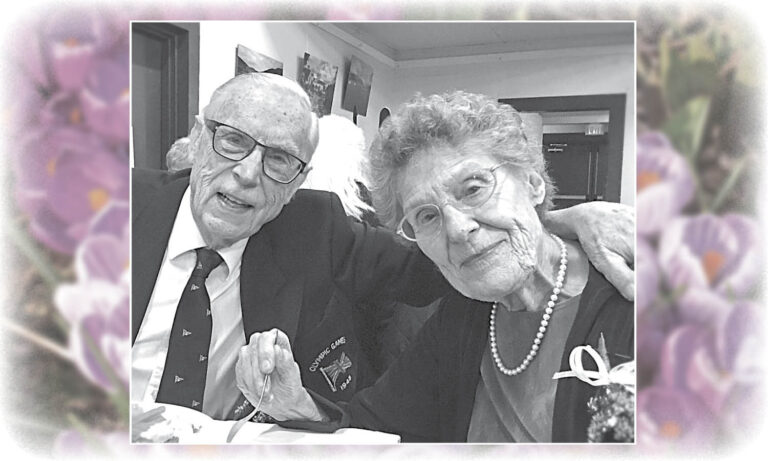
HARROP, Trevor James

Trevor James Harrop
(April 19, 1927 ~ April 9, 2022)

Trevor J Harrop was born in Winnipeg, April 19th 1927, to Jean and James Harrop. Trevor was a middle child between older brother John (Jack) and his younger sister Pat. He moved to Motherwell, Scotland at a young age and soon took a shining to competitive swimming. While in the School of Dentistry at the University of Glasgow, he got the opportunity to swim at the London Olympics in 1948. Upon graduation, Trevor and Sheila, his future wife, boarded a freighter to embark on their new life in Canada. Trevor became the first resident dentist in the small town of New Denver, BC. They fell in love with the village and quickly made lifelong friends including the Casley’s, DeRosa’s, and especially the Dahlie’s. Trevor and Sheila would settle down in Vancouver and raise their family. Survived by his 4 children, Jim (Jen), Catherine (Bill Griffiths), Ian (Judy), and David (Kaoru), 11 Grandchildren, and 7 great grandchildren. Predeceased by his wife Sheila (2021), and his eldest granddaughter Michelle Griffiths (2022).

As a member of the Faculty of Dentistry at UBC from 1965 to 1990, he taught many aspiring dental students. His sabbaticals included time on the Good Ship Hope in Tunisia (1970), a year in Florida (1975), and a year in Malaysia (1980). Upon his retirement in 1990, Trevor and Sheila moved back to the cabin in New Denver where they enjoyed over 25 years with close friends, trips abroad and summer visits from family. Family visits always included swims at Harrop’s beach, fishing up Carpenter Creek, huckleberry picking and regular hikes in the fall for Matsutake mushrooms.

Trevor loved to fish. In the 50’s/60’s in Campbell River, he would go steel heading and Salmon fishing with his friend Rod Haig-Brown. His love of fly fishing brought him to the Harry Hawthorne society at UBC and ultimately a shareholder at the Pennask Lake Fishing and Game Club. His last visit was in 2019 with Sheila, sons David and Ian and grandson Duncan. Lots of trout in his lifetime!

His joys in life included his many visits by his children, grandchildren, and great grandchildren. Always up for a chat and a story, Trev loved to socialize with anyone who would lend an ear. The last 5 years were spent on Salt Spring Island, many new friends and a supportive community made their final years yet another adventure. Trevor passed peacefully with family by his side on April 9th, 10 days before his 95th Birthday.

One Cool Island: Thinking like an island in the Hwmet’utsum watershed

By ANDREA PALFRAMAN

Transition Salt Spring

The little village of Ganges sits at the mountain’s feet. Every cup of coffee, every load at the laundromat, every splash in the public pool — it all comes through the many creeks, streams, ponds and lakes of the Maxwell watershed. Mount Maxwell is known as Hwmet’utsum, or  ‘bent down place’ to the Hul’qumi’num speaking peoples. 

Most of us have hiked up to the summit of Mount Maxwell to take in the view. But: how often do we make the connection between the intricate riparian network that threads through Salt Spring’s largest continuous forest, and the water we use daily? 

Comprising Douglas-fir, Garry oak meadows, salmon-bearing creeks and the largest undeveloped estuary in the Gulf Islands, Hwmet’utsum’s parklands and protected areas make up 1,100 hectares of forest lands. The watershed also supplies potable water to thousands of islanders. But after a century of logging, fire suppression, poor forest management practices and road-building, today we are left with an accumulation of pressures that are the carrying capacity of the watershed, contributing to a moratorium on new water connections. 

The area needs a helping hand.

Enter the Lake Maxwell Watershed Resiliency Project. Funded through Environment and Climate Change Canada’s EcoAction Fund, it’s a partnership between Transition Salt Spring, SSI Water Preservation Society, SSI Fire Rescue, North Salt Spring Waterworks District (NSSWD), and the SSI Conservancy. 

During a time when we are experiencing extreme weather events like “heat domes” and “atmospheric rivers” — phenomena we didn’t even have names for a decade ago — the Maxwell watershed project is an opportunity to begin working together to adapt to the climate crisis. 

According to research scientist Ruth Waldick, on small, rain-dependent islands, renewing water systems by keeping forests healthy is the name of the sustainability game. 

“The Climate Action Plan demonstrates that protecting our natural forested systems is the single most important thing we can do,” says Waldick. 

A research scientist who left her government job to research and implement Transition Salt Spring’s Climate Action Plan,  Waldick is all lit up about joining forces with the community to tackle its main priorities. 

“This is the most exciting project I’ve ever done in my professional life.  So much rests on this watershed, and here we are, able to do something to build resilience in a tangible way. It’s really exciting to see people step up, and volunteer to take action with us.” 

One of those people is Gary Gagné. An elected trustee with NSSWD for the past three years, the former officer on Greenpeace’s Rainbow Warrior is more comfortable on the frontlines protecting old-growth forests in places like Clayoquot Sound and Fairy Creek than he is sitting around boardroom tables. But Gagné is also taken with the ambition, scope and potential of the Mount Maxwell project. 

“We’re heading for a major wake-up call in terms of water on this island,” says Gagné. “Being involved in something where we are actually restoring wetlands means we prioritize improving the health of forests. In turn, more diverse forests with natural undergrowth won’t burn, because there’s more moisture in the ground.” 

Working in tandem with researchers from several universities, local experts and fire professionals, NSSWD crews are learning new ways to interact with water flows, control erosion and “think like a mountain.” The focus is on learning how to support what nature would be doing in a more intact ecosystem.

There’s no way to create more water in a rainfall-dependent system, but there is a way to make it more available: capturing it in the watershed. 

“Once we start cleaning up and restoring wetlands, Maxwell Lake will not drop nearly so much in the summertime as it will be continuously fed by springs and groundwater that is now just rushing off the mountain during big rains,” says Gagné.

While you might still find him on the Fairy Creek logging frontlines, he’s excited to take action at home with a project that has such big benefits. 

“It’s hard to find things to be involved with that can contribute to a positive future for this planet. This project allows experts to get boots on the ground in a degraded ecosystem, restore wetlands and bring a major recharge area back to health.” 

Creative resistance and cooperative restoration

The story of the Hwmet’utsum watershed is the story of logging in B.C. writ small. But, because it’s Salt Spring, our version of that story has a twist. 

Once upon a time, much of the forest on Mount Maxwell was threatened by clear cut logging after Princess von Thurn und Taxis sold 5,000 acres to the Texada Logging Company. A creative community effort — complete with nude eco-protectors led by Lady Godiva on horseback — led to the creation of Burgoyne Bay Provincial Park. It also led to the protection of a significant portion of the Maxwell Creek watershed, much of which is managed by the NSSWD.

All’s well that ends well? Not entirely. 

It turns out that putting previously logged land aside without restoring it creates a brittle, fire-prone forest whose disrupted water systems can lead to catastrophic erosion and watershed contamination, as this island saw during this winter’s record-breaking floods. 

Now, thanks to a diverse group of committed scientists, firefighters and hydrologists, Hwmet’utsum’s story may be getting a new chapter.

“Protected lands where water can slow, sink and spread into the island have been extraordinarily beneficial for us,” says NSSWD’s Sandra Ungerson, a water scientist and integrated water resource specialist. “This project now gives us the opportunity to restore that natural cleaning process at the headwaters of our drinking water system, which will reduce phosphorus and sediments from getting into Maxwell Lake.” 

Part of the work involves looking for restoration opportunities within degraded areas of the watershed. Says Ungerson, “there’s an area where large trees have been knocked down — probably in the windstorm of 2018. This event provided an ideal space for us to start a tree nursery. You look at it and at first see devastation, but if you look at it another way, it’s a gift, ripe for starting native seedlings. Washed in sunlight and ample groundwater it provides an excellent location. This place gives us an opportunity to restore the naturally diverse ecosystem by bringing back species and restoring existing species that belong there.” 

While to an untrained eye, piles of windfall timber and slash from earlier logging look to be a fire hazard, the Maxwell Creek Watershed Resiliency Project is prioritizing restoring soils and berm-making over chipping and burning, allowing the organic materials to nourish future forests, boosting native ecology and slowing the spread, clean and retain the water cycle. The plan also includes thinning single-species forested areas that have grown back too closely together to allow for naturally fire-resistant undergrowth to flourish. 

Ungerson sees the watershed as a reflection of the health of our community. Diversity and resilience in ecosystems, she explains, strengthens the same values in the forest that cultures require who depend on the forests and wetlands. Restoring one brings nourishment to the other. 

“We are trying to make sure our unhoused have housing, that our working families can remain here, that this island doesn’t turn into an exclusive seasonal resort-focused community that the majority of Salt Springers have said they don’t want it to become. To do so, we have to rehabilitate our watersheds,” Ungerson explains. 

“The measure of our success will be that, within the island’s carrying capacity, people will still have access to water so that both people and nature can flourish.” 

Connecting the dots

In the Mount Maxwell watershed, the first goal — land protection — is being accomplished, with another 345 acres being folded into the parklands map as we speak. The next order of business is more complex and involves re-connecting systems that have become fragmented. That includes wetlands, wildlife corridors, and — on a systems-level — organizations. This deeper layer of stewardship will require more cooperative, hands-on efforts by many organizations working as one.

“It’s a whole giant reciprocity circle that’s going on,” Waldick explains. “All of the project partners stand to gain. With the Climate Action Plan, Transition Salt Spring has been trying to develop solutions that bring us together. This project is a demonstration par excellence of that.”

Ungerson agrees. “So many projects are about how many big pieces of equipment you can muster and how fast you can do the job. You don’t often get the opportunity to do a real community restoration project. I am excited about getting volunteers working in little pods along the watershed to reconnect the broken links.”

As our relationship to Hwmet’utsum matures, we are being called to shift from simply protecting the area, to becoming mindful stewards, gently helping to bring nature back into balance. 

“It’s not just for people and it’s not just for nature,” Ungerson says. “It’s the integration of the two. This project is a way of re-affirming our first role on this Earth, as stewards for the generations to come.”

One Cool Island is a regular series produced by Transition Salt Spring on how we can all respond to the climate crisis — together. Andrea Palframan is a member and volunteer writer Transition Salt Spring, and director of communications at Raven Trust. To support Transition’s climate action work, go to https://transitionsaltspring.com.