Home Blog Page 261

Ways to help Ukrainian people offered by Salt Spring resident

2

The following is a message from Salt Spring Island resident Igor Darmokhid, who is from Ukraine and is spearheading a local response to the war in Ukraine following Russia’s invasion on Feb. 24. The next organized public gathering is near the Cenotaph in Centennial Park on Sunday, March 6 at 12:30 p.m.

Dear Friends of Salt Spring Island:

I know each of you as people with a kind and sincere heart and an open soul.

I have been living and working with you side by side for three years. During the difficult time of the pandemic, I worked on the front line at the Thrifty Foods grocery store, for 8 hours a day. Then we were all in the same boat and I understood that. Now the whole world is in one boat, and Russia is trying hard to sink this boat, a boat of truth, freedom and democracy. The aggressor takes the lives not only of our defenders, but also of women and children.

Across Canada, citizens, through organizations, are supporting Ukraine by collecting and sending much needed supplies of medicines, children’s clothing, donations of goods and donations to the Red Cross. 

Now I want to ask each of you for help for my country and my people.

1. We plan to organize the collection of medicines and then send them to Ukraine (when the planes will fly). We will be asking shops and pharmacies for their support. Bandages, plasters, over-the-counter medications are needed. If you can help with the organization of this, welcome.

2. We plan to organize a collection of clothes for children who have been affected or are currently temporarily relocated to other regions. We are speaking to the thrift shops, Transitions and Lady Minto as possible collection sites. If there is anyone who can help with the organizing of this, welcome.

3. I will sell all my drawings and send 100% of the funds from them to Ukraine as aid. I also ask people from the arts (artists, carvers, weavers and those who work with ceramics) to donate one of their products, sell it and send the money to help in Ukraine. Maybe you can do such a one-time action in the gallery before the sale and someone can help with the organization, it is welcome. We will also try to sell the things you donate to other establishments (shops, galleries, online groups).

4. I also want to ask local banks to create a special account so that people can quickly transfer funds to the Red Cross with the note “Help Ukraine.”

5. We also plan to hold other fundraising campaigns for both the defenders of Ukraine and the civilian population.

6. I appeal to those who have friends or relatives in Russia. Call your family and friends and ask them to join the protesters in Russia who want a stop to the war. Words of sympathy do not help. Action is needed.

7. darmohid.i@gmail.com is my e-mail address for receiving e-transfers or for receiving any information that can help in collecting aid for Ukraine.

These are the first seven steps aimed at preserving democracy, the peace, life and freedom of the civilian population.

May the Lord protect us all and grant us all a peaceful sky above our heads.

ISSERLIS, Paul Clark

5

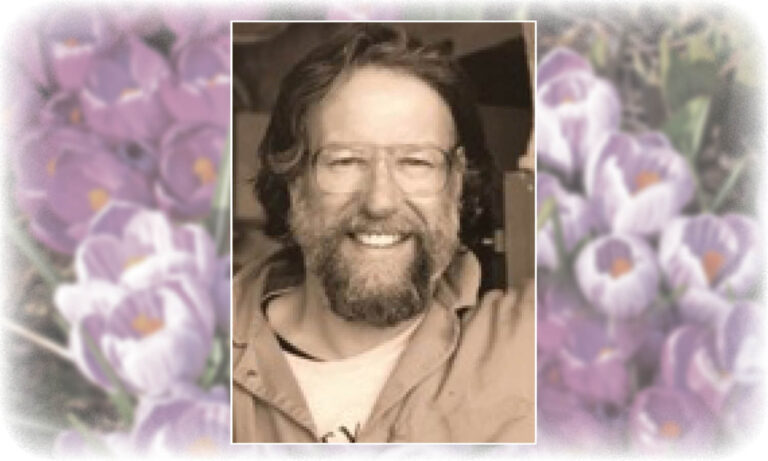
Paul Clark Isserlis
26 April 1946 – 2 January 2022 


Paul was born, with his twin Joseph, in Morton in Marsh, Gloucestershire, UK. The family moved to London and then Rochester to live on a Thames river barge which probably started Paul’s love of the sea. At eleven the family moved to Scotland, finally settling in Edinburgh. Here he studied marine navigation but poor colour discrimination led to his not qualifying for his officer’s ticket. He also married Liz and had a son, Roy. He joined the merchant navy as an able bodied seaman for a number of years before emigrating to Canada in in the early 70’s and worked on the BC coast. He discovered Salt Spring and stayed there for many years.

His twin passions were boats and motor cycles, only learning to drive a car in his sixties. He captained reconstructions of HBC fur trade York boats from Rocky Mountain House to Fort Edmonton Park and from Fort Edmonton to Lower Fort Garry in Manitoba. These historic trips were later complemented by his joining the support vessel to the RCMP MV St. Roche crossing the North West Passage in 2000. 


Paul married Janine in 2010 but she passed after only a few years together.


Paul suffered a stroke in 2016 but remained physically active until his death in January. He leaves his twin Joseph, older brother Alan and his son Roy.

BROUWER-KRISCHKO, Rita (Moroesja)

0

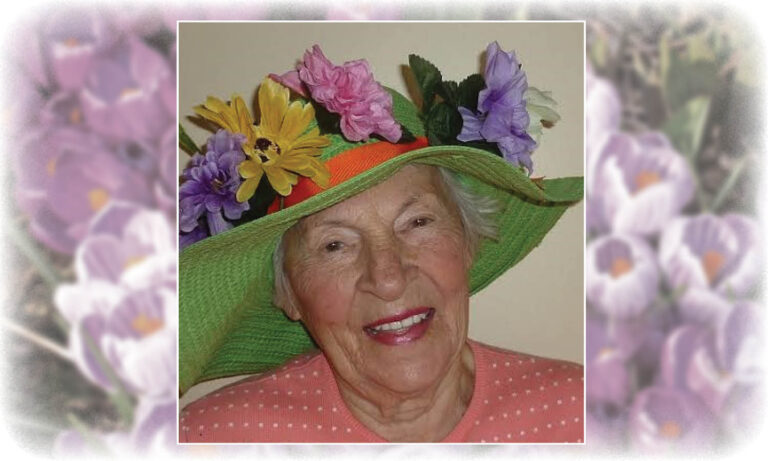
Rita (Maroesja) Brouwer-Krischko

In loving memory of Rita (Maroesja) Brouwer-Krischko who passed away February 5th 2022 surrounded by love and with the daughter she protected so fiercely in life by her side.

A devoted mother to Elly (Dave) and Theo (Maya), Rita was strong, determined and eternally kind, never allowing the immense hardships she endured as a child in war torn Europe dampen her loving spirit. Whether it was a stray cat, wild bird or pet dog she was there to offer comfort and nourishment, always embodying her maxim of it being better to give than to take.

Born in Seredyne, Ukraine, Rita married her love and protector Jan in 1945 (1924-1994), living together in Alkmaar, Netherlands then later Bergen, Netherlands until emigrating with the family to Oliver, BC in 1991 and finally moving to Salt Spring in 2003.

Her sense of humour remained strong throughout the years and her love of flowers and nature provided her endless enjoyment.

A caring and compassionate spirit, she will be dearly missed.

You must remember this: Film fest documentaries unearth forgotten histories

BY STEVE MARTINDALE

SS FILM FESTIVAL SOCIETY

“The past is a foreign country,” begins L.P. Hartley’s 1953 novel The Go-Between, “they do things differently there.”

Three award-winning documentaries screening at the Salt Spring Film Festival at ArtSpring in early March remind us that the past may seem particularly foreign when history is either forgotten or erased.

The festival kicks off with Bobbi Jo Hart’s Fanny: The Right to Rock. The first all-women band to be signed by a major record label, Fanny’s status as musical pioneers — admired by the likes of David Bowie — has largely been overlooked. Addressing misogyny, racism and homophobia in the music industry, this celebratory documentary corrects our collective amnesia as the aging band members joyfully reunite after half a century to produce a new album.

History can be lost even within marginalized communities, as evidenced by Michael Seligman and Jennifer Tiexiera’s revelatory P.S. Burn This Letter Please, in which a secret stash of letters resurfaces after 60 years to shine light on the little-known world of New York City drag queens in the 1950s. At a time when homosexuality was illegal and police brutality was commonplace, men who could be criminally charged for “masquerading as women” gathered to perform in underground drag bars run by the Mafia, which simultaneously controlled other criminal enterprises such as gambling and prostitution. Even within the LGBT community this history is not widely known.

Sometimes history is intentionally buried, as revealed in the festival’s closing night film My Tree, in which Toronto playwright Jason Sherman travels to the Holy Land to find the tree that had been gifted to him at his 1975 Bar Mitzvah, part of a popular fundraiser for the Jewish National Fund. Exploring the manicured parks and forests of Israel, Sherman unearths who and what had been removed from the land, asking tough questions about how so simple a gift could hide such dark truths.

Winston Churchill was fond of quoting Spanish-American philosopher George Santayana’s aphorism “Those who cannot remember the past are condemned to repeat it,” but perhaps this sentiment is due for an update. Those who cannot remember the past are condemned to simply continue forgetting it…until someone with the fortitude to examine the blank spots in our collective memory writes a book or makes a film to remind us all of people who should never have been forgotten.

All screenings are at ArtSpring from March 1 to 6. More information at www.saltspringfilmfestival.com.

Vortex proposal put in pause mode by local Trust committee

1

The developer behind plans to revamp the site of the former Fulford Inn will have to wait as the Islands Trust asks First Nations for feedback on variance and development permits they are considering.

The Salt Spring Island Local Trust Committee (LTC) was meant to decide Feb. 15 on whether a development could go ahead on the site at 2621 and 2661 Fulford-Ganges Rd. The LTC chose to halt the process before issuing any variance or development permits, asking first for early stage feedback from Tsawout First Nation and the Cowichan Tribes, who both expressed interest in the application. 

The Vortex is being developed by David Fullbrook, CEO of Merchant House Capital and a Salt Spring resident, who has plans to build 17 commercial accommodation units as well as a restaurant and plaza. It is partially a brownfield site that has stood empty since the inn was demolished in 2015, and is zoned to allow commercial accommodation. The site is also an ecologically sensitive area bordered by Fulford Creek, Fulford Harbour and Soule Creek and is specifically referenced in the island’s official community plan as a place where the LTC “should not support any development that could have a net negative impact on the marine environment” of the estuary and harbour.

To proceed, Fullbrook needs development variance permits for three aspects of the plan, most notably the request to put a sewage disposal field up to 10 metres from Soule Creek and up to 26 metres from Fulford Harbour. 

“Ordinarily, the land use bylaw requires a setback of 30 metres from the natural boundary of all water bodies,” planner Jason Youmans explained. 

The two other variances sought are an underground septic system 1.5 metres from the front lot line along Fulford-Ganges Road. Normally the distance would have to be 7.5 metres, as well as locating buildings closer to the two lot boundaries that the development spans.

The LTC has already granted these variances, including allowing the sewage field closer to Soule Creek and the harbour, yet as building did not commence on the site these permits from 2019 expired and Fullbrook had to re-apply. 

The idea, Fullbrook explained, was to repurpose and reuse the site where the septic field from the former inn was. The other option would be to move it to a location which was previously undisturbed, potentially needing land works that might have archaeological implications and requiring a site redesign. 

Ian Ralston with TRAX Developments Ltd., who designed the septic system, said moving it wouldn’t change much in terms of risk. The contaminants that people worry most about with sewage systems, the nitrogen species, are quite mobile once they reach shallow groundwater, he told the meeting. 

“I can confidently state that the system is designed to the highest levels of risk management,” Ralston said, adding that the design concept was peer reviewed by a prominent B.C. hydrogeologist. 

In response to trustee Peter Grove, Ralston explained what might happen to the system in the case of climate change-induced sea level rise or flooding. While a small amount of water might be seen in the septic field area, Ralston said, the system includes continuous monitoring of “vertical separation,” meaning the depth from the dispersal bed to the water table below, and an automatic stoppage of discharge and alarms sounding when this separation reaches certain levels.

Islands Trust staff made the same recommendations as in 2019, Youmans said. They had no concerns with the other variances sought, yet were not in support of allowing the sewage disposal field located close to the water bodies as the 30-metre setback in the land use bylaw is meant to protect water quality.

The LTC voted on Feb. 15 to refer the variance and development permit to First Nations with treaty and territorial interests on the island, with a request to comment.

Trustee Grove noted his support of the development, provided concerns about septic are addressed.

“But we have got a game changer. We have a First Nations request for consultation before we go any further,” he said. 

Trustee Laura Patrick noted that the plan “works for me” yet the voices of First Nations are missing and it is important to ensure the development works for them.

Youmans said the Islands Trust was contacted by chief Harvey Underwood of the Tsawout First Nation, who have a reserve at Fulford Harbour and “strong treaty and territorial interests” in the area. They, as well as the Cowichan Tribes, are interested in commenting on the development. While it isn’t standard practice to refer variance permits to First Nations, Youmans said it is within the LTC’s power to do so.

“The Tsawout are looking for a physical representation of their ancestral land claims in Fulford Harbour,” said Fullbrook.

While in support of First Nations engagement, Fullbrook cautioned it may be difficult to get Tsawout to make this a priority given other things the nation is working on.

Tsawout have previously indicated their general support of Fullbrook’s plans, yet leadership at the chief and council level has changed since a July 2021 election. 

Nine speakers addressed trustees Feb. 15, with seven against, one in support and one providing information. Those opposed cited environmental concerns, including the potential for septic facilities to contaminate the harbour, the risks of climate change-induced extreme weather and sea level rise and the critical environment the creeks and harbour provide to fish, mussel and other species in decline or at risk of extinction. Fulford Creek is one of 15 sensitive streams listed in the province’s Water Sustainability Act. 

“I share those concerns. In fact, it’s those concerns that drove me to take action, to acquire the property,” Fullbrook said. 

Consultants presenting with Fullbrook at the Feb. 15 meeting outlined plans to replant the site with native species as well as fence off parts of Soule Creek, and once the project gets to the detailed design stage an environmental protection plan will be developed. The plan will include “erosion sediment control, spill prevention, nesting birds surveys, environmental monitoring, etc.,” said Lehna Malmkvist from Swell Environmental Consulting. 

Speaking in favour of the development, David Rumsey said the Vortex would bring back a community gathering space lost when the inn closed. It would also allow family and friends to stay locally when visiting, and reduce the demand for illegal suites such as Airbnbs, which could instead be used for long-term housing. Ryder Bergerud argued that the development, being marketed as “a luxury place,” is actually incompatible with affordable housing as it would drive up real estate prices.

LTC chair Peter Luckham said Fullbrook faced an “uphill climb” due to the need to get public confidence behind the project. Fullbrook took issue with the characterization of public opinion being against the Vortex. Despite vilification online and someone damaging his property, Fullbrook said, he has actively avoided drumming up support for the project and asking supporters to take sides. 

“I’m not in a position to engage in an ongoing community debate and increase what is already a very divisive social environment on Salt Spring Island.” 

Luckham said that he needed further assurances that the material submitted by the applicant “is as it appears to be,” and suggested a developer-funded formal peer review process.

Fullbrook noted that third party experts and analysts come at the detailed design stage and their information is reviewed at the building permit stage by other levels of government. 

“You must let your processes that you’ve established, under which we made our application . . . play forward,” he said. “You can’t continue to change the rules as the game goes on.” 

Door opens on first draft of Trust housing bylaw

0

The Islands Trust continues to work on allowing more rental suites to be created island-wide, with local trustees reviewing a first draft of a new bylaw last week.  

The bylaw that came before the Salt Spring Local Trust Committee (LTC) for first reading Feb. 15 did not include allowing dwellings in accessory structures as first proposed when the LTC directed staff to create the bylaw last November. Staff advised that change would require an amendment to the official community plan (OCP). Instead, staff proposed an interim action to amend the land use bylaw (LUB) to allow secondary suites in all zones. Secondary suites are suites either within or attached to a principle single-family dwelling unit, a definition that doesn’t include other dwellings that could be located in a garage or other structure on a property. 

Trustees decided not to give the draft bylaw first reading and instead sent it back to staff to add in the definition of suites in accessory buildings. Trustee Laura Patrick said the objective of looking at accessory dwellings in all zones was “to cast a really wide net across the island in search of people who are willing to be landlords.” She said including suites in garages or other spaces not inside a home might make the prospect of becoming a landlord more attractive.  

Patrick argued that both secondary suites inside homes and suites in accessory buildings could be considered the same thing as the impact on the property is comparable. She questioned whether an OCP amendment would be needed in this case, as the plan leaves room for interpretation. 

In a presentation to the LTC, Housing Action Program Task Force chair Rhonan Heitzmann said the task force is taking environmental concerns, including the carrying capacity of the island, very seriously. 

“The environmental impact of a suite or dwelling unit is the same whether it is contained within the footprint of a main house or above a garage or a shop or within the walls of a seasonal cottage or studio,” he noted. “To claim otherwise is a logical fallacy that serves only to limit the uptake of the intended use of the bylaw effort underway.”

Staff were also instructed to remove the definition of density in the draft bylaw, and to look at what conditions and restrictions should be in the bylaw to phase in any new suites and manage the impacts. 

Patrick said that the number of suites approved should be limited, not an outright use, and this use should be monitored.

Heitzmann said a secondary dwellings registry should be set up, perhaps with a defined quota available to property owners island wide “who can prove adequate water and waste management on a first-come, first- served basis.” This would control the uptake and use of secondary dwellings in an incremental way, he said, and hopefully assuage the concerns of some regarding population growth. 

Patrick also asked whether the current restrictions on secondary suites in the rural upland and rural watershed zones could be lifted, instead replacing them with other conditions in the bylaw. She argued that some properties in these zones may be suitable for another dwelling depending on its current use.

“We’re trying to find people who want to do the right thing,” she said. “If we had the conditions in the bylaws that gave that flexibility yet also gave that control so that we didn’t have abuse and did just not add density, we’re just using unused space.” 

Regional planning manager Stefan Cermak reminded trustees that in general, the OCP and LUB were based on a principle of preserving the uplands and that Patrick’s proposal may challenge that notion.

Trust planner Louisa Garbo said the bylaw will go through revisions and a public input process, so won’t be finished in the next few months.

The Islands Trust is also looking at alternative water solutions that do not draw on the existing capacity of the water districts. 

Developer sought for tiny homes pilot

Planners are also working on a pilot project to build a tiny homes village on Salt Spring, one of the initiatives coming out of the Housing Action Program. For the time being, the idea is to attract one private developer, agency or non-profit interested in taking on such a project. Once the Trust gets clearer on how to provide water to such projects, they may be able to open the pilot up to more than one project.

Some concerns have been expressed about proposed 500-square-foot size limits, the lack of interest from a potential developer to take on such a project, and the fact that there is no mechanism to ensure the units in a future tiny home pilot project remain affordable if they become rental units. 

Garbo said the Islands Trust is looking for either a private developer, agency or non-profit interested in taking on such a project. The Trust could provide incentives such as planning staff time to expedite rezoning, technical support around a water system and possibly water rebates and help with finding grant funding. So far, Garbo said finding funding for home ownership is challenging but more work is being done on this aspect, which LTC chair Peter Luckham said is a critical piece of this kind of initiative.

Dragonfly Commons, Tami and Fernando Dos Santos’ plans to build 30 small homes in Ganges, is a similar project, Garbo clarified when asked by trustee Laura Patrick.

“It’s really the timing, because they submitted their applications and we were not ready. We were still working on developing the framework,” Garbo said. 

Slight change to stay of bylaw enforcement on unlawful dwellings 

The LTC also clarified the existing standing resolution they put in place in November, preventing bylaw enforcement on dwellings deemed unlawful by the Trust. The resolution only applies to existing dwellings, which is a small wording change staff noted would “provide clarity and . . . prevent the unintended consequences of allowing new illegal dwellings to be established.”

After a debate between trustees Peter Grove and Patrick, wording in the standing resolution that enforcement activities will be deferred “until there are safe, secure, appropriate housing options that are affordable for all demographics and household types in perpetuity” stayed in the resolution. 

Grove noted that achieving this state of housing is an impossibility, adding that the wording is unhelpful and is making “a lot of people quite upset in our community.” 

“This is a serious issue, we are not meeting the needs of our community,” Patrick said. “That’s the fundamental mandate of the Islands Trust, preserve and protect this area and that is including the diverse population of this community.”

Adding the wording was in response to the Housing Action Program Task Force, which had asked for wording to be added that addressed the need for bylaw enforcement to be deferred until sustainable housing solutions are implemented.  

Water Preservation Society creates educational video

0

By virtue of living on a rock surrounded by salt water, all freshwater we rely on comes from the sky, says Briony Penn in a new film about water stewardship on Salt Spring Island. 

The freshwater then gets stored in lakes and trapped by forest ecosystems within the 100 watersheds on the island.

“Wherever you live, you are in a watershed,” explains John Millson in the Salt Spring Island Water Preservation Society (SSIWPS) film.

Both he and Penn are featured in Freshwater Salt Spring, a recently released short film with a big goal of increasing knowledge of and appreciation for the watersheds of the island. It can be viewed on YouTube

Young people are the primary audience for the film and for a larger film project Millson is working on, an audience he hopes to reach through the classroom.

“They’re the ambassadors. If they take it home even if their parents are not keen or have got other stuff to do, then you’ve introduced this root into the home,” he said.

The film and teacher resources have been shared with educators in the Gulf Islands School District, with good reception so far, he added. 

Millson is a geologist, environmentalist, member of a Salt Spring Island Watershed Protection Alliance technical working group and a director at large with the SSIWPS. Soon after arriving on Salt Spring, he realized “we know nothing about most of the creek systems on this island.” From this grew the Salt Spring Island FreshWater Catalogue, a so-far 3.5-year effort to collect information on surface water on the island. Some of this data is now being fed into a Capital Regional District project in the Weston Lake area, Millson explained. 

The short film was borne out of the ongoing pandemic, which forced the 50 freshwater catalogue volunteers to pause their awareness raising and community building around watersheds on the island. While some kept sampling water on their own or in little bubbles, Millson thought, “Here’s an opportunity. I want education to be ongoing, I’ve got this window. How can we do it?”

The answer to that was a six and a half minute short film, which broadens the conversation from water stewardship to stewardship of the land and First Nations perspectives. 

Freshwater is special, Millson said, as it is a finite resource and despite what may feel like copious rainfall, very little of the water stays on the island. And knowledge of freshwater is not simply beneficial but essential to keep the delicate water balancing act between the natural environment and the human community on the island. It is a balance that may deteriorate over time with climate change, or with destruction of the natural ecosystems by human activity. 

Being so deeply involved in the topic of freshwater on the island, Millson knows there is an education issue that needs to be addressed. He described the state of understanding as a spectrum, with a choir on one side and naysayers on the other. In between are a large population who don’t know much about the issue, an estimated 60 per cent of islanders, Millson guessed. 

The short film was filmed and edited by Alex Harris, produced by Miranda MacDougall and made possible by a donation from Nancy Braithwaite. Apart from its educational purpose, the film will be a “calling card” to show potential funders for the next big project Millson is working on: a documentary. 

In the planning stages, the documentary will answer questions, including “Who are we? What do we know? What is stewardship?” Millson explained. Helping to answer the latter question are a collaboration group consisting of organizations working on conservation, forest protection, water preservation, climate change as well as Indigenous stewardship, including the Cowichan First Nations community and the Stqeeye’ Learning Society. 

Finally, the film will turn to the question of “What can we do?”, looking at stewardship through the lens of Transition Salt Spring’s Climate Action Plan and through a conversation with ecologist Chris Drake.

“It could be as simple as ‘I’m going to do something differently in my garden,’” he said, or it could open the door for people to get involved in stewardship efforts. 

Then the plan is to “take the camera into the field, and show what this stuff is,” Millson said, sharing with viewers what is happening with stewardship on the island.

The primary audience is, as with the short film, young people through the classroom. Although it will be focused on Salt Spring, the film can also find an audience further afield.

“If you look at islands worldwide, islands have a common problem,” Millson said. “So I see it as a flagship project for education and outreach on our islands, the Salish Sea islands and it’s a great project to demonstrate Indigenous stewardship.” 

For the time being, Millson is busy getting the larger film project off the ground, looking for funding and assembling a volunteer production crew to do research, videography, editing, support during the filming process, fundraising and video content illustrations. Anyone interested in knowing more can reach Millson via jamssiwater@gmail.com. 

Local Community Commission idea for Salt spring up for discussion

0

By GARY HOLMAN

SALT SPRING CRD DIRECTOR

As I indicated in a “year ahead” article in the Jan. 5 Driftwood, public consultation on establishing a local community commission (LCC) will begin later this spring.

I’m proposing an LCC of four, elected-at-large members. Working with the CRD director, an LCC would broaden our community’s elected representation and oversight of local CRD services (e.g., budgets, bylaws, policies, grants) and could lead to consolidation of some island-wide commissions.

LCC commissioners would have the same mandate from voters as the CRD director. This means that all CRD decisions, recommendations and advocacy for our community of almost 12,000 — now effectively the responsibility of a single electoral area director — would be by majority vote on a five-member “council” in regularly scheduled public meetings.

While the Local Government Act allows a regional district to establish an LCC, voter approval is necessary. Depending on the public consultation, a referendum would be held at the next local government elections Oct. 15, 2022. This would minimize the incremental cost of the referendum and if voters approve, LCC commissioners would be elected in 2023.

Establishing an LCC is a relatively simple governance change compared to incorporation, with far fewer financial impacts. Roads and policing would remain a provincial responsibility, while land use continues with the Trust. Taking over our poorly maintained 265-km road system (a liability that will increase with climate change impacts) and potential weakening of the Trust mandate were key voter concerns in past incorporation referenda. Establishment of an LCC could provide some governance advantages of incorporation without its possible downsides.

The potential benefits of an LCC have already been reviewed by Positively Forward and also the Community Alliance Governance Working Group, both formed to consider governance improvements after another vote against incorporation in 2017. At my request, a subcommittee of the Governance Working Group is preparing a more detailed discussion paper with options and recommendations regarding issues such as commissioner remuneration, consolidation of CRD commissions, degree of delegated authority from CRD and procedural guidelines. CRD and provincial government staff will review this discussion paper to ensure it is technically sound.

Similar to the incorporation referendum process, an advisory committee will be established to review the discussion paper and help coordinate public information sessions, perhaps with the help of a consultant. The advisory committee will make its own recommendations for implementation, based on public input. I propose to include representation on the advisory committee from CRD commissions, other key local government agencies and some members at large.

The mandate, responsibilities and maximum cost of an LCC would be defined in CRD establishment bylaws that would form the basis for the referendum question in October. An LCC may require some local taxpayer cost, primarily for modest stipends for commissioners who would be overseeing all local CRD services. However, some cost savings could also result from consolidation of commissions. The community commission would continue to be supported by CRD staff.

One of my 2018 election platform commitments was to improve governance and pursue an LCC. I’ve participated in monthly town halls with the local Trust committee and the Community Alliance ASK Salt Spring group; made public presentations of each annual CRD budget; submitted dozens of director reports and columns; and worked to improve CRD cooperation with other agencies and community groups. An LCC would be a more fundamental change on which voters will pass judgment.

Please join the ASK Salt Spring Zoom conversation about an LCC this Friday, Feb. 25, 11 a.m. to 1 p.m. (ask@asksaltspring.com). If you have an interest in serving on an LCC advisory committee, or have questions and comments, please contact me at: directorssi@crd.bc.ca or 250-538-4307.

Nobody Asked Me But: Wishing a fond farewell to fabulous February

0

You’ve probably heard of Rodney Dangerfield. He was an American comic actor and stand-up comedian whose shtick often revolved around the self-deprecating catchphrase, “I don’t get no respect.” A typical Dangerfield joke goes like this: “When I was a kid my parents moved a lot, but I always found them.”

Another thing that “don’t get no respect” is the month of February. When it comes to months in the calendar year, February is like the runt of the litter. It is at least two days shorter than any other month, but every four years, just to make it feel a little better about itself, it is given an extra day (supposedly for good behaviour).

Many of the other months of the year are named after Roman gods and emperors, but February gets its origin from the Latin “Februa” which was celebrated as a purification feast when Roman citizens ritually cleansed and washed. It makes sense that, after all the partying in December and the resulting hangovers in January, people would want to call a time-out to purify their beleaguered bodies.

The British also gave names to the time of year that is now known as February. In Olde English it was called Solmonath, which translates to mud month, or sometimes it was referred to as Kale-monath, which makes it a good month for cabbage. February, or “Feb-U-Wary” as most people mispronounce the name, is also the only month of the year that may pass without a single full moon.

Research shows that people born in February display unusual traits that can seem confusing at first glance. Although interesting and intelligent, Februarians can be far removed from reality and get lost in abstract thought. This is completely understandable if we take into consideration the rules that make up the conditions for when February gains an extra day in a leap year. Everybody probably knows that if the year is divisible evenly by four, then it will be a leap year and February will have 29 days. Thusly, 2020 was a leap year whereas 2021 was not. However, if the year happens to be a century year, as was 1900, then it is not considered a leap year even though it is divisible by 4. And just to give your head one last spin, if the year is divisible by 400, then it is again a leap year with 366 days (as was the year 2000).

Statistics are not too kind to people born in February. It has been shown that when men born in February marry women born in May, the relationships are often volatile with an exceedingly high divorce rate. Although they can be exceptionally loyal and love their freedom, Februarians are usually low on self-esteem and can be shy and introverted.

Who are some of the famous February babies? Perhaps you’ve heard of the scientific geniuses called Galileo, Copernicus, and Charles Darwin. You can also find George Washington, Abraham Lincoln, and Ronald Reagan among American presidents born in February. Composers and musicians such as Chopin, Handel, Mendelssohn, and George Harrison also checked into the sphere of life during the month of February.

Unfortunately, the month of February has also given birth to some not so illustrious human beings. Included among these are the names of 38 serial killers who are forever identified by their somewhat endearing criminal monikers, such as the Green River Killer, the Angel of Death, the Apostle of Death and the Butcher Barber.

Perhaps because February has been shown so much disrespect over the ages, the powers that be have compensated by assigning a myriad of special days to the month. In 2022, we have or will be celebrating Chinese New Year (Feb. 1), Groundhog Day (Feb. 2), National Flag of Canada Day (Feb. 15) and President’s Day or Family Day (Feb. 21).

These civic commemorative celebrations are merely the tip of the iceberg when it comes to acknowledging how much we appreciate our dear February. Among some of the lesser recognized days in the month (and you can circle these on your calendar because I am not making them up) are: Food Freedom Day (Feb. 9), Random Acts of Kindness Day (Feb. 17), National Pizza Day (Feb. 9, which ironically falls on the same day as Food Freedom Day), National Tater Tot Day (Feb. 2, which coincidentally is the same day as Groundhog Day), National Margarita Day (Feb. 22) and National Frog Legs Day (Feb. 29, which unfortunately can only be celebrated every four years because it only falls, or hops, on leap year day).

But that’s not all, folks! February, the month that “don’t get no respect,” is just loaded with more festive days than you could possibly find time to party on. Take National Frozen Yogurt Day which falls on the first Monday of the month, or National Wear Red Day on the first Friday. In case you’re wondering, Ice Cream for Breakfast Day is on the first Saturday while Open That Bottle Night is on the last Saturday of February (if you survive all the yogurt, pizza, tater tots and frogs legs that you have already hoovered down).

Wait. There’s even more. Not only are specific days dedicated to certain ground breaking events, but the month itself carries significance for various important causes. For example, February is designated as official National Bird Feeding Month, so make sure you save some of those tater tots and frog legs leftovers to offer to your feathered friends. If that weren’t enough, February is also National Children’s Dental Health Month, so have the kids go easy on Ice Cream for Breakfast Day.

Whatever days we celebrate, as we watch February slowly slide out of the frame while winter gradually fades in the rear view mirror, we can’t help but bid a fond adieu to our little runt of a month. Nobody asked me, but it only seems fitting that as we take a leap forward into springtime, we dedicate a moment or two to honour our wee February, the month that sheltered those of us in southern B.C. through the last of the inclement weather. Too bad that we have no undesignated day left that we could call National February Day.

Islands Trust to open third phase of engagement on draft policy statement

0

Southern Gulf Islanders are being asked for their thoughts as the Islands Trust prepares to make a major update to its overarching policy statement to better reflect priorities of reconciliation, affordable housing and climate change.

The public engagement process kicks off Feb. 25 with an online survey followed by a virtual Q&A session on March 1. These are the first of many opportunities for comment on a document meant to guide the work of the Trust and better address its stated commitments and the changing demographics, development and other realities of the area over the past 25 years. 

After preparing to go to first reading on a draft of the policy statement in 2021, strong concerns were raised by some who feared the Trust was attempting to rush changes through without sufficient public consultation. Several areas of concern arose, including around a proposed prohibition of new private docks throughout the Trust area as well as seawalls and other hard surfaces along shorelines. Others flagged concerns with changes to definitions around agriculture and forestry as valuable traditional activities.

The Trust’s 26-member governing body, the Islands Trust Council, decided in July 2021 to defer a first reading that could now take place at the council’s June 2022 meeting. It is unclear whether work on the policy statement update will be done before trustee elections in October.

The Islands Trust represents 26,000 residents and 10,000 non-resident property owners on 13 major islands and over 450 smaller ones between Vancouver Island and the mainland, with a provincial mandate to “preserve and protect the unique amenities and environment” of the area. The Trust uses the policy statement to guide the development of official community plans and regulatory bylaws in each locality. It also informs advocacy on a regional level and intergovernmental collaboration. The document has not had a significant update since 1994.

With a draft policy statement in hand, the Trust is now starting a third public engagement phase, to run from late February to April and led by ISL Engineering. The Q&A set for March 1 from 6 to 8:30 p.m. will be recorded but not livestreamed, meaning those who want to participate need to sign up in advance at https://us02web.zoom.us/webinar/register/WN_sfWxWhlGRTGndVq_2E03bQ. Questions can also be submitted in advance to Islands2050@islandstrust.bc.ca

In addition to the survey and Q&A session, more virtual and in-person activities are being planned. The Trust is also engaging with First Nations on the draft statement. For more detail, see https://islandstrust.bc.ca/programs/islands-2050/

“Updates to the policy statement, informed by the community and other partners, will help ensure that we preserve and protect what we most cherish about the Islands Trust Area, including thriving and diverse ecosystems, natural and cultural heritage, and sustainable and resilient island communities,” stated Islands Trust Council chair Peter Luckham.