Home Blog Page 278

Community rallies for man seriously injured in car crash

0

Salt Spring Islander Neal Kennedy is in hospital undergoing surgery for major injuries he sustained in a car accident, and community members have stepped in to support him and his family with a GoFundMe campaign.  

Kennedy sustained severe injuries after a Nov. 2 car accident on Rainbow Road in Ganges.

“The car was a total write-off, and he was lucky to have survived,” wrote Angelo Scaia in an online fundraiser for Kennedy. “He suffered a broken back, impact trauma to his kidneys, dislocated his shoulder.” 

Reached on Friday, Scaia said Kennedy is at Victoria General Hospital, having already undergone surgery on his back and an upcoming reconstructive surgery on his shoulder.

“His kidneys took a pretty big impact, they weren’t really working,” Scaia said, a situation that doctors continue to monitor. Adding to the difficulty of recovery are COVID-19 rules that limit the people who can visit hospitals, although Scaia confirmed Kennedy’s partner Isela Fernandez and some family members are with him. 

Kennedy, who attended high school on the island, works in building maintenance and is also a filmmaker. He recently directed the 2020 independent film Eyes Within You (Free Will Films). 

Scaia started the fundraiser, which had raised $11,475 in its first three days, to help Kennedy and his partner as he recovers. 

“It was just to alleviate some of the stress on both of them so that they can focus on recovery and rehabilitation as best they can, so that they can stay in their living situation and relieve some of the stresses that come with recovery,” Scaia said.

Recovery time will be far longer than initially expected, he added. 

Helping Kennedy and his family “is what living in a small community is all about,” Scaia said. “This is what you do for each other in a small town like this.” 

Fundraiser set up for Scott Hylands’ cancer drug treatment

0

The family of a man who lived on Salt Spring from 1990 to 2015 has launched a GoFundMe campaign to help pay for a drug to treat the acute myeloid leukemia he was recently diagnosed with.

Scott Hylands has started intensive chemotherapy but also needs a drug called Venclexta, which has been approved for use in Canada but the cost — which is $60,000 to $80,000 per treatment — is not covered.

“The feedback from cancer patients receiving Venclexta along with their chemo is excellent,” said Hylands’ wife Veronica. “It is primed to work for his age group.”

Hylands is a well-known professional actor who now lives in Victoria. Just this summer he presented his one-man Shakespeare-themed play called Lend Me Your Ears on Salt Spring Island.

“Salt Springers hold a place in our hearts after 25 years there,” said Veronica, in asking islanders to donate and share the GoFundMe page as widely as possible.

More information is available on the GoFundMe site.

Former CAF Reservist reflects on ‘veteranship’

0

By KEN JACKSON

SPECIAL TO THE DRIFTWOOD

I completed three years of service as a member of the Canadian Armed Forces (CAF) Reserves, specifically as a private in the 72nd Regiment, the Seaforth Highlanders of Canada.  Veterans Affairs, I am told, says that I am a veteran.  The Legion’s membership criterion also considers me to be a veteran.  So why in my 64th year am I still unsure?

It’s a simple question with not so simple answers.  I have technically been a veteran since 1977.  Yet it’s only in the past few years that I’ve begun to feel comfortable enough allowing myself to be recognized as one. I think some of the answer is associated with how I’ve performed when dealing with dangerous work-related challenges I’ve faced, often in a leadership role with responsibility for others.

Serving in the Reserves meant part-time service with some real military training. Being an infantry regiment, we trained as combat soldiers, including receiving weapons training where I lost some of my hearing.  I enlisted at 17 or maybe 18 years, not old enough to vote or drink but I was old enough to die for my country, as the corporals in my life reminded me. Without an active duty role or assignments for peacekeeping duty, as some of my unit eventually were, I did not consider myself a veteran after my honourable discharge.

There were many in my family, the generations before mine, which had active service during the Second World War. The greatest family sacrifice we had was the passing of my father’s father, a volunteer with the Winnipeg Grenadiers. He died in the hospital at home after WWII ended, having spent much of the war in a POW camp in Hong Kong after being shot in combat. My father was four years old when he last saw him.  Though he’s long passed, he was a veteran.

Five of my uncles, brothers of my mother, also served in the CAF during that war, though none were seriously injured. Being quite a bit younger, I never heard much about their service, apart from seeing some of the black and white photos of them in uniform at Grandma’s house. It’s hard to imagine how she felt with so many of her sons in active duty, all volunteers. My uncle Sebastian and I had the most conversations about his service in the navy, doing convoy escort duty for Atlantic crossings from Halifax to Europe, his ship protecting the convoy against submarine attacks. They all served in active duty, some in combat, others trained for it but had not yet been called up.  

Uncle Seb’s stories were more about the daily hardships of wartime service where, at any moment, the entire crew had to snap to action launching depth charges and hedgehog projectiles against an unseen enemy in horrid Atlantic Ocean weather.  Imagine spending two years service at sea and never having enough seniority to shift from sleeping in a hanging hammock bed to a coveted 14-inch wide table bench that the lucky ones with seniority got to sleep on.  I think of Uncle Seb and all my uncles as veterans.

From my youngest memories of Remembrance Day services, I remember seeing the aging faces, medals on chests, stories told in interviews that brought them to tears. There was no doubt in my mind they were veterans. That imagery certainly influenced the inaccurate view of myself and many Canadians that to be a veteran one must have seen combat in one of the world wars or the Korean conflict, not just served in the CAF.  

That misconception has dogged me since my service. The notion that in my early 20s, my Reserves role completed, that I’d be fittingly standing beside those honoured individuals as a veteran was simply not conceivable. I admitted serving, but always very modestly, in part because I openly considered myself to be a less than stellar example of a private. I was not particularly fit, so the physical demands of some of our tougher infantry training in harsh conditions had me labelled as an underperformer. I was not picked on but nor did I earn much respect for my efforts.

Reflecting back to then, I was not as proud of how I had performed as I was for having volunteered to serve, making the notion of claiming a veteran status as preposterous.  Forty years on, I don’t feel any different about that time when I was still in my teens but I feel much different about myself and how I’ve lived my life since.   

My career in the oil and gas industry began not long after my Reserves service was completed. I plunged into the middle of a boom cycle in the late ‘70s that I was unfamiliar with and largely unprepared for, lucky to survive my first year working in operations outside of Fort McMurray. Over the 30-plus years that followed, I had operational and managerial positions around Canada and the globe: front-line operations in locations like China, Egypt, Russia and Iraq, onshore and offshore.

I was directly involved in a number of operational mishaps, some as an emergency responder, where I learned to draw upon leadership skills that I never knew I possessed.  The kind where I had direct responsibility for not only my own life but also those who worked for or with me. As an example, I led a firefighting team via helicopter to a large offshore oil and gas facility that was on fire in the Gulf of Suez. My assignment — for which I had no formal training  — was to respond to the fire, secure the platform and evacuate the personnel on board. Every life on board that helicopter was my personal responsibility, a mistake potentially costing one of our lives and destroying a family. 

I cannot equate that situation to the images I have of an infantry combat team flying by helicopter into a battle scene, but I know enough to understand that the importance of leadership and all the responsibilities that go with it are largely the same. Realizing that has made me more comfortable over the years with the idea of representing my behaviours in life to a panel of the corporals and sergeants of my early life: How I’ve carried myself and accepted my responsibility for others, often at greater risk to myself.  I think I could now look them in the eye and know that they were proud their butt kicking and lack of coddling had made a lasting and favourable impression on my life after my service. 

I’ve also experienced anecdotal events that helped me feel more comfortable being labelled as a veteran. Internationally, working in high-security locations such as Kurdistan in Iraq, where our security team of ex-special forces soldiers from various nations respected both my work performance and the fact I’d served my country (their words) as the reason I was welcome to dine at their table. Or when Legion past president Bill McKenzie, a top-ranked non-commissioned officer of the sort who used to loath my kind of under-performance as a private, openly invited me to march with the veterans in the Remembrance Day parade. It was one of the proudest moments of my life.

So now, in a few days before this writing is printed, I am scheduled to attend my first ever Legion-sponsored veterans lunch, where only veterans and escorts are invited. I am certain to feel nervous and unsure in that esteemed company, perhaps relaxing after fulfilling my initiation responsibility of buying “first shout” libations to all in attendance. Perhaps the first time I’ll truly feel I’ve earned the honour of being called a veteran.

Salt Spring’s Poppy Campaign chair Ken Jackson reads at the First Poppy ceremony at Centennial Park on Oct. 27 this year.

One Cool Island: There’s no more ‘us and them’ when it comes to our forests

0

BY ANDREA PALFRAMAN

Transition Salt Spring

A German ex-regal turning a vast swath of Salt Spring’s forests over to developers. A woodland that’s been logged for 50 years, still standing tall. A nude Lady Godiva riding horseback through downtown Vancouver.  These are some of the colourful chapters in the history of forestry — and forest protection— on Salt Spring Island. 

With world leaders pledging to end deforestation by 2030 at the UN climate summit this week, it’s clear that a new era of cooperation is upon us.  

What if, apart from the deeply divisive “war in the woods,” we charted a course that saw forestry and forest conservation, not as mutually exclusive interests but as part of a web of life that could sustain livelihoods, ecosystems, AND a stable climate for future generations? 

Sustainable forestry is part of that new way forward. A blend between craft, culture, and science, the approach envisions forests being allowed to reach their full potential — not only in terms of timber to harvest but in terms of ecological and social values. 

Such “close-to-nature forestry” practices place the emphasis on the management of a whole and healthy natural ecosystem, with timber production carried out in a way that’s compatible with natural regeneration and many other cultural, environmental and recreational values in each part of the forest. Generally, this means no clear-cutting; instead, sustainable natural forest regeneration becomes the guiding principle, with less reliance on replanting and more on thinning trees. This form of forestry also encourages healthy trees by cultivating a mix of forest species to nourish a vibrant understory and fungi-rich soils. 

It is being used in communities in B.C. to establish community forests that are grounded in community involvement, and with special emphasis placed on First Nations governance. It’s an approach that recognizes that botanical uses of mushrooms and medicinal plant gathering can flourish alongside walking trails, conservation areas and — yes — sustainable timber harvesting. 

The current debate about the Islands Trust bringing in new bylaws to address unregulated logging is being painted, on the one side, as an attempt to trample the rights of property owners, and on the other, as a necessary strengthening of the Trust’s ability to fulfil its mandate. 

While Salt Springers have mobilized — through protest, land acquisition and parkland creation — to protect forests, one only needs to look to Denman Island, where despite having passed a suite of bylaws, the Islands Trust was ultimately powerless after the B.C. Supreme Court allowed clearcutting of 10 per cent of the island in 1999. Galiano, meanwhile, was able to enshrine the protection of Coastal Douglas-fir forests into law through the creation of a development permit area focusing on ecosystem protection over halting forestry operations. That distinction may be key in showing a way forward for Salt Spring, precisely because while Denman’s approach was seen as an attempt to stop clearcutting, Galiano’s approach emphasized the importance of careful forest management. 

What does sustainable forestry look like in real life? One long-standing local example is Seven Ravens Eco-Forest, located at the crest of Lee’s Hill. Eco-forester Michael Nickels has been logging his 38.5-acre farm for 30 years; there is now more forest cover on the property than there was when it was acquired.

“For every tree cut at Seven Ravens, on average 25 vibrant mixed-species trees get planted for future generations,” says Nickels.  

With an organic tree nursery and eco-forestry operation, the farm turns a profit through sales of milled wood for timber framing, flooring, furniture and fine finishing. 

Says Nickels, “Initially I spent hundreds of hours pruning trees in the forest to lift the lower branches to five metres. This in turn would add huge value to the trees and the health of the forest for years to come. The forest, fields and any unused land were thickly planted with a multitude of different species of trees which are now bearing fruits, seeds for sale and valuable furniture-grade wood.”

B.C.’s vast forests are significant carbon-storing ecosystems. Cut those trees, and they emit all the C02 they’ve been storing. The loss of this canopy increases drought, evaporation and allows heat to accumulate — it was far cooler in a forest than out in the open when the heat dome sat over Salt Spring Island this summer. It’s a horrific feedback loop that we can avoid by retaining forests and taking a balanced approach to forestry that avoids the extremes of clear-cutting on the one hand and outright logging bans on the other. 

Salt Spring’s forests are our greatest natural asset for climate change mitigation and adaptation; in addition to acting as sponges to soak up water, our Douglas-fir forests store 5.6 million tonnes of carbon. Our native plants and trees are also fire resistant. The imperative to protect these forests has never been more urgent. Developing an ecosystem-based approach can sustain the values and benefits of forested ecosystems. A strategic mix of protected areas, sustainable forest management areas, zoning for small milling operations and the legal frameworks necessary to prevent clear-cutting offers opportunity beyond the “log it or love it” polarities. 

Recently, Bill Henderson, who anchored a well-attended webinar on Oct. 27 co-produced by Transition Salt Spring and the Salt Spring Island Conservancy, walked the land of an island logger with two of Transition’s directors. Ruth Waldick, a biologist by training, was astounded by the diversity of life on the forest floor, the sponginess of the soils and the diverse forest canopy, all achieved using selective techniques on this land for many many years.  

“This looks better than many of the conservation areas on Salt Spring,” Waldick enthused. And while the owner of these lands is proud of what he does and may not call what he does “eco-forestry,” the hallmarks of exemplary forestry management are all there — a prioritization on selective harvesting, and the strategic placement of branches from sawn timber directly on the forest floor to promote rapid decomposition.  

Compare that with clear-cuts and slash piles which are the leading cause of forest fires in B.C., and the differences are clear: healthier trees of mixed ages that are more fire resilient in mixed forest stands create resilience in times of drought, and support resilient livelihoods.  

“People need to see that there is a lot of money to be made not just in timber but in the maintenance of healthy productive forests,” says Waldick. “On Salt Spring, there are a lot of jobs we need to create in order to help our forests survive the hotter, drier times that are already baked into climate projections for this region.”   

Salt Springers have some stark choices ahead. Do nothing and watch our forests become drier and more unstable while we continue to bleed jobs and working families, or give forests some protections that ensure they continue to provide medicines, support biodiversity and the wood resources we all rely on. Working together, we can help ensure that  “sustainable forestry” becomes a key part of Trust policy and sustains and creates new forms of forestry jobs while helping our forests and watersheds survive the hot times ahead. 

We can no longer afford the politics of division at this critical tipping point for humanity. We’re all in this canoe together.  For the rough waters ahead, the only way through is to overcome superficial differences and join forces based on our common love for, and dependence upon, our forests. 

To view or download publicly available forest stewardship resources go to transitionsaltspring.com.

Register now for Transition Salt Spring’s upcoming One Cool Island Climate Action Coach webinar called $ave Big with Home Energy Assessments, Insulation and Draft Sealing on Tuesday, Dec. 7 at 7 p.m. Register at https://bit.ly/3bP9KZb. The $10 cost directly supports the development of programming just like this.  

One Cool Island is a regular series produced by Transition Salt Spring on how we can all respond to the climate crisis–together. Andrea Palframan is a member of Transition Salt Spring, and volunteer communications contributor. To support our work and read the Salt Spring Island Climate Action Plan go to transitionsaltspring.com.


Avid readers make island book club challenge

0

When starting up a book club, Salt Spring Islander Joan Dickenson said you need a group of avid readers, people who can handle opinions different than their own and some spirited discussion, a nice warm beverage and “many, many goodies.” 

Oh, and you also need books. In the case of the book club Dickenson has been part of for 15 years, they need up to eight of the same book and they need them all at the same time, in time for the club to start that month’s reading. Now, Dickenson and her fellow book club members are committing to donating the cost of a book, $25, every year and challenging other book clubbers to do the same to help the library that ensures their clubs get the books they need. 

On an island like Salt Spring, getting a book club read into the hands of members isn’t always as easy as 1,2,3. Salt Spring Island Public Library chief librarian Karen Hudson estimates there are over 50 book clubs active here. And the interlibrary loan program, entirely managed by six volunteers, takes care of any book requests that come in. 

The program operates on a unique model, Hudson explained, with provincial funding received based on how many books a library loans out to other libraries in the province. The cost of administering the program is $1.45 per book for postage, as well as paying for lost books and administration, Hudson confirmed. The library gets an annual $4,039 grant to run the interlibrary loan program, which covers the shipping. Hudson added that the library welcomes donations for other costs, which include “labels, computer, printers, network, staff support” and more.

The library loans out around 1,800 books each year, yet the demand for books to be sent to the island is much higher. In 2019 there were 2,530 interlibrary loan requests put in by Salt Spring library patrons, with many of these being book club sets. That equals more than one book per hour the library was open that year, a total of 2,065 hours, Hudson stated. 

In the case of the book club Dickenson is a founder and member of, these can include books that are upwards of 30 years old or not necessarily bestsellers that take some effort to track down. Some favourites from the early years of their book club include Paris 1919 by Margaret MacMillan, Alphabet By Kathy Page and My Name Is Red by Orhan Pamuk. 

“Actually it’s quite a bit of fun. You look at the book and say ‘Oh, it’s from Quesnel.’ I love it,” she laughed. 

Most books travel far, except for usually one copy found at the local library.

“It costs a lot to go and buy the book if it’s popular [and] you might not even find it. So we really appreciate the library for that . . . It’s a wonderful service,” Dickenson said. 

As they save a substantial amount of money by using the interlibrary loan program, club member and volunteer interlibrary loan coordinator for the past 10 years Melynda Okulitch floated the idea of donating the cost of a book — around $25 — to the library’s annual appeal. The club members agreed, and are also challenging Salt Spring’s other book clubs to do the same. 

“In a way it was just saying thank you to the library,” Dickenson said. 

Library hosts Wednesday author events

The next three Wednesday evenings see book launch events at the Salt Spring Public Library, beginning with Robert Hilles tonight (Nov. 10). 

Beginning at 7 p.m., Hilles will read from his third novel, called Don’t Hang Your Soul on That, as well as his latest poetry book, From God’s Angle. 

His novel is set in Thailand and combines a spiritual journey with a murder mystery and offers many insights into life in Thailand.

From God’s Angle is about the aftermath of the Chernobyl nuclear accident. It explores the various long-term impacts of the Chernobyl nuclear accident including stories about those who have continued to live in the area for the past 35 years despite the radiation.

Hilles now divides his time between Nanaimo and Khon Kaen, Thailand but lived on Salt Spring Island for 17 years. He won the Governor General’s Award for Poetry for Cantos from A Small Room and has published 24 books, including 18 books of poetry. 

His novel called Raising of Voices won the George Bugnet Award while his poetry book, Wrapped Within Again, won the Stephan Stephansson Award. 

Brett Josef Grubisic is a long-time English department lecturer at UBC who now resides full time on Salt Spring. My Two-Faced Luck is Grubisic’s fifth novel. 

Loosely based on a luxury liner murder off the coast of Victoria in 1985, My Two-Faced Luck takes the form of a memoir, compiled from cassette tapes left to a former infirmary nurse by a deceased inmate. An account of queer life in the U.S.A. from the Depression to the Reagan years, the man’s recollections create a startling portrait of the small possibilities granted to a sexual minority by intolerant society. 

He will read from his new novel on Wednesday, Nov. 17 beginning at 7 p.m. 

Then on Wednesday, Nov. 24, also at 7 p.m., Peter Freeman will read from his just-released Elements: Twelve Stories, which is a collection of stories in groups of three aligned with the four classic elements. Although the subject matter varies, there is a theme of caring and resolution that permeates each story. 

Freeman is a Salt Spring resident who writes nonfiction and fiction novels, screen and stage plays, short stories, magazine articles, and poetry. He is the winner of The Fieldstone Review’s 2019 literary prize and a finalist for both the Best of 2020 Adelaide Literary Award and the Best of 2018 Adelaide Literary Award. 

Wearing of masks and presentation of a vaccine card are mandatory for all events.

Viewpoint: Co-ops offer housing hope

0

By M. CARMICHAEL

Lack of affordable housing and all the dilemmas that it creates in a resort town is a common problem everywhere. I’m a long-time resident of Banff, Alberta and this was a huge issue there as well. 

It is fixable and here’s how some of the businesses in Banff did it, or at least vastly improved the situation.

In the late 1990s the housing problem there became untenable much like it is here now. A group of 14 business owners formed the Rocky Mountain Housing Co-operative (RMHC). The plan was to build a 63-unit apartment complex made up of a mix of studio, one-bedroom and two-bedroom units. The initial investment, in 1998 dollars, was $10,000 for the studio, $14,000 for the one-bedroom and $20,000 for then two-bedroom units. 

At the time, the land that was available was in the current Banff townsite but held by Parks Canada. Arrangements were made and with their support it was made available to the RMHC on a long-term/perpetual lease.

The business owners, now shareholders in the co-op, began placing staff in the building as soon as it was completed. The rent was and is fixed and favourable to market rates. There is a small office at the front entrance which is staffed in the evenings providing security and there is a manager living on-site. There is no partying, no guests allowed after 11 pm and strictly no overnight guests unless approved by the owners of the unit. 

Tenancy in the co-op is based on employment so as soon as a worker leaves his or her position or is dismissed they must vacate the building. It works very well. 

We have had two units in the past and it was always good to know that our staff, usually younger folks, were in a safe, clean environment.

After 20 years the initial investment was returned to the business owners and they remain as shareholders. If a business has no use for a unit it is returned to the co-op and made available to other businesses to rent and become shareholders as well.

This was so successful that a few years ago phase two was completed with another 60 units that are now fully occupied.

I don’t think that looking to the government for a solution is worthwhile. This needs to be done by the people who have the most to gain and the wherewithal to do it. Of course having said that the government needs to be brought on board and every possibility for cooperation must be realized, whether it’s funding, grants, tax breaks and incentives and even acquiring land, but then it’s up to the stakeholders to do the job.

It took a lot of work and commitment in Banff and just like everywhere there were the nimbys and the nay-sayers, but it just needed to be done and, in the end, it worked.

If anyone is interested in speaking with one of the founding members of the RMHC and learning more about it please contact me through Driftwood editor Gail Sjuberg at news@gulfislandsdriftwood.com.

Michael O’Connor’s Horoscope for the Week: November 12, 2021

0

Tip of the Week:

The waxing Scorpio New Moon seed is manifesting as the destined synchronicities it is designed to. As the Moon rounds the first quarter and pushes towards full, the intensity will rise and culminate on November 19 as a lunar eclipse. The Moon is symbolic of the past and the eclipse has a way of snipping some of it away to make way for the new. In the wider context, it is all an expression of the birthing pains of the Age of Aquarius.

Paradoxically, synchronicities manifest as collective events, trends and episodes and also as personal, subjective manifestations of destiny. Like the uncountable wavelets that rise and fall on the ocean, each is distinct yet a participant in the same whole. Light works this way too, manifesting as both particles and waves, depending on our co-creative perceptions. Despite apparent division and opposition, the deeper spiritual understanding and lesson is to recognize that we are all in this together. The mind perceives division, while the heart sees unity. It is this kind of mind-bending that is the domain of the deeper reaches of Scorpio.

Aries (Mar 21 – Apr 19)

True to your sign, the planetary alignments manifest in a direct and raw way.  Yet, you are also among the more willful signs and, therefore strongly project your own will and perceptions onto life; as is your destiny to do. The focus now is to blend the two: to be extra willful yet to also be open to undergo necessary change and purification.

Taurus (Apr 20 – May 20)

Changes on relationship fronts continue to unfold. In fact, you may notice that they have gotten progressively deeper and more complex. Positively, this process is leading you to deepen bonds of intimacy with significant others. Be open to new attitudes, tools and methods to this end. Imposing your will now is sure to prove extra troublesome.

Gemini (May 21 – Jun 21)

Scorpio time is optimal for an organ cleanse. This is especially true for you. Your strategy can simply include taking a break for a while. Whether it is certain foods, or coffee, or the news, or social media, or perhaps you are keen to undergo an even deeper purge process. However you do it, now is the time. See it as a spiritual process.

Cancer (Jun 22 – Jul 22)

You are in a passionate mood. This includes new connections and encounters. A metamorphic process that began late last year has arrived at a critical stage. Yet, it can prove to be a breakthrough and a rebirth. Much depends on your attitude and interpretation. Your willingness to engage cooperatively is a key to your success.

Leo (Jul 23 – Aug 23)

Wow, big and powerful shifts are underway close to home. These may literally include your environment, but likely include family members as well. This is unlikely to be an easy time and one that requires you to dig deeper than usual and to give more than usual. Give more now and shift away from concerns of casually receiving, for best results.

Virgo (Aug 24 – Sep 22)

You are destined to undergo a process of change and transformation now in association with your perceptions and interpretations. This also constitutes a cycle of learning and realization. New knowledge of a more formal kind is emphasized. This may manifest as a mini course that amounts to a certification of some kind. 

Libra (Sep 23 – Oct 22)

A major focus now is upon values and priorities. This likely involves a focus on finances, investments, insurance and other such securities. This may include becoming more patient and trusting and letting go of concerns and worries that you cannot do anything about. However, it may also include becoming more committed. Tune in to discern what is true for you.

Scorpio (Oct 23 – Nov 21)

Taking new leads and initiatives should be quite evident by now. Depending on your nature and circumstance, these may prove very literal, or they may manifest as psychological, emotional and/or spiritual initiations of some kind. A gift of power awaits your resolve to acknowledge fears and to face them head on. The truth will not only liberate but will reward you too.

Sagittarius (Nov 22 – Dec 21)

A busy time behind the scenes continues. Whether this is literally true or that you simply have a lot of activity going on in the back of your mind depends on you. Yet, this is an opportune time to do inner work true to the psychological prowess associated with Scorpio. By acknowledging vulnerabilities you claim power over your overactive imagination.

Capricorn (Dec 22 – Jan 19)

Who are your true friends? Who are your allies, team mates, or adversaries and foes? Answering these questions is extra important now. Invariably, any who reveal or who you detect to be fake friends will be quickly removed and probably forever. Positively, you are replacing the lead with gold.

Aquarius (Jan 20 – Feb 19)

An ardent push in your public and professional life is underway. If this is not evident, you may feel a little lost and confused. Where can you best direct your efforts with a sense of commitment and resolve? If you are retired, for example, you can share information, insights, inspiration and wisdom on social media. Identify your cause and commit!

Pisces (Feb 20 – Mar 20)

Scorpio time offers an opportunity to both deepen and expand your scope of knowledge and awareness. This process includes creative thinking at least as much as accumulating knowledge. Doing so requires breaking free of the box, of dogmatic thinking, assumptions, credulous beliefs, and so on. Free your mind and the rest will follow. To do so, focus on your heart, your centre of intuition and truth.

Trust loosens Restrictions to address housing crisis

6

People living in rental units deemed “unlawful” by the Islands Trust will no longer be subject to bylaw enforcement on Salt Spring Island.

The island’s three-member local Trust committee (LTC) followed the lead of a housing task force set up to deal with an ongoing and deepening housing crisis, choosing to adopt all recommendations made by Trust staff at a Nov. 9 meeting. 

The Islands Trust will not be enforcing their housing bylaws for any “commercial accommodation, such as cabins, hotels, guest houses and motels” providing long-term residency. Bylaw enforcement will also be deferred for “all unlawful dwellings” used for residential purposes, except in the case of specific concerns. If bylaw officers were to attend it would be for health and safety, issues with sewage, contamination of wells or drinking water, being in environmentally sensitive areas or in the case of non-permitted campgrounds. 

Wishing to communicate the urgency of the situation, trustee Laura Patrick added wording to the motion on deferring bylaw enforcement for “unlawful dwellings,” which read that the deferral will be until “there are safe, secure, appropriate housing options that are affordable for all demographics and household types in perpetuity.” The Housing Action Program Task Force had asked for additional wording to be added addressing the need for bylaw enforcement to be deferred until “sustainable housing solutions” are implemented. 

It was standing room only at the Hart Bradley Hall Tuesday afternoon, and these interim changes meant to help alleviate Salt Spring’s housing crunch were welcomed with a round of applause. Members of the Salt Spring Solutions group, members of the task force and residents spoke in support of the changes at a town hall section of the meeting. 

“If you really look behind the scenes and look into who is the biggest provider of affordable housing on Salt Spring, the very unofficial answer will be . . . unlawful dwellings and that’s maybe not something people like to hear or that is showing up in any reports,” said Freyja Skye. “A lot of these unlawful housing units are perfectly safe and low impact, ecologically sound.” 

The committee also passed staff recommendations that serve to expedite the building of affordable housing on Salt Spring, including asking for amendments to Trust-wide policies that support “expedited rezoning applications for affordable housing.” 

Trustees are now also expecting to get reports back from Islands Trust staff about how they might amend bylaws to allow “accessory dwelling units” in all zones. This would include cottages, secondary suites in homes and buildings such as garages and the like, confirmed regional planning manager Stefan Cermak. 

For a fulsome report from the Nov. 9 meeting, see the Nov. 17 edition of the Driftwood. 

WEBB, Phyllis

1

PHYLLIS WEBB

April 8, 1927 – November 11, 2021
Officer of the Order of Canada
Recipient, Governor General’s Award for Poetry
CBC Broadcaster

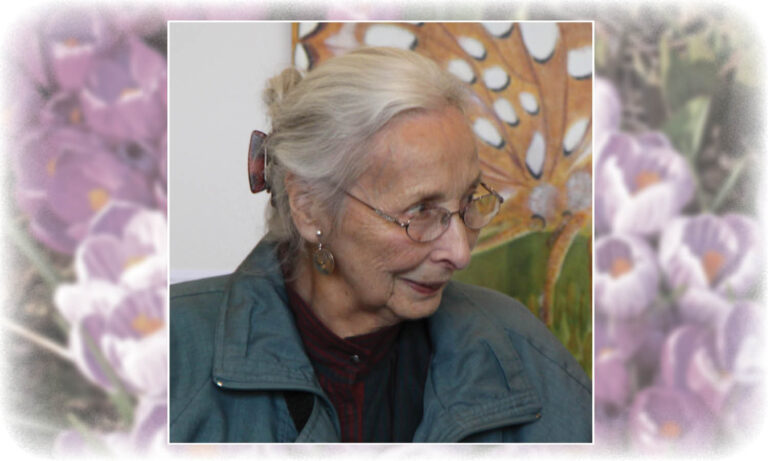
It is with great sadness that we announce the passing of Phyllis Jean Webb on November 11, 2021, at 10 am. She died peacefully, on her own terms, at Lady Minto Hospital in Ganges, Salt Spring Island, British Columbia. “‘I am happy, so happy,’” she said a few days before her death, echoing the last words Gerald Manley Hopkins, one of her favourite poets, spoke as he was dying.

Phyllis was a celebrated and influential writer, admired for her carefully crafted poems, her innovation with form and line, and the unflinching honesty and sharpness of vision through which she wrote about the human condition. Peacock Blue: The Collected Poems of Phyllis Webb (2014), edited by John F. Hulcoop, is a dazzling testament to her masterful use of language and the range of her poetic voice. The main influences on her poetry in her early years may have been male, but she “dispatched” those literary “fathers to the river Lethe,” and began writing, as fellow poet Sharon Thesen put it, in a “female-embodied poetic voice.”

The youngest child of Mary and Alfred Webb, Phyllis was born and raised in Victoria, B.C. She was eager to get off the island as a teenager, and she did so. She lived in London, Paris, San Francisco, Montreal, Edmonton, and Vancouver, yet she ended up spending the last decades of her life closer to home, in Victoria but primarily on Salt Spring Island. She received a BA in English and Philosophy from the University of British Columbia. She was 22 years old when in 1949 she ran as an election candidate for the socialist Co-operative Commonwealth Federation, the youngest person ever in the Commonwealth to seek office. She didn’t win, but she maintained an abiding interest in political and social issues, including the Russian tradition of anarchism, specifically Peter Kropotkin, a figure that inspired some of her poetry. She once called herself “a law-abiding anarchist.”

She worked as a secretary in the 1950s and as a freelancer for CBC. Between 1967 and 1969 she was the executive producer of Ideas, the CBC program she co-founded with William A. Young. Following her freelance work for CBC, she taught poetry in the creative writing programs at the University of British Columbia, the University of Victoria, and the Banff Centre, and was writer-in-residence at the University of Alberta.

When, circa 1990, “words abandoned” her, she put her typewriter aside, henceforth only used for the letters she wrote to friends, and picked up a camera. She created collages out of the photographs she took, the first step toward becoming a self-taught painter. She continued to paint and write letters until her arthritic fingers dictated otherwise. A voracious yet discriminating reader, one of the last things she read was the most recent issue of Brick, a literary magazine that she hadn’t read for a long while but which she specifically asked for. “Still zany,” she told the friend who sent it to her.

Though Phyllis was intensely private, she cherished old and new friends and was a most loyal and caring friend herself. She will be deeply missed by many.

She is survived by her beloved nieces, Starr Webb, Paola Unger, Sarah Webb, and sister-in-law Marianne Webb. Phyllis was predeceased by her brothers Walter and Gerald.

Our sincere thanks to Dr Paula Ryan and the nursing and care staff at Lady Minto Hospital for their care, kindness, and generosity to Phyllis and us all over the last few months.

Following Phyllis’s request, there will be no memorial service. A celebration of her poetry and painting will be planned at a later point.