Home Blog Page 328

Skeena Queen delayed by electrical problem

0

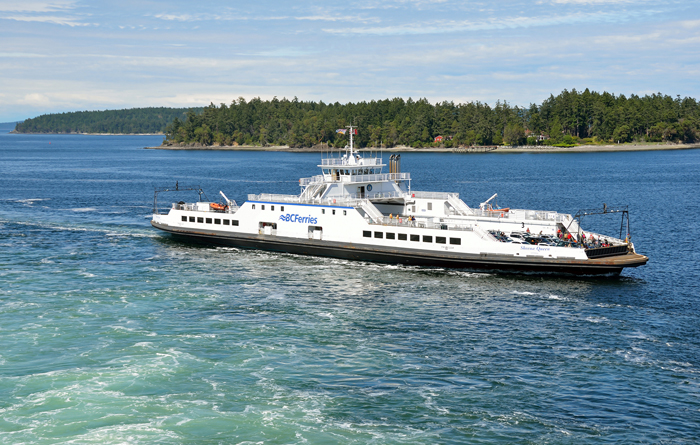
A mechanical problem with the Skeena Queen on Friday night caused mayhem for passengers on the 7 p.m. sailing from Swartz Bay to Fulford.

According to Salt Spring Islander Karen Hudson posting on Facebook, “The Skeena Queen (7 p.m. sailing) lost power by Piers Island, floated into 30 feet of water and dropped anchor. Got going again and returned to Swartz Bay.”

Passengers were advised to drive to Crofton where the Quinitsa would be held for them.

However, a ferry service notice issued at 10 p.m. stated that the Skeena Queen’s electrical problem was resolved and that it would make a final sailing and arrive at Fulford Harbour at 10:30 p.m.

Holmes appointed acting fire chief

1

The Salt Spring Fire Protection District board of trustees has appointed Jamie Holmes as the fire department’s acting chief until the regular chief returns from a leave of absence. 

The board announced Thursday that it had made the decision during a special meeting held Tuesday night. The appointment is effective Nov. 14 and is a temporary one until Fire Chief Arjuna George returns. 

Acting Salt Spring Fire Chief Jamie Holmes, seen in a 2018 training night photo.


A press release states Holmes joined Salt Spring Fire Rescue in 1996 as a paid-on-call member. He became a career member in 2002 and moved up the ranks to become assistant chief in 2015.

George has been on medical leave for undisclosed reasons since the end of June. The fire department has also been without a deputy chief for the past five years, meaning two key leadership positions were left open over the past several months.

The board will have its regular trustees’ meeting this Monday, Nov. 16 at the Lions Hall starting at 6:30 p.m. COVID safety precautions apply.

Fear causes ‘misinfodemic’ and other wackiness

0

By RALPH MILLER

COVIDian Delusional Bizz-arre Wacko-sis

— that’s my professional best diagnosis.

Things have gotten quite crazy ‘round here!

Are end times a comin’? Apocalypse near?

The COVID-19 pandemic is unprecedented, having gone world-wide in record short time, spreading rapidly in clusters, inflicting great direct and indirect collateral damage, including physical, psychological/emotional, social and economic problems. It will likely be with us for quite a while.

Much is unknown, scientific information is evolving, policies and recommendations inconsistent and shifting, and politics intrudes. Misinformation/disinformation abounds — a disruptive anti-social “misinfodemic” clouds public understanding.

In times of unexpected uncertainty and threatening, unpredictable, disruptive societal upheaval, such as the sudden appearance of a global pandemic, humans are more prone to fear/anxiety-based states and experiences, including increased general irritability, nightmares, depression, alcohol/drug addiction, phobias, paranoid conspiratorial thinking and fear/anger-based destructive offensive or defensive action.

A phobia is a specific, persistent, strong irrational fear that is not amenable to corrective information. Paranoia involves more complex irrational, delusional belief systems with exaggerated self-reference, such as personal victimness and perceived threat, and/or grandeur/superiority. Both often occur in the same person — a fear-based condition we call “dipolar paranoia.” 

Unfortunately, COVID-related masks have become a hotly contested, symbolic political/cultural issue in some parts of the world, especially in North America. There are many types of masks of different materials, with varying, evolving evidence of safety and effectiveness regarding the protection of the user and/or people with whom they come in contact. The readily available anti-viral masks appear to primarily protect others from “you.” Israeli scientists have recently developed a mask currently being tested in China for its virus-killing capacity.

And, believe it or not, some people, even here on Salt Spring, still argue that COVID doesn’t really even exist, in spite of the international scientific consensus. It is interesting to note that numerous countries with ongoing violent border disputes spanning many decades — such as India/China, India/Pakistan, China/Russia, Israel/Palestine — all agree on this one issue: COVID is real and masks are recommended, if not mandated, for personal and societal protection.

We’ve coined the term “maskophobia” to refer to the severe illogical fear of people wearing COVID masks, as well as fear of the masks themselves. This pathological maskophobic condition is typically embedded in paranoid conspiracy delusions involving ambiguous nefarious forces, including such potential candidates as They/Them, The Government, Deep State, CIA, U.S. Democrats, China, WHO, AI, aliens, Bill Gates, 5G and chem-trail spewers, possibly “in cahoots” with the “mainstream media.”

To top off the Wackosis, the QAnons are popular with the out-going U.S. president. This far-right conspiracy group alleges that the world is run by a powerful cabal of Satan-worshipping pedophiles operating a global child sex-trafficking ring that includes high-profile Democrats. Really! You can’t make this stuff up!  Check it out online from Wikipedia.

Some predatory maskophobic people seek out and aggressively confront mask-wearers in public, sometimes in swarming packs, such as the recent BC Ferries incident resulting in schedule delays and RCMP involvement. Some people insist they have a “right” to enter private and regulated public property (e.g., stores, markets and parks) without the requested/required masks. For example, here on Salt Spring some maskophobes have reportedly spit at store owners who require them to wear a mask freely offered.

Even the widely recommended two-metre social distancing often meets with active defiance. Some people purposely bump into others in public areas. And there is occasional mocking imposition of unwanted hugs, which is technically assault.

Why are some people so scared of masks and mask-wearers? In addition to normal associations of surgical masks with potentially risky/unpleasant medical and dental procedures, masks make it harder to recognize others and to interpret their facial expressions and lip-reading cues. Some fear that mask-wearing may harm them. Some anti-mask folks adopt a compensatory superiority stance, looking down at mask-wearers as fear-mongering naive sleeping sheep in denial, robotically marching to the cadence of evil-doers intent on doing us harm. However, the dominant factor here is likely that the mask has become a symbol of the frightening, incomprehensibly complex COVID-19 pandemic.

To mask or not to mask? That is the question: Whether ’tis nobler in the mind to silently tolerate the slings and arrows of outrageous maskophobes (at more than six feet, of course), or to try to reason with them. Lots of luck with that. Perhaps gently smile, show them a little love, blow them a kiss and wave “Bye bye.”

It doesn’t seem likely that many of the extremists will soften and open. Not at this point. Too much personal cognitive dissonance exists between contradictory, incompatible emotionally backed beliefs and group identifications. For many, the COVID issues are black and white, with little awareness or allowance for nuance, shades of grey or change.

Yet, it is important that we compassionately do what we can personally, socially and politically to minimize the extremists’ potential for harm — to themselves, as well as to others and to society as a whole. Of course, we cannot base our own sense of inner peace and well-being on others’ beliefs and actions. It is in our own best interests to see the innocence in their fearfulness. Our primary responsibility is in our own conscious action in thought, word and deed: loving kindness, compassion and understanding.

A final few thoughts: Swami Tattvavidananda reminds us, “People are nuts, I tell you.”

I say: “A little common sense goes a long way, or should we say uncommon sense?”

Meanwhile, as B.C.’s Dr. Bonnie Henry advises, “Be Kind, Be Calm, Be Safe.”      

A Course in Miracles reminds us, “Fear appears in many forms, but love is one.”

The writer is a former psychology professor, scientist in Ottawa and India, psychologist and teacher in the Gulf Islands School District, and is currently semi-retired.

Salt Spring Island Conservancy marks 25 years

0

An island institution that began as the dream of seven local women has now enjoyed a quarter century in action as a successful and highly regarded body for land conservation.

Nancy Braithwaite, Fiona Flook, Heather Martin, Maureen Milburn, Ailsa Pearse, Mallory Pred and Ann Richardson deserve thanks for their vision. It’s been 25 years since the Salt Spring Conservancy held its first annual general meeting, and five years have passed since the nonprofit organization moved to a new home base at the Blackburn Lake Nature Reserve. Although pandemic realities curtailed any anniversary events for this year, there is still plenty to celebrate. At the same time, the value of the conservancy’s work has only become more apparent.

“I think COVID is really showing us how important nature is for us,” said Susan Hannon, president of the conservancy’s board of directors. “We’ve certainly noticed a lot more people coming to our reserves. And hits on our website have really gone up, so people are really, really connecting to nature right now. I personally find being in nature quite healing.”

The conservancy has helped protect some of Salt Spring’s most important natural assets through community fundraising campaigns and local government partnerships. It started early on with the Mill Farm and went on to include areas of Mount Maxwell, Mount Erskine, Mount Tuam and Burgoyne Bay. Lands donated directly to the organization’s care meanwhile became the Andreas Vogt, Alvin Indridson, North View, Howard Horel, and Robert and Shauna Makaroff nature reserves. Other land donations allowed the Blackburn Lake reserve to expand.

As the conservancy reported in a recent edition of its newsletter, today it “stewards eight nature reserves and holds 17 conservation covenants, together totalling 1,554 acres, works with landowners through voluntary stewardship agreements to protect an additional 814 acres of privately owned property, and supports the protection of additional ecologically valuable lands in collaboration with partners.”

Having such an active body with obvious results is one reason the conservancy has attracted strong community membership over the years, along with consistently impressive board members.

Hannon had heard of their work even before she moved to British Columbia from Alberta. After retiring as a university professor in ecology and conservation biology, she chose Salt Spring as her new home because it still had a lot of forest cover and protected areas compared to other Gulf Islands. She was approached by conservancy members about joining the board soon after she arrived, and gladly joined their effort.

“For me, I felt hands-on conservation was really going to make a difference and leave a legacy in terms of preserving biodiversity,” Hannon said.

The conservancy is continuing that legacy through its own land holdings, helping others to register protective covenants and by providing land stewardship education.

The organization is not focused on acquiring more land itself, although Hannon said it will most likely increase its holdings if the right circumstances arise. Protecting watersheds and large blocks of forest will be a priority for new acquisitions.

“Having continuous habitat is very important for biodiversity. Little blocks become less and less resilient and can’t hold as many species,” Hannon explained.

The conservancy will also prioritize special habitats within the Costal Douglas-fir ecosystems such as Garry oak meadows, and wetlands.

“They hold a lot of biodiversity in our landscape and are important for water retention,” Hannon said. “I think the other byproduct of protecting land is creating a large carbon sink that will be protected in perpetuity. By protecting trees we will be sequestering carbon, which can only be good.”

The conservancy has been working hard at restoring natural landscapes and ecosystems within the eight nature reserves it now owns. That includes work at its two most recent acquisitions: planting trees and shrubs at the Howard Horel Nature Reserve and restoring wetlands and replanting the uplands at the Blackburn Lake Nature Reserve.

Since 75 per cent of the island is privately owned, education around how to protect native plant and animal species is another significant aspect. Maintaining and evolving the long-running Stewards in Training Program (currently on hold due to the pandemic) for all island school children from kindergarten through Grade 8 is a way to start that education and appreciation for nature early.

Creating stewardship agreements with landowners can build on that relationship with nature in a lasting way. Property owners sign these documents as an indication of good faith that they will try to protect their properties’ natural ecosystems through things like removing invasive species, incorporating native and drought tolerant plants into landscaping and eliminating pesticides. Conservancy staff do site visits to advise on the best course. There are now 69 active agreements on the island.

Additional ongoing work by the conservancy includes monitoring species at risk and providing habitat for them. One example is providing nesting boxes for western screech owls in its nature reserves and sometimes on private lands.

Even with significant island support and success with granting agencies, the conservancy has faced challenges that affect programming. Staffing has been reduced in recent years as one result of funding reduction.

“A shift in priorities for some of our historic grantors has meant that raising core operating funds locally is more important than ever. Most grants are targeted to special projects and do not cover operating costs or overhead and only cover a portion of staff salaries,” Hannon explained.

A fall fundraising campaign is now underway. Donations can be made through the website.

First Larmour lot sale completes

0

The first leg of a campaign to purchase lands owned by Mike Larmour’s estate has been successful.

Maxine Leichter, president of the Salt Spring Island Water Preservation Society, announced last week that the society’s purchase of 20-acre Lot H had been completed as of Oct. 30. Leichter said more than 300 islanders contributed to the campaign.

“We are so thankful to our donors,” she said.

Leichter would not disclose the final purchase price, but BC Assessment valued Lot F and H together at $1.143 million as of July 1, 2019, and the society was aiming to raise between $1.2 and $1.5 million for both 20-acre lots and associated costs.

“We made the very best deal possible,” she said, noting that the value of the timber on the property was also a consideration.

But Lot H, which includes valuable wetland areas that are part of the Cusheon Lake watershed, will now be preserved and not logged.

“We will be working on putting a conservation covenant on the property so that it will be protected in perpetuity,” Leichter said.

While SSIWPS is not usually in the business of owning land — except for 272 acres in the St. Mary Lake watershed — when a deadline for making the purchase approached, its board members decided the society could be the land owner. SSIWPS was able to take action more quickly than other potential agencies, such as the Salt Spring Island Conservancy or the Islands Trust Conservancy.

Leichter said SSIWPS will now start working on a plan to acquire the estate’s Lot F. People can email ssiwps2020appeal@gmail.com for information or to donate.

Viewpoint: Transfer of power needed

0

By BOB WEEDEN

As a result of the election just past, Americans will argue for years about voting systems and the Electoral College, historically understandable but deeply flawed.

I think the problem is far more basic. The whole idea of nation is wrongheaded. Nations were born of empire, and power is as fatal a foundation for nation as selfishness is for capitalism. Nations still celebrate their birth in false myth, but the fact is that a bunch of newcomers from far off overrode residents of ancient tradition and forced them into new ways of living.

We can’t do much about yesterday. The question is whether nations are a good way to organize human affairs today. I think they aren’t. They encompass a jumble of geographies and cultures while at their edges they divide landscapes with the same characteristic natural forces, and separate neighbour from neighbour. At the northern extreme of the Alaska/Yukon boundary, for instance, a line (invisible, weightless, more easily crossed by lemmings than by people) first divides Inuit families, then Dene neighbours. Emerging from the Pacific at the Strait of Juan de Fuca it splits communities that delight in and harvest the same waterways. Zooming transit-straight eastward for 1900 kilometres, the border splits oil patch from oil patch, wheat field from wheat field, woodlot from woodlot.

Since America’s start from fiercely independent colonies, power has shifted from local to national bodies. The upshot is that boundaries that wouldn’t stand a test of common sense promote turmoil and then assure that the people who decide outcomes of local issues are the people who understand them the least. When two combines meet in mid grain field, one driver scowls and the other grins.

It’s easy, and an odd sort of fun, to find fault, but hard to find solutions. (As true of scholars as of protest marchers.) I’m trying. I picture a slow transfer of power away from national to regional and local structures. The key would be mid-level partnerships between city and country folks who recognize their dependence on each other. (How would city folks get water if country folks didn’t take care of the land that produces it? How could country people have decent health care and full enjoyment of the arts if city people didn’t help create and pay for them?)

I’d call these partnerships “home regions,” and their job would be landscape stewardship with both care and use in mind. In that arena, home regions would be in charge.

Modern life has mostly blinded us to the fact that people are products of the land as much as moose and maples. Home regions would help make that truth a big factor in everyday life.

I picture a slow transition, not an abrupt change. Is there time? Maybe. Some scholars think we’ve already begun a truly fundamental transition away from a society based on belief in perpetual growth. Global populations are rising only slightly, women are choosing to have fewer children, per-capita consumption is dropping, and substantive technological changes are coming less often.

Let’s hope we are moving toward a world in which lives aren’t frantic reactions to rapid-fire change, but where the conditions under which we make choices for tomorrow are a lot like those we lived in yesterday.

We might even have time to figure out how to put brain and heart into democracy.

Old Boys concede gracefully to Zgoda team

By FRASER HOPE

DRIFTWOOD CONTRIBUTOR

The Old Boys injured reserve list caused manager Graham Tweddle conniptions as every hour and social-media post gave the impression that the chance of fielding a squad for the game against Zgoda 48s at Finlayson field receded into the distance just like Donald Trump’s re-election chances.

However, as always, Old Boys got out the numbers necessary to maintain the purity of a win with the addition of Rick Hoogendoorn (South Vancouver Island Classics Soccer Association president) as our 12th man backup. Missing in action were many of the Old Boys stalwarts: Donny Brown, Stefan Cermack, “newbie” Jude Shugar, Mike “Superman” Davis and Matt Johnson on vaccination duty. Striker Dave Toynbee returned to test out his lower body injury, hoping his body would last the full 90 minutes.

As always, following BC Ferries COVID regulations, the discussion in the lounge turned to more prosaic analysis of world affairs than the upcoming game with emphasis on the brouhaha south of the border. Needless to say, everyone was taken by the gracious way “45” was reacting to the result and were hoping to hear an uplifting speech congratulating the incoming president! Not!  

As has been noted over the years, Zgoda is a “Jekyll and Hyde” team. You are never sure who will turn up! Dr. Jekyll or Mr. Hyde? One certainty would be the appearance of Zgoda’s Dziadek, Stan Godek, who well into his 70s shows many of the football skills from his youth in Rostov. 

Within minutes of the whistle, two Zgoda players had to leave the field injured, giving Old Boys a glimpse of finishing the game ahead in numbers at least, if not in goals. These thoughts were quickly erased when the Zgoda striker out-muscled and out-ran Ben Cooper to advance on goal, but fortunately Bruce Winstone advanced far enough to challenge, causing the shot to narrowly miss. It is so rare for Cooperman to have faced a competitor in Old Boys games that this reporter searched through past reports for any examples. None to be found. A portent of things to come!  

Scott Howe, stepping up in the absence of Donny Brown, sent an accurate cross-field pass to Mike McCormick streaking (“streaking” as in moving very fast) down the right wing. McCormick kicked the ball into the middle to find an onrushing Toynbee, who calmly rounded the last defender and shot the ball into the bottom left-hand corner for an unexpected Old Boys 1-0 lead. Congratulations to the Team Medical Unit for rehabilitating Toynbee’s lower body injury. Five wins in a row? Even this reporter in the press box mused at the possibility. Notice the use of the word “mused.”

Several more forays by the Old Boys promised more success. But Zgoda have speed; lots of speed, and Winstone had to clear quickly to avoid an equalizing goal for Zgoda. Then the inevitable happened.

“Speed kills!” Zgoda speed killed the short-lived Old Boys lead. Winstone had no chance and the game was tied 1-1. The pace of the game began to take its toll on players and the game flow was interrupted by substitutions. The game had more subs than a Subway franchise.

After an Old Boys attack petered out, Zgoda used their skillful midfield spine to move the ball up-field, and before the Old Boys could regroup, that fast striker moved into position and gave Zgoda a 2-1 lead. Often the best opportunities to level the score come immediately after the opposition scores and lets down their guard. Not so on this occasion as the whistle brought the first half to a close with Zgoda well deservedly in the lead.

Team tactics of “Go to the ball!” and “Through ball to space not to feet!” were heard from the coaching team to an almost exhausted Old Boys squad. Maybe the fitness regime benefits would “kick in” later in the game?

Zgoda had several more self-inflicted injuries but had considerable bench strength and continued to move the ball around, connecting with teammates and applying constant pressure on the Old Boys net. After one corner kick the ball bounced off the post crossbar and fortunately was scrambled to safety. Old Boys at last lifted the siege that lasted for nearly 20 minutes with a breakout that lasted 20 seconds before needing to return to defence. The inevitable third goal came: same same same, with speed through the middle and another thunderous shot for Zgoda. Tactics fit for field conditions.

Old Boys seemed initially to be falling apart, a bit like Arsenal against Aston Villa, but girding their loins they mounted an attack to salvage Old Boys pride. The pressure resulted in a mis-kick out of defence and Toynbee, with a newly girded loin, pulled a goal back, 3-2, to make the last 15 minutes a contest that could have squeaked out a tie or even a win. It must be noted that having been distracted by dropping my pen and fiddling about under the bench, I missed the entire sequence of the Toynbee goal, which meant having the info relayed by hearsay.

No such luck with getting a win or a tie. The Old Boys threw everything into an attack, which left themselves open to the counter-attack and again Zgoda, using punishing speed, sealed a win with a fourth goal. Stan the Man Godek showed skills as he continues to contribute to his team victories. 

Old Boys graciously ceded victory to a very powerful, skillful Zgoda team who were well worthy of their victory. All good things must come to an end! (14th-century proverb or Nelly Furtado, 2006.)  

The press box “called the win” before the last minutes of the game were completed. 

Usually on the ferry, post-game analysis has Old Boys possibly tying the game or almost winning if not for the opposition scoring more goals. Dr. Jekyll or Mr. Hyde? Still not clear! Most of the conversation revolved around my completing a customer satisfaction questionnaire for the BC Ferry Corporation. All positives except “Bring Back the Old BC Ferries Website” and “We Want the Queen of Cumberland on the Fulford-Swartz Bay Run!”

This news just in: The Driftwood’s investigating team has intercepted an email from the Hubble Space Telescope Ground Center in Maryland cautioning new trainees that “Images seen on Sundays may have to be treated with caution because often they do not represent new planets or moons of Jupiter but scoring attempts on goal by Old Boys FC, a seniors soccer team in B.C., Canada.” Thanks to Dave Eadie, Mike McCormick and Dave Toynbee for their contributions to this research.

Old Boys will start the road to recovery on Sunday, Nov. 15 at Finlayson field in Victoria for a third-time bruising battle with the bulls of Centaurs 48s. Can the injured reserve list survive another such contest? Hopefully the Old Boys team will avoid hitting the buffers!

Editorial: Team players needed for fire board

0

While our focus in the past month has been on elections first in B.C. and then in the United States, Salt Spring Islanders will soon hopefully be voting for candidates closer to home.

We say “hopefully” because four seats need to be filled on the Salt Spring Island Fire Protection District Board in a mail-in voting process that concludes on Dec. 14, and at least five qualified candidates need to put their names forward in order to precipitate an election.

For a variety of reasons, the board that oversees running of the district has for many years suffered from incalculable challenges. Intransigence seems to create an atmosphere that makes it hard to move anything forward, such as a long-awaited new Ganges fire hall. At present, the district has neither a fire chief, with Arjuna George on medical leave, nor a deputy chief, a position the board has chosen not to fill since 2015 when George was promoted from deputy to acting chief and then full chief.

Since 2013, 23 different people have served as SSIFPD trustees on a seven-trustee board and 10 of those have resigned before their terms were completed. Most recently the district lost two highly qualified individuals — board chair Ron Lindstrom and Jo MacDonald — who felt they had no choice but to resign from the board due to some of their peers’ actions.

It’s time to stop this pattern of dysfunction with our fire board. Salt Spring needs and deserves to have solid governance when it comes to something as important as its fire protection and rescue service. The board must be comprised of seven community-minded individuals with strong communication skills who can respect the experience and views of others and learn from the mistakes of the past.

This Friday, Nov. 13 at 4 p.m. is the deadline to submit nomination papers for a trustee position. Forms and information are available from the Ganges fire hall or from election returning officer Tony Kennedy at 250-537-8815.

Running for a fire trustee position is a great way for educated and qualified residents to give back to this community and get things moving in a positive and timely manner.

TRUMP, Michael

0

Michael Trump
1980 – 2020

Michael was diagnosed with type one diabetes at the age of eleven. He bravely fought that disease for twenty-nine years and passed away from complications from it on November 7, 2020.

Michael had an enduring love of animals and nature. He was most happy when he took his truck out into the woods and camped with friends. He is mourned by his mother Rosemary, his devoted pets Oliver and Alphonse, and by his good friends Dara, Will, Katie and Max.

We would like to thank Dr. Reznick for the many years of care and friendship he extended to Michael.

Mike, I will miss you forever.
Love Mom

Anchorages issue hits parliament through private member’s bill

1

Coastal residents concerned about the environmental impacts and nuisance caused by freighter anchorages have found an advocate in Cowichan-Malahat-Langford representative Alistair MacGregor.

The NDP Member of Parliament introduced a private member’s bill last week that seeks to amend the Canada Shipping Act to prohibit the anchoring of freighter vessels in the southern Strait of Georgia. The area currently hosts 33 designated anchorage spots that are used by commercial vessels waiting to enter the Port of Vancouver. Increased usage and length of stay has produced considerable noise and light pollution for people who live close by the anchorages, while they and many other coastal residents are also alarmed at the risk to sensitive ocean ecosystems.

Speaking to the Driftwood on Friday, MacGregor said he’s aware some people may feel a legislative approach is extreme, but it’s a way to bring the issue into focus when all previous attempts have failed to produce any regulatory change.

“I would say this private member’s bill is the result of years of frustration in trying to deal with Transport Canada, Transport Minister Marc Garneau and the Port of Vancouver,” MacGregor said. “We still haven’t seen anything satisfactory coming out of that.”

Opposition members are coming together to shift the inertia of those in power. Saanich-Gulf Islands’ Green MP Elizabeth May has agreed to sign onto the bill as a seconder. During his recent election campaign, NDP MLA Murray Rankin said a provincial NDP government would back federal NDP leader Jagmeet Singh to advance the matter in Parliament.

MacGregor argues the Interim Anchorage Protocol the federal government established in 2018 in response to public outcry has been inadequate, and since its provisions are voluntary, they are often not followed at all. Recent years have instead seen an increase to the number of freighters, and the length of their stay at anchor.

“Community groups and First Nations have made repeated calls to Transport Canada to protect ancient clam beds, prawns, oysters and endangered species, such as the southern resident killer whales, from the environmental impact of the anchored shipping vessels,” MacGregor said.

MacGregor said he realizes the Port of Vancouver is important to the economy and that billions of dollars of commerce pass through there every day. However, the local economy is very dependent on tourism, which he says is not served by freighter presence.

“I think it’s incredibly inefficient for those ships to be lying in wait at their anchors for six, seven, eight weeks,” he added.

As to where ships will go if they can’t anchor around the Gulf Islands and eastern Vancouver Island, MacGregor said the federal government and port authority could work on regulatory changes that would include better coordination on vessel scheduling, so ships don’t arrive all at the same time. More anchorages could additionally be created in English Bay, as a less welcome approach.

Coordinates mapped out in the bill largely correspond to a proposed National Marine Conservation Area, plus added space to include the anchorages located off Gabriola Island.

As another key voice calling for change, the Islands Trust supports the amendment.

“MP MacGregor’s private member’s bill to prohibit the anchoring of freighters along the southern Strait of Georgia offers a long overdue solution to an issue that the Islands Trust Council has been advocating on for many years,” Trust Council chair Peter Luckham said in a statement to the Driftwood. “Despite promises, and years of investigation through the Oceans Protection Plan, the federal government has not provided recommendations or solutions to prevent sensitive coastal habitats being used as an industrial parking lot for the Port of Vancouver. The proposed bill would force industry to develop new practices that avoid endangering the coastal waters and shorelines of the Southern Gulf Islands.”

First Nations whose territories are impacted say they were not consulted about the anchorages, nor did they give their consent when they were first established. Many of the nations in the area have already signed on to support MacGregor’s bill. The Penelakut Tribe is also in the process of preparing legal action to force an end to the anchorages as a violation of their aboriginal rights, including a decline in seafood availability.

As Chief Joan Brown stated in a letter of support of the bill, “We are experiencing invasive species on our beaches and waterways which are a direct result of freighter parking. Dialogue with DFO [Fisheries and Oceans Canada] has confirmed that the pumping of ballast tanks, pumping of bilges, dragging of anchors, dumping of garbage and waste, and continuous noise from generators have combined to seriously threaten our livelihoods and traditional ways of life.”

MacGregor is hoping that introducing the bill will draw more action on the issue, and he is looking for widespread community support to keep that action alive. His office will be launching paper and electronic petitions against the anchorages in the coming weeks, and he would also welcome people sending letters to Transport Minister Marc Garneau. 

For more information, see https://alistairmacgregor.ndp.ca.