Home Blog Page 332

Collaborations exhibit opens Friday at ArtSpring

SUBMITTED BY ARTSPRING

Collaboration is about making connections. Almost two years ago Cicela Månsson approached Margaret Day with the idea of curating a show for ArtSpring and she was very grateful that Day agreed to take it on.

The result is an exhibit called Collaborations in a Time of COVID: Writers and Artists of Salt Spring Island. Day, for many years the creative force behind The Point Gallery, conceived of a project that would combine the talents of Salt Spring writers and artists in collaboration. Her proposal was to pair visual artists and writers to produce coordinated works. Day was pleasantly surprised at the enthusiasm with which her invitation was received. Each artist’s partner knew of the other’s work but they didn’t all know each other in person.

At that time there was no way to know just how restricted our way of life would become, and by mid-March the idea had suddenly became more complicated. By the end of April, however, the artists and writers were rising to the challenge, looking forward to an exhibit in October.

Any collaboration between two different disciplines forces participants to consider each other’s perspective, opening up boundaries, exposing the creators to risk, and forcing them to step outside their comfort zone.

Ultimately, the viewer becomes the third participant in each project. The effect of the multi-disciplinary collaboration is to integrate the viewer into a unique experience.

To get a fuller sense of Day’s fascinating thinking about this project, her curatorial approach, and the artists and writers involved, visit artspring.ca/collaborations.

Collaborations runs from Oct. 16 to Nov. 1. Hours are 11 a.m. to 3 p.m. Mondays through Saturdays, and 11 a.m. to 2:30 p.m. on Sundays.

Additional to the gallery show are three, hour-long Sunday afternoon dialogues in the theatre on Oct. 18, Oct. 25 and Nov. 1 at 3 p.m. The events are free but seats must be reserved ahead of time.

Viewpoint: Be kind when opposing others’ ideas

0

BY KIM HUNTER

This is in response to Paul McElroy’s “Dangerous Arguments” letter in the Sept. 30 paper.

When I expressed my opinion in the Sept. 23 Driftwood, I expected there to be backlash from some members of our community. It is why it took me so long to write a letter; I had to gather courage. I had heard from many people that they were also afraid to write to the Driftwood with their perspectives on COVID-19.

When I was interviewed for a Sept. 9 Driftwood story about COVID-19, I was nervous about being made out to be an extremist or an idiot (I am neither), but decided that I had to speak up.

I come from lineage that has been victimized in living memory, with maternal Jewish roots and paternal German ancestors. My father’s story is interesting as he and his only sibling were both Winnipeg-born to immigrant parents who arrived in Canada around 100 years ago. My grandparents met in Canada. My father, born in 1942, was about 10 when his brother was completing his university degree. He came home one day and, looking at the floor in shame, told his father that he had to change his name or he would never get a job. The story goes that my grandfather, in a quiet voice stifling tears, put his arm around my father’s shoulders guiding him towards my uncle, kept his gaze to the floor and said, “Take Gordie with you.” That day our family name changed from Unterschultz to Hunter. They simply took out the “schultz” and added an “H.” I am the first-born Hunter.

My family was subject so such abuse in Canada, by Canadians, that they changed our name. 

When I look at the history of WWII I wonder if people who stood up to Hitler in the 1930s as he was gaining power were called “conspiracy theorists” or something similar.

Living in a small community provides the opportunity to practise listening to and respecting other’s perspectives, while seeking a fuller truth. 

In my 20 years working with young children, my fundamental rules were that the children could do anything with the materials available to them at school, as long as they were kind, didn’t intentionally hurt themselves or others, and took care of our tools and toys.

The rules in my classroom were not too dissimilar to Bonnie Henry’s words of “Be kind, be calm, be safe.” I like a lot of what Dr. Henry says, but I think she is also not free to speak about things in the way she might if she wasn’t such a public person representing government.

At the end of my original letter to the Driftwood, I had attached a poem, written by William Stafford called “A Ritual to Read to Each Other,” which I feel reflects my concerns about the current world situation. “If you don’t know the kind of person I am and I don’t know the kind of person you are a pattern that others have made may prevail in the world . . . .”

Paul, you judge me harshly without knowing me. We have different perspectives. I can be comfortable with that. It does seem to me that you aren’t fully hearing Dr. Henry’s words of wisdom. She always starts with “Be kind . . .” You were not kind in your assessment of me. 

I hope your heart rests well knowing that I don’t carry judgments about you; I wish you peace and good health.

Editorial: Lady Minto ER project deserves CRHD support

0

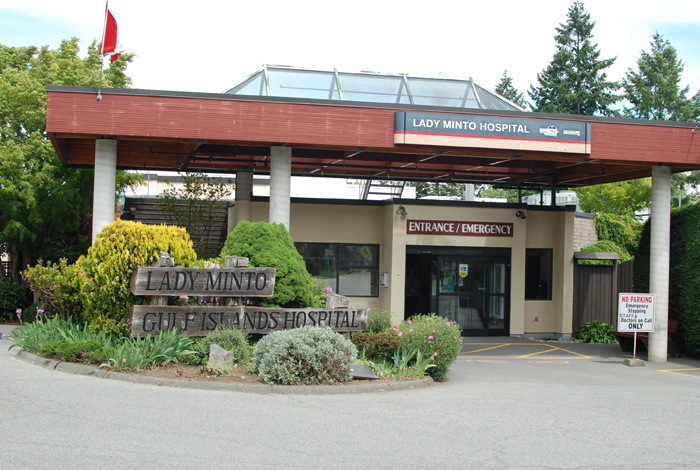
Anyone who has been to Lady Minto Hospital’s emergency department in the past 10 years will know that improvements to that much-valued service are desperately needed.

With space for only a few beds and not much breathing room besides, it’s woefully inadequate for a community of almost 11,000 people and the many visitors Salt Spring Island receives. Both due to its size and its location near the waiting room and other hospital services, privacy is almost non-existent.

In addition to handling medical emergencies around the clock, the department also acts as a walk-in clinic to those in our community who do not have family physicians.

Seven years ago a plan was presented to renovate the existing area to improve the way it operates. That proposal did not move forward. Since then the Lady Minto Hospital Foundation has taken the lead in spearheading a plan to build an addition to the hospital to house the emergency department. Preparing for eventual new medical imaging space is also proposed. The foundation, which is in a healthy financial position, has also accepted responsibility for funding 70 per cent of the $10-million project.

While Island Health has guaranteed funds to operate the department once it’s open, it would normally be expected to commit a significant portion of the capital cost as well. However, Salt Spring’s emergency department is not high enough on its list of priorities to warrant a capital contribution.

The Capital Regional Health District, which is part of the CRD, has been asked to provide $3 million. Its board will vote on the proposal today (Oct. 14). Last year the owners of average-assessed Salt Spring residential properties contributed $135 to CRHD coffers. While island residents clearly benefit when they use services at Royal Jubilee or Victoria General hospitals, it has been many years since CRHD funds have directly benefitted a Salt Spring capital healthcare project. 

A new emergency room will absolutely serve our community, whose members know best how much it is needed and who will no doubt step up to donate the required funds.

We hope the CRHD Board will agree that it’s a project worth investing in for Salt Spring Island, as part of the region it receives property taxes from.

CRD committee supports funds for emergency room project

0

A new emergency department for Lady Minto Hospital gained traction last week after the Capital Regional Hospital District’s hospitals and housing committee gave its support to contributing $3 million to the $10-million project.

“It definitely feels very positive,” said Dave Taylor, chair of the Lady Minto Hospital Foundation’s communications and fundraising committee, on Friday. “We are cautiously optimistic.”

The proposal now goes to the CRHD Board for consideration on Oct. 14.

Salt Spring’s Capital Regional District electoral area director Gary Holman said the supporting committee vote was unanimous and the project has CRD staff support, which bodes well for receiving final approval.

While Island Health would normally be a major funding partner for a significant capital project, Taylor and Holman both indicated that competing priorities in the region meant the Lady Minto emergency department might never see the light of day if the LMHF waited for Island Health.

It was on a long list of Island Health capital projects, but with no indication of how long Salt Spring would have to wait for funds since it competes with larger projects in the whole region.

“It’s like waiting for Godot,” said Holman.

Fortunately, the LMHF is in a strong position to fund the rest of the project by using $4 million in its endowment fund, and its board is confident it can raise a further $3 million.

“We know there is a lot of community support out there for this,” said Taylor, adding that CRHD approval will be “a big confidence booster to potential funders.”

A schematic design of the project, which will see an addition to the existing building located in the upper area of the parking lot, has been done. The next steps are to complete detailed design and construction documents, ideally by the spring of 2021, and then put the project out to tender. 

Island Health has committed to funding the ongoing annual operating costs of the new emergency room.

A renovation of the existing hospital emergency department was originally investigated in 2013 and estimated to cost about $5 million. Building an addition, as well as preparing for a future new medical imaging department, has since been deemed the preferred route to take.

HARTWIG, Audrey Joyce

0

Audrey Joyce Hartwig
1929 – 2020

Joyce, aged 90, passed away October 01, 2020 at Lady Minto hospital on Salt Spring Island, BC.  Joyce was born November 19, 1929 in Deep Brook, Nova Scotia to Jesse and Lorne Wright, the middle of five children.

Joyce was predeceased by brother Leslie and sisters Gertrude and Margaret and is survived by her children Jo Ann, Janet, Susan (Rick) and Gary(Cathy); grandchildren Brad, Ryan, Chris, Emma, Natalia, Gabriel; great grandson Jaydon; sister Shirley; and nine nieces and nephews.

Joyce attended nursing school in Yarmouth, Nova Scotia. After graduation she and a group of fellow grads decided to use their degree to travel and see the world. Their first stop was six months in Boston followed by Prince Rupert and the plan was on to Hawaii. Instead Joyce met Don, her husband of sixty-five years, and remained in Prince Rupert until 1966 when the family moved to Salt Spring, where she continued her nursing career as OR nurse at Lady Minto, ultimately becoming Director of Nursing during her time there. In the late seventies she left Lady Minto to nurse in Inuvik, once again as an OR nurse and as the field nurse in Tuktoyaktuk, NWT. She then moved on to Greenwoods where she remained until age 79 when she finally retired.

Those who knew Joyce knew of her love of animals which began when she was a child on the family farm in the Annapolis Valley. In 1974 she developed a small farm along Duck Creek named BrindleBuff after her first cow and dog from her childhood. She also loved to spend time in her vegetable garden where she taught her grandchildren how to plant peas, beans and more.

Mom was a generous person who always shared the bounty of her garden and more. Mom, you have barely left us and we already miss you more than words can say.

At some point in the future we hope to have a celebration of life for Mom and Dad.

The family would like to thank Dr. Ron Reznick for his years of caring for Mom and the kindness and compassion of the staff of Lady Minto for Mom on her last day with us.

In lieu of flowers the family would like to ask that a donation be made to a charity of your choice in her name.

GLOVER, Barry Clayton

0

Barry Clayton Glover
(1930-2020)

Barry died peacefully at home on October 7th on Salt Spring Island, British Columbia, after 30 years of managing prostate cancer which only became debilitating in the last year of his life. He leaves behind Joan, his wife of 69 years, his son Wayne (Bill), grandson Christopher, brother Roy (Bonnie), sister Marilyn Washington, sister-in-law Fay Sproule, sister-in-law Sheila Mosley, nieces and nephews and grand nieces and nephews.

In so many ways Barry was “a natural charmer” who made lasting friends easily and engaged them in easy conversations or discussions about how to fix this or make that work. He was not a judgemental man, accepting each person for who he or she was and bringing them into his own sphere.

Barry was always learning. At various points in time, he took up curling, snowmobiling, cross-country skiing, motorcycle riding, bee keeping, gardening, knitting and folk-art productions, square dancing, and playing organ, guitar and banjo. He always loved camping taking boys camping as a cub and scout leader. He was a keen amateur astronomer, getting up late on cold, star-filled nights to view the heavens, as well as a gifted amateur painter in oils; many of his pictures which were asked for by others to include in their homes. Barry was an avid reader whether it was non-fiction (astronomy, biographies, and history were favourite subjects) or fiction (James Harriott, Ian Rankin, Barbara Vine, and Linwood Barclay being some favourite authors).

In 2016, he and Joan moved to Salt Spring Island to be closer to Wayne and Bill, to enjoy the temperate clime and wonderful biodiversity of British Columbia. He could never get enough of Ganges Harbour, Duck Creek, Bourgoyne Bay (his last big hike was out to Daffodil Point), Trincomali Channel, Active Pass, and of course the Coastal mountains in the distance. He was an observant naturalist and hoped that British Columbians would always protect and nurture their environment that he enjoyed so much.
At the end, Barry expressed his appreciation for the support he received from Drs Parimi and McCracken at the BC Cancer Clinic in Victoria, but especially for the kindness and thoughtfulness of Dr. Peter Verheul and staff (Sandy, Sarah, and Jennifer) at Eagle Ridge Clinic. Thank you ever so much for being there for him.

Anyone wishing to make a donation in remembrance of Barry please do so to Greenwoods Eldercare Society, Salt Spring Island, or a charity of your choice.

Local food security rooted in island growers

Impacts of the COVID-19 pandemic include a number of positive results, such as a renewed interest in gardening and food production that has swept across Canada and beyond.

Garden centres around North America and in the United Kingdom reported immediate agricultural product shortages once lockdown restrictions on certain businesses eased. Here in B.C., plant nurseries and garden stores were recognized all along as the essential services they are. Local suppliers had a hard time keeping things like seeds and bags of soil and manure in stock, while online orders to off-island companies were reportedly backed up for weeks.

Salt Spring Seeds founder Dan Jason said he and his wife Celeste were run off their feet this spring trying to keep up.

“It was crazy for us, just like every other seed company,” Jason said. “We were going pretty much 12 to 15 hours a day just to keep on top of the orders.”

Some larger seed companies that are well-known in B.C. faced shortages in the spring, in part because they don’t grow crops themselves but order from the same global mega-suppliers. Jason said Salt Spring Seeds had enough stock to keep customers supplied, even though time was an issue.

Marsha Goldberg’s island-based company Eagleridge Seeds was also happily equipped to meet the demand.

“I’m glad so many local people are reaching out to me. It’s been fantastic,” said Goldberg, who reported her sales tripled this year. “It’s a worldwide phenomenon, but here on Salt Spring we’ve already stepped up.”

Goldberg noted she’s now at work on her biggest harvest ever, so the seed stock for next year should be plentiful.

The BC Eco Seed Co-op is a cooperative of 18 seed growers — including Kaleigh Barton and Ben Corno of Salt Spring’s Heavenly Roots Farm — who provide B.C.-grown seed that is ecologically grown, open-pollinated, regionally selected and free of genetic engineering. Their mission is to increase the quantity and improve the quality of ecological and organic seed grown in the province.

The cooperative reported this month that its sales from January to Sept. 1, 2020 went up 109 per cent from the same period of 2019, while the total number of orders went up 143 per cent. The period from April 1 to Aug. 30 saw a far more dramatic result, though, with an 847 per cent increase in sales and the total number of orders up 515 per cent. The co-op’s sales increase represented both consumer seed packets and bulk commercial seeds for farmers whose regular supply chains through the United States were interrupted.

“Currently, ecologically and locally grown B.C. seed is often difficult to source by farmers and home gardeners alike. Every year, B.C. organic/ecological farmers spend $7.79 million on vegetable seeds, the highest of any region in Canada, but there is no large-scale vegetable seed production in B.C.,” explained the seed co-op’s engagement coordinator Lisa Furfaro.

Furfaro said demand for local organic products is increasing, but the supply had not been keeping up even before this year, which is why the BC Eco Seed Co-op was created. Bringing together many small seed producers allows members to utilize co-op staff to take care of packaging, marketing, selling and shipping for them.

For producers like Corno and Barton, whose main concern is their market garden, there is much to be said for handing off those other chores while having access to the varieties the rest of the group is growing. At the same time, producing plants for seeds as well as for food has become something of a passion. Barton and Corno are now producing much of the seed they need to grow their crops themselves. They have ambitious plans ahead to grow their market crops entirely from B.C. and Cascadia-region seed in 2021 and, if possible, to grow their 2022 crops entirely from the seed that comes out of those plants.

“It’s an idea we hit upon as kind of a fun challenge. I liked the idea that it’s something really different, but it’s within our grasp,” Corno said.

The unknowns of longer supply chains during the pandemic is one reason why sticking close to home is a good plan when preparing for next year, for farmers and home gardeners alike. Another reason is the longer-term benefits of investing in local food security.

“We should be starting to think in terms of acquiring things locally because we don’t know what’s going to start to happen to the supply chains. We haven’t fully seen the ramifications and the repercussions of what’s been happening,” Jason said.

“Community resiliency is really important. It starts with food,” Goldberg added. “The more food security you experience, the happier your family will be.”

Corno points out that North America’s seed supplies tend to come from specific areas where they produce well: the Middle East for onion seeds, or Oregon’s Willamette Valley for spinach seeds. The latter was recently hit by forest fires and unexpected rain downpours, which put the seed crop for most of Canada and the U.S. at risk.

“That’s why Kaleigh and I feel pretty chuffed, because we have spinach seed at our house,” Corno said.

One of the things home gardeners can do, as well as farmers, is get their seed orders in early to prevent any shortfall when it’s time to get going in early spring. Corno said he and Barton employ a strategy of ordering seeds in October or November for things they want to get started in February, March and April. Then a second order can go in later for things that will go into the ground in the summer or early fall. 

It’s also not too late to get into the seed saving practice oneself, with plenty of varieties still in the garden through October. In addition to collecting and selling their own seed, local seed growers can be huge advocates and educators for people who want to learn how to do it themselves.

Goldberg’s main tip is to start with simple plants that self-fertilize and whose seed is easy to collect. Beans, peas and lettuce are all good starting points, while peppers and radishes can also yield good results for newbies. Leaving the best examples of your crops to go to seed will ensure the best strains carry on their lineages.

Seeds need to be gently cleaned of flesh or chaff and then thoroughly dried before storage. Goldberg said at this time of year, that likely means bringing them inside and drying them on trays. After that, she says the age-old mantra of “cool, dark, dry” is essential for successful storage. Seeds can go into plastic containers or glass jars, hopefully to be stored in a cool basement or storage room.

Goldberg took an apprentice under her wing this summer, and says she will entertain taking on more apprentices in 2021 as well as offering gardening workshops. She’s also open to help anyone who asks her.

“I have people reaching out to me from all over, and I’m available,” Goldberg said, adding that’s somewhat more the case in the winter months.

Jason is a prolific author on all sorts of farming and food sustainability topics. His popular book on seed saving has recently been re-released by Harbour Publishing under the title Stocking up on Seeds, and has become a best seller to boot. The user-friendly resource is available along with most of Jason’s titles at Salt Spring Books.

Corno and Barton have organized the annual Seedy Saturday event, put on by Island Natural Growers at the Salt Spring Farmers’ Institute, for the past five years. This is usually the place to find seed from local and regional growers, buy living plant stock and attend workshops and talks.

It’s unclear if the usual format will go ahead in February or not with the COVID situation unknown, but Corno said the organizers are optimistic they will come up with some way to distribute local seed and plants, although they may have to get creative. Stay tuned for announcements over the coming months.


Lady Minto Hospital Medical Staff Association Message to the Community

0

As we anticipate the Thanksgiving long weekend, a time when we normally get together with family, it is a good time to reflect on what we, as islanders, have to the thankful for.

We have had a low rate of COVID infections since the outbreak of the pandemic and we have not had a community outbreak on Salt Spring. In particular, our seniors living in residential care have not been exposed to outbreaks. We have had strong leadership from our public health team, including our provincial health office, Dr. Bonnie Henry and our Minster of Health with clear and unambiguous guidance on how to keep ourselves and our loved ones safe.

As the long weekend approaches, it is important to continue to follow the public health orders and guidelines;

  • Maintain our bubbles of a small number of close family and friends
  • Limit our gatherings, including restricting our Thanksgiving gatherings to those already in our bubble
  • Maintain physical distancing when in public or with people not in our bubble
  • Wear a mask to reduce droplet spread and limit the potential to spread viral particles from infected individuals, including those who do not have symptoms, or to inhale viral particles from others
  • Wash our hands frequently

We can continue to limit the spread of COVID on our island, and across B.C. if we all continue to follow these rules.

In the coming weeks, the annual influenza vaccine will become available. Vaccination against flu will help to reduce the amount of respiratory illness in the community. In the coming weeks, there will be information available abut how to get a flu vaccination on Salt Spring while maintaining public safety and infection control processes consistent with the COVID rules and guidelines.

New deer disease detected in Gulf Islands

0

People who have been wondering why so many dead deer have been turning up on Galiano Island received confirmation last week that a new disease is most likely at work in the Gulf Islands.

Provincial wildlife veterinarian Dr. Helen Schwantje is waiting for definitive results of testing, but says an outbreak of Adenovirus Hemorrhagic Disease (AHD) is suspected as the cause of death of over 60 deer. Most of the dead animals have been seen on Galiano. Some suspicious deaths have also occurred in deer on Parker, Mayne and Pender islands.

“It would be very odd for it to be located on just one island,” Schwantje told the Driftwood. “Disease in wildlife can be very subtle and it can be very silent. We could have animals dying in the back country and we would never know about it. This summer is very unusual since we had more people in the bush hiking around, so maybe we are just seeing it more. But it’s very rare that animals die suddenly with no signs of ill health, so that’s what got my spidey-senses up.”

While there is no known human health risk from the virus, and there is no evidence that it can be transmitted to humans, hunters in the area are being advised not to consume meat from animals found dead, obviously ill or acting abnormally prior to death. Research indicates AHD is not transmitted to livestock or pets.

Information from the B.C. wildlife health branch states cervids (mule deer, white-tailed deer, elk, moose and caribou) are all susceptible to the disease, but members of the black-tailed deer family appear to be most severely affected. Fawns are far more susceptible than adults and suffer much higher rates of death. The disease course is usually rapid and fatal as the virus damages small blood vessels in the lungs and intestines.

Schwantje said with the over-population of deer in the Gulf Islands, it’s not surprising that disease would travel quickly and hit hard.

“Any time an infectious disease occurs in a high-density population you will see a far wider spread than if the population density is low. If there were controls such as predators on the islands, we probably wouldn’t see a disease spread like this,” she said.

Detection of a new disease is also not surprising to experts who have been studying the impact of deer on local ecosystems. That work has been led by Salt Spring resident Tara Martin, a professor in the University of British Columbia’s forestry faculty.

“We have been predicting such an outbreak for some time as a result of hyper-abundance. Perhaps now that it’s clearly an animal welfare issue along with it being a key ecological issue driving the loss of rare plants and ecosystems in the islands, we can begin to discuss deer management across the islands,” Martin said.

Parks Canada has contracted Martin and her colleague Peter Arcese to develop such a plan for the Gulf Islands National Park Reserve.

AHD was initially discovered in California and outbreaks are recorded annually in some parts of the western United States. No outbreaks are currently underway in California and Oregon. However, B.C. has never documented the disease and there is no outbreak recorded happening in Washington state or in the nearby San Juan Islands.

Schwantje said it’s therefore unclear how AHD made its way to the Gulf Islands. Since the disease is carried in body fluids, it’s possible that it was transferred from an infected carcass or hunting equipment.

“It may always be a mystery,” she said.

A network of wildlife professionals has assisted provincial wildlife health staff to investigate the possible emergence of AHD since deer were discovered dead on Galiano in September, with participation from the RestQ Animal Sanctuary being a particular help. Schwantje said she suspected the disease was the culprit after seeing photos of the dead deer. She then asked a veterinarian colleague on the islands if he would mind taking samples. Those samples were sent to Canadian and United States laboratories to confirm the disease.

“None of this would have been possible without the diligent work of the rescue organization and that particular veterinarian, and some dedicated people in the background,” Schwantje said. “That’s how a lot of my work gets done — by networks of people bonding together and helping.”

Acute signs of the disease include difficulty breathing, foaming or drooling from the mouth, diarrhea (sometimes bloody) and seizures. More chronic symptoms include ulcers and abscesses in the mouth and throat. Anyone observing deer displaying these signs should report it to the Wildlife Health Laboratory at 250-751-7246.

Art collector shares collection in upcoming exhibit

Art lovers will get a rare and intimate window into the artwork that’s captivated one local curator when Anthony Matthews brings his private collection to Mahon Hall this month.

Matthews’ show iCollect: An Exhibition opens Friday, Oct. 9. It will feature some favourite paintings, drawings, sculpture, photography, craft and curiosities that Matthews has collected during his past dozen or so years on the island. While much of the work represented is by contemporary Salt Spring artists, the collection spans back to Vancouver artists working in the late 1960s and early ‘70s plus a few international names, with 46 different artists included.

The premise for the show sprang in part from an idea Matthews had around creating a series of exhibitions featuring island art collections.

“We always see what’s for sale, but we never see what’s been purchased already, and where people sit as collectors,” Matthews said.

Matthews has worked with multiple island art venues, both community and commercially based. He was with the Venter Gallery prior to the pandemic shutdown and has been a key member of Salt Spring Arts Council projects, including the Salt Spring National Art Prize and the annual Easter Art Show, which he curated for a number of years.

Matthews also works with clients who are building their personal collections, connecting them with local artists. His passion for the art surrounding him has extended to building his own collection, which consists of unique pieces he’s connected to personally. The upcoming show marks the first and probably last time that members of the public will get a chance to see that collection and also to acquire many of the works on display.

“The exhibition takes a glimpse into the private collection I have formed on Salt Spring over the last decade resulting from my diverse activities in the community as an art curator,” Matthews explained. “It’s not a comprehensive collection and it’s not important.   It is rather an intimate look at the art and mementos which spoke to me personally and which I have lived with joyously.”

Some of the artworks being shown were gifts from the artists. In those cases Matthews will not be making the pieces available for sale, but he has asked the artists to supply something comparable in case people want to buy something along the same lines. He has also invited some of the artists included to provide additional work outside of what he owns for the exhibition.

The show runs daily from 10 a.m. to 5 p.m. to Sunday, Oct. 18. Matthews will be on hand to speak with visitors.

For more on this story, see the Oct. 7, 2020 issue of the Gulf Islands Driftwood newspaper, or subscribe online.