
Home Blog Page 336

Viewpoint: Forest framework needed

0

By SHEILA DOBIE

Is the provincial government heading for real changes for our forests?

What is going on with our local efforts to change how we are protecting the forest right here at home?

What is the response to a loud voice to protect of what is left of our old-growth forests?

Join communities across B.C. as we unite for the forests.

A Forest March is planned this coming Friday, Sept. 18 at 2 p.m. in the United Church Meadow. Our MLA Adam Olsen has been invited to speak on the provincial directions. And Island Forest Watch will speak about the local scene with our forests, current efforts to protect them and tools we can use to be stewards of our forests.

It’s time to build a new forest framework that respects nature and Indigenous systems and gives power back to communities.

This “march” will look very different from past gatherings. We must limit numbers, keep spacing, get contact numbers of those present and wear masks. And yet still, our hearts and minds will come together for our forests. Amidst all that we hear and know going on around us in this turbulent time, our forests factor prominently in what can be done now; in stewardship, protection and acknowledgement in their role for a healthy planet.

For this gathering on Friday, if it’s raining we will move to the Portlock Park shelter. We are grateful for the ASK Salt Spring group’s use of chairs and sound system.

If you are not able to attend on Friday, there are several creative ways to act for our forests.

Did you know that the Islands Trust has a Guide to Environmental Friendly Building and Renovating in the Southern Gulf Islands? In the latest edition of the Gulf Islands Real Estate the Driftwood published a summary of this guide.

The first words of this summary are: “Maintain as much of your property as a natural undeveloped areas where only native species grow. Conserving existing natural areas is by far the most effective way to conserve plant and animal biodiversity on our islands.”

From there it goes on to describe a whole series of ways to be stewards on this land. The full document is eight pages long, clearly written and found on the Islands Trust website in the Media section.

This could be a great talking point with your neighbours, friends and newcomers to this island. And realtors, please give this to every one of your clients.

Take a walk in our precious forests and be still for a moment to understand and feel what they are giving us. It’s called Air. Life. Beauty. You name it!

The writer is a member of Island Forest Watch and submitted this piece on the group’s behalf.

Editorial: Voting for change

0

When voter participation in a local government election increases by 700 per cent,  it’s hard not to ask what the heck is going on.

The answer is that when a pandemic throws everything off course, voting by mail is apparently embraced on Salt Spring Island.

What happened is that when the usual returning officer advised he would not preside over a North Salt Spring Waterworks District trustees’ election that would see untold members of the public come into a voting space, the NSSWD board and staff decided to use a mail-in ballot process instead. It had never been done before and the timeline was tight.

Last year’s NSSWD AGM saw 110 ballots cast in person by ratepayers at Community Gospel Chapel when four candidates vied for two trustee positions. This year’s mail-in process saw 753 ballots returned out of 3,038 sent out to NSSWD property owners qualified to vote, or almost 25 per cent. That level of interest and participation in a water utility election, when the candidates were not presenting competing positions on any particular issues, is almost shocking. 

Could it be that islanders were so bored due to COVID-19 restrictions that voting for waterworks trustees provided some excitement for the week? 

Whatever the reason, it seems that mail-in voting was positively embraced and it should definitely be considered for future elections.

On the other hand, only seven ratepayers attended the meeting where election results were announced and other business conducted. One was a trustee candidate, another was the spouse of the incumbent trustee in the race, a third was a past NSSWD chair and a fourth was a waterworks staff person.

And with that small number of people, a rather bizarre thing occurred in that the spouse of a trustee made a motion that the trustees’ monthly honorarium level be raised from $150 to $250 per month for trustees and from $200 to $300 per month for the chair. The trustees themselves did not speak in favour of a raise except to acknowledge the position does require ample time. The staff person did not vote.

Trustees will now be paid more, but the optics of one of those trustees’ spouses being the person to propose the raise is not a model of good governance.

When it comes to democratic reform, NSSWD trustees should keep mail-in voting but look at who is allowed to initiate their pay raises.

School bus drivers demand protection

0

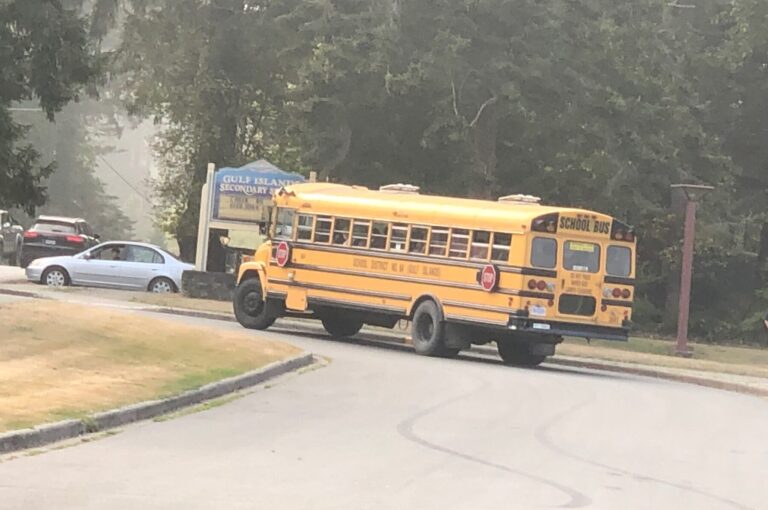
Safety protocols established for B.C. school buses during COVID-19 have not gone far enough to reassure some drivers with health concerns, including those working in the Gulf Islands School District.

Several Salt Spring school bus routes were cancelled Tuesday until further notice as drivers with concerns have elected to stay home and the district doesn’t have the staff to replace them. The main issue is the lack of plexiglass or other barrier between drivers and students. 

School bus driver Alisa Coles has made a public plea for help via her Facebook page, in which she called B.C. cabinet ministers to account for their failure to provide a safe workspace. She said she feels vulnerable and that barriers and reduced seating capacity are required.

“As of last week, 200 people (staff and students) of a school district in Ottawa are in isolation after a COVID-19 outbreak traced back to the school bus,” Coles wrote on Sept. 13. “I’d like to know which pencil-pusher behind which desk has decided to wager me and our passengers as collateral damage in this vast experiment to restart the economy.”

According to the B.C. Ministry of Transportation, there is nothing from their department to stop barriers being installed: “Provincial regulation permits the use of a school bus barrier and approval is not required, provided school bus safety standards are met.”

Barriers are also optional according to Transport Canada’s federal guidance for school bus operations during COVID-19.

The ministry notes there are specific vehicle manufacturing and safety standards that must be met to ensure passenger safety on school buses.

“It is recommended that owners and operators contact their bus manufacturer to ensure safety standards are not affected by any modifications done to the bus,” communication from the ministry states.

The district was set to meet with CUPE union reps on Monday for further discussion. However, district superintendent Scott Benwell said SD64 is in compliance with all the regulations they are aware of, which include those issued by Transport Canada, the BC Centre for Disease Control, WorkSafe BC and the Ministry of Education. 

“Going beyond those regulations can be problematic, because they could have unintended safety consequences,” Benwell said. 

Middle school and high school students are required to wear masks on school buses under provincial order.

Benwell added any district employee has the option to take leave of their usual position for health reasons as an “accommodation.”

“A number of staff are being accommodated now. We have a successful history of doing that through the spring with both CUPE and GITA [the Gulf Islands Teachers’ Association],” Benwell said. 

The school district apologized for the inconvenience and said it was working to address the driver shortage in an email sent to families Tuesday afternoon. 

Fire crews tackle Isabella Point car fire Friday night

0

Sirens were heard from Ganges to the south end of Salt Spring Friday night after a vehicle erupted in fire on Isabella Point Road.

Salt Spring Fire Rescue Capt. Dale Lundy said it seems the driver had been experiencing car trouble prior to the incident. According to reports, a witness observed sparks coming from a vehicle that was parked on the side of the road. The female driver was visiting friends at a nearby home. The vehicle then caught fire. Witnesses heard explosions that may have sounded like gun shots from further away that occurred as the vehicle became consumed.

Salt Spring Fire Rescue initially sent four trucks to attend the incident, which was called in around 9 p.m., because there is no on-site water supply in the area. Two trucks that are based at the Ganges fire hall were then put on stand-by while the Fulford Hall trucks dealt with the fire.

An investigation has not yet started into the cause of the fire. Salt Spring RCMP also attended the incident.

Gagné wins NSSWD trustee election

0

The North Salt Spring Waterworks District board of trustees membership will remain the same for another year.

Incumbent Gary Gagné was elected with 491 votes, while challenger Garth Hendren had 215 votes.

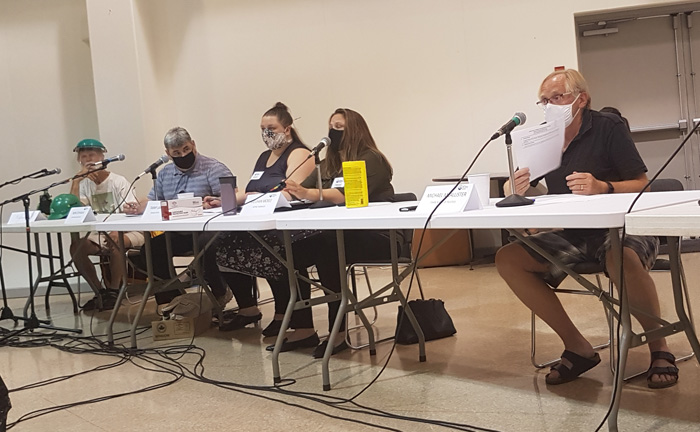
Election results were announced at the NSSWD annual general meeting on Wednesday evening at Community Gospel Chapel. Only seven members of the public attended.

Board chair Michael McAllister reported on the success of the mail-in ballot process precipitated by COVID-19. Seven times as many ratepayers participated than the highest number of in-person voters in the past, he said.

“There were 3,000 or so ballots mailed out. More than 750 people took the time to mail it back. That’s outstanding,” said McAllister.

He said either a combination of mail-in and in-person AGM voting or only mail-in voting would likely be used in subsequent years.

A total of 3,038 ballots were mailed out to ratepayers. Of the 753 returned, 46  were not done correctly and one was spoiled.

The NSSWD AGM is normally held in April of each year, but was postponed due to COVID-19.

For more on the AGM, see the Sept. 16 issue of the Driftwood.

Government issues smoky skies bulletin

0

Smoke from U.S. wildfires is impacting the south coast of B.C., including the Gulf Islands.

The B.C. Ministry of Environment has issued the following bulletin about the current situation, stressing that people with underlying health conditions need to be especially careful.

During a wildfire, smoke conditions can change quickly over short distances and can vary considerably hour by hour. Wildfire smoke is a natural part of our environment but it is important to be mindful that exposure to smoke may affect your health. People with pre-existing health conditions, respiratory infections such as COVID-19, older adults, pregnant women and infants, children, and sensitive individuals are more likely to experience health effects from smoke exposure.

Stop or reduce your activity level if breathing becomes uncomfortable or you feel unwell.

Stay cool and drink plenty of fluids.

If you have asthma or other chronic illness, carry any rescue (fast-acting) medications with you at all times and activate your personal care plan that has been designed with your family physician.

Make sure that children and others who cannot care for themselves follow the same advice.

Monitor your symptoms

People respond differently to smoke. Mild irritation and discomfort are common, and usually disappear when the smoke clears.

Exposure to wildfire smoke and the virus that causes COVID-19 can both result in respiratory symptoms such as a dry cough, sore throat, or difficulty breathing. Use the BC COVID-19 Self-Assessment Tool to help determine whether you need further assessment or testing for COVID-19.

If you are unsure whether you need medical care, call HealthLink BC at 8-1-1.

If you are experiencing difficulty in breathing, chest pain or discomfort, or a severe cough, contact your health care provider, walk-in clinic, or emergency department. If you are having a medical emergency, call 9-1-1.

Tips to reduce your smoke exposure

Smoke levels may be lower indoors but will still be elevated, so stay aware of your symptoms even when you are indoors.

Running a commercially available HEPA (high efficiency particulate air) filter can improve indoor air quality in the room where the device is located.

If you have a forced air heating/cooling system in your home, it may help to change the filter and set the fan to run continuously.

Reduce indoor air pollution sources such as smoking, burning incense, and frying foods.

If travelling in a car with air conditioning, keep the windows up and the ventilation set to recirculate.

If you are very sensitive to smoke, consider moving to another location with cleaner air, but be aware that conditions can change rapidly.

Maintaining good overall health is a good way to prevent health effects resulting from short-term exposure to air pollution.

More information

For additional general information about wildfire smoke and air quality:

Current Air Quality Health Index and air quality measurements: http://www. env.gov.bc.ca/epd/bcairquality/data/aqhi-table.html

Smoke forecasts (next 48 hours) Environment and Climate Change Canada FireWork prediction system:https: //weather.gc.ca/firework/index e.html

Blue Sky Canada Smoke Forecasting System: https://firesmoke.ca/forecasts/ current/

Ferries car-deck flexibility rescinded as of Sept. 30

0

BC Ferries announced today that as of Sept. 30, Transport Canada is rescinding the temporary flexibility it granted to ferry operators allowing passengers to remain in their vehicle on enclosed vehicle decks.

Transport Canada granted this flexibility in the spring in response to the COVID-19 pandemic. BC Ferries must comply with Transport Canada regulations and the company supports the regulation and its intent.

Enclosed car decks are spaces that represent inherent risk to the travelling public. During the pandemic these risks were mitigated with additional safety procedures and patrols. However, Transport Canada has now advised BC Ferries that measures have been developed and implemented to prevent the spread of the disease in all transportation modes and businesses across Canada.

They have further advised the marine safety case for ending the practice of permitting people to remain in their vehicles on enclosed car deck is clear. BC Ferries has implemented the measures to which Transport Canada refers above. This includes additional cleaning, sanitization, physical distancing and mandatory wearing of face coverings while at the terminal and onboard the vessel. The company will also reopen certain areas of the vessels, such as the Pacific Buffet area on the Spirit Class vessels, for seating only, as a way to provide passengers more space for physical distancing. Buffet food service is not being reintroduced at this time.

This notice affects the following routes:

Tsawwassen – Swartz Bay

Tsawwassen – Duke Point

Horseshoe Bay – Departure Bay

Powell River – Comox

Tsawwassen – Southern Gulf Islands

Photosynthesis goes virtual for 2020

The Photosynthesis group is marking its 20th anniversary with its first-ever virtual show.

The www.photosyn.ca/gallery/ site features an image from 31 of Salt Spring Island’s finest photographers.

“Early in the season we realized it was not possible to have our usual gallery gala show at ArtSpring due to COVID-19 restrictions,” said Photosynthesis chair Alane Lalonde. “We then began the process of creating an alternative show featuring stunning new images in a virtual gallery.”  

Several former Photosynthesis members and guests have been invited to participate for the special 20th-anniversary year.

Participating photographers are Seth Berkowitz, Alan Bibby, David Borrowman, Roger Brooks, John Cameron, Terry Curell, Gregg Eligh, Howard Fry, Timothy Gibbon, Tamar Griggs, Diana Hayes, Christina Heinemann, Susan Huber, Ken Ketchum, Avril Kirby, Greg Klassen, Alane Lalonde, Michael Levy, Sam Lightman, Bernadette Mertens-McAllister, Doug McMillin, Amy Melious, Larry Melious, Maureen Milburn, Pierre Mineau, Eric Onasick, Julianna Slomka, Anette Schrage, Chris Stackhouse, Mike Wall and Ann White.

SWOVA changes name to The Circle Salt Spring Education Society

0

Salt Spring Women Opposed to Violence and Abuse — a group formed on Salt Spring Island more than 20 years ago — has announced a change of name for the organization.

SWOVA Community Development and Research Society has become The Circle Salt Spring Education Society, a name that reflects its long-time work in schools with children and youth.

According to a press release from the group, the idea for the change was brought to the organization several years ago. SWOVA’s program facilitators suggested that SWOVA change its name to embrace a more inclusive perspective that empowers everyone with the attitudes and skills for healthy and respectful relationships.

“The process began with a fruitful discussion about how to prepare SWOVA for the next decades of its service to the Salt Spring community and beyond. After researching, brainstorming and consulting, the organization’s staff and board decided on a name that’s easy to remember and say — a name that reflects SWOVA’s values, such as respect and diversity.”

Its new name — The Circle — reflects a key feature of the organization’s long-time work. When program facilitators meet with students, they gather in a circle. In a circle, everyone is equal, able to look one another in the eyes and listen fully, they explain.

“Despite the name change, the staff and board remain grounded in the vision that SWOVA had embraced since its founding: inclusive and gender-equitable communities living violence-free. How? By offering social and emotional education to children, youth and adults and inspiring and training others to deliver our programs.”

Programs include The Empathy Project (for Grades 3, 4 and 5); The Respect Project (Grades 6, 7 and 8); Pass It On (Grade 8 students, as buddies, with high school students, as mentors); and Key Components to Facilitation with Youth (adult training).

“The Circle is about social and emotional education. It’s about holding a space where everyone has the courage to speak up and to trust their voice and the power it holds to make change in the world. Within the safe space of the circle, young people are equipped with skills and language to create healthy relationships. Within the circle, youth are empowered for a better tomorrow, and the work begins to help create inclusive and gender-equitable communities living violence-free.”

For more information, people can contact the group’s executive director Janine Fernandes-Hayden at executivedirector@thecircleeducation.org or call 250-537-1336.

Viewpoint: Racism message missed

0

BY BRIAN SMALLSHAW

In his Viewpoint article of Aug. 19, Hojo Takuyuki writes that he is “saddened” by Aina Yasué’s speech published as an opinion article (Aug. 12) on the atomic bombings of Hiroshima and Nagasaki, and the racism that continues to this day.

He was saddened not by the racism suffered by Yasué and other people of colour, but by her teachers who “taught her that the best way to improve society was by separating us into various tribes based on ethnicity, gender, sexual orientation and political belief system.”

If Mr. Hojo is Japanese or of Japanese descent as his name suggests I’m heartened to hear that he has never suffered from racism, but in his criticism of Yasué’s “divisive message” he has missed its essential point: it is an argument against divisiveness. It is not divisiveness that she was taught by her teachers, it is divisiveness that she has experienced, first hand, here on this island.

She is not arguing that we be separated into “various tribes,” she is making an eloquent plea for a community in which we all belong.

I take particular issue with Mr. Hojo’s condescending attitude towards Yasué. In his reading of her speech, she’s a young person whose experiences count for little and she’s been misled by her teachers. Worse, in his mind her criticism of racist attitudes implies she’s ungrateful for the opportunity her parents were given to immigrate to Canada.

The thing is, Mr. Hojo, whether you became a Canadian last week or your great-great-grandparents were Canadian, we all have the same right to call out injustice in our country when we see it. It takes courage to speak out on an issue that many people want to pretend doesn’t exist. Denying that racism exists perpetuates it.

I appreciated that Yasué grounded her argument in the history of Canada and this island. Prior to World War Two, Salt Spring had a sizeable Japanese Canadian population. They suffered discrimination, but as always, racism is not a uniform thing; there were strident racists like our then MLA, Macgregor Macintosh, who gave speeches around the province calling for the deportation of Asian Canadians, but there were also allies, people of genuine goodwill. Yet, when the racists prevailed and Canadians of Japanese descent were having their land taken from them, nobody on this island challenged it. Speaking up helps to ensure such things never happen again.

Full disclosure: I’ve known Aina Yasué since she and her family moved to Salt Spring many years ago and appreciate the many contributions that they have made to our community. I do not know Hojo Takuyuki, but would welcome the opportunity to speak to him: Mr. Hojo, please get in touch. Communication is the best way to achieve the “unity, cooperation and trust” that we both seek.

The writer is the author of the forthcoming book, As If They Were the Enemy: The Dispossession of Japanese Canadians on Salt Spring Island.