
Home Blog Page 38

BC Ferries mum on electric bus plans

1

As the academic year enters its seventh week, Gulf Islands School District (SD64) planners have yet to receive clarity from BC Ferries about how any of the electric school buses running on the islands might be transported off if repairs are needed.

The ferry company’s abrupt shift in policy over the summer to deny boarding for electric vehicles being towed — saying BC Ferries would, as a safety precaution, refuse to transport any EV not able to drive onto a ferry under its own power — was a surprise to almost everybody, according to SD64 secretary treasurer Jesse Guy, who told trustees Wednesday, Oct. 8 the company had so far offered no solutions for the district. 

“We have reached out to BC Ferries,” said Guy. “We’re really hoping that, as there has been a federal and a provincial push for electric buses — and since it is really the province that is buying the buses — that there will be a long-term solution.” 

Since the first zero-emission bus rolled out here in 2023, the district — and the province — has been investing heavily in battery-electric vehicles, with SD64’s fleet of them growing to five. That investment has brought considerable local savings, Guy said, partly because the district is uniquely suited for EV adoption. Guy said the cost per kilometre running an electric bus was turning out to be about one-third that of diesel — which, along with route reconfiguring, was saving the district some $20,000 per year. 

That savings is most pronounced in the “outer” islands, where the price of diesel reflects additional transport costs; Guy noted the district’s longest route was fully electrified, carrying students on Pender Island.

Guy told trustees Seaspan commercial ferries spokespeople have said they won’t take buses as freight, so any transport for maintenance looks increasingly likely to be through a private barging company.

“[Electrification of the bus fleet] had been a wonderful direction for us to go in that ticked every  box,” said Guy. “Now we have a complication in the system that provides some hesitancy.”

For its part, the ferry company has said the policy was based on federal safety regulations restricting the transport of damaged or compromised batteries — a rare but real safety risk, according to BC Ferries, particularly when the condition of that battery can’t be assessed.

“With more electric vehicles on our roads and ferries, we want to make sure we’re handling them safely,” said BC Ferries senior communications advisor Sonia Lowe last month, “especially because damaged or defective lithium-ion batteries can pose a significant fire risk in marine environments, where emergency services otherwise available on roadways aren’t available.”

Ferry officials said in September the company was “actively” looking into whether additional measures might be introduced, to certify when a vehicle is safe for transport — and that BC Ferries was in ongoing dialogue with automotive industry groups including towing, EV repair and insurance representatives. 

Shortly before press time, BC Ferries told the Driftwood there may be a relevant announcement later this month, but could not yet elaborate.

Meanwhile, Guy said, the district’s only “backup contingency” is to continue to keep three diesel buses as spares, as generally if any bus — electric or otherwise — needs significant work, it can be out-of-service longer than it might in districts not constrained by ferries.

“And internally, our thinking is that if anything even starts to look like it’s going wrong [with any electric buses], we’ll get them off-island,” said Guy. “We won’t ‘wait and see.’”

Editorial: Encourage OCP review input participation

0

From a marketing perspective, it must be quite a challenge trying to drum up interest in an acronym.

But that’s the mission right now for our local trustees and Salt Spring staff, part of a stated goal to reach beyond the “usual suspects” who typically take part in our land use matters. And as they enter the second month of engagement for the island’s official community plan (OCP) review — and as we see helpful consultants planted in front of Country Grocer or posting to social media — they’re clearly trying something different.

It’s a noble effort. The OCP is meant to lay out our community’s broader goals for the future, guiding whatever growth we encounter toward a collective vision. And even with the OCP update’s scope narrowed by the three “legs” that inform the process — focus on climate change resilience, environmental protection and housing affordability — such wide-ranging plans require commensurably broad participation for the final product to be meaningful. 

Of course, all government is guided by those who show up; on Salt Spring, these processes have historically been dominated by the already engaged individuals and groups whose intentions are as well-meaning as their positions are familiar. Trustees argue, and we agree, that we already have some sense about what they would like to see from a new OCP. What we don’t know is how the literally silent majority feels about land use on Salt Spring. 

To paraphrase one trustee, these fundamental questions surrounding what kind of community we want to live in — what we value — need to be answered by as many islanders as possible.

So we’d like to try something different as well. In the spirit of helping our trustees cast that wider net, we are asking our readers, demonstrably well-informed and community-minded as they are: reach out to a friend, a neighbour or family member who might not be as fully steeped in the acronyms of island land use policy. 

Ask them to engage with the Islands Trust in whatever way they feel most comfortable — whether listening patiently to someone holding a clipboard in front of the grocery store, or getting online to make their way through the website survey. 

We are all part of our community fabric; we should all help guide its planning.

Salt Spring woman surpasses 100-mile running goal

BY MARCIA JANSEN

DRIFTWOOD CONTRIBUTOR

Have you ever run on the track at Portlock Park? How many laps did you do?

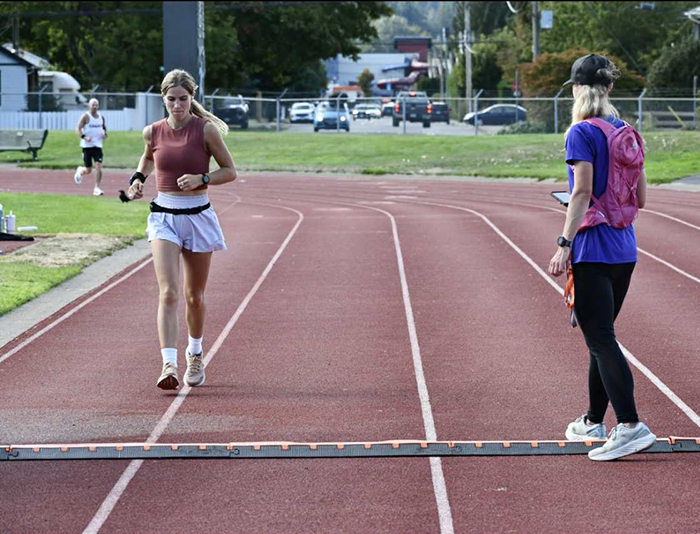
Mira Byron ran 170 kilometres (105 miles) on the track in Duncan — 425 laps — in a 24-hour race to raise money for the Victoria Hospitals Foundation. Fighting rain, blister pain and the urge to take a nap alongside the track.

Speaking three days after the race, Byron, 25, said her legs felt pretty good. Her feet were a different story.

“It started to rain in the night, and I was definitely wearing the wrong socks. I had blisters on every toe. The day after the race, my feet were so swollen I couldn’t wear shoes. I was supposed to work on Tuesday at Moby’s, but luckily I found someone who could cover my shifts.”

Byron signed up for the Dream Nation Apparel Vancouver Island 24 Hour held Sept. 20 because she wanted to experience an ultra-marathon.

“I am doing better in long runs, and the 24-hour race on the track seemed to be a good event for beginners.”

You might have seen her running, as she did a lot of practice runs on the track on Salt Spring Island.

“I think I worried the most about the repetitiveness of running on the track. I had practice days where I got bored after five kilometres. So I brought my headphones, a playlist and a few audiobooks, but during the day, there was so much distraction, I didn’t listen to anything.”

In the night, it got harder when other runners finished their (shorter) races or just quit.

“I started an audiobook at 2 a.m. It was raining, and everything started to hurt. At that point, just me and another runner were still going. He had a little bed at the side of the track, and although I was dozing off while walking, I didn’t want to stop. I knew if I did, I wouldn’t want to continue.”

Being cheered on by the race directors, who took turns sleeping, and with a lot of positive self-talk, she made it to 100 miles at around seven in the morning.

“That was my goal. I had been running for 22 hours, I was struggling to walk, so I took a little nap at 7:30 and started to run again at 9 o’clock when the sun came up.”

After this endeavour, Byron is not done running. She will participate in a half-marathon in Ucluelet on Oct. 19 and run a marathon in Burnaby in November. She even thinks about doing another ultramarathon.

“But definitely not on a track.”

Lifetime of moments shared in Hiromoto Ida play

Submitted by ArtSpring

Hiromoto Ida is not afraid to turn inward. The director/actor/choreographer makes that clear in his new dance-theatre play, Vacant Lot, which takes the ArtSpring stage on Oct. 17 as part of the ArtSpring Presents series. 

In Vacant Lot, a long-married couple, embodied by Ida and Lindsay Clague, returns to the empty lot where their family home once stood. As they share memories of the life they built there, they reflect on the swiftness of time and the ephemerality of human existence. 

Blending movement and stillness, dialogue and silence, Vacant Lot transports the audience to a plane where past and present momentarily dance together before rushing by, leaving a house-sized void in their wake. Artfully peppered with comedic scenes that “tickle the soul,” the play’s heart rests in a lifetime of moments that are both fleeting and infinite. 

Ida’s unique talent lies in transforming deep, personal reflection into universal theatre. His dedication to the existential is woven into the very fabric of his Nelson-based company, Ichigo-Ichieh New Theatre, which he started in 2006. The company takes its name from the Japanese concept of “Ichi-go, ichi-e” (one time, one meeting), which reminds people to treasure every gathering because no specific moment shared can ever be replicated, even if the same people meet again.

Salt Spring Island audiences may remember Ida from Birthday Present for Myself, which came to ArtSpring in 2023 and centred on a man raising a glass of sake to himself on his last birthday. In Vacant Lot, Ida furthers his masterful exploration of what it means to look back on a life gone by, turning a loving eye to the past while honouring the sacredness of the present.

Ida has spent 19 years creating movement-based performance art in Nelson. He has also appeared on screen; recently, he played the role of Kiyama in the FX series Shogun.

The curtain goes up this Friday, Oct. 17 at 7:30 p.m. For tickets, visit purchase.artspring.ca or the ArtSpring box office.

ArtSpring is grateful to Salt Spring Coffee for sponsoring this performance.

WIKLUND, Judith Anne

0

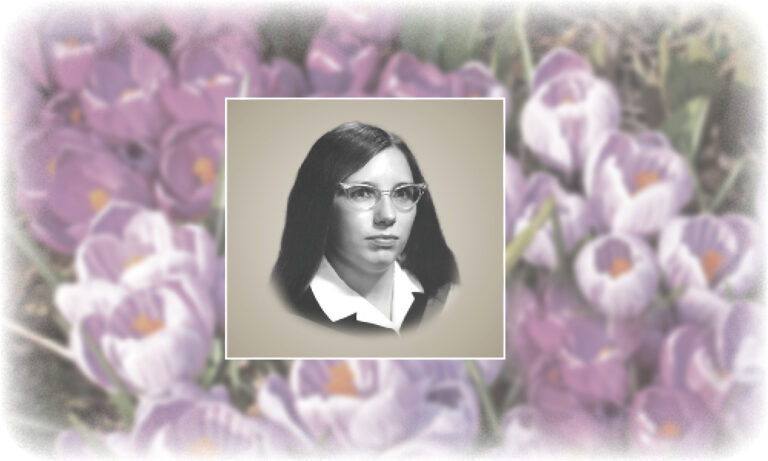
It is with great sadness that we announce the passing of Judith Anne Wiklund at Ian Anderson Hospice on October 4, 2025, surrounded by family.

Judith was a devoted wife for over 50 years to her best friend and husband, Eric, and a loving mother to Kristina, Johan, Karl, Katherine and Brendan. She was also a proud and adoring grandmother to Chloé, Gwendalyn, and Evelyn.

Judith and Eric’s story began in the fall of 1964 when they originally met as members of the UBC Varsity Outdoor Cub. Their shared love of the outdoors blossomed into a lifelong journey of hiking, camping and adventure – a spirit of exploration that Judith carried throughout her life.

A McMaster University graduate with a B.A., Judith later completed her B.Ed at Western University and found her calling as an art teacher. She inspired students through her creativity, warmth, and belief that art could open hearts and minds. As a Girl Guide leader, she shared her love of nature and adventure encouraging young people to explore the world with courage and curiosity.

A longtime resident of Bronte, Judith was deeply connected to her community. She enjoyed being part of the Bronte Horticultural Society and the Sir John Colborne Recreation Centre for Seniors, where she made new friends and took art and French classes. Her lifelong love of learning, curiosity and joyful enthusiasm for life brightened every room she entered and every heart she touched.

Judith lived with grace, purpose and gratitude. She found beauty in simple moments – tending her garden, walking the trails, or sharing laughter with friends and family.

Friends and family were received at Oakview Funeral Home, 56 Lakeshore Rd. W., Oakville, Ontario Wednesday October 8 from 4-8pm with a Funeral Service at St. Dominic’s on Thursday October 9 at 10:30am.

In lieu of flowers, donations to Ian Anderson House Hospice, whose compassionate care brought peace and dignity to Judith’s final days would be deeply appreciated by the family.

“Those we love don’t go away, they walk beside us every day.” -Celtic Proverb

BOX, Douglas

1

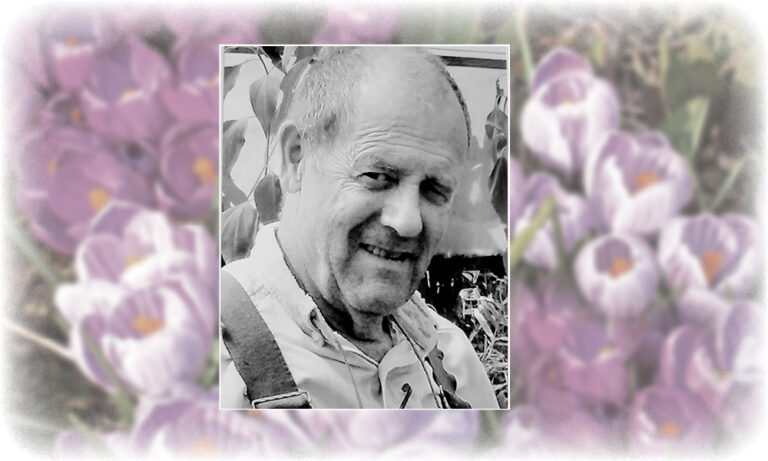
Doug, “the Bamboo Man”, passed away on September 29, three weeks after cancer surgery. He was 88 and he and his wife, Merle, had just celebrated 64 years of marriage on September 9.

Doug grew up in Saskatoon but moved his family to Dawson Creek in 1966 where he worked for BC Hydro. Eventually the family made its way to Salt Spring and arrived here in 1976. Doug worked for many years as a lineman /foreman for BC Hydro but retired at age 59. He worked with a carpenter to build his home on an acreage on Thomas Road where he and Merle started their plant nursery business.

Doug’s passion was propagating and growing plants. He became fascinated with bamboo, and he grew and sold specimens from his property, the Bamboo Ranch, for twenty years. He knew the latin names and characteristics of the dozens of varieties he grew, and he enjoyed talking about them to his customers.

Doug was a life long learner. He taught himself silver smithing and woodworking, and gifted his family with many beautiful bowls turned on his wood lathe. He studied Spanish for many years after he and Merle backpacked around Mexico in their fifties. He played the banjo and loved bluegrass music.

Doug was a calm quiet man who could surprise us with a comment that brought laughter as we recognized his quirky sense of humour. Doug’s family surrounded him with stories that brought tears and laughter in his final days. He was much loved by those he leaves behind: Merle, his wife, son Brian Box and wife Maxine Olynyk, daughter Ellen Box, son Denny Box and partner Christina Chan, daughter Susan Box, grandson Jute Wilson Box, granddaughter Eve Bennett and husband Riley Bennett, grandsons Benjamin and Marlow Box. He was close to his brother Len Box and wife Arlene, his sister Yvonne McGuire, his sister Lucille Bonner and husband Paul Bonner. Doug was looking forward to welcoming his first great grandchild in December. He will be missed by extended family members and many close friends.

The family is planning a celebration of Doug’s life for mid-November.

BOSNELL, Elsie Pearl

1

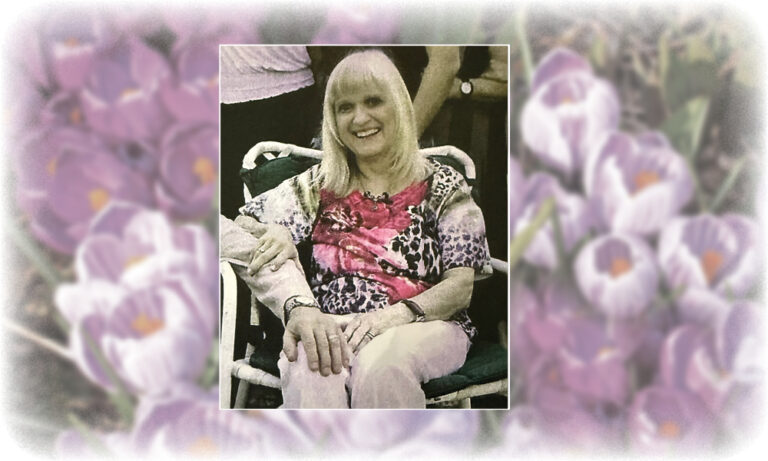
Elsie Pearl (nee Trichuk) (Marshall) Bosnell died October 4, 2025 at Lady Minto Hospital.

She was born in Ontario at Niagara Falls General Hospital on August 3, 1945. Elsie was thrilled to reach her 80th birthday a few months ago.

Elsie was a dietitian by training. She worked at Surrey Memorial Hospital and Greenwoods. She loved singing, playing the piano and guitar.

When illness forced her to be sedentary, she turned to writing and illustrating her “Gorsey the Horsey” children’s books.

Elsie is predeceased by her first husband Dennis Marshall, survived by her current husband Pierre Bosnell, her son Brett Marshall, his wife Joanna, granddaughters Natasha and Skyla, twin sons Joshua and Jonah Marshall, her sister Lydia Nimchuk and husband Dennis, her nephew Tom Nimchuk and family, Zahra and Aliya, her nephew Jerry Nimchuk and family, Sierra and Royce.

The Celebration of Life will be held at her beloved Legion at 2 pm, Saturday, October 18, 2025.

COULTER, Gary

0

Dad’s dad Earnest (young farmer) was successful courting the new American school teacher and they had a thriving farm with hired help at one point. Gary was the youngest of 7 and was cared for with help from his 2 older sisters. The 5 boys slept in an unheated bunkhouse under buffalo robes with the farm animals in the early days. Dogs pulling sleds or wagons to school or jumping out the window of a truck after a rabbit. Happy childhood other than early days in Grade 1 at a one room school with the yelling Mr. Avery. “Not at you, Gary!” from sisters to console him. Horse and sleigh to railroad for coal to cook meals for 12 where Gary learned to eat every last bite on his plate.

The Depression ruined the market for grain to the extent that they shovelled their house full of a crop they could not sell and moved North to make a living cutting firewood. After about a decade of hard times they gave up and packed up the flatbed truck and moved West to what is now Tsawwassen, but was then a pile of gravel slightly above the quality farmland they could not afford. Rented a cottage across the road from Boundary Bay and plugged air leaks because they figured they would freeze, and then ended up shovelling sea water away from the front door! This was 1946 and Gary missed his friends. The family bought 5 acres at what is now the town centre in Tsawwassen and Gary hated real estate developers after his father sold the land for a song and the community grew around our childhood home.

Gary learned to love the Coast when working a summer job after Grade11 for the Department of Fisheries tagging salmon on the Upper Pitt River. Back then it was real wilderness that close to Vancouver, and boats and bears and fish and mountains was an eye opener to a boy from the flatlands! Even Delta was away from the mountains, but Ladner was an old farming and fishing community on the big river too. In his late teens he worked helping survey valleys for their timber value and being the last to enjoy them before logging. Bushcraft. Camping.

Other family joined the exodus and the Prairie people missed having ice. They converted a hangar, at the Boundary Bay Airport into a short rink for hockey and figure skating, curling rink (and smoky lounge), and archery and hay bales in the far end. Coulters were playing hockey again and Delta was one of the few places with a rink and we got clobbered when we played the private clubs from the North Shore and Burnaby and at the Kerrisdale Arena. Gary later became the Chair of the Civic Properties Commission in Delta and oversaw the building of 3 rinks and swimming pools in the fast-growing municipality.

Gary worked installing antennas for new VHF technology and met Mona in the office of Spilsbury Communications. They were married and went on a wild trip that family did not approve of. Bought a VW Beetle when a new thing and drove around the 48 States! Sprayed by a crop duster on a road in Texas (like a bug) and tried pizza in New York City (“this will never catch on”). Came home and bought a lot in Tsawwassen from his Dad who helped build a little house on the edge of a shopping mall development in later years. Three children were born, all boys. We had a good life playing in houses under construction and roaming the beaches of Tsa and Point Roberts. Gary took us fishing in a rowboat to catch big salmon near the ferry terminal and we went for family camping trips in the Interior to fly fish for trout. Wonderful adventurous father, though a bit too much for Mona sometimes.

Gary was so popular in our neighbourhood that children would knock on our door and ask if he could come out and play! Road hockey or hide and seek, or down a cliff trail to have a beach fire and try to get us to appreciate oysters. Always game and good to go. Great Dad.

His real career began working for a non-profit society providing medical and dental coverage for union members. Some family vacations involved business as he was calling at fruit packing worksites. In the early days Gary gave Tommy Douglas a ride during an election campaign, and he was proud. Later he “did business” with the likes of Jack Monroe (President of the IWA) with a hospitality suite in the Bayshore Inn during a Labour convention. This involved throwing the bottle cap away upon opening. The advent of computers was too much for him and he was given an early retirement and enjoyed a well-planned retirement for more than 30 years. Moved to Salt Spring Island and was President of Men’s Golf, made wine, and seemed to think Hawaii was the perfect place during winter.

The move to Salt Spring was a result of his love of sailing and hatred of traffic on summer trips. Gary bought a 25-foot trimaran which was kept moored near the Tsawwassen ferry and holidays began 10 minutes from the house. The boys made use of the boat alone from age 15 and the Southern Gulf Islands became more familiar to the family, culminating in the purchase of the current family home (near the Fernwood Wharf). We are fortunate for his vision and love of adventure.

The Marine Thing seems to have corrupted his sons as all three worked on boats and showed little interest in wearing a suit and lining up at the south end of the Deas Island Tunnel early 5 days a week to sit in an office. Gary didn’t like it much either.

Garold Garth Coulter was born into a time of hardship, change, and opportunity. His family are lucky for his work ethic, and his love of mountains, oceans, sailing, and catching fish (even trout trying to survive in high elevation lakes). He is very loved and survived by his wife Mona, and three sons (Ross, Ryan, and Rob) and seven grandchildren and ten great grandchildren.

There will be an afternoon gathering to celebrate Gary’s life on October 19 at the family home located at 1120 North Beach Road.

BOURKE, Michael

2

It is with great sadness that we share news of the untimely death of Michael Bourke August 23 due to complications following a surgery. He is survived by his daughter Ariella Taylor and partner Pamela Murphy and will be greatly missed by his brother Steven and sister-in-law Margaret, sister Julia and her husband Peter Clark and two children Emory and Olivia Shaw.

Michael was born February 5, 1951 in Montreal, Quebec, second son of Mitchell Bourke and Barbara Brown, and attended public school where he was a popular, stellar student and athlete. He eagerly took on projects such as a hip coffee house in old Montreal, ‘The Mother Earth Cafe’, and a small commune in the Laurentians centered on a geodesic dome inspired by Buckminster Fuller, before enrolling in Carleton’s School of Architecture for 1 year. He then made his way out west, like many adventurers of his era, looking for an authentic lifestyle and meaningful community. After living in Nelson and Vancouver, Michael found his safe harbour on Salt Spring Island.

Michael was a master carpenter and serious sculptor, but music and poetry were his biggest pleasures. He channeled his joy into jamming with friends and expressed his observations about the meaning of life as a rapper and master of wordplay. He was a caring father, uncle and friend, well known as a generous host with a ready harmonica eager to welcome those who sought his company.

In many ways Michael was larger than life with his imposing height and quick wit, his passion and energy, his loving heart, and especially his profound connection to the spiritual world. He was very principled (way ahead of his time with regard to vegetarianism, for instance) and sometimes made others uncomfortable with his high standards: that was the preacher in him! Something he came by naturally with ministers on both sides of the family, Bourke and Brown! This latter fact might bring solace to those of us left behind, but the great space he filled in our lives also makes his absence harder to bear.

An upbeat celebration of life will be held Sunday, Oct 26 at Brinkworthy Place’s clubhouse: 135 Brinkworthy Rd. Doors open at 1:30pm with an open mic for tributes to Michael from 2-2:45pm and live music from 3-4pm. Musician friends are welcome to bring instruments for an open jam starting after 4pm. Some food and drink will be provided, but potluck style is encouraged.

Editorial: Put on notice

0

After 50 years, it’s tough not to take it personally.

Under the banner of its storied fiscal responsibility, the Islands Trust continues to reduce its budget for public notices, this week endorsing yet another Local Trust Committee “publishing” them only on its website and social media.

With the Trust’s history of sensitivity to criticism — and given how relatively tiny the expenditure was, compared to its operating budget — one might think the action more punitive than fiduciary.

While there are clearly more Driftwood readers on Salt Spring than, say, Galiano, to presume one’s land use decisions are of no interest to the other demeans the very connections that define this federation of islands. 

Further, the idea that the Trust’s own website (we’ll say as little as possible about Facebook) is a reasonable substitute is short-sighted.

If the website was celebrated, rather than reliably frustrating for trustees and the public, or had social media proven to be the bottomless fount of trustworthiness we all dreamed of during the Arab Spring — then perhaps.

But neither is the case. And what is a rounding error for the Trust’s $11-million budget is increasingly consequential funding for local news, chipping away at the solvency of the only institution covering local government — and holding it accountable.

Newspapers provide a permanent public record of information — unlike government websites and social media posts, which can be deleted or altered. 

This is not a hypothetical argument. Last November, Trust Council deleted a “published” recording of its public meeting from its own website. Whether the move was justified is not relevant; today, Driftwood reporting remains the only objective record of a decision-making gathering of trustees from every island — and of their reasoning for the recording’s removal. 

It is always more convenient for elected officials to bypass local journalism, just as it is always more convenient to bypass any public process. But public documents deserve to be presented and contextualized independently. 

If an organization’s budget is a statement of its values, this choice sends a rather unfortunate message.