Home Blog Page 390

Editorial: Younger voices

0

If asked to name the most powerful voice of political and social change in the world these days, many people would likely not hesitate to say “Greta Thunberg.”

When Greta speaks, people stop what they are doing to listen. She is being joined by other strong, vocal young environmental activists, such as Autumn Peltier and Isra Hirsi. In describing Thunberg and others, the characteristic mentioned most often is their age. If they were 55-year-old seasoned politicians, their words would have far less impact.

Proposed changes to B.C.’s Election Act announced last week recognize that younger people do and should have a larger voice in how governments are chosen and run. The suggested changes fall short of giving the vote to 16 year olds, as the Green party has promoted. But one amendment, if passed, would allow 16 and 17 year olds to register to vote, so that they are already on the voters’ list by the time they are eligible to vote at age 18.

It is a step in the right direction towards acknowledging that governments’ actions affect people of all ages both now and in the future. Also intriguing is the suggestion made by Driftwood letter writer Ron MacKenzie last week that mothers or caregivers be given votes for each of their offspring.

At one time, it seemed unthinkable that Canadian women or citizens from non-Caucasian backgrounds should be granted the privilege of voting. As we mark Remembrance Day this week, it is interesting to realize that voting rights federally were slowly given to women, starting with those who served in the military in World War I, and then those who were British subjects (over the age of 21) who were the wife, widow, mother, sister or daughter of any persons, male or female, living or dead who was serving, or had served with the military forces. Women were first given the franchise in provincial elections in Manitoba in 1916 and that slowly expanded across the country. Quebec was the last to acquiesce in 1940.

There really is no difference between not letting 16-year-old citizens vote now and barring women or non-Caucasian citizens from voting in the last century. Today’s youth are remarkably aware and astute. When people of any age are given responsibility, they tend to rise to the occasion. Governments should not be afraid of a youth vote but should encourage it instead.

COLE, Sally

1

Sally Cole
October 25, 2019

On Oct. 25 our beloved Sally’s beautiful heart stopped. We have lost an incredibly beautiful, intelligent, talented, and generous woman.

Sally was born in Sioux Lookout, Ontario, but because of her father’s work lived all over Canada. Her father and mother taught her to love and respect nature.

Sally knew more about the woods than most anyone. While she studied herbal medicine and was a well regarded and loved RMT, Sally’s real passion was writing and travelling.

There are very few places in the world that she hasn’t been to. Sally’s beautiful soul touched everyone wherever she went.

After extensive travel, Sally came to Vancouver where her much loved daughter, Soleil, was born in 1981.

In 1982 Sally met Robert Kelly and they loved and lived together with great passion. When Soleil moved out to start her own life, Sally and Robert got onto their sailboat and spent many years exploring the BC coast. They came to Salt Spring Island for boat repairs and found a new place to call home, which Sally soon filled with comfort, warmth and fantastic cooking.

Sally’s sudden loss is too great for words.

Soleil and Robert will have a celebration of Sally’s life in the new year, to honour her exceptional life and her treasured memory.

In lieu of flowers please donate to a Salt Spring cause of your choice.

More Goodlife results unearthed

BY ERIC ELLIS

DRIFTWOOD contributor

Our apologies to our readers and to the nine competitors whose accomplishments went unacknowledged, who may have noticed that last week’s article only covered half the Salt Springers entered in the Thanksgiving weekend Goodlife Victoria road running events.

Shortly after two hours from the starting gun, Salt Spring Sneaker Keith Cloete crossed the event’s finish line in a time of 2:06:31, earning a 14th place in the men’s 70-74 group, four minutes better than his time in this race a year ago, a top two-thirds finish among all men and among all finishers.

Thirteen seconds later, Sneaker Conrad Bowden followed, his 2:06:44 being an 11-second improvement compared to last year.

Sneaker Catherine Bennett finished in 2:07:35, a three-minute improvement over her performance in last year’s race, sixth place among the 46 women in her age group. A Sneaker who will not be named followed less than a minute later.

The 13th Salt Springer to finish was Jennifer Kerrigan, whose time of 2:18:38 earned her a top two-thirds finish in her age group.

The 14th Salt Springer to finish was Sneaker Judith Beaglehole, completing her 14th Goodlife Victoria Half Marathon after a two-year break. Her time of 2:19:27 earned her a second place among the seven women in her 75-79 age group who finished.

The last half-marathon runner from Salt Spring to finish was Cathy Lenihan, persevering for three hours, 23 minutes and 23 seconds, a feat of endurance in which she prevailed over 15 other women in her age group.

Just after Lenihan’s finish, the first of three Salt Spring marathoners crossed the Goodlife finish line. Barely nine hours after his mother completed the Kona Ironman World Championships in Hawaii, her son Nevan Young crossed the finish line in his first marathon attempt in a time of 3:25:30 for fourth place of 26 in the men’s 20-24 age group, 135th of 610 men, and 163rd of 1,126 marathon finishers.

The second Salt Spring marathon finisher was Alexander Wilkinson. His 4:38:27 earned him a 77th place out of 92 in his men’s 30-34 age group, 458th place of 610 men and 737th of 1,126 total competitors. 

The third Salt Spring finisher was Dominic Wild in his first marathon competition. His time of 4:54:09 earned him a 55th place of 61 in his men’s 45-49 age group, 502nd place of 610 men who finished, and 842nd of the 1,126 total finishers.

This past weekend, Salt Spring Sneakers coach Susan Gordon entered the 49th Annual James Cunningham Seawall 10km, held surprisingly enough around Stanley Park’s Seawall, with her brother, Ron Gordon, an honorary Sneaker from Port Moody. Susan finished the race in 44 minutes and 51 seconds for first place of 19 in her age group, seventh place among the 187 women who finished and 40th place among the 346 finishers. Her brother followed shortly in 47:20 for sixth place in his age group, 46th male and 58th overall.


Teacher earns top B.C. award

0

Gulf Islands Secondary School teacher Jason Donaldson has earned the highest acknowledgment of his peers, receiving the Association of B.C. Drama Educators award for Drama Teacher of the Year over the weekend.

ABCDE is the professional specialists’ association representing theatre arts teachers across the province. The annual award is for an exemplary teacher who teaches K-12 and incorporates drama in and beyond the classroom.

Donaldson said it was a surprise to hear his name called out during the conference event, which was held Oct. 25-26 in Vancouver, and even more so to hear passages from letters of testimony supporting his nomination read out loud.

“Hearing words that colleagues and alumni had submitted was really, really moving,” Donaldson said. “Especially standing in a room full of drama teachers, who I know put in long hours of work and have made sacrifices in other aspects of their lives to support arts education, and the value it can bring to students and their communities.”

“It felt overwhelming to be recognized for work that is so important to me,” he added.

Along with feeling valued by his peers, attending the ABCDE conference and receiving the award has sent Donaldson back to his daily work on Salt Spring feeling inspired, re-invigorated and rejuvenated. His students are meanwhile just as thrilled about their teacher’s honour.

Grade 12 student Kahlila Ball is one of a group of friends who have worked closely with Donaldson throughout their high school years, both in the theatre and on the improv team.

“He’s changed so many lives — mine especially,” Ball said. “He’s taught me how to be a person in the world, a person I can be proud of.”

“I really think that recognition of any kind is really exciting and it’s so well deserved in this case,” said fellow student Calla Adubofour-poku. “And he’s kind of even more deserving because if he didn’t get the recognition he would still be the person he is.”

Adubofour-poku said Donaldson stands out for his willingness to speak to students as if they’re on the same level, and the feeling that he learns from them as much as he teaches.

“He affects a lot of students’ lives in an amazing way, on the daily,” Adubofour-poku said.

For more on this story, see the Oct. 30, 2019 issue of the Gulf Islands Driftwood newspaper, or subscribe online.

B.C. mushroom warning issued

0

Mushroom poisonings are on the rise in the province, and the BC Centre for Disease Control’s Drug and Poison Information Centre is urging people to use extreme caution when foraging for wild mushrooms.

The death cap mushroom has been seen in parts of the province, including in the Gulf Islands. It is the most deadly mushroom in the world, and is often found in urban areas rather than in natural forest. Other varieties of wild mushrooms are less toxic than death caps but can also cause severe illness.

According to an invasive species alert from the Ministry of Environmental Protection and Sustainability, death cap mushrooms have been known to grow near Garry oak trees. That report stated that it has been spotted in the past on Galiano Island near a hazelnut tree planted decades ago.

Island Health spokesperson Cheryl Bloxham said Monday that she had “received no reports about death cap mushrooms on the Gulf Islands [so far this year]. We would, however, likely only be notified if there was a human or possibly animal-related illness associated with the mushrooms.”

This year is on track to be a record year, according to the Provincial Health Services Authority and the BCCDC, which has received 201 calls as of Sept. 30. By comparison, 2018 saw 202 calls in total, and 161 calls were logged in 2017. The BCCDC correlates the increase in calls related to mushroom foraging to the amount of rainfall received in a year. The mushroom’s normal fruiting period is from late August until early November, with some cases documented in December.

Though no human deaths have been attributed to the death cap mushrooms since 2016, a release from the Provincial Health Services Authority said that two dogs have died due to possible death cap poisoning this year.

They are particularly dangerous since they closely resemble other edible varieties of mushrooms, including puffballs or Asian Straw mushrooms. Symptoms of poisoning include nausea, vomiting, watery diarrhea, low blood pressure, liver failure and kidney failure. Illness begins eight to 12 hours after ingestion with gastrointestinal issues, followed by an apparent recovery. Symptoms recur, and kidney and liver damage progresses over the next three to six days.

Mushroom hunters are urged to use caution and only eat mushrooms that are well known to be edible and are easy to distinguish from poisonous varieties. Those who suspect they’ve ingested the mushrooms are to call the Drug and Poison Information Centre’s 24-hour line at 1-800-567-8911 and seek immediate medical attention.

For more on this story, see the Oct. 30, 2019 issue of the Gulf Islands Driftwood newspaper, or subscribe online.

SSICT presents Mamet’s Oleanna

Salt Spring Community Theatre presents a bold choice for their 2019 fall season in David Mamet’s Oleanna, which opens at Mahon Hall on Nov. 8 under director Damian Inwood. 

Oleanna — whose title stems from a 19th-century Norwegian folk song about a lost utopia — premiered in 1992 as the first production of Mamet’s new Back Bay Theater Company in Cambridge, Mass. Mamet was writing it while the Clarence Thomas hearings were underway, after the U.S. Supreme Court nominee was accused of sexual harassment by Anita Hill. Though that was more than 25 years ago now, the themes are probably more relevant than ever.

“I think it’s more topical now. It’s still as controversial as it was then, because we’ve had the #MeToo movement, and we’ve had the Brett Kavanaugh hearings. The text of the play really addresses that from a different viewpoint, I think,” Inwood said.

The play features just two characters on stage: a college professor about to receive tenure and an accompanying large raise, and a female student who has come to his office for help with his class. The professor’s treatment of the student in the first act sets the stage for her retaliation and his downfall afterwards. But audience members may disagree with the student’s interpretation that she’s suffered sexual harassment or worse.

The division between audience members over the outcome reportedly had couples fighting loudly in the theatre and even saw an actor attacked by an audience member when the play had its first run.

Even within the community theatre company, Inwood said, there has been wide divergence of viewpoints on which way things should have gone.

“It’s sort of a different play for community theatre, but I think it’s important that we do some challenging work among our repertoire,” he said.

As well as carrying the entire drama, the challenge for the actors (and their director) is magnified by Mamet’s unique writing for dialogue, which is fast, clever and edgy but also frequently features cut-off and interrupted fragments. Inwood’s casting of Dave French and Metta Rose brings back two of the leads from last year’s powerful staging of The View from the Bridge to take on the challenge.

“It’s stretching them both as actors. I think they’re going to do a great job,” Inwood said. “It’s huge because they’ve got so many lines and huge chunks of text they have to remember.”

The evening will be under two hours, and although this is one play that would seem to beg additional discussion, there will be no talk-back session this time. That’s because Mamet specifically forbids talk-backs under his licensing.

Oleanna opens Friday, Nov. 8 at 7:30 p.m. Shows continue Nov. 9 at 7:30 p.m., Nov 10 at 2 p.m. and Nov. 14-16 at 7:30 p.m. SS Community Theatre will once again be staging an additional show as a fundraiser, with an event where ticket sales benefit  SWOVA set for Nov. 13.

For more on this story, see the Oct. 30, 2019 issue of the Gulf Islands Driftwood newspaper, or subscribe online.

Salt Spring the backdrop for Awakening film

0

Salt Spring Island will be the setting of a new short film written by Tamara Hamilton that looks at loss and recovery through community and whimsy.

Filming wrapped up on Oct. 5 for the film, which included several Salt Spring Island community members in background roles. Awakening is the story of a woman named Cora who is grieving from the sudden loss of her husband. After her husband takes his own life, Cora returns to her childhood home (Salt Spring) to start the healing process. Cora initially feels lost and hopeless, but she ends up being reacquainted with her childhood imaginary friend who guides her along the path to recovery.

“She’s someone who is so in despair and all of her attempts to reconnect just go totally awry,” Hamilton said. “She continues to push through it with the support of her imaginary friend and she’s able to come alive again.”

Hamilton, who lives in the Lower Mainland, wrote the screenplay based on an image she had in her head of a woman who is so upset by her husband’s passing that she eats his ashes. The idea was encouraged by her co-writer Mark Anthony Hogan and it was changed from a drama to a comedy.

“The emphasis isn’t on the suicide, but on the healing part, like what happens after a woman loses her husband who she didn’t even realize was so depressed and willing to take his life. What do you do when you feel so isolated and sad and on the brink of madness?” Hamilton said. “I didn’t want it to be a serious drama. I wanted there to be whimsy.”

She chose Salt Spring as a setting for the film because the island has a unique combination of quiet and solitude, and has a strong community. The setting gives Cora the space to do introspective work after the death of her husband, as well as to reach out to a vibrant community to help lift herself up when she’s ready.

“To me, Salt Spring is a place of creativity, whimsy, beauty, solitude and peace. It’s a place to have the space and quiet to be able to have that inner dialogue that is more challenging in the city because there’s so much stimulus. Sometimes it’s hard to really quiet down and be still,” Hamilton said.

“We put several calls out for auditions and for background actors,” she added. “We were so surprised at the turnout and enthusiasm. It was so incredible.”

Hamilton said the film will now enter the post-production phase, which she hopes will be short. She intends on submitting the film to festivals worldwide, and having screenings on Salt Spring and in Vancouver when the festival run is complete.

For more on this story, see the Oct. 30, 2019 issue of the Gulf Islands Driftwood newspaper, or subscribe online.

Go ahead: Blame the boomers, we deserve it

0

Okay. We admit it. Guilty as charged. On behalf of the millions of baby boomers all over the globe I hereby accept full responsibility for the terrible mess we’ve made of this planet. Let us be your sacrificial lambs. Go ahead; blame it on the boomers.

So, what is it that we boomers have perpetrated that has been so god-awful terrible? Destruction of the environment, you accuse? Climate change? The greenhouse effect? Hole in the ozone layer? Depletion of natural resources? Extinction of species?

Yes, we have to give ourselves a D- grade in how we have taken care of our planet.  There have, however, been some mitigating factors. For instance, we weren’t the first ones to mess up the Earth’s atmosphere.  Some of the blame has to fall on previous generations, namely the ones who lived in the 18th and 19th centuries and who gave the world the Industrial Revolution. They were the ones who practically invented air pollution; we were merely the generation to whom they passed the smoking torch.

If you want to fix the blame on anyone, why not spread it out a bit? Why not go right back to prehistoric times? Humans have been guilty of fouling up the atmosphere ever since early Neanderthals started the practice of tailgate parties by roasting pterodactyl dinosaur wings over a hot fire in front of their caves. We boomers just took the idea and ran with it.

Before we go any further with this public shaming, let’s sidetrack for a moment to define what exactly we mean when we discuss the “boomer” generation, and exactly where it sits when compared to succeeding generations. Let’s remember that defining these generations is not an exact science and there is plenty of room for overlap and much grey area between the different categorizations. Nevertheless, according to studies polling western cultural generations, it is generally agreed that baby boomers were born in the post-war era between 1946 and 1964. The boomers are followed by Gen X or “baby bust” generation, born between 1965 and 1979. Next come the millennials or Gen Y (some have named these “the children of the boomers”), who came into being between 1980 and 1994. Following the millennials is Gen Z (or the iGen) between 1995 and 2012. Lastly, we have Gen Alpha, half of whom have not even been born yet, spanning the years 2013 and 2025.

Now that we’ve cleared all that up, let’s get back to boomers and discuss how, in addition to wrecking our world’s ecosystems, we’ve also been screwing up the economy. Millennials might have a point here. After all, weren’t the boomers responsible for the financial crisis of 2008 that led to the great recession? And didn’t the market crash cause companies to downsize by laying off millions of workers in the U.S. alone? And because of seniority and loyalty issues, didn’t most of the pink slips go to millennials instead of us slower, less productive boomers?

If that wasn’t bad enough, boomers came of age at a time when you could still afford to buy a house if you had a steady job (millennials roll their eyes in disbelief when they hear that boomers just needed to work at one job). Not only could boomers afford to buy houses then, but now that they have reached or are approaching retirement age, they can cash in on that early property investment. The shortage in affordable housing has turned the boomer generation into “property millionaires” and has set them up for life when they decide to downsize to something smaller and more manageable.

It’s not as if we were totally reckless and evil. We did give the world a few good things. Take rock and roll, for instance. Maybe the generation before ours created it, but we were the ones who used it to define pop culture. Now all those “oldies but goldies” rock stars have aged and turned moldy. Some, like McCartney and the Stones, can still shake an artificial hip or two and bang out an old tune (provided they get the necessary transfusion before the gig). Others have rocked their way to that big stage in the sky, exiting stage left the way that most rock icons have done: overdosing on drugs, drowning in a hotel swimming pool, or choking on their own vomit. The really great ones have managed to go out doing all three at the same time.

Not that I’m trying to defend us boomers, especially with “boomer bashing” being in such high fashion, but there are a few mitigating factors to consider. Sure, boomers (aka the worst generation EVER) are hurting the economy by not consuming as much as they had in the past but, let’s face it, how much new stuff do you really need as you reach a ripe old age? Speaking personally, I think I’ll forego a cutting-edge titanium skateboard and stick with my “old school” wooden one. I’ve just been using it as a dolly for my groceries anyway.

Besides, there are reasons why boomers aren’t spending like we did in our heyday. We’re either working and saving for our retirement or already retired and living on a fixed income. Any loose change might be going to our kids to help them out financially. Lord knows, we wouldn’t want them to run short so they couldn’t pay through the nose for Starbucks coffee, the latest devices, or more data. In 2014, as a matter of fact, 32 per cent of millennials were living with their parents (probably holed up in the basement to keep any interaction with their selfish boomer mommas and poppas to a bare minimum).

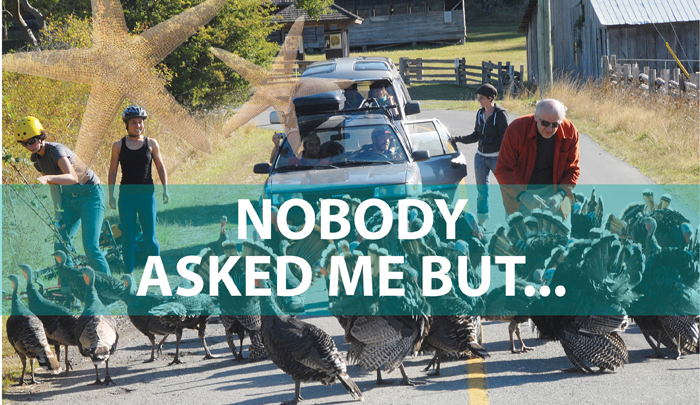
Nobody asked me, but it’s inevitable that the problem with baby boomers will eventually resolve itself through attrition. Already, in 2016, the number of millennials in North America began to outnumber the boomer generation. Nobody lives forever, and although we boomers have been fighting that notion since that first grey hair appeared, at some point we must face reality. But until that happens, we still have time to suck the economy dry with our old age security and health care costs. Call it a “boomer or bust” society. I wonder if our millennial children have any room in their basements.


Viewpoint: Election another net loss

0

By MURRAY REISS

The most important news the morning after our federal election had nothing — and everything — to do with that election’s results. It wasn’t about the Liberal minority government, or the Conservatives’ slight edge in the popular vote. It wasn’t about NDP seats that vanished, Green Party seats that failed to materialize, or the resurgence of the Bloc Quebecois.

No, the most important news to hit the media the morning after the election was this: Arctic soil has now warmed to the point where it releases more carbon in winter than northern plants can absorb during the summer. And that means that natural systems that were supposed to keep carbon out of the atmosphere are starting to release it. The extensive belt of tundra around the globe — a vast reserve of carbon that dwarfs that held in the atmosphere — is becoming a source of greenhouse gas emissions, rather than a sink.

This is part of a trend far more alarming than the rise of Western alienation, Quebec separatism, or the growing urban-rural divide. The Earth’s systems are breaking down at a speed that’s taking even climate scientists by surprise.

The amount of meltwater pouring from the Greenland ice cap is 50 years ahead of schedule. Permafrost is thawing in the High Arctic at depths projected for 2090. And instead of melting slowly and steadily, as once believed, sudden collapses are speeding up its rate of emissions.

Under a business-as-usual scenario, researchers report, emissions from northern soil will likely release 41 per cent more carbon by the end of the century. And with the Arctic already warming at three times the pace of the rest of the globe, even with major mitigation efforts those emissions will still increase by 17 per cent.

Business as usual, though, is what the election’s left us.

In her recent book, After Geoengineering, Holly Jean Buck quotes a U.N. delegate from a small nation who declares, “What we thought was years down the road is facing us now.”

In the election, only the Green Party of Canada and, to a somewhat lesser extent, the NDP, dared face that fact. The result? The Greens went from two seats to three and the NDP lost 15.

James Baldwin once insisted, “Not everything that is faced can be changed, but nothing can be changed until it is faced.”

The only people I’ve seen who are really facing what we’re up against are the masses of youth who’ve been marching and striking in streets all over the world. Too bad most of them are too young to vote. Maybe we should lower the age to 16. Or six.

The report on Arctic soil from which I’ve been quoting describes the situation in the Arctic as a “net loss.” The same description fits our latest election.

Editorial: Coffee allowance

1

Salt Spring voters are being asked to give their blessing to creation of a new “Community Safety Service” through the Capital Regional District.

If approved, it will result in a tax increase in 2020 — say $5 per year to start for the average assessed residential property — and will allow up to double that amount in future years. The amount — $0.016 per $1,000 of assessed property value — is so minor it has been likened to “a cup of coffee per month” at its maximum.

When added to the other considerable flagons of tax java Salt Springers are being hit with in 2020, we will either be suffering from caffeine withdrawal or the over-caffeinated jitters next year.

We know that government bodies exist to provide services to residents and that property taxes are a reliable way to fund those services. But the proposed Salt Spring Island Community Safety Service (Bylaw 4235) seems like a service that’s not really needed regardless of its minor cost. It was proposed as a way to address a short-term problem of vandalism last year that a CRD meeting heard was caused by one disturbed individual, and the discomfort created by groups of homeless people hanging out in Ganges. Unless the service will fund a full-time street worker, or another bylaw enforcement officer or police officer, it’s unlikely to make a visible difference in the community. Holding meetings to discuss safety concerns, or forming a volunteer Citizens on Patrol group, which the island has had in the past, can surely be done without creating an additional finger of CRD bureaucracy and cost to taxpayers. The whole scheme is so vague it seems inevitable that the money will be frittered away without having any impact.

Under what is called an alternative approval process, if at least 10 per cent of registered Salt Spring voters — so 910 of them —  don’t oppose the plan by Dec. 9, the new tax is a done deal. The process to register opposition is not difficult. “Elector response forms” are available online or at the Ganges and Victoria CRD offices. Details are in an ad in this week’s paper.

So many huge community issues will demand our property tax resources in the coming years. Let’s not deplete the coffee allowance on something as peripheral as “community safety.” Let’s also show that we do have some control over and interest in how that allowance is spent.