Home Blog Page 41

High seas home-schooling in Home is the Ocean film

By STEVE MARTINDALE

SS FILM FESTIVAL SOCIETY

The Salt Spring Film Festival invites you to sail away with a globe-trotting, mountain- climbing Swiss family of eight who live full-time on their sailboat, featured in Livia Vonaesch’s award-winning new documentary Home is the Ocean, which launches the annual “Best of the Fests” film series on Wednesday, October 1, at ArtSpring.

Dario and Sabine Schwörer and their six home-schooled, multilingual children — all born in different time zones — have travelled over 100,000 nautical miles and visited over 100 countries. Conducting research on climate change and microplastics in some of the world’s most remote waters, the Schwörers are founders of the Swiss-based TOPTOTOP Global Climate Expedition, whose mission is to inspire young people to save the planet. Sharing 20 square metres of living space, each family member plays an important role in this well-coordinated team, with the intrepid and seemingly fearless kids confidently handling themselves on the high seas, until a destructive storm forces the family to reconsider their unconventional life choices.

Filmed around the world over seven years and featuring gorgeous cinematography, this strikingly beautiful film — co-presented by the Salt Spring Nature Academy and the Salt Spring Island Sailing Club — was named Best Documentary at Italy’s Riviera International Film Festival.

The Best of the Fests series continues on Oct. 29 with Have You Heard Judi Singh?, about an enormously talented but largely forgotten Canadian jazz singer; The Art of Adventure on Nov. 12, featuring Robert Bateman and Bristol Foster travelling around the world in the 1950s; and the National Geographic documentary Love+War, about courageous photojournalist Lynsey Addario, on Dec. 3.

All Best of the Fests screenings are at ArtSpring on Wednesdays at 7:30 pm. Tickets available through artspring.ca; by phone (250-537-2102) or at the ArtSpring box office in person (Tuesday to Friday, 10 a.m. to 2 p.m.); or at the door an hour before showtime.

Waterfront property donated for park

0

Local officials announced there will soon be a new waterfront community park on Salt Spring Island, thanks to a donation of roughly 1.5 acres of land near Fulford.

Property for a park on Morningside Road was donated by the family of Ruth Baldwin, according to Capital Regional District (CRD) officials, offering open views and direct access to the ocean via a small beach. Baldwin passed away in 2009; in a statement, the family said she had loved the property, and would be “thrilled to see it being used as a community park,” they said, “for all to enjoy.”

Local Community Commission (LCC) chair Earl Rook said the parcel was a meaningful donation that aligned with the island’s strategic plans — specifically goals surrounding increased public access to lakes and ocean; CRD Parks on Salt Spring are among regional district services administered by the LCC.

“We are deeply grateful for this generous donation,” said Rook, “which will provide lasting benefits to the Salt Spring Island community. This oceanfront property offers a rare opportunity to protect shoreline access and natural beauty for generations to come.” 

Planning for the park is underway, according to CRD staff; in a statement Thursday, Sept. 25, officials said a community park covenant would be registered on the donated portion of 215 Morningside Road. With that protected status, according to the CRD, the land “will remain a publicly accessible space that supports shoreline access and environmental preservation.”

Hands Across the Water celebrates cross-border island culture

0

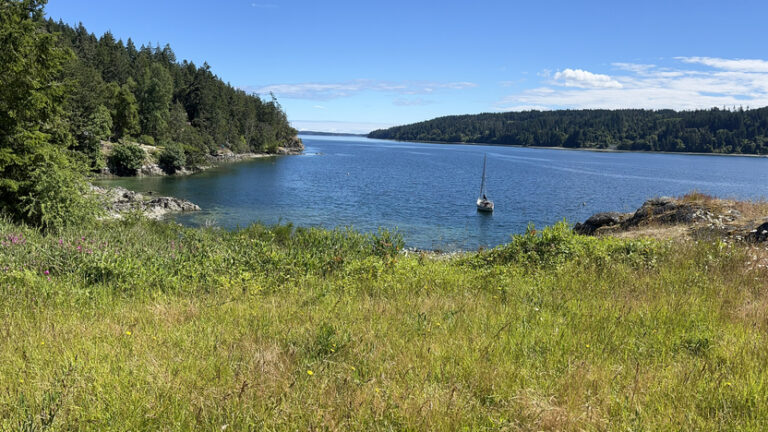
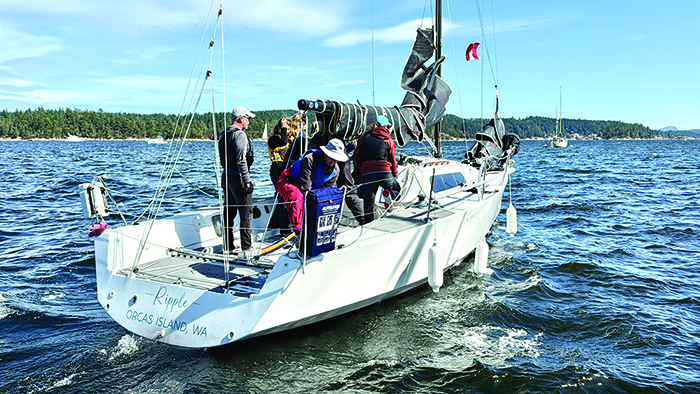
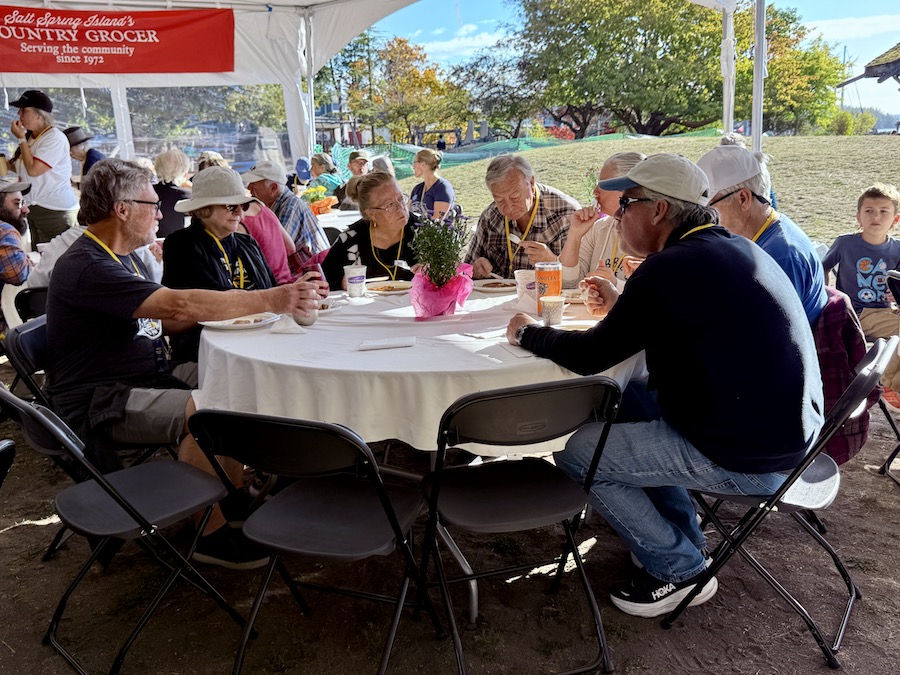
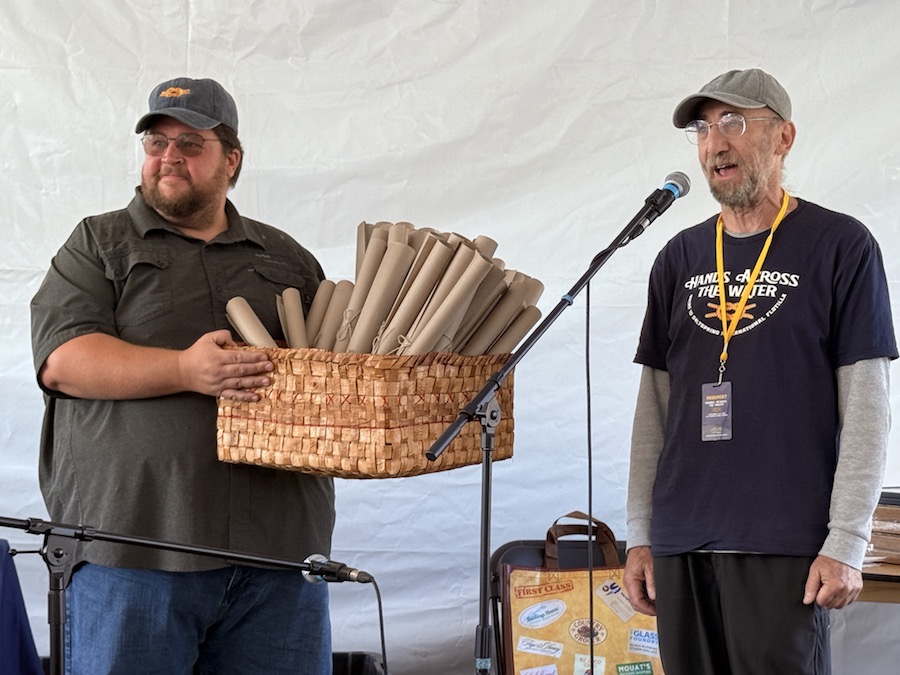
The inaugural Hands Across the Water festival marking the bringing together of Orcas Island and Salt Spring Island communities saw many smiles (and handshakes) shared and discoveries made on the Sept. 19-21 weekend.

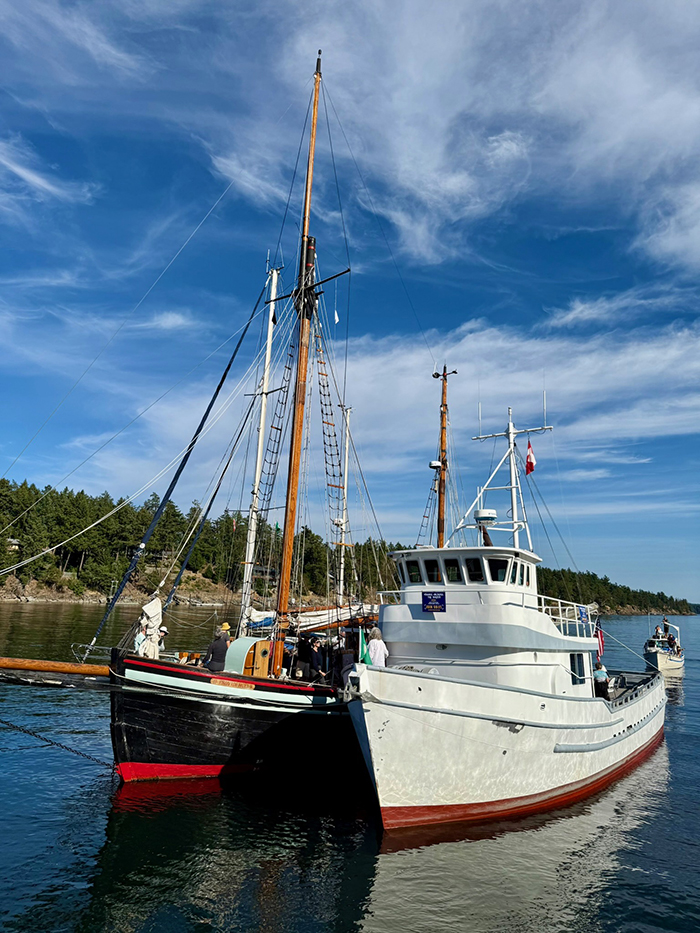
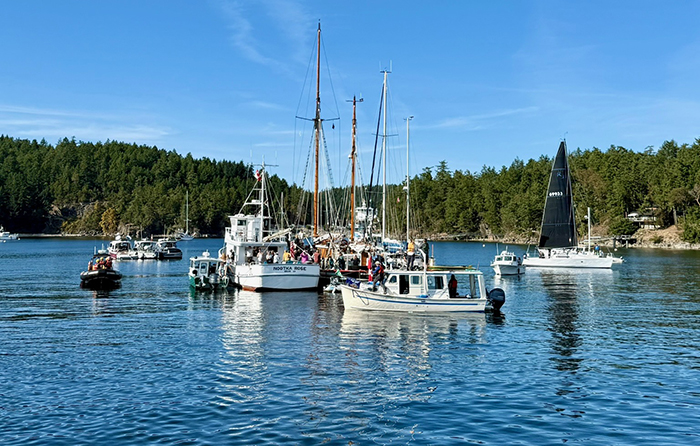
A full roster of events began with a flotilla of boats gathering in Welbury Bay on Friday afternoon and carried on non-stop through Sunday morning.

The Salt Spring Island Chamber of Commerce and Orcas Island Yacht Club were the lead organizing bodies.

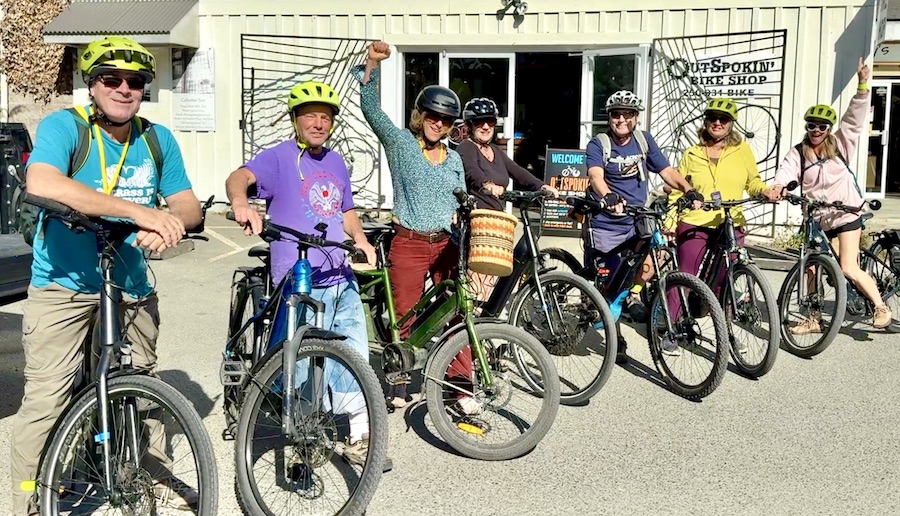
Driftwood photographer Rob Lowrie captured images from the Welbury Bay meeting, Saturday’s car show, bike ride, sailing regatta, Saturday night concert with The Boom Booms in Centennial Park, and Sunday closing ceremonies and pancake breakfast.

Driftwood publisher Nancy Johnson also photographed the historic Friday afternoon moments on the water.

A letter from San Juan County Council member Justin Paulsen embodies the spirit of the event.

Salt Spring Island Conservancy marks 30th anniversary

0

SUBMITTED BY SSI CONSERVANCY

The Salt Spring Island Conservancy (SSIC) is celebrating 30 years of grassroots efforts to protect the island’s natural heritage. Since 1995, it has worked to acquire and manage ecologically valuable land, support landowners in becoming good stewards of their own land and provide public outreach programs.

Seven dedicated women shaped the Conservancy’s early years. They established the SSIC as a registered charitable organization and held the first board meeting on Jan. 13, 1995. Their first campaign was to protect the old-growth forest on Mill Farm, along Musgrave Road, a process that took two years. By 1997, the Conservancy had raised $192,000 for the CRD’s purchase of the land, was engaged in 16 other projects, and had launched its publication, The Acorn. During this period, the SSIC became the first conservancy in B.C. permitted to hold a conservation covenant on private land. Conservation covenants enable landowners to protect important ecological features on their land while continuing to own the land. This marked a major step for conservation in B.C., as previously, only government entities could hold these agreements.

In the late 1990s, as part of the efforts to protect the Texada lands from logging and to ultimately create Burgoyne Bay Provincial Park, the Conservancy played a pivotal role in protecting 263 acres of Maxwell Lake watershed lands.

By 2001, the fledgling organization had grown to where it needed an executive director. Public education initiatives were launched, including a guide for new island residents and a popular bird checklist. Soon thereafter, the Conservancy’s first nature reserves, Manzanita Ridge and the Andreas Vogt Nature Reserve, were created through the generosity of the landowners.

In 2004, volunteers spearheaded the Stewards in Training program, inspired by Richard Louv’s book Last Child in the Woods. Twenty-one years later, the SSIC continues to offer this program, providing hands-on environmental education for island students in Grades K-7. That same year, the Conservancy received its first grant from the Government of Canada’s Habitat Stewardship Program, supporting research on species at risk.

The Conservancy launched a Land Stewardship program in 2005 to provide advice to private landholders interested in learning how to be good stewards of their land. This free program involves an SSIC ecologist walking the land with the owner, preparing a report on the land and species observed, and providing stewardship recommendations.

Over the past 30 years, the Conservancy has established 11 nature reserves for islanders to enjoy, such as the popular Mount Erskine reserve (part of Mount Erskine Provincial Park) and the Blackburn Lake reserve, which protects an important water source. Creekside Rainforest reserve, a rare 15.5-acre parcel of coastal temperate rainforest near Beddis Beach, is one of the SSIC’s newest reserves.

In total, the Conservancy now protects more than 1,640 acres in 11 nature reserves and 19 private conservation covenants. However, its reserves are not financial assets it can draw on; they are lands to be held in perpetuity to conserve their ecological diversity and wildlife habitats. The Conservancy relies entirely on grants and donations to acquire, restore and manage these rare and valuable areas, as well as to provide education opportunities to children and its public workshops and presentations.

With this in mind, the Conservancy has launched a campaign to build an endowment fund, with a goal of $1,000,000, to provide a long-term foundation for its work. More information on how to support the SSIC’s mission can be found on their saltspringconservancy.ca/30th-anniversary website.

After three decades, the Salt Spring Island Conservancy remains true to the vision of its founders: ensuring that the island’s natural beauty is preserved for generations to come.

Message from Orcas Island

0

The following was read at the closing ceremonies of Hands Across the Water in Centennial Park on Sunday, Sept. 21 by Justin Paulsen, San Juan County Council member, District #2.

On behalf of the Orcas Island community, it is my honour to recognize the Hands Across the Water cross-border event — a coming together of the Orcas Island and Salt Spring Island communities.

While we occupy lands divided by a national border, this event is a recognition of our shared values, a celebration of our unique cultures and an acknowledgment of the struggles — past and present — that our communities face together.  We acknowledge the long history of injustices that our occupation of these lands has inflicted upon our Indigenous residents and recognize that it is our obligation and responsibility to continue to not only honour their fundamental, traditional rights but to continually strive to repair and protect this place for future generations.

This event, born from a shared vision of a “meeting of communities,” offers the residents of our islands an opportunity to gather together in the spirit of cooperation, free from broader political distractions, to share, learn and establish friendships that transcend artificial boundaries.  As neighbours on the Salish Sea, this is one small step in expanding our understanding of one another and the importance of the place in which we live.     

 The Orcas Island community recognizes the tremendous time, energy and resources that have been invested in creating this event and wish to thank the organizers for their efforts.  I wish to personally thank my counterparts with the Salt Spring Island Local Community Commission for their support of this event and for allowing this opportunity for engagement. It is with thanks and appreciation that I affirm and support the values of this event:

“We choose to become the best versions of ourselves — as neighbours, as friends, as people moved by care, community and reconciliation.” 

“We declare our intention to strengthen this cross-border friendship, to steer away from division and sail toward the true north of unity and engagement.”

Nobody Asked Me But: Mother’s “tattoo“ dampens enthusiasm for the art

0

Let me be honest right off the top. I am not a big fan of tattoos. I love colour and I admire art. I believe people have the right to do as they choose with their own bodies. But I guess I just don’t appreciate people using their bodies as their canvas. Let’s call it my little hang up.

Similarly, you won’t find me drooling over body piercings, staplings or brandings. If you add to these, neck hoops to elongate the space between head and shoulders and lip discs to make the lower lip protrude farther than the shnoz, then you are entering the realm of “just plain weird.” Self-immolation is out of the question when it comes to options for what you can do to your body.

It’s virtually impossible to go anywhere on Salt Spring without having your visual senses hijacked by the myriad of tats out there. They come in all shapes, forms and colours. They may be delicate, intricate line drawings or giant, full-spectrum painted murals that can expand across an entire body. They can spell out the name of a first love such as Rosie, or place Mom inside a heart with an arrow through it. Tattoos are able to visually represent spiritual and meditative concepts like a Mandala or Om. Politically and philosophically, they can express beliefs and sentiments such as “arrest is good for a change” or ‘imagine whirled peas.” I once saw a Hell’s Angel biker who had tattooed across his back “If I wanted your opinion, I’d beat it out of you.”

I come by my unease with tattoos honestly. You see, my mother had a tattoo. It was on her left forearm. It wasn’t the name of an old boyfriend or a drawing of a unicorn. It was a number; 56128 to be specific. From that moment when the German SS gave her the tattoo in 1942 until the end of the war, she no longer had a name but only the number. Below the number was a small downward pointing equilateral triangle which represented half of a Star of David. This signified that she was a Jew.

She had been transported by cattle car from her home in a small town in Poland to the Auschwitz concentration camp, infamous for the German phrase on the sign on the front gate “Arbeit Macht Frei” which translates to “Work Shall Set You Free.” For the next three years she worked as slave labour sewing Nazi soldier uniforms or manufacturing munitions on an assembly line. The plan they had for her was to work her until she was too weak or sick, in which case she would be exterminated like the rest of her family who had been eliminated earlier in the war.

However, she did not die. She was liberated in early 1945 by Soviet forces, met and married my father (who had been interned in another concentration camp, Buchenwald, where they just executed humans without bothering to document and tattoo them) in a post-war camp for displaced people, gave birth to my sister and me, and seven years later immigrated to Canada.

Let me get back to my mother’s tattoo. When I was still young, I was shielded from the harsh reality of its origin. I just knew that when my parents hosted the weekly Saturday night card game, almost all the other adults, friends from the Old Country who had also survived the genocide, sported similar numbered tats on their arms. I naturally assumed that the tattoo was some kind of rite of adulthood. They showed that a person had reached some level of maturity and was now permitted to gamble dimes and quarters at games of poker and gin rummy.

As I aged a bit, I let my imagination take me to more mysterious and exotic explanations. Perhaps my mother and her gambling associates were part of a very exclusive club, no, a secret society, bent on world domination right from the kitchen table of our house. What if the numbers were covert codes which, like secret handshakes, revealed to insiders who could be trusted and who not? Maybe the numbers allowed you to connect to top-secret phone lines or acted as passwords to hidden Swiss bank accounts.

Eventually, I learned the truth about my mother’s tattoo. Although I must admit I felt a little disappointed that it was just the result of a Nazi bookkeeping perversion in human flesh, I accepted the situation stoically as my mother had done all those years earlier. I am not lying when I say that she used to play different combinations of the numerals in 56128 when she bought Lotto 649 tickets.

Maybe that explains my emotional response to tats. Maybe I need to chill. After all, in the not-too-distant future there may be no more need for needle-pricking tattoos at all. Technologies utilizing biofeedback and microchip implants in the brain could possibly recreate processes similar to what a chameleon does when it changes colour. Signals could convey images to nerve endings found in and between layers of the skin which would allow the body to become a projection screen. Essentially, you would become your own screen saver. There is no theoretical reason why these images could not be 3-D or in the form of holograms. Who’s to stop you from renting yourself out as a billboard?

Nobody asked me, but tats are becoming as commonplace here as Scotch broom growing along the roadside. Whereas there was a time when you could only find them on sailors and bikers, you would be hard-pressed today to find anyone over the age of 15 who hasn’t been inked at least once.

I’m not saying I would never consider getting a tat for myself. At my age and with the sum total of my wrinkles, I don’t think I would make a pretty sight. Nevertheless, I suppose I could follow in my mother’s footsteps and use the tat pragmatically. This way, I won’t always be forgetting that secret code password number that allows me into my offshore anonymous Swiss bank account.

Editorial: More housing not just a dream

0

The amount of affordable housing built,or not, in recent years to address Salt Spring’s housing crisis has been a subject of disagreement in these pages and elsewhere.

And we would agree that it’s been too little — far too late — to prevent widespread stress and an erosion of community diversity and services as much-valued working people leave the island due to lack of safe and secure accommodation.

But a sudden flurry of activity has relit the flame of hope and possibility on the housing front, and we applaud everyone involved in trying to make things happen.

Thirty-two units of supportive housing (with a staff person on site) and four affordable rentals will open imminently on Drake Road, with 18 healthcare worker units at the Lady Minto Hospital Foundation’s Bittancourt Road property not far behind.

In recent weeks we’ve learned about Island Community Services’ aspirations to create at least 30 units of affordable housing on 10 acres of land the society owns on Brinkworthy Road, and Islanders Working Against Violence’s accepted conditional offer to purchase 210 Norton Rd., already zoned for 26 units through a previous owner’s efforts. Donations will be needed to make the latter project fly; people should watch for upcoming communications about a fundraising campaign.

Just last week, Islands Trust Council agreed to waive the development application fees for a 50-unit proposal on Kings Lane property owned by the Gulf Islands Seniors Residence Association, which owns and operates Meadowbrook.

So 54 units are on the cusp of being opened. More than 100 could be created by the other three proponents, and that’s not to mention the potential for another 50 to 80 units on Drake Road, should the Capital Regional District make its presence known there.

But wait, there’s more: A meeting set for this Friday, Sept. 26 at Lions Hall at 2 p.m. will discuss a potential cohousing initiative for seniors on the island.

Even if all of the articulated projects could open their doors tomorrow, Salt Spring’s problems caused by a lack of housing would not vanish. Still, the number of developments being contemplated proves that our community has not given up on the dream of rekindling housing and resident diversity.

Viewpoint: The non-discussion about population

0

By Frants Attorp

Watching the Islands Trust’s online “town hall” on Sept. 10 regarding the draft new Trust Policy Statement (TPS) was an exercise in frustration. My pre-submitted question on population growth was read aloud by the moderator, but the answers provided by two trustees defied logic — and there was no opportunity to respond.

For half a century, population growth on the islands has been a major concern. From the history section of our existing TPS: “Sustainability of the region’s physical environment, native species and quality of life are threatened by low density urban sprawl and rapid population growth . . . Approximately five million people presently live in the areas surrounding the Trust Area . . . The Trust Area continues to experience extreme pressure from population growth and tourism.”

Given Trust Council’s recent closed-door reinterpretation of the mandate to include everything from soup to nuts, is it any surprise the entire history section of the TPS, outlining how and why the Trust was established, and emphasizing the threat of population growth, has now been deleted? Poof — gone!

Regarding population, trustee Laura Patrick argued that “people live differently than they did 30 years ago.” She spoke of ways “to minimize the impacts of future development,” but made no mention of the need to limit the number of dwellings or ensure new units are for local needs only — even though 5,000 more people are already expected on Salt Spring under existing zoning.

Gabriola trustee Tobi Elliott tried to blur the connection between “density” and “population” and rewrite the book on conservation: “Limiting density is certainly one way to counter the harmful impacts of growth. Limiting human population, however, does not appear to limit the degrading impact of humans . . . Population control is not a tool for a land-use planning agency to do . . . So I think it’s most effective to regulate how humans live and direct where they live, rather than how many.”

The fact that population can be controlled by limiting the number of dwellings — as required by Salt Spring’s Official Community Plan — seemed to be lost on the trustees, as was MLA Rob Botterell’s message that “development and population growth in the Islands Trust Area is not inevitable; it’s a choice.”

Trustee Elliott’s creative solution to population growth, increased pressure on infrastructure and precious resources, damage to ecosystems and a general loss of rural character, reflects the word games being played in the draft new Policy Statement which offers two definitions of density: “number of dwellings” or “floor area ratio.” One can be used to limit population, the other opens the door to massive densification and population growth.

The only way to stop this nonsense is to tell trustees that we support the ecological interpretation of the mandate, and want growth to be truly limited, not just “managed” as in municipalities. There must be clearly-defined limits on the number of dwellings, along with solid guarantees that all new units will be affordable and go to workers and other local residents.

Two petitions, one by Friends of the Gulf Islands, the other by Positively Forward, recognize the need to limit development and population growth. Please consider signing.

Paper Covers Rock ready for fun, creative weekend

Salt Spring’s annual festival for readers, writers and creatives of all types — Paper Covers Rock — is ready to unfold on Saturday-Sunday, Oct. 3 and 4.

Events include:

• Journaling for Creativity: Local poet Carlie Blume leads a hands-on workshop that invites participants to turn a journal into a living database of ideas, images and sparks.

• Stories in Bloom: Seasonal flowers become writing prompts in a workshop led by Molly Wilson, farmer and floral designer at Bullock Lake Farm.

• Amplify Your Book: PR Strategies for Authors: Jenn Wint, PR strategist and author, will guide writers and other creatives in how to promote their work.

• Reclaiming Magic: Writing Stories from Myth and Memory: Nathalie de los Santos, co-organizer of the Filipino-Canadian Book Festival, will show how myths and memories can inspire fresh, personal narratives.

• Sentences with Style: Novelist and author Frances Peck offers a session devoted to sharpening the rhythm and clarity of prose and poetry.

• The Creative Adaptation: Sarah Adina Smith, filmmaker and television director, explores how literature makes the leap to film and television through playful exercises and behind-the-scenes insights.

Workshops are intentionally limited in size, creating space for real conversation and exchange.

The festival begins Friday afternoon with the Stories in Bloom workshop, and flows into the evening with a free, open-to-all reception with music, storytelling for kids, food and drink at Bullock Lake Farm from 5:30 to 8 p.m.

“The reception is a chance to soak up the spirit of the festival, meet the speakers and connect with neighbours,” states a festival press release. “Whether you’re curious about the Saturday workshops or simply looking for a warm community gathering, it’s the perfect way to settle in to the fall season.”

Full details and registration is available at papercoversrock.ca.

LCC mulls noise bylaw carve-out on ‘rooster issue’

0

Almost exactly one year after Salt Spring’s agricultural community crowded Lions Hall to press for change in the wake of a court ruling against one couple’s poultry-breeding activities, local elected officials think they might have a path forward on noise bylaws.

And even as he acknowledged islanders’ celebrated patience may be wearing thin with the slow pace, Local Community Commission (LCC) member Brian Webster said it was “better late than never” on a thorough examination of the disturbance and animal control laws that govern Salt Spring residents.

“There are lots of people in the community who will just roll their eyes, that a year after we do a town hall we’re asking for clarification about the rules,” said Webster at the LCC’s meeting Thursday, Sept. 18. “Just the fact that it’s taken this long for us to get to this point. But this is clearly information that people need.” 

To that end, the LCC intends to ask staff to report back on the “process and implications” of amending Capital Regional District (CRD) Bylaw 1465 surrounding animal regulation to exempt Salt Spring from the animal noise section (26), with a reference to elevating CRD Bylaw 3384 — the “abatement and control of disturbing noise” bylaw — as the “sole animal noise bylaw applicable to Salt Spring Island.”

They also asked for a report clarifying what LCC chair Earl Rook called the “status quo” on exceptions to those bylaws, such as identified farm operations on ALR land.

“I like to think of us as a deliberative body,” said Rook, “and this is part of the process. It’s not always fast, it’s not always pretty, but that’s what we have to do to get there.”

The two seemingly competing bylaws each exempt agricultural noise — such as that from roosters — from nuisance restrictions in some circumstances. Bylaw 1465 states, in part, that except in an Agricultural Zone, “no person shall keep, harbour or permit, allow or suffer to be kept or harboured on any property owned, occupied or controlled in any way by such person any animal which disturbs or tends to disturb the quiet, peace, rest, enjoyment comfort or convenience of the neighbourhood in which the animal is kept or harboured or of persons in the vicinity of such animal.”

Bylaw 3384 states, in part, “no person shall make, cause to be made, or continue to make any noise or sound in the Electoral Area which creates a noise that disturbs or tends to disturb the quiet, peace, rest, enjoyment, comfort or convenience of the neighbourhood or of persons at or near the source of such noise or sound.”

Notably, while Bylaw 1465 carves out an exception for agricultural activities by zoning, Bylaw 3384 has several laid out by the kind of activity taking place. Relevant to what has become Salt Spring’s “rooster issue,” the bylaw would not apply to “noise associated with legitimate farm operations, providing all reasonable measures have been taken to abate noise.”

LCC member Ben Corno mused that the discussion tends to become heated on Salt Spring because it resonates so deeply with islanders — more than people living elsewhere might immediately understand.

“We also get just as much flak for not enforcing enough,” said Corno, who pointed to noise complaints that had nothing to do with agriculture being brought to his attention. “We have people coming to us saying they’ve been trying to get a bylaw complaint lodged against a neighbour, and bylaw enforcement is not catching the noise.

“But this one is different,” Corno continued. “If people want to know why we’re focusing [on the rooster noise issue], it’s because it brings up who we are as a community.”

CRD director Gary Holman pointed out that CRD staff do make efforts to work things out between neighbours, at least in a “shuttle diplomacy” framework if not in an all-parties mediation setting.

“The [Woodland Avenue] case that went to court took three years [to get there],” said Holman, “because staff were trying to work it out, and in the end they couldn’t. Eventually they had to go to court to enforce the bylaw — and until a bylaw is taken off the books, they’ve got their job to do.”

LCC member Gayle Baker said she still held out hope for “neighbours talking to neighbours” to resolve disputes before calling bylaw enforcement. Corno agreed, but added if there had been a silver lining to the ongoing rooster saga, it had been islanders educating themselves on seemingly arcane issues like land zoning and bylaw compliance. 

“We can wish all the things that we want to, for these complainants and complainees, but there’s still an onus on the community here to behave a certain way,” said Corno. “I just don’t think that’s something we can legislate, and I kind of think that some of the community is wondering if we can.”

The LCC next meets at 5 p.m. Thursday, Oct. 9.