Home Blog Page 426

GISS Improv team qualifies for nationals

Gulf Islands Secondary School’s senior improv team is headed to national championships in Ottawa for the third consecutive year, and a fundraising drive is helping to get them there.

The team just missed securing a berth through the Vancouver Island regional championships last month, taking second place behind frequent rivals GP Vanier from Courtenay. GISS came out on top in the Canada-wide online “wildcard” competition, though, so will be meeting their island friends on the national stage from April 1-4.

“That is three years in a row that we’ve qualified for nationals,” coach Jason Donaldson reported. “We won silver last year and gold in 2017.”

The team now has just under a month to raise $10,000 for airfare and accommodation for the team and their coach. Supporters can contribute directly to the GoFundMe campaign under “Help Send GISS Improv to Ottawa” or enter a pledge system. They can also attend a March 14 fundraiser dinner party, a March 23 show at Mahon Hall or an event at the Mayne Island Agricultural Hall.

Contact jdonaldson@sd64.org for more details.

Driftwood gets five B.C. award nominations

0

The Driftwood has been nominated for five B.C. and Yukon Community Newspapers Association awards.

Marc Kitteringham’s No Direction Home web and in-print story about the housing crisis on Salt Spring is up for a multimedia feature story award. Elizabeth Nolan’s two-part series about the maturing of Salt Spring’s arts community is nominated for an arts writing award, and a series on freighters anchoring in the Gulf Islands written by Gail Sjuberg is nominated for environmental writing.

The Driftwood is also a finalist in the community service category for its Greening Salt Spring clean-up campaign, which was spearheaded by Nolan.

First, second and third-place prizes will be announced at the April 27 Ma Murray Awards gala in Richmond. All entries were published in the 2018 calendar year.

Additionally, Kitteringham is one of three winners in the inaugural New Journalist of the Year Award, based on the submission of five samples of work and a recommendation letter.

Ma Murray Awards finalists were announced on March 1.

Viewpoint: Anchorage usage damaging

BY MARY LAUCKS & BRIAN SWANSON

For years we have seen freighters anchored off Salt Spring’s shores. Several times we have observed oil slicks or plumes of brownish water coming from these ships.

We are residents of Salt Spring Island and live about four miles south of Ganges with a clear view of ships at two anchorages along the western coast of Ganges Harbour. Last year there were at least 10 ships that moored at these “deep moorage anchorages” and this year there have already been at least two.

Besides the health concerns (from the constantly running generators), privacy issues (at night the boats are close enough to see into houses along the shoreline) and aesthetic concerns (lights and noise 24 hours a day) for anyone living near the shoreline, we are concerned about the fragile environment that is being harmed. One day recently the ZEYNO arrived and immediately dumped some liquid substance in the water. The liquid mass floated and remained together for about half an hour. The tide was pushing the mass of liquid into Ganges Harbour.

The protocol for reporting pollution events is for the public to report any sightings to the Coast Guard. However, despite years of reporting under this protocol these pollution events are still occurring. Any pollution dissipates rather quickly before it can be confirmed by the Coast Guard and it is easy for ships to deny that there has been any dumping. In addition, sporadic aerial surveys of the area have not detected these events in the past. 

We used to be able to fish for crab along our waterfront, but we would never consider doing that now. Our fragile marine environment is under attack by this continuous stream of freighters to our front door. Even the propellers cause problems stirring up the bottom and disturbing the marine life this close to shore.

We are very concerned that this onslaught of freighters in our Gulf Islands marine environment is completely against our Islands Trust’s “preserve and protect” mandate. It is so hypocritical to “preserve and protect” our land environment while destroying the marine environment by mooring freighters that travel around the world (possibly carrying alien species which could cause havoc with our indigenous species) and dump sewage and bilge water into our marine environment. These materials end up in our environment on land too and they cause irreparable damage to the marine mammals, fish and birds that call the water their home.

Transport Canada has instituted an Interim Protocol for the Use of Southern B.C. Anchorages, which has designated use of several places along the shores of Salt Spring Island as freighter moorage areas.  Appeals to this agency by many island residents have not resulted in any action. Previous letters to MP Elizabeth May have not been answered and she has not made any headway on this problem.

We call on the community to step up pressure on our local representatives to do something about this menace before the pollution irrevocably harms our environment here in the Gulf Islands!

The writers are Beddis Road residents.

Editorial: Get on the right track

1

It was surprising to hear recently that Gulf Islands Secondary School has a lower-than-average graduation rate among B.C. high schools.

Accomplishments of individual students or certain GISS programs tend to give the impression that the institution or all of its students are thriving, when that is clearly not the case. 

Incoming schools superintendent Scott Benwell has rightly highlighted graduation rates as an area of improvement he would like the district to work on. The reported rate of about 60 per cent — representing the percentage of students who enter Grade 8 and graduate within six years — is much lower than the B.C. average of 85 per cent. Factoring in the impact of international students who may not complete Grade 12 requirements still leaves us far below the average.

Perhaps one way to increase the graduation rate is to build on an area of strength in School District 64, which is its trades training programs.

Just as the overall graduation rate has been flagged, the school district has coincidentally received one of only seven awards from across B.C. for the number of students it had registered in Industry Training Authority programs, which was 13, or 10 per cent of the graduating class. Through another count, it had the second highest number of students introduced to the trades through various activities. The school and participants in the program — including workplace representatives who help train the students — were honoured at a gala event last week.

These days the demand for skilled workers in B.C. is high, so that a young person who has completed an apprenticeship is all but guaranteed a rewarding job that also pays well. They also graduate with a high school diploma.

GISS has been a leader in encouraging exposure to the trades for students who may not otherwise know they have an aptitude or desire to work with their hands in addition to their minds. It’s an accomplishment to be touted and nurtured, and one that will hopefully help increase the school’s graduation rate at the same time.

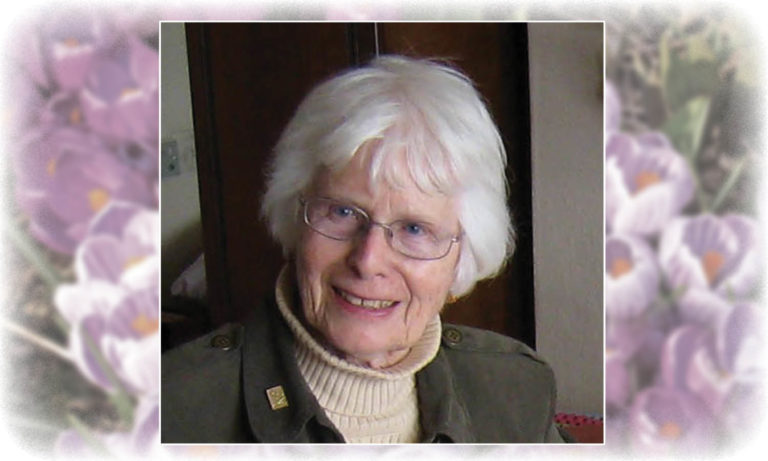
MURAKAMI, Taeko Violet

Taeko Violet Murakami

Violet peacefully passed away on March 1, 2019.  She was lovingly cared for at the Greenwood Elder Care facility for two years.

Left to mourn are her sisters Alice Tanaka of Gardena, California, Mary Kitagawa of Tsawwassen and Rose Murakami of Salt Spring Island and her only brother Richard of Salt Spring Island.  Violet was predeceased by her parents Katsuyori and Kimiko Murakami, her two brothers Riyoichi and Bruce (Langley). She also leaves behind her nephews, Brian Tanaka of Colorado and Gerald Tanaka of California, Landon Kitagawa of Tsawwassen, nieces Karen Bennett of Cloverdale, Kimiko and Sachiko Murakami of Toronto.

Violet was born on Salt Spring Island in the old Lady Minto Hospital.  She went to the new school which was opened in 1940.  Her parents contributed money to build that school. However, her stay was short because when Japan bombed Pearl Harbor, all Canadians of Japanese descent were labelled “enemy aliens” were uprooted, dispossessed, dispersed, deported, enslaved and put in a Prison-of-War camp.  Her father was arrested and sent away. Her mother became a reluctant single parent with five children, one and a half year old to fourteen years old. Violet along with three thousand woman and children were forced to live in a filthy barn in Hastings Park. Life was brutal in that barn where her family was fed in the poultry section of the barn. Unfamiliar, poorly prepared food caused diarrhea and food poisoning. The stench of urine and feces permeated her clothes and hair. After enduring this dehumanizing situation, Vi was sent to Greenwood with her family to live in a tiny room in an abandoned miners’ building. From there, the family was moved to the sugar beet farm where life was so brutal that their lives were in jeopardy. As the result, Violet journeyed to many prison camps with her family: Pop Off, Bay Farm, a tent in Slocan, unfinished shacks in Rosebery and in New Denver.  Before returning to Salt Spring Island, her family had to struggle through several years working in another sugar beet farm then to run a restaurant in Cardston, Alberta. Violet contributed immensely to the survival of her family during seven year journey through Canada’s incarceration of Japanese Canadians.

Memorial service will be held at the United Church on Friday March 8, 2019 at 1 PM. Donations in memory of Violet may be sent to the Katsuyori and Kimiko Murakami scholarship fund at School District 64 Board Office, 112 Rainbow Road, Salt Spring Island, BC V8K 2K3.

BALL, F.E. Betty (Bell)

F.E. (Betty) Ball (Bell)
SEPT. 17, 1924 – Feb. 20, 2019

Betty, aged 94, died 20 February 2019 in Ganges, BC. Betty was born 17 September 1924 in Winnipeg and lived in a log home on a homestead near Chelan, SK (1924-1941). She was educated through Grade 11 in a one-room school, completed high school at Nutana Collegiate in Saskatoon (1942), and earned a BHSC (Foods and Nutrition) at University of Saskatchewan (1946). She started her career as a dietician with hospitals in London, ON, Sheffield, UK, and Chilliwack, BC. She then enlisted in the RCAF and spent 21 years as an officer in the food services. She retired in 1973 at the rank of Major, having served in Europe on the front lines of the Cold War and completed the unification of the separate food operations from the three services. Betty rounded out her career with appointments in Ghana, Victoria and other locations in BC.

Betty married Bob Ball in 1976 and they moved to Salt Spring Island, where they built their Mt. Belcher home and she became active in the community. Betty was a lifelong member of the United Church of Canada, serving in youth leadership or congressional committees wherever she lived, and on SSI was active in building and nurturing the social systems and infrastructure that enable seniors to have a happy and healthy retirement. Betty was a life member of the Canadian Dietetic Association, earned an Award of Merit from the BC Dietetic Association and received the Caring Canadian Award (now Sovereign Medal for Volunteerism).

Betty was predeceased by: parents Peter & Della (Fallis) Bell; husband Bob (2018); sister Tanyss (2016); brother-in-law Bob (2006); and nephew Sandy (2013).

She is lovingly remembered by: Brenda, David and Genny Phillips of Vancouver; Peter, Wanda, Alex and Andrew Phillips of Saskatoon; Michael, Jenny, Cristina and Sarah Ball of Victoria; and Tony of England; cousins in the US and Scotland; and many friends around the world.

Until this past November, Betty was a ‘super senior’ – defying age, with an active lifestyle and mind. Betty touched everyone she met.

Betty’s funeral was held on Saturday Feb. 23rd. In lieu of flowers, we encourage you donate to your favourite caring charity.

Nine unknown Old Boys now known after incredible victory 

By FRASER HOPE

DRIFTWOOD CONTRIBUTOR

Feedback from the Old Boys Help Line (1-800-OLD-BOYS) gave the coaching staff some concerns as the number of confirmed players at Fulford amounted to a mere nine unknown persons to make the trip to Lochside.  Thanks to our sponsors in Langley, Virginia and P.O. Box 9732, Station T, Ottawa, who kindly offered software that could provide a host of relevant information on the callers to our counsellors. Information that is anonymous and will not be shared with any social media or commercial operations — honestly! The facial and voice recognition features seemed to indicate that many of the more anxious callers were in fact closely associated with the Old Boys squad: coaching staff, players and management.

There have murmurs that with all the injuries to our players our roster of 23 needs some boosting! Where to find adequate star replacements in time for the crucial Bill Drew Tournament now that the winter transfer period has ended? Maybe we will have you use some of our sponsors funding to entice some big names to bypass the North American and Chinese leagues that have been magnets for European has-beens.

As a form of deflection from team concerns, the conversations turned to topics more Salt Spring in nature: the possibility of using four berthed B.C. Ferries as emergency accommodation in case of the “Big One,” dining options in an ever-changing restaurant scene and of course the concern that the fire district trustees might want to emulate Sidney’s new “drive-thru” fire station in the process of being completed.

As the team warmed up in the bright but still brisk sunshine at Lochside with 90 minutes before kick-off, the shooting and goalkeeping skills were put to the test. Well, not really, but readers will remember that Old Boys only have a certain amount of fuel in the tank and the warning light usually comes on well before the final whistle. The turkey vultures circling the field overhead were also an unwelcome intrusion.

At kick-off, nine Old Boys faced 10 Cordova Bay players. Both teams obviously have player commitment problems, the deal was that the Old Boys would get the next player that came onto the pitch, whoever it was — man or beast! In fact Rick Hoogendoorn, president of the SVICSA, was co-opted onto the Old Boys and he did not need to change his shirt because of his red Arsenal Van Persie shirt!  

Maybe it was the springlike weather, the first game in ages for both teams, the extra space with reduced numbers, the Fortlek training in the snow drifts of the alpine meadows of Mounts Bruce and Erskine, the calmest of the Zen meditation or possibly the secrets of the “Nine Unknown Men,” the Old Boys arguably produced their finest 45 minutes in this reporter’s memory.  Certainly the result of the previous night’s “Classico” with Barcelona now heading Real Madrid in head-to-head contests since 1932 were an inspiration. 

Triangulation and accuracy of passing and Zen moves in space opened the Cordova defence, but the software has not yet been developed to overcome “Big Tony” in goal as he continued to thwart the combined thrusts of the Old Boys attack. A fine move from down the right wing initiated by Scott Howe and continued by Andrew Haigh saw Mike McCormick head a for-certain sure goal downward, but they don’t call the Cordova keeper “Big Tony” for nothing. His arm seemed to telescope to bat away the opportunity for the lead. 

Donny Brown in goal, acting as a defensive sweeper a la Allison, Liverpool’s wanderlust Brazilian, commanded and directed the midfield with only occasional scary forays well beyond his penalty box.

Half-time came with no score, but the Old Boys were rather pleased with their performance.

It has to be noted that the quality of play especially by the Old Boys meant that the time just flew by. As an assistant referee, I did not need to signal an offside call as both teams kept the ball on the pitch between the lines so there was little delay for retrieving “ballooned” shots over goals or fences.

Coach Graham Tweddle’s half-time tactic talk — the WWII slogan “Keep Calm and Carry On!”was all that was needed to inspire the now famous nine. But there was always the niggle in the back of the mind that the fuel gauge warning light would start to blink!

Same old. Same old second half. With the Old Boys having to give up sub Rick to his home team, the “Nine Worthies” — because that is how they will go down in history — took on the herculean task of not losing but daring to win.

With Brown solid in goal and commanding as sweeper in defence, Dave Toynbee was moved up into attack, causing some disruption to the home team’s plans. Haigh seemed to have a roaming commission to be all over the field like Arjen Robben but also back-tracking in defence when needed. 

The Beast was unleashed, i.e. his ankle bracelet was momentarily disabled, and Ben “Cooperman” took wing, causing as always untold chaos in both teams but not giving away any penalties. 

The midfield trio of Dave Eadie and Mark Aston seemed to have found new energy feeding the attackers with potential goal opportunities. Luckily the FIFA Drug Enforcement Team were nowhere to be seen. 

A free kick in midfield allowed Brown to pick out Toynbee on the right in open space and he worked the ball into the centre where McCormick escaped his shadowing defender, using Haigh as a decoy on the left and at last found Big Tony’s weak spot and rifled through his legs to take an all-deserved lead. With calls to tighten the defence as well as attack for a second insurance goal, the adrenalin-infused goal saw Old Boys capitalize on Cordoba’s efforts to equalize. 

A movement started by Brown in goal involved all the team, with Dave Eadie dummying a pass by jumping over it that reached Haigh on the left and making what is now known as the “AD-CL” move cut to the byeline. In heeding my perennial plea to ”always cut the ball back from the line,” the ball found McCormick, who calmly beat the GK for a 2-0 insurance lead. It was noted that everyone should be awarded an assist on the goal and that Cooper should be awarded two points for his participation, or non participation to be precise, in the movement that led to the score, as he was busily running back towards goal to cover for Brown /Allison meanderings downfield.

The final whistle brought to an end an Old Boys performance that must rank as one of the finest not only in determination but skill and stamina with nine players who will no longer be unknown but will share their secrets as true “worthies”of those who have had the honour to wear the OB shirt (now on sale at the club’s memorabilia shop, $0.80).

The soft drinks cooler was almost out of tisanes, apple kefir and Yerba Matte before the team climbed onto the team bus for the ferry home. There was talk of a parade downtown but that was all “cooler talk.” The new Old Boys shirt design is to have a 9 Lions insignia sewn on the left breast. 

It would be remiss if I did not acknowledge the support of he who shall remain nameless who supplied an array of Beacon Avenue Bakery’s finest sausage rolls and Cornish pasties before kick-off. Thanks, Scott!

Notes: Nine Unknown Men – Secret Society in Ancient India, Emperor Ashoka, 226 BC; “The Worthies” or “Princes” are nine historical, scriptural, and legendary personages who personify the ideals of chivalry established in the Middle Ages, whose lives were deemed a valuable study for aspirants to chivalric status.  The Nine Worthies include Hector, Alexander the Great, Julius Caesar, Joshua, David, Judas Maccabeus, King Arthur, Charlemagne and Godfrey of Bouillion.

9 Lions – IPA  6.2% ABV Extra Strong Bitter from Nine Pints Brewing Company, Papillion, Nebraska — our latest sponsor.

Can the Old Boys continue the unbeaten run?  Can we find more uninjured players? All will be revealed at Carnarvon Park in Victoria versus the Castaways FC 48s at noon on Sunday, March 10.


Sam Chan remembered at celebration of life

0

Meaden Hall was crowded well beyond standing room only for a celebration of life for Sam Chan on Saturday, Feb. 16.

The well-loved face of Golden Island Restaurant died at his home on Jan. 6 at the age of 64. He had retired last fall after he and members of his extended family sold the restaurant that his sister Winnie and her husband Ted Kwong opened in the early 1980s.

Sam’s nephew Brian Kwong emceed the formal part of Saturday’s event, telling his uncle’s life story, which was also detailed in a six-page keepsake card. Kwong’s narrative contained ample humour, as might be expected from a close relative of Sam’s.

Coming to Victoria from Hong Kong along with his older brother Richard, Sam had been among the first cohort to earn a computer science degree from UVic in 1979, although he did not end up pursuing that career in Canada, and returned to Hong Kong for a time after graduating.

Family was always important to Sam, said Kwong.

Sam had three older and three younger siblings, and he took a lead role in looking after his father until he died last year.

“He saw it as his duty to do. He was proud to do it . . . and that was very indicative of the kind of person he was.”

The printed biography explained that Sam’s father had carried Sam to the hospital for daily treatment due to the polio he contracted as an infant.

Kwong addressed Sam’s sons David and Andrew in telling them they “got off easy” when it came to discipline from their father.

“We are a tight-knit Chinese family and we were not afraid to discipline each other’s kids,” Kwong explained, drawing laughter from the crowd. “He really mellowed out when you guys came along.”

He also said it was evident “how proud [Sam] was of the men you guys had become.”

Kwong noted that their uncles would now have to tease them about their girlfriends, as Sam had done with the chosen partners of his nieces and nephews, and the many young adults he came to know through the Golden Island.

Kwong said interacting with the Salt Spring community as he did in the restaurant for more than 30 years brought Sam great fulfillment and the admiration of his customers.

“He wasn’t the Pope, but look around,” said Kwong, indicating the number of people who had come to pay respects to their favourite server, who always took the time to ask his customers about their life and families and remembered all the details, as well as their favourite Golden Island dishes. 

Both David and Andrew Chan described how they didn’t get to spend much time with their father until their adolescent years when they worked with him.

“Only when I worked at the restaurant did I realize what a great human being he was,” said Andrew. “How nice he was to everyone . . . and how he was just so involved in the community.”

David shared how he hosted his parents at Christmas time in Victoria when they lost their power after the windstorm. On Boxing Day he and his father ate food rescued from the family freezer on Salt Spring and watched a basketball game, even though neither of them follow the sport.

Following a slide show put together by John Malcolm, people enjoyed food and refreshments hosted by the Legion Ladies Auxiliary, and shared memories amongst themselves.

The celebration of life was organized by Sam’s wife Jane Chan and Samantha Chamberlin, a longtime colleague of Sam’s at the restaurant. 

People are welcome to send messages of condolence and memories to samchanmemorial@gmail.com.


Cusheon Cove pioneer recalled

BY Emma and Ian Laurenson

A Salt Spring pioneer has been commemorated with a sign placed at Cusheon Cove by his great granddaughter and her family from Scotland.

The event honouring William E. Bulman (1876-1948) took place last summer, when Emma Laurenson and children John and Hazel were accompanied by current residents Chris Hatfield, his wife Janthra and the family of Tom and Dtik Boivin.

They were assisted by Emma’s late mother Gillian and her aunt Cara, who had visited Salt Spring some 11 years ago, having tracked down details about Bulman through islanders Hatfield and Charles Kahn.

In the early 20th century, Bulman founded a lumber business, which, at its height, had around 150 workers on site, with a mill and pier, visited daily by steamers plying their trade between Ganges and Victoria. Bulman’s wife Sarah had spent some years there, but later returned to the U.K. with their two sons Arthur and William. She never returned, but Bulman remained at Cusheon Cove for the rest of his life. 

The mill continued, but with many challenges of the time, including labour disputes, drowning of a senior manager in a steamer accident and a major pier collapse with loss of much lumber. As need be when funds were short, Mr. Bulman would sell some of the land he owned to enable him to survive. Ultimately, he died on a considerably reduced holding, having never seen his wife again. One son paid a short visit to him before he died in 1948.

William Bulman was the youngest of 10 children from Ebchester, near Newcastle, England. The first to emigrate to B.C., he was followed by four siblings, scattered from Vancouver Island to the Kamloops area. While on Salt Spring Island, Emma and her family met for the first time several cousins through another Bulman branch in Nanaimo.

When Hatfield bought the property in 1984, he had little idea of this history. Once retired in 2004, but still with an active mind, enthusiasm and energy, aided by examination of aerial photographs, he began to uncover a wealth of artefacts from middens on the property. These included tools, bottles, shoes, personal bowls and utensils from Japan and China, helping to piece together some of the story.

Complemented by old photographs from Richard Bulman, William Bulman’s grandson in the U.K., as well as documents unearthed from the B.C. Archives in Victoria, the recent history is on display in the Bulman Museum at Cusheon Cove. Hatfield and Boivin regularly show groups of children and other interested individuals the property by arrangement. Also on the site, separately owned, are the Bulman house and office building, which have in part been restored.

Hatfield is also the donor of 100 acres of land contiguous with Ruckle Provincial Park land.

Eden Robinson shares new Trickster stories

The next Open Poetry Mic at the library will include a special double bill showcasing two acclaimed First Nations writers on Thursday, March 7.

Featured poet Philip Kevin Paul is a member of the WSÁNEC Nation from the Saanich Peninsula. His third book of poetry, I’m Still Your Pitiful One, will be published by Nightwood Editions this year, while his second book, Little Hunger, was shortlisted for a 2009 Governor General’s Literary Award. In addition to writing poetry, Paul works with the University of Victoria’s Department of Linguistics to ensure the preservation of the SENCOTEN language.

Paul is joined by Haisla and Heiltsuk novelist Eden Robinson, the author of Monkey Beach and a two-time Giller Prize finalist. Robinson will present Trickster Drift, the follow-up to Son of Trickster and the second book of her Trickster trilogy.

Reached at her home in Kitimat, Robinson talked about coming from a family of storytellers who were always trying to one-up each other after dinner. Stories about the trickster in particular would come at increasingly fast and funny rates.

“When I started writing Son of a Trickster it would bring me back to that time,” Robinson said.

Her Trickster trilogy was partly born of a wish to pass on the stories to the next generation in a context that would make sense to them. She started with a short story and soon realized she had much more to say, as well as an attachment to the web of characters and their relationships.

Robinson’s writing is hugely influenced by her own physical and emotional state. She said there is a noticeable break in Blood Sports where everything starts to go wrong for the protagonist, and it coincides exactly with quitting her two-pack-a-day smoking habit. (This book was deemed too dark for international publishers and Robinson said no one in her family has been able to finish it.) Jared’s wild childhood, zero-boundary mother and supernatural craziness seem partly influenced by the fact she did all her writing for Son of a Trickster between the hours of 4 and 5 a.m., because that was the only time available to her in that period.

“There’s less of a censor at 4 a.m.,” Robinson reports. “I considered not writing but it brings a sense of creative satisfaction that I can’t find anywhere else.”

A sharp wit with a generous disposition, Robinson comes from a culture that places high value on word-play: the ability to pun is considered very high art in Haisla. And while her characters are coming of age into broken families where substance abuse is prevalent and violence is a constant threat, Robinson’s later work in particular finds a way to balance darker themes with her keen sense of humour.

“It always makes me grateful that I write for CanLit, because in CanLit I’m about medium-level darkness,” she laughed. “Usually the stories I’m attracted to are the darker stories anyway — usually in my heart of hearts I’m still the teenage goth girl. It’s just a personal quirk.

“As I get older I’m also drawn to the goofy, so that has been an interesting element. That’s not where I expected to be.”

The March 7 event includes the regular poetry open mic format, with reader sign-up at 6:45 p.m. and open mic at 7. Featured author readings begin at 7:30.

For more on this story, see the Feb. 27, 2019 issue of the Gulf Islands Driftwood newspaper, or subscribe online.