Home Blog Page 47

Drug trafficking search warrants executed on Salt Spring

0

A significant amount of illicit drugs, including suspected cocaine and evidence consistent with drug trafficking, were seized by RCMP on Salt Spring Island on Aug. 14.

According to an Island District RCMP press release, Salt Spring RCMP members were assisted by officers from the Island District RCMP General Investigation Section in executing multiple search warrants in an ongoing drug trafficking investigation. 

The investigation remains ongoing, and a detailed report to Crown counsel will be sent for consideration of criminal charges.

“We want to ensure the community is aware of our proactive steps towards targetting those individuals who prey on the vulnerability of others and removing drugs off the street,” said Salt Spring RCMP Sgt. Clive Seabrook.

As the investigation remains active, no further information will be released at this time.

Anyone with information is asked to contact the Salt Spring RCMP at 250-537-5555.

UPDATE: Highland-Fernwood system Boil Water Advisory cancelled

0

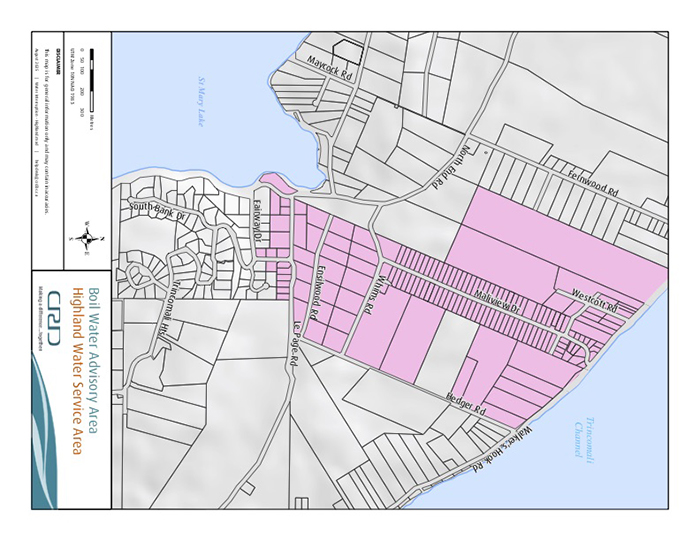
The Capital Regional District (CRD), in consultation with Island Health, has rescinded an Aug. 20 Boil Water Advisory for Highland-Fernwood Water System on Salt Spring Island. Customers on the following roads had been advised to boil their water until further notice – Maliview Drive, Fer de Lance Road, Westcott Road, Hedger Road, Whims Road, Primrose Lane, Enilwood Road, Le Page Road, South Bank Drive (north of Fairway Drive only), and Walkers Hook Road. See map of affected area

On Aug. 20 the CRD said in a public notice that “Water quality may have been compromised as a result of a water main break. As a precaution, the Boil Water Advisory will be in effect until flushing and water samples indicate the water quality no longer poses a risk to public health. 

“Residents in the impacted area should boil any water used for drinking, food preparation, ice cubes and dental hygiene until further notice. During a boil water advisory, household tap water may be disinfected by boiling vigorously for one minute.

“The boil water advisory will be removed when Island Heath is satisfied that the drinking water does not pose a health concern and issues an ‘ALL CLEAR’ notice, at which time the impacted customers will be notified.”

Homesharing program info shared

0

A housing-focused fundraiser at the Harbour House Hotel on Saturday served up not only a dessert buffet but a chance to learn more about the Housing NOW initiative underway on Salt Spring and the other Gulf Islands.

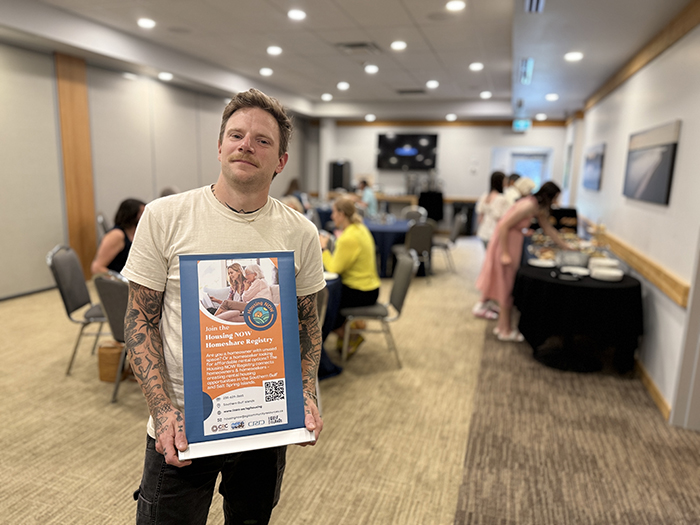
While proceeds from the Aug. 16 event were earmarked for the Copper Kettle Community Partnership, which seeks ways to support people who do not have secure accommodation, local Housing NOW homeshare program coordinator Adam Evanik was there with information about the program.

“There are a lot of houses sitting around the Gulf Islands that are either empty or it’s one person renting a big house or having a home with a lot of spare rooms,” he explained. “So we’re kind of facilitating this homeshare program where we come in and offer support if people want to rent out their rooms, for the short term or long term, as a homeshare opportunity.”

The program was initiated through the Southern Gulf Islands Community Resource Centre with support from other agency partners as a way to address the lack of workforce housing on Pender, Galiano, Mayne and Saturna islands. It was then expanded to include Salt Spring Island.

Evanik said one reason the islands are a good fit for the program is because so many residents are seniors who would like to age in place and maybe can’t afford home care or seniors housing. Providing home or garden maintenance or certain errands could be negotiated into the agreement between the home owner and the renter.

“So homesharing is a nice kind of alternative for them, where we could help them create a custom lease with a renter that could be, say, for reduced rent.”

The program also takes care of collecting rent and uses the Happipad online platform.

For more information, visit linktr.ee/sgihousing.

The next Harbour House tea and dessert buffet fundraiser is on Saturday, Aug. 30 from 2 to 4 p.m. Tickets cost $25.

Ganges Hill contractor aims for final major paving Sept. 8-12

0

Road crews on Salt Spring are pleading with drivers to observe construction area speed limits, as contractors for the Fulford-Ganges Road project have solidified the week of Sept. 8 to 12 for the final “major” paving for the island’s busiest road.

But with much new pavement already in place, vehicles are travelling very fast through the project area, according to Northridge Excavating Ltd. project manager Bob Mitchell, who pointed out the speed limit is still 30 kilometres per hour throughout the construction area. 

“Hazards remain,” said Mitchell, “and our crews are starting to feel like their lives are on the line with the way vehicles are approaching our work zones at high speeds.”

Mitchell said while a few “minor design challenges” are slowing work planned on the north section of Fulford-Ganges Road between Drake Road and Seaview Avenue, the lift paving for the remainder will mark the last serious traffic interruption islanders will see for the project.

“Unfortunately I can’t give firm dates for completion here,” said Mitchell, “but I am aiming for mid-September.”

Remaining notable works include transition paving at either end of the construction area, at the Fulford-Ganges Road intersections with Cranberry Road and Seaview Avenue — which may be done in the Sept. 8 to 12 week, according to Mitchell, or shortly after — and the top lift paving on side roads. 

“All side roads get two layers — or ‘lifts’ — of asphalt,” Mitchell said. “The first base lift will be done on Aug. 27 to 29.”

After that, he said, all the adjoining private driveways will be re-graded and tied into the top lift of Fulford-Ganges Road with a single layer of asphalt.

ArtSpring announces bold, Canadian-focused lineup for new season

SUBMITTED BY ARTSPRING

ArtSpring’s 2025/26 season promises to be one of its most ambitious and resonant yet — a curated collection of live performances, immersive residencies, community events and visual art exhibitions that dive deep into the transformative power of the arts.

Building on the success of the 2024/25 season, which went “wider” and experienced more sold-out or close to sold-out shows than ever, ArtSpring is now inviting audiences to “go deeper” this year with programming that spans classical music, contemporary dance, Indigenous theatre, world music, film and genre-bending jazz — all from Canadian artists at the top of their game.

“Salt Spring’s cultural spirit is one of curiosity, connection and imagination,” said executive and artistic director Howard Jang. “This season reflects those values, while also honouring our roots and welcoming new voices into the room.”

The season opens with major solo performances by classical piano stars Charles Richard-Hamelin and Angela Cheng, as well as the return of the popular Banff Centre Mountain Film Festival now extended to two days of different screenings.

In November, acclaimed Polaris-winning musician Jeremy Dutcher takes the stage in a concert described as “reverent and radical” — one of many highlights in a season that centres music as both memory and movement.

A key innovation this year is ArtSpring’s Immersive Experience Series — multi-day residencies that invite artists to stay longer, engage more deeply and collaborate with the community. Three headline residencies anchor the season: Corey Payette’s Les Filles du Roi, Measha Brueggergosman-Lee’s Black History Month residency and The Ostara Project, an all-female jazz collective featured during International Women’s Week.

“This isn’t just about watching a show,” said communications and donor engagement manager Kirsten Bolton. “It’s about more extended conversations, workshops, youth outreach and shared experiences that linger.”

Other season highlights include the debut of the Royal Winnipeg Ballet at ArtSpring, the modern operatic and theatrical tribute to the music of Leonard Cohen in Take This Dance, and the hilarious off-Broadway Indigenous musical Bear Grease. The season closes with jazz phenom Michael Kaeshammer and a lively Treasure Fair concert featuring Van Django.

Six MET Operas: Live in HD are back, including traditional favourites like La Bohème and a modern new opera El Último Sueño de Frida y Diago, which tells the colourful and passionate story of Mexican artists Frida Kahlo and Diago Rivera.

ArtSpring continues to prioritize access with $10 youth tickets, a robust Theatre Angel program offering subsidized admission and new pricing that includes GST up front. The organization’s Roundtable Committee — a community volunteer legacy of its 25th anniversary — will also be hosting six community-driven events this season, including a Halloween family dance, a Pecha Kucha night and a Salt Spring Talent Showcase.

“As always, our goal is to be more than a venue,” said Jang. “We want to be a gathering place, a creative heartbeat, and a source of joy, challenge and belonging.”

ArtSpring is thrilled to announce season partner sponsorship has evolved into Island Savings and Ganges Village Marketplace as the annual supporters of the season.

Whether you’re a longtime ArtSpring supporter or discovering it for the first time, this season is an open invitation. “Come to be inspired, stay to be transformed” is the season tagline.

Season Launch Sneak Peek Event is on Thursday, Aug. 28 from 4 to 6 p.m. ArtSpring members have a one-week advance purchase window starting Tuesday, Sept. 2. Tickets go on sale to the general public on Tuesday, Sept. 9.

For the full lineup, ticket details and updates, visit artspring.ca.

Viewpoint: Explore options for Maliview sewer upgrade

0

By MIKE STACEY

When next April arrives I will have been a homeowner on Maliview Drive for 50 years. 

Back then, 39,900 bucks provided a house on half an acre complete with a privately owned water system that failed on an almost daily basis and a sewer system of equal quality. Sewage went downhill and with minimal intervention ended up in the salt chuck. 

Why did we have a sewer system in the first place? Because the heavy clay soil made it impossible to put in a septic field of the type used at that time. So septic fields were a no-go but septic tanks would work just fine, if the outflow from the tank (water) were to be put into the sewer system, leaving very little work for a sewage plant to do. Tanks get pumped out every five years and you’re all set. 

If that would still be possible today, then maybe the collection system slated for replacement would be up to the task. At the other end of the pipe is the plant. The steady stream of septic pump trucks coming from the site tells me that pumping a home septic tank at five-year intervals is a viable option, and according to my own experience of driving one of those pumpers, the five-year pumping schedule works. In the old days a septic tank could go on forever, or at least til the wooden top rotted out and the whole thing caved in. Modern detergents put an end to that because they clog up the tank inlet after five years or so.

I have never been a member of the “green club,” but surprisingly that does not mean I would be in favour of off-shore drilling in Fulford Harbour or an island-wide clearcut. If I see something that might be environmentally friendly and actually work I will consider it. The concept of dumping any sort of waste into the ocean is a less-than-perfect idea, but it fulfills the two requirements of waste control: cheap and easy.

Why not climb out of the box and see what else is out there? Sewage treatment using aquatic plants is working elsewhere, and greenhouses using vegetation for evaporative purposes are possible.

The property owners on Maliview Drive pay very high rates for sewer and water and are being asked to approve a huge borrowing plan to rebuild the sewer system. My last bill was a little shy of $900 for three months in basic charges, before a single drop of water was used.

As long as crap is going into the ocean this is not a Maliview problem, but an island problem. Mother Nature has been doing this stuff a lot longer than we have, so if we are a “green” community, let’s have a look at how she would handle this.

In Response: Trust slashes newspaper notices while calling for public engagement

0

By DEBORAH CAMPBELL

Good journalism is sunlight. Bad politics hides in the dark.

Last week we learned — only because it was reported in the Driftwood, our award-winning newspaper of record — that to save a few thousand bucks from an $11-million budget, the Islands Trust will no longer require itself to publish some public notices in print. Our trustees now deem their own clogged website and American-owned Facebook to be all that’s needed. This on small islands where many residents were born before the internet, where others lack stable access and where the power is sometimes off for days.

Public notices are a cornerstone of democracy. They are meant to inform us about important meetings, development permits and rezoning applications. We also learned (again, only thanks to The Driftwood) that the Trust spends some $450,000 a year facilitating development permits, of which developers pay merely one tenth. Taxpayers cover 90 per cent. Why are residents subsidizing a development boom, especially in a protected area? Only independent local media are likely to tell us. This Trust Council chooses to make key decisions behind closed doors, most notoriously its September 2023 “in-camera” re-interpretation of the Islands Trust Act to “preserve and protect” such “unique amenities” as tourism, infrastructure, and anything else they might decide.

Abolishing the longstanding requirement to print public notices in the newspaper may not even be lawful. B.C. regulations for public notices state clearly that the means of publication should be “reliable” and “provide factual information.” Is Facebook, which we’re now being offered, reliable? Facebook has already made it clear it’s not in the business of providing factual information. In August 2023, the tech giant blocked access to news on Facebook and Instagram for users in Canada. More recently, soon after its CEO dined with Trump at Mar-a-Lago, it scrapped its fact-checking department.

We’re very lucky to have a newspaper here on the Gulf Islands, reporting not only on our healthcare, schools and politics, but on swim meets, cougar sightings, community arts, music and books. A recent investigation by journalism professor April Lindgren, published in The Walrus, tracked the loss of 529 local news outlets across Canada since 2008. In “Local News Is Dying. The Consequences Are Worse than You Think,” Lindgren found that rumours, paranoia and social divisiveness typically follow the death of a local paper, as people rely on hearsay and fight on social media. Residents are left less informed, less involved and less connected. Some politicians may prefer this, but it doesn’t make for healthy communities.

No doubt trustees will argue they will also be posting notices on the Islands Trust website. But provincial legislation says public notices should be “accessible” and “easily found.” Those who believe information on the Trust website is easily found have obviously never tried to find something there. Important information has even been known to disappear, such as the 14 hours of recorded Trust Council debate from the September 2024 meetings where trustees discussed the controversial new Trust Policy Statement (TPS) that will affect all islands.

The new TPS, and Salt Spring’s Official Community Plan revisions, are now beginning the community input stage — the only chance residents will get to have a say. It’s no secret that some trustees have been unhappy with Driftwood coverage of their activities. But starving our local paper while calling for “public engagement” looks like a cynical attack on the public’s right to know. It will only add to a growing mistrust of the sweeping changes being proposed. Mayne, Saturna, and North Pender have already jumped to the new “model” of abolishing print notices. Salt Spring hasn’t, for now. But the threat is there.

The writer is a Salt Spring resident and a journalism professor at the University of Victoria.

Editorial: Helping island neighbours

0

Nothing lights a pathway quite as brightly as a crisis.

As the relationship with our neighbours to the south continues — subtly and otherwise — to fray under political strain, it is all the more heartening to see professionals from both nations serve a common purpose — and in a moment when they’re needed most.

When a dozen kayakers ran afoul of weather and wave conditions between tiny Patos and Sucia islands in the northern reaches of the U.S. San Juan Island chain, RCMP, Washington State Park and U.S. Coast Guard patrols all immediately switched gears from enforcement operations to lifesaving ones — locating the group and bringing two families (and apparently at least one kayaking guide) on board their vessels. 

Thanks to these highly skilled seafaring professionals, short work was made of a potentially dangerous situation for the paddlers; all were transported back to their home port on Orcas Island, and while everyone was shaken up, none were injured.

On one hand, the swift cooperative rescue is the perhaps predictable result of a long-running joint cross-border crimefighting program — the Integrated Cross-Border Maritime Law Enforcement Operations endeavor we thankfully can just refer to as “Shiprider” — built to make it easier for officers from both sides of the international boundary line to slip over and help one another.

On the other, it’s a reminder that while big-picture international negotiations take place, the enduring reality on the ground — or on the sea, as it were — shows us that the best results are produced when we focus on our shared values, rather than places where we are at odds.

Those living in the Southern Gulf Islands — most acutely those here since time immemorial — know that the border running through the Salish Sea is even more arbitrary than most. Technically speaking, when they ran into trouble, those American kayakers were in U.S. waters but farther north than Fulford — and in a moment of need, that mattered even less than usual. 

In late September, three days of events will mark a planned “sister” relationship between Salt Spring Island and the same island the kayakers launched from. The opportunity to renew and revitalize our connection to fellow islanders should be seized — and celebrated.

From Closets to Community: Sharing Hobbies the Sustainable Way

BY TRANSITION SALT SPRING

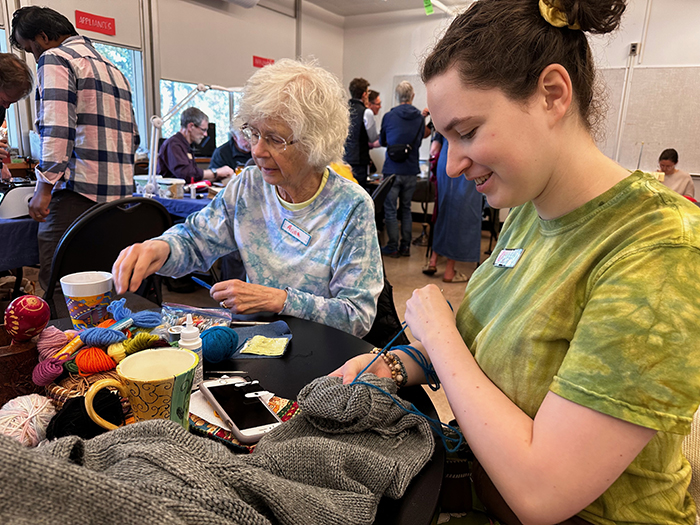
Salt Spring Island punches well above its weight when it comes to craft guilds, talented and aspiring artists and makers.

We also have organizations for nearly every sport — short of ice hockey. Take a look at the back of the Lions Club Directory or the Salt Spring CRD Leisure Guide and you’ll find pages of them: painters, paddlers, potters, pipers and pickleball players; weavers, spinners and quilters; golf clubs and garden clubs; racquetball, tennis, rod and gun clubs — just to name a few. Whether you’re looking to try something new or connect with like-minded folks, Salt Springers have access to a plethora of hobbies, crafts and clubs.

While the desire to try something new is healthy and creative, frequently jumping from one hobby to the next can lead to more than just fond memories and new friends. The dark side is the accumulation of no-longer-used gear or supplies that sit collecting dust — the dreaded “hobby graveyard” — often taking up valuable closet or shelf space. From brushes and paints to old paddles and pottery tools, balls, looms, sewing machines, rackets and rods, these items take up space in your home and, more significantly, sit unused — wasting away in some dark closet instead of bringing joy to someone else.

It doesn’t have to be that way. Whether you’re starting something new or have decided the latest pursuit isn’t for you, the gear and supplies you need don’t have to be brand new — and they certainly don’t need to atrophy in storage. With a shift in approach, a small amount of effort and good intentions, it’s possible to explore new interests while keeping both environmental impact and material accumulation in check.

Lighter Living is here to provide several practical and climate-conscious tips to help you satisfy your creative pursuits more sustainably.

Begin with Borrowed Materials

Rather than purchasing new supplies at the outset, consider borrowing from friends. Tell people what you’re doing and ask around. This allows you to experiment without committing to excess consumption.

Shop / Donate to Thrift Shops

Salt Spring has two terrific non-profit thrift shops: IWAV’s Transitions Thrift Store and the Lady Minto Auxiliary Thrift Shop. SUPPLY Victoria is a non-profit organization that sells donated school, office and art supplies on a sliding scale. Many larger communities have thrift shops or reuse centres that carry donated art, craft and DIY materials. These offer an affordable, eco-friendly alternative to buying new — while reducing waste.

Get Online

You may be just keystrokes away from what you’re looking for. If you use Facebook, join “Buy Nothing Salt Spring” to ask for what you need or donate what you aren’t using — it’s a fabulous local resource. Consider checking out FB Marketplace at the same time.

Pick up the Salt Spring phone book or Leisure Guide and find the craft guild or club associated with your hobby. Email to ask if they are accepting donated supplies or if there’s an opportunity to borrow or rent while starting out!

Organize a Hobby Swap

A hobby or craft swap among friends or neighbours can breathe new life into unused materials. What one person has set aside might become another’s new passion project.

Choose Low-Waste Hobbies

Consider hobbies that have minimal environmental impact and align with sustainable living — such as mending clothing, foraging, plant propagation, forest bathing walks or digital art. These activities often use existing resources and foster a deeper connection with nature.

In a time when consumption habits are under increasing scrutiny, even our leisure choices have a role to play in building a more sustainable future. Pursuing hobbies should enrich our lives — not our landfills. With thoughtful choices, creativity and environmental stewardship can go hand in hand.

We invite you to sign up for free access to Lighter Living content at: tinyurl.com/Lighter-Living. Learn how to take low-effort actions that feel good, benefit our community and help the planet.

RCMP help rescue U.S. kayakers

0

A special cross-border team of RCMP officers were a welcome if unfamiliar sight for a U.S.-based tour group last week, as a dozen kayakers — half of which were children — were rescued with help from Canadian law enforcement.

During rougher weather Thursday, Aug. 14, the U.S. Coast Guard (USCG) broadcasted that six kayaks carrying 12 people were in distress on the U.S. side of the border — well off the tip of Saturna Island, between Washington state’s Patos and Sucia islands. The RCMP’s Federal Policing-Pacific Region Integrated Cross-Border Maritime Law Enforcement Operations team — commonly referred to as “Shiprider” — responded just before 2 p.m., according to RCMP, as they were already patrolling nearby waters. 

The kayakers were quickly found by the RCMP vessel, and working with Washington State Park authorities and the USCG Station Bellingham 29-foot response boat crew all 12 paddlers were taken aboard and their kayaks put under tow.

Officers learned that two families had gone out on an overnight guided kayaking tour and were on their way back to Orcas Island when they encountered challenging conditions. Realizing the conditions had surpassed their capabilities to safely continue the trip, according to RCMP, they made the prudent decision to call for help before the situation worsened.

The kayakers were safely transported back to Orcas Island, and no injuries were reported, according to RCMP Inspector Jim Leonard, who said the incident highlighted the professional level of teamwork between highly-trained officers on both sides of the border.

“While rescue operations are not typically our primary role, our presence on the water allows us to respond when emergencies arise,” said Leonard, “reflecting our shared commitment to public safety.”

The Shiprider program involves vessels jointly crewed by specially trained and designated officers who are authorized to enforce the law on both sides of the international boundary line. Working together, armed officers can transit back and forth across the border to help secure it from threats to national security, as well as prevent cross-border smuggling and trafficking.

Enforcement activities typically consist of detecting, monitoring and sometimes boarding vessels in either Canadian or American waters. Operations are conducted under the direction and control of law enforcement officers of the “host” country, assisted by officers from the “visiting” country.

“A VHF marine radio is a mariner’s lifeline when there is no cell phone service,” said Capt. Michael Hunt, deputy commander, Coast Guard Sector Puget Sound. “It proved its worth by helping save lives in the San Juan Islands.”