
Home Blog Page 55

Viewpoint: Salt Spring already has a museum

BY the SALT SPRING FARMERS’ HERITAGE FOUNDATION BOARD

In response to the puzzling June 25 letter to the editor proposing the Capital Regional District (CRD) establish a “new” museum in the old fire hall in Ganges, we are extending an invitation to letter-writer Eric Booth, CRD director Gary Holman and Driftwood editor Gail Sjuberg to visit the current Salt Spring Island Museum on Rainbow Road. Admission is free.

Four and a half decades ago, the Salt Spring Island Farmers’ Institute (est.1895) moved one of the Bittancourt Houses (built in 1884) from Vesuvius to the grounds on Rainbow Road with the specific goal of establishing, in this small four-room house, a community museum highlighting people, lifestyles and the island’s farming tradition between the 1850s and 1950s.

Since then, this ever-expanding museum and the adjacent facilities, including the antique farm equipment display, the restored sawmill and the blacksmiths’ shop, exist because of the dedication of hundreds of volunteers, the generous donations of artifacts from hundreds of island individuals and families, the support and collaboration of the Salt Spring Island Historical Society and the Salt Spring Island Archives; and, the financial assistance from the Salt Spring Island Farmers’ Institute, the Salt Spring Island Women’s Institute, the Salt Spring Island Foundation, and the provincial and federal governments.

From the early 1980s, literally thousands of people, young and old, from all over British Columbia, Canada and the world, have visited our museum. Comments in our guest books capture their gratitude and enjoyment of “seeing” our island stories. We also continue to welcome and host organized tours from interested off- and on-island groups and organizations as well as educational tours for Salt Spring and off-island schools.

The building and museum collections are maintained and managed by the Salt Spring Farmers’ Heritage Foundation, an organization that respects the diversity of cultures and experiences that form the richness of our island heritage. We are a not-for-profit charitable organization whose mandate is to promote interest and education about the important role farming played in the recent history of our island.

Additional information about the Salt Spring Island Museum and our community stories — Indigenous, African-American, Japanese, pioneer farming — can be viewed on our saltspringmuseum.com website.

From the board of directors of the Salt Spring Farmers’ Heritage Foundation: Charlie Sampson, Tony Threlfall, Margaret Reid, John Teagle, Merv Walde, Ross Van Winckel, Kristi Spencer, Mark Cleveland, Conrad Pilon and museum host Mary Ann McColl.

‘Non-operational’ EVs barred from BC Ferries

0

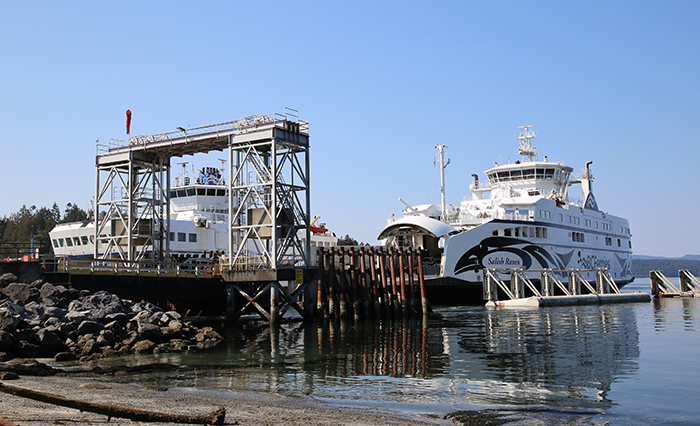
Hundreds of Gulf Islands electric vehicle (EV) owners were left feeling uniquely stranded by BC Ferries this week, as the company made public a new internal policy prohibiting EVs that can’t drive themselves aboard. 

BC Ferries’ current interpretation of federal Transportation of Dangerous Goods (TDG) regulations means if any of the islands’ numerous electric cars, trucks or buses need a tow elsewhere to be serviced, they won’t be allowed on board any vessel within the ferry system. 

On Salt Spring alone, according to ICBC statistics, that leaves nearly 1,000 currently registered electric and hybrid-electric cars and trucks — nearly one in seven passenger vehicles on the island — unable to be brought off for service or repair, unless they can make the trip under their own power or hire private barge service. 

“We recognize this presents challenges for customers and commercial operators, particularly as EV adoption increases,” said BC Ferries senior communications advisor Sonia Lowe. “However, the safety risks associated with transporting damaged or potentially damaged high-voltage batteries, especially when the vehicle cannot be assessed under its own power, require a cautious approach.” 

It’s unclear what prompted the operational change. BC Ferries vessels must comply with Transport Canada’s safety guidance, and a Ship Safety Bulletin in 2024 noted EVs are “not more prone to fires than vehicles with an internal combustion engine,” although it recommended crews train specifically for fighting EV fires — which, the bulletin noted, can burn hotter and are more likely to re-ignite once extinguished. 

Days before the policy shift became public, BC Ferries president and chief executive officer Nicolas Jimenez told islanders on Salt Spring there was “some communication” coming on the subject; Jimenez was on-island to participate in the ASK Salt Spring public forum at SIMS on Friday, June 27.  

Responding to a question about EVs and fire risk on ferries, Jimenez said the company was “very much alive to the fact that this is a concern for people.” 

“We are very much convinced, currently, that the fire suppression systems we have are appropriate for the risk in place for EVs,” said Jimenez. “What I also know is there are a lot of people who just won’t agree with that.” 

Noting what he characterized as “different perceptions of risk” in the community, Jimenez said the company was “monitoring recent research.” By that weekend, the new policy was in place. 

Since 2017, the TDG Act has regulated lithium batteries as “dangerous goods” on passenger vessels — much as it does gasoline and propane — and damaged or defective batteries have been required to be packed for transport following specific regulated instructions.  

That would necessitate removing them from a vehicle, work that few independent mechanics perform; and, like gas or diesel vehicles, an EV can break down from problems unrelated to its “fuel” system — leaving some inoperable vehicles with fully functional batteries likely to be denied boarding. 

Gulf Islands “institutional” EV users were just as surprised by the changes as private vehicle owners, and said in the absence of guidance from BC Ferries they were working to find alternative solutions should they need to bring fleet vehicles to Vancouver Island or the Lower Mainland for service.  

Gulf Islands School District director of operations Colin Whyte said the district’s five electric school buses — nearly half the fleet, serving multiple islands and all less than three years old — are still under warranty, although they may need to be transported at some point for repairs. Whyte said it’s not yet clear how that would be accomplished given BC Ferries’ new policy. 

“Normal mechanical issues, we just do the work here,” said Whyte. “But for any of the high-voltage drive components — batteries, motors, etc. — that are under warranty, the service centre for the four big buses is in Victoria.” 

The manufacturer for the smaller electric bus serving Mayne Island is in Vancouver, Whyte said, but tends to send crews over to do work in the field. 

“If we have a bus that’s disabled, if we can’t even put it on a flat deck or a tow truck or something to get it over for service, it’s going to be challenging,” said Whyte. 

Salt Spring’s Capital Regional District (CRD) manager Dan Ovington said not being able to transport one of their fleet vehicles off island would be an issue for both administration and the Parks and Recreation departments, as both have also been working in recent years to replace fossil-fuel vehicles — and equipment — with electric alternatives. 

“We currently have a hybrid SUV, two fully electric trucks and an electric mower,” said Ovington, adding they have two gas-powered parks trucks remaining — and both are scheduled to be replaced with fully electric vehicles in 2026 and 2027. 

“As this area evolves and [BC Ferries] gathers additional data, we will look at whether safe, regulatory compliant options can be introduced in the future,” said Lowe. 

As of the end of 2024, ICBC statistics show Salt Spring Island with 558 registered electric vehicles and 423 hybrid-electric; on Pender Island there were 103 electric and 94 hybrid. For Saturna Island there were 61 electric and 38 hybrid, and on Mayne Island ICBC tallied 33 electric and 39 hybrid. 

Ships & Gigs evening sets sail July 18

Stonewell Farm is celebrating summer with an unforgettable three-act musical evening that will also have its audience in stitches.

Hank Pine, Shirley Gnome and The ReViberators perform in the Ships & Gigs concert at the Lee’s Hill venue on Friday, July 18.

Grace Jordan of Stonewell Farm encountered the ensemble at the Otherworld Festival on Vancouver Island this spring.

“They were by far the best thing we saw there: absolutely unique, incredible sound and original music and hysterical,” she said.

“Pine is a queer Canadian multi-instrumentalist whose eclectic blend of punk, rock, dark cabaret, hip-hop, disco and theatrical performance has made him a standout in the alternative scene,” promotional material explains. “Best known for his collaboration with Lily Fawn, his music fuses storytelling, elaborate costumes and raw energy.”

Gnome is a Juno-nominated cabaret-comedy-clown chanteuse who blends satirical country, rock and folk songs with dark pop parodies.

“Known for her clever, subversive lyrics and captivating vocals, she has garnered rave reviews and awards across five countries.”

The ReViberators are a Vancouver “surf rock” group featuring Noah Walker on guitar and Jodie Ponto on drums — also known as Kitty and the Rooster.

Organic treats by Mama G’s Eatery and a full bar will be available. Fun begins at 6:30 p.m.

Tickets are on sale through Eventbrite. The farm is located at 1852 Fulford-Ganges Rd.

Baker Beach property owners make appeal

0

A group of waterfront property owners above Salt Spring’s Baker Beach have appealed an Islands Trust staff decision to deny a permit for their shoreline erosion mitigation project — and the island’s Local Trust Committee (LTC) will deliberate Thursday, July 10 whether to uphold that decision or grant the project permission. 

A consultant team has delivered, as expected, a highly technical response to staff’s itemized concerns with the project, largely surrounding water quality and habitat impact on the popular island beach. 

Much of the appeal centres on directing trustees’ attention in greater detail to documents already submitted, arguing they should satisfy staff concerns over conflicts with Salt Spring’s Official Community Plan (OCP). Across several points, the appeal takes exception to staff’s interpretation and characterization of the work proposed as the permit was denied — such as referring to the proposed sediment material to be added as “fill” and suggesting the project would create “additional land” in the sense used in the island’s OCP. 

“We respectfully submit that the proposed material placement should not be categorized as fill in the regulatory sense implied by the guideline,” reads the appeal document in part. “The intent and functional effect does not create additional upland or extend property boundaries . . . and the intended elevation is transitory by design; it is subject to tidal reshaping by wave energy [and] aligns with the Province of British Columbia’s endorsement of beach nourishment as a low-impact, nature-based strategy for mitigating coastal erosion.” 

The decision to deny the permit fell to staff rather than trustees since authority for marine shoreline DPA permit issuances had been delegated to them, through a 2022 bylaw passed by the current LTC, characterized as an effort to “improve process efficiency, reduce the size of LTC agendas and provide greater certainty to the applicants.” 

Trustees are now tasked to either uphold staff’s decision, or amend it, wholly or partially. If that decision is further delayed, the appeal notes the approved window for in-water work within the site’s Department of Fisheries and Oceans area ends Sept. 1, which would push any efforts there to next June. 

The LTC meeting begins at 9:30 a.m. at Meaden Hall.

Flamenco duo opens concert series

SUBMITTED BY SALT SPRING ARTS

Salt Spring Arts’ Summer Outdoor Concert Series (SOCS) returns for its sixth season on Thursday, July 17, kicking off six weeks of free concerts in Centennial Park.

The season opener features internationally acclaimed flamenco duo Melón Jiménez and Lara Wong as the first headliner, with local favourite Two Pants Trio opening the series. The concert runs from 6 to 8 p.m. and welcomes audiences of all ages.

Rooted in flamenco and tinted with jazz, Melón Jiménez and Lara Wong’s music echoes flamenco’s nomadic roots — from India to Africa to Latin America. Together, they share a unique musical dialogue between the Indian bansuri and the flamenco guitar — mysterious, bold and passionate.

Wong is a Canadian flutist and bansuri player. After immersing herself in the tradition in Andalusia, she became the first woman and first foreigner to win the Filón Minero Award for Best Flamenco Instrumentalist at Spain’s Cante de las Minas festival. Jiménez, a flamenco guitarist from Madrid with Gitano (Andalusian Roma) roots, blends deep tradition with global influences. The son of a flamenco guitarist and a German classical pianist, he has toured with artists such as Anoushka Shankar, Enrique Morente and Richard Bona.

Since forming their duo in Madrid, Wong and Jiménez have performed across four continents on renowned stages around the world. Their debut album Confluencias (2024) was nominated for a Juno Award for Instrumental Album of the Year.

Opening the evening is Two Pants Trio, a Salt Spring–based group known for their unique 1920s and ‘30s ragtime jazz and country blues sound. When the resophonic guitar, washtub and trumpet get to syncopating, good times are sure to be had by all audiences.

The Summer Outdoor Concert Series has become a beloved Salt Spring tradition. Every Thursday evening through Aug. 21, islanders and visitors gather in Centennial Park to enjoy live music in a relaxed, family-friendly setting. Attendees are encouraged to bring lawn chairs or blankets and enjoy picnics as they experience an array of local and touring artists.

This year’s SOCS headliner lineup includes Inn Echo, Hayley Wallis and the Bright Futures, Alpha Yaya Diallo, Ashleigh Ball and Empanadas Ilegales. For more information visit saltspringarts.com/socs.

Ferries CEO suggests Crofton homeporting decision final

0

When BC Ferries brings two-vessel service to the Vesuvius-Crofton route by 2027, both will homeport on Vancouver Island rather than Salt Spring — a business decision made and settled, according to the company’s chief executive officer (CEO). 

Ferry company CEO Nicolas Jimenez faced criticism from local elected officials, staff and the ferry-dependent public Friday, June 27, as a returning guest at the ASK Salt Spring forum. Around 30 islanders peppered Jimenez with questions and critiques on ferry issues generally — and on that homeporting issue most specifically.  

Salt Spring’s Local Community Commission (LCC) had last week joined the broader Capital Regional District (CRD) board and the BC Ferry and Marine Workers’ Union in opposing the plan, largely over local job and community loss fears. Salt Spring’s CRD director Gary Holman reiterated those concerns directly to Jimenez Friday, backed up by fellow LCC members Earl Rook and Brian Webster.  

All three decried the lack of “meaningful” consultation with local elected officials — the ferry company later pointed to an April 15 briefing call that included Holman, although the LCC wasn’t specifically invited.  

And all three, with public support in the room, urged Jimenez to reconsider an alternative “dual-homeporting” plan first suggested by the union — to keep one ferry on each side overnight, meaning some crew could still easily live on Salt Spring and work on the vessel.  

That did not appear likely. 

“We made this decision, and there are lots of business reasons for it,” said Jimenez. “You may not agree with what we’re saying, and I respect that, but running a system as challenging as the one we’ve got, sometimes you make hard decisions that benefit most, but not all — because it’s better than the version of whatever operating parameters you have currently.” 

As Holman and others pointed to the current dual-homeporting arrangement in place on the Gabriola Island/Nanaimo route, Jimenez said the situation wasn’t exactly comparable. 

“For one, they don’t have a hospital on Gabriola,” said Jimenez. “Having the homeport provides some level of support service there. In the event there are issues and water taxis aren’t available, then our teams can be deployed.” 

Another difference, Jimenez said, was that the Gabriola route stands alone on that island — whereas Salt Spring has two other terminals. 

“In fact, this island has more terminals than any other part of our network,” said Jimenez.  

But the big underlying concern for the ferry company, he said, was attracting — and keeping — licensed officer crew members. Jimenez said that highly certified segment represented the bulk of the company’s system-wide staff, and as a group they have a lot of career options, all over the world. 

“Just coming over on the Quinsam this morning, one [crew member] had been working on the Great Lakes before, another was working ‘deep sea’ before he came here,” said Jimenez. “People choose to come here, which is great, but they also have choices to go work for other operators.” 

And while he agreed he had met many crew members who “loved” being on Salt Spring, he said there remained a stubbornly high turnover rate here among those difficult-to-recruit officers — pointing out the average cost of a Salt Spring home is twice that of one in the Cowichan Valley area — and that it had memorably affected BC Ferries’ ability to provide on-time sailings, when they’ve been unable to field adequate regular or relief crew.  

“The challenge we have is to provide an environment where we can faithfully provide service — and not put it at risk with that high turnover rate,” said Jimenez. “That’s just a simple fact; you might not believe me, but that is the reality of your network.” 

On the matter of electrification, according to Jimenez, while the two hybrid-electric Island Class ferries that will serve the Vesuvius-Crofton route are indeed capable of running fully under electric power — and the same class of ferry will soon do so elsewhere, on the Gabriola Island/Nanaimo and Quadra Island/Campbell River routes — the infrastructure needed to charge the vessels serving Salt Spring is at least five years away, if not more.  

Jimenez said for the moment, all that could be said of any effort to build a charging station that might serve that route was that it was “not in the five-year plan.” 

Fire contained at Mount Maxwell Road 

0

A 911 call warning of a structure fire — and an aircraft report of flames and black smoke rising above Salt Spring — sent firefighters racing up Mount Maxwell Road as part of a busy summer day for island fire crews. 

Salt Spring Island Fire Rescue (SSIFR) Chief Jamie Holmes said no one was injured at the fire, which was reported around 6 p.m. July 7 and destroyed a 20-by-20-foot shed; thanks to quick action by the homeowner and quick response by firefighters, the flames were contained to the structure and did not threaten the surrounding forest.  

The fire was first discovered by the property’s owner, Holmes said, who arrived home to find a shed burning, called 911 and grabbed a hose to water down the area surrounding the blaze — from a safe distance. 

Even as trucks were on their way, fire crews received an update from the Ministry of Forests’ Cobble Hill Fire Base — relaying news that an aircraft flying above Mount Maxwell had contacted them to report “visible flames and black smoke.” 

“That’s one nice thing about being on the flight path to Victoria,” said Holmes. “When pilots flying over forested areas see something, they notify Cobble Hill — and then they pass that on to us.” 

Holmes said since the report was adjacent to a lot of rapidly drying forest near a watershed area, SSIFR moved quickly to get as many firefighters into position as they could. 

“You want to get a lot of ants on the hill, so to speak,” said Holmes. “Fortunately, the shed was well-spaced from trees and other structures on the property, and the homeowner was trying to get whatever water they could around to make sure it didn’t spread.” 

It was a good tactic, Holmes said, noting that even “misting” the area around a fire with a residential hose can increase humidity and help keep a fire from spreading. And importantly, he added, the homeowner kept a safe distance until firefighters arrived.  

“They didn’t go running in; they stayed safe and called 911,” said Holmes. “If you want to get closer, we’ll gladly welcome you to join the department, and we’ll put you in the right safety gear.” 

Crews shuttled water tender trucks up and down the long driveway, he said, then thoroughly sprayed the area before leaving. Holmes said some 4,500 gallons of water were used, and 25 SSIFR members spent about three hours at the site. 

The fire up Mount Maxwell Road was just one of the department’s nine emergency calls for the day, according to Holmes, ticking off a list from every corner of Salt Spring that included multiple alarm bells, four medical calls and a motor vehicle collision on Stewart Road — activating response from crews across Salt Spring’s multiple fire halls.  

“Our career firefighters are here for that quick response, but we also really rely on our paid-on-call volunteers dropping everything they’re doing and going out,” said Holmes. “They all did a lot in one day. But that’s a summer Monday for us.” 

New Maliview sewer estimate shocks ratepayers

0

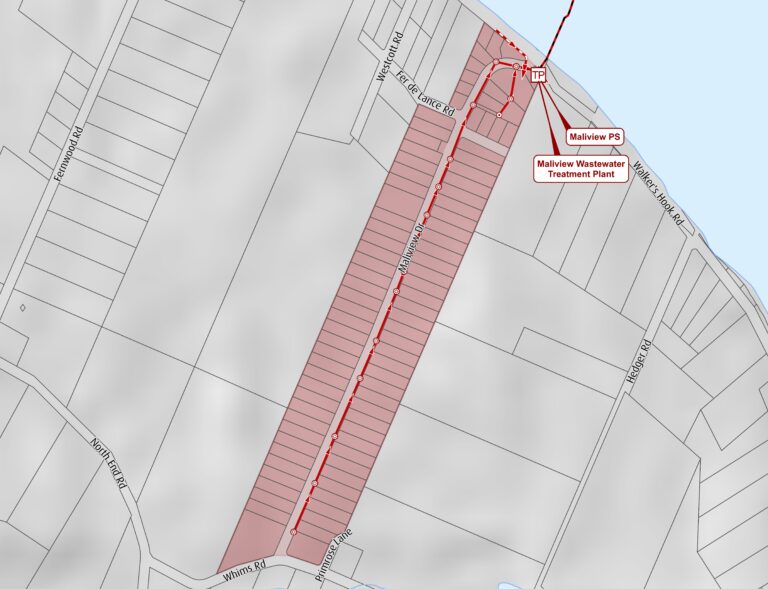
Owners of property in the Maliview Sewer Local Service Area (MSLSA) are facing a massive 30-year bill to pay for a mandated wastewater treatment plant upgrade which is finally close to going out for tender. 

On Wednesday, June 18 the MSLSA Commission of the Capital Regional District (CRD) passed a motion to increase the long-in-the-works project budget by $1,726,000, from the $2,260,000 that was estimated in 2020 for expected completion in 2022 to $3,986,000 now. The additional funds will come from $47,000 in capital on hand and proposed new debt of $1,679,000.

Schuyler Witman and Sharon Bywater are two Maliview area property owners who attended the meeting about the project.

“People were saying they’re considering selling their homes because they can’t afford these utility bills, which are already really high,” said Witman.

“We’re a working-class neighbourhood, and lo and behold, [at the meeting] people were raising their hands and saying, ‘I’m a plumber, I’m a construction worker,’ and me, personally, I’m a teacher.”

She was also critical of the short notice provided for the June 18 meeting, and its mid-afternoon Wednesday timing, since so many residents are workers. 

Witman said she and her husband bought one of the least expensive Salt Spring houses they could find a few years ago and were shocked when they received their first quarterly MSLSA water/sewer bill.

MSLSA property owners already pay almost $2,000 per year for a fixed-use charge, an annual $56.77 parcel tax and a $1.75 per cubic metre water consumption charge, with water supplied from St. Mary Lake by the CRD’s Highland/Fernwood water system.

The CRD is unable to state the exact per property cost of borrowing the proposed $1,679,000, but “for analytical purposes only” estimate the impact will be a further $1,779.

“It’s a sad situation,” said Bywater, “because Maliview has always been a place where blue-collar folks could maybe buy a home or rent affordably, and our infrastructure costs have just grown and grown over the years.”

Bywater served on the MSLSA Commission for a time in the past, so knows the inherent challenges faced by the CRD and commission. 

“A small number of [property owners] maintain a large, expensive piece of infrastructure,” she said, “and we’ve been caught in a breakdown-repair cycle.”

That has resulted in capital reserves being depleted so that the new upgrade project cost hits the approximately 100 property owners even harder.

CRD senior manager Dan Ovington said the older system does require emergency repairs and ongoing maintenance, which increases costs to users. 

“The CRD has also been mandated by the Ministry of Environment to investigate the infiltration and inflow — or I&I — which will ultimately reduce the amount of ‘small fixes,’ and the I&I is included in the overall costs of the upgrade project.”

In late 2019 and early 2020, the CRD received notices from federal and provincial government environmental authorities that the Maliview wastewater plant was out of regulatory compliance when it comes to its effluent quality. 

According to a CRD staff report, the CRD made operational changes to mitigate non-compliance events, and started on the path to upgrading the plant. In August 2022 the project was approved for $1.98 million in federal-provincial government infrastructure funding. At the time the CRD gave an estimated 18-month completion timeframe for the project and said only $271,000 more debt would need to be carried by ratepayers.

But various factors resulted in progress not being made as planned.

“Staff turnover, staff capacity and competing priorities have caused a delay,” said Ovington. “Despite this, staff have completed detailed designs, updated cost estimates and have purchased major equipment components that are already on Salt Spring Island.”

On the funding front, Ovington said CRD director Gary Holman has committed an additional $200,000 of Community Works (gas tax) funding to support the project, in addition to a previously committed amount of $343,620.

Ratepayer approval is required to authorize the borrowing, but must be forthcoming one way or another since the project has been mandated by the provincial and federal governments. The CRD is proposing a method that would need owners of 50 per cent of properties representing at least 50 per cent of net taxable value in the area to give borrowing approval. CRD materials state, “If the petition is not successful, an alternative approval process (AAP) will be initiated at further cost to the ratepayers,” should the AAP fail. 

Ovington said the AAP would cost about $20,000 and a full referendum as much as $70,000 — all borne by the ratepayers. 

Bywater said she would support the borrowing petition and that she and her husband can handle the increase somehow, even if it means deferring the taxes as seniors. 

“We can make it work. It’s just a matter of how. But there are other people on the street who aren’t in that situation, and so that’s troubling.”

“If I had a message to send out to the government bodies,” she added, “it would be ‘is there any more money you can put onto this street?’ Because this is where your hospital employees are, this is where your teachers are, this is where your ferry workers are, this is where the gardeners are . . . all those people.”

Editorial: Here kitty kitty

0

When it comes to the subject of credible cougar sightings, the skeptics are eating their words this week. 

It has been years since cougar reports generated interest beyond farmers and hikers, and decades since a picture of one has been printed in the Driftwood. 

In that interim, there have been images of “cougar tracks,” a few earnest eyewitness accounts and infrequent but tragic livestock losses — largely blamed on other animals. For many, the absence of photographic evidence seemed to settle the question in today’s “a camera in every pocket” era.  

But recent clear pictures (and even video) of a particularly photogenic cougar have thoroughly dispelled any notions of Salt Spring’s big cat as an island myth, or a memory from the distant past. 

There’s no guarantee it’s necessarily the same animal, but if so, its tour of Salt Spring Island has been an extensive one — there are images from Armand Way to Booth Bay, Maliview and Fernwood. Wildlife experts are split on what prompted this one to swim over and join us, and why the elusive creature is making itself such an easy target for photographers. But the consensus on what action to take right now is clear: wait and see. 

Unlike recently famous cougars that prompted trail shutdowns in Whistler, Salt Spring’s stealthiest tourist hasn’t been seen acting aggressively, at least so far. If a big cat decides to chase, stalk or intentionally get close to people, according to the Conservation Officer Service, a response is warranted. But for the moment, the cougar’s behaviour is textbook cougar — which means we can be ready to act effectively to keep ourselves safe in an encounter. 

Obvious measures like keeping an eye on pets and livestock apply; the province’s advice on human-cougar interactions centres on convincing it you are a threat, not prey. That means making yourself look big — holding your bag over your head, for example — keeping eye contact, being loud and, if it comes to it, being ready to fight back, all while removing yourself from the area and leaving an “escape route” for the cougar to do the same. 

And, of course, report conflicts or any new behaviour to the provincial RAPP line at 877-952-7277.  

Bassoon collective nurtures next generation

SUBMITTED BY SALISH SEA BASSOON COLLECTIVE 

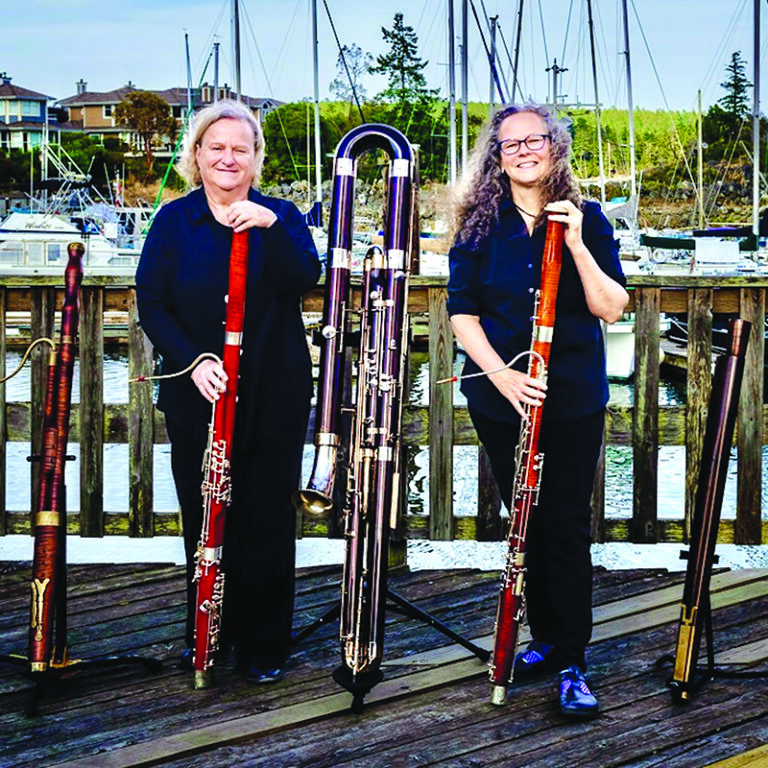
The Salish Sea Bassoon Collective is excited to announce the launch of its Bassoon Incubator  — a unique initiative aimed at nurturing and growing the next generation of young bassoonists on Salt Spring Island. 

Led by the collective’s founders, professional bassoonists Kerry Graham and Tracie Whitelaw, this novel program will offer low-cost instruction, mentorship and instruments for young island musicians wanting to learn this complicated and important double-reed. In collaboration with local music groups and regional bassoonists, the collective is working to raise funds to purchase bassoons, with the goal of starting at least two students by September.

To get the Bassoon Incubator rolling, Whitelaw and Graham are collaborating with local school music teachers Brandon Bronson, Michelle Footz and Ben McConchie, as well as island music organizations such as Bandemonium Music Society and Salt Spring Baroque. All of the groups would benefit greatly from the addition of bassoonists. 

“We are incredibly lucky to have some excellent musicians willing to teach and support the next generation,” said McConchie, a local educator and Bandemonium’s artistic director. “The bassoon often plays some of the most important supportive musical parts, adding a harmonic and rhythmic aesthetic that fills out the entire sound of the ensemble. Having students learn and play bassoon will not only improve the quality and sound aesthetic of the young bands but will also allow students to eventually be able to play some of the most rewarding and pedagogically interesting music in the world.” 

Both Graham and Whitelaw have noticed a definite interest in the bassoon. Frequent performers at island music events, both are often approached by fascinated young people wanting to learn more about the instrument. While playing at this year’s Christmas with Scrooge play, Whitelaw recalls a young boy coming up to her exclaiming, “That is the most amazing instrument I’ve ever heard, and I’d love to play it!” 

Learning to play the bassoon, however, can be challenging: it’s expensive — with even entry-level instruments costing thousands of dollars — and there are few teachers. Because of these barriers it is often underrepresented in schools, and bassoonists are in big demand everywhere. With two professional bassoonists on Salt Spring, it’s the ideal time and place for a project like this. Salt Spring has the teachers, now it needs the bassoons.

The project’s first goal is to acquire two bassoons and to start two students this next school year. One bassoon has already been donated, and plans are underway to purchase a second instrument. A fundraising concert will be held Thursday, July 10 at 7 p.m. to generate funds to pay for this.  

Organizers hope that islanders will come together to help “manifest” a bassoon at this humorously titled “Bassoon Seance” concert. Eight West Coast bassoonists will gather at All Saints by-the-Sea to play a diverse repertoire ranging from the Beatles to Mozart. People will also get the chance to meet the whole bassoon family, including dulcians, baroque bassoons and even the contrabassoon. This may be the only time to see and hear eight bassoonists playing at once on Salt Spring. 

This is a not-to-be-missed concert and a great opportunity to support local music and young island musicians.