Home Blog Page 64

Food security tips help dial down the panic

By HEATHER PICOTTE

Coordinator, Neighbours Feeding Neighbours

Amid all of today’s economic and political uncertainty, one of the biggest stressors for many is the rising cost of food.

Our food security on Salt Spring — that is, our ability to consistently access healthy food — is lower than it ever has been. We now rely on outside producers for approximately 95 per cent of our foodstuffs. This is bad enough on its own; we import food extravagantly at great cost to our wallets and our environment. But what if, on top of that, a major emergency happened tomorrow? What if we were cut off from Vancouver Island and the mainland for days or even weeks? How would you and your neighbourhood fare? 

Take a moment to think about it, and you might start to panic. It’s easy to get overwhelmed if you don’t have a plan and don’t know the resources available. However, the antidote to anxiety is action! Neighbours Feeding Neighbours (NFN), Salt Spring’s emergency food security project, has some tips for getting started:

1. Be aware: There are so many good emergency resources in our community: sign up for the Public Alert Notification System via the CRD website, which will call or text you during weather events and other crises. Visit the NFN website (nfnsaltspring.org) to learn more about emergency food security on Salt Spring and download resources, including our emergency plan templates. Find out which emergency pod you belong to with our updated pod map, and connect with your emergency pod by emailing ssipod@crd.bc.ca. 

2. Build relationships: Exchange contact information with a few people in your neighbourhood in case one of you needs something during an emergency. You can also participate in one of our community’s many food security projects. One upcoming initiative is the invasive plant disposal hosted by NFN on May 24, May 31 and June 8. Removal and proper disposal of invasive plants can make way for Indigenous and/or food plants, thereby increasing the island’s long-term resilience to climate change and weather events. This summer, check out the Salt Spring Island Farmland Trust (SSIFT) Food Share and Gleaning programs, or Transition Salt Spring’s new garden mentor program. All of these serve to increase the amount of food available on island, while simultaneously strengthening relationships.

3. Build up a simple stock of emergency food supplies: Try to have at least three days’ worth of food and water for each member of your household, including pets. It doesn’t have to be fancy or complicated. Make sure it’s food your family enjoys, and is as shelf-stable and easy to prepare as possible. Keep it in a place you can easily access in an emergency. You can store water purification equipment, utensils and simple washing supplies in the same area. Be sure to incorporate awareness of the food supplies into your broader household emergency plan.

4. Buy local goods whenever you can: supporting local farmers and food producers builds our island’s food sovereignty, expands the market for new producers and keeps our local economy thriving. 

5. Try growing some food! Ultimately, there’s no surer way to be food secure than to grow your own. And while it’s not feasible for most of us to be completely self sufficient, growing even just a bit of your own food can be incredibly rewarding. If you’re a beginner, we recommend starting with beans. They’re easy to grow and the harvest can be used in multiple ways: eaten fresh, or dried and then cooked, sprouted for greens, ground for flour, or planted for more beans! Best of all, in an emergency the complete protein from beans gives us the healthy energy we need to make rational decisions and survive. 

For more information on Salt Spring’s emergency preparedness and food security resources, visit:

• Neighbours Feeding Neighbours: nfnsaltspring.org;

• SSI Emergency Program: crd.ca/programs-services/fire-emergency/electoral-area-emergency-management/salt-spring-island-emergency-program;

• SSI Farmland Trust: ssifarmlandtrust.org;

• Transition Salt Spring: transitionsaltspring.com.

Water leaks: A cautionary tale

Part of Transition Salt Spring’s Lighter Living Series

Sue Earle, a seasoned farmer on Salt Spring Island, received an alarming call from the North Salt Spring Waterworks District (NSSWD) early last December. Sue’s water meter reading had detected a significant, rapid flow, indicating a major leak somewhere on her property, which includes multiple greenhouses, irrigation systems, wash stations and her residence. Her first thought: “Had it been leaking for five days or five weeks?”

Sue launched into action! She started with a thorough inspection of her house and then began combing the property via a visual inspection, but searching for a leak by identifying “wet spots” in December proved challenging. This wasn’t her first leak incident. Having installed a shut-off valve near her water meter after a previous mishap, she was able to mitigate some of the loss by halting water flow to the farm when not actively searching for the leak or using water in the house. Thus began weeks of strictly limiting water use to a few hours each morning and evening, while combing her 13-acre property for the elusive leak.

NSSWD kindly provided a water leak detection kit for Sue’s use, but initial attempts with the equipment led to false leads and confusion. With the assistance of local friends and experts like Ron Patterson, known as “The Drain Guy,” and Paul Smith from Paul Smith Excavating, Sue initiated a methodical search. At one point, attention focused on a wet pothole in her driveway, suspecting a nearby water line issue. Despite cutting into pipes and using fish tapes to trace the line’s path, the culprit remained elusive, though they were tantalizingly close! Eventually, an unknown water box beside her driveway was discovered as the source of the leak, and the problem was promptly fixed.

The incident incurred costs exceeding $2,000, plus additional charges for excess water usage (at a significant discount from NSSWD). From NSSWD’s initial alert to the final resolution, the ordeal spanned over two months, during which Sue restricted water use to minimize further loss.

Reflecting on the experience, Sue emphasizes the importance of proactive measures. She recommends creating detailed maps during construction, irrigation set-up or any pipe laying, with clear labelling of valves wherever possible. Sue also highlights the need for real-time flow monitoring technology to detect leaks earlier.

For Sue, managing water conservation and leak detection on her farm remains crucial for both sustaining her livelihood and upholding environmental stewardship.

Water leaks aren’t confined to farms. Recently, we received an anxious call from a neighbour who had received a similar notification from NSSWD. Their water meter was showing an unusually high flow, yet they had been away for three weeks.

The neighbour asked if we could pop over to inspect the house for leaks. Once a thorough check of the house was completed, our attention turned to the outdoors, searching for telltale wet spots. It didn’t take long to identify the culprit. A malfunctioning automatic timer in the yard had allowed water to flow unimpeded via the irrigation system.

Fortunately, a clearly marked shut-off valve in the garage made it easy to halt the flow. However, $1,700 worth of water had already been distributed in the yard in addition to the November rainfall. Again, NSSWD generously reduced the water bill, but it wasn’t without consequences.

The lesson here is crystal clear. Water leaks happen, more often than one might think. They can’t always be prevented. However, there are precautions and preparedness steps to take to avoid catastrophe. Plan to turn your water off when you go away for longer than a week. If you can’t do this, contact NSSWD or your local water office to arrange shut-off and turn-on dates. Alternatively, ask a trusted neighbour to conduct regular, thorough checks. Whether a homeowner or a renter, everyone should locate the main valve that brings water into their home and ensure that it is clearly marked for other family members or house sitters to mitigate damage from an indoor leak.

Water leaks happen due to aging pipes, unfortunate mistakes, faulty electronics and a host of other reasons. They are almost always costly and wasteful, however, prevention and preparation can mitigate the worst results from occurring.

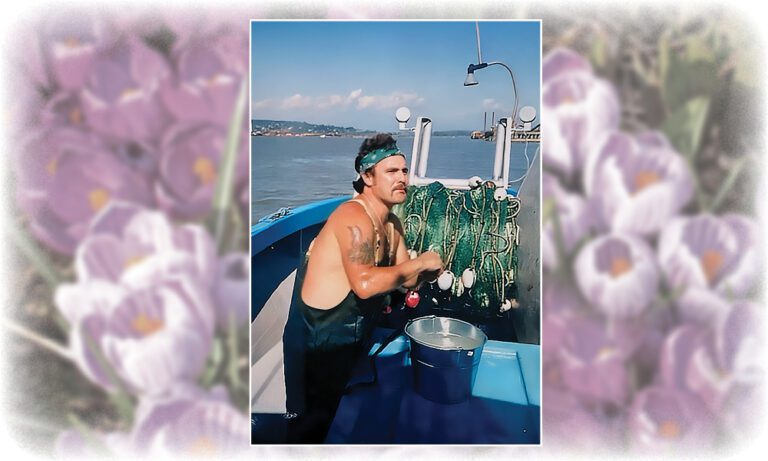
HAGAN, Gary Lawrence

It is with heavy hearts that we announce that

Gary passed away peacefully on Friday May 9th, 2025, surrounded by family and friends at his home in Surrey BC. after a courageous battle with cancer.

Gary Lawrence Hagan was born on March 8th, 1957, in Victoria BC but spent a large part of his life living on Salt Spring Island. He was very proud of his Hawaiian/Aboriginal/ Irish heritage, also, of our seven-generation connection to the island. Gary had a great love of the water. Whether he was commercial fishing, working on the towboats or on the docks he was a happy man! He will always be remembered for his incredible sense of humour and generosity of spirit.

Family meant everything to Gary, and he will be greatly missed by his sons Luke Hagan and David Tarkanen, his sisters Geraldine de Koninck and Becky Hagan and his many nieces and nephews. Gary touched many people’s lives, and I cannot begin to mention them all, but I know that many will feel his absence.

Gary is predeceased by his mother Jackie Hembruff (Lumley), his father Larry Hagan, and sister Juanita Erickson.

I would like to make an extra special thank you to Luke for providing the tenderest and most loving of care for his dad through his illness and to Karen Waugh for her endless love and support.

Happy sailing my brother and safe journeys a hui hou Kakou (until we meet again).

Gary’s service will be held at the Maritime Labour Centre in Vancouver on Friday June 13th from 11:00am -4:00pm at 111 Victoria Drive (Entrance is from Triumph Street).

SMITH, Donna Lynn

It is with heavy hearts we share the peaceful passing of our sister, aunt, and dearest friend. After dealing with pancreatic cancer for 20 months Donna chose to end her suffering and we are grateful she is free from pain.

Donna held a BA from UBC 1976 and a teaching certificate 1977. Donna felt as a teacher she had been given an opportunity to make a difference in the lives of her students. She made an enormous impact on the lives of many students and she continued with this dedication through her volunteer work. Donna was an active volunteer at The Lady Minto Hospital Thrift Store, The Salt Spring Seniors Services Society, and The Croftonbrook Craft Group, as well as performing numerous random acts of kindness throughout the Salt Spring Community.

Donna will be deeply missed by her surviving family; brother Robert (Carolyn) Smith; sisters Jan Smith (Paul Oeuvray) and Maureen (Dave) Milner; her beloved nephews and nieces Daniel (Lauren) Smith, Rebecca Smith, Steve (Olivia) Smith, Amelia Milner (Trevor Lemky), and Genevieve Milner; her cherished great nephews Robert and Carter Smith, Lincoln and Jasper Lemky; and her close companion Mauro Lepore.

The family expresses their gratitude to her dear friends Mauro Lepore, Bev Kay, Victoria Paul, Charlie Molnar for all their support and love. We also want to thank Island Health Community Home Services, Short-Term Nursing and The Red Cross Loan Program for their services and support enabling Donna to remain in her home. We thank The Lady Minto Hospital staff (emergency, lab and acute care), Dr Stephane Voyer and Sandi at Long Harbour Medical Clinic, Dr Ian Gummeson, Island Health Palliative Care Team, Dr Holly Slakov, Dr Don Versluis, BC Ambulance Service, and BC Cancer Society (particularly Pain and Symptom Clinic) for their compassionate care. Finally, we thank the many other individuals that helped Donna maintain her independence and quality of life.

Donna requested no service but asks you remember her by helping another, whether that be by volunteering or donation of time, goods or funds; perhaps simply by helping someone you see in need. She asks you enjoy the spring flowers and think of her.

We will miss Donna’s generosity, laughter, playfulness, and her consummate kindness… travel well dear Donna.

Rain holds off for Blossom Picnic

The forecast for Sunday, May 18 hadn’t been conducive to an outdoor festival featuring performing artists, demonstrations, crafts and delicious food, but the 14th Blossom Picnic unfolded instead under mostly sunny skies.

Driftwood photographer Rob Lowrie captured some of the moments in the following photos, including the first public performance by Salt Spring’s own Shimakaze Taiko drumming group.

The event is organized by the Salt Spring Japanese Garden Society and members of the island’s Japanese community.


Gallivanting through Europe concert on Saturday

SUBMITTED BY SS BAROQUE

Salt Spring Baroque presents an uplifting program of baroque works to celebrate the joy of springtime, given by a trio of top baroque specialists.

Christi Meyers (violin), Chloe Meyers (violin) and Alexander Weimann (harpsichord) will perform at All Saints by-the-Sea on Saturday, May 24 at 7 p.m. The program will feature the trio sonata form, which originated in the 17th century and was a favourite chamber ensemble combination throughout the baroque era. The genre originated as an instrumental adaptation of the three-part texture common in Italian vocal music in the late 16th century.

This program features a colourful bouquet of sonatas by well-known baroque composers Handel, Corelli and Leclair. The concert will be bookended by J.S. Bach and a sonata long attributed to Bach, but now known to have been composed by Johann Gottlieb Goldberg. Goldberg was a harpsichord prodigy and studied with both J.S. Bach and his son, W.F. Bach. A highlight of the program will be an improvisation by Weimann, who will create a piece on the spot using a repeating bass line as his beacon.

An accomplished performer on both modern and baroque violin Christi Meyers has played a prominent role in the musical life of Victoria for 20 years. She has been assistant concertmaster of the Victoria Symphony since 2001, is a founding member of the period performance group Victoria Baroque and a member of Vancouver’s Pacific Baroque Orchestra.

Violinist Chloe Meyers performs with early music ensembles across North America as leader, orchestra member and chamber musician. She is the concertmaster of the Pacific Baroque Orchestra in Vancouver and concertmaster of Arion Baroque Orchestra in Montreal. She has led or appeared as soloist with groups including Victoria Baroque, Pacific MusicWorks, Ensemble Les Boréades, the Theatre of Early Music, Ensemble Masques and Les Voix Baroques, of which she was a founding member. 

Weimann is one of the most sought-after ensemble directors, soloists and chamber music partners of his generation. After travelling the world with ensembles like Tragicomedia, Cantus Cölln, the Freiburger Barockorchester, the Gesualdo Consort and Tafelmusik, he now focuses on his activities as artistic director of the Pacific Baroque Orchestra in Vancouver and as music director of Les Voix Baroques, Le Nouvel Opéra and Tempo Rubato. Weimann can be heard on some 100 CDs. His latest album with Karina Gauvin and Arion Baroque Orchestra (Prima Donna) won a Juno Award in 2013, and a complete recording of Handel’s Orlando was released in the fall of 2013, with an exciting group of international soloists and the Pacific Baroque Orchestra.

Tickets for the May 24 concert are available at saltspringbaroque.com and artspring.ca.

Factors merge for rough traffic day

0

Eight months into a 10-month road work project, it might seem surprising it took just a few days of extended backups before Salt Spring Island drivers started seriously complaining — first to one another online, then to local officials and media outlets, ultimately prompting the Ministry of Transportation and Transit to issue an empathetic statement. 

But while driver delays had been inconvenient during the first days of May, an unfortunate set of poorly-timed events conspired to bring Salt Spring motorists to the brink on Tuesday, May 13 — leading to perhaps the biggest non-livestock-related traffic jam in island history. 

To set the scene: the $22.9-million improvement project on Fulford-Ganges Road from Seaview Avenue to Cranberry Road has been underway since September, and thus far drivers covering that 1.6 kilometres have seen delays ranging from zero to roughly 20 minutes. 

Those traffic slowdowns did increase as work accelerated and pulverizing began, but things truly came to a head May 13 as several events — none directly connected to the provincial road improvement project — happened nearly at once.  

That day, as had become nearly routine, road crews operated first one then two sections of Fulford-Ganges Road as single-lane, alternating traffic — sporadically and briefly blocking the road in both directions when trucks or equipment needed to unload or turn around. 

Slightly adding to congestion, Lady Minto Hospital Foundation staff confirmed concrete was being poured May 13 at the foundation’s Bittancourt Road project — the 18-unit healthcare worker housing effort underway at the site of the former Seabreeze Motel — meaning large trucks turning on and off Fulford-Ganges Road interacted with the existing slowdown. 

Meanwhile, Emcon Services Inc. crews began unrelated all-day asphalt repairs on Atkins Road between Lower Ganges Road and Swanson Road, causing drivers attempting to dodge much of downtown Ganges via Rainbow Road to double back and re-enter the traffic line they hoped to avoid. 

And back at Drake Road off Fulford-Ganges Road, BC Housing confirmed construction crews were on-site for water service work — to effect fire suppression equipment at the supportive and affordable housing project being constructed there — with that new water main expected to be complete this month. 

Then, the coup de grace: in the midst of it all — and likely having the worst day of anyone — a semi-truck pulling an empty 50-foot flatbed broke down at the base of Ganges Hill by Seaview Avenue. The truck was successfully towed away, but not before snarling traffic further for many drivers. 

By that evening, while a few had experienced relatively “clear sailing” through Ganges, many reported the worst delays at different times of day had exceeded 90 minutes, for a drive islanders typically expect to take less than five.  

While unlikely to ameliorate such a “perfect storm” of mishap, the ministry shared it had communicated with contractors, asking them to consider “flushing” traffic through as-needed, rather than on set schedules, which may improve flow during busier times of day. 

With already extended 7 a.m. to 5 p.m. active hours for crews, which will include weekdays and some Sundays not attached to long weekends, major disruptions are still expected to end, with project managers reiterating publicly last week that the work will be substantially complete by July 1.

Trustees criticize housing report

0

Those seeking insight from a provincially mandated report on housing needs within the Islands Trust should prepare for disappointment, according to local trustees. 

An interim Housing Needs Assessment Report (HNAR) for each of the Trust areas is now publicly available on the Islands Trust’s website, prepared by Vancouver-based Urbanics Consultants — but despite meeting the province’s requirements and a six-figure price tag, trustees roundly criticized the report as confusing and unrealistic. 

On Salt Spring Island, the report estimated 821 new housing units needed within the next five years, and 2,525 total in the next 20 years; yet to achieve a three per cent rental vacancy rate in the same timeframe, the HNAR estimated a need to add only 16 new rental units. 

“We were kind of shocked at this,” said Salt Spring local trustee Laura Patrick in remarks before the island’s Local Trust Committee (LTC) meeting Thursday, May 8. LTCs received the report in advance of its official receipt by the Trust’s Regional Planning Committee (RPC) the following day. 

“And the report says [Salt Spring needs] ‘two,’” said Patrick, “which I think they accidentally copied from another island. I mean, we all know that whether we provide two or 16 rental units over the next 20 years, that’s not going to meet our housing needs.” 

Regulations surrounding the Housing Statutes (Residential Development) Amendment Act directed all LTCs to update their HNARs to align with the bill’s new requirements, with an “interim” report due by January. The province accepted a delay and this report was completed in April. 

While the interim report included a housing needs questionnaire, it resulted in 893 responses — a high response rate, according to staff, but not a scientific survey. Of those, six indicated they were members of a First Nation whose territory included islands in the Islands Trust area. 

“The questions were perhaps not as targeted as they could have been,” said planning services director Stefan Cermak. “It was never really designed to be policy-specific to an individual Local Trust Area. And the number of people that were engaged was significantly less than the number with contact information we had given the consultants.” 

HNARs follow a provincially regulated methodology provided to the consultants last summer, which staff noted seemed to project a local area’s needs simply as a percentage of those in a larger area. For example, Thetis Island’s housing need projections were approximately 18.5 per cent of those calculated for the larger Cowichan Valley Regional District Electoral Area G — and Thetis residents represent about 18.5 per cent of that area’s population. 

The calculations for Salt Spring’s HNAR were based on the 2021 census — noting 960 rental households — and assumed the island’s population growth and housing needs would follow along at the rate of the Capital Regional District. Current rental vacancy rate data for the assessment was drawn from the CMHC’s Primary Rental Market 2021 Vacancy Rate data, according to the HNAR, which itself is based upon a survey of purpose-built rental landlords — with the explicit assumption that “the whole market, including rented condominium units, rented houses and other small-scale residential landlording operations follow similar trends.” CMHC does not collect rural rental market data. 

So on Salt Spring, according to the HNAR, the local rental vacancy rate was assumed to be the provincial average — 1.4 per cent.  

“This doesn’t even begin to help us,” said Patrick. “We really need customized data; we know we’ve got 1,000 people living in RVs right now, today.” 

Patrick told the RPC May 9 growth assumptions that continue to favour single-family dwellings suggest an opportunity to remind LTCs generally that there’s nothing wrong with revisiting their “1971-era” zoning bylaws. 

“We should be horrified by the number of houses this indicated we should be building, to supply some demand and growth,” Patrick said, “when our very own hard-working people are living in tents.” 

“It just doesn’t feel human to me,” said Denman Island trustee David Graham. “It feels very mechanical, the numbers don’t make sense, and it’s so sad that we spend taxpayer dollars in an exercise that provides absolutely no benefit to us.” 

The Islands Trust received $127,000 in funding from the Ministry of Housing in 2023 to support updates to its HNARs, according to the RPC staff report, which also indicated those funds were used to complete the interim HNAR. 

“Staff will consider and assess lessons learned in the development of the interim report to inform potential improvements for the 2028 HNAR to more fully reflect unique island circumstances,” read the staff report. 

The RPC elected to receive the report and advance it to the Trust’s Executive Committee, but also attached a resolution expressing its lack of confidence in the data or its usefulness, as well as its concerns about the potential harms of the report’s findings.  

“People who say that we do not have a housing problem in our communities may use this report to say, ‘look, there’s hardly anybody in need,’” said Gabriola Island trustee Tobi Elliott. “We can’t have a public conversation with the vulnerable people in our community, of which there are far more than these reports indicate, because they are vulnerable — and putting this kind of report out there just is going to further drive them into hiding.” 

The HNAR is available online.

Second Ganges Harbour roundtable hoped for fall

0

Salt Spring elected officials are planning an end-of-summer return to the roundtable on Ganges Harbour management, hoping to build on common ground — if not outright camaraderie — kindled among harbour users.

The island’s Local Community Commission (LCC) tasked staff with finding an opportunity for a second harbour management workshop this fall, this time at least partly focused on regulatory and service options for the future. Nearly 40 people attended the April 10 roundtable, which according to Capital Regional District senior manager Stephen Henderson included representation from First Nations, the Islands Trust, the Harbour Authority of Salt Spring Island, commercial marine operators, environmental stewards, community interest groups and residents of boats living in Ganges Harbour.  

“There were a lot of discussions on different ideas, potentially ways to make incentives to getting people together to do beach cleanups,” said Henderson, “which looks like it’s organically happening already. Community members have met and have been undertaking their own initiatives.” 

Henderson suggested the most helpful outcome of that first meeting was that seemingly disparate groups found they had greater common interest than they believed prior to the workshop — a “consistent and common interest” in enhancing and improving environmental stewardship of the harbour. LCC member Brian Webster said he was encouraged by the diversity of those participating, particularly among local governments. 

“And even more important to me was the significant presence and participation of First Nations representatives, which I find really heartening,” said Webster. “And not surprising, given the obvious interests that First Nations have in our harbours.” 

But LCC member Ben Corno said he heard a frustration from some participants — less satiated, he said, by the “happy tone, and the connections, and the sharing” — that no action was proposed. Corno characterized worries over derelict boats as an “anxiety about maintaining the status quo” he said he identified with, to a degree. 

“I feel the tension of seeing things that are future oceanic waste, and thinking that ‘well, once that dips below the water line, then we can go and fish it out,’” said Corno. “And that’s like our big plan for this. I am sensitive to the fact that this is just a problem that we are, at the moment, just watching.” 

Commissioner and CRD director Gary Holman defended an incrementalist approach, saying that while he was still wary of local government stepping in to “manage” the harbour, the improvement in tone among concerned community members surrounding the issue was taking place even before the April workshop. 

“That [March 29] clean-up that was organized absolutely changed the channel,” said Holman. “You had members of [harbour regulation advocacy group] CASHI out there with the liveaboard folks collecting garbage.” 

Holman added that in the “things that are happening” category was a likely proposal next week requesting a grant to assist with more regular garbage collection at Ganges Harbour, as well as earlier LCC action to provide the water fountain at Centennial Park and keep washrooms open later — both to the presumed benefit of those living afloat. 

“These are all small things, but definitely a shift and I think an improvement,” said Holman. “Both in terms of stuff being done and in relationships between the various stakeholders.”  

LCC chair Earl Rook said there was no specific outcome targeted from any of these workshops, adding that neither liveaboards nor those on land should expect the commission to “take over the harbour.” 

“It may end up being advocacy to senior government, or maybe some things we can do more locally on the service side,” said Rook. “We recognize there’s a problem here that hasn’t been addressed — a whole constellation of problems — and we see our responsibility is to do all we can to bring people together to sort through some of the issues.” 

Young island athletes dominate

Two very talented Salt Spring athletes — Rylee Severn, age 13, and Rosemary Fehr, age 10 — have been working hard this year travelling several times a week to train in the competitive program at the Duncan Dynamics Gymnastics Club and experiencing a lot of success this competition season.

Both gymnasts achieved astounding results at the B.C. championships held in Maple Ridge over Easter weekend in April. Severn won all-round gold for her age group, and Fehr earned all-round silver in her age group. These accomplishments are the result of extremely hard work and dedication to their sport with the extra commitment of all the travel necessary for these island girls (and their families) to pursue a higher level of training.

Fehr also made her team proud at the April 25 to 27 Orca Invitational in Mill Bay —  which hosted athletes from all over Vancouver Island — by winning overall gold in her bronze category. At this same tournament, Severn went up a level category from silver to gold and placed seventh all-round with a strong performance on beam earning her a third-place medal.

The families of these athletes and the gymnastics community on Salt Spring are so proud of them and the tenacity they have shown this year.