
Home Blog Page 65

Editorial: Value proposition

0

When we say Salt Springers vote with their wallets, that sometimes might mean opening them up. 

Islanders are still blinking their eyes at the novelty of seeing a “new connection applications” button on the North Salt Spring Waterworks District (NSSWD) website, and the momentum seems behind ensuring the prerequisite resilient infrastructure will be in place to support them. 

Twice as many voted in favour of the loan authorization for the Maxwell Lake water treatment plant than voted at all during the last water district trustee contest — and at first glance, with 74 per cent voting to authorize borrowing, one might reasonably assume ratepayers showed up at the polls ready to spend. 

Of course there’s some nuance at play. A ballot cast to authorize borrowing now is arguably a frugalist’s vote; the treatment plant is mandated by the province, and choosing to pay in today’s dollars is simply wagering that tomorrow’s will buy less — an undoubtedly safe bet. 

But were the Salt Spring voter merely a thrifty animal, perhaps we might’ve seen more than lukewarm participation in the counter-petition on the Capital Regional District’s Regional Transportation Service, a looming tax hike our island’s elected officials assure us will show no local benefit. Or, even more relevantly, we might’ve expected less enthusiasm for authorizing similar borrowing for the new fire hall. 

Indeed, the “no more taxes, ever” contingent seems again to have been vastly overrepresented, mostly confined to an outsized social media presence; between record voter turnout and the 3-to-1 result for the NSSWD referendum, there may be a lesson to be drawn regarding online tempests and their virtual teapots. 

Regardless, we continue to take the optimist’s view: that Salt Spring brings voters to the polls with a keen eye to future value, rather than simple penny-pinching. With this latest referendum, yet another local improvement district can justifiably crow about having the confidence of its ratepayers. Now we look forward to both of them delivering. 

Viewpoint: Park access plan opposed

BY CAROLINE HICKMAN

and 16 other area resident signatories

We, the residents and farmers of Wright Road (Cranberry Valley), have a serious problem with Parks and Rec as represented by Dan Ovington and Elizabeth FitzZaland of Village Builders. They are in the process of pushing through an extremely ill-conceived plan to construct a public trail off of the cul de sac on Wright Road, which would connect with a newly acquired piece of land adjoining the existing park atop Mount Maxwell. 

Although we have endeavoured to point out the dangers that this planned construction will create for our farming community as well as the Maxwell Lake watershed, these concerns have been basically ignored and/or glossed over, with some choice “woke” verbiage that makes it pretty clear that the entertainment of the general public completely overrides the actual realities of fire hazards, water stewardship, the well-being of our livestock and the peaceful enjoyment of our hitherto quiet rural community. 

We therefore ask that you take prompt action and direct Ovington et al to utilize and improve, if necessary, the two existing routes into the park and set aside this potentially disastrous trail project. 

We have, as a farming community, expressed our concerns. However, in a so-called “We Heard” summary report, it becomes obvious that they are glossing over our issues and pushing a predetermined plan ahead, regardless of the damage it would do to our neighbourhood.

I am listing our common objections in point form below and we urge you to become involved because we feel that this extra public access does not respect our rural and agricultural way of life and poses a serious threat to our livestock and property, as well as to the Maxwell and Roberts Lake watersheds, which should certainly concern the Capital Regional District as well as all islanders who depend on the water from this source. 

1. The elevated risk of human-caused fire: every summer there is a high risk of fire on Mount Maxwell, in part because of the rocky, shallow soil, and the number of tourists who treat the outdoors as their personal ash tray. Maxwell Lake supplies a big part of our island, including the hospital, with water, and a fire above the lake can render the water useless until things like fire retardant, ash and debris can be cleaned up.

2. As many of us know, “leash your dogs” signage does not work! Most of the farms in the Cranberry Valley raise lamb and poultry and we already deal with cougar predation. We do not need running dogs killing and maiming our livestock as well.

3. Parking and traffic chaos: the proposed trail would begin at the undersized cul de sac on Wright Road, which barely has space for emergency vehicles to turn and/or park. There is also a private driveway off the cul de sac, which eliminates 40 feet of road frontage and there is little room for public parking, which would apparently include horse trailers.

4. Construction costs will be high, as the right of way is steep and rocky. Please note that Emcon has recently resurfaced and greatly improved the road up to Mount Maxwell Provincial Park, and our tax money would be better spent to improve the access to the existing parking area of the summit, giving the public far more space to enjoy the entire park area without putting our neighbourhood property and livestock at risk.

Opinion: ferry committees’ past value and history recounted by chair

By Harold Swierenga

As of April 30, British Columbia Ferries (BCF) has a new approach to engage with the coastal public in general and ferry users in particular, and as part of this new approach the Ferry Advisory Committees (FACs), which have been the major contact between BCF and the public for over two decades, have been eliminated. 

From my perspective as former chair of the Salt Spring Island FAC, there are a number of factors behind this change, but I will discuss only a few at this point. In my opinion, the FAC model of public engagement worked well until fairly recently. We had local in-person meetings as needed to deal with local issues and often to formulate an approach to BC Ferries. We would have bi-annual in-person public meetings with BCF, at which at least one member of the executive, the marine superintendent and other operational staff would attend. At the end of the meeting I often felt we had accomplished definite results. 

Then Covid hit, the meetings largely went online and the sense of direct contact between the ferry-using community and the decision-makers at BCF was severely weakened. Then a member of the public made a serious threat of harm at an in-person FAC meeting on the mainland and meetings were suspended for some time. While all this was happening there were significant head-office staff changes at BCF, with a number of new personnel who had little or no memory of when the FAC model worked well. As a result of these and other reasons, the FAC process became less effective. 

But the FAC chairs and members were rather shocked at an online session last November to be told the entire FAC model was to be scrapped and a new model was to be developed. The FAC members had not been asked for suggestions for improvement of the model and in my opinion it was a case of throwing out the baby with the bathwater. 

An ongoing committee, representing the various and often diverse components of the ferry-using community to address ongoing issues seems very useful. However, the decision is one which BCF can make and a new model has been developed and is available to see on the BCF website. I had hoped for a hybrid model of some form of FAC and elements of the new model.

I leave my role as member and chair of the Salt Spring Island FAC with some optimism regarding ferry service to Salt Spring. Unless there are more retractions, the two-ship Island Class service on Route 6 (Vesuvius and Crofton) will begin in early 2027. The earlier announced amenities such as waiting rooms, washrooms, etc. are off the list for now for financial reasons. BC Ferries is staring in the face of major expenses for the new large ferries and the overhaul of the Horseshoe Bay terminal. 

During peak periods, the Quinsam, now on Route 6, is slated to relocate to Fulford when it becomes available in 2027 to supplement the Skeena Queen by providing two-ship service to Swartz Bay. The long-awaited proposal to modify the Fulford terminal is still on the back-burner despite the best efforts of the FAC for over 30 years. However, on both routes 4 and 6, the introduction of two-ship service should greatly improve the ferry line-up issue. Still, a transportation service of any type has to keep evolving as technology, demographics and economic realities change.

Finally, I would like to thank all those who provided comments, suggestions and other input to the SSIFAC over the years. Some suggestions, such as “build a bridge,” were, thankfully, beyond our purview. 

As well, I would like to thank all the volunteer members of the SSIFAC who served with me while I was chair. And finally, I would like to acknowledge the BC Ferries staff who worked with the SSIFAC over the years I have been involved.

Batemans’ art, love and legacy at ArtSpring

By KIRSTEN BOLTON

For ArtSpring

In April 1999, Robert and Birgit Bateman cut the official ribbon to open ArtSpring. This May, coinciding with Robert’s 95th birthday, ArtSpring is proud to present a rare and intimate look into the lives of two of Canada’s most influential artistic and conservation voices. 

Confluence: The Bateman Collection promises to be more than an exhibition; it is a once-in-a-lifetime glimpse into the private world of Robert and Birgit Bateman, partners in life, art, travel and environmental advocacy. The exhibition opens with a reception on Saturday, May 17 from 4 to 6 p.m. and continues daily through May 30, 10 a.m. to 4 p.m.

Best known for his breathtakingly realistic wildlife paintings, Robert Bateman has long stood at the intersection of artistic mastery and ecological awareness. His accolades — including the Order of Canada, the Order of British Columbia and, most recently, the King Charles III Coronation Medal — barely hint at the depth of his impact as an artist, educator and conservationist. 

Alongside him is Birgit Freybe Bateman, a globally exhibited photographer whose lens has captured everything from spirit bears in the Great Bear Rainforest to Maasai families in Africa and icebergs in Antarctica. Together, their creative journey spans decades, continents and causes.

Curated by ArtSpring’s new gallery curator Zoe Zafiris-Casey, the exhibition offers a profound narrative of this shared life. 

“Robert and Birgit Bateman have a love story for the ages,” she said. “A love of our planet, a love of education, a love of art and a deep love for each other.”

The show is a deeply personal anthology with hundreds of artworks, photographs, carvings, cultural artifacts, family snapshots and story-rich objects, carefully moved from the Batemans’ home and storage. Visitors will encounter pieces by Arthur Lismer, Jack Shadbolt, Robert Motherwell, Kenojuak Ashevak and Rockwell Kent, alongside Robert’s own iconic Vancouver Island Elegy triptych and Birgit’s photographs from their globe-spanning adventures. Several Bateman family members’ works will be shown, including a touching portrait by son Alan, capturing his father in a quiet canoe moment.

Birgit recalls their early years collecting. 

“Both being artists, we knew the importance of buying art at community sales so that other artists could earn a living.” From UBC art sales to remote villages in Papua New Guinea, their collection grew with intention. “The criteria for an item was that it needed to have artistic merit and be functional within its culture, not for the tourist trade,” she added. “It was the same standard a museum would use.”

More than an art show, Confluence is a record of advocacy and impact. From protesting logging in the Carmanah Valley to working with Jane Goodall and leading expeditions with Canadian Geographic, the Batemans’ legacy is painted not just in oils and photographs but in action. Their philanthropic approach to art publishing has raised millions of dollars for environmental causes, and Robert’s workshops and talks have inspired generations of young conservationists. 

“Nature is magic,” he often says — and he’s spent a lifetime proving it.

The exhibition’s title, Confluence, speaks to the meeting of art, activism and affection — a flowing together of vision and vocation. 

“When I first flew over Africa in 1974,” Birgit recalled, “I felt a change come over me. It was humbling. It felt like the beginning of humanity.” 

That spirit of reverence pulses through every image, every object, every story told in this extraordinary collection, one shaped by a lifetime of purpose, passion and love. 

The show is sponsored in part by Seth Berkowitz Photography.

Met’s Salome dives into the psyche

BY KIRSTEN BOLTON 

For ArtSpring 

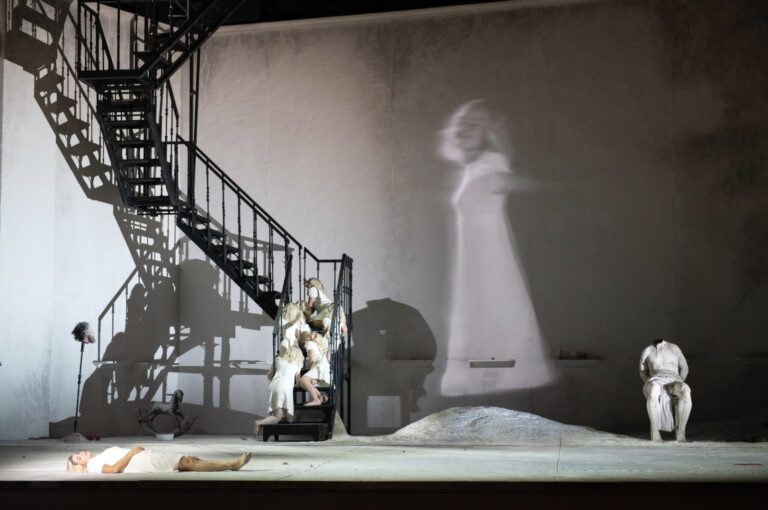
The Metropolitan Opera’s latest production of Richard Strauss’ Salome offers a chilling and psychologically charged reinterpretation of the classic opera, broadcast live in HD May 17 at ArtSpring as part of its Saturday morning opera series.

Directed by Claus Guth in his Met debut, the staging shifts the powerful biblical tale into a late Victorian setting, drawing inspiration from Stanley Kubrick’s Eyes Wide Shut to create a dreamlike and unsettling atmosphere. 

At the heart of Salome is the beheading of John the Baptist — a moment first recounted in the gospels of Matthew and Mark. Herod Antipas, ruler of Galilee, imprisons John for denouncing his marriage to Herodias, his brother’s wife. Herod’s stepdaughter, Salome, dances for him at a banquet; in return, she demands John’s head on a platter. A moment of lust and vengeance becomes legend.

It was Irish playwright Oscar Wilde who reimagined this ancient tale into the decadent, sensual and surreal play Salome in 1891 — originally written in French. Banned in Britain, it first premiered in Paris in 1896. 

Wilde’s Salome is no passive pawn but a disturbing force of desire, obsession and defiance. Richard Strauss saw its theatrical potential and composed his operatic adaptation in 1905, premiering in Dresden to scandal and success.

The Met Opera’s new production honours this layered lineage. Soprano Elza van den Heever delivers a captivating performance in the title role, portraying Salome as a character deeply affected by past trauma. Supporting performances include baritone Peter Mattei as Jochanaan, tenor Gerhard Siegel as Herod, and mezzo-soprano Michelle DeYoung as Herodias, each contributing to the production’s exploration of moral ambiguity and emotional depth. 

The set, designed by Etienne Pluss, features monochromatic visuals that enhance the opera’s dark themes, while projections and nuanced lighting amplify the psychological tension. 

Canadian Yannick Nézet-Séguin, the Met’s music director, conducts Salome for the first time at the Met, bringing Strauss’ complex and colourful orchestration to life. At under two hours, there is no intermission, but the experience will still accommodate backstage interviews and introductory content. 

Showtime is 10 a.m.

Japanese cultural celebration returns

Salt Spring’s Japanese Canadian community and the island’s Japanese Garden Society are hosting the 14th annual Blossom Picnic at Heiwa Garden in the Peace Park on Sunday, May 18. 

If the weather cooperates, the free event will run from 11 a.m. to 2:30 p.m., a celebration of multicultural unity and reconciliation that’s become one of Salt Spring’s most beloved traditions as part of its celebration of Asian Heritage Month. The joyful spring gathering brings together Japanese Canadian culture, food, music, dance and family-friendly fun, all while honouring the past and in support of the renewal of Japanese Canadian cultural heritage on Salt Spring. 

Festival highlights include a debut performance by Shimakaze, Salt Spring’s own Taiko drumming group, a tate samurai sword performance, karate demonstrations and a community bon odori dance — with everyone welcome to join in. 

Kid-friendly activities include a paper airplane making and flying contest; an origami station, including making origami ninja stars and target shooting; “go fish” yo-yo water balloons; and “pick an Omikuji slip and read your fortune” activity. 

Once more, a homestyle Inari sushi lunch is available for pre-purchase. People should send an email message to heiwagardensaltspring@gmail.com with their name, phone number and number of lunches desired — with pickup and payment between 11 a.m. and 1 p.m. at the food booth. Also available on a first come, first served basis is a katsu sandwich lunch and other homestyle Japanese dishes. 

Heiwa Garden is located across from the ArtSpring theatre in Ganges.

For information about the Japanese Garden Society of Salt Spring Island visit saltspringjapanesegarden.com

Tuesday Farmers’ Market goes for early start

Submitted by the Tuesday Farmers’ Market group

Spring is in the air and the Tuesday Farmers’ Market is gearing up for a great start to the season. 

The first market will be on Tuesday, May 20, from 1:30 to 5:30 p.m. in Centennial Park. Expect to find your favourite returning vendors, including Duck Creek Farm, Foxglove Farm, Nance Bakes, Salt Spring Sprouts & Mushrooms, Jane’s Dough, Windsor Farm, Vital Kitchen and many more. 

With more than 10 farms attending the market, the produce variety is the best on the island. Freshness is unbeatable, with vegetables, fruits, herbs and flowers harvested just for the market. Week to week the selection changes as crops grow and ripen. Spring greens, radishes and peas shift into summer crops like tomatoes, summer squash and peppers. Shopping at the market is a great way to think seasonally about your food, with opportunities to get excited for the first strawberries to appear or tomato season to begin. You can find unique produce like fresh-grown ginger from Foxglove Farm, or shishito peppers from Duck Creek Farm. Looking for local meat and eggs? Windsor Farm has you covered. 

Expect to find other delicious foods at the market as well, including a wonderful variety of baked goods (yes, gluten free too), ice cream sandwiches, locally milled flour, hand-blended teas, vegan samosas, beverages and more. Everything you’ll find at the market is grown and produced right here on Salt Spring. Come early for the best selection or skip the crowds by shopping a little later in the day. 

There will be some new faces at the market this season with a number of first-time vendors joining this year. Those include a variety of bakers, farms and other exciting food producers. The market gives entrepreneurs the opportunity to try out new products in a supportive public space. If you are a local food business and you’re thinking about joining the market, you can contact the market manager at sstuesdaymarket@gmail.com. 

The Tuesday Farmers’ Market is a proud member of the BC Association of Farmers Markets, which enables the market to participate in the province-wide Farmers Market Nutrition Coupon Program. This program is a healthy-eating initiative that enables lower income families, pregnant people and seniors to use market money to purchase fresh food at the Tuesday Farmers’ Market. The money goes directly to farmers/producers and allows more of our community access to fresh and nutritious food. 

The market runs every Tuesday until the end of October. 

New bylaw enforcement policy manual nears finish line

0

The Islands Trust’s Regional Planning Committee (RPC) endorsed a near-final draft of its new bylaw compliance and enforcement policy and best practices manual, tasking staff with harmonizing those documents, adding a few changes generated at the committee’s meeting Friday, May 9 and forwarding the whole package to the B.C. Office of the Ombudsperson for review. 

After that, with the RPC’s final endorsement of any changes suggested by that agency, it heads to the Trust Council for approval, permanently changing bylaw enforcement within the Islands Trust. The land use authority tackled revamping the guiding documents in response to a series of public concerns that ramped up in 2023, ultimately resulting in the Ombudsperson’s office issuing a list of recommendations — and the RPC has painstakingly integrated those into both internal and public-facing documents, with the target of being “administratively fair, reasonable and transparent” with the aim of restoring public confidence. 

Big changes include establishment of guiding principles, a “roles and responsibilities” section, and new clear, detailed policies for commencing and conducting investigations. Conduct during those investigations, a site inspection process and principles, and policies for when investigations are closed are also laid out.

A section to deal with “frivolous and vexatious” complaints will come as comfort to many islanders who have expressed they felt targeted by such campaigns, as well as to enforcement officers who had previously been bound to fully investigate complaints that might be obviously groundless. 

The best practices manual is built to be reader-friendly, removing acronyms and revised for plain language. It includes a visual flowchart about the bylaw enforcement process, and a section on how to appeal decisions made by officers.  

If Trust Council adopts the changes this summer, keen policy watchers might notice the near-absence of the word “violation” in both the policy and the best practices manual — and not by accident, according to trustees and staff. 

“We can have better language,” said bylaw compliance and enforcement manager Warren Dingman. “We’re kind of stuck with using ‘bylaw violation notice’ for our tickets, but we should use ‘contravention’ as much as possible.” 

Trust planning services director Stefan Cermak said he had been in regular contact with the Office of the Ombudsperson, which suggested to him a review could take place within weeks of getting the document to them, possibly placing revisions in front of the RPC in July. 

“[The Ombudsperson’s Office] has been monitoring our progress through this, and is keenly interested,” Cermak told trustees. “They actually said that the work this committee is doing is now being modelled by other communities — so you’re leading the way for others to do better work.” 

WAKEFIELD, William (Bill)

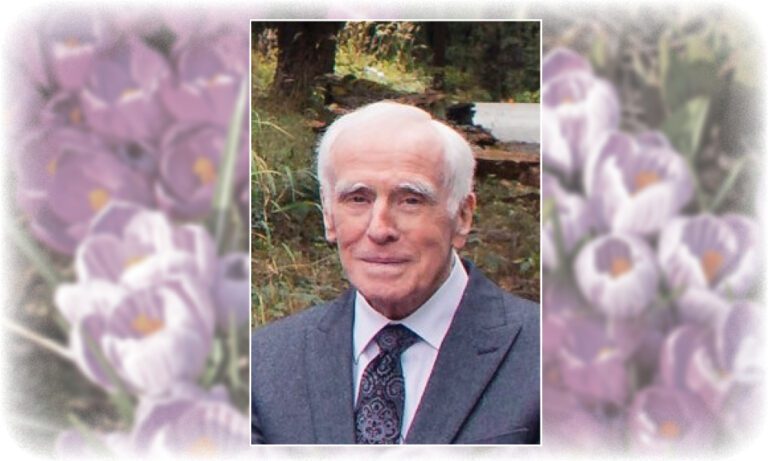
WAKEFIELD, William (Bill) passed away on April 29, in Victoria, BC, at the age of 92.

Bill is lovingly remembered by his wife of 67 years, Margaret; his children Thomas, Sarah, and John (Sheri); and his grandsons James (Elly), Steve (Amber), Liam, and Isaac.

Bill devoted his life to education, with a career that spanned from Britain to British Columbia.

He retired as Assistant Superintendent of the Delta School District, later settling on Salt Spring Island from 1996 to 2016, before moving to Victoria, where he cherished the view of the ocean.

He was a true gentleman—kind, thoughtful, and dedicated to making the world a better place.

He will be deeply missed.

As per his wishes, no formal funeral service will be held.

A private family gathering will take place when his ashes are interred.

In lieu of flowers, please donate to a charity of your choice.

SCOTT, Delanor

On April 16, 2025, Delanor Scott passed away peacefully in his sleep. He will be missed dearly by his wife Sandra Scott, son Mason Scott, daughter Heidi Scott and grandson James Patterson.

Del was born in Calgary on December 19, 1945, the second of five children. He is survived by his younger brother Dan Scott who has shared that Del was a wonderful brother to him while growing up, taking him fishing and teaching him how to tie his shoes. When Del was 18, he joined the Royal Canadian Navy where he was trained as a helicopter mechanic. After the Navy he worked as an Electronics Technician and then owned and operated a construction contracting business.

Del and Sandy moved to Salt Spring Island in 1987 where he built their family home, and they raised their children and enjoyed island life. Back then, in his spare time he played hockey with the Salt Spring Slugs.

He was a devoted father supporting his children in baseball, soccer and basketball wherever it led them around the province, taking ferry after ferry for countless off island games. He was also a wonderful and caring grandfather and loved spending time with his grandson James.

Aside from his family, his passion was studying health and nutrition, sharing his knowledge and helping people when he could. ‘Health is the first wealth’ was his philosophy.

Later in life he kept busy playing pickleball with the gang at Portlock park, and after a stroke and breaking his hip twice, he could often be seen walking the track as he persevered to regain his strength. He pushed himself to the end, getting out to walk for his last time just the day before he passed.

It’s hard to imagine a world now without him, but we will all remember his strength and how caring he was as a husband, father, grandfather, brother and friend. We will miss talking to him about all that was going on in our lives and how he was always a supportive, kind and understanding listener. Del lives on through us now.