

Home Blog Page 67

Salt Spring LTC sued for ‘unreasonable delay’

1

One of the property owners seeking permit approval for an erosion mitigation project above a popular Salt Spring Island beach claims island officials are taking too long to decide one way or another — and has asked a judge to step in. 

Baker Road homeowner Ethan Wilding has petitioned B.C.’s Supreme Court, asking that body to compel Salt Spring’s Local Trust Committee (LTC) to issue a decision on a development permit application related to a shoreline project there. Wilding is among several adjacent property owners above Baker Beach who have been developing a “nature-based” climate adaptation plan, according to submitted documents, using an erosion mitigation design similar to the Stewardship Centre for B.C.’s pilot “Green Shores” program.  

That standard is encouraged by Salt Spring’s official community plan, minimizing hard armour concrete seawalls in favour of non-uniform rock clusters, vegetation enhancement and “beach nourishment.”   

But the “nourishment” –– sand and gravel placed at the toe of an eroding slope –– worried many islanders, who feared for wildlife at the beach and reached out to the LTC last year, even as the project’s application with the Ministry of Water, Land and Resource Stewardship to modify a 560-metre strip of provincial Crown land fronting the parcels became public. 

While also mostly on Crown land, the Baker Beach proposal lies within the Trust’s marine shoreline development permit area (DPA), meaning any construction taking place there requires the LTC’s approval. In public meetings, planning staff have said the application had been considered largely routine; the authority for marine shoreline DPA permit issuances generally had been delegated to staff through a 2022 bylaw passed by the current LTC, in what a contemporary staff report characterized as efforts to “improve process efficiency, reduce the size of LTC agendas and provide greater certainty to the applicants.” 

But reading the lawsuit filed April 4, it seems at least one of the project’s proponents would beg to disagree.  

Lawyers for the petitioner argue that the 16 months which have passed since the application was submitted exceeds the “reasonable time” within which statutory bodies are expected to act — and suggests that the LTC has “impliedly refused to make a decision on the application by virtue of its unreasonable delay.” 

“The project’s viability is threatened by the Trust Committee’s delay in making a decision,” reads the filing. “The Baker Road property is at risk from suffering further erosion and will suffer real and irreparable damage if work on the project does not commence soon.” 

Now, a full month since Wilding’s April 4 filing, B.C.’s courthouse services still show no response from the Islands Trust. LTC chair Tim Peterson said he had reached out to staff but no comment was provided before press time. 


Update: Lawyers for the LTC filed a response after press time Wednesday, May 7, briefly disputing the petitioner’s facts and arguments, noting the LTC was served April 17 and advising the court it would shortly file an “amended, substantive response” with supporting materials.

Notably, the petitioner’s lawsuit emphasizes there is no pressure intended on which way the LTC should decide, rather simply that trustees need to make a decision. 

“The project has also required approval from provincial and federal authorities,” according to the filing. “These requisite processes have either already been finalized and approved or are imminently ongoing.” 

Those “imminently ongoing” processes include a review of the proposal by Fisheries and Oceans Canada, who provided guidance last summer through an official Letter of Advice; and the provincial Crown land tenure application itself, which at press time remains under review after a three-month period of public comment.  

The lawsuit contends a “full and complete” application was submitted in late December 2023, with Islands Trust staff and a file number not assigned to it until July 2024. According to court documents, the LTC began requesting additional information from the engineering and construction management firm Wilding retained for the project in October, and staff conducted a site visit to the property in January 2025.

That month, according to the lawsuit, “due to concerns about a delay in receiving a decision,” Wilding hired counsel to correspond with the LTC. 

“The provincial and federal authorities have thus far cooperated timely,” read the lawsuit. “The petitioner needs this court’s assistance in forcing the Trust Committee only to do its job.”
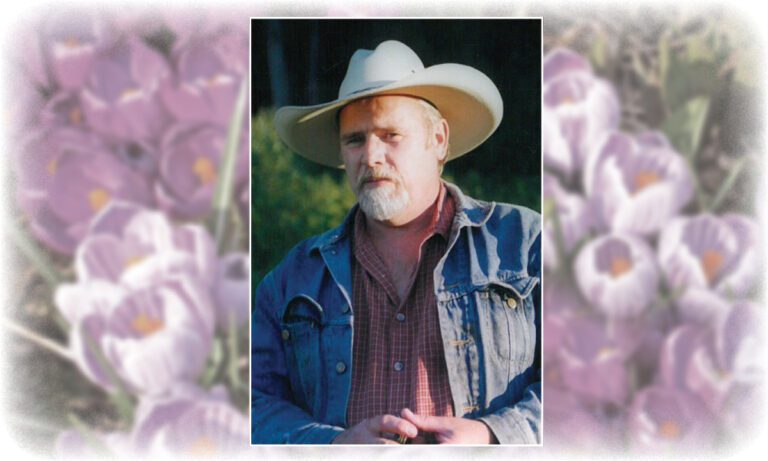
MCCULLY, Robert “Bob” Carl

Mr. Robert “Bob” Carl McCully, born on April 22, 1947 in Truro, Nova Scotia died April 26, 2025 in Kamloops, BC.

Bob will be sadly missed by his loving wife, Yvonne McCully and sons, Jess (Amanda) of Quesnel, BC and Kyle (Nilda) of Toronto, ON, step-son Sidney DeBow (Jenn) of Kelowna, BC, grandchildren: Joshua, Jacob, Jordan, Jeremiah, Eva, Jayna, Sydney and Sloan and great-granddaughter Ariella. He will also be missed by brother William “Bill” McCully, sister Linda Saprunoff, special nieces Michelle and Marnie as well as many other nieces, nephews, friends and relatives.

Bob was predeceased by son Patrick, brothers Cecil, Fred and Allan and sisters Audrey McDowell and Edna Harroun.

Bob had many careers, but retired as owner/ operator of McCully Moving, a long haul trucking company. He was an avid gardener and his green thumb produced beautiful flowers and vegetables. He was a talented artist and accomplished cook and carpenter. Bob was a real home body, but thoroughly enjoyed when company dropped by to visit and chat.

There will be no formal service by request.

Should friends desire, donations may be made to BC Cancer Society.

First Memorial Funeral Services Kamloops

250-554-2429

www.firstmemorialkamloops.com

Elizabeth May keeps Green seat

0

Green party incumbent Elizabeth May has won her fifth straight federal election campaign for the Saanich-Gulf Islands riding.

 By 8:45 p.m., the vote totals were enough to give May a decisive mandate when she was declared elected.

Preliminary results as of 11:30 p.m. Monday were as follows:

Elizabeth May – Green – 17,980 votes (39%)

David Beckham – Liberal – 13,892 (30%)

Cathie Ounsted – Conservative – 12,347 (27%)

Colin Plant – NDP – 2,083 (4%).

While a Liberal government was projected early in the night, whether or not that would be a majority or minority government was still not determined by midnight, as so many races in various parts of the country saw frontrunners change throughout the night.

May thanked a huge team of volunteers, staff and family members at a celebratory event at Church & State Winery in Brentwood Bay.

“Greens win — and we’ve always seen this — from the devotion and commitment of volunteers,” she said. “In this election campaign we had 250 volunteers working pretty much non-stop . . . When it comes to Saanich-Gulf Islands it’s a community achievement. It’s not me alone ever.”

“It’s been a hard election,” she added, “because so much of the mainstream media had promoted the idea that I was going to lose in Saanich-Gulf Islands. It developed a momentum based on a rumour, and it became a very hard thing to fight.”

The Saanich-Gulf Islands riding had set an early voting record, tallying the highest turnout in British Columbia and the second highest nationwide, according to Elections Canada. Among the 7.3 million Canadians casting ballots during the April 18-21 advance voting period were a record 37,468 voters within the riding represented by May since 2011. That meant that even before election day, nearly one-third of eligible voters had already cast a ballot. Advance voting in the riding in 2021 had drawn roughly 27,000 voters, up from about 25,000 in 2019. 

Former PM urges expanded roles for Canada

0

The current U.S. administration may be causing trouble for Canada and the rest of the world, but it also offers opportunities for our country, Canada’s 16th prime minister told a Salt Spring Forum crowd on Wednesday, April 23.

Fulford Hall was again packed for a Forum event, as it and other venues have been on a few occasions this season. This time the draw was the Right Honourable Joe Clark, a Progressive Conservative prime minister from 1979 to 1980. 

Forum chair Michael Byers, who introduced Clark and moderated the evening, said he has wanted to have Clark as a guest for the past 15 years, or since the group’s inception. 

“I was barely a teenager living in Lethbridge, Alta., when a 39-year-old from High River was elected Prime Minister of Canada. So to say that my entire life of being aware of politics has centred around this man is not an overstatement, and I’ve discovered over the years of my friendship with Joe that we actually line up pretty close in terms of our politics, because Joe was an oxymoron. He was a ‘progressive’ conservative.”

Clark, who is almost 86 and still active in various organizations and university teaching, has been speaking publicly since the election of U.S. President Donald Trump, encouraging Canadians to become aware of the important role their country can play at this turbulent time in history. 

“As Canadians in the world I think we are sometimes too complacent about the influence that we might be able to have,” he said, when all of us — not just those in elected office — can have a positive impact through the standards we hold and example we set. 

Byers asked Clark to talk about how the current U.S. administration “seems to be creating some major opportunities for Canada.” 

Clark elicited laughter from the crowd when he said, “I don’t think it’s deliberate.” 

“I think that one of the consequences of what Mr. Trump is doing is that it has created an awareness among our own citizens of how valuable a country we are, and indeed how potentially threatened we are as a country. And I think that, in turn, creates a very real opportunity for us to pay more attention to the things that we can do in the world,” whether that is because the scope has now enlarged or because the Americans are alienating themselves from other nations. 

“I sometimes get the feeling that we are not acting as a country as much as we should be acting as a country,” he said, stressing that he is not attributing that to any particular regime or factor. “I think it simply is due to having a more relaxed view than we should have about our own capacity.” 

He revisited the message at different points in the evening when responding to questions. 

“I don’t want us to be aggressive in the world,” he said. “I want us to be proud in the world. I want us to be aware of our capacities and our ability to do things that we once would leave to others, but which others are now not doing.”

Clark said he once described Canada as “a community of communities” — and was widely criticized for that characterization — but said, “I think it is true. I think that there is a sense of community among Canadians of difference that is stronger here than it is in many other countries. But like so much in Canada, we are not doing enough about it.” 

Clark said he was pleased to see recent cooperation between the provinces’ premiers and federal government in responding to the U.S. tariff threat, noting that may not always have been possible.

Clark was prime minister from June of 1979 to March of 1980. His minority government lost the confidence of the House in a narrow vote due to its budget that included a plan for an 18 cents per gallon (four cents per litres) tax on gasoline to reduce the budget deficit. He was Leader of the Opposition from 1976 to 1979 and 1980 to 1983 and the country’s Secretary of State for External Affairs from 1984 to 1991, and the Minister Responsible for Constitutional Affairs from 1991 to 1993, in the Brian Mulroney government. 

While in charge of external affairs, Clark spent time on the South Africa file in the period leading up to the end of apartheid in that country. He shared his opinion Wednesday that Canada should invest more in building relationships with African countries.

“We have a number of interests in common that we need to pursue, and I hope that we might be able, over time, to re-establish a sense of high profile in Canadian-African relations.”

Almost an hour of the evening was devoted to audience questions ranging from concerns about governments’ deficit spending, to Preston Manning raising the spectre of western separatism, to the CBC. 

Clark was applauded for expressing support for the institution of the CBC, which he said “is of real value to our country . . . I think it needs to undergo some rigorous self-examination, but that should be to improve it, not to remove it.”

Byers also invited everyone to attend the Salt Spring Forum’s 15th anniversary party at Fulford Hall on Saturday, May 10, from 7 to 9:30 p.m. The free event will feature delicious nibblies, a cash bar, silent auction, prizes, music and “very short speeches,” he said. Registration for catering purposes is requested at saltspringforum.com.

Tsunami Circus presents Metamorphosis

If she could correct one misperception about Salt Spring’s storied Tsunami Circus, lead coach Manda Hutchinson said it would be that it’s “just for kids.” 

“What these people can do is absolutely jaw dropping, no matter their ages,” said Hutchinson. “I’ve heard that some people don’t come because they hear it’s a children’s show, and it’s so much more.” 

The 2025 production Metamorphosis kicks off its first of four performances at 6 p.m. Thursday, May 8. It’s a youth circus production that features 16 Tsunami Juniors — the youngest in that troupe are seven years old — and 23 Seniors, weaving spectacular circus performances into the transformational lives of butterflies.  

“Our clowns will lead the story,” said Hutchinson. “They will begin the show — they’re mad scientists that want to study the life cycle of a butterfly. It will start in black and end in black, but everything in between is beautiful colours.” 

It’s perhaps Tsunami Circus’ most ambitious performance yet, from aerial trapeze work to acrobatics and the German wheel — a level of circus that might not have been possible before the Juniors program began, according to coordinator Michelle Bennett.  

“It used to be that we just had kids in grades six, seven and eight,” said Bennett. “Then the middle school closed, and circus started being all ages.” 

That brought in a bunch of new kids, she said, and new coaches; Bennett said one of the original “circus kids” from back when the program started in 2014 had returned, this time to coach. That youth energy, combined with that from a “bunch of adults” who show up to volunteer — including parents and board members — is what makes such a showcase possible, where students can share the results of their hard work with the community. 

“Thousands of hours, collectively” chuckled Bennett. “It’s almost unbelievable how much time gets put into a show.” 

Juniors coach Leticia Taylor said the returning Juniors have been a huge influence on the new students, in bringing Metamophosis’ “beautiful, sad and happy” story to life. Last year was the first year for the Juniors troupe, and those still perhaps too young to move on to the Seniors were leaders in their program this year, demonstrating for the new students the work ethic needed to put on a professional performance — and working amongst themselves to self-choreograph three different small-group routines. 

“They’ve done a great job working it out together, and they’ve come up with some really cool moves,” Taylor said. “It’s nice to have more younger people starting earlier, getting comfortable with communicating and what we’re doing on different apparatuses. The returning ones understand how hard putting on a show is — and having watched the Seniors, there’s a lot of drive there.” 

That collaborative spirit is a bright line that runs through Tsunami Circus, a sense that there’s a place in it for everyone, particularly those that might not think they belong. Hutchinson said the big takeaway from building this year’s show has been inclusion — everybody has a role to play, she said. 

“We’re all part of this circus, and everyone shows up,” smiles Hutchinson. “We [adults] were also those weird kids growing up, who didn’t quite fit into anything. And I think that’s why we all fit here so perfectly.” 

For next week’s shows, Taylor said they hope to draw in audience members who haven’t seen circus before and to inspire the next generation of Tsunami Circus performers.  

“There’s so much going on in this show, it’s going to be a great first introduction for lots of people,” she said. “Especially for the families that come with young children.” 

Metamorphosis runs at the Salt Spring Island Multi Space gymnasium Thursday, May 8 at 6 p.m.; Friday, May 9 at 4 p.m.; and two performances Saturday, May 10 at 2 and 6 p.m. 

A limited number of advance tickets are available online (tsunamicircusmetamorphosis.eventbrite.ca) with more available for purchase at West of the Moon.

For more info, visit ssicircusandgymnastics.com

Editorial: Vote ‘yes’ on water

0

It’s not easy to whip up enthusiasm for something as practical as a water treatment plant, but we’re going to try one last time. 

Briefly, organic matter in lake water reacts with chlorine treatment to create trihalomethanes (THMs) like chloroform and bromodichloromethane; these byproducts of disinfection have been linked to some forms of cancer, so health officials are requiring water providers take steps to remove more organics prior to treatment. 

The Dissolved Air Flotation (DAF) plant planned by the North Salt Spring Waterworks District at Maxwell Lake will do just that — professional engineers have worked through the design and the district’s board and staff have spent countless hours ensuring it will meet their long-term needs. 

And importantly, Island Health has mandated the plant be built; the new facility is coming eventually, regardless of how the May 8 referendum vote turns out, and district ratepayers will pay the bill. 

The voting is the final step in this multi-year journey, required to authorize any significant district borrowing. For anyone contemplating marking “no” at this point, consider a referendum failure will likely delay the start of construction, lengthen the time we spend drinking elevated-THM water, and — unless anyone predicts materials and labour prices will shrink in coming years — raise ratepayer costs. 

To their credit, NSSWD officials have been easing us into this for a few years now; every property owner in the district has already paid an increased parcel tax in anticipation of servicing this incoming loan. And yes, in a “worst case” scenario there could be one last such increase in 2026.  

But as ratepayers vote to authorize a maximum borrowing amount, the district has demonstrated they have efforts underway to secure funding to help avoid that increase.  

As a “bonus,” treating Maxwell Lake the same as St. Mary Lake — where a DAF plant is already operating — offers an opportunity to combine the two “sides” of the system and increase water supply resiliency to drought and flood events.  

For these reasons, we support voting “yes” on the NSSWD ratepayer referendum, either by mail-in ballot until 4:30 p.m. on May 6, or in person at Community Gospel Chapel from 2 to 6 p.m. on May 8.  

Spring Repair Cafe promises fixing phenomenon

SUBMITTED BY TRANSITION SALT SPRING

The Transition Salt Spring (TSS) spring Repair Café — a celebration of community, sustainability and skill-sharing, all wrapped up in one exciting event — promises to be the biggest Repair Cafe to date. 

This season’s event, which runs on Sunday, May 4 from 10:30 a.m. to 1:30 p.m. at Meaden Hall, features an extraordinary lineup of local volunteer experts — over 40 strong — coming together to share their time and talent to help you breathe new life into your broken and worn-out belongings.

“The community response has been amazing,” said Andria Scanlan, community engagement and education lead at TSS. “Both from volunteers, who are passionate locals with serious skills that want to help us all live a little lighter, and the locals who don’t want to throw their valuables in the landfill simply because one piece or function is broken.”   

From general household repairs and small electrical appliances to micro-electronics, hand-mending, knitwear darning, leatherwork, patching and sharpening of knives and garden tools, this Repair Café has you covered.

Bikes need love too, especially at this time of year. Answering our call for pedal-powered support, the fantastic folks at Island Pathways will be on hand with a team of bike repair pros offering basic tune-ups and minor repairs for both bikes and e-bikes.

We’re also excited to welcome volunteers from the Salt Spring Island Public Library’s Fab Lab, who will be consulting on creative ways to fabricate replacement parts using tools like 3D printers — innovation meets old-school fixing!

One of the core values of the international Repair Café movement is skill-sharing. When you bring in an item, you don’t just hand it off — you sit down with your “fixer” and learn about the process. Visitors are encouraged to roll up their sleeves and take part, helping to build a culture of hands-on resilience and learning.

And if you’re wondering if your broken lamp or torn jeans stand a chance — wonder no more. Salt Spring’s Repair Café boasts an incredible fix rate of nearly 90 per cent, well above the international average.

How it works:

• Bring up to two items: one clothing/textile and one general repair.

• Register when you arrive at Meaden Hall.  

• You’ll be assigned to one of our “repair concierges,” who will triage your item and help you settle in.

• Grab a cup of tea or coffee and enjoy the friendly, communal vibe while you wait.

• Fixers aim for repairs to be completed within 20 to 25 minutes, keeping things moving efficiently.

• If you have more than one item, repeat the process!

The event is free to attend (though donations are welcome!) and is made possible by support from 100 Men Who Care Salt Spring Island and the Capital Regional District.

Repair Cafe is part of TSS’ Lighter Living initiative.

Art on the Hall works up for 2025

SUBMITTED BY SALT SPRING ARTS

Salt Spring Arts is once again turning heads with the return of Art on the Hall, its beloved annual public art initiative. From April through September 2025, the south-facing side of historic Mahon Hall becomes an open-air gallery featuring three striking mini-murals, with this year each one offering a unique reflection on our connection to the natural world. 

This year’s featured local artists — Lori Waters, Corvi Zeman and Tina Dots — bring distinct perspectives rooted in the Salt Spring Island community. Their works delve into themes of environmental stewardship, interconnection and the quiet power of collaboration. 

Waters explores the relationship between native plant species and their pollinators in Resilient Blooms Draw Wild Wings. Using a blend of botanical watercolour and linocut printmaking, Waters creates a textured dialogue between scientific illustration and artistic interpretation. Her piece celebrates the intricacy of ecological relationships while nodding to the timeless beauty of traditional craft. 

Zeman, in To Become Home, shifts the focus beneath the surface of the water, imagining life from the viewpoint of a salmon. The mural draws attention to the mysterious, sensory-driven journey of a fish navigating magnetic fields, auroras and ancient instincts. It’s a poetic meditation on return and belonging, inviting viewers to consider life through a new lens. 

Dots offers Post Rain Emergence, a mural rooted in her personal reflections on nature and community. The work represents humanity as tiny vessels drifting through vast natural systems — fragile yet full of strength when united. Inspired by Indigenous teachings and her studies at the Ontario College of Art and Design University, Dots’ mural highlights the importance of sustainability and collective care for the planet. 

Displayed prominently on Mahon Hall, these murals are visible to all, reinforcing Salt Spring Arts’ commitment to public accessibility and creative engagement. Each mural is available for purchase, offering the opportunity for collectors and supporters to take a piece of the island’s artistic spirit home with them. 

To learn more about Art on the Hall, upcoming exhibitions and open artist calls — including the 2026 Showcase Exhibitions and Artist in the Class program — visit saltspringarts.com

Viewpoint: in defence of Botterell and the mandate

By JENNIFER MARGISON

for Friends of the Gulf Islands Society

The three Saturna trustees — two current, one former — who responded to MLA Rob Botterell in the April 16 Driftwood did not make a convincing case for reshaping the Islands Trust without broader public engagement. The changes proposed by Trust Council to the Trust’s mandate and Policy Statement are not merely “a review” but, as Mr. Botterell put it, “dramatic revisions” — and should be presented to islanders in an election.

The Islands Trust Act states that the Trust’s purpose is to “preserve and protect the trust area, its unique amenities, and its environment for the benefit of residents, the trust area, and British Columbians generally, in cooperation with First Nations and other levels of government.” Mr. Botterell, in his April 2 column, rightly emphasized that conservation remains paramount. He raised serious concerns about Trust Council’s reinterpretation of the mandate and whether council has the “electoral mandate” to pursue sweeping changes. Friends of the Gulf Islands Society strongly supports Mr. Botterell’s position, especially his reminder that “growth in the Islands Trust Area is not inevitable, it’s a choice.”

The Saturna trustees also failed to clarify the 2023 in-camera meeting that led to the “consensus” reinterpretation. Their claim that it was limited to legal advice is contradicted by Trust Council’s own “rise and report,” confirming major policy decisions were made behind closed doors.

The report reveals that “Trust Council’s view is that unique amenities are broad-ranging and may include issues such as housing, livelihoods, infrastructure, and tourism.” We disagree. These are services delivered by regional governments, not unique features to be preserved. The Islands Trust’s role is to protect the environment and the distinct character of the islands. The phrase “not limited to” dangerously opens the door to broad reinterpretation. If the environment becomes just another “element” to consider, the Trust risks losing its special role and becoming indistinguishable from other local governments.

Following the in-camera meeting, 34 former trustees issued an open letter expressing concern about the lack of transparency and the dilution of environmental priorities. Despite repeated requests, the public still lacks clarity on who attended, who voted, or whether a formal vote even occurred.

Trust Council also admitted it did not review a critical 1986 position paper endorsed by both the council and then Minister of Municipal Affairs. That paper defines “unique amenities” as natural and cultural features such as “heritage and archaeological” sites, “solitude, scenic beauty, a clean environment” and “tranquil rural areas.” While acknowledging a “range of lifestyles,” it firmly prioritizes conservation — not the provision of human services.

Meanwhile, Trust Council is moving ahead with revisions to the Trust Policy Statement, which guides local bylaws and community plans. We are concerned that the new interpretation will erode the Trust’s original conservation mandate.

At a time when environmental protection is increasingly sidelined, it is critical that the Islands Trust remain true to its founding principles. Only the provincial government can change the Trust Act, crafted to protect this provincial treasure. We need trustees who understand this. We urge residents to call on their local trustees to put this reinterpretation on hold and delay major changes to the Policy Statement until after the 2026 election.

You can add your voice by signing our petition at friendsofthegulfislands.ca.

Nobody Asked Me, But: gods of pain amused

0

My back is just killing me. Well, it’s not literally killing me, but it might as well be. Back pain has taken control of every waking hour of my life and most of my sleep time as well.

It wasn’t that long ago that a sore back just meant popping a couple of extra-strength Tylenol pills, taking a short break, and climbing back into the metaphorical ring. My how things have changed! I’m not sure how it happened but I woke up one morning and I was 50 years older than when I went to bed. At least, that’s how much my back had aged.

After trying a number of different remedies and treatments, I decided to go the medical route with an MRI scan of my spine. The spine is located in your back, which is on the other side of your front, and runs down from your head to your tailbone (which is where your tail used to be when you still had one).

I was lucky to have my MRI scheduled without too long of a waiting period (because of my age and many medical complications, I guess). A major stumbling block was that I was informed that I would have to lie perfectly still, flat on my back for up to 90 minutes during the imaging process. I practised at home and found the longest I could do this was two minutes. Houston, we have a problem. Eventually, we worked our way around the difficulty by getting me to ingest what must have been the equivalent of a handful of elephant tranquilizers. I have no memory of any time spent in the MRI machine, but I do recall foraging in the African Serengeti for acacia tree leaves.

My MRI results showed a total disaster. The pictures revealed that I have severe stenosis of the spine, which means that the spaces inside the spinal canal have narrowed and the spinal cord and associated nerves are being wickedly compressed. In addition, several of the discs which cushion the movement of the vertebrae against each other have disintegrated and a few of the bones in the spine have fused to protect whatever was still intact.

In short, my spine looked like a Lego set that had been partially dismantled before everybody went outside to play. Or you could compare it to a Jenga tower the moment after it begins to collapse. I was informed that although there were certain surgical procedures available that could possibly improve or even fix my spine, at my age and with my disabilities, any neurosurgeon would go running in the opposite direction. My choices were to either go the medication route or have a spinal injection treatment to ease or moderate the pain. Right now, I’m using medications, which might explain my inability to wake up in the morning or keep a coherent thought in my mind for more than a few seconds.

Meanwhile, things have deteriorated even more. Now, the ground seems so much farther away than the sky. The world is conspiring against me by forcing me to have to stoop down to pick up the objects I keep dropping to the floor. The problem is that just when I think I have bent my body downward enough so that my hands should be close enough to reach the dropped item, I discover that my fingers are dangling a foot and several inches above the desired thingamabob. Meanwhile, my spine is pretending it is a bowl of Rice Krispies cereal as it plays accompaniment to my efforts with the familiar crepitating sounds of snap, crackle and pop.

It’s like that game we used to play at the PNE. There was this miniature crane inside a glass enclosed case and a wheel that allowed you to move the crane side to side and its metal claw up or down. Inside the case, seated on a bed of small stones and crushed shells, were a number of semi-valuable trinkets and the big prize: a Rolex watch. You would drop your coin into the machine and carefully manoeuvre the claw so it would drop down directly onto the cherished Rolex. The claw would grab hold of the watch and you would carefully winch it to the exit chute. But, invariably, just as the Rolex was about to be yours, it would slither out of the grasp of the claw and slip back into the case and all you were left with were a few shiny stones and some shell fragments. Well, in my efforts to pick things off the ground, I am the PNE crane.

In the real world, when I finally succeed in getting low enough to grasp the dropped object and attempt to straighten up again to a normal altitude, the damned thing will slip from my fingers to fall once again to the practically unreachable floor. This can happen several times and I sometimes think the gods are amusing themselves with my misfortunes. I must look like a basketball player dribbling the thing I’m trying to retrieve from the floor. Even the cats are in on this cruel game. They deliberately stretch out to their full length so as to lower their bodies closer to the floor and thereby make it all the harder to give them a passing pet.

Putting on my underwear has become a serious challenge. On my first attempt, because I can barely bend at the waist or raise my knees the slightest amount, I often end up with both legs poking through the same leg-hole. Then, when I employ some contortions I learned from Cirque du Soleil, I am able to get each of my legs in a separate leg-hole but my underwear is facing backwards.

Getting in and out of bed has become an exercise that probably equals the logistics needed for the invasion of Normandy on D-Day. Every move has to be carefully planned. It’s like a game of Twister, where placing a hand or knee in the wrong place means certain doom (and a whole lot of pain). For instance, for the final move in getting into bed, which is an act of faith in itself, you must pull your limbs away, straighten up and hope that the mattress is directly below you when you land.

Nobody asked me, but back pain is something you want to avoid if at all possible. It may get you a mobility scooter sooner than you want one. Take care of your back. I wish I had. One thing is for sure; you won’t find me dancing the limbo anytime soon.