
Home Blog Page 7

And Another Thing: U.S. TV health-care ads a fright

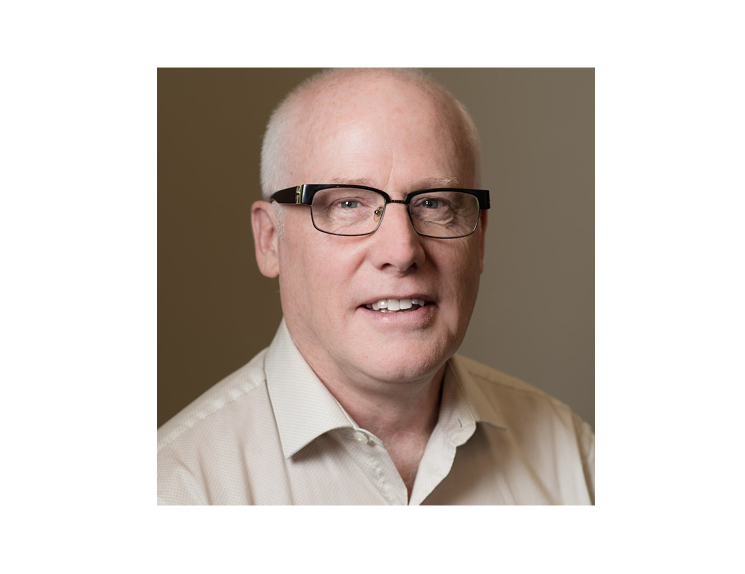
By PAUL MCELROY

DRIFTWOOD COLUMNIST

I do worry about the Americans. I worried about them long before Trump emerged from under his rock because I have watched American television and couldn’t escape the advertisements for medicines without either having a finger hovering over the mute button or my head exploding.

The United States is either a nation of the permanently unwell or of chronic hypochondriacs, which is a bit ironic in a country where having an ingrowing toenail can bankrupt you.

Equally, it is puzzling that a nation whose health tsar seems to embody all the wholesome attributes of Simon the Leper should be so preoccupied with its own wellbeing. Or maybe it’s because of their cadaverous health secretary that they have become more fearful of any potential malady.

On CNN and MSNBC (or MSNow, as it prefers to be called these days, presumably as a result of a new CEO who, after doing some hard thinking, had an idea), every four advertisements in five is for some miracle cure, invariably of an ailment I’ve never heard of and most certainly don’t want. Others are more prosaic but are still not a suitable topic for polite conversation, especially around the dinner table.

There is, for instance, the young woman working in her garden while brazenly extolling the virtues of a particular laxative but, if she’ll excuse me for saying so, however winsome she might be I have absolutely zero interest in her bowels, regular or otherwise! And that also goes for the ladies with wind and troublesome bladders. I’m sure it’s desperately uncomfortable, but I’d just as soon they kept it to themselves.

Worse still are the pills and nostrums, advertised this time by young women in various degrees of undress, aimed at chaps who are having problems in the bedroom department. Bowels and bladders are bad enough, but a gentleman’s tackle is really below the belt.

But it’s the more serious maladies that I worry about, most of which I’d never heard of but now live in fear of getting. American shingles, for instance. I’d heard of shingles, of course, and have even been inoculated against it, but I had no idea, according to the MSNow ads that pop up about every 15 seconds, that in the U.S. shingles presents itself as a fiery pox that will burn through your shirt unless you take the precaution of immunizing yourself. Presumably the American variety is significantly more potent than our own, although both are best avoided.

And American heartburn! Mortifying. Show the slightest sign of feeling slightly queasy after another giant dinner of whatever it is you’ve just hoovered up and the restaurant staff will take to the stage and sing about it in gruesome detail.

Then there are the quack potions for restoring your memory. Never mind that none of them have been proven to work for an ordinarily healthy person who merely occasionally misplaces their car keys — or their car. Even the tiny print at the bottom of the screen points out that these particular nostrums are probably of no use to man nor beast and the folk they’ve quite obviously paid to advertise them are best ignored. And then forgotten.

The small print is always terrifying. For a regular arthritis pill: “Serious infections, including tuberculosis and fungal infections, have occurred, sometimes leading to hospitalization or death. Tell your doctor if you have fever, cough, weight loss or fatigue.” Death!? Tuberculosis!? And they always come over the cheery part which offers instant relief from shortness of breath and a probable first place in the Vancouver marathon.

At least the American drugs, unlike the nation itself today, are democratic. There’s pretty much something for everyone, from the fat to the emaciated, blocked noses to the running sores, the depressed and the hyperactive. There is even a drug for a guy who appears to have a finger with a mind of its own and another for some old fellah, a doctor no less, who is terrified of stairs because he has pins and needles in his feet. Killer pins and needles, eh? Who knew.

The whole Big Pharma message is slightly biblical: “Heal the sick, cleanse the lepers, raise the dead, cast out devils: freely ye have received, freely give.” Except of course, this is the United States, where nothing is free and the halt and the lame will have paid an arm and a leg to walk again.

But it’s the dental ads that keep me awake at night, those All-American teeth that glow in the dark, so white, so perfect they can be seen from space; far too good to be wasted on mere chewing. They never show the “before” pictures of the poor souls whose lives have been blighted by a mouthful of teeth that would shame Shrek, but the remedy is almost as shocking: wide, rictus grins displaying teeth just too perfect to be taken seriously.

And here’s an interesting fact. Despite having the world’s most aesthetically appealing teeth, America’s actual dental health comes way down the World Health Organization league of healthy choppers. The Scandinavians, needless to say, lead the world and even the Brits, who have long been scorned for having teeth best hidden behind a bushy moustache, are much healthier, mouthwise, than the luminescent Yanks. Europe is more into drilling and filling than buffing, while it’s likely most Americans can’t afford decent teeth unless they whittle them themselves.

Neither, I assume, can many of them afford these medicines which might just make their lives more bearable.

paulmcelroy@shaw.ca

Report: CRD rural areas get back less than they pay

0

A new report has reignited the debate over fairness in funding between urban centres and rural electoral areas (EAs), as Capital Regional District (CRD) officials said they will task future directors with addressing disparities revealed in regional spending.

Suspicions that regional investment favoured cities over rural areas like the Gulf Islands and Juan de Fuca were largely borne out by the report, which — even taking into account population densities — found dollars coming in usually didn’t find their way into rural projects at similar proportions. 

“I think there is sufficient evidence in here to suggest that, at least for some services, some electoral areas are contributing way more than they’re receiving back,” said Salt Spring Island CRD director Gary Holman as the report was brought to committee in April. “The staff report indicates there is a concern there for EAs, about paying taxes and not necessarily receiving benefits back.”

According to the analysis first presented to the CRD’s Hospital and Housing Committee, while Salt Spring Island, the Southern Gulf Islands and Juan de Fuca EAs combined represent 5.1 per cent of the CRD’s population, they contribute about 7.5 per cent of regional hospital and housing requisitions and receive just two per cent of hospital capital spending within their areas — and merely 1.5 per cent of housing capital investment. 

“We’re all part of the social contract,” said Holman. “But in my view, the social contract is a two-way street.”

The analysis covered the 15 years between 2010 and 2025, and looked at tax requisition, investments and grants for the Capital Regional Hospital District (CRHD) and Regional Housing, including “non-application-based” grants, i.e. direct awards to the CRD such as the Community Works Fund, COVID “Safe Restart” dollars and Growing Communities Fund (GCF). 

The request for the report — and the subsequent vote Wednesday, April 29, advising the next CRD board to consider regional equity as part of its strategic priorities planning process — was prompted by EA representatives. Holman told fellow directors on April 1 that in light of the report, his goal was simply to ensure equity was among the principles future boards use in planning.

“Not the only principle, but one of the principles,” said Holman. “For example, we’ve got First Nations reconciliation as a key principle within our strategic goals, we have climate action. The intent of my original motion was to try to get the board, when it was considering its priorities and how it was allocating both staff and funding resources, to take into consideration the equity issue.”

That issue was front and centre in the report. From 2010 to 2025, according to the analysis, $352 million flowed into regional housing capital projects, delivering 989 affordable rental homes across eight municipalities; standout efforts include creating 250 new housing units between Langford’s $36.4-million Spencer Close and the $31.1-million Hockley House projects.

Yet of that total, Salt Spring and the Southern Gulf Islands saw just $5.29 million, or 1.5 per cent — less than half the dollars expected with a strict by-population formula — and zero capital investment was recorded for the Juan de Fuca EA. 

EAs similarly funded $1.34 million of the $18-million CRD Land Banking and Housing Service requisition during the period, but despite ongoing initiatives — like $75,000 set aside through 2027 for the Rural Housing Program pilot and $1.2 million to purchase land for Galiano’s Thuthiqut Hulelum’ Housing Project — dollars for completed work are dominated by those in urban centres, according to the report, with 98 per cent of funding.

For hospitals, the picture was consistent. CRHD granted almost $300 million to Island Health for a portion of its capital needs, with only two per cent — about $6 million — targeting EAs, mostly Salt Spring’s Lady Minto Hospital and to a far lesser extent Galiano’s Health Care Centre. During the same period, EAs shouldered 7.6 per cent of the $450 million in total requisition.

On the surface, non-application-based grants painted a rosier picture in the report for EAs. The CRD Board, for example directed 100 per cent of Community Works Funds — $2.6 million annually, across two 10-year terms — to EA projects. 

But for other grants, the situation was more complicated. The GCF provided a one-time total of $1 billion in grants distributed among all 188 of B.C.’s municipalities and regional districts, for their use to address each community’s “unique infrastructure and amenity demands,” according to the province — including development finance portions of infrastructure costs that support affordable housing. 

And the report noted that the CRD Board directed about 47 per cent of its share of the GCF to electoral areas. But while seeming generous in exceeding the province’s suggested 32 per cent population-based share, that number, according to Southern Gulf Islands EA director Paul Brent, does not tell the full story, 

“Of that billion, $100 million came to the CRD,” said Brent on April 1. “$89 million to municipalities directly, and then $11 million that the board distributed: $5.4 million to Electoral Areas, and the balance back to the municipalities.”

From “the perspective of equity,” he continued, “it certainly looks to me that it’s more like 95 per cent versus five per cent, which is kind of consistent with the numbers [for] hospitals and housing.”

EAs already have a lower level of service in terms of health care, affordable housing and other services, according to Holman, who said while the province had made suggestions on how to allocate those dollars, the decision was ultimately up to the CRD Board.

“Provincial funding programs have absolutely benefitted us, and we’re grateful for them,” said Holman. “But they have been inequitable. The board could be thinking about offsetting that, and not reinforcing it.”

As directors from “core” districts noted their own experiences of inequity — where they also might’ve contributed for projects not built inside their municipal boundaries — Brent was less circumspect.

“If there’s affordable housing built in Esquimalt, and you live in View Royal, it’s not very far away — if you qualify for it, it’s realistic and there’s a bus route,” said Brent. “On Saturna? It’s ridiculous. And it’s the same thing with medical services; we may be only 30 kilometres from Swartz Bay or 50 from the hospital, but in reality, depending upon what time you might get sick or need it, we’re 12 hours away.”

The 24-member CRD Board is composed of one or more elected officials from each of the 13 municipalities within the regional district; there is one director from each EA. 

“I have always been a regionalist,” said Brent. “I understand it takes time for equity to work its way through. But we’re talking a decade and a half of analysis here, and I’m seeing nothing in terms of housing, close to nothing in terms of hospital. That’s what equity is about, and what I want this board to reflect on. If you want the EAs to be supportive of the region, then the EAs at some point in time have to see it. We can be patient, but I think we’ve demonstrated patience enough.”

Guild Show on at Mahon Hall May 12-18

DONNA COCHRAN

FOR THE GUILD SHOW

This is the fifth year for Salt Spring Island’s guilds to showcase a stunning array of their work at Mahon Hall.

The Guild Show runs daily from 10 a.m. to 4 p.m. from Tuesday, May 12 through Monday, May 18 (right through the long weekend).

The six guilds participating this year are the basketmakers, painters, potters, printmakers, weavers and spinners, and woodworkers. Mahon Hall is a beautiful setting to blend the colours and textures of the more than 90 artists in carefully curated groupings. 

The printmakers are the newest guild on the island and they really enjoy being part of this community event. They say it is fun and inspiring to be part of a common endeavour. Similarly, the painters say they enjoy the privilege of showing their paintings at the event as it reaches a much wider audience than their own shows.

“It has fostered cooperation between the Salt Spring guilds, which sometimes results in a cross pollination of creativity, ideas and work,” they say.

Don’t miss the chance to see how the guilds today are continuing to contribute to Salt Spring’s lively arts scene. 

People can meet the artists at the opening reception on Tuesday, May 12 from 4 to 7 p.m. at Mahon Hall. Entries to win one of three gift baskets of small treasures donated by each guild will be available, with the draw takings place at the close of the reception.

Hope to see you there!

Forum hosts Neve on human rights topic

By GEORGE SIPOS

FOR SALT SPRING FORUM

Any of us who have been alive a while can, if asked to name transformative inventions in the world within the last 80 years, come up with a number of obvious ones.

Gadgetry will come to mind, everything from the internet, to smart phones, to satellite communications and the like. In medicine, the invention of antibiotics, transplant surgery, MRNA vaccines, etc. have revolutionized the quality of life for many of us.

But what about ideas, especially ideas in the social and political realm?

We may not immediately think of the idea of human rights as an invention, but it did come about as a distinct formal concept in 1948 when the newly born United Nations created and adopted the Universal Declaration of Human Rights.

After the horrors of World War II, the world for the first time articulated an explicit belief that all human beings share common, inherent and inalienable rights and freedoms by virtue of being human. But beyond simply believing this, United Nations member countries wanted to codify the concept in the form of international human rights law.

Ah, you say, that’s where the problem arises. Law is only useful if it can be enforced. And the last 80 or so years of world history have shown that disregard of human rights has been all too common, and injustices have tainted the fabric of the benevolent world we had hoped would emerge in time.

Not for want of trying, however. The UN’s Human Rights Council has worked tirelessly on a global scale to promote international treaties and legal mechanisms such as the International Criminal Court, criminal tribunals in the aftermath of genocides in Rwanda and the Balkans, and so on.

Perhaps more significantly, the idea of universal human rights has led to the emergence of international non-governmental organizations whose purpose is to fight for the acceptance of human rights as the moral and legal basis of world order.

Last October, Kenneth Roth, former director of one such important NGO, Human Rights Watch, visited the Salt Spring Forum and spoke about many decades of its work around the world to defend human rights.

On Wednesday, May 13, the forum will present Alex Neve, who spent 20 years as Secretary General of Amnesty International Canada, another crucial NGO whose initial focus was defending imprisoned and abused individual rights activists in many countries. Over the years its scope has grown to engaging with human rights issues more broadly.

Arising from this work, Alex Neve has just published a book: Universal – Renewing Human Rights in a Fractured World, which is a compilation of his 2025 CBC Massey Lectures.

In light of the acute conflicts currently ongoing in the Middle East, Ukraine, Sudan and elsewhere, the forum event will be both very informative and, unfortunately, all too topical.

The Neve event takes place on Wednesday, May 13 at 7:30 p.m. at Fulford Hall.

A link to tickets can be found at saltspringforum.com.

Women, leadership and local politics in focus at Prime Minister film night

SUBMITTED ARTICLE

Salt Spring is a place where people care deeply about their community, and don’t shy away from engagement. But when it comes to who steps forward to lead, some voices are still missing.

On Saturday, May 9 at 6 p.m., ArtSpring will host an evening that invites a more open, honest conversation about what leadership really looks like and who it’s for.

The night begins with a screening of Prime Minister, a documentary about former New Zealand leader Jacinda Ardern, who argued that the most important leadership qualities are the same ones we try to teach our children: empathy, curiosity, bravery and kindness.

That conversation will then come closer to home, with a panel of Islands Trust Council chair and local trustee Laura Patrick, Salt Spring Local Community Commission member Gayle Baker and Central Saanich councillor Sarah Riddell.

Together, they’ll speak candidly about their experiences in public life: what’s rewarding, what’s difficult and what often goes unspoken.

“Politics can look harsh and impossible from the outside, and for that reason, many people think it’s not for them,” said Riddell. “And of course there are tough moments, but there are so many beautiful ones of connection, collaboration and meaningful change. We want to share the full picture.”

Salt Spring has a strong culture of civic engagement, but like many communities, women remain underrepresented among local elected officials.

“Local government works best when it reflects the community it serves,” said Patrick. “And that means creating space for more diverse voices at the table.”

The goal of the evening isn’t to convince anyone to run for office, but to make the idea feel more accessible.

“For me, leadership is simply about the basics: listening, understanding, caring and having the courage to support changes,” said Baker. “Exactly the lessons I taught my children, it is now time for their generation, especially our young women, to move into leadership roles.”

With local elections approaching this fall, organizers hope the conversation will resonate with those who are curious, questioning or quietly considering getting involved.

The event is non-partisan, free to attend and open to all.

Tickets are available through the ArtSpring box office at artspring.ca.

Tsunami Circus troupe ready for Undertow show

SUBMITTED BY TSUNAMI CIRCUS

A wave of energy, creativity and determination is set to hit the stage this weekend as the Tsunami Circus Performance Troupe presents Undertow, an original youth circus production created by creative director Manda Hutchinson.

Featuring 45 island youth aged seven to 17, Undertow showcases the full spectrum of circus arts, including trapeze, lyra, hammocks, silks and aerial cube — and the troupe’s new aerial harness — alongside clowning, acro-dance and prop work. Undertow blends athleticism, artistry and storytelling into a dynamic, high-energy performance. Beyond the spectacle, it’s driven by something deeper: passion. These young performers have been working intensely to bring Undertow to life!

Since January, the cast has built a full-scale show with the support of 35 dedicated volunteer coaches and crew members. From experienced instructors to teens stepping into mentorship roles, the Tsunami Circus program is a true community effort, fuelled by a shared love of circus and collaboration.

Undertow is more than a performance, it’s an immersive experience. Audiences are transported into a world where the human realm and the ocean collide, exploring themes of environmental responsibility, connection and coexistence. Through breathtaking aerial acts and expressive movement, performers tell a story of what happens when nature pushes back, and what it means to care for our ocean world. The visual impact is equally compelling. Striking costumes, bold makeup and imaginative staging transform the Salt Spring Island Multi Space gymnasium into an underwater landscape, brought to life with dynamic music and theatrical flair. It’s a true feast for the senses.

“Undertow allows us all a moment away from everything,” said Hutchinson. “It’s a chance to dream, to be inspired and to see what’s possible when we come together.”

Performances run Thursday, May 7 (6 to 8 p.m.), Friday, May 8 (4 to 6 p.m.) and Saturday, May 9 (1 to 3 p.m. and 5 to 7 p.m.). Tickets are available at West of the Moon (cash only) or online via the ssicircusandgymnastics.com website.

Suitable for all ages, Undertow promises to inspire audiences young and old with its powerful message, stunning visuals and remarkable local youth talent.

Firefighters extinguish Stark garage blaze

0

While a recent blaze at a property on Salt Spring’s north end was quickly extinguished by firefighters, officials still cautioned vigilance — warning that a potentially dangerous fire season on the island is only just beginning.

About 15 Salt Spring Island Fire Rescue (SSIFR) personnel and multiple vehicles raced  from both ends of the island Friday, May 1, responding just after 1:30 p.m. to a call of a structure on fire in the 400 block of Stark Road. When they arrived, firefighters quickly took over for neighbours who had been bringing water to a burning carport that sent smoke billowing into the sky above the residential neighbourhood.

Crews were able to safely douse the fire, preventing flames from spreading to other buildings; the fire reportedly began on the outside of the carport, although the cause has yet to be determined by SSIFR officials. 

The fire came as temperatures in the region began to climb, and local fire danger level at press time on Monday afternoon remained at “high” on Salt Spring Island, with a two-hour fire watch in effect. The B.C. Wildfire Service advised that early May’s above-seasonal temperatures are expected to increase the likelihood of new wildfire starts. The Coastal Fire Centre has instituted a campfire ban across the region as of noon on Thursday, May 7.

There were 11 calls for structure fires on Salt Spring in 2025, according to the fire chief’s annual report, down from 13 the previous year and 12 in 2023.

For current fire danger rating and restriction information, people should visit saltspringfire.com.

Nobody Asked Me But: What really goes on behind the refrigerator door?

0

Everybody knows that living on an island is, by definition, a political act. Whether divided as north versus south, newcomer versus old-timer, working-class family versus empty nest retiree, or aggressive online entrepreneur versus the laid-back, back-to-the-lander, there’s always a line forming that will divide islanders into different camps.

Nowhere is this more apparent and evident than when you look at the shelves attached to the door or doors of your refrigerator.

What? Excuse me? Did I just say something about refrigerator door shelves? Yes, you heard me right.

Those fridge door shelves are more than just storage space for jars, packages, containers and other foods that don’t efficiently use up room in the main compartments of your refrigerator. No, they actually mark out a virtual pecking order of gourmet delicacies and specialty items that you long ago forgot you had purchased for an obscene percentage of your grocery budget. 

Take, for example, that squat glass jar of Conimex Sambal Oelek Vers Gemalen Chilipepers that has made its way all the way to the narrow top shelf of the door. The ingredients on the label have faded so badly that they are no longer legible. The expiry date is etched on the glass with hieroglyphics and it is impossible to know for certain whether the “best before” year date is BC or AD. To be sure, the Sambai Oelek must have been a key ingredient in an exotic recipe of some Paleolithic drawing chiseled onto a cave wall, but those days disappeared about the same time as the latest eruption of Mount Sambai.

Alongside the jar of Sambai Oelek, and probably just as mysterious in origin, sits a short canister of organic Maison Orphee Yellow Mustard with Turmeric (or, as they say in Paree, “Moutarde Jaune au Curcuma”) that had been verified as Non GMO even though it was probably processed back when genetic modification meant something you did to your pet gerbil when your parents weren’t home.

You may not believe this, but the position of the assorted food containers on the door shelves is by all accounts a contest of high status/low status. As time goes by, they work their way down lower on the door as they get older and it becomes harder and harder to remember why you bought them in the first place. By the time they make it down to the bottom shelf, it’s not worth the effort to bend over low enough to be able to identify which mystery food you are dealing with. In a sense, the bottom shelf of the fridge door is kind of a purgatory for specialty food items. When they reach this point in their nutritional descent, they can be easily hoodwinked into trusting that they are still of some culinary use. They may still believe that they have entered a Witness Protection Program portal for out of date condiments where they will be given new labels and identities. Little do they realize that, because they can’t get any lower on the fridge door, the next stop for that tube of Giovanni’s Gluten Free Anchovy Paste is the compost bin.

Somewhere tucked in the corner of one of your fridge door shelves is your collection of probiotic capsules and tablets. Maybe you’ve got the Double Strength Acidophilus and Bifidus with 10 billion active cells. Or perhaps you’ve stashed some Acidophilus Ultra with 11 billion cells for IBS support and restoration of intestinal balance. Either way, you know you will never open either probiotic in fear of unleashing billions of intestinal bacteria on this fragile earth.

A good way to help you remember where you have placed your precious little brown bottle of Blue Ice Fermented Cod Liver Oil Non-Gelatin caps is to regularly take photos with your camera phone of all the items inhabiting every shelf of your refrigerator door. We call these “shelfies,” and they can really cut down the time it takes to find that Favuzzi “The Artisan’s Way” Green Olive Tapenade before you decide it’s too dangerous to even try to pry open the canning lid. These photos may also help you to locate that collection of restaurant pads of butter and ketchup packages that you were sure you had placed somewhere safe in case of an emergency.

You can never really know what goes on inside your fridge once the door is closed. Just like the 1970s San Francisco comedy group, Firesign Theatre, spoofed in an ad when they described the finer selling points of a refrigerator, “Close the door and the light stays on,” all kinds of nefarious activities may be transpiring on the inside with most of the insidious actions occurring right there on the fridge door shelves. It is quite possible that insults are being hurled from one shelf to another and even between products occupying the same shelf. 

Most guilty of this demeaning behaviour and “trash talking” are the various mustards, which are always looking to increase their condiment status. As a result, the Dijon mustard spends much of its shelf life dissing the Heinz yellow mustard, but is itself ridiculed by the French’s Organic Classic Yellow Prepared Mustard. At the very top of the mustard food chain, and thereby occupying the top shelf, is that tiny little imported glass jar of brown speckled Edmond Fallot Moutarde au cassis de Dijon, which, even when it was still full, contained only enough mustard to barely flavour a single Reuben sandwich. Of course, none of these mustard containers were stored upside down on their shelves, and consequently when squeezed or shaken, produce only a thin runny liquid while a concrete-hard lump of the solidified substance remains stuck to the bottom of the jar or bottle.

Nobody asked me, but living on an island can feel an awful lot like being squeezed onto one of the narrow shelves of the refrigerator door. You may not know who or what you are. No one may know or care where to find you. You may not get along with your neighbours or they might not want to get along with you. You may be as compatible as Dennis’ Original Horseradish is with Uncle Luke’s Organic Maple Syrup. Nevertheless, you can still make it work. Just remember that just because the door is closed, the light may still be on.

Editorial: All in a heap

0

There are many levers local governments can pull to nudge human behaviour.

But the ones grabbed most eagerly — and admittedly effectively — have always been any that target our pocketbooks. The Capital Regional District (CRD) reached for those once it became clear the region’s only landfill was filling up faster than it could raise money to expand it. 

As part of a multi-year ongoing increase scheme, the CRD raised Hartland Landfill tipping fees again to $160 per tonne for general refuse; through its regulation bylaw, fines for some kinds of prohibited trash can now be as high as $2,000.

It’s all done in hopes thrifty customers will take the hint, perhaps reduce their consumption but certainly take advantage of low- to no-cost recycling and organics drop-off options. 

And it may be working. We’ve seen how popular island recycling depots are, and it seems as if everyone is growing something each summer thanks to all the backyard composting that’s done.

But for institutional customers, it’s another matter. There’s no free ride on Salt Spring for a business, park, clinic or school that’s producing recyclable or compostable waste; they either pay someone to sort their trash and someone else to take it away, or pay someone to take it all and sort it elsewhere. Staffing costs make that latter choice pretty attractive, which we imagine leaves haulers in a similar situation later: pay someone to sort, or risk penalty costs at the landfill.

Or, possibly, find somewhere cheaper to take it all. The Cowichan Valley Regional District accepts trash it sends to landfills in Washington State for a relative bargain of 33 cents per kilogram.

Notably, for residential trash it’s an unsettled matter as to whether raising tipping fees causes more households to dump illegally; in rural settings, the baseline of random bags found at the end of quiet roads is unmeasured, and it’s hard to tell who’s burying what in their backyards.

But marketplace forces are far more predictable. If the cost of something goes up, every operation will search for a lower cost supplier. Business is business. 

It may not be the environment-conscious plan we’d hope for. But if the CRD’s goal is simply to divert island trash to anywhere but Hartland, its strategy may be working. 

GISS student earns Team BC nationals spot


Submitted by GISS TRADES PROGRAM

Grade 12 Gulf Islands Secondary School (GISS) welding student Antoine Gonzalez will compete with Team BC at the 2026 National Skills Canada Competition in Toronto from May 28 to 30. 

Gonzalez earned his spot on Team BC after winning a gold medal at the prestigious Skills Canada Provincial Championships in Abbotsford on Wednesday, April 15. To gain a seat at the provincial championships, Gonzalez first took home the gold medal at the Skills Canada South Island Regional Competition at Camosun College in March. 

Gonzalez has been working towards his welding certificate since discovering the trade in metalwork class at GISS in Grade 11. He began his apprenticeship locally at Island Marine Construction on Salt Spring while he completed Grade 11 and 12 courses at GISS and set himself up to move to Victoria in August 2025 for the seven-month dual credit Welding Foundation program at Camosun College. 

Dual credit students are sponsored for tuition by their high school and gain high school course credits as well as the college program credentials. According to his instructors at Camosun, Gonzalez had a “strong technical foundation.” As well, they highlighted his “responsiveness to coaching and growing confidence.” His hard work paid off and he quickly rose to the top of his welding class, which resulted in competing at the regional Skills Canada event. 

Kevin Huebert, Corey Johnson and the team at Island Marine Construction have sponsored at least 10 GISS students for work experience or apprenticeship over the past 10 years. Huebert’s patience and skill have been passed on to all these students, most still working as welders locally or elsewhere in B.C. The trades community on Salt Spring has stepped up and supported the Youth Work in Trades programs for over 20 years, allowing young workers to enter the workforce with strong mentors and opportunity. GISS students consistently complete trades training at the top of their classes. 

Gonzalez’s apprenticeship at Island Marine Construction and the excellent instructors at Camosun College prepared him very well for the regional and provincial competitions. In a five-hour period, he followed a complex blueprint and assembled a steel box structure with multiple design features. The competitors were even granted an extra 30 minutes as the judges recognized the complexity of the task! Gonzalez was on the ferry returning to Salt Spring when he heard his name announced for the gold medal through the live broadcast from the Abbotsford Tradex. 

Gonzalez missed the evening award ceremony at Skills Canada provincials because it would have meant spending another expensive night in a Vancouver hotel. He is determined to be there for the medal ceremony at Skills Canada Nationals and has a strong chance of being back on the podium.

Event registration will be paid for by GISS Career Programs funding for trades training, but the flights and accommodation for five nights in Toronto add up quickly. The goal is to raise $15,000 to pay for Gonzalez, his mom, his welding mentor, who will coach him through the three-day welding competition and a staff member from GISS to attend. Watch for upcoming local fundraisers for the GISS Welding “A Team.” 

Charitable donations to support the trip can be made to the SD64 Gulf Islands – attention: Skills Canada Welding Competition. People are invited to contact Shari Hambrook, GISS Youth Work in Trades teacher, with inquiries at shambrook@sd64.org.