Home Blog Page 72

Viewpoint: Don’t sink ferry committees 

By ERIC MCNEELY 

Coastal communities across British Columbia rely on BC Ferries as a lifeline.

These are not luxury services. They are marine highways connecting people to schools, jobs, medical appointments and family. Without them, life in many ferry-dependent communities would be impossible.

For years, the ferry advisory committees (FACs) have been a key connection between communities and the people who run the ferry system. Their replacement in May — for some new but as-yet-unknown engagement model — is a serious step away from public consultation and accountability.

BC Ferries may be structured as a private company, but it is publicly owned and delivers an essential public service. Decisions made by its leadership affect the quality of life for thousands of people. Moving to a top-down model, where communities are informed after decisions are made, is not consultation — it’s an erosion of the relationship between the public and a service they rely on and help pay for.

As ferry workers, we know this firsthand. Our members don’t just work on these vessels — they live in these coastal communities. They rely on the ferries to get home, just like everyone else. They understand how service cuts, schedule changes or rising fares directly affect families, businesses and access to health care and education.

BC Ferries must be accountable — not only to government but to the communities it serves. That’s why the ferry advisory committees mattered. They gave people a seat at the table and ensured decisions were made with local input. Were they perfect? No. But the solution isn’t to scrap them. It’s to strengthen them, so coastal communities continue to have a real voice in shaping their future.

As a union, we believe that public services should put people first. We’ve seen what happens when public services are run like private businesses — profit comes before people. That’s not what British Columbians need or deserve.

We’re calling on BC Ferries to support — not sink — the ferry advisory committees. Make them stronger, more inclusive and more effective. But don’t silence the communities who rely on these services every day.

We also urge everyone who depends on BC Ferries to speak up. Write to BC Ferries. Contact your MLA. Let them know you expect real consultation and a meaningful say in decisions that impact your community.

The future of BC Ferries should be built with the people who live and work on this coast — not decided in a boardroom behind closed doors.

The writer is president of the BC Ferry & Marine Workers’ Union.

Ballots out for water plant vote

0

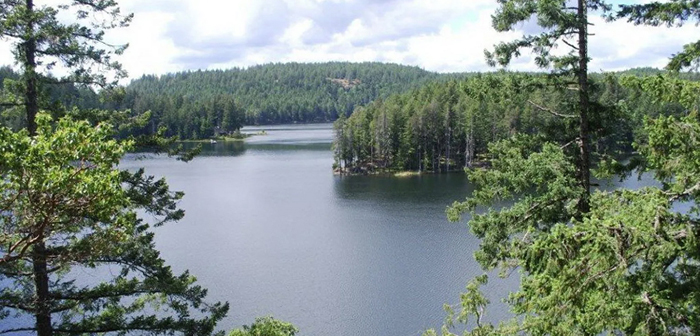
Ballots are in mailboxes, according to North Salt Spring Waterworks District (NSSWD) officials, and the decision on whether to authorize borrowing funds to support a provincially mandated water treatment plant at Maxwell Lake now rests with district ratepayers. 

NSSWD chief administrative officer Mark Boysen told trustees at the district’s meeting Thursday, March 27 that referendum mail-in ballots have been sent to eligible voters and should be in their hands soon, with information cards specifically communicating information about the water treatment plant expected to arrive shortly after. Trustees had approved May 8 as voting day for the referendum back in January. 

“The two opportunities to vote are the mail-in ballots — and those need to be sent in before May 6,” Boysen told trustees, “and then the second opportunity is in-person voting at the annual general meeting May 8, between 2 and 6 p.m. at the Community Gospel Chapel.” 

Voters will approve borrowing, but not the design of the plant or indeed whether to build one; Island Health has required the district complete the project as part of an effort to remove more of the organic matter that reacts with chlorine treatment to create trihalomethanes (THMs), such as chloroform and bromodichloromethane.  

Health Canada has said the health risks of THMs are far lower than those from consuming water that has not been disinfected, but is nonetheless directing utilities — including NSSWD — to make every effort to keep THMs at the lowest levels possible, so long as they do so without compromising the effectiveness of disinfection. 

The new Maxwell Lake Treatment Plant is expected to do just that, at a projected cost — inclusive of a 15 per cent contingency — of $14.6 million, with some of that already budgeted and $11.7 million funded through the planned 20-year loan, although notably ratepayers won’t see much change on their water bills — particularly, Boysen said, if NSSWD is successful in its recent application for a grant through the Canada Housing Infrastructure Fund. 

“The [ratepayers’ cost] increases have gradually taken place over the last few years,” said Boysen, “as part of the board and staff’s strategy to ease the impact of this increased cost.” 

Moreover, if the grant is approved, according to a January staff report, the loan could be as small as $5.7 million –– meaning between the grant, budgeted use of existing reserves and projected new connection revenue, ratepayers could see a zero per cent tax increase for 2026. 

“A good, simple answer is, if we don’t get the grants, the difference is [ratepayers] are going to be paying $100 more than they’re paying right now,” said district financial officer Tammy Lannan, meaning 2025’s $300 annual surcharge would rise to $400. 

Boysen said while the grant applications were formally closing March 31, he thought it was likely the district wouldn’t hear one way or the other until after the federal election April 28. 

Regardless, upon loan authorization approval, plant tendering and construction would be initiated this summer, according to staff, with a goal of completing the project by the end of 2026. More information is available online at northsaltspringwaterworks.ca

Unexpected Bateman exhibit opens April 11

Submitted by SALT SPRING ARTS 

Salt Spring Arts is proud to present Unexpected Bateman as their 2025 Spring Art Show: a compelling exploration of Robert Bateman’s artistic journey. 

The retrospective exhibition will be showcased at Mahon Hall from April 11 to 27, open daily from 10 a.m. to 5 p.m. Known worldwide for his masterful wildlife paintings, Bateman’s work is often associated with intricate detail and realistic depictions of nature. However, this exhibition reveals a different side of the artist. 

Originally curated by Paul Crawford, director of the Penticton Art Gallery, Unexpected Bateman offers a fresh perspective on Bateman’s evolution as an artist. 

“It challenges viewers to look beyond the familiar and consider the journey, one marked by curiosity, experimentation and bold choices, the cumulative impacts which have contributed to Bateman becoming one of Canada’s most celebrated artists,” said Crawford. 

The exhibition showcases works from Bateman’s early years, when he was influenced by abstract expressionism and modernist movements, as well as lesser-known pieces that highlight his ongoing artistic exploration. This selection allows visitors to witness the development of an artist who has never ceased to grow, adapt and push creative boundaries. 

Zoe Zafiris-Casey, co-curator of the exhibition, emphasizes the significance of this creative journey: “Robert has spent a lifetime honing his craft. As a young boy, he studied and rendered the flora, fauna and ecology around him — a theme which was to recur throughout his artistic practice. Over the years he explored various art movements and influences which shaped the evolution of his work, ultimately returning to his great love as a naturalist painter.” 

“I’m delighted to have this unique exhibition come to Salt Spring from the Penticton Art Gallery,” said Bateman. “I hope people enjoy seeing my early art, plus pieces that have never been exhibited before.” 

For Bateman, art is more than just capturing a scene — it is about connection to the natural world and an ongoing dialogue with the environments around him. This exhibition invites viewers to step into that dialogue, reconsidering not only Bateman’s legacy but also the nature of artistic evolution itself. 

Unexpected Bateman is on at Mahon Hall from April 11 to 27. The exhibition’s opening reception takes place Friday, April 11 from 6 to 9 p.m., followed by a public interview with Robert Bateman on Sunday, April 13 at 6 p.m. Curator tours run at 11 a.m. and 2 p.m. on April 14. A related youth art exhibit and maker station runs concurrently in the hall’s Annex Gallery.

Purchase tickets and learn more at saltspringarts.com. Don’t miss this rare opportunity to see Bateman’s work in a new light. 

Original Islands Trust Mandate is paramount

By ROB BOTTERELL

Every month I plan to write about an issue raised by constituents from Saanich North and the Islands, and offer my perspective as your MLA. This month my focus is on the future of the Islands Trust. 

In the mid-1980s, I was a trustee for Bowen Island and I now live on Pender Island. Then, as now, there were strongly differing opinions on how the Trust should operate and how it should be funded. But there is one thing we all agreed on: The 13 major islands and 450 smaller islands are a unique and very special part of the world that must be preserved and protected from the exponential growth in surrounding urban areas on Vancouver Island and the Lower Mainland. The Islands Trust mandate is clear: 

The object of the Trust is to preserve and protect the Trust Area and its unique amenities and environment for the benefit of the residents of the Trust Area and of British Columbia generally, in cooperation with municipalities, regional districts, improvement districts, First Nations, other persons and organizations and the government of British Columbia. 

Fast forward to 2025 and the Islands Trust has more challenges to preserve and protect the lands and waters in the Trust area. These challenges include accelerating climate change, drought, wildfires, development pressures, environmental and marine degradation, reconciliation with First Nations, lack of affordable non-market housing and access to health care for existing residents. And all of these challenges must be met in a fiscally sustainable way. 

Land use planning to preserve and protect the Trust area and its unique amenities and environment is the core responsibility of the Islands Trust. In the face of the above challenges, islands trustees have worked to develop a new Islands Trust Policy Statement to guide land use planning work. In particular, there has been a move, made in camera, to re-interpret the term “unique amenities and environment” to include matters that are not unique to the trust area, for example housing, livelihoods, infrastructure and tourism. 

Last year, the Islands Trust Council asked the B.C. government to conduct an open-ended review of the Islands Trust Act. Further, some islands such as Salt Spring are considering major changes to their official community plan. 

So where do I stand on the Islands Trust as your MLA? 

I respect every islands trustee. We may have our policy differences, but I do not question your sincerity, dedication and hard work. 

The original mandate of the Islands Trust is even more valid now than it was 50 years ago. The effort to re-interpret the mandate of the Islands Trust to cover land use planning issues that are not unique to the Trust Area is a serious concern and does not accord with my assessment of the law. 

The preservation and protection of the lands and waters of the Trust Area is, and must always be, paramount. 

That is not to say changes are not needed. Nobody I have heard from across the “preserve vs. develop” spectrum is completely happy with the Islands Trust and there are significant questions about the “how” of carrying out its mandate. 

Development and population growth in the Islands Trust area is not inevitable; it is a choice. The challenge we all face is to work together to identify the ways we can tackle the issues facing existing residents, for example, sourcing affordable non-market housing and ensuring timely access to health care, while preserving and protecting the unique amenities that brought us here in the first place. 

In my experience over the past 25 years as a lawyer working with First Nations and local governments on governance, land use planning and similarly complex issues, this means taking the time to build consensus, not division, on long-term solutions at the community level. It means ensuring there is extensive open, transparent and inclusive community engagement with everyone on proposed solutions. Solutions adopted that do not have general support are often doomed to failure and reversal. Finally, and most importantly, trustees making long-term decisions that affect the Trust Area must have an electoral mandate on those issues from their constituents. 

If trustees are intent on introducing a bylaw in June 2025 to make major changes to the policy statement that guides land use planning, I also urge each trustee to support further extensive, open and inclusive consultation with the public and First Nations on this bylaw. Final passage of such a potentially dramatic revision of the Islands Trust Policy Statement should be delayed until after the October 2026 elections in order to ensure trustees are given that mandate. 

In the current political environment, I will be very surprised if the B.C. government initiates an open-ended, or even a limited, review of the Islands Trust Act before the October 2026 Islands Trust elections. Premier David Eby and his cabinet are dealing with many other far more pressing issues facing the province. This is good news for the Islands Trust. It will allow time for everyone to work together to identify the specific changes needed to help the Trust meet its original, not re-interpreted, mandate to preserve and protect. 

I believe this approach of inclusive and open engagement at the community level is preferable to leaving potentially major changes to the Islands Trust Act in the hands of those within the B.C. government who do not have lived experience of preserving and protecting the environment of one of the most special parts of the world for future generations. 

As your MLA, I look forward to working with everyone across the Trust Area to build consensus on the path forward that respects the original preserve and protect mandate of the Islands Trust. 

The above is the first regular column from Green party Saanich North and the Islands MLA Rob Botterell. 

Editorial: Unknown impacts

0

Between the birds, the blossoms, the traffic and the Saturday Market opening, spring has very much arrived. And that means it’s tourist season. 

With many Canadians planning summer vacations that hold to this side of the U.S. border, communities like ours are cautiously anticipating a bumper crop of visitors. And against that backdrop, Salt Spring’s Local Trust Committee (LTC) has decided to amplify the province’s efforts to regulate short-term rentals in hopes of nudging the long-term rental market towards affordability.  

But the action –– a request to the province for Salt Spring to be included in B.C.’s principal residency requirement for short-term rental properties –– has led to competing theories on effects. They range from the utter death of tourism, as small B&Bs shutter from overregulation, to an explosion of new accommodations as formerly hesitant home-based entrepreneurs run toward the bright lights of clear guidelines. 

There is also a fair argument to be made that opting in will change little; Salt Spring’s land use bylaws already enumerate that the island’s only permitted short-term rentals are where home-based businesses are allowed by zoning, and that business is operating a bed and breakfast (including “a morning meal to paying guests”). And all home-based businesses, per those bylaws, “must be operated by a person permanently residing on the premises in which the home-based business is conducted.” 

Backing any of these theories with data requires an impossible accounting of current unpermitted activity, pent-up demand and what might be going on in islanders’ heads. 

Regardless, none of these possible results will happen immediately. As local trustee Laura Patrick was quick to point out, even if the province accepts the request (and we’ve no reason to believe they won’t), the decision does not go into force until November –– although anyone playing by the rules must still register by May 1 –– and it’s unclear even now how the provincial registry will be updated. 

Taking this action during such uncertain times is unquestionably bold; for the sake of everyone who lives and works on the island, we hope it helps. 

CRD transportation service opposition urged

By GARY HOLMAN

Salt Spring CRD director

The Capital Regional District (CRD) Board has approved its 2025 budget, including a 10 per cent requisition increase for regional and local services. Property tax notices, including a summary of the CRD requisition, will be mailed out later this spring.

The CRD is initiating a regional alternative approval process (AAP or “counter petition”) from April 3 to May 16 to determine voter support for a new regional transportation service. I opposed Salt Spring’s inclusion in the AAP since this service results in a significant requisition increase with little additional local benefit. I urge voters to look for information on the CRD website and in local media outlets, and to submit opposing petitions.

The CRD board has now passed the bylaws for two new, voter-approved regional services that can benefit Salt Spring at modest taxpayer cost: Foodland Access, and Biodiversity and Environmental Stewardship. These services will offer financial and other support to facilitate affordable land access for new farmers, and to coordinate ecosystem protection efforts throughout the region, including invasives removal. CRD staff will be conducting workshops on the kinds of initiatives that can be supported through these new programs.

At this time, the CRD Board is not proceeding with further investigation of regional harbour management options. As has been reported, the Local Community Commission is holding an April 10 workshop for stakeholders and First Nations on harbour issues. Improvements in management and support can be and are being made without a formal management regime, including: a more coordinated approach to derelict vessel removal by federal agencies, better access to washrooms and potable water in Centennial Park, more constructive engagement with harbour liveaboards, and monitoring of water quality and environmentally sensitive areas in the harbour.

The CRD Board approved my resolution urging BC Ferries to reinstate ferry advisory committees (FACs) or a similar advisory process. Paul Brent, the CRD director for the Southern Gulf Islands, and myself will be meeting with BC Ferries staff to discuss options for the direct engagement with senior BCF management that FACs had provided.

A number of new Level 2 EV chargers, with grant funding secured by the CRD climate action service, will soon be installed at several of our public properties on the island. BC Hydro (in partnership with the fire district) and Mid Island Co-op are installing Salt Spring’s first Level 3 “fast chargers.” New chargers will be user-pay to cover ongoing maintenance, repair and eventual replacement. 

BC Housing has now issued a request for proposals to manage its 36-unit supported and worker housing facility on Drake Road. While fire safety concerns for the building remain, this facility will be transformative for the island. Supported housing, year-round funding for our local homeless shelter and success of The Hearth project affirm Salt Spring’s commitment to our most vulnerable residents as one of the strongest in the region.

Including renovations of the Dean Road boarding house and the former Seabreeze Inne for health worker housing, more than 60 units of supported, affordable and worker housing are now being constructed on Salt Spring. Unfortunately, the province has ended its suite incentive pilot, but incentives are still available federally and through the CRD Rural Housing Program. I applaud the Local Trust Committee for opting into the principal residence requirement of provincial short-term rental legislation to help prevent illegal commercialization of scarce housing on the island.

The NDP–Green partnership agreement includes a commitment to build 30,000 non-market housing units over the next four years. Other new local and regional funding opportunities are also available, and I will continue working with all of these partners to help support affordable housing on Salt Spring.

For any questions or comments, please contact me at: directorss@crd.bc.ca.        

The author is CRD Electoral Area Director for Salt Spring Island.

Sarah Hagen tackles Goldberg Variations

BY KIRSTEN BOLTON

For ArtSpring

Canadian pianist Sarah Hagen performs a virtuoso program this Sunday, April 6 at 2:30 p.m., showcasing J.S. Bach’s formidable Goldberg Variations. 

It is part of an ongoing celebration of the release of her recording of the masterwork, her fourth of her critically-acclaimed and award-winning albums.

Cherished by many, the Goldberg Variations are emblematic of keyboard virtuosity, rich expression and hardcore classical interpretation. Hagen’s interpretations have been described as “outstandingly inventive” (University of Waterloo Gazette) with an approach that “combines unfettered joy, wide awake with wonder, requisite pedagogy and the ability to make the instrument bend to her will […] Something to absolutely die for!” (Whole Note Magazine). 

Consisting of an opening aria and then 30 different variations on it, the Goldberg Variations — named after its first performer Johann Gottlieb Goldberg and published in 1741 — is said to be Bach’s most popular keyboard work and covers so much musical ground, the piece feels epic. 

For those who may not be as familiar with the music, the aria was used with dramatic effect to introduce Hannibal Lecter’s cultured intelligence from his jail cell in The Silence of the Lambs. In The English Patient, the nurse plays Goldberg’s first variation from the shelled monastery to evoke comfort, nostalgia and humanity before being interrupted by the soldier sweeping for mines — such is the emotional range and nuance of Bach’s compositions.

From the opening aria to its 30 variations, classical listeners are confronted with their need to define, categorize, and classify what they’re hearing in a joyful work that defies being pigeon-holed. Hagen will offer a Glenn Gould performance and short introduction to this marvellous and intense piece before playing the full work.

Hagen has been awarded Artist of the Year by both the Ontario (2017) and B.C. Touring Councils (2015), toured across Canada and Europe, and twice played New York City’s Carnegie Hall. She has been heard nationally on CBC Radio 2’s In Concert, completed five residencies at the Banff Centre for the Arts, and enjoyed two terms there as collaborative pianist.

During her years on Vancouver Island, Hagen founded nine concert series, curating each one individually and inviting artists from across Canada and around the world to share the stage with her.

In addition to writing wine reviews and matching wine to music for her blog “Artist Wines: Uncorking musician-priced cellar secrets,” she tours a one-woman musical comedy show called “Perk Up, Pianist!” of which the Edmonton Journal wrote, “Her comic timing is as solid as her musical meter.”

Exclusive to ArtSpring, for the first time, Hagen has paired a white, red and sparkling recommendation to match the mood of three of the variations. Sponsored by Voyage Liquor Merchants, the wines will be served at the concert. Hagen’s CDs will be available for sale, as well as art prints she created for Goldberg Variations titled Oneness.

Tickets are $35 ($5 for youth), with $15 Theatre Angel Program tickets on request in person or by phone while they last.

Rare Renaissance show brings history to life

By KIRSTEN BOLTON

For ArtSpring 

If you are a music, dance or history buff, how rare is the opportunity to experience the music and dance of 15th- and 16th-century Renaissance France and Italy played on stage today using period instruments like those used at court festivities, some of which were organized by Leonardo da Vinci himself? 

In partnership with the Early Music Society of the Islands in Victoria and Early Music Vancouver, ArtSpring is pleased to welcome Ensemble Doulce Mémoire from France’s Loire Valley for a very special presentation on Thursday, April 10 at 7:30 p.m.

For over 30 years, Ensemble Doulce Mémoire has masterfully represented the spirit of the Renaissance in performances around the world, from Versailles to the Sultan’s Palace in Istanbul with an evolving cast of musicians, actors, dancers and singers. For this tour, the ensemble has partnered with classical and contemporary choreographer, dancer and French literature and musicology scholar Hubert Hazebroucq, who began to specialize in Renaissance and Baroque dances in 1998. 

The program — entitled Let’s Dance! — challenges how we generally imagine early dances and music as highly stylized and solemn and instead shows what they were really like, which was spectacular and sumptuous theatre.

The experience is dedicated to sharing the originality, diversity, inventiveness, virtuosity and energy of the many forms of dance during the Renaissance, but it is also a journey back in time with period instrumentation. 

Shawms, crumhorns, lutes and recorders combine with bassoons and oboes to capture both regal authority and crisp lively dance steps of the day. In the case of the reconstructed column flute, Doulce Mémoire is the only known ensemble in the world to play this instrument today.

Tickets for the April 10 show are available through ArtSpring. 

ARCHIBALD, Shareen

It is with broken hearts that we announce the passing of our dearly beloved daughter, sister, auntie, cousin and friend, Peggy Shareen Archibald.

Shareen Archibald was born on Feb. 1, 1982 and passed away on March 14, 2025 with cancer- related challenges, complicated some while enduring the recent sudden passing of her beloved teenage son.

Shareen is dearly loved and was generously supported and sustained by close friends and a large family.

Shareen celebrated life while alive repeatedly exploring the passionate, ecstatic aspects of living through gardening, music, dance and travel.

LALONDE, Michael

It is with a heavy heart & profound sadness that I announce the peaceful passing of my wonderful husband Michael Lalonde at Greenwoods on Saltspring. He was 72 years old. Michael had temporal frontal lobe dementia.

Born in Cornwall Ontario, Michael had a real zest for life. Was a very peaceful man, searching for truth & enlightenment, treating everyone with kindness & respect. Everything he did, he did well. He was an avid reader and loved all genres of music, playing the accordion and guitar. George Harrison being one of his favourite singers. He did very creative rope work for boats, making rope mats. At Expo 1967, he had a special place in the scout pavilion where he gave examples on how to make fishing flies to people visiting. He loved to paint, doing watercolours and loved his sailboat. Michael worked at Foxglove for many years when it was owned by Tom Gosset. He worked on the sea walk when they first started building it and as a cook for the Crest restaurant in town many years ago. He had his own gardening business called Sol Gardening for many years. He owned Parkside News which he ran in Grace Point Square for over 8 yrs.

He would spend all his days outside after he retired, working in the yard.

He was an avid runner & cyclist. He loved to call Saltspring his home.

Michael was predeceased by his mother Therese Marie Anna Lalonde who passed on Nov 27/ 1979.

He is survived by his loving wife of almost 47 years Alane ( Lesk ) Lalonde, loving sister Diane Proulx ( Paul ); Stepfather Charles Henri Pelletier, Aunt Ida & many nieces & nephews. Beloved brother in law to Kevin Lesk (deceased) (Bonnie); Karen Boals (Nelson) (deceased); Martin Lesk (Rose) & Raymond Lesk (Julia). A special thank you to Greenwoods & Dr Kalf who took care of Michael in his last years with great compassion & caring.