Audrie passed away peacefully at Greenwoods on March 20, 2025. She will be sadly missed by family and friends.
Special thanks to the Greenwoods staff: Dr. Reznick, Darcy O’Donnell, Nikki Menard; the Anglican Church and the ambulance drivers.
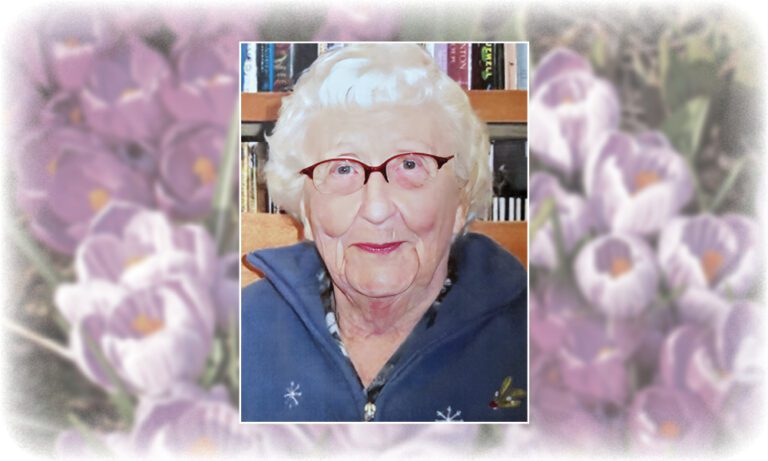
Audrie passed away peacefully at Greenwoods on March 20, 2025. She will be sadly missed by family and friends.
Special thanks to the Greenwoods staff: Dr. Reznick, Darcy O’Donnell, Nikki Menard; the Anglican Church and the ambulance drivers.
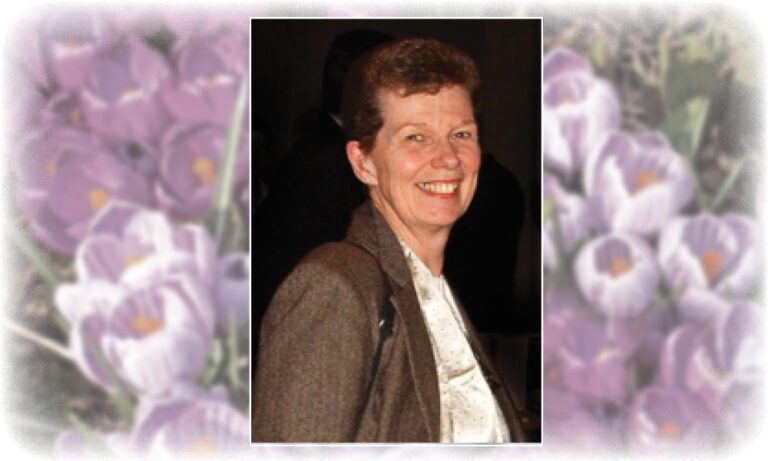
Rosemary passed peacefully away at Lady Minto Hospital in Ganges, British Columbia on April 24, 2025. She was born May 1, 1943, daughter to Rose Martha and Otto Ommer in Glasgow, Scotland, big sister to Andrea.
Rosemary was fiercely intelligent with a restless and inquisitive mind. Her academic efforts earned her respect and admiration not only in Canada but across the world.
She was an avid reader, an accomplished poet, a mentor and teacher, and dear friend to many. She is survived by her sister Andrea (Brogan), her children Keith, Ken, Catriona, and Andrew, her beloved grandchildren Liam, Zachary, Spenser, Miranda, Tessa, Annika, and Lorenzo, and her beloved nieces and nephews Clare, Nikki, David, Andrew, and Tom.
Your memory undiminished, your earthly duties done.
Rest easy Rosemary; the fray is finished, the battle won.
Her children would like to say a special thank you to the Acute Care team of doctors and nurses at Lady Minto Hospital who made her last days comfortable and happy.

Construction on Salt Spring Island’s busiest road will be picking up the pace this spring, officials said.
Starting Tuesday, April 1, Northridge Excavating Ltd. crews will be actively working on Fulford-Ganges Road between 7 a.m. and 5 p.m. on weekdays, according to a construction notice, adding two hours to the workday that previously affected traffic between 7:30 a.m. and 3:30 p.m.
Those additional 10 allowed working hours per week have been granted by the Ministry of Transportation and Transit, according to the company, “to allow for an acceleration of the schedule.”
“We understand that increased working hours on the road could create more traffic disruption,” read the notice. “We thank you for your patience as we work hard to complete this project.”
An update report in February had set a completion date for the project on June 30; work began in September 2024.
Improving the 1.6-kilometre stretch of Fulford-Ganges Road from Seaview Avenue to Cranberry Road known locally as Ganges Hill is a $22.9-million project, with planned improvements including pedestrian crossings and refuge areas and paved shoulders for pedestrians and cyclists — a 1.2-metre-wide shoulder heading north (or downhill into Ganges) and 1.8 metres in the southbound direction.
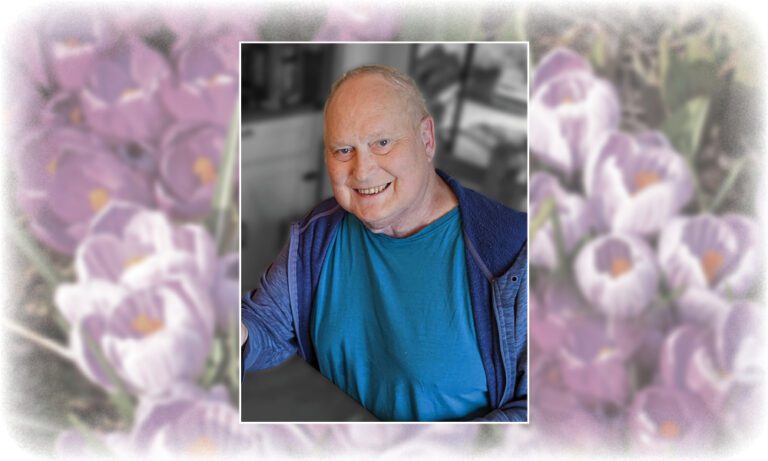
Dave passed away on Friday March 21, 2025 surrounded by family at the Lady Minto Hospital on Salt Spring Island.
We have lost one of the good guys. Dave said that he wasn’t afraid of dying but hated to leave. Dave chose his time which was a gift to all of us.
David Earl Blizzard was born in Amherst, Nova Scotia. When he was three years old his family moved to Montreal and then, eventually to Greenfield Park, Quebec.
He was predeceased by his father Ronald Blizzard, mother Eva (Gates) Blizzard, brothers Ronald, Allan and Carl, and sister-in-law, Helene Thifault.
Dave is survived by his wife of fifty years Carolyn (Walker) Blizzard, daughter Emily, son Andrew, {wife Brieanna and his adored best buddies, grandsons Sebastian and Rowan} and son, Ian. He is survived by his sister Carolyn Blizzard DeYoung, her husband, Allan and nieces and nephews, Laura (Chad), Adam (Susie), Allison (Sean) and Nick (Joelle) plus all of his wonderful great nieces and nephews. Dave is also survived by his brother, Ken Blizzard (Helene), his mother-in-law, Sylvia Walker (Tom), brother-in-law, Robert Walker (Rose), niece Sarah Kooijman (Maarten) and their lovely children, Astrid, Beatrix and Finnick. Family was everything to Dave.
Dave and Carolyn left Greenfield Park in 1975 and moved to Kitimat, British Columbia where Dave worked for Alcan until 1979. Dave then worked for Chevron in Calgary and Kuwait for thirty years. He and Carolyn built their retirement home on Salt Spring Island, British Columbia after falling in love with the island during a visit.
Dave made friends wherever he went and loved nothing better than sitting on his deck sharing food, drink and stories with them. Having always played baseball or racquet sports, when he moved to Salt Spring he joined the local tennis club. The rumour is that at the net Dave played a version of both sports. Even through chemo and radiation, he managed to play a modified version of tennis once or twice a week thanks to his tennis buddies.
Dave loved board games and that is a bit of an understatement. At one point he owned around 5,000 of them. He loved introducing people to games and teaching them how to play. For many years he was involved with a Calgary board game convention called FallCon and had gaming friends around the world.
Dave’s battle with prostate cancer started in April 2018. He researched treatments and medications often surprising his doctors with his knowledge of cutting edge treatments. Throughout this fight he was optimistic and willing to try any treatment even though we knew there would be no cure. He would want me to tell anyone with a prostate to get a baseline PSA test and a digital exam.
We would like to express our deep gratitude to his doctors, Dr. Atwell, Dr. Pai, his primary care physician, Dr. Applewhaite, to our friends Dave and Marnie for always being there for us with an offer of help and Dave’s tennis friends who checked in on him and boosted his spirits. To doctor Holly Slakov who was with us at the end, thank you so much for your support, compassion and serenity.
There is no memorial planned at this time. Donations to Canadian Cancer Society are always appreciated.
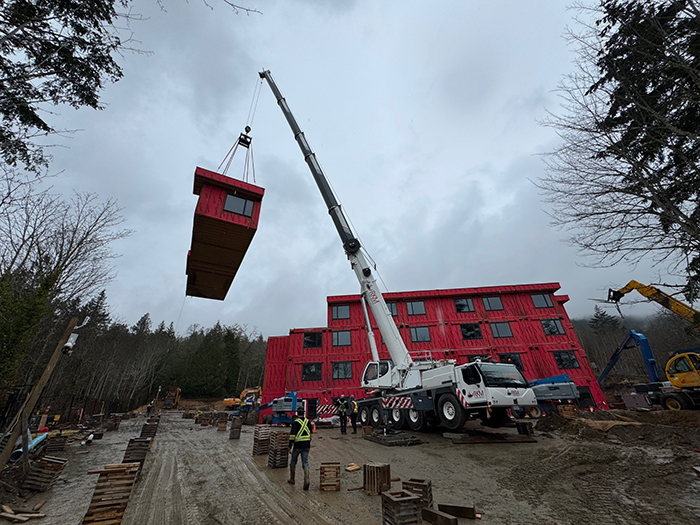
A long-awaited supportive housing project finally under construction on Salt Spring has also unexpectedly become the island’s first four-storey structure, alarming fire officials who worry that in an emergency, their equipment simply won’t reach.
First announced by the province in 2022, the modular units comprising BC Housing’s Drake Road project were trucked in and set into place last month, stacking up what will soon become 32 units of supportive housing –– as well as four additional affordable rental units –– at 161 Drake Rd. Part of the project’s “fast track” included a statutory immunity plan, meant to sidestep local regulations in the name of speed as the province acknowledged the affordable housing crisis in B.C. communities.
As a result, BC Housing was not required to obtain zoning or building approvals from neither the Islands Trust nor the Capital Regional District, under the province’s authority exercising its power of paramountcy. Relevantly, Fire Chief Jamie Holmes told trustees for the Salt Spring Fire Protection District Monday, March 17, that meant they weren’t bound by the island’s land use rules –– including one about limiting height.
Salt Spring’s Land Use Bylaw prescribes a two-storey building limit, although it does specify the counting may begin atop a basement –– and since the language defines a basement such that it need only be “partly underground,” historically three-storey buildings on even gentle slopes have been permitted, so long as three storeys are above-grade on one side and just two on the other.
The new supportive housing structure, however, has three storeys above grade on the north side and four storeys on the south.
In response to questions, Holmes told trustees he had raised concerns to BC Housing about the height being over the Islands Trust’s limits –– which were in place partly, he pointed out, “because that’s what our ladders can safely reach.”
“Our concern really is that if a fire happens and the hallway [exit] is compromised, we do not have a ladder capable of doing a rescue from the south side of that building,” said Holmes.
“We will not be able to ladder any of the windows on the fourth storey.”
Adding an “elevating device” –– firefighter parlance for an aerial ladder or platform mounted on a truck –– to the district’s fleet that is capable of reaching the fourth storey is an expensive proposition, Holmes warned, with a suitable apparatus likely in the $2- million range, and difficult to source quickly even were the funding available.
Holmes said the project’s architects and engineers told local firefighters they were confident the extensive sprinkler system in the building would protect the occupants.
“I raised the question of what happens if the occupants override the building’s systems,” said Holmes, “and they said they would be aware if that happened because there will be monitors, and staff on the site.”
In response to questions from the Driftwood, BC Housing confirmed the building had been designed to “meet or exceed” the applicable BC Building Code, including life and safety requirements, noting both upper and lower parking lots –– the north and south sides of the building –– were “fire truck accessible.”
“The building is fully sprinklered, individual units and common areas are equipped with combined heat/smoke detectors, and there is a two-stage fire alarm system,” according to BC Housing’s response. “The building has been designed to take advantage of the site’s significant slope and has three stories at-grade and four ground-oriented affordable rental units below-grade.”
The four affordable homes, they clarified, are for individuals who can live independently without additional services.
BC Housing also said the organization was in the process of selecting a qualified non-profit operator to provide 24/7 staffing and support services to the supportive housing residents –– including two meals a day, laundry services and connections to wellness and health supports –– and that the selected operator will be announced once confirmed.
Holmes told the board his understanding was that BC Housing was adding a fire hydrant on-site and upgrading the water line there for emergency use and to support that sprinkler system. Local officials have said the project’s domestic water needs will be met through wells drilled at the property.
The fire board referred the issue to its communications committee, who will likely continue to look for help –– financial and otherwise –– from senior government.

BY KIRSTEN BOLTON
For ArtSpring
For those who consider themselves piano aficionados, have a handful of piano favourites, or ever took piano lessons as a child, your appreciation of the range and impact of the piano and its signature musicality will be explored and celebrated in fine form at ArtSpring on Tuesday, April 1 at 7:30 p.m.
In the line-up is 50 musical masterpieces in two 50-minute sets presented as evidence by lifelong friends and musical colleagues Nico Rhodes and Patrick Courtin, who claim to have been “shocked and appalled by discovering that the piano just isn’t ‘cool’ anymore.”
Armed with the music of the greatest composers, songwriters and performers of the past 300 years, and the technology of the 21st century, the multi-talented duo delivers everything from classical piano raptures to bombastic boogie woogie; romantic piano ballads to ‘80s keyboard synth as evidence. It promises to be a mishmash of theatre, comedy, audience participation, heartfelt stories, a pinch of history and a world of musical madness.
The show’s full eclectic program is posted on ArtSpring’s event calendar and includes everything from Mozart’s Sonata No.16 in C Major to Darth Vader’s Imperial March by John Williams. Queen’s Bohemian Rhapsody, The Beatles’ Hey Jude and Elton John’s Tiny Dancer get acknowledged alongside Rhapsody in Blue by George Gershwin, Nocturne No. 2 in E-flat Major by Frédéric Chopin and Habanera (Carmen) by Georges Bizet.
Rhodes was most recently at ArtSpring last season accompanying his mother Joëlle Rabu and her popular cabaret-style performance of Edith Piaf. An in-demand young arranger/musical director with 40 stage musicals and 400 original compositions to his credit, Rhodes is a proud Vancouver Island artist who was recognized in 2019 with a Nanaimo Emerging Cultural Leader Award.
Courtin is also a Vancouver Island pianist, multi-instrumentalist, composer, arranger, music director and teacher.
The concept of Piano Heist originated in Rhodes’ mind a decade ago. He admits he never liked adhering to boundaries of conventional genres and wanted to play all kinds of music on the same night: from Bach to Jerry Lee Lewis to Freddie Mercury. As a drama kid who grew up to write theatre productions, Rhodes wasn’t satisfied with merely showcasing a series of songs.
“He wanted to make people laugh in the spirit of showmen like Charlie Chaplin, Laurel and Hardy, Victor Borge and Tenacious D,” as described by Pique Newsmagazine.
As the review would go on to say, Rhodes sat on this idea for years, feeling like he didn’t have the tools or the bravery to commit. At last he described the dream gig to longtime agent and family friend Margot Holmes, wanting to reset his life after the COVID-19 pandemic. Her first advice: “You need another musician. [Doing it by yourself] is going to be an insane amount of work . . . it’s better if you have someone else on stage you can play off of.”
Courtin picked up the phone later that night. He talked things over with Rhodes, and Piano Heist was officially born in 2022. ArtSpring is part of a select seven-venue B.C. tour.
Thank you to Kate Merry for sponsoring this performance.
Tickets are available through ArtSpring online and through the box office.
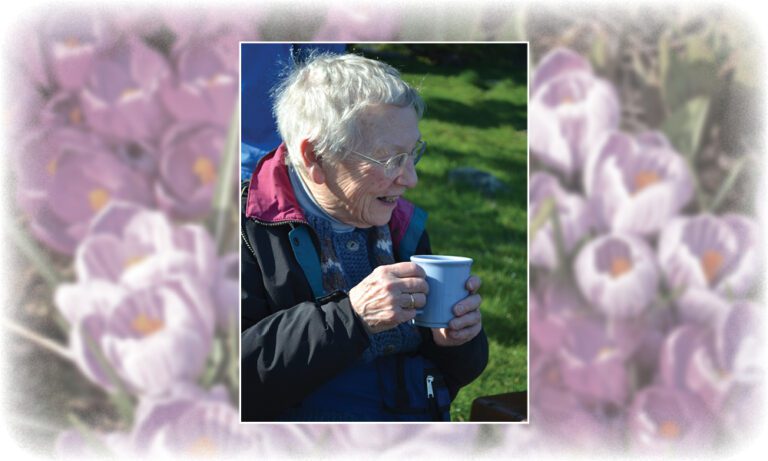
Audrey Louise Inch was born in Hamilton, Ontario, the third of four children, to George and Marjorie Inch. She grew up in Hamilton and went to McMaster University, where she earned a B.A. Later, she got her teaching credentials and taught in Tillsonburg.
In 1955, she married John Starr and they moved to Sarnia where John worked at Dow Chemical. Audrey taught there for a few years, until the arrival of their first child, Jane, in 1958. Their second child, Alison, followed 18 months later.
In 1961 they moved to Edmonton, Alberta, where they welcomed sons Tommy (1962) and Peter (1964). Sadly, Tommy was born with haemophilia and died at the age of two, in 1965.
Later, Audrey went back to school, earning a B.Ed. and a teacher-librarian certificate at the University of Alberta, and became a teacher-librarian with the Edmonton Public School Board. She started at Grace Martin Elementary School, and later split her time between Oliver School and MacDougall School.
In 1981 her marriage to John ended, and later she met Bob Wild, the new minister at St. Augustine’s Anglican Church in Edmonton. They were married on New Year’s Eve, 1983, a marriage that lasted 41 years.
In 1989 Audrey and Bob retired and moved to Salt Spring Island, where they built a lovely home and garden. They had an orchard, a greenhouse, a workshop for Bob, and masses of gorgeous flower beds. Audrey was well-known (and often teased) for the hundreds of tomato plants she started and gave away every year.
Both before and after retirement, Audrey and Bob enjoyed travelling, camping, and canoeing. They had some wonderful trips to places such as the British Isles, the Bowron Lakes, Haida Gwaii, the BC Coastal Inside Passage, northern BC and Yukon, Canada’s East Coast, and, of course, visiting extended family and friends in Ontario.
Audrey volunteered at the Salt Spring Public Library, working on the circulation desk, introducing the Dewey Decimal System, helping with the change to a library computer system and the transition to a new library building, and sending out overdue notices. In 2022 she received an award for Lifetime Achievement in Library Service. She couldn’t help herself – even when she and Bob sold their house and moved to Meadowbrook, she volunteered to organize their library, too.
While building their dream home on Salt Spring, Audrey and Bob adopted Daisy, a border collie, as a companion. Daisy was later followed by Mattie, and then Sam, the labradoodle. Sam accompanied them to Meadowbrook, where he was very popular and lived to a good age.
She and Bob were committed to service and social justice work. Audrey was active in the Anglican church, Ometepe Coffee and possibly her favourite, the Raging Grannies. She had a real knack for topical song parodies. She donated to many social and environmental causes.
She campaigned for (and donated to the building of) the Rainbow Recreation Centre, where she enjoyed many years of aquafit classes. She loved swimming from a very young age.
Predeceased by son Tommy, parents George and Marjorie Inch, brothers Doug and George Inch, and Bob’s grandchildren Sara Ewen and Michael Morgan.
Her husband, Bob Wild, followed her into the unknown on March 14th, 2025.
Audrey is survived by her sister Jacqueline (Dennis) Carson; children Jane Starr (Marcel Chichak), Alison Starr, and Peter Starr; grandchildren Tom Chichak (Pam Kriangkum), Will Chichak, and Riel Starr; Bob’s children Anne Millerd (John) and Peter Wild (Tara) and their three siblings (Cathy, Stephen and Nora), Bob’s seven grandchildren and seven great-grandchildren; and many nephews, nieces, and other relatives in both the Inch and Starr families.
In Audrey’s memory, donations can be made to Medecins Sans Frontieres, Nature Conservancy of Canada, or the Salt Spring Island Conservancy.
Cremation has taken place. A joint service and reception are planned for Bob and Audrey for Saturday May 3rd, at All Saints Anglican Church on Salt Spring Island. Details to be announced.
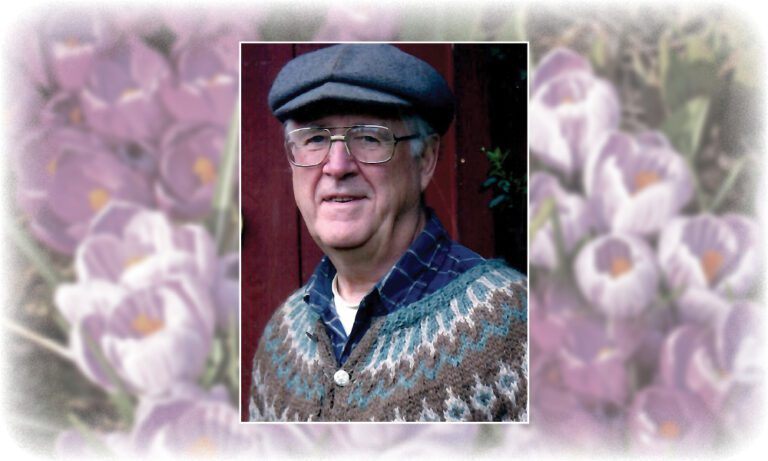
Robert Wild was born in Montreal, Quebec, to Elsie and Harold Wild, eldest of three children. Bob grew up in Montreal, attending McGill University where he earned a BA in 1949. Bob loved academia and made lifelong friends in the Student Christian Movement at McGill. He married Barbara Smardon in 1949. Their first child, Cathy, was born in Montreal in 1951.
Bob continued his studies at Huron Theological College, earning a Licentiate in Theology in 1954. During Bob’s final year at Huron college, Bob and Barbara moved to St. Thomas, Ontario where Bob acted as Deacon at St Hilda’s church before being ordained as an Anglican priest. Bob and Barbara’s second child, Stephen, was born in St Thomas in 1954. Upon ordination, Bob accepted a position as parish priest of the two-point parish of Christ Church, Glanworth and St Hilda’s St Thomas.
While living at Glanworth, Bob and Barbara welcomed their third and fourth children, Nora and Anne. The family lived in an old stone rectory with minimal financial resources, struggling to pay for coal and other essentials, and depending on the generosity of the farming community which Bob served.
Throwing himself into his work, Bob described this period of his life as a time when, “he was determined to bring in the kingdom of God single-handedly.” In 1959, unable to meet this goal to his own satisfaction, Bob stepped away from parish work, accepting a position as Diocesan Secretary Treasurer and traveling missionary with the Synod Office in Saskatoon.
For the next five years, he spent his weekends driving the highways of southern Saskatchewan, holding services where no Anglican priest was stationed. He had many adventures on these weekends, driving through the coldest winter nights, meeting members of the farming community in their homes, and taking services in remote churches. Bob and Barbara’s fifth child Peter was born in 1959.
In 1964 Bob became the Anglican Chaplain for the University of Saskatchewan in Saskatoon. Here, Bob enjoyed the freedom to encourage dialogue and debate among students, embracing the campus spirit of the 1960’s. He and Barbara regularly hosted large gatherings of young people, offering fellowship, along with generous helpings of chili con carne.
In 1969 Bob returned to parish work at St Francis-in-the-Wood in West Vancouver, BC, where he served for ten years. During this time Bob took a sabbatical year to complete a Master’s Degree in Theology from Trinity College in Toronto. An avid reader, Bob enjoyed his work at St Francis very much, sharing his studies about the history of the early church, and encouraging debate and discussion among parishioners.
Bob’s marriage with Barbara ended in 1979, which sent Bob into a time of sadness and introspection. He left St Francis and spent four months traveling in Europe by himself with a backpack. This trip took on the significance of a healing pilgrimage for Bob; the experiences he had on this trip continued to ground and inspire him for the rest of his life.
On his return from Europe, Bob accepted a position as parish priest at St Patrick’s Mission in Edmonton for one year before moving to St Augustine’s Church, also in Edmonton. At St Augustine’s Bob met and married Audrey Starr in 1983.
Bob and Audrey retired to Salt Spring Island in 1989, where they built a beautiful home with a garden, greenhouse and large wood-working shop for Bob. Bob was a talented woodworker, making many beautiful furniture pieces both for himself and Audrey and for many other people and organizations.
Throughout his life, Bob enjoyed outdoor activities including golf, tennis, alpine and cross-country skiing, camping, canoeing and fly-fishing. Audrey shared Bob’s passion for the outdoors and, together, they had many adventures including particularly memorable trips to Myrtle Lake, the Maritime provinces and the British Isles.
Bob was known and loved by many for his spiritual guidance and leadership. He was also a passionate advocate for social justice and protection of the environment. He supported many charities. On Salt Spring Island he was active in the Ometepe Coffee group and was a founding member of the Salt Spring Documentary Film Festival. He led retreats and spoke at conferences. He authored four books: Frontiers of the Spirit, A Christian View of Spirituality (1981), Sacred Presence (2004), Realm of the Sacred (2014) and A Primer for Spirituality in the 21st Century (2019).
Bob was predeceased by his beloved wife Audrey by ten days, also by grandchildren Sara Ewen and Michael Morgan.
Bob is survived by his children Cathy Kleinman, Stephen Wild, Nora Morgan, Anne Millerd (John), and Peter Wild (Tara); step children Jane Starr (Marcel Chichak), Alison Starr, and Peter Starr; grandchildren Fredrick Ewen, Peter Millerd (Jennifer), Frances Millerd (Brock Hunter), Jeff Millerd Sol (Laura Richardson Sol), Joshua Kleinman, Rosa Levin (Denis), Kieran Wild, Tom Chichak (Pam Kriangkum), Will Chichak, and Riel Starr; as well as greatgrandchildren Reuben Sol, Orïa Sol, Taika Sol, Benjamin Millerd, Luke Millerd, Anna Hunter and Claudia Levin.
Donations can be made in Bob’s name to the Primate’s World Relief and Development Fund.
A joint service and reception is planned for Bob and Audrey on Saturday May 3rd, at All Saints Anglican Church on Salt Spring Island. Details to be announced.

Salt Spring’s Local Trust Committee (LTC) has decided to request the island be included in the “principal residency” requirement of the province’s Bill 35 — the Short-term Rental Accommodations Act.
The decision came at the Thursday, March 20 LTC meeting, arising from a staff report by Trust bylaw compliance and enforcement manager Warren Dingman on various short-term rental enforcement issues.
The LTC decision means that owners of visitor accommodations units, now including bed and breakfast operations, must affirm when registering with the province by May 1 that units offered are “in that person’s principal residence, in a secondary suite or other accessory dwelling unit on the same property as the principal residence such as a basement suite or laneway home, or in both.”
Bill 35 was passed in order to discourage residential housing from being used for tourist accommodation purposes.
Islands Trust communities were initially exempted from Bill 35’s principal residency requirements, but LTCs were given the choice to “opt in” by language in the 2023 act –– although until now only Gabriola Island had done so.
Discussions held between the LTC, Salt Spring Local Community Commission, the Salt Spring Accommodations Group (SSAG) and Salt Spring Chamber of Commerce since the legislation was first introduced more than a year ago, determined that opting in was desirable.
At Thursday’s LTC meeting, SSAG president Peter Lloyd-Jones said his group supported the move, with a couple of caveats.
“I think it will provide us with stronger tools for managing short-term vacation rentals and also establish a new provincial role for the management and regulation of short-term rentals on Salt Spring, and enforce the principal residency rule, which we think is very important,” he said.
The “caveats” are that sections of the island’s Land Use Bylaw 355 related to tourist accommodation “should be revised in order to be in compliance or work with the legislation and actually be enforceable,” and that a business licensing system be introduced.
Bill 35’s regulations require a “valid business licence number” be included in the provincial registry, where local governments require them. In the Capital Regional District’s electoral areas, businesses are regulated by zoning and rural land use bylaws, but currently no business licences are issued.
Trustee Laura Patrick said some people have questioned why the LTC didn’t opt in to Bill 35 last year, and told attendees no one knew at that time what the implications would be.
“The regulations weren’t out. It was unknown. And here we are a year later — we have the accommodations group, as well as the Salt Spring Chamber of Commerce, supporting us for opting in.”
She observed that the island’s tourist accommodation regulations were built “when the likes of Airbnb and others were not even imagined,” and said it was good to see the Trust working cooperatively with the local industry on this issue.
Patrick has since stated that the opt-in request, if accepted by the province, would not go into force until Nov. 1.
“At present and in accordance with the act, bed and breakfast operators must register by May 1. We have not had any conversations with the province as to how the registry will be updated — after Nov. 1 — to include the provincially required evidence of principal residence.”

An innovative partnership between the Salt Spring Island Garden Club and the island’s Farmland Trust hopes to cross-pollinate knowledge surrounding a less examined part of resiliency, as Störii and Dane Wild from Wild Folk Herb Farm present a four-part course on growing a thriving medicinal herb garden.
Herbal Medicine for Resiliency runs four Sundays in April and May, with hands-on sessions at both the Farmers Institute and the farm, taught by registered herbal therapist Störii Wild and biochemist and plant biologist Dane Wild. Participants will make their own fresh herbal remedies, Dane said, and take home the knowledge needed to grow and create their own herbal preparations –– as well as the confidence, he added.
“Being able to say, ‘my daughter has a sore throat, here’s this beautiful thing that I grew,’” said Wild, “and knowing you can just make some tea is so empowering.”
Educators at heart and in practice, the pair have been teaching courses to small groups on Salt Spring for three years, he said, starting with “little kid” classes and camps that grew as the children did.
“Now we’re on our fourth year with many of the same kids,” laughed Wild. “So, now we’re teaching teen courses!”
For adults, he said, their usual immersion programs run for eight months, one weekend per month, with workshops interspersed throughout the year –– following pivotal moments in the growing cycle. This workshop will follow along with participants as they start from scratch, so to speak, and work their way toward a harvest.
“For example, the first session is going to be here on the farm, talking about planning aspects like where the sun is, some fun activities,” said Wild. “And we’ll ask questions about the kind of herb garden you want, what your approach to herbal medicine is, and whether you want to sprinkle things into your vegetable garden to enhance the flavour and growth of those vegetables.”
After that, he said, the course will go through preparing soil, seeding and planting herbs, and when and how to harvest properly –– all with a little botany woven in, Wild said, teaching how and why the plants grow. Throughout, he emphasized, participants will make medicine at every class.
“We teach principles and elements, so that whatever you do, however you garden and however big your garden is, you should be able to take things back home –– whether it’s a balcony and two pots, or an acre,” said Wild. “Until really recently, growing food and growing medicine was one and the same, in practice –– inseparable, intertwined. We love kind of retying those threads, because gardening is so fun, and brings so much joy.”
The course runs from 11 a.m. to 1 p.m. April 6 and 13, and May 4 and 11. For information or to register, visit the link on ssifarmlandtrust.org or wildfolkherbfarm.com.

Your community newspaper since 1960
241 Fulford-Ganges Rd.
Salt Spring, BC V8K 2K7 Canada
Office hours:
Monday–Thursday 9 am–4 pm
Friday 9 am–noon
250-537-9933
driftwood@gulfislandsdriftwood.com