Home Blog Page 80

Guests make film festival extra special

BY STEVE MARTINDALE

FOR SS FILM FESTIVAL SOCIETY

The Salt Spring Film Festival celebrates its 25th anniversary from Friday, Feb. 28 to Sunday, March 2 with world-renowned environmentalist and broadcaster David Suzuki and his partner Tara Cullis, co-founders of the David Suzuki Foundation, presenting the Opening Night Gala film.

The Giants is an award-winning profile of Australian environmentalist and politician Bob Brown, which will be followed by 42 more documentaries screened over the subsequent two days at Gulf Islands Secondary School (GISS). This year’s program boasts a remarkably balanced line-up of films, with several documentaries focusing on the recent rise of anti-democratic forces around the world, alongside an array of joyful and entertaining films on a wide range of subjects, including music, fashion, sailing, filmmaking, photography, children’s picture books, theatre, dance, artificial intelligence, soil regeneration and food sustainability.

The program includes two Oscar nominees, one of which is almost certain to win the Academy Award for Best Documentary: Porcelain War, Brendan Bellomo and Slava Leontyev’s visually astonishing portrait of how Russia’s brutal invasion of Ukraine has forced Ukrainian artists to become soldiers; and Sugarcane, Julian Brave NoiseCat and Emily Kassie’s staggeringly powerful indictment of the Canadian residential school system.

In addition to presenting the opening night film on Feb. 28, Suzuki will present the Saturday morning screening of The Stand, a captivating NFB film in which he is featured. Haida filmmaker Christopher Auchter from Burnaby will present the Sunday afternoon screening of the film, which examines the Haida Nation’s pivotal anti-logging stand-off on Lyell Island, revealing how much — and how little — has changed in this province since the 1980s.

Half a dozen other documentaries at the festival will be presented by visiting filmmakers, including festival favourite Suzanne Crocker from Dawson City, Yukon, presenting her short film The Home Team, about immigrants from warmer climates adapting to life in Northern Canada. Crocker was last here with her first feature film All the Time in the World, which was named Audience Favourite in 2015; her second feature First We Eat was presented at Fulford Hall in 2021.

Screening alongside The Home Team is Anthony Bonello’s spectacular short film Farming Turns, presented by film subjects Chris Rubens and Jesse Johnston-Hill. Rubens is a world-class downhill skier who gave up his athletic career in order to reduce his carbon footprint, launching an organic farm in Revelstoke with his partner Johnston-Hill, who is originally from Salt Spring.

Also from Salt Spring, Emmy-winning filmmaker Peter Klein will present Bribe, Inc., a mesmerizing, globe-trotting exposé of the byzantine web of corruption in the global oil industry, which has to be seen to be believed.

Festival guests include two Vancouver filmmakers: Jon Ornoy will present Lost in the Shuffle, a delightful mystery in which world champion sleight-of-hand magician Shawn Farquhar of New Westminster travels to Europe to investigate the unsolved 500-year-old murder of a French king, the clues to which can be found in any deck of playing cards; and Jeff Lee Petry will present the deeply moving Ari’s Theme, about talented Victoria composer Ari Kinarthy, who was born with a severely debilitating condition, which opened this year’s Vancouver International Film Festival for its gala evening.

Emmy-nominated Edmonton filmmaker Roswitha Dransfeld will present the engagingly optimistic medical investigation The Good Virus, about the promise of microscopic bacteriophages – viruses that kill bacteria – in the international battle against drug-resistant superbugs, filmed in the US, Canada, Kenya and Uganda.

Full festival passes can be purchased in advance from the ArtSpring box office, and a variety of passes and tickets will be available at the door.

Childcare shortage endures despite facility

0

Against the backdrop of the affordable housing crisis, one Salt Spring success story highlights another related, persistent and often-overlooked shortage on the island: childcare. 

The 1,500-square-foot infant and toddler-care facility called Little Rainbows Early Learning Centre opened its doors just over a year ago at Salt Spring’s Rainbow Recreation Centre — a Capital Regional District grant-funded childcare space. The project features a committed, small group of community early childhood educators (ECEs) welcomed by the Gulf Islands Early Learning Society (GIELS), who have provided childcare for working families for 40 years. 

And it’s going well, according to the early learning centre’s manager Janice Shields –– as far as it goes. A great new facility, an educator team Shields calls “awesome,” an excellent early years program being administered for several children and families. There’s a lot to celebrate.  

But that gratitude is somewhat quieted by the knowledge so many other Gulf Islands families face the ongoing effects of the acute childcare shortage enduring throughout B.C. 

GIELS offers the only full-time, five-days-a-week group infant/toddler childcare option on Salt Spring. With a capacity of 12, Shields said, the struggle remains finding ECEs to fully staff-up the centre to accommodate that capacity. 

“We’ve been up to eight,” said Shields, “which is great, and we’ve probably helped more than 15 families in the last year. But the other 30 just that I know of that are desperate? I just wish we could assist.” 

Before Little Rainbows, Shields said, there were just four spaces for infant/toddler group childcare on Salt Spring, a number she said had been consistent for three decades. 

“And right now, the program with those four spaces hasn’t been open since spring,” said Shields. “You would have to say, we’ve gained eight and then lost four.” 

Historically, the shortage of ECEs has been tied to relatively low wages, as well as lack of benefits and pensions –– particularly considering the costs of becoming certified, which Shields said can run well into five figures. 

Shields said while the pace is slow, provincial and federal commitments to bettering childcare have brought improvements; in addition to grants for new facilities, she pointed to the fee reduction for families –– helpful if not yet the “$10-a-day-for-childcare” hoped for –– and the paid integrated practicums in ECE training programs that are replacing what used to be volunteer hours for students. 

“We were lucky to have someone last year who was able to do the courses they needed, and the practicum working with us,” said Shields. “And then they got their certification.” 

Little Rainbows has also benefitted from the Gulf Islands School District’s Care Economy Career Sampler program launched last year, a skills training course that lets students explore future potential careers in in-demand areas. Shields said two volunteer students are currently helping out on Fridays as part of their work experience to earn school credits. 

But the majority of the program’s income still comes from what is charged to families, she said. They’d love to offer better wages, but the dollars aren’t there –– yet. Meanwhile, island families –– especially those with infants –– face their own squeeze from Salt Spring’s high cost of living: find childcare, or leave. 

“Families are stressed because they need to go back to work,” said Shields. “Because you need to work full-time to afford this expensive housing, you’ll need full-time childcare. And then, where are those ECEs going to live?” 

To fill that gap, some parents are getting together, taking turns with each other’s kids during the day –– or, Shields said, some are “offsetting,” where one parent works nights and the other takes shifts during the day. 

And anyone with family members nearby brings them in, too. 

“Some days I’ll have three grandparents in the Strong Start program at the school,” said Shields. “So they’ve either moved here to help with childcare, or are living together on the same property, buying-in together. Some are commuting here; they’ve retired, but they come over to Salt Spring to do childcare every week, one or two days or more.”  

The addition of a Child Care Resource and Referral (CCRR) centre for the Gulf Islands has been immensely helpful, Shields said. CCRR maintains an active list of home childcare, group childcare, multi-age and preschool opportunities for young ones on the islands. 

“They keep track of all that, and they can pass onto families contact numbers so they can get onto wait lists,” said Shields. “They’ve also started offering little workshops, and of course the toy lending library.” 

That library, at 346 Lower Ganges Rd., is a modest but growing collection of age-appropriate toys and games that can be checked out by both childcare providers and families, Shields said. CCRR on Salt Spring is operated by Beacon Community Services. 

For more information, call the Gulf Islands CCRR at 250-931-1302.

Anyone interested in making financial donations to support Little Rainbows should reach out to Shields at littlerainbows@giels.org, or they can donate directly through GIELS’ website: saltspringearlylearning.ca/donate/p/little-rainbows-donation

FabLab offers creative haven for local residents

0

BY JULIA WAGNER

Salt Spring Public Library assistant director

The FabLab at the Salt Spring Public Library is a beacon of innovation and creativity.

If you’ve not been lately, or yet, come see for yourself. This unique facility offers residents an opportunity to engage with state-of-the-art technology and transformative resources that fuel imagination and create new possibilities.

But what makes the FabLab so special? And why should you, as a resident of this vibrant community, take notice?

First and foremost, the FabLab promotes hands-on learning and experimentation with STEAM (Science-Technology-Engineering-Art-Math) content. Equipped with a variety of tools and technologies, including 3D printers, laser cutters, programming-learning toys and design software, it allows individuals of all ages and abilities to explore their creative potential. Whether you are a seasoned inventor or a complete novice, the FabLab invites you to tinker, learn and create.

One of the most extraordinary aspects of the FabLab’s operation is that it is entirely funded through the Wilding Foundation. This organization believes in empowering communities through support of technology and art, and its backing has made the FabLab a reality for Salt Spring Island residents. The Wilding Foundation’s funding ensures that the facility remains accessible, providing resources and tools at no cost to users. As a result, residents can engage in projects that might otherwise be beyond their reach, eliminating barriers to creativity and invention.

And the free Friday and March Break programs for children? Get on the Children’s Programs List via the library website to get the email to register first. These are activities that engage your kids — and perhaps inspire or support a future career.

Another fantastic fact about the FabLab: It provides employment to five islanders, all of whom are amazing. These friendly folks offer project support from idea, to design process, to product, and foster creativity through play and problem solving. FabLab employees love what they do, and it shows: people love their FabLab time and STEAM programs, speaking highly of Matt, Callum, Maya, Sophia and Ryan.

So come check out the FabLab at the Salt Spring Public Library. It’s a remarkable, friendly and accessible resource for our community. With its state-of-the-art tools, custom and community-oriented programming, and support from the Wilding Foundation, it embodies the spirit of collaboration and innovation that makes Salt Spring Island so special.

Whether you are looking to develop a new hobby, improve your skills, or simply meet creative-minded individuals, the FabLab offers endless possibilities. So why not take a step into this creative haven and discover what you can create? The only limit is your imagination!

BAXTER, Donald

4

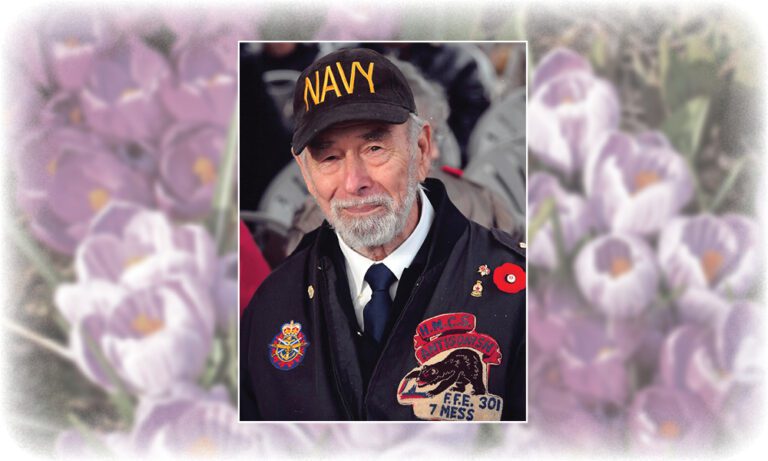
 Long-time Salt Spring Island resident Don Baxter passed away on January 16, 2025 after a long illness. 

Don was born December 27, 1940, to Herbert and Stephanie Baxter in Calgary, Alberta. The family moved to Vancouver in 1945. Don joined the Navy at age 17 and became a diver until his honourable discharge in 1963. 

Don met his future bride, Alicia Helen Clarke in 1953 when he was 13 and she was 12. They lived next door to each other in Burnaby, BC. 

The young couple married in Vancouver, BC on September 29, 1962. They were blessed with a daughter, Theresa. Don and Alicia Baxter were married for 62 years. Alicia passed away suddenly last Easter Sunday, March 31, 2024. 

Following Don’s time in the Navy, he worked for the BC Ferries. He began on Prince Rupert run and then out of Vancouver before he and Alicia relocated permanently to Salt Spring Island in 1971. 

Don retired from BC Ferries in 1981 as a Captain on the Long Harbor run. He next earned his Masters certification and became a Master Mariner. This qualification allowed him to captain ships of any size or type anywhere in the world. From 1981 until his second retirement in 1995, he captained large drilling vessels for Canadian Marine Drilling (Canmar), which was later taken over by Amoco. Don sailed in waters off Singapore, Vietnam, Malaysia, and in the Beaufort Sea in the Arctic. 

After retiring from those adventures, Don captained the smaller boats of the Gulf Islands Water Taxi from 1995-2012. Alicia was “first mate” on many runs. In addition to the school run, he would often conduct medevacs, and also shuttled Canadian and American Navy personnel between their ships and shore during “fleet week” at Esquimalt Harbour. In later years, he reminisced about the time the U.S. aircraft carrier Abraham Lincoln visited Esquimalt. 

In 1973, Don and Alicia played an instrumental role in the creation of the Salt Spring Island Sailing Club. The couple had many sailing adventures through the years and raced often in the islands. Don and his nephews, Chris Bohnen, Mike Bohnen, and Scott Clarke sailed the “Round Saltspring” race many times. Uncle Donald called his three nephews Hugie, Louie and Dewey. 

Although Don was often at sea from 1958-2012, he always felt that he and Alicia “were never apart.” He felt her loss deeply over this past year. 

Don was preceded in death by his parents, Herb and Steffie Baxter (nee Beck) and wife Alicia Baxter (nee Clarke). 

Don and Alicia are survived by their daughter Theresa Stevenson Welsh (Dan Welsh), grandson Daniel Stevenson, great grandson Ryan Stevenson all of Salt Spring Island, Don’s sister Joyce Bohnen (nee Baxter) of Monroe, WA, Alicia’s sister Phyllis Clarke of Salt Spring Island, nephews Chris Bohnen of Puyallup, WA, Mike Bohnen of Monroe, WA, Scott Clarke of Tsawwassen, BC and Darren Clarke of Port Coquitlam, BC, and all their families, many friends on Salt Spring Island and extended family throughout Canada & the USA. 

A celebration of life for both Don and Alicia will be held at the Canadian Legion – Salt Spring Island on March 22, 2025. 

You will both be greatly missed, and NEVER forgotten as each day goes by. 

Spoken word luminary set to shine

By KIRSTEN BOLTON

FOR ARTSPRING

They say some artists happen to be in the right place at the right time to slip through an open door. There are other artists who stand in front of a closed door and choose to kick it open. Enter Shane Koyczan.

In the rise of spoken word’s popularity, the genre cannot be discussed without saying the name Shane Koyczan, an unlikely Canadian success story.

In 2010, the world caught a glimpse of Koyczan’s prodigious talent with his presentation at the opening ceremonies of the Winter Olympics in Vancouver. This stand-out performance helped shine a light on this street poet from Vancouver’s Downtown Eastside.

Born in the Northwest Territories to a Canadian Indigenous father and a French mother, Koyczan grew up in Penticton. He had been an artist, inches away from living on the street, when in 2000, he became the first Canadian to win the Individual Championship title at the National Poetry Slam competition.

Even in those troubled early times Koyczan was putting out work like the anti-bullying poem based on his life called To This Day, now a video that’s garnered 24 million views and is used worldwide in classrooms as a teaching tool, as well as in speech and forensic competitions.

Koyczan has also published several books, with his second book Stickboy adapted into an opera by Vancouver Opera. His voice has been sought after by luminaries like George Miller, who worked with Koyczan on Mad Max: Fury Road. Koyczan also created the piece called Shoulders, which he toured with David Suzuki as part of The Blue Dot Tour, a movement to enshrine environmental rights in the Canadian Constitution.

A collaborator with artists such as Ani DiFranco, Dan Mangan, Tanya Tagaq and others, Koyczan has elevated the art form of spoken word from its humble beginnings in after-hour cafes and on sidewalks to grand stages far and wide. Despite the venue, he has become known for bringing an authenticity to his work that viscerally connects with audiences, as evidenced by his fiercely honest 2011 TED Talk which received a standing ovation.

Weaving together spellbinding narratives, Koyczan continues to trek through some of the more difficult parts of our collective existence with humour, heart and humanity. In 2017 Koyczan invited audiences deep into family trauma with the documentary Shut Up And Say Something, an emotional trip through his past as he comes to terms with his estranged father. The film went on to win Most Popular Documentary at the Vancouver International Film Festival, moving audiences with its bravery and vulnerability.

After a number of critical successes in the book world, Koyczan launched his own publishing house, Stickboy Press, whose first collection was brought to life by a crowdfunding campaign in which 1,688 backers pledged $91,154 to make A Bruise on Light a Guinness record holder as the most money raised through crowdfunding for a book of poetry.

A prolific force, he recently released a new collection of poems called The Basement In My Attic, and worked with Theytus Books to publish Inconvenient Skin, a journey into Canada’s own troubled history with residential schools and the treatment of Indigenous people. The themes of Koyczan’s much-anticipated spoken word performance on Tuesday, Feb. 25 are not being released ahead of time to allow for spontaneity and the inclusion of current affairs. Regardless of subject matter, the experience promises to be transformative. This marks the first time ArtSpring has presented spoken word in its season’s programming

Thank you to Paula Palyga and David Demers for sponsoring this performance, which begins at 7:30 p.m.

Tickets are available through ArtSpring, online and at the box office. Quick purchase is advised.

Farmland Trust offers workshops and courses

0

SUBMITTED BY SSI FARMLAND TRUST

It’s no fun being at the whim and mercy of faraway decision makers. Even if they have the best intentions for you, how can they possibly know your needs? The answer is they can’t.

The foundation of health has always been local — personal, familial, neighbourly. And living on an island with an abundance of people who carry deep wisdom for growing and raising the highest-quality food and medicine is a huge advantage. Better than winning the money lottery.

Whether you’re already a seasoned farmer, or just beginning the journey of putting your hands into the earth for yourself and our radiant community, the Farmland Trust has arranged a powerful lineup of kind and generous people who want to help you grow.

To learn more or to register for a life-enhancing course, please visit our website at ssifarmlandtrust.org/news-blog.

Simply Seed Saving with Ben Corno and Kaleigh Barton

Sunday, Feb. 23

As part of Seedy Saturday, participants will be introduced to a variety of plants that can be harvested for seed in a single calendar year. You will learn about types of plants, harvesting techniques and timing, preparation and cleaning methods, and knowing when your seed is ready to save.

Farmer Field Trip at Eagleridge Seeds Farm with Marsha Goldberg

Saturday, March 1

Learn how to bolster your business model by integrating seed saving. Gain valuable insights on selecting resilient seeds, identifying high-performing plants and embracing sustainable bioregional farming. The session includes a presentation, a walkabout and a discussion period, with optional one-on-one consultations to help you tailor a strategy for the specific attributes and microclimate of the land you steward.

Rotational Grazing at Ruckle Farm with Small-Scale Meat Association

Saturday, March 8

Join us on Saturday, March 8 for a rich discussion that will help you achieve a personalized grazing plan. Topics include stocking density, managing water access, knowing when to move animals and more.

Biosecurity Made Simple – Keeping Your Pigs and Poultry Healthy

Sunday, March 9

With increasing threats like avian Influenza and African swine fever, biosecurity is more critical than ever. This session will provide practical insights on minimizing disease risks in outdoor production systems, including infrastructure improvements, biosecurity planning, outbreak response and evolving regulations.

Four-Part Course on Herbal Medicine for Resiliency with Dane and Storri Wild

Sunday, April 6 & 13 and May 4 & 11

Through hands-on learning, you will make fresh herbal remedies and take home the confidence to grow and create your own herbal preparations to support yourself, family and community.

Explore the planning, prepping, planting and harvesting practices that will contribute to your own thriving medicinal garden.

Letters to the Editor: Feb. 19

0

Be vigilant

We are watching the attempted destruction of democracy in the U.S. before our very eyes.

Although we hear many good arguments about boycotting American products, perhaps the most important U.S. product to boycott is that of the MAGA movement, which is forming an oligarchy, a kleptocracy and an autocracy. If it can happen in the U.S., it can happen here too.

It is striking that the actions of the Trump administration reflect so clearly Yale history professor Timothy Snyder’s small but mighty book called On Tyranny: Twenty Lessons from the Twentieth Century. Some of the lessons are: Do not obey in advance, defend institutions, beware a one-party state, take responsibility for the face of the world, remember professional ethics, be wary of paramilitaries, believe in truth, investigate, contribute to good causes, listen for dangerous words, stand out, and be as courageous as you can.

Whether we are Canadian or American or both, we need to be vigilant. We cannot sit back and let our nation slide into chaos. We must vote. We should urge our elected representatives to support democratic principles. We ourselves can support those institutions and organizations that are doing the good work of defending democracy, the rule of law and the people of our nation.

Susan Thorpe MacLeod,

Salt Spring

______________________________________________________________________

Support civility and decency

Today, after reflection, I withdrew from a long-planned trip to Bellingham. It wasn’t an easy decision, as the trip was to be with friends, and a lot of energy and anticipation had gone into  the planning.  Also, it wasn’t easy because cancelling seemed such an insignificant, imperceptible response to events south  of the border.

Thinking about how trivial my gesture seemed, I decided to write  this short letter. Cancelling trips to the U.S., buying Canadian and waving flags are ways of expressing  our frustration and alarm at what  is happening, but let us do more than that. Instead of just cloaking ourselves in patriotism, let us firmly and assertively support the values we care about. Let us support civility and decency.  Let us be proud of being “politically and socially aware.” Let us do our best to quietly, yet firmly, oppose and counter injustice in all its forms.

How to do that? Different people will have different approaches. Some might do so by volunteering for community organizations. Others by fundraising for such organizations, and for schools and youth groups. Still others by simply talking to their friends and neighbours and by clearly, calmly voicing their beliefs.

As for me, beyond writing this letter and doing some of the above, I plan to donate money to the CBC and to the Driftwood. Much of what is happening south of the border — and here too, to some degree — is caused or enabled by not having trusted sources of information. While I don’t always agree with what the Driftwood and the CBC say or do, I believe that they generally support civility and decency, and that they make an effort to base their reporting on verifiable facts. We should do all we can to support such news organizations. They help us make sense of the world, and in doing so, help us make informed, responsible decisions.

Andre Gerard,

Salt Spring

_____________________________________________________________________

Reduce costs

The Feb. 12 article about in-house costs of processing developments permits is interesting.The Islands Trust has realized that application fees are paying less than 10 per cent of their costs of processing, thus are considering increasing application fees to cover this shortfall.

The first thought should be how to reduce the in-house costs of processing development applications, not sustaining current procedures and charging applicants more.

When 32 per cent of all working hours are spent on applications, you have a problem in the process. Find the bottlenecks, resolve them and reduce your costs.

Harry Kirwin,

Salt Spring

In Response: No madness in U.S. actions

1

By ERIC BOOTH

Last week’s Driftwood editorial started out with the following line: “We would really rather not talk about the madness and upheaval emanating from the dissolving democracy to the south of us.”

Really? Madness? Dissolution of democracy?

I don’t know which mainstream media outlet(s) from which that opinion was born, however, what the world is witnessing is actually a rebirth of what is loosely referred to as “democracy.” That having been said, the United States has never been a “democracy.” It is, in fact, a republic.

The word “democracy” in the context of a republic refers to the process by which people choose leaders by voting.

Now, unless I missed something last November, a democratic process of voting led to the election of a new leader and a new administration by a majority of voters. There was no dissolution of democracy during that process.

What has occurred since the new administration has come into office is, in fact, a continuation of the democratic process wherein the voters are getting exactly what they voted for. That may perhaps seem unusual to some, given politicians aren’t well known for following through with their election promises.

However, the only “madness” I am witnessing is the hysterical, hypocritical gnashing of teeth from those whose candidate(s) was/were unsuccessful. And many of those who are the most vocal appear to be those who are now in the sights of long-deserved, democratic justice. How does an elected representative, making a couple of hundred thousand a year, end up with a net worth in the tens of millions? Great work if you can get it —and we are going to find out exactly how that occurs.

The governor of New York has just been accused in a lawsuit of aiding and abetting illegal aliens. Massive slush funds are being exposed. The expenditure of trillions of dollars of taxpayer money is now being audited in a transparent manner never before seen in any democracy I am aware of, with the possible recent exception of Argentina and El Salvador. Peace is breaking out in the Middle East and it appears the Ukrainian/Russian conflict is nearly concluded.

Mainstream media, in all forms, is, and thankfully so, in its final death throws. Freedom of speech is being secured. Criminals will face public accounting of their crimes.

And, while this is all happening south of the border, the majority of Canadians (according to believable polls) are praying a new federal government in Canada will have its own department of government efficiency. And when that happens, the cries of the bloated bureaucracy north of the border will be heard in the short term, but, once the smoke clears, the average Canadian will have more money in their pocket and, more importantly, actual hope for the future.

So, everyone out there currently suffering from “Trump derangement syndrome” has a rather simple choice to make. Either turn off your TV and seek “alternative” news sources, not controlled by multinational corporate cartels, and learn what is really going on, or, get used to losing . . . because we, the majority, are going to be winning for the foreseeable future.

Editorial: Seed-saving haven

0

We all remember the resurgence of interest in gardening spawned by the Covid-19 pandemic in 2020.

Demand for everything related to growing one’s one food soared on Salt Spring Island, and elsewhere — from seeds to soil to fencing and tools — and knowledge as well.

Interest in producing more food on both an individual and community-wide level has since continued, augmented by several initiatives of the Salt Spring Island Farmland Trust, the Salt Spring Island Farmers’ Institute and other groups and individuals with passion for the subject.

As another growing season arrives, support for those efforts is readily available. The “big event” happens this weekend at the Farmers’ Institute, with Seedy Saturday running from 10 a.m. to 3 p.m. For the uninitiated, Seedy Saturday is the place to not only find all sorts of growing-related products and purveyors, but a huge selection of heirloom and open-pollinated seeds, either grown by your neighbours or from seed companies on the island or in the region. A key to food security is the ability to save a plant’s seeds and grow new ones on your own, providing independence from multinational seed companies and their hybrid seed varieties that must be bought year after year.

When the first Salt Spring Seedy Saturday took place 30 years ago, notions of food security and the possibility of losing the ability to grow well-loved heirloom plants were just beginning to be talked about. Salt Spring’s Dan Jason of Salt Spring Seeds and Marsha Goldberg of Eagleridge Seeds have been at the forefront of the movement to preserve heirloom and open-pollinated seeds. A local seed bank was also established and continues to thrive.

For people wanting some hands-on learning about seed saving, Ben Corno and Kaleigh Barton are leading a workshop on Sunday, Feb. 23 as part of Seedy Saturday weekend, and Goldberg is hosting visitors at her farm on Saturday, March 1 for a seed-saving presentation, discussion and walk-about.

Registration for both sessions is through www.ssifarmlandtrust.org/news-blog.

The need to produce our own food without relying on outside forces is more important than ever. On Salt Spring we have all the expertise and passion required to keep growing.

Film shares contemporary Métis stories

A Salt Spring audience can take the first steps toward understanding an important cultural group in Canada by watching Lii Michif Niiyanaan: We Are Métis, a one-hour documentary that includes interviews with 20 contemporary Métis elders, artists, activists and scholars who share their perspectives on what it means to be Métis today.

The film makes its Salt Spring debut at the Salt Spring Public Library on Thursday, Feb. 20 at 7 p.m., and will be introduced by its writer and co-producer Christine Welsh, a 30-year Salt Spring resident.

Welsh, a Métis from Saskatchewan, has had a long career in documentary filmmaking, including as writer and producer of Finding Dawn (2006), one of the first films to call for action on missing and murdered Indigenous women in Canada. Other films include Women in the Shadows (1991), Keepers of the Fire (1994), Kuper Island: Return to the Healing Circle (1995) and The Story of the Coast Salish Knitters (2000).

Welsh said the new film was conceived in 2016, when she was still teaching in the Department of Gender Studies at the University of Victoria, along with Jeannine Carrière, a professor in the School of Social Work and the film’s executive producer.

“We were both older women who had come of age in a time of huge political and cultural awakening for our people,” said Welsh, “and in our time at UVic, we had, right up until I retired, really been dismayed by how little university students actually knew about Métis people, and I think that continues for the general Canadian population. So we wanted to create a film that would basically answer the question, ‘Who are the Métis?’ We envision the film as a teaching tool that would reach out to Canadians generally and answer that question.”

Almost 625,000 Canadians identified as Métis in the 2021 census.

Bringing Lii Michif Niiyanaan: We Are Métis to fruition took longer than first anticipated, largely due to the timing of the Covid pandemic, which meant they could not start filming until 2021, and even then things did not unfold as initially planned.

But Welsh credits a great team with the final result, which has achieved its original goal. Gregory Coyes, who is coordinator of the Indigenous Digital Filmmaking Program at Capilano University and an award-winning filmmaker Welsh has worked with before, is co-producer. He also co-directed the film with Madeline Ell, who is Welsh’s niece.

“All four of us had big roles to play in the making of the film, ” said Welsh, adding that one of the project’s gifts was being able to work with her niece.

“She’s also the narrator of the film, and in many ways, it felt like I was sort of handing off the baton to a new generation. So that was, for me, really, really cool.”

In choosing the interview subjects, Welsh, Coyes and Carrière contacted people they knew, almost all of them from the Prairies.

“We wanted to have a diversity of voices, so we reached out to a wide range of artists and writers and elders and community leaders from across our homeland, and asked them to participate.”

Lii Michif Niiyanaan: We Are Métis is Welsh’s last film.

“It’s been a huge gift and privilege to be able to tell those stories,” she said. “And now it’s time for a new generation to do that.”

Welsh said she wanted to show the film at the Salt Spring library.

“The library staff and board have made really strong efforts to increase the Indigenous presence in the library, and I’m appreciative of that, and so this is a way to express that appreciation.”