Home Blog Page 9

World Water Day: Expect to be resilient and pay the price

By ANDRIA SCANLAN

FOR TRANSITION SALT SPRING

Each year, World Water Day invites us to think about the value of water and the responsibility we share in protecting it. Around the world, the conversation often focuses on scarcity, infrastructure, and the growing pressures climate change is placing on freshwater systems. Here on Salt Spring Island, these concerns always feel close to home. Water isn’t just something that flows from a tap, it’s a resource we actively manage, protect, and depend on every day.

Living on Salt Spring Island means paying attention to things that people in the city might never think about. Services, infrastructure and supply chains are limited, so island life encourages greater self-reliance, thoughtful planning and strong community relationships.

Local resilience around water, food, housing and energy takes on a different meaning here. Many homes are not connected to a large shared water system but instead rely on wells.  Storms cause power outages more frequently and often last longer than they might in an urban centre. We must consider wildfire risk and maintain defensible space around our homes, prepare for winter storms and practise responsible land stewardship.  Nature feels closer and far more influential in daily life, and with that, a greater awareness and responsibility for the systems that sustain us.

I experienced this in my neighbourhood recently.  Similar to many rural settings on Salt Spring, I live at the end of a small cul-de-sac. Off the circle are three driveways that branch out to eight properties over a few hundred metres. A couple of weeks ago, one of my neighbours knocked on my front door. She had noticed more water than usual running down her driveway and wondered if we might have a leak. 

Walking over to take a look, sure enough, the water appeared to be coming from near her driveway and cascading down through our property. That caught my attention, because I had noticed some erosion at the bottom of our land recently as well.

Thanks to a conversation I’d had last year with Sue Earle at Duck Creek Farm about an outdoor water leak she experienced, I knew what to do. First, I turned off all the water inside the house. Then I shut off the main valve in the basement. After that, I walked down to the cul-de-sac where all of our water meters are located. When I lifted the lid on our meter box, the numbers weren’t moving.

Good news — we weren’t the leak.  But we still clearly had a problem. The ground was dry, yet a small stream of water was running down the hill.

The neighbourhood telephone tree kicked into action. Before long we identified the source: a home two houses away, accessible from a different road, some distance through the forest that had been built 29 years ago. The original plans for the neighbourhood mapped their water from the cul-de-sac, across three other properties (that hadn’t been developed at the time)  before reaching their house.  They turned off the water in the house and the meter on their gauge continued to spin furiously.

North Salt Spring Waterworks District was called and had someone out to close the offending valve at the meter, but 85,000 gallons had been lost!  Another neighbour ran a hose from one house to another to ensure everyone had water.  But the real challenge was still ahead: finding the leak.

Local plumber Gary, owner of Polaris Plumbing, arrived with his crew and got to work.  It wasn’t long before he called another well-known island expert, Ron Patterson, sometimes referred to as the island’s “water whisperer.”

Ron arrived carrying a pair of copper dowsing rods he uses to locate underground water lines. Within minutes he identified two buried pipes belonging to our property and our immediate neighbour. I had pulled the photos I took during the process from nine years before, and his accuracy was remarkable.

But the leaking property was farther away, and its underground pipes had been installed three decades ago. No one was entirely sure where they ran.

Not long after, Ron’s rods picked up a third water source. He then switched to an acoustic leak detector, an instrument that amplifies the sound of water moving underground beneath soil, asphalt or concrete. Soon enough, the source was identified: beneath the neighbour’s paved driveway.  Aidon began to dig and sure enough, Ron was spot on.

From there, the steps were straightforward, if a bit messy. Matt cut the pavement, Aidon used a small excavator to remove the concrete and the first foot of soil, and then continued to dig by hand, and the problem was found.  The culprit was a faulty junction between two slightly different pipes that had been connected more than 30 years earlier. The damaged section was removed, replaced and the trench filled with gravel.

As Gary and his team packed up some time later, I mused that the job involved more detective work than plumbing. He laughed and replied that water moves in mysterious ways.  Then he added something that gave me pause. They were heading off to attend to three more outdoor leak emergencies on the island that had been called in that week. Each one required a similar process of service interruption, human deduction, unforeseen costs and the unfortunate waste of an important resource.

I asked if that was typical. Gary told me he sees far more of these situations than he did 15 years ago.  Aging infrastructure, it seems, is catching up with us, and it’s not pretty.

There’s another lesson in this story. Community relationships matter deeply in places like Salt Spring. People rely on each other, and neighbours look out for one another in ways that can make all the difference.

City living is often built around convenience and services. Country and island living are built around resilience, planning and community support.

The takeaway: water leaks happen more often than we might think. They can’t always be prevented, but preparation can keep them from becoming disasters.  Our neighbour’s costs associated with this “unpredicted and seemingly unpreventable incident” are a staggering $7,500!  They plan to ask for some leniency on their water bill, but the costs are still difficult to stomach.   

Every homeowner and renter should know where the main water shut-off valve is located and make sure it is clearly marked so family members or house sitters can find it quickly. It’s also wise to know where your water meter is located and how to access it.

If you plan to be away for more than a week, consider turning off your water supply. If that’s not possible, contact your local water authority to arrange shut-off and turn-on dates, or have a plumber install a shut-off valve at the meter.

Water leaks can happen for many reasons, such as aging pipes, faulty fittings, accidental damage or failing equipment. They are almost always costly and wasteful. But with a little preparation and a good relationship with your neighbours, the worst outcomes can hopefully be avoided.

We invite you to sign up for more FREE access to Lighter Living Content at tinyurl.com/Lighter-Living.  Learn how to take low-effort actions that feel good, benefit our community and help the planet.

Expect Delays show arrives on time this weekend

“Back by popular demand” is a phrase often heard in entertainment marketing circles.

But in the case of The Geezers’ Expect Delays comedy show that runs at ArtSpring this weekend, it really is returning to the stage because of the response to its debut last October.

The theatre was about 90 per cent full for the first show and sold out for the second, said Geezer Les a.k.a. Sid Filkow. Lots of people who wanted a seat had missed the boat, so Filkow and fellow Geezer Bill (Patrick Cassidy) just had to do it again.

“The feedback was extraordinary,” said Filkow, “with people saying how hard they laughed. My favourite comment was ‘My face hurt.’” He’s less sure of what to make of the person who said she had to go home and change her underwear, but assumes it meant the show made her laugh a lot.

“I had a young lady come up to me in Country Grocer and just say, ‘Thank you. Thank you so much. We really need laughter right now, you know, with what’s happening in the world.’ I had no idea who she was.”

“So we decided the reviews were so good we were going to risk coming back,” said Filkow, “but you’re only as good as your last show, as they say, right?”

Expect Delays runs on Saturday, March 28 at 7:30 p.m. and Sunday, March 29 at 2 p.m. They decided to include a matinee for the many people who prefer to not drive at night.

No two Geezers shows are ever the same — whether Filkow is teamed with Cassidy or his former partner in Geezer crime, the late Arvid Chalmers — but they do plan to include the same topics and material from October, with some updating as required. The show’s title refers to the impact of the Ganges Hill road construction that concluded last fall.

“The one we’re doing now is close to a script, without being a script,” said Filkow, “because we do have a running order, and we pretty much know the subject matter, more or less, that we need to get out, but how we get there varies.”

Filkow and Cassidy admitted that the real-life pitfalls of aging occasionally determine what happens on stage, despite efforts to bolster Filkow’s memory through use of a Driftwood newspaper prop, for example.

Referring to the last show, Cassidy said, “Sid took the paper once, and gave it to me, but the notes were in the paper. He took it back and then he couldn’t find the notes.”

Expect Delays will include a sing-along to the Geezers’ original Enjoy Yourself song, with advice to follow Cassidy’s opening note rather than Filkow’s, and a question and answer period at the end.

Tickets are available through ArtSpring.

Artistic life of independent woman explored

BY STEVE MARTINDALE

FOR SALT SPRING FILM FESTIVAL SOCIETY

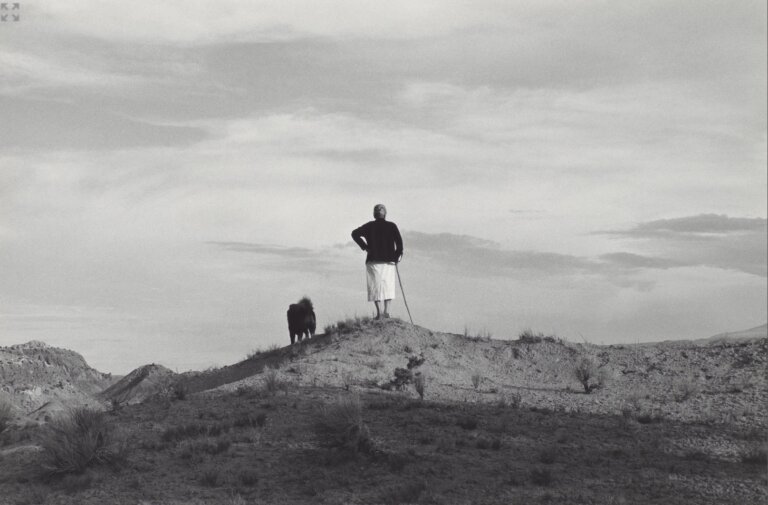
The Salt Spring Film Festival joins the Salt Spring Arts Council at Mahon Hall on March 27 to present the award-winning documentary Georgia O’Keeffe: The Brightness of Light, directed by Oscar-winning filmmaker Paul Wagner.

 World-famous for her sensual paintings of flowers, animal skulls and the stark beauty of her beloved New Mexico, O’Keeffe is widely revered as one of the greatest visual artists of the 20th century.

 From her early struggles and artistic awakenings to her rise as a globally recognized cultural force, O’Keeffe emerged from under the shadow of her older husband, celebrated photographer and art gallery owner Alfred Stieglitz, to become a feminist icon who insisted on living life on her own terms.

 What many don’t know about O’Keeffe is that she painted a series of ominous cityscapes during the 1920s when she lived in New York. Among other surprises in this revelatory film is that O’Keeffe first came to public attention as the nude model in Stieglitz’s erotic photographs, which at the time were considered scandalous — and which led to Stieglitz abandoning his first wife, Emmeline Obermayer, when she came home to unexpectedly find one of their early nude photo sessions in progress and issued her husband a curt ultimatum.

Born in Wisconsin in 1887, O’Keeffe spent the last 40 years of her life in New Mexico after being widowed in 1946, until her own death in Santa Fe in 1986 at the age of 98. Nearly 30 years later, one of O’Keeffe’s paintings sold for an astonishing $44.4 million USD, shattering previous records for the highest price ever paid for a painting by a female artist.

This spellbinding journey through love, loss and the radical independence that shaped O’Keeffe’s life won the Founders Award at the Virginia Film Festival. With unprecedented access to her groundbreaking body of work and over 20,000 pages of letters between O’Keeffe and Stieglitz — poignantly narrated by acclaimed American actor Claire Danes and her real-life husband, British actor Hugh Dancy — this award-winning film offers an in-depth, cinematic portrait of the artist known as the Mother of American Modernism.

This one-night-only screening takes place at Mahon Hall at 7 p.m. on Friday, March 27. Tickets are not available in advance and will be sold only at the door. Admission is by donation, with a suggested donation of $10 (although all are welcome and no one will be turned away for lack of funds).

Trust policy statement delayed past fall election

0

As some clients behind a legal threat over the Islands Trust’s draft Policy Statement (TPS) publicly identified themselves, staff revealed the sheer volume of feedback has overwhelmed the document’s revision process — making it impossible to complete before the next election regardless.

Speaking before the Islands Trust Council on behalf of advocacy group Positively Forward on Tuesday, March 10, Salt Spring Island resident Maxine Leichter told trustees that group had “joined with others” to seek a now widely circulated legal opinion from Lidstone & Company senior partner Don Lidstone — and further entreated council to not advance the TPS’ current draft.

“The Trust’s legislative mandate is clear and unequivocal: to safeguard the natural environment in an area awarded special status by the Trust Act,” said Leichter. “To betray that responsibility in favour of greater development is short-sighted and reckless.”

The legal opinion outlined in Lidstone’s Feb. 17 letter to Trust Council warned planned revisions to the TPS risked running afoul of the object of the Trust — the often-cited preserve-and-protect “mandate” in the Islands Trust Act — on several points. Lidstone, who in the past represented the Trust in legal proceedings, wrote that an ordinary-meaning reading of the mandate’s language — and some legal precedent — partly pointed to a priority of protecting and preserving the natural environment, with the current TPS “aimed at protecting ecosystems from development and growth, specifically.”

“This can be contrasted with the language in the draft TPS,” wrote Lidstone, “which opens the door for growth and development without regard for the limits of the island ecosystems.”

After it was included as “correspondence received” on an Islands Trust agenda, the legal opinion mostly made the rounds within local policy enthusiast circles, where few likely found Leichter’s March 10 statement revelatory. The broader public learned of the letter’s existence Feb. 21 when it was posted online by an account associated with Saanich North and the Islands MLA Rob Botterell. 

Botterell clarified for islanders at an ASK Salt Spring gathering March 6 that he was neither the author of nor impetus behind the letter, but had merely been among three people copied: himself, Minister of Housing and Municipal Affairs Christine Boyle and Islands Trust CAO Rueben Bronee.

“And when it was posted on the [Salt Spring] Exchange, there wasn’t a suitable explanation that I was simply republishing this out of a civic ‘openness and transparency’ approach,” said Botterell, “giving the impression I had written it.”

A retired lawyer, Botterell was a professional associate at Lidstone & Company for five years ending in 2019. The letter was addressed to trustee Laura Patrick as the chair of Trust Council, a standard for such correspondence that further confused many readers.

“So, lesson learned,” he said. “I need to put a bit of a preamble on anything I publish.”

At Trust Council Tuesday, language from both the meeting agenda and trustees themselves indicated the letter would be discussed during an in-camera session Wednesday morning. In response to a later question during the continued public meeting Thursday, Bronee told trustees they could share with constituents merely that the letter had been received, and staff would provide “communications support to address questions in your communities.”

But any reassurances Trust Council may have received from lawyers regarding the Trust’s legal footing was likely little consolation for task-oriented trustees, who had set a goal of completing the TPS revision process before the end of their elected terms. Trust Area Services director Clare Frater said Thursday the work would “inevitably” carry over past the election.

“I’m here to tell you today, I think we’re now in the place of advising you the project will not be able to be completed this term,” said Frater, citing an extraordinary number of responses to a call for feedback from Indigenous, local and regional governing bodies and agencies — and the general public, who sent more than 2,000 completed surveys, some 750 of which were “long-form” responses. All of that will need to be organized for trustees to digest.  

“There is a vast amount of information that’s coming in, and we want to honour all the commitment and effort and passion that communities, other governments and staff have brought to this — such that we can then refine and polish the document in a way that reflects all the values and interests.”

That volume, combined with an indication from the Ministry of Housing and Municipal Affairs that their process may take longer than originally envisioned, will easily push the process well past October elections. The TPS has not seen meaningful revision in three decades, with the current iteration described as an attempt to address shortfalls in the guiding document — such as addressing the climate crisis, growing housing needs and a commitment to reconciliation with local First Nations.

Frater and Bronee said next steps would include bringing distilled feedback to Trust Council for their consideration — perhaps during a scheduled May 13 meeting of that body’s Committee of the Whole, or just as likely in a separate, dedicated and as-yet unscheduled meeting.

“This remains in your hands to advance as far as you can, and as far as you wish,” said Bronee. “If you can get it to the point where it’ll be with the minister, great; I don’t think we can or should presume what a new council may, or may not, choose to do with that.”

Fire, water districts set trustee elections

0

Once again, governance for Salt Spring Island’s two largest improvement districts could see changes this spring, with candidates nominated and elections set for trustee positions coming open on both the Salt Spring Island Fire Protection District (SSIFPD) and North Salt Spring Waterworks District (NSSWD) boards.

Eager voters won’t have to wait until October to cast a ballot as with other local government elections, as both districts’ elections will take place sooner — with voting for the fire district concluding in April and the water district in May.

With nominations closed, five candidates will vie for three trustee seats on the fire district’s board, according to staff: incumbents Roland Cook, David Courtney and Mary Lynn Hetherington will be joined by new candidates Darryl Martin and Jennifer McClean seeking election to three-year terms. 

The fire district will make mail-in ballots available upon request, but those must be received by April 11 to be counted. In-person voting will take place on an advance voting day on Wednesday, April 8 and on election day Saturday, April 11. The results will be announced at the SSIFPD AGM on Monday, April 13.

For the NSSWD board, three nominees will seek election to two seats for what will be three-year terms as well: Philippe Erdmer, Steve Lam (incumbent) and Jon Scott. 

Voting packages will be mailed to NSSWD ratepayers on March 23, according to district staff, with mail-in packages due by Monday, May 4 and in-person voting taking place from 2 to 6 p.m. on Wednesday, May 6 at Community Gospel Chapel. Results of that election will be announced later that same evening at the water district’s AGM.

Editorial: Group project

0

Some days it seems the Islands Trust’s confederation of communities is more loosely laced than others.

Despite all of us being surrounded by shoreline, there are times we watch our trustees truly stretch to leverage the commonalities among our islands as they work to advance our common interests. And even on those infrequent issues where we might all agree on the scope of a problem, how can a solution for Denman Island ever possibly work on Bowen? Or Gabriola’s on Galiano? Salt Spring’s on South Pender? How can 26 members of the Islands Trust Council agree on anything, if on something as simple as a budget, even the eight trustees voting against it didn’t agree on their reasons for doing so?

Yet at the end of the day — or rather, at the end of three at a quarterly meeting — decisions are made and work done. In addition to passing the budget last week, the Trust’s unsung accomplishments include advancing a draft of its remarkable multi-year Indigenous Relations Action Plan, and a final — and also remarkablely, unanimous — approval of a new bylaw compliance and enforcement policy, complete with a user-friendly plain-language guide for islanders. That long-awaited product will be rolling out in the next few months, the fruit of trustees’ sincere efforts to improve what was an arguably broken system.

On the wider stage, they agreed to sign on to a joint call for the province to recommit to meaningful implementation of the UN Declaration on the Rights of Indigenous Peoples; on a much smaller one, they agreed to cover a few thousands dollars in application fees for Salt Spring’s Farmland Trust, to permit distribution of compost produced at the Burgoyne Valley Community Farm site. The work of the Islands Trust is indeed varied.

During this last meeting, one trustee took insightful exception to the characterization of the Islands Trust as merely a land use authority keen to “preserve and protect.” While it is indeed that, they noted the often-recited mandate continues with “in cooperation.” 

We agree that despite all attention given to the former, it’s the latter that may turn out to be the hardest work.

Viewpoint: Reality check is needed

By MICHAEL WALL

Much of the good-natured discussion we’ve been enjoying in the community recently regarding reviews of the Trust Policy Statement and Salt Spring Official Community Plan (OCP) has been focused on housing needs, and the idea that building density closer to the village cores rather than out in the more rural parts of the island would decrease disruption of the forest ecosystems, decrease fire risk and reduce car use, etc.

I think this is an accurate assumption, and if we were, just now, to embark on a process of subdividing and zoning the island, it would be the best place to start. 

Unfortunately, the island was subdivided and zoned many decades ago and we are stuck with the consequences of that process. So it is all very well to say, “We should not build homes remote from the villages,” but there are roughly 1,600 vacant lots currently and the owners have the zoning to build on them, resulting in an estimated build-out population of 17,000 — 5,000 more than now. Do we say to these owners, “I’m sorry, we have decided that you can’t build on your lot because we want to move your density closer to the villages?” I think the Trust would be deluged with bankrupting litigation immediately.

Or should the community buy out these properties, create park land and transfer the densities to the villages? Let’s say at an average of $700,000 per lot, that’s more than a billion dollars we’d have to find to do that. And in the villages we would have to ensure water supply and sewerage adequate for more dense communities. 

We live on an island where water resources are already scarce and vulnerable to climate change effects. In other words, new buildings in rural Salt Spring and the resulting population growth are “baked in” to the future of the island, so any additional market housing built in the village cores will add to the island population over time. Many islanders who have been here as long as I have — nearly 40 years — consider the population already maxed out. Salt Spring’s population from 2016 to 2021 grew at twice the national average.

There is, however, a concrete change we could make to mitigate the environmental effects of remote home building which is within the power of the Islands Trust: take control of the kind of homes that are built. The Trust can do this by limiting the floor area permitted in new homes. If, say, a limit of 2,500 square feet is imposed, it would eliminate construction of “mansions” and summertime trophy homes — we already have more than enough of those. It would probably lower the values of those properties and make it easier for families to buy them. The creators of our existing OCP and land use bylaw tried to do just that but met with strong opposition from certain sectors of our community. Perhaps in the next review we will have the resolve to make it happen.

Our local trustees have spent hundreds of thousands of dollars on their lumbering review process and PR campaign, but have failed to commission any scientific research into carrying capacity and environmental degradation which could be used to calculate the effects of the extra development they want. The precautionary principle encourages us to consider the consequences before taking action, and that philosophy has never been more important on our lovely little island.

Artists with developmental disabilities share works

BY MICHAEL BEAN 

For GIFTS 

For the past three years, a quiet but powerful creative force has been at work in a small, unassuming building across from ArtSpring. This March, the vibrant results of that work will be on full display for the entire community to see.

The Gulf Islands Families Together Society (GIFTS) is proud to present “Working Together: Expressions from an inclusive art experience,” a new art exhibit featuring works created by participants in their visual arts program. The exhibit opens at the ArtSpring gallery onTuesday, March 24 and continues daily from 10 a.m. to 2 p.m. until Sunday, March 29.

The show marks a milestone for GIFTS, a registered charity that has been supporting adults with developmental disabilities on Salt Spring Island for over 25 years. Founded in 1999 by a group of parents asking critical questions about their children’s future quality of life, GIFTS takes a unique, person-centred approach. 

“Our mission is rooted in strength-based approaches that empower individuals and families to have a strong voice and to advocate for an equitable quality of life,” said Amanda Myers, executive director of GIFTS. 

Unlike traditional program-based models, GIFTS ensures participants retain full control over their support structures, fostering independence, dignity and self-determination.

This philosophy of empowerment extends directly into their art programming. The GIFTS art program is led by Alicja Swiatlon, an accomplished painter and fine art teacher on Salt Spring. Swiatlon, who started the program, emphasizes that her classes are taught as fine art, not art therapy. Her approach is both structured and deeply inclusive. She plans each class around the abilities of every single participant, ensuring that everyone, regardless of their capability, works on the same project. 

“It’s so diverse, we all have such a different approach to art, to colour, to form,” she explained. 

The benefits extend beyond the canvas, encompassing social skills like sharing materials, cleaning up and being on time. For some participants who don’t usually enjoy being in a group, “the art creates an environment so that they can be in a group . . . where they can socialize in a healthy way,” Swiatlon said.

The GIFTS art program has done more than just create art — it has built bridges. The classes often include participants from other organizations, such as Choices, fostering collaboration and healthy relationships across community programs. The program has also been a tremendous outreach opportunity, connecting individuals with developmental disabilities to Salt Spring’s larger, arts-oriented community. “Working Together” is the second exhibit to emerge from this initiative, and it promises to be a celebration of that connection. The gallery walls will be filled with expressions of creativity from GIFTS participants, showcasing the talent and unique perspectives fostered in these inclusive workshops. 

The community is invited to not only view the exhibit throughout the week but also to join in celebrating the artists at a special reception. A celebration of the artists will be held on Saturday, March 28 from 11 a.m. to 1 p.m. at the ArtSpring gallery. It will be a chance to meet the creators, learn about their work and see firsthand the powerful results of an inclusive approach to art and community. Don’t miss this opportunity to experience the vibrant talent within our community and support an organization dedicated to ensuring that all islanders have a place to belong.

For more information about Gulf Islands Families Together Society and their work, visit gulfislandgifts.com.

Ballet Kelowna triple bill show ready to thrill

BY MEGAN WARREN

For ArtSpring

Nearly three years after they opened ArtSpring’s landmark 25th anniversary season, Ballet Kelowna returns to Salt Spring next week to prove why they remain one of the most riveting forces in Canadian dance. 

Named the 2024 Artistic Company of the Year by the BC Live Performance Network, the collective brings a residency that invites our community to step into the studio before witnessing the mainstage magic of Vividus: Full of Life. Much like the The Ostara Project jazz collective’s residency last week, Ballet Kelowna thrives on the edge of creative risk, blending the rigid discipline of classical training with the daring soul of contemporary movement.

The journey begins in the studio on Sunday, March 22, where the company throws open the doors for local dancers to learn from the best in the business. Held at Antler Ridge Dance Studio, these workshops offer a rare, intimate gift to Salt Springers looking to find new sensations of freedom and skill in their own bodies. The afternoon kicks off at 3 p.m. with an all-levels Barre and Centre class. Those seeking a deeper challenge can take the 4:15 p.m. advanced Learning Repertoire session. Advanced dancers are advised to take both classes to ensure they are fully warmed up for the rigours of repertoire.

On March 23 at 7:30 p.m., the curtain goes up for Vividus: Full of Life, a triple-bill program that feels less like a series of dances and more like a cinematic exploration of the human heart. The evening launches with Alysa Pires’ Vestiges, a sweeping work set to the evocative melodies of Hilary Hahn and Hauschka that delves into a search for connection and meaning in a chaotic world. Next, the stage shifts into the dreamlike space of Kirsten Wicklund’s The Forever Part. This ethereal meditation explores the tension between yearning desire and the anxiety that the permanence of “forever” can bring, leaving a haunting, beautiful atmosphere that lingers in the theatre long after the final curtain.

For the finale, the company sheds its introspective skin for a burst of unbridled, whimsical joy. Choreographed by National Ballet of Canada principal dancer Guillaume Côté, Le Carnaval des Animaux is a jovial, upbeat spectacle that reminds us of the playfulness inherent in high art. It is a performance defined by exuberant energy and frolicking fun — a perfect closing note for a residency dedicated to the relentless pulse of being alive. 

See artspring.ca for ticket info.

Therapeutic riding group celebrates 25 years

0

The Salt Spring Therapeutic Riding Association (SSTRA) is celebrating its 25th anniversary this spring and invites the community to join them. 

The organization that provides horse riding lessons mainly for young people with mental, emotional and physical challenges has seen a new board secure grant funding and other donations in the past year and is poised to expand instruction hours and grow its program offerings. Two more things are needed to realize that vision: One is support for new Adopt-a-Rider and Adopt-a-Horse programs, and another is a successful fundraiser on April 11. Set for Meaden Hall, it will include a gourmet meal from chef Brody Paine and his Salt Spring Catering team, live music, plus both silent and live auctions. 

“The Salt Spring community has been amazing with their auction donations,” said board member Becky Citra, who also volunteers with the program. “We’ve been out searching for donations, and the response has been absolutely fantastic. This is a very generous island.” 

In addition to many gift cards and baskets from local stores and restaurants, artwork pieces and unique items like a handcrafted wooden blanket chest, a signature experience is a weekend at Sundance Guest Ranch in the B.C. Interior near Ashcroft.

Tickets ($75) for the April 11 event are available at Foxglove Farm and Garden Supply, Salt Spring Books and Salt Spring Coffee if paid with cash. SSTRA volunteers will also be selling tickets at Thrifty Foods on Friday, March 20 and Country Grocer on Tuesday, March 24 from 10 a.m. to 3 p.m. with credit/debit payments or etransfers accepted. Payment instructions for etransfer on other days are available by emailing gillianptaylor@gmail.com.

Citra explained how the Adopt-a-Rider program works. 

“We’re offering the opportunity to sponsor a rider for either half of a session, which would be five or six lessons, or a full session,” noting that costs for some, but not all, riders are covered by organizations like AutismBC and that some families find it difficult to afford lessons. Sponsors will receive either a photo or drawing of the child and a progress report from the instructor. 

“It’s such a wonderful program,” said Citra. “I’ve been volunteering for eight years, and it’s just amazing to see how the kids thrive and get more confidence.”

Riders may be nervous at the beginning when they first meet the horses, but grow and learn so much with each session, she said.

“Lots of animals are therapeutic, but horses are so big, and a big, quiet horse can be incredibly reassuring to a child. It’s this big, quiet, steady animal that’s there every week, no matter what happens during their week,” she said.

The Adopt-a-Horse program has different options for people to contribute to the care of one of SSTRA’s five horses. 

“One option would be to pay for the care of a horse for a month, which would include his feed, farrier costs and any related costs,” said Citra. 

Smaller options could see someone pay for a farrier visit for a horse, or buy 20 bales of hay, for example. Supporters would receive a photo and be invited to a meet and greet with the horse.

“I’m hoping it will attract people who love horses, see that the program is really valuable and would like to maybe have a little connection with a horse.”

One of the grants received in the last year came from the 100 Men Who Care Salt Spring group. 

“It was huge for us,” said SSTRA president Rick Way, “because it enabled us to get a tiered pricing system for the riding to make it more affordable for families who can’t afford it.” 

SSTRA will also soon have three trained instructors, making it easier to accommodate more riders. A group program for teenagers that ran last year thanks to grant funding will also be offered again this spring, said Way.

“It’s a lot of fun,” he said of being involved with SSTRA. “It has been a lot of work this year, but it’s worth it, believe me.”

For more information about the SSTRA, including how to donate and volunteer, visit sstra.ca