Home Blog Page 94

Island’s second EV fast charger spot revealed

0

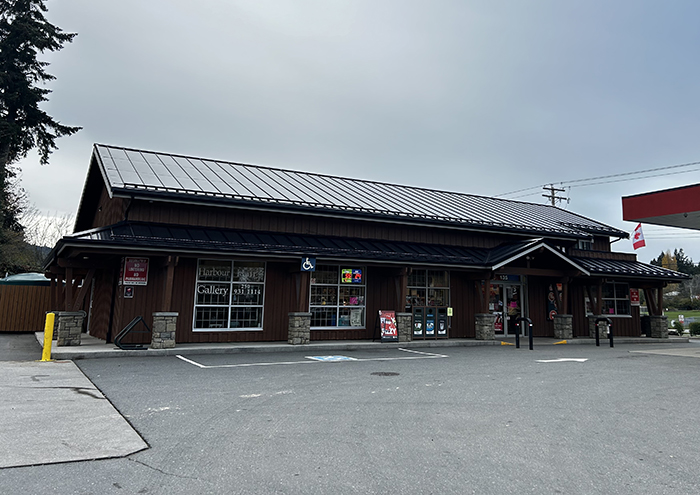
Following on its installation of a 37-kW solar roof, Mid Island Co-op’s gas bar may also be first to bring an electric vehicle (EV) fast charger to Salt Spring, hoping to open theirs within weeks of the new year –– possibly before one planned at the island’s new fire hall comes online. 

EV enthusiasts have been watching eagerly since May, when a federal program listed the fuel station’s Rainbow Road address among recipients for “zero-emission vehicle infrastructure” funding. Mid Island’s director of energy operations Bruce Buckingham teased the news during a recent Salt Spring Community Energy online forum, and confirmed to the Driftwood the co-op’s Salt Spring location was one of seven planned across its region.  

Buckingham said Mid Island Co-op’s new electricity “dispenser” will be equipped with one CCS connector, compatible with most EVs, and one CHAdeMO-type connector –– primarily used by the popular Nissan Leaf. For now, Tesla drivers –– and those of other vehicles that have switched to the NACS standard –– will continue to need adapters to connect. 

“We had hoped to include NACS connectors,” said Buckingham, “but they are not yet available to equipment manufacturers.” 

The new chargers will be part of the FLO network and will operate at “Level 3” in terms of charging power –– at least 50 kW, according to Natural Resources Canada’s Zero Emission Vehicle Infrastructure Program funding documents. That translates to equipped vehicles charging an order of magnitude faster than they might at owners’ homes. 

FLO, which maintains one of the largest EV charging networks in North America, currently operates just one public charger on Salt Spring: the 6.24-kW “Level 2” equipment at the Rainbow Recreation Centre. Basic home charging is often what’s known as “Level 1,” and is limited by power available to residential electrical outlets –– largely less than 2.4 kW. 

Buckingham said FLO had committed to informing Mid Island Co-op of developing plans regarding NACS, whether by replacing the CHAdeMO connector with a NACS connector or by offering an integrated adapter solution at the station. A rate structure for EV charging at the new equipment has yet to be determined, although similar stations operated by BC Hydro on Vancouver Island charge $0.3479 per kWh plus GST, as well as a 40-cents-per-minute “idle fee” after a five-minute grace period. 

“The goal is to energize the charging stations by the end of January,” said Buckingham, “but that is dependent on the number of [available] contractors and BC Hydro schedules.” 

Viewpoint: FAC adventures recounted

0

BY MIKE STACEY

When the green and white  flag was torn off every funnel BC Ferries (BCF) owned and some idiot took it upon himself to fill the void with the striking image of two amorous slugs caught in a moment of indiscretion, it was clear that the beloved “Dogwood Fleet” was sunk, and whatever it was that had taken its place was sailing off in the wrong direction.

David Hahn was hired. However, the “new improved company” was required to have a means of gathering constructive input from ferry-dependent communities. Enter the ferry advisory committees (FACs). These groups have volunteer members representing schools, business, etc., gathering information, opinions and complaints from the residents and holding meetings to discuss the issues. They then pass the results on to BCF, along with recommendations for improvement. A fair chunk of this is more or less ignored by the company, although some makes it through.

A classic case of OOPS! was the introduction of a far-too-minor vessel on Route 6 in 2019. The committee said, “Ain’t gonna work.”

BCF said, “Sure it will!” When the whole thing went south, someone from the company came to us with a piece of paper covered with numbers showing conclusively that it was running like a Swiss watch.

“So, why are the cars lined up halfway to town?” we asked.

Oddly, that information was not readily available.

It was decided that a little get-together would help, with concerned ferry patrons welcome to attend. I fondly remember this event as “The Great Harbour House Pie Fight.” The locals came in swinging, assailing the committee members for doing such a foolish thing. We had not actually done the deed, but were the only target in sight. Eventually the issue was resolved, for which someone else took credit.

A week or so ago we were all invited to sit in front of our computers for another online meeting with those in charge. Compliments regarding the wonderful job we had been doing were followed by our “digital dismissal.” No more FAC. No alternative was yet in place, but they wanted people to be able to go online to voice their concerns directly to those in charge. Made sense to me. Far easier to ignore folks on an individual basis as opposed to a group.

The first thought of most, if not all, members of our group was “How could they do this to Harold?”

Harold Swierenga, chair of our committee, has dedicated years to his task, seemingly spending half of his life travelling to meetings with the company, never blowing his own horn (unlike some), fielding offensive emails recommending that he and most other members quit, largely unseen by those he has been serving.

As for “digital input” from the patrons, judging by the efficiency of our Covid/violence-driven online meetings of the past few years, it will be a waste of time and effort.

On a more positive note, since being canned we have all been invited to figure out what they should replace us with. I can hardly wait. Most, if not all, members will be staying until the bitter end and doing all we can to help. I promise not to cause any problems . . . again . . . really! I promise!

Thank you for sailing with BC Ferries! Like we have another choice.

The writer is a Salt Spring FAC member.

Time to address lack of decent working-class housing

0

By ERIC MARCH

On Nov. 24 I attended the third public engagement session of our Complete Community Assessment, the precursor to our targeted Salt Spring Island Official Community Plan (OCP) and Land Use Bylaw (LUB) review.

Trustee Laura Patrick and several Islands Trust staff were in attendance, and the care and hard work being put into this project was obvious.

Unfortunately, there was an enormous housing-crisis-sized hole in the data and, especially given the recent hysteria from some members of our community that the OCP/LUB review will lead to massive overdevelopment, I think this missing data is extremely important.

Most of the statistics used come from the census conducted in 2021, and therefore show an artificially rosy view of Salt Spring Island’s demographics. Statistics Canada does its best to assess all dwellings, regardless of their legality. Unfortunately, Salt Spring Island is an island with extensive secret housing, from trailers to tiny homes to repurposed accessory buildings, all hidden away from casual view, on “farms,” in resorts and on other properties. Folks in hidden housing units, folks in hidden trailers and RVs parked in the woods, folks in liveaboards, those registered at short-term accommodations but staying long term don’t get counted in the census. And if our “complete” community assessment is excluding the legions of working-class Salt Springers struggling with housing, then it absolutely fails at its goal. We have enough prejudice against the underhoused on Salt Spring without erasing those experiences with flawed data.

Salt Spring Island has an incredibly powerful anti-housing lobby. They are writing to the Driftwood suggesting that the limited lifting of the North Salt Spring Waterworks District water hook-up moratorium will increase our population by up to 10 per cent or that our OCP/LUB review is a fait accompli for unrestricted development. They are protesting outside our Islands Trust Council meeting suggesting that preserving livelihoods and affordable housing will ruin the island.

They are our elected officials celebrating 131 units of housing built in five years as if that pitiful number is anything to be proud of. Worst of all, Salt Spring’s anti-housing lobby has folks saying, “I’m not anti-housing, I just want the right type of housing,” while shooting down every housing proposal and not providing any suggestions of their own.

Far too many Salt Springers are eager to live in a community with schools, a hospital, two grocery stores, numerous small businesses from restaurants to alcohol production, and a regular ferry schedule, but refuse to think about how we’re supposed to house all those workers. Expecting these services to be available without being willing to build safe, affordable housing for the workers to live in is the absolute height of entitlement.

There are definitely hundreds and possibly thousands of underhoused, unsafely housed, unstably housed workers on this island. The status quo is unsustainable, irresponsible, and immoral. The state of working-class housing on Salt Spring Island is abysmal. Having to choose between living in a suite, trailer or RV that is leaky, mouldy, rat-infested,or a combination of the three and leaving Salt Spring is an incredibly common occurrence. Furthermore, shoddy wiring, leaky plumbing or septic systems, poorly hooked-up propane lines, bad weatherproofing and lack of winterization run rampant.

What kind of community are we expecting to build on Salt Spring when our population is divided between folks living in legal and illegal housing, especially when that divide is so strongly down class lines of legal landowners and illegal tenants? How are we expecting to maintain Salt Spring’s culture of volunteerism when some landlords use the precariousness of illegal housing to extort labour far beyond a reasonable work trade or raise rents so high a renter has to work multiple jobs? How do we expect folks to want to work in our community when they have to live in “temporary” housing indefinitely? Why do we expect folks to live in homes so toxic or unsafe that it risks damage to their health?

What part of “rural character” is preserved by refusing to house rural workers? What part of “rural character” is preserved by having landlords who would be just as comfortable running an SRO on the Downtown Eastside as they are renting out shoddy units on Salt Spring?

Nobody is arguing for massive development. There is no conspiracy to sell Salt Spring out to developers, no plan to double our population, no proposal to pave paradise. Working folks simply want to live in safe, secure housing without going broke. And to suggest otherwise is nothing more than hysteria fuelled by willful ignorance.

It’s time to end the divide between legal and illegal Salt Springers. It’s time to end the divide between securely and insecurely housed Salt Springers. It’s time to engage with our housing crisis in good faith and build a Salt Spring Island for everyone.

The writer is a worker and renter residing on Salt Spring Island.

Sustainable gift giving: all the joy without the waste

0

Part of the Lighter Living initiative presented by Transition Salt Spring

The holiday season is upon us — a time for joy, connection and, unfortunately, waste. Traditional gift-giving, deeply rooted in the extraction economy, often prioritizes short-term gratification at the expense of long-term sustainability.

Overproduction, deforestation and pollution are just a few of the harmful practices fuelled by consumer habits during the holidays. From mountains of plastic packaging to single-use items discarded after a day or two, the environmental impact is staggering.

But there’s good news: sustainable gift-giving is not only possible but also rewarding. By choosing thoughtful, eco-friendly gifts, you can help reduce waste, support local businesses and create lasting memories. Transition Salt Spring’s Lighter Living Initiative offers inspiration with a curated list of sustainable gift ideas that are practical, meaningful and planet-friendly.

Learn Something New

Salt Spring’s vibrant community offers a treasure trove of workshops and classes:

• Art Classes: Painting, drawing, pottery and more are available for all skill levels.

• Cooking Workshops: Gift a session with renowned local chef Haan Palcu-Chang for an unforgettable culinary experience.

• Martial Arts: Share the joy of movement with kickboxing, jiu-jitsu or karate classes.

Memberships and Subscriptions

For gifts that keep giving, consider these low-waste options:

• Bus Passes: Help someone reduce their carbon footprint with a monthly transit pass.

• Museum Memberships: Give the gift of learning and exploration with access to the Royal BC Museum and its IMAX theatre.

• Local News Subscriptions: Support independent journalism with a Driftwood subscription.

Encourage Recreation and Wellness

Gifts promoting health and fun create lasting value:

• Learn to Row: Introductory rowing classes from Salt Spring Rowing make a fantastic gift.

• Fitness Passes: From yoga to dance classes, there’s something for every fitness level.

• Roller Skating: Bring joy to the whole family with a session at the SIMS gym.

Sustainably Delicious Gifts

Food is a universal language of love and care:

• CSA Memberships: Support local farms by gifting a Community Supported Agriculture box.

• Homemade Treats: From cookies to spice blends, DIY gifts add a personal touch.

• Zero Waste Groceries: A gift card to Salt Jar Refillery helps reduce plastic waste.

Relaxation and Pampering

Help your loved ones unwind with thoughtful gifts:

• Massage or Spa Day: Treat someone to a day of relaxation.

• Dinner Out: A gift card to their favourite restaurant makes for a memorable night.

Experience the Joy of Entertainment

Rather than gifting material goods, give the gift of shared moments. Experiences bring people together and create lasting memories:

• Theatre: Treat your loved ones to a night at ArtSpring, featuring live performances in music, drama and more.

• Movies: Gift movie passes or a voucher for the Fritz Cinema, where the popcorn is just as memorable as the films.

• Live Music: Explore diverse musical genres at venues like the Mateada or the Legion, offering everything from hip-hop to blues.

Gifts That Give Back

For the person who “has everything,” consider donating in their name:

• Plant a Tree: Support reforestation efforts with a symbolic tree-planting gift.

• Animal Adoption: Protect wildlife through symbolic adoptions from organizations like the Sheldrick Wildlife Trust.

• Local Charities: Contribute to Transition Salt Spring or other community-focused non-profits.

This holiday season, let’s move beyond materialism. By choosing sustainable gifts, you can make a difference for the planet and your community.

For more ideas and tips on sustainable living, sign up for Transition Salt Spring’s Lighter Living series: signup-can.keela.co/lighter-living-series-subscription.

Together, we can create a season of joy, connection and lasting impact.

FLEMING, Farrell

0

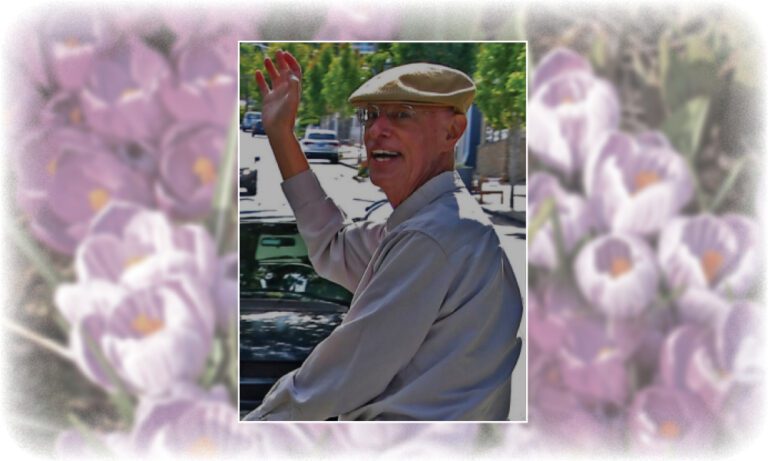
On November 27, 2024, Farrell Fleming passed away peacefully at Lady Minto Hospital on Salt Spring Island, British Columbia, with loving family by his side.

Born on September 28, 1940, and raised in Queens, New York City, Farrell’s life was defined

by his intellectual curiosity, vibrant community spirit, and unwavering passion for enriching

the lives of others.

Farrell’s academic journey began at Brown University in Providence, Rhode Island, where he found a home within the marching band, serving as its student manager and drum major. These experiences instilled in him a love for camaraderie and collaboration, which he carried with him throughout his life. Farrell graduated in 1962 with a degree in philosophy, laying the foundation for a career dedicated to thought and action.

In pursuit of further knowledge, he earned his master’s degree in philosophy at the University of Washington (1965–1969). Teaching philosophy became his calling, leading him to his first academic position at the University of Manitoba in the 1970s. It was during this time that he met Delaine, the love of his life, beginning a beautiful partnership that would span more than five decades.

Farrell’s career took a transformative turn in 1978 when he was invited to join a pioneering initiative to enrich the lives of older adults by fostering active community involvement. This endeavour became the creative retirement institute, where Farrell’s leadership flourished for over two decades. His ability to forge partnerships with organizations like the city of Edmonds, Edmonds College, and AARP, among many others, left an indelible mark on the community.

Among his proudest accomplishments were installing the Bastyr medical on-site clinic at the Edmonds Senior Centre in 2012; establishing a cold-weather emergency shelter for the homeless; and creating spaces like the Edmonds Waterfront Centre where people of all ages could connect, learn, and thrive. Farrell’s vision, kindness, and tireless dedication touched countless lives, and his work continues to echo in the vibrant institutions he helped build.

In 2020, Farrell experienced a full-circle moment when he was named grand marshal of the Edmonds kind of fourth parade, an honour celebrating his decades of service to the community. It was a fitting tribute to a man who spent his life lifting others up and bringing them together.

Farrell was predeceased by his beloved children Robin Fleming and Mitchell Fleming. He is survived by his loving partner and friend 52 years, Delaine Fleming, with whom he shared a life rich in travel, adventure, and a shared love for the outdoors; his cherished daughter-in-law, Angelique Olivier; and his beloved grandchildren, Alya Fleming (Niko Maillet) and Matthew Gillard.

Farrell Fleming was a devoted humanitarian, an inspired thinker, and a community builder in the truest sense of the word. His legacy lives on in the countless lives he touched and the communities he helped create, reminding us all of the power of connection and compassion.

In lieu of flowers, please send donations to the Farrell Fleming Helping Hands Fund at Edmonds Senior Centre. Cheque’s to be payable to Edmonds Senior Centre, PO box 717, Edmonds WA. 98020.

Online condolences can be shared with the family at www.Haywardsfuneral.Ca

LCC supports the Hearth with grant

0

Salt Spring’s Local Community Commission (LCC) wrapped up 2024 with one last grant award at its Dec. 5 meeting, using its grants-in-aid program’s remaining funds to boost a local project aiming to create a “warm, safe and inclusive space” during winter months. 

The Chuan Society became the LCC’s 18th recipient for the year, participating in a funding program that saw community organizations receive awards ranging from less than $1,000 to as much as $5,000 in two rounds of applications. The LCC had directed staff to accept Chuan’s application outside of its normal spring and fall intake windows, hoping the group might advance its project before the worst of the island’s winter weather arrives. 

The Hearth is the name for a new community drop-in space, with Chuan Society organizers now planning to operate daily from 9 a.m. to 8 p.m. at the former Phoenix Elementary School property’s portable classroom on Drake Road. That property is now being leased by the Capital Regional District, who in turn will book use by Chuan. 

“It’s a little bit complicated, a little bit risky, and everybody recognizes that,” said commissioner Brian Webster of the plan, which will see the Hearth launching this month and running as a pilot until the end of March.  

“But I think everybody –– the Chuan Society, our staff and our elected people who’ve been sort of helping shepherd things through –– everybody has been acting with good faith, and we’ve ended up with as good a proposal and plan as we could have.” 

The Hearth will serve as a “hub,” organizers said, where all community members –– and especially those who are under-sheltered or marginalized –– can find “respite, connection and support.” Chuan Society chair Kajin Goh has said the space would offer a warm, dry environment for relationships to flourish through planned activities, as well as improve access to resource information and wellness supports. 

Commissioner Ben Corno said he had “a lot of optimism” for Chuan’s ability to run the Hearth, and looked forward equally to its efforts in coming years. 

“I feel super grateful to everybody involved,” said Corno. “And I’m happy we’re able –– I hate to say ‘finally,’ but finally –– to do something meaningful for this specific underserved group in the community.” 

LCC grants-in-aid are one-time grants to fund special projects and activities, awarded to non-profit organizations who deliver projects benefitting Salt Spring that are not already funded by tax requisition. 

The project’s $2,068 award brought the LCC’s 2024 grants-in-aid total to its full budget of $53,986, according to staff; 2025 application intakes for the grant program will begin this spring. 

Community shines in aid drive

0

BY JON COOKSEY

Board Member, SSI Farmland Trust

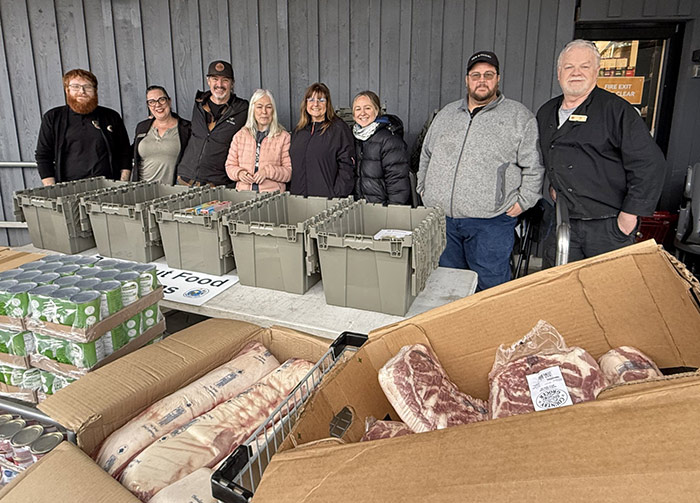
On behalf of the many people who stepped up to help with the emergency food drive for the Penelakut people last week, I wanted to report in on the results and say thank you, but also mark the significance of that burst of generosity from so many on Salt Spring, and others around the region and the country.

The “bomb cyclone” hit Penelakut Island hard on Tuesday, Nov. 19, knocking out power to the many home freezers where the Penelakut people had stored the elk, fish and other meat that they had hunted and caught to stockpile for the winter. It was four long days until BC Hydro restored power on Saturday, and since many people there can’t afford generators, their frozen food was lost. Hundreds of people had no stored food for the winter.

A week later, on the 23rd, Penelakut councillor Kurt Irwin had lunch with Jason Roy-Allen of the Hen & Hound Feast. Because they’re friends, Kurt shared with Jason that the lost meat was an emergency for his people, and though they’re reluctant to ask for help, Kurt felt they needed it. Jason and I are friends, so he texted me to see what we could do, and I sent out emails to some of my friends, including local and regional food folks, community organizers and others. We suggested a food drop-off at Country Grocer to replace the lost meat on an upcoming weekend, spreading the word through our networks, finding out what we could do to help. Jason started a GoFundMe with a goal of $5,000, promoted it through the Feast and started some social media. Our expectations were modest.

Within a few days, the response was overwhelming. Sandra Crandall at Thrifty’s said they were in, quickly followed by Robert Steinbach at Country Grocer. Sheila Dobie and Shannon Farmer volunteered to create a page on the Farmland Trust website to accept tax-deductible donations for a longer-term solution, a community freezer with backup power. Darlene Gage and Natasha Kong at Transition Salt Spring jumped in to help with logistics and amplifying social media, and talked to a donor who was willing to match funds donated for a fossil-free generator. David and Kirsten Marshall at WAWWE volunteered the use of their cooler van to transport the food to Penelakut Island. Cheryl McLay, a regional manager at the BC Ministry of Jobs, Economic Development and Innovation, made sure that the emergency response folks at the province were in touch with their Penelakut Tribe counterpart.

The folks in media stepped in just as quickly. Colin How and Leslie Ash at the Salt Spring Exchange asked how they could help, and ran an ad with both fundraising links. Bryan Young contacted Robb Magley and Gail Sjuberg at the Driftwood, who interviewed Kurt for an article. The Times Colonist got in touch with Kurt, then CTV News called Natasha. Regional people started food drives on other islands, and set up a drop-off at the Penelakut-owned Salish Sea Market in Chemainus. This was all within five days of the word first getting out. By day nine, donations were already past $10,000.

Kurt and Jason made a plan to be outside the two grocery stores from 10 a.m. to 3 p.m. on this past Saturday, Dec. 7. I knew Jason had recently torn a ligament in his knee, so Natasha put out a call for volunteers, and more than a dozen showed up to help outside the stores and then sort the food into individual bags for Penelakut Islanders at the end of the day.

Leigh Large wanted Country Grocer to go beyond their usual generosity, so Robert brought in Rob Lowrie for social media and the store donated three carts full of food and water. As of the writing of this article, Kurt, Jason and Dave Marshall are driving the WAWWE van and Kurt’s truck up to Penelakut Island, both packed with food. Donations on day 14 of this drive are over $40,000.

I’m naming all these people not because they’re more special than the names of the many, many other people who re-posted and volunteered and donated (maybe you included), but as a reminder that in the end it isn’t organizations or governments that make things happen: it’s people. It’s us. We heard that our neighbours were in trouble and we responded in a way that blew past anyone’s expectations. I stood outside our grocery stores on Saturday and watched people ask what was going on, light up at a chance to help, hand over cash or return with food and never ask whether it was tax deductible. It was like being in the happy part of It’s a Wonderful Life — everything you could possibly want community to be.

And that’s what I really wanted to mark with these few words. We’re entering tougher times. Outside the store, I heard that the Centre School has closed. The climate is clearly going to make our lives more difficult. Our farmers are struggling. Nurses are living in hotels and teachers are living on boats. The era of the “argument surrounded by water,” as much as we took a perverse pride in it, is passing. Salt Spring is evolving into something new, and much more beautiful. Friends surrounded by water, working together for the good of all.

Thanks to all who participated in this food drive, and who are part of this evolution.

Empty Bowls ceramic fundraiser aids food bank

The Empty Bowls event has become a tradition for the Salt Spring Island Potters Guild, since the start of the pandemic in 2020.

It is wonderful way local artists can help out those who are struggling to make ends meet: all proceeds from the sale will go to the island’s food bank. This year, the guild will be selling bowls at the holiday market in Centennial Park on Saturday, Dec. 14 from 10 a.m. to 2 p.m.

While many handmade ceramic bowls sell for $30 or more, a minimum donation of $20 will be requested.  There will be a wide variety of pottery styles, from hand built to wheel thrown, porcelain and stoneware. Some of Salt Spring’s well-known potters from the Saturday Market and the local art galleries will have pieces to sell. 

Islands Trust should consider different Baker Beach vision

0

By GARY CHERNEFF

The Islands Trust describes its job as “preserving and protecting over 450 islands and surrounding waters in the Salish Sea.”

My house is on a high ridge overlooking Ganges Harbour. When the big wind smacked us in December of 2018, 11 large trees were blown over. Just at the back of my studio, one fallen tree left a 14-foot hole when the root system was levered out of the hillside. At the bottom of the hole there was a mass of saturated sand and clay that looked like my breakfast porridge. I didn’t talk to my neighbours about collaborating on a wind abatement scheme, or go to Environment Canada or the Islands Trust to seek protection from climate change. This would have been absurd and impossible. Instead, I fixed the problem at my own expense. Now my studio has gutters it didn’t have before and much better perimeter drainage. And the slope is no longer slipping.

The Baker Beach Management Plan is a proposal to reduce natural oceanfront bluff erosion in an attempt to address property losses for several beachfront owners. Their proposal to reduce or eliminate “toe erosion” is the primary aim of this plan, but this will change the beach immediately and forever. The procedure will be to construct an artificial berm along the beach to protect the slope. Toe erosion is a slow, natural conveyor belt of nourishment (erosion) that occurs at the high tide mark where the sea meets the land. The process has been going on for thousands of years. For the critters that make a home in the intertidal area, this erosion is a normal, healthy part of their world. Changes to the beach occur over many decades and unevenly over the expanse of the area. When a natural disaster happens, organisms in selected locales are affected differently. The population is resilient because things rarely happen all at once, everywhere.

That is until 85 truckloads of mixed aggregate (artificial nourishment) are dumped in just a few weeks over much of the area. The substitute materials will inevitably be dispersed by wave action, triggering repeated assaults from the beachfront owners as they struggle to maintain their barrier.

The plan envisions a 30-year maintenance life span. For “30 years,” you can substitute the word “indeterminate” or maybe “forever.” It is pretty much the same thing. The copper smelter at Osborne Bay (Crofton), built in 1902, lasted about six years. The beautiful black sand — slag — from that industry continues to assault the shoreline 122 years later.

The Baker Beach owners group are requesting approval from the Islands Trust (and provincial government) for a lifetime sentence for the beach as we know it. They are asking the Trust to give them authority over the future of this beach, in other words, to privatize the authority of the Trust. And they plan to replace the natural cycle of beach nourishment with an artificial one.

Baker Beach, right now, is a part of what could be described as an “intertidal ecosystem” that stretches from Stonecutter Bay, southeast along Baker Beach into the Booth Canal estuary, past the bridge and into the salt marsh beyond, eventually reaching Okano Creek. (The Island Stream and Salmon Enhancement Society has already performed some restoration here to improve fish habitat.) This is a rich geographic area that is biologically interrelated. All of us on Salt Spring Island are the joint stewards of this area. Think of this as the Booth Bay intertidal ecosystem. We have one chance to preserve it as an amazing example of a transitional ecology that is accessible by foot or watercraft, a place that we can learn from, that our children can learn from.

That we are now struggling to save what we know as Baker Beach could be seen as a consequence of the perfunctory offloading by our trustees of sensitive community engagement in favour of efficient processing of development permit applications. I don’t want to believe this outcome was intentional.

I encourage the trustees to find a way to set aside this proposal and to consider a different vision for the beach and the system it is a part of. As our elected representatives, you have an obligation to intervene. If you cannot do this or will not do this, you will have failed in your responsibility to protect Salt Spring Island.

The next Salt Spring Island Local Trust Committee meeting is Thursday, Dec. 12 at Meaden Hall at 9:30 a.m. Join the 1,100 petitioners who oppose this application.

Matching donors boost cat rescue campaign

0

By JENNIFER MCMILLAN

Founder, Cats of Salt Spring Rescue Society

Support the Cats of Salt Spring Rescue Society’s fourth annual year-end Matching Fundraising Campaign and help us continue our work with the community cat population here on Salt Spring Island.

We are thrilled to have two individuals supporting our campaign this year, both offering to match donations received as part of our year-end fundraising event. The first donor, who has pledged a matching donation of up to $3,000, has been our matching donor for our first three year-end campaigns. We are so grateful that a second supporter has stepped forward, pledging a matching donation of up to $2,000. This means that with your support we can raise up to $10,000 to help cats in need here on Salt Spring Island.

We have continued our work trapping feral cat colonies this year. Whereas our work in 2023 centred around a large colony of approximately 40 cats, this year, we have assisted with management of many smaller colonies. For example, we brought in eight adult cats from one location, with eight kittens born from two of the trapped females within just a few days. We also brought into care several young female cats (less than a year old), each with kittens of their own. All of these young mom cats came from different locations on Salt Spring, and were physically depleted and frightened, requiring four to six months of socialization in foster care before placement in permanent homes. We currently have four “kitten moms” within our foster network.

In 2024, we have taken in a greater number of adult cats, particularly older adult cats, with significant medical requirements (e.g., hyperthyroidism, kidney disease, diabetes). Some of these cats were surrendered to us by Salt Spring residents, while others were found stray. These adult cats, particularly the senior cats, tend to stay in our care for longer periods of time, incurring greater veterinary costs (e.g., diagnostic testing).

We are very proud of our “Lifetime Foster” program. Cats placed through this program live in approved long-term foster homes where they receive love and care from their foster families, while their medical needs are provided for through the rescue. The benefits of this program are twofold:

• Homes are provided for cats/kittens which, due to their ages or underlying medical conditions, would not otherwise be “adoptable.”

• Companion animals are provided for individuals or families who might not otherwise be able to afford pet ownership or to coordinate veterinary care on their own.

Consistent with the increased intake of older cats in 2024, the number of cats placed through our Lifetime Foster program has increased this year. We currently have 10 cats placed in the program.

We need your support. Cats of Salt Spring Rescue Society does not receive funding from any organization or government. We rely solely on donations and monies that we fundraise (e.g., through our bottle drives, Country Grocer Save-a-Tape box) to support our programs. We charge adoption fees for our kitten and social adult cat adoptions. However, these adoption fees do not cover even our veterinary and food costs.

We are a completely volunteer-run, foster-based organization. We do not have any overhead or staffing costs, meaning that all funds received go directly toward assisting cats in our community.

We are a registered Canadian charity, issuing tax receipts for all donations of at least $20 received.

We are very proud to highlight some of our accomplishments for the first 11 months of 2024:

• Total number of cats and kittens assisted by our rescue: 122

• Cats surrendered by owners/ caretakers to our rescue: 52

• Stray cats/trapped cats or kittens born in care: 34

• Number of cats and kittens adopted to date in 2024: 99

• Cats/kittens provided with spay/neuter, vaccinations or other medical services as part of our TNR/Community Care program: 10

• Cats currently in care as part of our Lifetime Foster Program: 10

Donations to Cats of Salt Spring Rescue Society can be made in several ways. See catsofsaltspring.com/support-our-work for the options.

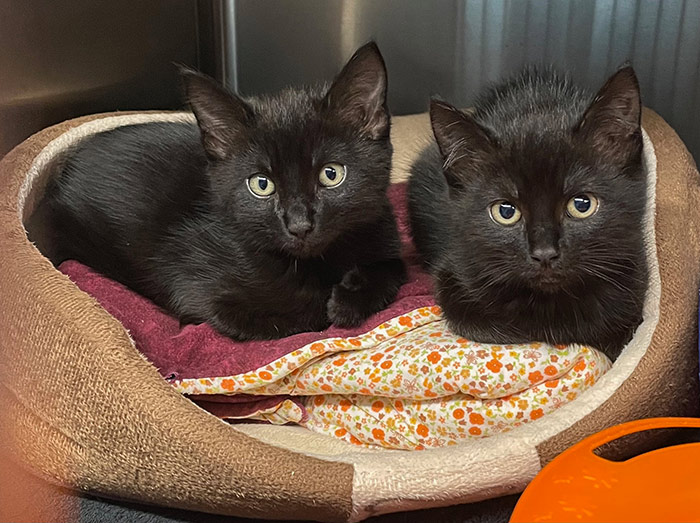
Sweet Pikachu from the Pokemon litter of Cats of Salt Spring Rescue Society kittens cared for in 2024.