Home Blog

Eclectic Visions returns to Gallery 8

SUBMITTED BY SS PHOTOGRAPHY CLUB

Everyone is invited to join the Salt Spring Photography Club at Gallery 8 on Friday, May 15 from 5 to 7 p.m. for the opening reception of our annual Eclectic Visions photography show.

It’s an opportunity to celebrate local photographers’ work with a night of refreshments, appetizers (generously provided by Thrifty Foods and Country Grocer) and, of course, art!

Eclectic Visions runs during Gallery 8 hours (10 a.m. to 5 p.m. Mondays through Saturdays and from 11 a.m. to 4 p.m. on Sundays) from May 15 at 10 a.m. to May 28 at 3 p.m.

Eclectic Visions showcases the diversity of club members’ photographic talent. It is a perfect reflection of its membership, which includes everyone from professional photographers to enthusiastic beginners. All of the artwork is available for purchase, and there will always be a photography club member present to answer your questions. Come down to see some incredible photos, ask the photographers about their work, and vote on your favourite image for the People’s Choice Award.

The group is thrilled to welcome another student photographer in this year’s show. Eighth grader Judah Lyons won “Best Junior/Youth Photo” at last year’s Salt Spring Fall Fair. Presented by the Salt Spring Photography Club, this prize comes with exhibition space in Eclectic Visions. Lyons has a passion for photographing animals and action sports. Make sure to check out his work at the show while you’re there.

Founded in 2009, the Salt Spring Photography Club is a group of people sharing ideas and technical knowledge about photography. They meet every month for an informational talk or video followed by a themed slide show and feedback session for members’ images. The club has members ranging from beginners to retired professionals who are united by a common love of photography.

This will be the ninth year that the owner of Gallery 8, Razali May, has hosted the club for an exhibition. His artistic eye for colour, balance and theme always produces a pleasing and professional show.

“It is my great pleasure to host this annual exhibition that celebrates the unique vision of each photographic artist,” said May. “The Salt Spring Photography Club has accurately named its show Eclectic Visions because it covers a wide-ranging collection of photographic subjects that often have little in common other than being great photographs in themselves. It is a chance for our community to enjoy fine photography from local artists.”

Gallery 8 is located in Grace Point Square.

Lam, Erdmer elected to NSSWD board

0

A new trustee joined a successfully re-elected incumbent on the board of Salt Spring’s largest water district on Wednesday evening — and that may not have been the biggest news of the night. 

The handful of ratepayers that attended the North Salt Spring Waterworks District (NSSWD) annual general meeting May 6 were the first members of the public to learn the results of the board election, which brought incumbent trustee Steve Lam and newcomer Philippe Erdmer a victory with 293 and 267 votes, respectively. Jon Scott received 150 votes from among 387 ratepayers who cast a ballot, according to district financial officer Tammy Lannan.

But the evening’s news also included a somewhat coy announcement that, to a still-unspecified extent and thanks to the federal government, all 3,125 eligible district voters will see some relief from the cost to finance and build a new water treatment plant already underway.

NSSWD had applied for federal funding in December 2024, under a since-cancelled program called the Canada Housing and Infrastructure Fund (CHIF), now “rebranded” as the Build Communities Strong Fund. The original application had asked for $6.7 million to support both the new Maxwell Lake water treatment plant and an upgrade to the Crofton pump station.

And while details remained under wraps Wednesday pending an announcement from the federal government, NSSWD board chair Brian Pyper said in a prepared statement Pyper the program was a “significant opportunity” and promised additional information soon.

“[NSSWD] is pleased to share that our funding application to support the cost of the Maxwell Lake water treatment plant and Crofton pump station is currently in progress,” said a visibly delighted Pyper. “On behalf of the board and ratepayers, I would like to thank the Government of Canada, and district staff look forward to providing additional information in the coming weeks regarding this pending agreement.”

Construction of the new plant at Maxwell Lake was mandated by Island Health as part of efforts to remove more of the organic matter that reacts with chlorine treatment to create trihalomethanes (THMs), such as chloroform and bromodichloromethane. 

Health Canada has said the health risks of THMs are far lower than those from consuming water that has not been disinfected, but is nonetheless directing utilities — including NSSWD — to make every effort to keep THMs at the lowest levels possible, so long as they do so without compromising the effectiveness of disinfection.

The Crofton pump station upgrade project is meant to ultimately join the northern and southern “halves” of the NSSWD system into one, combining similarly treated water from Maxwell Lake and St. Mary Lake into a single more resilient source, according to the district. That, alongside the provincially funded $10-million project to raise the weir on St. Mary Lake at Duck Creek, is widely expected to eventually give the district more flexibility on capacity — and could result in freeing up additional new water connections. The district partially lifted what had been a decade-long moratorium on new taps just over a year ago, allowing the equivalent of 300 new connections — up to a maximum annual demand of 50,000 cubic metres — but only for properties on the Maxwell Lake side of the system. To date, according to Pyper, about 22 per cent of the available water supply from that policy change has been allocated.

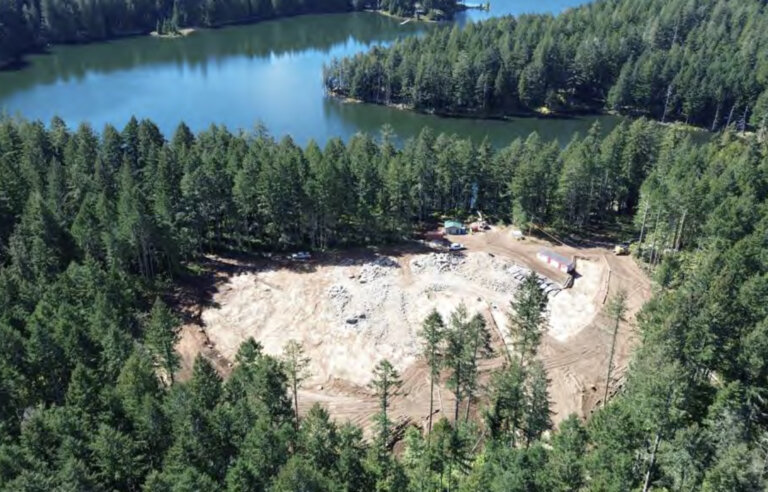
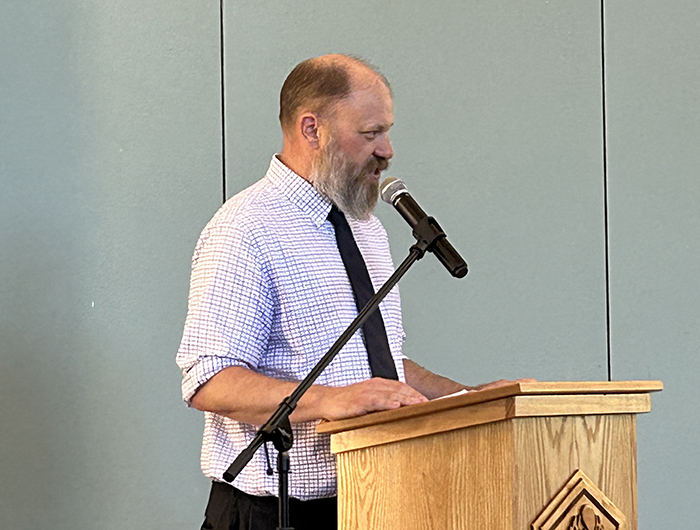
Operations manager Ryan Moray said Wednesday that the trees had been cleared at the future plant’s location and ground preparation for the building’s foundation had already begun. Pyper added that the sale of timber from the site would bring about $70,000 to the district.

Pyper also said staff had made considerable planning progress on the weir-raising project, and that the NSSWD board would be reviewing the upgrade this summer before a required submission to the Government of B.C.

“The province will then take at least a year to review the application and receive feedback from lakeshore property owners and licence holders,” said Pyper. “Staff have provided several updates to property owners and water-right holders, and another update will come before the provincial submission is made.”

Pyper also thanked outgoing trustee Elizabeth FitzZaland for her three years of service. 

New and returning trustees will enjoy a modest bump in remuneration for the service on the board, thanks to a successful motion from the floor that added another $25 per month; regular board members will now receive $425, with the chair receiving $475. 

Regional trail decision delayed to 2027

0

A $300,000 slice of the regional budget already allocated to start a “missing link” pathway is now likely to sit idle well past next year, a consequence of uncertainty among officials as to whether the proposed Salt Spring Island Regional Trail (SSIRT) should be considered recreational or transportation-focused.

That distinction matters, at least to the Capital Regional District (CRD) Board, who have presided over considerable administrative friction on a long-imagined 21-kilometre bicycle and pedestrian route that would run from Fulford Harbour to Ganges, then on to Vesuvius — closing the last gap in a 186-kilometre regional network that connects trails in Victoria and the Cowichan Valley. 

The CRD Board had allocated that funding for design work for SSIRT, and the CRD’s Parks Committee — after an exhaustive multi-agency feasibility study concluded SSIRT represented a “significant opportunity” to enhance active transportation across Salt Spring — unanimously recommended the CRD Board refer “planning, implementation and operation” of all Gulf Islands regional trails to the nascent Transportation Committee.

The board did just that, but in January that committee referred the issue back to the board, largely over concerns SSIRT might be more recreational than transportation-oriented — and therefore less suited to be managed alongside $53.5-million plans for widening and lighting on the Galloping Goose and Lochside trails. 

Notwithstanding the 47-page SSIRT feasibility study report, the board agreed not to determine a designation without more information, and tasked CRD staff to return with their own report — on the “implications” of designating all Gulf Islands Regional Trails as regional trails under the transportation service.

Gulf Islands representatives seemed at their wits’ end over the process.

“At this point in time, regional trails in the Gulf Islands are still under the auspices of regional parks, [while] regional trails in the Greater Victoria Area are under the transportation service,” said Salt Spring CRD director Gary Holman at the CRD Board’s Committee of the Whole meeting Wednesday, April 29. 

“So when we talk about a regional plan, and a regional service, and a regional commission — do staff believe that we can resolve what are silos at this point, in terms of regional trail management within the CRD?”

Salt Spring property owners are expected to contribute some $175,000 this year to support the CRD’s Regional Transportation Service, roughly $26 per average residential property. If managed by that service, Holman has said, SSIRT would be the first local manifestation of a tangible benefit for Salt Spring; Holman, along with the island’s Local Community Commission (LCC), had opposed being part of the new service at all, given Salt Spring’s extant self-funded transit service. 

CRD general manager Kevin Lorette reiterated staff were performing the work asked of them by directors, and expected that report on implications — covering issues such as land authority and construction standards — will be part of the update to the Regional Transportation Plan, being brought to the board in September 2027. At that point, the board presumably will consider again how it wants to designate Gulf Islands regional trails. 

Southern Gulf Islands alternate director Robert Fawcett said he had concerns about the pace of the process, and given the only complete section thus far is a two-kilometre stretch on Mayne Island, finishing the rest could take years.  

“Currently, the residents on the Southern Gulf Islands don’t have any access to convenient, green, affordable multi-modal transportation at all — so I’m really glad that we’re looking at equity when we’re doing this,” said Fawcett.  “If we look at how much we’ve built so far through the Regional Trails Plan, to get to all of the Gulf Islands and all of the sections, we’re looking at many, many decades.” 

CRD regional planning and transportation senior manager Patrick Klassen clarified that a June transportation workshop will focus predominantly on “umbrella objectives” — broader vision and goals for the transportation service — with limited opportunities to discuss actions like how to define regional trails or how to build them out.

“There’s quite a bit of time that lies ahead to develop the plan itself,” said Klassen. “We are still in that earlier stage of developing the higher-level framework.”

Editorial: CRD funds need to go two ways

A Capital Regional District (CRD) report has confirmed that CRD electoral area residents pay more taxes to fund some regional services than they get back. 

Titled Regional Equity Investments (REI), the report arose from a request by Salt Spring electoral area director Gary Holman through the CRD Hospitals and Housing Committee. The resulting analysis found the three electoral areas provided 7.5 per cent of the requisition total and received two per cent in capital hospital funds and 1.5 per cent in housing over a 15-year period.  

Now what’s needed is a similar study undertaken for the rest of the CRD’s regional service spending.

We might feel differently if the CRD Board had not rebuffed a formal request for Salt Spring to be excluded from a new region-wide transportation service last fall. Salt Spring residents already pay for their own transportation and transit service, Holman and Local Community Commissioner Brian Webster told the board, and are unlikely to benefit from contributing to another one. The cost is $26 per average-assessed household this year, but is expected to rise to $100 per year. Then-board-chair Colin Plant said if we wanted a Fulford Harbour to Vesuvius regional trail, this service would be the way to go, adding it would be “untenable” for Salt Spring to not participate. But guess what happened when the Salt Spring Island Regional Trail concept hit the CRD Transportation Committee agenda? Members suggested that already earmarked design funds for the same trail Plant cited might more appropriately come from the regional parks budget. This is after the proposal was originally punted from the CRD Regional Parks Committee to the Transportation Committee late last year. A report on the matter has been commissioned and is due in September of 2027. . . unbelievable!

We understand the tendency is to spend funds to benefit the largest number of people. Building an urban apartment building or spending money on upgrading the wildly popular Galloping Goose Trail makes more sense than providing significant funds to a 20-unit housing complex on, say, Pender Island, or an off-road trail on Salt Spring.

But it does beg the question of what we are paying for, exactly, and why, when moving off the islands may be the only clear way to benefit.

GISS principal announces return to teaching role

0

The top administrator for the Gulf Islands’ largest school says he’s decided to step down from leadership — and is stepping back into the classroom.

Gulf Islands Secondary School (GISS) principal Ryan Massey has officially requested the move and, according to Gulf Islands School District (SD64) superintendent Jill Jensen, will engage in a full-time teaching position effective this September.

In an email to the school community Thursday, April 30, Massey said the decision came with much reflection upon, and gratitude, for his 18 years of educational leadership — the last six of which have been at the high school on Salt Spring Island.

“I am proud of the work we have been part of at GISS,” wrote Massey. “It is an amazing school, grounded in the values of learning, community and creativity, and I am thankful to have contributed to its growth alongside students, staff and families.”

Massey said that as he looked to the “latter part” of his educational career, he felt a strong pull to the classroom, noting the “extraordinary” level of dedication the principal role demands on one’s capacity. The change, he said, will allow him more space for his own “growth, connections and experiences as an educator,” while continuing to serve students in a purposeful, sustainable way.

“I am excited about this next phase of my career, and the chance to focus more directly on teaching and learning,” wrote Massey. “I trust the district process will find an excellent next principal, and they will have my full support through the transition into next year.”

Jensen said she joined the SD64 community in extending thanks to Massey for his years of service.

“During his time with the district, Mr. Massey has built strong relationships and shown a deep commitment to supporting students, staff and families,” said Jensen. “His steady leadership, care and dedication have made a meaningful difference in the school community, and his contributions are greatly valued.”

Jensen said she looked forward to continuing to work alongside Massey as he steps into his new role and wished him “every success in this next chapter of his professional journey.”

The GISS principal position has been posted, according to district staff, and the review of applications the district receives will begin May 15. The new principal is expected to start in August.

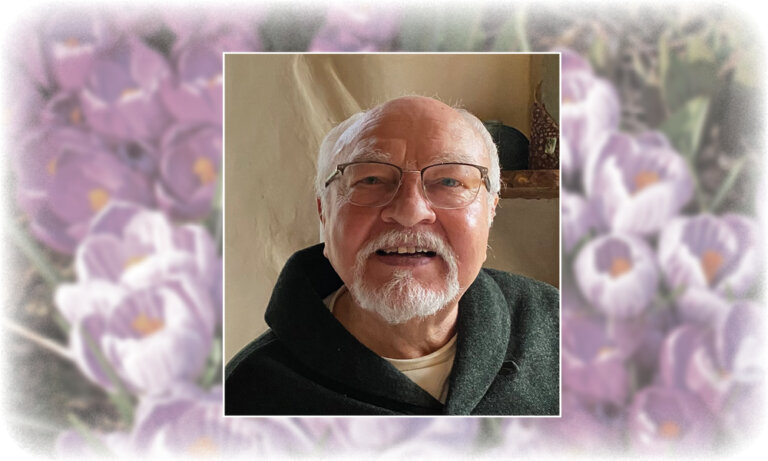
HILDEBRANDT, Edgar

April 14, 1942 – April 6, 2026

We want to celebrate the life of our dear Edgar. He was born in the Ukraine and spent half his childhood in Germany before emigrating to Canada with his family. They settled in Vancouver until he left on his worldwide travels.

After many adventures he met the love of his life in New Zealand, married and had three children. In 1980 he moved back to Vancouver with his family and ended up spending the last decade of his life on Salt Spring Island. He embraced life and everyone he met, but his greatest joy was living close to his three children and being Opa to his six grandchildren.

Forever remembered by his wife, Gloria, children, Adina, Adam and Gretta, and grandchildren, Cypress, Aidan, Chloe, Ezra, Summer and Nicholas.

We would like to thank Dr. Kalf and everyone at Lady Minto Hospital for their compassion and kindness to us all in his final days.

May he be remembered for his laughter, dad jokes and endless stories.

And Another Thing: U.S. TV health-care ads a fright

By PAUL MCELROY

DRIFTWOOD COLUMNIST

I do worry about the Americans. I worried about them long before Trump emerged from under his rock because I have watched American television and couldn’t escape the advertisements for medicines without either having a finger hovering over the mute button or my head exploding.

The United States is either a nation of the permanently unwell or of chronic hypochondriacs, which is a bit ironic in a country where having an ingrowing toenail can bankrupt you.

Equally, it is puzzling that a nation whose health tsar seems to embody all the wholesome attributes of Simon the Leper should be so preoccupied with its own wellbeing. Or maybe it’s because of their cadaverous health secretary that they have become more fearful of any potential malady.

On CNN and MSNBC (or MSNow, as it prefers to be called these days, presumably as a result of a new CEO who, after doing some hard thinking, had an idea), every four advertisements in five is for some miracle cure, invariably of an ailment I’ve never heard of and most certainly don’t want. Others are more prosaic but are still not a suitable topic for polite conversation, especially around the dinner table.

There is, for instance, the young woman working in her garden while brazenly extolling the virtues of a particular laxative but, if she’ll excuse me for saying so, however winsome she might be I have absolutely zero interest in her bowels, regular or otherwise! And that also goes for the ladies with wind and troublesome bladders. I’m sure it’s desperately uncomfortable, but I’d just as soon they kept it to themselves.

Worse still are the pills and nostrums, advertised this time by young women in various degrees of undress, aimed at chaps who are having problems in the bedroom department. Bowels and bladders are bad enough, but a gentleman’s tackle is really below the belt.

But it’s the more serious maladies that I worry about, most of which I’d never heard of but now live in fear of getting. American shingles, for instance. I’d heard of shingles, of course, and have even been inoculated against it, but I had no idea, according to the MSNow ads that pop up about every 15 seconds, that in the U.S. shingles presents itself as a fiery pox that will burn through your shirt unless you take the precaution of immunizing yourself. Presumably the American variety is significantly more potent than our own, although both are best avoided.

And American heartburn! Mortifying. Show the slightest sign of feeling slightly queasy after another giant dinner of whatever it is you’ve just hoovered up and the restaurant staff will take to the stage and sing about it in gruesome detail.

Then there are the quack potions for restoring your memory. Never mind that none of them have been proven to work for an ordinarily healthy person who merely occasionally misplaces their car keys — or their car. Even the tiny print at the bottom of the screen points out that these particular nostrums are probably of no use to man nor beast and the folk they’ve quite obviously paid to advertise them are best ignored. And then forgotten.

The small print is always terrifying. For a regular arthritis pill: “Serious infections, including tuberculosis and fungal infections, have occurred, sometimes leading to hospitalization or death. Tell your doctor if you have fever, cough, weight loss or fatigue.” Death!? Tuberculosis!? And they always come over the cheery part which offers instant relief from shortness of breath and a probable first place in the Vancouver marathon.

At least the American drugs, unlike the nation itself today, are democratic. There’s pretty much something for everyone, from the fat to the emaciated, blocked noses to the running sores, the depressed and the hyperactive. There is even a drug for a guy who appears to have a finger with a mind of its own and another for some old fellah, a doctor no less, who is terrified of stairs because he has pins and needles in his feet. Killer pins and needles, eh? Who knew.

The whole Big Pharma message is slightly biblical: “Heal the sick, cleanse the lepers, raise the dead, cast out devils: freely ye have received, freely give.” Except of course, this is the United States, where nothing is free and the halt and the lame will have paid an arm and a leg to walk again.

But it’s the dental ads that keep me awake at night, those All-American teeth that glow in the dark, so white, so perfect they can be seen from space; far too good to be wasted on mere chewing. They never show the “before” pictures of the poor souls whose lives have been blighted by a mouthful of teeth that would shame Shrek, but the remedy is almost as shocking: wide, rictus grins displaying teeth just too perfect to be taken seriously.

And here’s an interesting fact. Despite having the world’s most aesthetically appealing teeth, America’s actual dental health comes way down the World Health Organization league of healthy choppers. The Scandinavians, needless to say, lead the world and even the Brits, who have long been scorned for having teeth best hidden behind a bushy moustache, are much healthier, mouthwise, than the luminescent Yanks. Europe is more into drilling and filling than buffing, while it’s likely most Americans can’t afford decent teeth unless they whittle them themselves.

Neither, I assume, can many of them afford these medicines which might just make their lives more bearable.

paulmcelroy@shaw.ca

Report: CRD rural areas get back less than they pay

0

A new report has reignited the debate over fairness in funding between urban centres and rural electoral areas (EAs), as Capital Regional District (CRD) officials said they will task future directors with addressing disparities revealed in regional spending.

Suspicions that regional investment favoured cities over rural areas like the Gulf Islands and Juan de Fuca were largely borne out by the report, which — even taking into account population densities — found dollars coming in usually didn’t find their way into rural projects at similar proportions. 

“I think there is sufficient evidence in here to suggest that, at least for some services, some electoral areas are contributing way more than they’re receiving back,” said Salt Spring Island CRD director Gary Holman as the report was brought to committee in April. “The staff report indicates there is a concern there for EAs, about paying taxes and not necessarily receiving benefits back.”

According to the analysis first presented to the CRD’s Hospital and Housing Committee, while Salt Spring Island, the Southern Gulf Islands and Juan de Fuca EAs combined represent 5.1 per cent of the CRD’s population, they contribute about 7.5 per cent of regional hospital and housing requisitions and receive just two per cent of hospital capital spending within their areas — and merely 1.5 per cent of housing capital investment. 

“We’re all part of the social contract,” said Holman. “But in my view, the social contract is a two-way street.”

The analysis covered the 15 years between 2010 and 2025, and looked at tax requisition, investments and grants for the Capital Regional Hospital District (CRHD) and Regional Housing, including “non-application-based” grants, i.e. direct awards to the CRD such as the Community Works Fund, COVID “Safe Restart” dollars and Growing Communities Fund (GCF). 

The request for the report — and the subsequent vote Wednesday, April 29, advising the next CRD board to consider regional equity as part of its strategic priorities planning process — was prompted by EA representatives. Holman told fellow directors on April 1 that in light of the report, his goal was simply to ensure equity was among the principles future boards use in planning.

“Not the only principle, but one of the principles,” said Holman. “For example, we’ve got First Nations reconciliation as a key principle within our strategic goals, we have climate action. The intent of my original motion was to try to get the board, when it was considering its priorities and how it was allocating both staff and funding resources, to take into consideration the equity issue.”

That issue was front and centre in the report. From 2010 to 2025, according to the analysis, $352 million flowed into regional housing capital projects, delivering 989 affordable rental homes across eight municipalities; standout efforts include creating 250 new housing units between Langford’s $36.4-million Spencer Close and the $31.1-million Hockley House projects.

Yet of that total, Salt Spring and the Southern Gulf Islands saw just $5.29 million, or 1.5 per cent — less than half the dollars expected with a strict by-population formula — and zero capital investment was recorded for the Juan de Fuca EA. 

EAs similarly funded $1.34 million of the $18-million CRD Land Banking and Housing Service requisition during the period, but despite ongoing initiatives — like $75,000 set aside through 2027 for the Rural Housing Program pilot and $1.2 million to purchase land for Galiano’s Thuthiqut Hulelum’ Housing Project — dollars for completed work are dominated by those in urban centres, according to the report, with 98 per cent of funding.

For hospitals, the picture was consistent. CRHD granted almost $300 million to Island Health for a portion of its capital needs, with only two per cent — about $6 million — targeting EAs, mostly Salt Spring’s Lady Minto Hospital and to a far lesser extent Galiano’s Health Care Centre. During the same period, EAs shouldered 7.6 per cent of the $450 million in total requisition.

On the surface, non-application-based grants painted a rosier picture in the report for EAs. The CRD Board, for example directed 100 per cent of Community Works Funds — $2.6 million annually, across two 10-year terms — to EA projects. 

But for other grants, the situation was more complicated. The GCF provided a one-time total of $1 billion in grants distributed among all 188 of B.C.’s municipalities and regional districts, for their use to address each community’s “unique infrastructure and amenity demands,” according to the province — including development finance portions of infrastructure costs that support affordable housing. 

And the report noted that the CRD Board directed about 47 per cent of its share of the GCF to electoral areas. But while seeming generous in exceeding the province’s suggested 32 per cent population-based share, that number, according to Southern Gulf Islands EA director Paul Brent, does not tell the full story, 

“Of that billion, $100 million came to the CRD,” said Brent on April 1. “$89 million to municipalities directly, and then $11 million that the board distributed: $5.4 million to Electoral Areas, and the balance back to the municipalities.”

From “the perspective of equity,” he continued, “it certainly looks to me that it’s more like 95 per cent versus five per cent, which is kind of consistent with the numbers [for] hospitals and housing.”

EAs already have a lower level of service in terms of health care, affordable housing and other services, according to Holman, who said while the province had made suggestions on how to allocate those dollars, the decision was ultimately up to the CRD Board.

“Provincial funding programs have absolutely benefitted us, and we’re grateful for them,” said Holman. “But they have been inequitable. The board could be thinking about offsetting that, and not reinforcing it.”

As directors from “core” districts noted their own experiences of inequity — where they also might’ve contributed for projects not built inside their municipal boundaries — Brent was less circumspect.

“If there’s affordable housing built in Esquimalt, and you live in View Royal, it’s not very far away — if you qualify for it, it’s realistic and there’s a bus route,” said Brent. “On Saturna? It’s ridiculous. And it’s the same thing with medical services; we may be only 30 kilometres from Swartz Bay or 50 from the hospital, but in reality, depending upon what time you might get sick or need it, we’re 12 hours away.”

The 24-member CRD Board is composed of one or more elected officials from each of the 13 municipalities within the regional district; there is one director from each EA. 

“I have always been a regionalist,” said Brent. “I understand it takes time for equity to work its way through. But we’re talking a decade and a half of analysis here, and I’m seeing nothing in terms of housing, close to nothing in terms of hospital. That’s what equity is about, and what I want this board to reflect on. If you want the EAs to be supportive of the region, then the EAs at some point in time have to see it. We can be patient, but I think we’ve demonstrated patience enough.”


Guild Show on at Mahon Hall May 12-18

DONNA COCHRAN

FOR THE GUILD SHOW

This is the fifth year for Salt Spring Island’s guilds to showcase a stunning array of their work at Mahon Hall.

The Guild Show runs daily from 10 a.m. to 4 p.m. from Tuesday, May 12 through Monday, May 18 (right through the long weekend).

The six guilds participating this year are the basketmakers, painters, potters, printmakers, weavers and spinners, and woodworkers. Mahon Hall is a beautiful setting to blend the colours and textures of the more than 90 artists in carefully curated groupings. 

The printmakers are the newest guild on the island and they really enjoy being part of this community event. They say it is fun and inspiring to be part of a common endeavour. Similarly, the painters say they enjoy the privilege of showing their paintings at the event as it reaches a much wider audience than their own shows.

“It has fostered cooperation between the Salt Spring guilds, which sometimes results in a cross pollination of creativity, ideas and work,” they say.

Don’t miss the chance to see how the guilds today are continuing to contribute to Salt Spring’s lively arts scene. 

People can meet the artists at the opening reception on Tuesday, May 12 from 4 to 7 p.m. at Mahon Hall. Entries to win one of three gift baskets of small treasures donated by each guild will be available, with the draw takings place at the close of the reception.

Hope to see you there!

Forum hosts Neve on human rights topic

By GEORGE SIPOS

FOR SALT SPRING FORUM

Any of us who have been alive a while can, if asked to name transformative inventions in the world within the last 80 years, come up with a number of obvious ones.

Gadgetry will come to mind, everything from the internet, to smart phones, to satellite communications and the like. In medicine, the invention of antibiotics, transplant surgery, MRNA vaccines, etc. have revolutionized the quality of life for many of us.

But what about ideas, especially ideas in the social and political realm?

We may not immediately think of the idea of human rights as an invention, but it did come about as a distinct formal concept in 1948 when the newly born United Nations created and adopted the Universal Declaration of Human Rights.

After the horrors of World War II, the world for the first time articulated an explicit belief that all human beings share common, inherent and inalienable rights and freedoms by virtue of being human. But beyond simply believing this, United Nations member countries wanted to codify the concept in the form of international human rights law.

Ah, you say, that’s where the problem arises. Law is only useful if it can be enforced. And the last 80 or so years of world history have shown that disregard of human rights has been all too common, and injustices have tainted the fabric of the benevolent world we had hoped would emerge in time.

Not for want of trying, however. The UN’s Human Rights Council has worked tirelessly on a global scale to promote international treaties and legal mechanisms such as the International Criminal Court, criminal tribunals in the aftermath of genocides in Rwanda and the Balkans, and so on.

Perhaps more significantly, the idea of universal human rights has led to the emergence of international non-governmental organizations whose purpose is to fight for the acceptance of human rights as the moral and legal basis of world order.

Last October, Kenneth Roth, former director of one such important NGO, Human Rights Watch, visited the Salt Spring Forum and spoke about many decades of its work around the world to defend human rights.

On Wednesday, May 13, the forum will present Alex Neve, who spent 20 years as Secretary General of Amnesty International Canada, another crucial NGO whose initial focus was defending imprisoned and abused individual rights activists in many countries. Over the years its scope has grown to engaging with human rights issues more broadly.

Arising from this work, Alex Neve has just published a book: Universal – Renewing Human Rights in a Fractured World, which is a compilation of his 2025 CBC Massey Lectures.

In light of the acute conflicts currently ongoing in the Middle East, Ukraine, Sudan and elsewhere, the forum event will be both very informative and, unfortunately, all too topical.

The Neve event takes place on Wednesday, May 13 at 7:30 p.m. at Fulford Hall.

A link to tickets can be found at saltspringforum.com.