Home Blog Page 10

Junior tennis program grows on Salt Spring

For young tennis players wanting to develop their game and make a mark on the competitive circuit, Salt Spring has become a destination of choice thanks to Mukul Karthikeyan. 

Since becoming a coach at the Salt Spring Tennis Association (SSTA) tennis centre in 2023, Karthikeyan, who will soon be 33, has taught 42 players from off-island and 140 Salt Spring youth through the SSTA junior program.

Five of his off-island students have qualified to compete nationally at least once — meaning they were in the top four or five in B.C. in their age category — with several others earning titles in provincial championships and top tournaments in Vancouver, Victoria, other areas of B.C. and beyond. 

Besides Salt Spring’s Nate Kray-Gibson (two runner-up titles and 2025 Gulf Islands Open (GIO) men’s tourney winner) and Scott Goddard (2024 GIO winner, six champion/runner-up titles), multiple champion and runner-up titles have been won by Mansino Snell, Jason Fan, Lucy Chapman, Fiona Huang, Emma Chen, Filbert Zhang, Arcee Yijen Chen, Nate Mauro Smith, Tommy Freer Chapman and Ethan Liu from Victoria and Nanaimo areas. 

“What I value most about coach Mukul is that he never tries to fit athletes into a box,” said nationals qualifier Emma Chen in a commendation letter. “He recognizes my strengths and unique playing style, and instead of changing that, he helps me build on it. That approach has made me more confident and motivated to keep improving.”

“In just a year, my strokes, fitness and mental toughness improved drastically,” said Fan. “Thanks to Mukul, I competed at both the 2025 indoor and outdoor nationals. He’s always there to challenge me, encourage me and build my confidence — on and off the court.”

Karthikeyan will say that the off-court stuff is equally important, like developing the right fitness routine, and the camaraderie that comes from participating in group play and camps. 

Marjorie Blackwood also coaches on Salt Spring, with some 40 years of experience behind her. She is a former top-50-ranked World Tennis Association player, a member of the Tennis Canada Hall of Fame and a big Karthikeyan fan. 

“In the three years Mukul Karthikeyan has been at the Salt Spring Indoor Tennis Centre, juniors and adults of all levels have been infected by his passion for the game,” said Blackwood. “Not only has Mukul brought a high performance mentality and great results for our junior competitors, but he has lifted the fitness and abilities of our adults and seniors as they play the ‘sport of a lifetime.’”

Blackwood said Karthikeyan’s mentorship of youngsters has built a culture of excellence individually and within group training.

“As a former professional player and coach,  I am constantly impressed with Mukul’s work ethic and professionalism on and off court,” she said.

Building an environment of hard work, trust and getting results is one of Karthikeyan’s goals.

“Once you get that environment, the players are not going to back off,” he said. “If they see the results coming and all the other kids working harder, then the culture is set, and everyone is going to drive to get better and make the other kids do well too.”

Having competitive players from Vancouver Island training on Salt Spring obviously gives local players a boost, as seen by the Gulf Islands Secondary School tennis team’s fifth place finish at provincial championships last year. 

“A lot of Salt Spring kids will be going for the tournaments from now on,” said Karthikeyan, “so it’s pretty good for them to see how the other top juniors train and it gives a lot of motivation for the island kids.” 

Karthikeyan can relate to his travelling students as that’s what he had to do to access tennis coaching starting at age nine when he lived in a  rural village in India. His coaching career began at age 16 and he’s never looked back, becoming a Professional Tennis Registry master of performance tennis, being one of 16 coaches chosen for the World Tennis Conference 3’s Next-Gen Tennis Coach Project and having taught in 14 different countries. Some of his players represented Junior Davis Cup and national teams in China, India and the U.S. 

Karthikeyan came to the island through the SSTA and now offers lessons and programs as a contractor on SSTA courts through his Mukul Karthikeyan – High Performance Tennis company. 

He is also happy when the parents of junior players take up the sport. Knowing what their kids are going through on the court helps parents be even more supportive, he said, and further strengthens the island’s tennis culture.

One thing he likes about teaching on Salt Spring, in fact, is the range of ages he encounters. 

“So at 3:30 p.m. I’ll be teaching a six year old; the next day I’ll be having an 83-year-old on the court . . . It makes me understand the people well and connect to them. It’s challenging, but also it helps me to grow better as a person.” 

People can book a lesson with Karthikeyan through coaching@saltspringtennis.ca. 

BOURDIN, Barbara Mae (nee Smith)

April 22, 1937 – March 8, 2026

It is with great sadness that we announce the passing of Barbara, our loving mother, grandmother and great grandmother.

Barbara was born in Vancouver, but moved several times in her lifetime. Her family moved to Nanaimo when she was a child and then back to Vancouver where she attended John Oliver Secondary School. Barbara had many interests. In her youth she enjoyed figure skating and was an accomplished pianist. At the age of 16 she started a long on and off career with the Bank of Montreal. It was while riding the bus to work that she met her future husband, Gerry. They enjoyed 68 years together, living in Vancouver, Fort St. John, North Vancouver and here on Salt Spring Island.

Moving to Salt Spring in 1970, she worked at the local BMO and took up hobby farming, tending to chickens, pigs, horses, cattle and proudly showing her purebred Suffolk sheep at the Fall Fair. Barbara was a very kind person and had a special way with animals. She was very devoted to her animals. The family always had a variety of pets, many rescued by Barb. She even had a pet chicken that spent her nights at the farmhouse in a crate and would tap on the window to go outside to forage and lay her egg.

Tiny orphaned piglets lived in a crate in the house while Barbara bottle fed them. They would gallop up and down the hallway before growing strong enough to make their home in the barn.

Barbara’s family was of Scottish and Finnish heritage and the ocean was in her blood. She loved boating and fishing with Gerry and in 1994 she took the Power Squadron course so she could safely navigate their 19’ boat, piloting it often to Vancouver or off the coast in Port Renfrew fishing.

In 1978 Gerry completed construction of the Fulford Inn. Barbara, with her banking back ground, managed the establishment together with Gerry and his business partners. She was an excellent cook, so it wasn’t long before not only “doing the books”; Barbara was cooking in the pub kitchen or the staff were using her recipes to feed the loyal patrons.

Her grandchildren and great grandchildren were her joy. She adored them all and loved spending time with them.

Barbara was predeceased by her husband Gerry and brother Jim Smith.

She leaves to mourn her daughter Kellie, (Perry), son Jay, grandchildren, Travis (Robyn) Ferron, (Ryan) & Brianna, (Ron) Great grandchildren Layne, Chase, Charlie, Jaxson, Sophie & Noah.

The family would like to extend deepest appreciation to the staff at Lady Minto Extended Care for their excellent care and compassion, Dr. Peter Verhuel and Dr. Kimberly Northcott. Very special thanks to Jenny Pickering and Pam Fetherston for their love and care of Barbara in her final years.

At Barbara’s request there will be no service. In lieu of flowers donations can be made to The Arthritis Research Centre Society of Canada or the local BCSPCA.

LONGLEY, Joy


April 23, 1935 – March 1, 2026

Joy passed away peacefully on March 1, 2026, at the age of 90.

Joy loved all animals, especially horses, and dedicated much of her life to both family and the equestrian community. She was predeceased by her beloved husband of 60 years, James Donald Longley, in May 2017 and her older brother, Richard Avery Walpole in May 2022.

She is survived by her four children: twins Wendy and Margot, Holly, and James, along with many grandchildren and great grandchildren. She will be missed by many friends, students and members of the community whose lives she touched.

Joy grew up in Richmond, British Columbia, and attended medical school at UBC graduating in 1960. She balanced her professional career while raising four children, and still found time to share her passion for horses and teaching. Joy was a longtime instructor at Southlands Riding Club, where she taught dressage to countless riders. She was also a dedicated supporter of Pacific Riding for Developing Abilities (PRDA), taught Pony Club, and was instrumental in starting the Southlands Riding Club vaulting team.

The Longley family home in Southlands was always full of life – more like a revolving door of neighbourhood children, riders, and animals. Joy created a welcoming place where many young equestrians found encouragement, mentorship, and lifelong memories.

In 1993, Joy and her husband moved to Salt Spring Island, where she continued to pursue her many creative passions. She was a talented seamstress and quilter and loved creating beautiful greeting cards using stamps and embossing.

A perfectionist by nature, Joy brought the same dedication to her riding. She competed with her beloved dressage horse Tiggy to Olympic level Grand-Prix, earning many championships along the way.

A big thank you to the caring staff at Heritage Place.

Joy will be remembered for her kindness, generosity, determination, creativity, and the many lives she influenced through horses, teaching, and community.

Salt Spring’s first ladder truck covered by anonymous donation

0

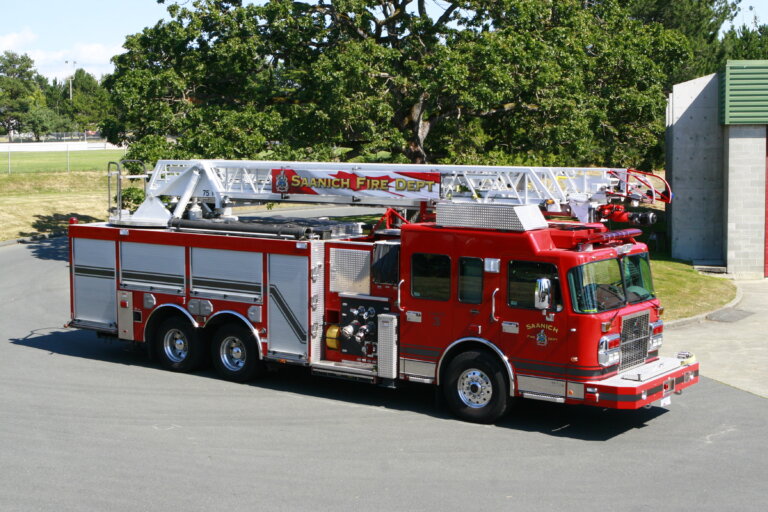
Island firefighters struck gold at a closed-bid auction last week, officials said, and Salt Spring’s fire district will put its first-ever ladder truck into service this spring.

And in a surprising turn of events, a good deal just got even better. Salt Spring Island Fire Rescue (SSIFR) Chief Jamie Holmes told district trustees Monday night, March 16, that not only had the district’s bid on a used 2009 Spartan-Smeal “Gladiator” ladder fire truck had been accepted — and the aerial apparatus, formerly in service for the Saanich Fire Department, would soon be joining the island’s fleet — but also that the $326,350 cost was now being fully covered by an anonymous donation.

“Today, I received a letter from a private foundation,” said Holmes, “[saying] ‘we are proud to support your valuable fire department and the Salt Spring Island community; we do not require any naming or public recognition.’”

The purchase of an elevating device has been part of the fire district’s strategic plan for a few years, Holmes said, although ladder trucks cost upwards of $2.5 to $3 million new and have multi-year wait times for delivery. The used Saanich “quint” fire truck has been professionally maintained, he said, and even apart from the donation had represented an “excellent value” for the district at a cost of $305,000 — plus tax.

“Actually, a member [of the anonymous foundation] approached one of our members, asking after some news articles about the need for an elevated device, and the pieces just fit together at the right time,” said Holmes. “Now we are in the elevating [apparatus] game at no capital cost to the community; we can protect current structures on Salt Spring, and evaluate if in the future we need something bigger — or even smaller.”

“Quint” apparatus simply means the truck has five major functions, Holmes said. In addition to the 75-foot ladder, the new truck has a pump, hydraulic generator, extrication equipment and ground ladders. The fire district’s board authorized the purchase through reserve funds already allocated for apparatus replacement, and passed a resolution accepting the generous donation offer.

In the meantime, Holmes said, the Saanich Fire Department has agreed to temporarily store the vehicle and coordinate training for Salt Spring firefighters on it at their facility, until the new fire hall on Lower Ganges Road is complete and ready for SSIFR operations to shift there — still expected to take place May 1, with a community celebration now planned for May 24.

The truck will meet firefighters’ needs to respond to emergencies at several multi-storey care facilities on Salt Spring, Holmes added, including the four-storey supportive housing complex built on Drake Road, and will help “future-proof” the department for any future densification planned in Ganges.

“An apparatus like this, with care and maintenance, we can get it to 30 years, and if we find after a number of years it’s not right for us we will get very close to what was paid for it.” he said. “We’ve never had an elevating device as part of our operations before, so we don’t know what we don’t know. We want to make sure we don’t make a $3-million mistake.”

Global voyagers back home on Salt Spring

0

Salt Spring’s Callum and Cianan McGuffin seem eager enough to spend a little time ashore after completing a global circumnavigation Friday, Feb. 20 — in a sailboat older than the two of them combined.

But islanders should not expect the McGuffins to go too long between adventures. The brothers, now 26, learned to sail at the Salt Spring Sailing Club, as junior members racing 420s — they both pointed from the dock and smiled, having tied up Saumure only metres from where they first found a love of sailing. 

They felt the call of adventure early on. Crewing aboard various boats across B.C., they found themselves choosing increasingly daring trips. After completing the storied Race to Alaska in 2019 as the then-youngest sailors in race history — in a “leaky little J/24,” Cianan chuckled, with third brother Finn and compatriot Conner Ekelund  — the pair scarcely seem to have paused, working to set aside funds for a new journey. They started boat shopping — on a budget — landing on a 30-foot Hunter-Vogel built in 1970.

“There wasn’t a huge range of options,” laughed Callum. “But this one is old, with really thick fibreglass, a solid hull and full keel — and heavy. That’s what we were looking for. We bought it for $7,000, so it was well within our price range.”

The interior plywood was rotted, so much of it was replaced along with every single window. Callum was working at Leitch and McBride Sailmakers in Sidney at the time, he said, so he stayed late in the evenings and built Saumure’s sails.

Right from the start they’d been keen on sailing the Northwest Passage, but with pandemic restrictions that was off the table. A co-worker had regaled them with stories of sailing to New Zealand back in the 1990s, so they set off to do that — leaving Salt Spring Island on July 18, 2022.

They characterized the crossing to Hawaii — itself often a sailing “bucket list” trip — as a sort of “test run,” and said there had been some rough weather but all downwind. Coming into New Zealand was tougher, Callum said — 30-foot waves, a big storm with strong winds. At one point the anchor, which had been tied down on the bow, broke free.

“I was up on the bowsprit, holding on with one hand and trying to get the anchor tied off with the other hand, and then this wave came along,” he said. “And you can hear them coming, it’s like a rumble as they come in. It swept me, ripped my hand off the bowsprit and threw me against the mesh. I was tied on, so it wasn’t real danger, but it was a little unnerving.”

“There’s so much water coming over the decks,” agreed Cianan. “It all comes down through the hatches, down through the air vents, basically anywhere it can. And when you’re on deck, you’re just looking up at a wave, way up above you.”

After that harrowing finale to their five-month journey, they figured Saumure could probably get through just about anything. So after a “quick” two-month hike across the length of the South Island Te Araroa and a jaunt over to Australia to drive the Great Central Road, the pair flew back to their little boat to pore over maps and decide what to do next.

“So we’re looking at the charts,” smiled Calllum. “And when you look at it, it sort of looks like you’re halfway around the world.”

Cianan laughed. “It turns out you’re nowhere near halfway.”

Callum McGuffin points to seas west of Africa while he and brother Cianan recount their global circumnavigation. (Photo by Robb Magley)

Crossing the Indian Ocean, they “accidentally went through a cyclone,” Cianan said. Surprisingly it wasn’t the storm itself but rather the anticipation of it that was most disquieting.

“Seeing the cyclone on the chart coming toward us, and there’s nothing we can do to get out of its way,” he said. “That was unnerving.”

“So we came up with the idea, since cyclones spin clockwise in the southern hemisphere, we could just go down to the south of it and tuck in close,” said Callum. “We’re calling it the ‘cyclone slingshot,’ and it worked pretty well — we took like two weeks off our crossing to South Africa.”

“I don’t know if I’d recommend it,” chuckled Cianan. “But yeah, it worked well.”

After what had become a 34-day crossing to Richards Bay, between bouts with thieving monkeys they were warned about the Agulhas Current, a powerful south-board stream along South Africa’s east coast that moves like a nine-knot river. Picking the right weather was critical, they were told — quite often the wind and current run against one another, making for steep and dangerous waves.

“But along the route, everyone had always been telling us everything was ‘too dangerous,’ and how we shouldn’t be doing stuff, so we didn’t really pay much attention,” said Cianan. “It turned out in this case, they were right.”

They left Richards Bay with 70 knots of wind against them, and the current behind. Callum and Cianan estimated it was five days of 40-foot waves, water coming through hatches, a bilge pump struggling to keep up and practically no sleep — they had to keep extra watch, as they were also right in a shipping channel. 

The reward was Namibia — like nothing they’d ever seen — giant sand dunes coming right down to the ocean. They visited shipwrecks and endless stretches of sand with virtually no humans around. 

Then they had to decide between several options to get back home to Salt Spring. The Panama Canal would be expensive, they realized — and arguably not particularly exciting. Rounding Cape Horn would be practically the definition of excitement, but given the time of year they were going the wrong way and would be sailing upwind the entire time.

That put the Northwest Passage back on the menu. They went on to Saint Helena, a remote island in the middle of the South Atlantic, and began what became their longest and most gentle crossing of the trip — 54 days of good wind and weather, Callum said. Just past Bermuda, they were awakened to the sound of fermenting cans exploding in storage beneath their bunk, leaving them with an unpleasant smell below-deck and little in provisions — two kilograms of oats and “whatever fish we could catch” for the last two weeks into Halifax.

But they’d made it. Leaving Saumure in Nova Scotia, they came home to work again, then flew back to sail up to Greenland’s Disco Bay and meet the first of the trip’s icebergs. At Pond Inlet on Baffin Island, they learned there was ice moving east through Lancaster Sound.

“Coming to the Northwest Passage, we were so far behind schedule,” said Cianan. “And it just meant the weather was getting worse and worse and worse. But we just had to keep going.”

Turning south, they went through Prince Regent Inlet and “five- to seven-tenths ice coverage.”

“It’s like a maze, trying to find leads through the ice,” said Cianan. “It was actually pretty fun, if intimidating at times — sometimes you choose and don’t make it all the way through, and then it starts closing up behind you.”

Prince Regent featured a polar bear that swam after them for longer than they expected it might, followed by a stop at the long-abandoned Hudson’s Bay trading post at Fort Ross. Favourable ice-free conditions at treacherous Bellot Strait gave them access to King William Island and Victory Point, where they saw old sled runners and assorted other debris from when the Franklin Expedition crew came ashore, abandoning their boats in 1848 — and two more polar bears, cutting the McGuffins’ exploration short.

The real ice choke point was expected to come through Amundsen Gulf into Tuktoyaktuk, Callum said — but they stuck close to shore, sailing in relatively clear shallow water. The highly rustic sauna on Herschel Island was too alluring to bypass, and indeed kept them there two days — but from there it was one long journey all the way around the northern half of Alaska. 

This leg was not without misadventure; at Point Barrow the wet exhaust fell off Saumure’s 16-hp engine, soaking the electronics and putting the motor out of commission and forcing several days of tedious upwind sailing. Once they got it running again, the clutches failed, so they carried on under sail power all the way to Nome, Alaska.

Accessing the clutches required lifting the engine, something accomplished by using Saumure’s boom as a makeshift block and tackle.

“We were able to switch our forward and reverse clutches,” chuckled Callum. “So we could go forward!”

After three weeks in Nome, they decided they couldn’t watch the ice thicken any longer — and seized a six-day weather window to make it to the Aleutians just before another storm. The stretch south through those islands was beautiful and easily among their favourites, they said. Near Bella Bella, Saumure broke her prop shaft; after spending almost a month and a half there — mostly waiting for the new shaft — they set off for the last 10 days’ journey to Salt Spring.

What was going through their minds in that last week?

“Honestly we thought a lot about what food we would eat when we got back,” laughed Cianan. “We actually had a notebook with everything we thought of that we wanted to eat. A long list!”

Three years, seven months and two days later, and after charting 37,070 nautical miles (68,654 kilometres), they sailed into Salt Spring, flanked by a welcoming flotilla from the sailing club. Saumure is moored there, at least for now; Callum said even while they were going through the Northwest Passage they were already plotting how they might return — with a more leisurely schedule and stopping more places, maybe even freezing the boat in somewhere and taking two full summers to explore.

Also in their minds for the future is something more “human-powered,” they said, revealing they’re mulling a canoe voyage across Canada.

For now, logging a trip around the world via the Northwest Passage is a rarely completed challenge to savour — the McGuffins believe they are just the 15th Canadian sailboat in history to manage it. Both brothers said their advice to would-be adventurers is to stop focusing on the obstacles and simply get out there.

“I would say just actually do it,” said Callum. “Everything is a lot easier once you start doing it; things are much more achievable than people think they are.” 

Follow McGuffin Brothers Adventures on Facebook or at their criminally undersubscribed YouTube channel: @mcguffinsailing3715.

Fallow deer ‘ticking time bomb’ explodes

0

A population of non-native deer that has been altering the ecosystem on Mayne Island for decades has grown into the thousands, according to experts, now numbering more than five times an estimate from 10 years ago.

Jeanine Dodds has lived on Mayne Island since 1960, currently serving her seventh term as local trustee for the Islands Trust. When she spoke to the Driftwood in 2015, she described the fallow deer population — estimated at about 1,000 then — as a “ticking time bomb.” At a webinar on Wednesday, March 4, she told attendees she agreed with locals who blame provincial regulators far more than anyone who originally brought fallow deer to the Gulf Islands.

“I grew up here as a child on SḴŦAḴ, Mayne Island, Helen Point,” said Dodds, “and I know what that landscape looks like today and it’s heartbreaking.”

The fallow deer landed on Mayne in the 1980s, when a development plan was approved for a game farm located near Horton Bay, on the island’s southeast corner. At the time, game farms were being promoted by the province itself, as a means of diversifying B.C.’s agricultural revenue streams — and through the Game Farm Act, a permit to farm fallow deer was issued in 1990. 

By 1992, according to Dodds, there were already concerns expressed locally about overstocking, and by 1994 visitors were writing letters to the editor about the dwindling vegetation on the island.

“At that time, the housing I was living in overlooked the historic Robson Farm,” she said, in a large valley to the west of the game farm. “I looked out my window and saw the strangest three deer.”

What followed those first “wild” sightings outside the original farm were literal decades of passionate community discussion and earnest meetings with various ministries, staff and elected officials as they struggled to grasp the size of the problem — and how to solve it. 

Fallow deer today share Mayne Island — if unevenly — with a native species of Columbia black-tailed deer; anywhere large predators have been pushed out, the deer population increases. But while black-tailed deer are found throughout the Gulf Islands, the severity of impact caused by fallow deer is consistently higher.

“Fallow deer have a larger gut system that processes a wider variety of forage,” said Mike Janssen, a forest ecosystem restoration specialist for Parks Canada. “So they eat a wider variety of plants and can do more damage than black-tailed deer.”

Fallow deer also tend to travel in larger groups, eating the new leaves off their preferred plants year after year — and as the old leaves fall off, eventually there are none left. Biologist Rob Underhill, who works with the Mayne Island Conservancy, explained that where the deer have been active, the native plants have been replaced — mostly with non-native deer-resistant species.

The impacts go well beyond just the plants the deer are eating; plants are the building blocks of the ecosystem, Underhill said — taking energy from the sun and making it available to organisms down the food chain, as well as offering the “structural habitat” they need to shelter and reproduce.

“Deer overpopulation also reduces food for pollinators,” he said. “Birds that directly forage on flowers or eat the insects that rely on plants are affected. It has a cascading effect.”

Fenced restoration sites tell the story of how well plants can recover, but they require significant investment and management once the deer are kept out. Underhill said some 2.5 kilometres of fence has been installed on Mayne across different restoration projects, and groups have been gathering data on what grows.

“Fencing isn’t an ideal option. It’s expensive to install and requires maintenance when trees fall on them, or materials reach end-of-life,” said Underhill. 

“Studies suggest the populations will have to decrease very significantly, at least below eight deer per square kilometre, if we want to see a return of herbaceous plant communities to these sites.” 

Island farmer Peter Robinson has direct experience with how costly fencing can be. Robinson has run Mayne Island’s 144-acre Hedgerow Farm since 2016. Hedgerow has been operational since the 1870s, he said, and when his family took over, the primary production came from hay fields — alongside fruit from heritage apple and pear trees. 

“In our first year, we were surprised to see [fallow deer] herds in the fields, numbering 50-plus,” said Robinson. “In the orchards, there was browsing on branches up to about nine feet when they stood on their legs.”

Robinson’s fencing mitigation on the orchard alone has cost some $9,000 so far, he said, and with another $5,000 or more expected this year to finish enclosing that area — and he’s already spent more than $27,000 fencing the hay fields, with another $50,000 needed to protect them fully.  

With hay production bringing in less than $12,000 last year, he expects “payback” in restored production will take at least a decade to materialize. Meanwhile, comparing his per-acre hay production today with his first few years at Hedgerow, his yield has dropped — from 65 to 70 bales per acre to about 25 as the deer population has increased.

“We saw about 50 deer per day on the fields, and they can eat about two per cent of their body weight each day,” said Robinson. “Those fallow deer can consume the equivalent of about 900 bales per year.”

In 2018 the Ministry of Wildlife decided to unilaterally change regulations, designating Mayne Island as an open hunting area for fallow deer year round — and with no bag limit.

“This caused huge consternation within the community,” said Dodds. “It’s all very fine that we have that, but we have very few properties that can — or should — be hunted.”

Robinson allows a select group of professional hunters on their property — hunters removed about 100 in the last 14 months, he said — but his observations had been that the deer could reproduce faster than they were being taken.

A Parks Canada fallow deer management program on Sidney Island to the south collaborated with trained First Nation hunters, with a number of animals being harvested there. Tsartlip Elder Carl Olsen was among knowledge keepers who spent time training young hunters for the task, and said while youth were willing to learn — and that he still goes out with some of them on weekends when he can — it takes a long time to teach the safety and cultural aspects of hunting. 

“You also need to teach them how to clean the deer properly, to skin it, how to be safe about collecting meat,” Olsen said, agreeing they “barely made a dent” in the population. 

“I think that was a really good project, but you don’t learn how to hunt in one or two years,” Olsen chuckled. “I still learn new tricks about hunting.”

In early 2025, Mayne Islanders successfully lobbied the Capital Regional District board to urge the B.C. government to provide sustained funding for fallow deer control. Robinson said staff from the Ministry of Water, Land and Resource Stewardship had told the Mayne Island Deer Management Society they needed to take on the task of counting the deer themselves.

“They told us how to estimate the size of the population, so using their instructions we undertook an island-wide survey,” he said. “We had 102 people take part, all at the same time in the evening last year, walking the same distance and recording all the deer they saw.”

The count came to a total of 723 that day: 68 native black-tailed deer, and 655 fallow, mostly located in the most densely inhabited areas of the island where the latter have become comfortable around people. 

Presenting those numbers to wildlife staff and the ministry, Robinson said they calculated a likely real population of a “staggering” 5,200 fallow deer on the island — and with a biodiversity-ideal target of 200, he said, “now the government knows we have a significant problem.”

“The impacts of the deer are readily obvious,” said Robinson. “If you go from Mayne to Galiano, you will immediately see the difference in the understory.”

But whether it’s reinstating the use of rifles, allowing trapping and baiting, permitting the sale of fallow deer meat — currently required to be destroyed after a hunt — tracking with drones, administering birth control or subduing with tasers, the province reiterated whatever solutions Mayne Island chooses will come without senior government funding, at least for the moment. Robinson said there had been some openness to regulatory changes, if they didn’t cost much to implement. 

That puts the onus, as it has been, on Mayne Islanders. 

Offering advice after eight years managing the Sidney Island forest project for Parks Canada, Janssen said it would be important to recognize what kind of effort managing deer in populated areas really is. While the work on Sidney was indeed an “ecosystem” project, he said, it turned out they hadn’t anticipated how much of a “people project” it needed to be.

“Successful deer management in the Gulf Islands requires identifying the course of action that the most people can agree to,” said Janssen. “The goal isn’t just to find the most effective deer management method; the goal is to determine which methods are likely to be effective, and also have the most support among the people involved.”

That means getting more voices to the table early, he said, long before picking deer management techniques — addressing concerns well before you start, even when there are serious disagreements. If there are shared objectives, the process of hashing out how to get there can be transformative in a positive way for a community, Janssen said, noting he’d seen people surprised by how much respect and camaraderie could result from those conflicts. 

“Not everyone has to agree,” he said. “Even though some people might prefer a different approach, at least they understand the chosen approach — and they can live with it, rather than feel a need to actively oppose it.”

And, Janssen pointed out, even if fallow deer are eventually completely eradicated, there will still be native black-tailed deer.

“Unless there are wolves and cougars on that island, those deer are always going to need to be managed,” he said. “So the question for Mayne Island is, will deer management be a source of conflict, or will it bring people together? I would say that choice belongs to the community.”

For more information on the society’s efforts, visit maynedeer.ca.

BTU set to heat up Fulford Hall

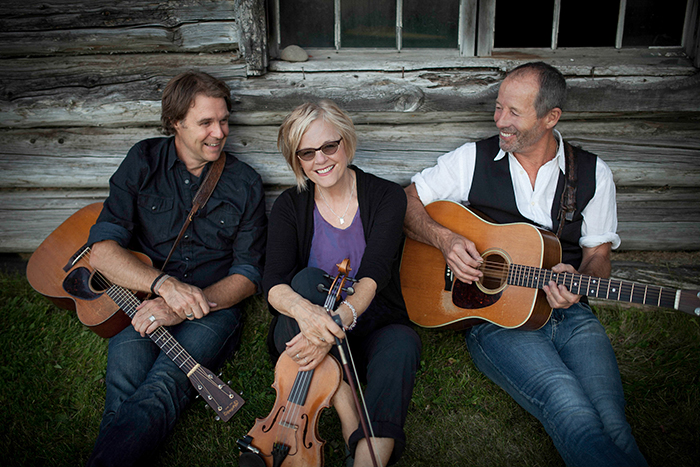
Salt Spring Folk Club (SSFC) is set to host three of B.C.’s best-known musicians in their trio known as BTU — Barney Bentall, Tom Taylor and Shari Ulrich — on the afternoon of Sunday, March 22 at Fulford Hall.

Bentall and his rock and roll band The Legendary Hearts recorded and toured throughout Canada in the late 1980s and 1990s. Bentall then became a Cariboo cattle rancher, but returned to recording in 2006 with longtime friend Jim Cuddy producing Bentall’s first solo record called Gift Horse. Salt Spring Islanders know Bentall well from bringing his inimitable Cariboo Express food bank fundraiser to Fulford Hall through the SSFC for several years.

Taylor is probably best known for his role in the Vancouver cult band She Stole My Beer, where he spent years touring and recording. Taylor also has three solo albums to his credit, including Pull Over Here, which was produced by Bentall. He is part of the roots rock band The Radio Grande, and last year released an album called Folk Signals with his new folk-bluegrass band The Southern Residents.

Ulrich first performed with the legendary Pied Pumkin band, along with Joe Mock and Rick Scott, beginning in 1973. She was also part of the Hometown Band (along with Salt Spring’s own Valdy) and others, and then UHF — Ulrich Henderson Forbes — and the High Bar Gang with Bentall.

BTU first played together in November 2007 at a songwriter concert on Bowen Island. Soon after, they released their Live at Cates Hill album, described on their website as “an eclectic mix of the character, voices and songwriting talents of these three unique artists.” Because all three musicians were so busy with other projects, it wasn’t until 2015 that they could record their second album: Tightrope Walk.

Since then BTU has reunited for a run of shows  as often as possible, “always bringing new tunes to the table to work up as only BTU can. Their blend of acoustic guitars, mandolin, fiddle and swoon-worthy three-part harmonies along with their obvious love of performing together is enduring and inspiring.”

The March 22 concert begins at 2 p.m. Doors open at 1 p.m. with food from chef Brody Paine’s Salt Spring Catering and mocktails from Moonshine Mamas available for purchase.

Tickets are sold in advance at Salt Spring Books (cash only) or at the door, if any are still available at that point.

Viewpoint: Try courtship, not war

1

By CAFFYN JESSE

This is a letter to environmentalists about broom and gorse.

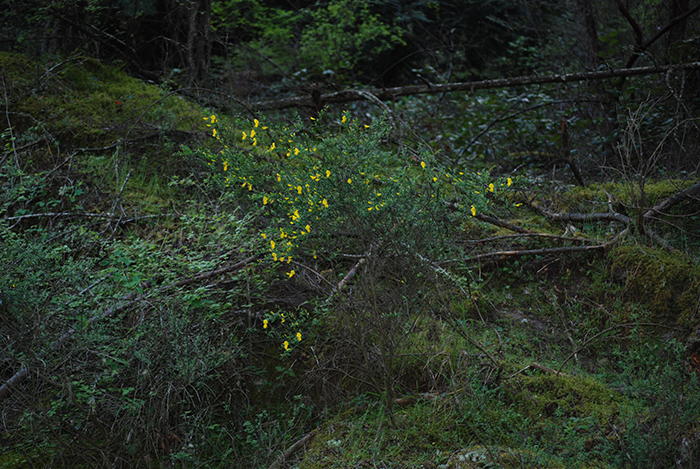
As the first yellow blossoms of broom and gorse begin to open, I recognize the devotion that brings those who love the land out to tackle the problem, with gloves and loppers, with herbicide bottles and burn permits.

I know the fierce love that wants to protect Garry oak meadows, fragile bluffs, rare lilies and camas and mosses that live nowhere else. I share it.

And I want to speak about what happens when we call broom and gorse “invasive species.” Plants are framed as enemies, and people gather to clear them with righteous intensity, as if resisting an occupation. The work can become grim.

Broom and gorse are early-successional species, answering the ecological realities created through logging, grazing, road-building, scraping, fire suppression. Broom partners with rhizobia to fix nitrogen, rebuilding fertility in depleted soils. Gorse stabilizes slopes, feeds pollinators, shelters birds. Both blaze with extravagant yellow, offering beauty and nectar to bees and butterflies when little else is in bloom.

In their homelands, these plants are medicine. Broom has been used — carefully — for the heart. Gorse has warmed ovens and fed animals once its spines were crushed. The yellow flowers yield dye. Broom stems weave into baskets, wattle fencing and garden borders. Both plants burn hot and clean as kindling. They can become charcoal, biochar, compost, craft, bouquet. Thorny gorse stems can be stacked and shaped into fences. These plants can be harvested, sung with, metabolized into local culture.

What if we ended the war and began the courtship?

Native plant communities need careful protection. Broom and gorse removal can be an act of profound care.

But we can cut without contempt. We can thin with gratitude. We can gather what we cut and use it. We can notice bees and bird nests before we lop a flowering branch. We can acknowledge that these plants are responding to human disturbance, not initiating it. We can refuse to displace our colonial histories onto their roots.

Environmentalism rooted in love — sensuous, participatory, creative — lasts. It invites people in. When restoration is fuelled by delight, it sustains us.

Imagine restoration days that end with woven fences, dyed cloth, kindling stacked for winter, bouquets gathered for spring weddings. Imagine teaching children how nitrogen-fixers prepare soil, in a world where broom and gorse are honoured as collaborators in transition landscapes — abundant partners whose energy we redirect rather than annihilate. Imagine how each autumn, as the pods dry and begin their bright percussion in the sun, we gather those abundant seed pods and turn them into instruments — rattles, shakers, small drums of stored sunlight. The very seeds that frustrate every effort at eradication could become a joyful music.

We could make gorse and broom so beloved and valued that they become rare.

The writer is a Salt Spring Island resident.

Why Transition Salt Spring Cares About Housing

By TRANSITION SALT SPRING ADVOCACY CIRCLE

Lately, some folks have been asking us why Transition Salt Spring (TSS) cares about housing. The answer to that important question is the focus of this article, which coincides with Salt Spring’s Official Community Plan (OCP) review being led by our Local Trust Committee.

The answer sits in our tagline “Responding to Climate Change. Restoring ecosystems. Reimagining community. Together.” Each part of that statement has direct implications for how, why, and where we build housing.

“Responding to climate change” is our core mission, reflected in our Climate Action Plan and biannual Climate Action Report Card. It’s in everything we do, from our pretty skookum Repair Cafés to our political advocacy, including op-eds like this and our recent submission on the Island Trust’s draft Policy Statement.

“Restoring ecosystems” is the next pillar of that mission. The more we fragment Salt Spring’s forests with scattered housing, the greater the risks we face — wildfire, water scarcity and ecological decline. As soils dry out, trees die, and risks compound. Kelowna is the sobering reminder of where this leads. That’s why we’ve invested in ecological restoration work in the Hwmet’utsun (Mount Maxwell) Creek watershed and have piloted roadside woody debris collection with the Capital Regional District.

It’s also why ecosystem protection will be central to the recommendations we will share publicly and submit to the Local Trust Committee for their OCP review. Without meaningful change, the default outcome is more big lots with big homes, long driveways and further fragmenting forests.

“Reimagining community. Together” is where climate action and community building intersect. In a climate-disrupted future, resilience depends on having a diverse mix of people who can actually afford to live here. By that measure, Salt Spring is becoming less resilient every day.

We can’t respond effectively to wildfires, droughts, storms, food disruptions or infrastructure failures without nurses, farmers, tradespeople, ferry workers and emergency responders living on the island.

Simply saying “no” to additional right-sized housing preserves a status quo that’s hollowing out the very workforce we will need here as climate impacts intensify. A climate-smart response instead is “No — but, what about this instead?”

That alternative is compact, affordable housing in serviced areas. It strengthens our capacity to withstand climate stress while keeping forests intact. Large, dispersed homes carved into drying, fragmented forests do exactly the opposite.

So, why does TSS care about housing?

First, housing has a big impact on ecosystems — wildfire risk, erosion and forest fragmentation — what we misleadingly call “the natural environment” as though humans weren’t a part of it. Indigenous worldviews understand humans as a part of the natural world. Today, our land-use patterns work against it. But there’s another way, long understood by Indigenous and traditional cultures, and increasingly acknowledged by western ecological science.

Second, housing is currently a big source of emissions. Large homes carved out of clearcuts also make the Trust’s “preserve and protect” mandate — especially on Salt Spring, where more than three-quarters of the land is privately owned — almost impossible to achieve. Smaller, compact forms of housing, close to services, have far fewer emissions and a way smaller footprint.

Third, our resilience depends on people. We need all kinds of humans acting together to meet tomorrow’s challenges — not just doctors, but farmers, tradespeople, ferry workers and emergency responders. We will also need strong skilled people to actively steward our stressed forests. First Nations have always understood this. Western land management practices are only now catching up. Community resilience means changing course so we can care for both people and ecosystems in the decades ahead.

Who gets to live here is, in part, influenced by the choices we make in our OCP. As it stands, who’s more likely to land here when housing costs what it does —a barber with a kid, or two retirees with significant wealth?

If we want a resilient community, we need to tilt the board further back towards people other than the most fortunate. Everyone deserves a decent place to live. Diversity is strength — in communities as in ecosystems — and both are shaped by good planning decisions.

A community shaped mainly by wealth — where working families leave, schools close and working people are priced out — is fragile on many levels.

Of course, there are limits to how many people Salt Spring can accommodate. Under our current OCP and land-use bylaws, Salt Spring has lost roughly six per cent forest cover in just 20 years, according to Global Forest Watch. We can change direction — by getting clear about where and what we build.

Put housing in Ganges and we cut way fewer trees. Build up instead of out and housing becomes more affordable while using less land. Better still, we can truly “preserve and protect” by further limiting housing in high-fire-risk forested areas and low-lying shorelines — while enabling farmers to house workers on their land.

Our decades-old OCP is missing some of the tools we need to build affordable housing, not to mention its silence on First Nations and the lack of a plan on how to address accelerating climate change. And that is understandable, because the world has changed, and with those changes we need to update our plans to better prepare for new risks and realities.

While no OCP can actually build a range of affordable housing on its own (housing economics are very challenging now), one clear example of what we could change is building height in Ganges, for example. On Salt Spring, a maximum of three storeys is available only for seniors’ supportive housing or “affordable housing” that is pretty tightly defined by our local policies. Allowing more than three storeys would help make more affordable forms of housing economic to build, and with additional rules to disincentivize speculation. The only four-storey here is the new Drake Road supportive housing built by the province — which can pre-empt local bylaws. In this case they did so with the support of CRD director Gary Holman and trustee Laura Patrick.

Housing economics have become incredibly difficult, and especially so with B.C.’s current dire financial situation. We need to have a community conversation about how our community steps into the breach financially to make some of these projects happen, without senior government support.

As we close, here’s our request — whether you agree with us or not. Talk to younger people who’ve grown up here. Ask GISS students what they think of their chances of staying after graduation. Talk to people who work on this island about what kind of housing they think our island needs. Read differing views in print or online. Reflect. Get engaged. And share your views with the Islands Trust as part of their public engagement on our revised OCP.

Together, let’s keep unpacking what a diverse community with healthy forests and watersheds would look like — in conversations with friends and neighbours and each other, as we rethink what our community plan can and should do.

Transition Salt Spring’s (TSS) Advocacy Circle includes Mary Ackenhusen, Pam Tarr, Bryan Young, Jon Cooksey and Kacia Tolsma. TSS works to provide fact-based positions rooted in protecting the island for future generations through a compassionate balance between environmental and human needs in a changing climate.

WEEDEN, Judy (Stenger)


1932 – 2026

Judy Weeden fell while working in her Ganges pottery studio on February 11, suffering a concussion from which she never recovered. She died that evening in Lady Minto Hospital despite the gentle care of son Bristol, husband Bob, and Hospital staff. Her daughter Kim and son Robert soon gathered ’round.

Judy was best known for her marvellous ceramics, but she was much more than a potter. She could garden everywhere: in a windowsill oyster shell or flower patch at timberline. Her veggies and the meat from caribou and moose fed her family in its youthful decades in Alaska, and on the day she died she had carried the vigorous green leaves of overwintering ‘chard into her kitchen. She was co-builder of a 30 x 40 foot home in Fairbanks built of spruce logs from which she had stripped bark, then washed with Clorox to deter mould. When we came to Salt Spring Island in 1990 it was her inspiration and helping hammer that converted a pig barn to a spacious, light-filled ceramics studio complex.

Judy was 7 in 1939 when her family squeezed through Hitler’s fingers to start their Canadian lives. They bought a badly run-down farm 50 miles from Toronto. She liked the farm with its vigorous green and brown life but liked wilder country better. She learned Canadian quickly, did well at school, and eventually earned an MSc in Ecology from the University of Toronto. Feeling an urge to see more of Canada’s landscapes, she drove to Vancouver in 1956 to start a PhD in ecology at the University of British Columbia. She was derailed by meeting Bob, marrying him on the family farm in Enniskillen, Ontario, then driving the dusty, unpaved Alaska Highway to Fairbanks and her job teaching comparative anatomy and physiology at the university there.

Twelve years later her urge to work creatively with her hands could be denied no longer. With family help she backpacked clay from a pit at the edge of Mt. McKinley (later Denali) National Park, the start of a lifelong career. She became one of western Canada’s best potters. She brought to her fingertips both a fusion and an independent expression of her sources: a desire that vessels be honestly useful, her love of nature as revealed in leaf and feather, the always-surprising forms her imagination brought out of the clay, and the courage to dare novelty.

Several years ago her eyesight began to fail and her artistic vigour waned. She could still dream creatively and tactile memory could give the imagined work a partial reality. She never stopped her daily trudge to her studio.

A celebration of Judy’s life and art is planned for spring.