Home Blog Page 153

Library opens Indigenous Learning Area

0

Salt Spring’s public library now has an area dedicated specifically for Indigenous learning, filled with beautiful artworks, furniture and books created by Indigenous artists and authors.

The ITOTELNEW̱ HÁUTW̱ / Tatul’ utew’t-hw Indigenous Learning Area was opened with a ceremony on Sunday afternoon, acknowledging everyone who contributed in some way to the project.

“It’s for Indigenous people, especially the 150 Indigenous youth in our school system, to come here and know that they have a place to be,” explained library director Karen Hudson at the event. “Not only will they see this decolonized collection that we’ve created, but their families can feel they can safely come and see this art and be inspired in whatever they want to do in their lives.”

She said creating the area is part of the library’s ongoing response to the calls for action in the Truth and Reconciliation Commission report of 2015. Other initiatives include the Indigenous mural created by young artists on the outside of the library, hosting an Indigenous reading group for the past four years and more recently a friendship circle, and establishing an Indigenous coordinator position.

Caroline Dick has been in that role since September of 2023. Under her guidance, the new area will be home to language learning and other programs, including Indigenous story times for kids.

Dick said she went to school on Salt Spring and at the time it was disturbing to hear the false but then prevailing narrative about Indigenous people not living in the Gulf Islands except for some occasional clam harvesting visits.

“Coming back and being able to be a part of this has been such a healing experience for me, and to be a part of what is really a healing experience for so many different communities and different people has been such a singular honour,” she said.

“We’re just so grateful and cognizant of the fact that the grace that is extended to us by the Indigenous peoples and the communities around here, and the people that are from here — these are your homelands that were taken — that you are willing to come back and be here with us in these healing moments is amazing and wonderful.”

Rose Spahan of the Tsartlip Nation, who curated the artwork collection, introduced attending artists and credited elders for helping her with protocol language and helping things work together in a good way.

Pieces now part of the library’s permanent collection were created by James Jimmy (W̱SÁNEĆ), Maynard Johnny Jr. (Penelakut / Kwakwaka’wakw), Myrna Crossley (W̱SÁNEĆ), TEMOSEṈ / Chazz Elliott (W̱ SÁNEĆ), the late TEMOSEṈŦET / Charles Elliott (W̱SÁNEĆ) and Statu Stsuhwum / Angela Marston (Stzuminus).

W̱SÁNEĆ elder J’SINTEN (Dr. John Elliott) explained at Sunday’s ceremony that “ITOTELNEW̱ HÁUTW̱” means “place of learning” in the SENĆOŦEN language. “Tatul’ utew’t-hw” is the Hul’qumi’num term for “house of learning.” J’SINTEN also shared a W̱SÁNEĆ creation story about the first deer being created from a boy in Hwu’ne’nuts (Fulford Harbour), and a song that urges taking care of our natural places.

Sunday’s events also included delicious bannock and other foods served by Adrienne Peter of Hungry Bubbas, preceded by songs and a talk from her father and Quw’utsun knowledge keeper Bubba Qwulshemut.

Funds for the ITOTELNEW̱ HÁUTW̱ / Tatul’ utew’t-hw Indigenous Learning Area were provided by the Province of British Columbia through the Ministry of Municipal Affairs, the Salt Spring Island Foundation, the Philip and Muriel Berman Foundation and Salt Spring Island Public Library donors.

Editorial: Housing wanted for Islands Trust

1

There’s an unfortunate irony to the Islands Trust facing its own kind of housing insecurity on Salt Spring Island.  

BC Hydro advised the Trust in July 2023 that it wouldn’t be renewing the lease on the space north of Ganges where the Trust has had an office for the past 20 years. 

The local government body’s inability to find a new home exemplifies the lack of appropriate spaces for any number of activities on the island, a state of things some critics might blame on the Islands Trust — justifiably or not — because it is in charge of providing zoning for those activities.

There are likely many reasons a relatively simple ask like a downtown office space seems so difficult, but for certain the options being discussed at the Trust Council committee level don’t seem too appealing — or indeed feasible for solving a rather pressing problem.  

Those include purchasing property that could be made into an ideal or usable space, or closing the Salt Spring office and transferring needed staff to Trust head office in Oak Bay. The former will be a costly long-term project, one that will look like a marathon with sprinter’s hurdles sprinkled in all along the way. The latter seems like a recipe for potentially unhappy staff — will they commute? Work remotely? — and an even unhappier public, who might need to hop a ferry to have every complicated question about their development permit application answered satisfactorily. 

Meanwhile, trustees are setting aside a quarter of a million dollars to improve buildings never intended to house a full office and staff, if that becomes the only option deemed palatable.

It’s a situation that clearly needs more brainstorming and outreach, and at the very least a request for some accommodation on timing from BC Hydro.

And if any of our readers knows of a potential landing spot for the Salt Spring Islands Trust office, they could contact a local Trust committee member, staff at the present Trust office at 250-537-9144, or the Victoria office at 205-405-5151.

Author returns with first YA fantasy novel

Giselle Vriesen was a volunteer at the Salt Spring Public Library when she was a Gulf Islands Secondary School student, graduating in 2018.

On Tuesday, Feb. 6 at 4:30 p.m., the 23-year-old woman will return to the library for the book launch of her first young adult fantasy novel — Why We Play With Fire — published by 100 Block Futures, a division of Row House Publishing and Simon & Schuster.

“It’s super fun to be able to have the launch there,” she told the Driftwood in a recent interview.

Vriesen started seriously writing fiction when she was 16 years old, and has kept to that course ever since.

“I have a tendency to just really commit to things. So when I was 16, I decided I wanted to be an author. I kind of just full tilted into it. It’s been a dream,” she said.

Why We Play With Fire is the second book she wrote which she thought had the potential to be published, and her instincts were obviously correct.

Vriesen serendipitously ended up having a one-on-one conversation with Row House president Rebekah Boroucki, where her questions about the editing and publishing process were answered, and led to her book being edited by two different lead editors.

“The editor ended up really liking it and acquiring it, and that’s how I got a publishing deal.”

Vriesen said the journey from submitted manuscript to final version was a very cooperative one. She and the editor would focus on one aspect of the novel — the minor characters, for example — going back and forth with ideas and suggestions until they were satisfied with the results.

She was also given ample input about the illustrator, as well as cover image and design. That process began with her looking at a board full of other book covers she was inspired by and had a similar energy to her story. The illustrator, ShinYeon Moon, provided several samples and she chose from a narrowed-down final grouping, and also provided her opinion about use of colours.

“It was definitely very input heavy and it was amazing to be able to have that much control.”

Why We Play With Fire is about a 16-year-old girl named Thea and the odyssey-like challenge she is given. As publicity information explains, “Thea finds herself transported to a house for the children of gods, where she must retrieve lost keys while navigating secrets, rival schools, and her own doubts, all before the shadow creatures catch up to her.

“Embark on a spellbinding odyssey of self-discovery, where Thea’s extraordinary journey unfolds withint a realm of enchantment and peril. Desperate to escape encroaching darkness, Thea is propelled through a mystical well by her mother and groundmother, left only with a cryptic mission to ‘retrieve the keys.’”

Vriesen said the setting includes places with recognizable names — including Salt Spring Island and Crofton — but the characters also go to other magical worlds.

“The story is really about the rites of passage it takes to become an adult,” said Vriesen, “and I was really excited to be able to include that as the main element.”

Thea is 16 years old in the novel, but Vriesen said younger readers will also benefit from getting to know a character who will experience life challenges long before they have to.

“It will almost prep them for all the different ways that they can handle the grief and loss and tough decisions and stuff like that, but in a safe environment while they are at home and reading.”

People can learn more about the book on the simonandschuster.com website.

Vriesen studied creative writing at UVic for a year, and took Neil Gaiman’s masterclass and Tomi Adeyemi’s The Writer’s Roadmap course online.

While she understands the value of acquiring general skills through a traditional university writing degree, Vriesen said because she already knew what she wanted to learn it made more sense to study the specific genres and styles she was interested in.

With online course options, “You can study exactly what you need to take you in the direction you want to go, one step at a time . . . I got to refine what I was learning to be specialized towards what I wanted to make of it.”

Vriesen has a long list of favourite authors, but among the top entries would be Sylvia Moreno-Garcia, Tomi Adeyemi and Holly Black.

In addition to Tuesday’s launch at the Salt Spring Public Library, where copies of Why We Play With Fire will be available to purchase, Vriesen is so far scheduled for in-person events in Nanaimo, Vancouver and Duncan, and other online activities, such as interviews with book Instagrammers and influencers.

People can find Vriesen on Instagram @gisellevriesen.

10-sailing Fulford schedule slated for summer return

0

The 10-sailing schedule between Fulford and Swartz Bay is back on for this summer, according to BC Ferries officials, adding that plans to explore using the Quinsam for future supplementary service to fill the gap on the Vesuvius-Crofton route once full-time two-ferry service arrives in 2027 are still in motion. 

Several representatives of the ferry company joined Salt Spring’s Ferry Advisory Committee (FAC) Wednesday, Jan. 24 for a virtual meeting — that body’s first since last year.  

“Once the two Island Class ferries come to Route 6, I think our problems regarding capacity will be solved for some time,” said FAC chair Harold Swierenga. “Having the Quinsam on Route 4 during the summers should do the job for years to come as well, as long as the Quinsam’s around.” 

Fulford peak season schedules will run, according to BC Ferries, from June 26 to Sept. 30 in 2024, when traffic to and from the island is expected to be at its highest. But, said Swierenga, on Salt Spring the “peak season” idea was starting to fade.  

“I think ultimately we’re going to find that the peak season is going to be all year ‘round,” said Swierenga. “It’s going to be a process in which we evaluate on a continuing basis whether the Quinsam is going to have to be around longer every summer.” 

Capt. James Bradley, marine superintendent for BC Ferries’ south region, said that from a shipboard perspective, the extra sailings from Fulford last summer had gone very well. 

“It was a little bit more extra work for the crews,” said Bradley, “but once they got into the swing of it, I would say it was more of a success than what some people were expecting.” 

Bradley said that projected congestion issues in Swartz Bay were handled well, and despite the additional pressure on crews, the 10-sailing schedule — which amounted to a 25 per cent increase in capacity on weekdays — worked out from a fleet operations point of view. Salt Spring Garbage driver Mike Stacey said he agreed, both as a customer of BC Ferries and an FAC member.  

“In the summer it worked really well for us,” said Stacey. “Sending the trucks over two trips a day, we saved a lot of time, and we hardly ever missed a boat.” 

The so-called 10-sailing plan — nine on Sundays — began last year and featured a first sailing most days departing Fulford at 6 a.m. for Swartz Bay, and a last chance for Salt Spring passengers to return home departing Swartz Bay at 10 p.m.  

Ferry officials said there would be renewed efforts to align the amended schedule with Salt Spring’s BC Transit bus service.

Full schedules will be available at bcferries.com and bctransit.com/salt-spring-island.  

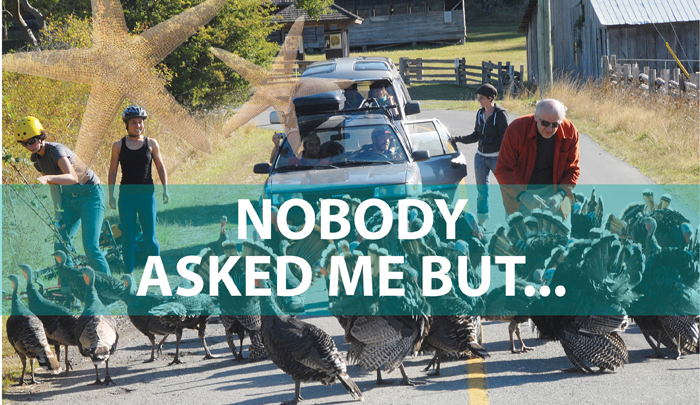
Nobody Asked Me But: Word of the year honours can be fleeting — thankfully

0

Now that we’ve crossed the frontier line and ventured fearlessly into the year 2024, it’s time to take a step back to announce the official “Word of the Year” for 2023. You probably didn’t even realize that such an award even existed, did you? Well, not only is it real but there’s actually a competition among respected literary bodies that choose the winner.

In one corner stands dictionary publisher, Merriam-Webster, which selects its candidate by its popularity, based on the number of times people look up the word. The competition comes from Oxford University Press, which employs a public vote. Oxford first publishes a list of eight words from which the public chooses the top four finalists. The winner is then picked from these final four by a panel of expert etymologists.

The Word of the Year as chosen by Oxford is “rizz.” It originates from the sound of the middle syllable of “charisma” (as in ka-rizz-ma), and describes someone or something that has real style or charm. In street slang, it can mean the ability to attract a sexual partner. Saying that someone has real rizz, however, can be misconstrued to mean that their hair resembles an Italian rice and Parmesan dish.

The winner, as selected by Merriam-Webster, is “authentic,” which means real or actual and not fake or an imitation. On a more cosmic level, it can convey a sense of being true to one’s personality or spirit.

Although Oxford and Merriam-Webster lead the literate field in popularizing words and expressions, they are by no means the only players in the game. For instance, The American Dialect Society, perhaps in a mocking mood, offered its support for the word “enshitification” to describe the deterioration of online platforms.

Coming at the subject from the opposite side is Lake Superior State University, which publishes an annual Banished list for words and expressions that are so imprecise, overused, trite and meaningless that they deserve to be kicked out of the English language. “Gaslighting,” which means dangerous psychological manipulation and was chosen by Merriam-Webster as word of the year as recently as 2022, is first in line for banishment. Similarly, “quiet quitting,” which describes an employee who performs the bare minimum on the job, is an expression that is ready for early retirement.

Among some other words that are lining up for banishment, you will find the acronym G.O.A.T. which stands for Greatest of All Time. G.O.A.T. has been so overused that it can basically be called on to describe everything from athletes and politicians to chicken wings and guacamole. “Irregardless” is another candidate for expulsion, especially since nobody actually knows whether or not it means the same thing as “regardless.” For the same reason, say adios to both “inflammable” and “flammable” as both terms are confused with each other and it’s a mystery as to which one means you are likely to burn your fingers off.

Language has always been amorphous and fluid, so it should come as no surprise that new words come bursting onto the scene while others line up to catch the last stagecoach out of town. In my youth, words such as “groovy,” “cool” and “outtasight” were mainstays of conversation, although cool is still cool to use. You would be hard-pressed, however, to say you “grok” somebody and have anybody “dig” what you mean. Even Oxford’s winning word, “rizz,” is already being dismissed as being passe. Other terms on their way out are “absolutely,” “amazing,” “totally,” and “moving forward,” and there will be no tears shed by me when they are gone for good.

Moving in to take the place of these oldies are delightful specimens such as “tush push,” a football play where the quarterback gets his butt pushed by players behind him in order to advance the ball far enough to gain a first down. Another newbie is “Barbenheimer,” a term that combines the titles of two movies, Barbie and Oppenheimer, which were both released on the same day and found fantastic commercial success even though they dealt with subjects that were polar opposites.

Other words popping up on the horizon include “Swifties,” defined as passionate fans of pop singer, Taylor Swift, and “situationship,” which is used to describe an informal romantic or sexual relationship (presumably with someone who oozes tons of “rizz”).

I have my own informal list of words and expressions that I wouldn’t mind never having to hear or read again. Who is going to miss “it is what it is?” Will anybody feel deep sorrow when “at this point in time” is replaced by the much simpler “now?” How about “at the end of the day” disappearing behind the sunset and being replaced by “finally?”

Include in this list all the terms that derive from technical and business jargon. How long do you suppose you can get into a meeting or conference before someone suggests a “deep dive” before making a “pivot” so you can “circle back” to “move the needle” and get “boots on the ground” in order to “think outside the box?”

Probably my least favourite candidates for Word of the Year are the ubiquitous LOL and the supertext “ha ha” (followed closely by the equally irritating “ha ha ha”). How can any of these compete with the inaugural winner in 1990? The word was “bushlips” and it was inspired by George H.W. Bush, who was quoted as saying “read my lips, no new taxes” just before he went ahead and raised taxes.

Nobody asked me, but maybe it’s time we simplified the English language. It was not that long ago when most male teens needed only two adjectives to get by. If something was good, then it was “awesome.” If it was bad, it was “annoying.” There was no need to think outside the box back then. Besides, regardless or irregardless of whether you were inside or outside of it, the box was annoying.

Viewpoint: Trust Council actions still alarming

1

By JENNIFER MARGISON

for Friends of the Gulf Islands Society 

The Islands Trust was created by the provincial government in 1974 to protect the Gulf Islands from overdevelopment. It was given authority over land use with the legislated mandate to “preserve and protect the Trust Area and its unique amenities and environment.”

The Friends of the Gulf Islands Society is alarmed that elected trustees acting together as Trust Council have interpreted “unique amenities” to include “housing, livelihoods, infrastructure and tourism.” This new interpretation of the Islands Trust mandate gives development equal consideration or even priority over environmental protection, considering the Trust more like a local government than a conservation-oriented “trust.”

The elements named can in no way be considered unique. We are shocked this erroneous interpretation was decided on during a closed meeting last September, with no way for the public to hold their elected trustees accountable on how they voted. This de facto redefinition was described in Trust documents as a “consensus” but that seems highly unlikely given the voting record of some trustees. However, Salt Spring Trustee Laura Patrick, whose actions imply support for this interpretation, refuses to say how she voted.

Legal opinions can be discussed in closed meetings, but the political debate to arrive at an interpretation of the mandate should have taken place in an open meeting. We have sent letters to the Trust asking for an explanation, but have not received answers. Our next step will be to take a complaint of inappropriate procedures to the provincial Ombudsperson.

This definition matters because it will likely guide development of the new Trust Policy Statement, the critical document that sets requirements for all Islands Trust bylaws. Even now, the new interpretation may influence decisions of local Trust committees on various islands and of the Executive Committee.  

Democracy is in danger when important decisions are arrived at behind closed doors and elected representatives cannot be held accountable.

If you want to express your concern, write to Trust Council at execadmin@islandstrust.bc.ca.  

The Friends of the Gulf Islands is a society dedicated to protecting the natural environment, surrounding waters and rural character of the Gulf Islands. Our goal is to ensure that the Islands Trust fulfills its legislated mandate: to protect the environment and truly unique amenities of these beloved islands. 

To learn more about Islands Trust issues, our society and to join our group and receive regular updates about Islands Trust activities, see our website at friendsofthegulfislands.ca.  

Trustees eye public engagement on policy statement amendment

1

A first draft of the Islands Trust’s amendments to its official policy statement will likely stay out of the public eye into the spring, even as plans for its rollout — and talking points for trustees — solidify. 

Trust Area Services director Clare Frater gave a project update as part of a funding request to the Trust’s Financial Planning Committee on Wednesday, Jan. 24.  

The Policy Statement will soon mark 30 years since its last meaningful update in 1994 — coming up short, according to officials, in adequately addressing issues of reconciliation, climate change and housing. Efforts to begin an update process began in 2019, but were delayed in 2021 when residents crowded public meetings — and filled newspaper opinion pages — with negative reaction to both wording and process during a first reading of the proposed changes. 

Trustees reacted by sending staff back to the drawing board, to incorporate that feedback into a new document now produced, according to a Trust Area Services report, and shared with nine First Nations representatives for their feedback and reflections. 

While there have been delays with First Nation engagement, according to Frater, planning a communications strategy should proceed regardless. 

“Without properly funding communication support, you risk a challenging process,” said Frater. “I think we’ve seen that in prior experiences and found that we were not sufficiently equipped around the communication side of things.” 

The coordinated approach to public engagement will include providing enough communication materials for trustees to give them confidence in answering questions from their local communities. 

“Such that when it goes public on the agenda, you’re all equipped with speaking notes and ‘frequently asked questions,’” said Frater. “And you will have all the commentary from First Nations.” 

Frater said her recent discussion with Trust Programs Committee chair Kristina Evans had made the broad outlines for a plan that would produce an agenda for that meeting well in advance of the usual 10-day pre-meeting timeline — hopefully as soon as mid-March, which would give both trustees and the public more time with the information.  

“The nations are aware that council is very eager to see this document and receive their comments,” said Frater, noting they had only received the new document in September. “I just can’t at this point commit to a firm timeline. I am hopeful it goes public in the middle of March.” 

“I have been following the project since the very beginning of the revision,” said Gabriola Island trustee Susan Yates, “as a citizen, as a reporter and now as a trustee. I would like to see it finished, before this term is over, and done well — it is the backbone bylaw for the entire Islands Trust, guiding all of our official community plans.” 

Spanish film creating a buzz on festival circuit

By STEVE MARTINDALE

FOR SALT SPRING FILM FESTIVAL SOCIETY

Despite previewing over 300 films this year, the Salt Spring Film Festival’s screening committee has selected just one drama to include in this season’s “Best of the Fests” series at ArtSpring: the award-winning Spanish film 20,000 Species of Bees.

We were in search of the kind of beautifully heartfelt film that has proven popular with audiences here on Salt Spring, such as last year’s visually sumptuous and beloved Moroccan weeper The Blue Caftan, or the romantic depiction of dangerously repressed desire in And Then We Danced from the former Soviet country of Georgia, which we screened in 2020 to great acclaim.

Unfortunately many of the narrative films we previewed at other festivals over the past year were disappointingly mediocre, and the best of the bunch were often well executed but coldly precise, failing to elicit any meaningful emotional response.

And then we had the opportunity to see 20,000 Species of Bees, which sounded as though it might be a nature documentary about apian diversity, but which turned out to be one of the most engaging and memorable films of the year.

A sculptor grappling with her artistic identity gradually becomes aware that her youngest child is struggling with gender identity, and over the course of an otherwise idyllic summer vacation in the Basque countryside, her initial obliviousness slowly shifts to maternal concern, followed by briefly intense moments of alarm, as she and her family try to make sense of why their previously cheerful eight-year-old is becoming increasingly reactive, sullen and withdrawn.

With novelistic attention to detail and decidedly non-Hollywood restraint, a layered series of small, intimately observed moments over the course of this understated film eventually culminates in a crescendo of emotion that catches viewers off-guard with its depth and intensity.

Basque filmmaker and screenwriter Estibaliz Urresola Solaguren’s surprisingly assured début feature has won multiple audience awards at festivals around the world. Leading an ensemble of astonishingly believable performers, newcomer Sofía Otero — who is in almost every scene of the film — became the youngest-ever winner of the prestigious Berlinale Silver Bear for Best Actor at the Berlin International Film Festival.

The late, great Maya Angelou famously said that “people will forget what you said, people will forget what you did, but people will never forget how you made them feel.” The same can be said of cinema, which has the power to affect viewers on a profoundly emotional level that few other art forms can achieve, leaving us wiser and more empathetic for having briefly immersed ourselves in the lives of others.

As is true of the best and most evocative dramas, you may find that years from now, long after the somewhat cryptic title and the specifics of the deceptively simple plot have faded from memory, you will still remember how this lovely, heart-wrenching and thoroughly humanistic film made you feel.

Co-presented by DAISSI and Haiti Beekeepers Society, tickets to 20,000 Species of Bees are $13 each and are available via the ArtSpring box office and online. For more information, visit saltspringfilmfestival.com.

BRETT, Brian Thomas

1

Brian Thomas Brett

1950 – 2024

Longstanding Salt Spring Island resident Brian Brett passed away peacefully in Purdy’s Pavilion located in the UBC facility. Suffering from a serious stroke last year and eventually succumbing to sepsis on January 17/2024 at the age of 73. Brian was well known for his contributions to the writers community of Canada, publishing many books of poems and novels. He was also active in journalism throughout the country for most established newspapers since the early 1970s. He was highly regarded as a teacher and mentor influencing many aspiring authors throughout Canada. Among Brian’s 13 published works, “Trauma Farm: A Rebel History of Rural Life” gained him The Writers Trust Nonfiction Prize in 2009, becoming his best known accomplishment. His literary works and extensive involvement in the writers community such as President of the Writers Union of Canada, and in 2016 the winner of the Writers’ Trust Matt Cohen Award solidified his position as a remarkable and respected member of the Canadian literary scene with 7 major awards to his career.

Brian Brett’s passions and achievements were many, which would require a serious biography to fully encompass. He left a legacy in the writers community but also was active in environmental action, being a major contributor in the conservation effort for Clayoquot Sound and multiple other efforts to protect lands on Salt Spring Island and throughout British Columbia. His love for the natural world remains with his poetry, novels, and throughout the Canadian Culture.

A healthy family remains in Brian’s departure, two loving brothers Leonard and Bill Brett, a longstanding partner Sharon Doobenen. Children and grandchildren, Chris and Nancy Doobenen, siblings Kylie and Jenna Doobenen. Roben and Sovanny Doobenen, siblings Ajra and Aubrey Doobenen. Many years of cherished memories! We are hoping for an April ceremony.

Fire wrecks Portlock Park equipment shed

0

A maintenance shed at Portlock Park was destroyed by fire in the early hours of Monday, Jan. 22.

Salt Spring Fire Chief Jamie Holmes said the structure was fully involved by the time crews arrived after a 1:46 a.m. call came in from staff at the Emcon highways yard across from the park.

Over a three-hour period, 15 firefighters and 3,000 gallons of water from a nearby hydrant were used to extinguish the blaze, ensuring it didn’t extend to the Lions picnic shelter or a truck and excavator parked on site.

Holmes said there is nothing to indicate the fire was deliberately set, especially with no tracks seen in the snow on the ground around the building.

A combination of the structure being an older building and the likelihood of rodents living inside may have been the fire’s cause, said Holmes.

“They can wreak havoc on electric wires,” he said.