Home Blog Page 18

KITCHEN, Eric

2

Feb 12, 1946 – Jan 19, 2026

Eric passed away on January 19, 2026 at his home in Metchosin after a long and courageous battle with cancer and heart disease. Eric is survived by his loving daughter Leah Gronow, 7 of his 11 siblings and many nieces and nephews.

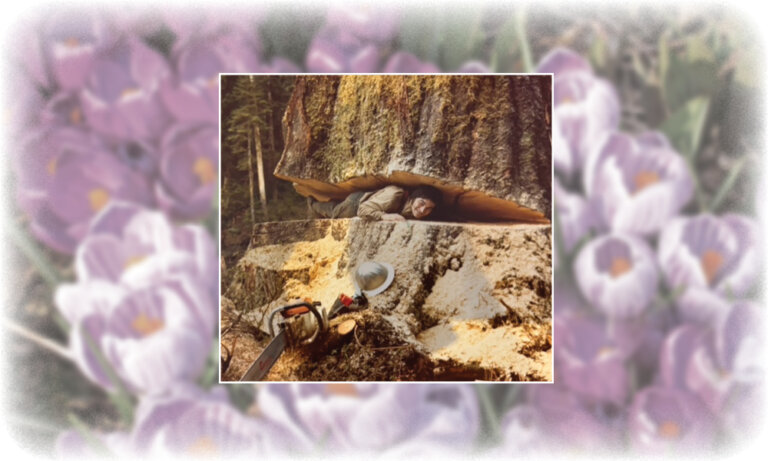
Eric was born (February 12, 1946) and raised on Salt Spring Island. Dad grew up on the family farm, learning to help with chores from a young age. Dad left home in his late teens, married Louise (his first wife) and began his career as a faller in the logging industry. Dad’s brother, Bert ‘broke’ him into the falling industry and dad loved working in the many logging camps on the West Coast, from Sooke to Rivers Inlet and was well respected for his expertise and skills. Dad had fond memories of working and living in Rivers Inlet, for Malloch and Moseley and on days off from logging, he enjoyed fishing on his boat, hiking and helping the community at large.

In the 1980s Eric and brother Bert bought the family homestead on Salt Spring Island and developed it into several lots and named the road after the family. Dad was proud of the work he and his brother put into creating the subdivision and he always held it as one of his most cherished accomplishments. Years later, Dad and his second wife, Candy built their own beautiful home in Cobble Hill, on five pastoral acres and he enjoyed time on the property when he was not working in camp.

Eric loved socializing and friends were plentiful throughout his life. Dad was always known for offering a helping hand to family and friends and was terrific at problem solving situations. Dad’s stamina was beyond compare and nothing was too hard to do, if it took strength and skill. One of his favourite sayings was, “Let’s get’er done,” and indeed, when Eric Kitchen was around, things got done!!! Some of dad’s other past times included sponsoring an adult soft ball team, helping a friend track a nuisance cougar in the snow, assist with any projects for family and friends and taking time to enjoy the company of others.

Dad loved the outdoors and his annual hunting trips on the Alaska Highway for moose. His retirement years were spent in Metchosin, where thanks to his cherished friends Danny, Carol and their family, he found friendship and peace.

“Like the trees, your roots run deep in our hearts”

Thank you to Dr. Nazar and Dr. Kinahan for their care and support during the last five years, while dad battled cancer and heart disease.

A Celebration of Life will be announced at a later date.

Viewpoint: On Thought, Morality, and Other Unruly Forces

0

By DAVID GORDON

People seem to treat thought as if it were a polite little house-guest — something that knocks before entering and wipes its feet on the mat. But I’ve lived long enough to know better. Thought is like weather. It rolls in uninvited, kicks over the furniture, and leaves you wondering why you ever trusted a clear sky.

And morality — well, that’s another thing people misunderstand. They treat it like a Sunday suit: something you put on when company’s coming and hide in the closet the rest of the week. But morality isn’t a garment. It’s infrastructure. It’s the bridge you hope the other fellow reinforced before you drive across. Without it, the whole town collapses into the river, and everyone stands around pretending they didn’t see it coming.

Now, I’ve heard it said that the world is getting crueller, meaner, more inconsiderate by the day. Maybe so. But I suspect the world’s always been that way; it’s just louder now. Cruelty has better amplification. Selfishness has a marketing department. And inconsideration — well, that’s been running for office since the dawn of time.

But here’s the thing: morality still works. Not because it’s noble, but because it’s useful. A moral act is like a well‑placed beam in a creaking barn. It keeps the whole structure from falling on your head. You don’t have to be a saint to appreciate that. You just have to prefer your skull uncreased.

As for thought — its substance, its weight — most folks never notice it until it’s already pushed them somewhere that they didn’t intend to go. They think they’re steering the ship, but half the time they’re just waving from the deck, while the current decides their destination. And sometimes, if they’re unlucky, someone on shore mistakes that waving for a friendly hello.

But if you pay attention — real attention — you can feel the pressure before the thought forms. A kind of inward wind. A shift in the air . . . a change in air pressure, a cold spot in an old house. That’s the raw material. That’s the clay everything else is shaped from. And if you learn to read it, you can tell when a storm’s coming, or when a clear patch might give you enough time to fix the roof, or go cut hay.

Now, I won’t pretend that any of this is easy. Thinking is hard work. Moral thinking is harder. And thinking morally in a world that rewards neither is about as easy as teaching a mule to play the violin. But it’s still worth doing. Because every time you choose the harder path, you reinforce the bridge. You strengthen the barn. You keep the river from taking another soul downstream.

So. Mind your thoughts, because they have mass. Mind your morals, because they have momentum. And mind the signs, because the universe posts warnings more often than we might suspect.

Most folks ignore them. But you — you’re the sort who reads the signs. And maybe even sketches a few of your own. So cut each other the slack you seek, relax and enjoy the ride. You paid for your ticket already, so relax.

The writer is a digital creator and longtime Salt Spring Island resident.

Community Health Networks – What is their mandate?

0

By the Salt Spring Health Advancement Network

When people hear the word “mandate,” they often think of government orders or legal authority. But in the context of community health networks, a mandate is something both more human and more powerful.

It is the shared responsibility — granted by the community itself — to bring people together, align efforts and act where no single organization can succeed alone. Community health networks do not exist by accident. They emerge because a community’s needs are too complex, too interconnected and too important to be left to isolated programs or agencies.

At their core, community health networks are built on a simple truth: health is shaped by far more than clinics and hospitals. Housing, food security, social connection, mental wellness, education, transportation, income and cultural belonging all influence whether people thrive. No one organization holds all the tools to address these factors. A network’s mandate grows out of this reality. It exists to coordinate, connect and strengthen the many groups already working to improve well-being, so their combined impact becomes greater than the sum of their parts.

A mandate born from community need

The first source of a community health network’s mandate is need. Communities everywhere, and Salt Spring is no exception, face rising mental health challenges, an aging population, youth struggling with belonging and purpose, gaps in access to care, and increasing pressure on volunteer and non-profit organizations. These are not problems with single causes or single solutions. They cross sectors, generations and social boundaries.

When multiple organizations repeatedly encounter the same issues from different angles, a clear message emerges: collaboration is not optional, it is essential. A community health network is created to hold that shared space. Its mandate is to look at the whole picture, identify common priorities and support coordinated action. In this sense, the network is not imposing a role on the community; it is responding to what the community is already asking for.

A mandate granted through trust

Unlike top-down institutions, community health networks gain legitimacy through participation. Their mandate is reinforced every time a non-profit joins a working group, a health provider shares data, a municipality partners on a project or residents attend a community forum and see their experiences reflected in collective plans.

This trust-based mandate matters. It means the network is not there to compete with existing services, but to serve them — by reducing duplication, encouraging learning and helping partners move in the same direction. Over time, the network becomes a steward of shared vision. It helps answer questions like: What kind of community do we want to be? Where are people falling through the cracks? How do we measure whether we are truly improving well-being?

A mandate to work at the systems level

Most organizations are designed to deliver specific programs: counselling, meals, housing support, youth activities or medical care. Community health networks have a different mandate. They operate at the systems level.

This means looking for patterns rather than isolated cases. It means identifying barriers that affect many groups — such as transportation gaps, service fragmentation, stigma or long wait times — and bringing the right partners together to address root causes. It also means using data, community stories and lived experience to guide long-term strategy.

Because no single agency “owns” these systemic issues, the mandate to work on them must belong to a collective body. A community health network becomes the table where those conversations can happen and where coordinated solutions can be built.

A mandate to amplify community voice

Another essential part of a community health network’s mandate is to ensure that planning is not done for the community, but with it. Networks are uniquely positioned to elevate voices that are often underrepresented — youth, seniors, caregivers, people facing mental health challenges and those experiencing social isolation or poverty.

By gathering input, supporting community-led initiatives and sharing stories across sectors, networks help decision-makers understand what statistics alone cannot show. This role gives moral weight to the network’s mandate. It becomes a bridge between lived experience and institutional action.

A mandate focused on the future

Finally, community health networks carry a forward-looking mandate. While individual organizations often operate under short-term funding cycles, networks are designed to think in years and decades. They track trends, support prevention and invest in conditions that help people stay well, not just respond when they are unwell.

This long view is critical. Strong relationships, early intervention and shared infrastructure do not develop overnight. A network’s mandate is to protect and nurture these foundations, even when immediate pressures compete for attention.

More than permission — a responsibility

In the end, a community health network’s mandate is more than permission to exist. It is a responsibility to convene, to listen, to align and to act in the collective interest. It reflects a community’s recognition that health is everyone’s business and that lasting change depends on working together.

When a community creates and sustains a health network, it is making a quiet but profound statement: that well-being is not the job of one organization but the shared work of an entire island, town or region.

The Salt Spring Health Advancement Network (SSHAN) is a Salt Spring-focused community health network of 35 active community partners with a vision of “a collaborative and connected community working for the well-being of all.” Some of its mottos are “Nothing about the community, without the community” and “Together we are better!”

SSHAN is currently engaged around an updated community health needs assessment, the Mental Wellness Initiative, the needs of insecurely housed and unhoused community members, seniors and community health and well-being generally. Its main charitable sponsor is the Lookout Foundation.

For more info about SSHAN and/or to be involved, connect to the SSHAN online pages at sshealthadvancemen.wixsite.com/sshan, on Facebook or via email at sshealthadvancementnetwork@gmail.com.

Editorial: Closing hall doors

0

Few topics are of universal interest in any community, but on Salt Spring, the future of a most central spot in Ganges village comes close.

The fate of the Ganges fire hall, also known as Fire Hall No. 1, will be entering the realm of official public discussion next week when the Salt Spring Local Community Commission (LCC) receives a report on the state of the 73-year-old building. It should be part of the agenda package for the LCC’s evening meeting on Thursday, Feb. 12, which members of the public are welcome to attend.

The LCC, through the Capital Regional District (CRD), will assume ownership of the site four months after the new fire hall is occupied, as per an agreement related to a $1-million CRD contribution to the Salt Spring Island Fire Protection District, which reduced the project’s borrowing costs by that amount.

We would be surprised if the report contained “good news” about the state of the building and the practicality of preserving it. Among reasons a new main fire hall has been needed for years have been well-founded worries over the existing building’s health and safety deficits. Its inability to withstand a serious earthquake, coupled with the likelihood of having to mitigate the presence of toxic materials like asbestos for any significant renovation, should concern those hoping to fully preserve the “heritage” structure itself.

We understand the building holds sentimental value as a fixture that’s been in the centre of town for so long, especially because of its clock tower, which is useful as well as visually iconic. (While in Ganges it’s easier to check the time with a quick skyward glance than searching for it on a cell-phone, for sure.) Eating hot dogs and sipping hot chocolate at the hall after Halloween fireworks are part of many islanders’ favourite memories, along with annual Fire Prevention Week open houses and other safety-oriented events and fundraisers held there.

But in considering what will happen next at the fire hall site, we hope sentimentality will find an appropriately temperate rank on the list of considerations, that a fulsome public input process will be developed, and that in the end a balance will be struck — between cherished memories and respect for local taxpayers.

Scorpions host North Island tourney

Gulf Islands Secondary School (GISS) senior girls Scorpions basketball team is hosting the AA-level North Island championship tournament from Feb. 3 to 5.

Ranked #1 in their pool after a strong regular season, GISS started off on the right foot Tuesday, Feb. 3 with a 63-39 win over a Queen Margaret’s School team.

The Scorpions next play on Wednesday, Feb. 4 at 4:30 p.m. Spectators are welcomed!

The schedule is as follows. See https://www.instagram.com/giss_athletics/ for updates as games are played.

Feb.3rd 

1- 1:00pm GISS vs  QMS 

2- 2:45pm Highlands vs Ladysmith 

3- 4:30pm  Brentwood vs  KSS   

4- 6:15pm  Brooks vs Shawnigan 

Feb.4th  

5- 1:00 pm Losers games 1 + 2    

6- 2:45 pm Losers games 3 + 4    

7- 4:30 pm Winners games 1 + 2   

8- 6:15 pm Winners games 3 + 4   

Feb. 5th   

9- 9:00 am Loser game 7 vs Winner game 6   

10- 10:45 am Loser game 8 vs Winner game 5   

11- 1:30 Loser of game 9 vs Loser of game 10 5th  and 6th    

12- 3:15 pm Winner game 9 vs Winner game 10 3rd/4th    

13- 5:00 pm Winner game 7 vs Winner game 8 1st/2nd

Drum-Making Workshop Brings Indigenous Teachings to Salt Spring

BY SALT SPRING ISLAND FARMLAND TRUST

On Sunday, Feb. 7, Beaver Point Hall will be filled with the sound of stories, tools and careful hands as Cowichan and Hawaiian knowledge keeper Hwiemtun (Fred Roland) leads a day-long drum-making workshop hosted by the Salt Spring Island Farmland Trust (SSIFT).

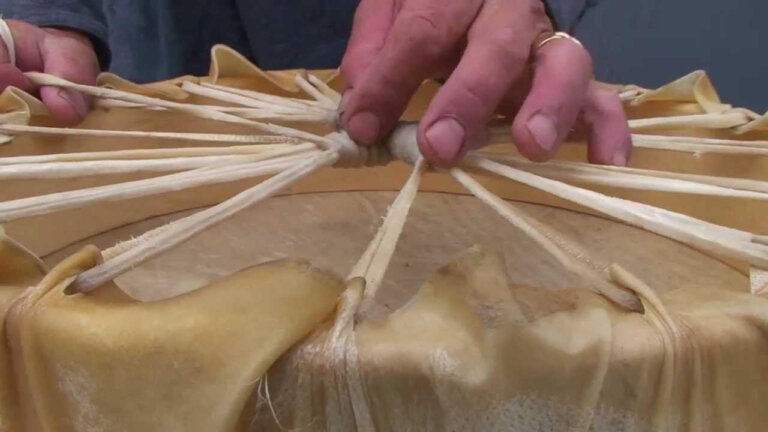
Rather than beginning with materials or technique, Hwiemtun begins with relationship. Participants will be guided through the creation of a traditional hand drum using cedar and elk hide, while also being invited to reflect on where those materials come from, what they ask of us, and how responsibility is woven into Indigenous foodways and cultural practices.

The workshop arrives at a moment when many on Salt Spring are grappling with urgent questions about land use, food security and sustainability. For SSIFT, the course offers a way to broaden those conversations beyond policy and practice, grounding them instead in values, memory and long-standing stewardship traditions.

“Hwiemtun teaches from a place of deep attentiveness,” said SSIFT director Andrea Palframan. “He asks people to slow down and really consider their relationship to land and food — not as resources, but as living systems we are accountable to.”

Drawing on teachings passed down through generations, Hwiemtun’s approach emphasizes listening: to the land, to materials and to the stories that connect people to place. Participants will learn not only how to assemble a drum but also why every part of an animal or tree matters, and how gratitude and restraint are central to sustainable food systems.

“For Indigenous communities, using the whole animal isn’t just practical — it’s ethical,” Palframan explained. “Those teachings align closely with values many people are rediscovering now, like minimizing waste and repairing our relationship with the natural world.”

The Farmland Trust sees the workshop as a natural extension of its work supporting agriculture, food education and land stewardship on the island. While SSIFT is often associated with farming and farmland protection, Palframan notes that cultural learning plays a vital role in shaping how communities care for land over the long term.

“If we want resilient food systems, we also need resilient ways of thinking,” she said. “Indigenous knowledge systems hold lessons that have allowed people to live well within ecological limits for thousands of years.”

Throughout the day, Hwiemtun will weave together hands-on instruction with storytelling and quiet observation. The setting — a fireside room overlooking the water — offers space for reflection as well as conversation among participants, who may include farmers, educators, land stewards, artists and others curious about Indigenous approaches to food and land.

Each participant will leave with a completed drum, but organizers emphasize that the experience is about much more than the finished object. The process itself — working carefully with natural materials, acknowledging their origins, and taking time to reflect — is central to the learning.

As Salt Spring Island faces increasing pressures from climate change, development and rising food costs, SSIFT hopes the workshop will encourage broader thinking about solutions.

“Technical fixes matter,” said Palframan, “but cultural shifts matter just as much. Learning how to be in respectful relationship with land and food is foundational work.”

Registration is open, with limited spaces available. Early registration is encouraged.

Course details and registration information can be found at ssifarmlandtrust.org.

NSSWD corrects Maxwell plant estimate difference

0

If there’s comfort to be had for ratepayers surrounding the high costs for Salt Spring’s planned Maxwell Water Treatment Plant, it’s that at least the price is not as unexpected as believed.

That slightly complex message came from North Salt Spring Waterworks District (NSSWD) chief administrative officer Mark Boysen, who brought a mea culpa to district trustees at their meeting Thursday, Jan. 29. Boysen told the board a report presented at a special board meeting Friday, Jan. 16 contained an error: the “Class A” estimate, forecasting the cost of the new plant, was far more accurate than presented.

“There’s no way around it,” Boysen told the Driftwood last week. “It was a staff error in the estimates that were provided.”

A bit of inside baseball: a Class A estimate is a detailed, nearly definitive construction cost prediction used for planning — and budgeting — late in a project’s process, with an expected accuracy within five to 10 per cent of the median of competitive bids, according to Canadian Construction Association standards. 

Between civil construction and engineering and project management, on Jan. 16 the board approved the project cost of $16.6 million — almost 14 per cent higher than the Class A estimate NSSWD staff had reported as $14.6 million. 

But, Boysen said, that was staff’s mistake; consultants Kerr Wood Leidal (KWL) had submitted a Class A estimate back in September that worked out to a $16.1 million price tag — or just 3 per cent off the number that would be accepted by the board months later.

“Staff apologize for that error,” Boysen said. “We were moving quickly through a lot of different numbers.”

The price tag is still higher than some early estimates made by the district — including a familiar-sounding $14.6 million number, which had been used both for planning before the borrowing referendum and in a significant grant application the district made to the Canada Housing Infrastructure Fund in late 2024.

That application was not successful, trustees learned Thursday; Boysen said staff had received an email that morning indicating that there could be an opportunity to carry over the application to the new provincial Build Communities Strong fund.

Trustees reiterated that the loan authorization secured by last year’s ratepayer referendum would stay the same, at $11.7 million in borrowing, and that there would be no new parcel taxes or water toll charges to make up the higher cost of the Island Health-mandated plant. Instead the district will put off the $1.5-million Crofton Road pump station until 2027 and use some capital and connection charge reserves.

Seeking savings, district trustee David Courtney made a motion to rescind the nearly $1 million construction engineering award, but the motion was not seconded. Most trustees on Jan. 16 had indicated they agreed with the staff assessment that any re-tendering at this point would not result in lower bids.

The water treatment plant project is being required by regional health authorities as part of an effort to remove more of Maxwell Lake’s organic matter, which reacts with existing chlorine treatment to create trihalomethanes.

Award-winning Marlee Matlin film at ArtSpring

By STEVE MARTINDALE

For SS FILM FESTIVAL SOCIETY

At the age of 21, Marlee Matlin became a household name as the youngest-ever winner of the Best Actress Oscar for her groundbreaking performance as a teacher in a school for the deaf in the 1986 romantic drama Children of a Lesser God.

Also starring William Hurt, the film was directed by Randa Haines and was based on Mark Medoff’s Tony Award-winning 1979 stage play.

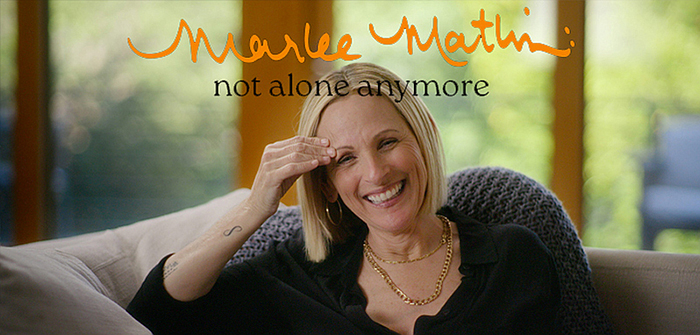
Matlin is now the subject of the award-winning documentary Marlee Matlin: Not Alone Anymore, being presented at ArtSpring by the Salt Spring Film Festival as part of their ongoing Best of the Fests series on Wednesday, Feb. 11 at 7:30 p.m.

After her Oscar win, Matlin went on to become Hollywood’s best-known deaf actor, appearing in dozens of films and television shows, including fan-favourite roles on The West Wing, Reasonable Doubts, Picket Fences and The L Word, as well as memorable guest appearances on Seinfeld, Glee, The Practice, ER, Sesame Street, Desperate Housewives and Law & Order: Special Victims Unit.

In the 2011 season of Celebrity Apprentice with Donald Trump, Matlin came in second place after country singer John Rich, raising awareness about accessibility rights for the hearing-impaired and also raising a cool million dollars for the Starkey Hearing Foundation.

The role that finally brought Matlin’s career full-circle, however, was in Sian Heder’s 2021 film CODA, which won the Oscar for Best Picture. As the film’s highest-profile star, Matlin had the power to insist that only deaf actors be cast to play deaf characters, which led to Troy Kotsur becoming the second deaf actor ever to win an Oscar.

At the Academy Awards ceremony that night, with the CODA filmmakers and the entire cast receiving a standing ovation, Matlin was at long last able to share a heartfelt and deceptively simple message from the stage in reference to her co-star’s award, 35 years after she had shattered that particular glass ceiling: “I’m not alone anymore.”

Directed by deaf actor and filmmaker Shoshannah Stern, this entertaining and enlightening film is also something of an experiential, empathy-building exercise, as the sound is intentionally modified to simulate the experience of hearing loss, forcing all viewers — regardless of the quality of their hearing — to rely on their eyes instead of their ears.

In addition to discussions of Matlin’s difficult childhood, her struggles with addiction and her abusive relationship with Hurt, one of the surprising revelations of this film is that Matlin was instrumental in introducing closed captioning, which the U.S. government legislated as mandatory in all new television sets after Matlin successfully lobbied Congress in the early 1990s to make broadcast television more accessible for the deaf and hearing-impaired. 

Following the annual Salt Spring Film Festival at Gulf Islands Secondary School from Feb. 27 to March 1 — at which over 40 documentaries will be presented — the Best of the Fests series continues at ArtSpring with a bonus film to celebrate International Women’s Day in collaboration with The Circle Education Society: Between the Mountain and the Sky on Friday, March 6. Edited by Salt Spring resident Piet Suess, this award-winning documentary is an engaging profile of CNN Hero of the Year Maggie Doyne, who founded an orphanage and school in Nepal after adopting more than 50 orphans.

Lady Minto Thrift Shop welcomes volunteers

The second week of our Stepping Up volunteer series puts the spotlight on a beloved community hub that provides invaluable services: the Lady Minto Hospital Auxiliary Thrift Shop.

The Thrift Shop is a popular venue for island residents who want to donate or purchase good, usable clothing, shoes, books and a wide variety of special treasures. Sales provide the main source of revenue for the Lady Minto Hospital Auxiliary (LMHA). 

Each year the auxiliary makes major grants to Lady Minto Hospital and to the Greenwoods Eldercare and Braehaven assisted living facilities for equipment and improvements that they need to enhance care and comfort of patients and residents. Auxiliary members also provide voluntary services at these facilities. As well, we have a new initiative to reach seniors at home. 

Our Lady Minto Thrift Shop is becoming busier, not only with increases in sales but also by accepting very good in-kind donations. We need more volunteers to work in the shop and to receive and process incoming donations.  

For more information, send an email to contact@lmhas.ca or phone the office at 250-931-3311 to leave a message.

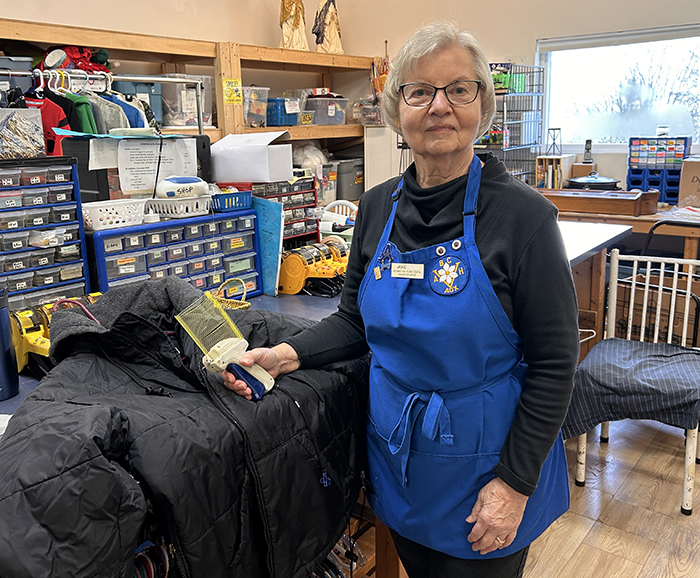
Meet LMHA Thrift Shop volunteer Jackie Jensen!

Q. How long have you been volunteering with your group?

A. 31 years.

Q. What attracted you to this particular group?

A. I was browsing in the Thrift Shop when it was underneath Mouat’s when Betty Ann Caldwell, the then LMHA president, approached me and asked if I would like to volunteer. I said “yes,” and the rest is history.

Q. What role do you have now and what other roles have you had?

A. I am shift leader for the Wednesday morning shift and sit on the Thrift Shop Committee as communications person. Some of the things I have done, or still do, are secretary and publicity on the shop committee, created the Facebook page for the shop, sort donations, managed the children’s boutique, sort the donated eyeglasses and pass on the prescription ones to the Lions Club for third-world countries, train new volunteers, fix the jammed or broken barbing guns and ensure the coffee room is well stocked.

Q. What past experience have you had that has been helpful in your role(s)?

A. I have worked with the public in retail and alongside my husband Aino in the businesses we have owned.

Q. What do you like best about volunteering with your group?

A. I love the comradeship that develops amongst the volunteers and the fact that the funds from our work go towards helping support the various health-related facilities on the island.

Q. What is something that has surprised you or you did not expect?

A. That I would still be here 31 years later. I think what surprises me most is the volume and wide variety of items that we receive in donations.

Q. What are a few traits that would be helpful for potential volunteers to have?

A. A sense of commitment even though it is a volunteer job.

Q. How long have you lived on Salt Spring Island?

A. 35 years.

Q. How else might islanders know you?

A. I worked at the Sears Catalogue office from 1992 to 1995. Some may know me as the voice on the phone of our business, Salt Spring Bottled Water, the first on-island bottled water company, from 1991 to 2006.

Q. In a nutshell, why would you recommend volunteering with your group?

A. It’s fun. You meet new people. It provides a service to the community and helps support our health care facilities.

Salt Spring non-profit groups wanting to participate in the Stepping Up series should contact Driftwood editor Gail Sjuberg at news@gulfislandsdriftwood.com or 250-537-9933.

Salt Spring performers wanted for Showcase

BY MEGAN WARREN

FOR ARTSPRING

Following the vibrant success of ArtSpring’s 25th-anniversary celebration in 2024, a new island tradition is taking root.

The ArtSpring RoundTable has officially announced the return of the Salt Spring Community Showcase, scheduled for April 17, and the search is on for local performers to fill the spotlight.

The goal of the anniversary event was to create a celebration of the arts by the local community, for the local community. For Showcase co-producer Christina Penhale (working alongside Michael Bean), this goal was the hook that made her want to be involved.  

“My heart work is providing platforms and spaces for our local groups to be seen and heard,” Penhale said. “My focus for the 25th was ‘how do we involve as many local artists from as many different disciplines and as many different backgrounds as we can in a meaningful way?’”

The result was a glorious 25th-anniversary weekend that featured local performers from start to finish, opening and closing the celebration with island talent. With dancers, singers, actors, a swing band, multimedia pieces and even short films, Salt Spring’s incredible creative variety was on full display. It was clear from that weekend that the island wanted more events that centred on local talent. Penhale’s decision to produce this year’s Showcase is a response to a question she heard a lot after the inaugural Showcase: “Why can’t we do this every year?”

ArtSpring has long been known for bringing top-tier acts from around the world to the island. However, the Showcase represents a way forward to ensure that the art deeply enmeshed in the local landscape is also celebrated on ArtSpring’s professional stage.

For Penhale, one of the 25th anniversary’s great triumphs was the breadth of local groups that performed.

“We had Swing Shift and the improv team, we had the GISS dancers, we had musicians from GISS Music, we had StageCoach and we had the Makana Youth Choirs,” she said. “It was just amazing to have all of those people come together in celebration of what we have on this island.”

Organizers hope to see a similar turnout in this year’s application pool, with even more variety in media.

“I would love to see more scenes, poetry, spoken word, monologues, even film,” said Penhale. “More representation of the different disciplines that we have on this island would be great to see.”

To those on the fence about submitting, she offers timeless advice: “If you don’t apply, you can’t get selected. There is no wrong application, you just have to put yourself out there.”

Call for Submissions

Performers of all media are encouraged to apply, regardless of age or experience level. All selected performers will receive an honorarium. General submission time slots are up to 20 minutes long, and youth slots are three to five minutes. 

The deadline to apply is Saturday, Feb. 14 at 11:59 p.m. Interested artists can find full submission details and apply online at saltspringshowcase.com.

For those who are more at home in the audience than onstage, tickets to attend the Showcase are already on sale at purchase.artspring.ca. Book your ticket now for a joyful and uplifting celebration of the people who make Salt Spring’s art scene so unique.