Home Blog Page 260

Local community commission idea explored

2

Salt Spring Islanders will soon be hearing a lot more about the local community commission (LCC) governance model, which will likely be put to a referendum during fall local government elections.

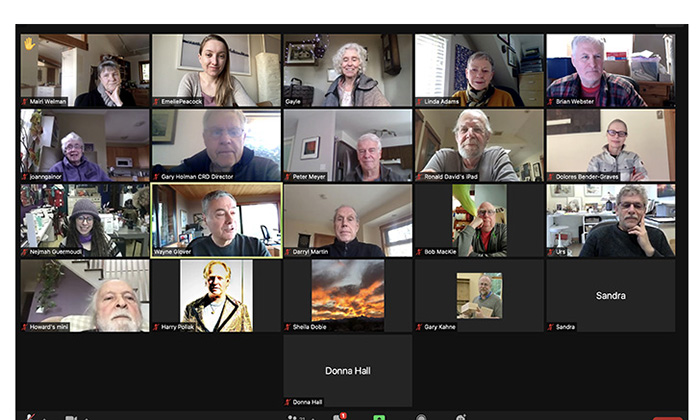
A move from a single director to a director plus four elected members overseeing Capital Regional District (CRD) operations on the island is being studied by a group of Salt Spring Islanders and advocated for by the island’s current CRD director Gary Holman. How an LCC could look, as well as benefits and unintended consequences, were discussed at a Feb. 25 virtual ASK Salt Spring public meeting with 21 people attending. 

An LCC both broadens representation and makes dealings of local government more transparent, Holman said. Discussion and votes on CRD matters would be done at public meetings, whereas now many decisions, including where grants in aid and gas tax funding are distributed, are made by the director and staff.

An LCC could be anywhere from purely an advisory body to having extensive delegated authority, depending on bylaws that establish it. All powers and authorities of a regional district, except for passing bylaws and final approval of items such as budgets and financial plans, can be done by an LCC, explained Brian Webster, a Salt Spring Parks and Recreation Commission member and one of the residents working on an LCC discussion paper.

“In my personal opinion, this is a wasted exercise if it is simply creating one big advisory commission either to add to, which would be the worst-case scenario, or to replace a bunch of current advisory commissions,” he said. “The whole purpose of doing this is to have Salt Spring people on Salt Spring Island — a diverse range of democratically elected people — making more of the decisions.” Webster added that a “timid version” of an LCC is “just another layer of local government” and would not be acceptable to voters.

Implementing an LCC could involve consolidating some of the commissions that oversee economic development, parks and recreation, transportation and liquid waste disposal on the island, Holman said. As the largest and most complicated of the commissions, Holman said there is an advantage to keeping the parks and recreation commission. He also wouldn’t support the consolidation of entities overseeing the island’s sewer systems and water districts as they already have a group of commissioners elected to represent their ratepayers and he wouldn’t want to eliminate that relationship.

The opposition to an LCC could come from residents who strongly supported incorporation and who may see it as defusing the interest in incorporation, said Linda Adams, a former Islands Trust CAO who is also working on the discussion paper.

An LCC avoids one of the greatest concerns of incorporation, which is taking on the cost and liability of the island’s road network. Adams pointed out that the island’s roads are 25.1 metres in length per capita, which is 2.3 times the B.C. average.

“Our municipal government, if we had created one of those, would be absolutely overwhelmed with some of those costs and would be doing little else,” she said.

Holman agreed that with extreme weather events becoming more frequent, the cost of emergency repairs could swamp a municipality financially.

While larger communities are not usually the ones to establish LCCs, the challenges of incorporation and the unique circumstances Salt Spring finds itself in with a large land area and a small population could be things that make the LCC option a “made in Salt Spring solution,” Adams said.

Questions were raised about how an LCC would impact and interact with the Islands Trust. This is a relationship prescribed in legislation, Adams explained, with the Islands Trust Act laying out the role of the Trust in land-use planning and regulation as well as its relationship with regional districts. While no legislation will change, Adams said it could become easier for the Trust to collaborate and coordinate with the LCC as a single body rather than many separate commissions.

“I do worry about the potential for some head butting around, for example, land-use issues,” Holman said, so ensuring the existing relationship is reflected explicitly in the LCC’s establishment bylaw is critical.

Keeping land-use decisions by the Islands Trust separate from the servicing decisions of the CRD has some advantages, Adams said, such as avoiding the push by municipalities to increase the density of development in order to afford policing, roads and other costs. 

“Our system that keeps those things separate is part of what’s enabled us to not get kind of sucked into that train and not go that route of increasing development in order to afford services,” she said.

An LCC may encourage more women to run for office, Mairi Welman said, “because women like collaborating and a lot of women are terrified to run for office right now because of how toxic the atmosphere can be. I think there’s safety in numbers.”

Holman noted that the chairs of all the island-wide CRD commissions are currently women. 

Ron Cooke advocated for younger representation on a future LCC, as the elders on Salt Spring may not experience the same pressure young people do.

Nejmah Guermoudi said “diversifying voices and ensuring there’s space for everyone” is a key concern in efforts to move towards unity on the island.  

Holman advocated for a modest stipend for elected members of the LCC, similar to what mayor and council compensation might look like. Currently, electoral area directors have a base salary of $40,626 plus expenses, not including remuneration for their roles on CRD boards. 

A stipend, Adams said, “hopefully would enable people from all walks of life” to run. 

When finished, the discussion paper will be reviewed by the CRD and province for accuracy before it goes to the public.

Holman said an advisory committee would be set up to oversee public consultation and unless there is overwhelming opposition, which he does not expect, the question will be put to voters on Oct. 15. Should it pass, work would start on forming the LCC and members would be elected in 2023. 
Encouraging Children to Walk, Bike and Bus to School

By ROBIN JENKINSON

Island Pathways

Did you walk or bike to school as a child? If you’re over 60, it’s likely you did.

In 1969, only 12 per cent of students were driven to school and half walked or biked, whereas by 2012, only 12 per cent walked/biked, and over half were driven. In one generation, the way students get to school has been completely inverted.

To encourage more students to bus, bike and walk to school more often, BC Healthy Communities selected 12 schools across B.C., including Salt Spring Elementary, to participate in an Active School Travel pilot program for 2022.

Island Pathways is building on this project to offer reduced-cost helmets, bike skills and safety workshops to children from all of Salt Spring’s public primary schools during the month of May. Plus, ICBC and the Lions Club have chipped in to support an exciting West Coast pilot of All Kids Bike, an innovative Strider Bike two-week in-school P.E. program to teach every child on Salt Spring to ride a bike by age seven.

Why? There are so many reasons to encourage active school travel. Jennifer Keesmaat, the former chief city planner for Toronto gave a fabulous TEDxRegina talk in 2012 on the topic.

She says, “Walking to school is an indicator of what we believe in and what we choose to value . . . of the health of our children, our environment, and communities.”

Child Health

Data show increased happiness, decreased stress, increased concentration for at least four hours, better school grades and overall academics, alertness, lower BMI, and better sleep associated with active travel to school. Across Canada, only 12 per cent of children get their 90 minutes/day of recommended physical activity. Childhood obesity in Canada has doubled since 1979. Biking or walking to school helps.

Environment

Here in B.C., the greatest contributor to greenhouse gasses is transportation (40 per cent), and passenger transport comprises the biggest share. In its appropriately named CleanBC Roadmap to 2030, the province set targets to increase the share of personal trips made by walking, cycling, and transit for all ages from about 25 per cent today to 30 per cent by 2030, 40 per cent by 2040 and 50 per cent by 2050.

Safety

In a 2020 survey of Salt Spring Elementary families who usually drive, 82 per cent would prefer walk and wheel, but choose to drive because of legitimate traffic safety concerns and convenience. The sad truth is that auto and road collision is the leading cause of injury and death for ages one to 19 in Canada. The neat thing is: when you choose not to drive, you are helping to improve the safety of our roads for everyone! And, evidence shows that children are more likely to be harmed in a car accident compared to walking to school.

Our choices affect safety. Collisions increase with traffic volume and traffic speed. Road safety for students walking to school is inversely related to the number of people who drive their children to school. On average, school drop-off drivers make up at least 10 per cent of rush-hour road traffic. School staff who drive add more. We can add slow-zones and more signage, but choosing not to drive, itself, contributes to safer roads.

It goes without saying that improved safety for children, and for all pedestrians and cyclists, improves the quality of life for our community as a whole.

Community connection

Studies show that walking and biking to school encourages more friendships, a greater sense of belonging and social connection, better understanding of one’s local built and natural environment, improved spatial awareness, and self-sufficiency. Win win win.

Most importantly, it’s fun!

As Keesmaat states, “Walking to school is a simple, hopeful, and powerful act.”

So, how can you take steps to walk, bike or bus more often?

Since 1988, Island Pathways volunteers have advocated for safer transportation and better regional connections for Salt Spring Island, have built kilometers of separated, packed gravel multi-use pathways with partners, and have coordinated many years of GoByBike BC, Helmets for Life, and Walk&Wheel to School events.

Become a member of Island Pathways today and consider joining our Cycling Salt Spring committee.

A tale of two invasions

By GEORGE SIPOS

At 5 in the morning on Feb. 24, 2022, Russian forces invaded Ukraine.

At 4 in the morning on Nov. 4, 1956, Russian tanks began a similar assault on the city of Budapest to put down a popular uprising against Soviet domination of Hungary.

What connects these two events, apart from their early morning onset, is something for historians and political analysts to mull over. For me there is a simpler and more visceral connection.

I was seven years old in 1956, living with my parents in a three-storey apartment building not far from the Danube on the Buda side of the city. By the beginning of November there had already been much drama in the country. The uprising started on Oct. 23 when the communist head of state was forced to step down after students, workers and just plain folks overran the secret police headquarters, occupied the radio station and toppled a huge bronze statue of Stalin by tying one end of a rope around his neck and the other to the back of a truck.

Of course I did not see any of this. I was only seven. I know of these events only from later adult stories and from books. What I do know more personally comes via a child’s memory.

In the evening of what must still have been Nov. 4, my parents and I found ourselves, together with the other 20 or so residents of our building, in a basement bomb shelter. After the tanks did whatever it was they did during the day, word was that the Russians were setting up artillery on a hill overlooking our part of the city. A nighttime bombardment was expected.

The shelter was somber and rather dreary, but not particularly uncomfortable. There may have been bunk beds, though 65 years later I wouldn’t swear to it. One of the tenants, an elderly WWI veteran, had brought along his old tin helmet and kept the half dozen of us children happy trying it on and learning to salute.

I guess he was keeping us occupied while adults attended to more important matters, which mainly involved tinkering with my father’s radio in the hopes it could catch Voice of America — not an easy matter in a basement. They succeeded in the end and heard that the whole Free World was apparently on our side, that they supported our valiant struggle, etc, etc. There was an air of excitement among the adults in the shelter as they of course translated the speeches into the expectation that U.S. paratroopers would soon be dropping from the sky, probably before morning.

Do I really remember these details? After all these years I have some doubts. But some aspects of these memories I’m sure are authentic. I remember the comfort and excitement of knowing that whatever was coming, we had our shared tin helmet, which could transform calamity into adventure.

Beyond this though, I remember a stronger and more palpable mood of anxiety and fear emanating from the adults. The events unfolding in the city outside were anything but adventure. Lives were at stake.

I don’t mean just the prospect of being wounded or even of dying. But the normality of everyday life was about to vanish. The small events of ordinary routine — making coffee, putting socks and underwear into drawers, feeding the hamster — were suddenly going to be wrenched from us, leaving only what Shakespeare called “bare, unaccommodated man.” (Don’t worry, I obviously didn’t read Shakespeare till at least 15 years later, so this is clearly me speaking as an adult.)

And it is this which I find heartbreaking now as I see on the news people taking shelter in the Kyiv subway, or heading on foot down highways to who knows where. They are pulling suitcases. Women push strollers containing toddlers dressed for winter. Teenagers check their cell phones. Tomorrow they may die. But hopefully they will live through whatever fate brings them and come out unharmed.

Unharmed, however, is not the same as unscathed. The stability, the benevolent dependability of ordinary lives will have been cruelly and pointlessly wrenched from them. Perhaps their ability to believe again in the normality of a world governed by reason, trust and grace.

It is this inner devastation — as much as death and material destruction — that is the profound pathos of the events in Ukraine.

The writer is a Salt Spring resident and author.

Editorial: Will more be merrier?

0

Salt Spring’s governance is under the stage lights again as discussion about establishing a local community commission (LCC) gets underway.

Exploring the LCC idea was a campaign promise made by Gary Holman when he ran for CRD director during the 2018 elections. Initially the hope was to have a referendum on the concept completed in time to elect LCC commissioners during this fall’s elections. Holman has said that both the pandemic and delays around trying to resolve another governance issue, that of potentially having the North Salt Spring Waterworks District (NSSWD) become a CRD entity, led to the LCC issue being pushed further ahead than originally planned. At this point that change will not be taking place. (The fact that the NSSWD has been providing maintenance services to CRD-run water services without a legal contract since December of 2019, despite NSSWD attempts since last summer to get new contracts finalized, is just one example of why that change may not be occurring.)

Last Friday’s ASK Salt Spring meeting heard from Holman and others working on a discussion paper about the LCC concept that would see islanders elect a CRD director and four LCC commissioners rather than a sole director as at present. Hopefully that document will illuminate many more details than were revealed on Friday, and public dissection can give shape to possible bylaws that might result and be voted on at a referendum in October.

Brian Webster is a longtime Salt Spring Parks and Recreation Commission member contributing to the discussion paper. As he pointed out during Friday’s session, there is no point simply adding to the plethora of existing commissions and CRD bureaucracy with one more body if true change does not result.

Spreading the responsibility of providing CRD services among more people who are accountable to their electorate would no doubt be a positive thing. It would reduce the quite untenable load for the sole director and should lead to better processes, but if an LCC simply adds costs without resulting in substantially improved governance, it would not be worth doing. But it is early days to be speculating on the impact of an LCC, so we look forward to release of the LCC discussion paper and further public discussions to come.

Greenwoods sees first COVID-19 outbreak

0

The Greenwoods complex care facility on Blain Road on Salt Spring has declared a COVID-19 outbreak after 17 residents and five staff members tested positive for the novel coronavirus. 

In addition to the test positive cases of COVID-19 at the facility, there are also a number of staff and residents who have symptoms and are considered presumptive cases. Those who have tested positive or are presumptive cases have mild to moderate symptoms, said Greenwoods Eldercare Society executive director Aletha Humphreys. 

The society operates the 51-bed residential facility with 48 residents at present, providing 24-hour nursing care to elders who live with complex cognitive and physical challenges. Registered care aides and registered nurses provide care to the residents who live at the facility on a permanent basis. 

The eldercare society also operates an assisted living residence, Braehaven, where so far only one person has tested positive for COVID-19. The resident who tested positive was transferred, Aletha stated, as the facility did not have 24-hour care.

“The exposure to other residents at Braehaven is considered to be low and we have spoken to the residents who may have been in closer contact,” she stated on the society’s website. “We will be continuing to monitor everyone closely and provide support.” 

All staff are vaccinated and there is a high vaccination rate among residents at Greenwoods, Humphreys said, including early roll-out of the third booster vaccination last October. 

While staff are stretched and working long hours, Humphreys confirmed they are still able to maintain staffing levels and provide essential care and services for residents. While the Omicron variant of COVID-19 is highly transmissible, the up side is the short isolation period required. Staff who tested positive or are presumptive cases isolate for five days, then are able to return to work.

“We’re in a much better shape than facilities who had outbreaks early on when their staff was out for 14 days,” Humphreys said. 

The society has also reached out to Lady Minto Hospital to see if they have staff capacity to help out at the facility. 

On Feb. 25, Humphreys informed families and the public that one Greenwoods resident had tested positive, with transmission having occured outside the facility.

The outbreak was declared on Feb. 28, yet outbreak protocols have been followed since last week when staff started seeing concerns. This includes closing the dining room and having residents stay in their private rooms. The facility has no shortage of personal protective equipment, Humphreys confirmed.

The facility has not had to change the visiting protocols, she added, so visitors have been able to come in and support their loved ones with some social time and during mealtimes. 

Island Health noted that the outbreak response also includes limiting staff movement, enhanced cleaning and infection control and enhanced screening of staff and patients for symptoms. 

Humphreys puts out frequent bulletins on the society’s website concerning the outbreak, and is also holding a Zoom meeting for residents, family and friends on March 3 from 1 to 2 p.m. 

The outbreak will be monitored with the help of Island Health and the medical health officer. It will be declared over 10 days after the last staff or resident shows symptoms of COVID-19. 

This is the first outbreak at Greenwoods, Humphreys said, and she wants to ensure morale is kept high among staff and residents during this difficult time.

“This pandemic and this virus is changing all the time and the fact that we’re dealing with it now doesn’t diminish the success that they’ve had for two years keeping it at bay, especially at the very critical time,” she said. 

A March 1 information bulletin from Island Health included Greenwoods as one of three new COVID-19 outbreaks at long-term care homes in the region. The bulletin noted that four existing long-term care outbreaks were over.

The outbreak at Greenwoods was not included in a Tuesday update from the provincial health ministry, which noted that there are 28 ongoing healthcare facility outbreaks including 12 outbreaks in long-term care facilities in the Island Health region.

Across the province, 466 new cases were recorded, including 95 in Island Health. 

From Feb. 18 to 24, Salt Spring Island saw 11 new test-positive cases while the other southern Gulf Islands saw two. The case rate is more than double on Salt Spring than the rest of the Southern Gulf Islands. Salt Spring has a 14 per 100,000 case rate, compared to six per 100,000 on the other islands.

Documentarians attend festival screenings

By STEVE MARTINDALE

SS FILM FESTIVAL SOCIETY

Two visiting filmmakers will present their award-winning documentaries this weekend at the Salt Spring Film Festival at ArtSpring.

Los Angeles-based documentarian Zach Carver will be here on Friday with field producer and camera operator Yana Kehrlein to present The Race to Alaska, a wildly entertaining film capturing the perils and the perseverance of the intrepid competitors in one of the world’s most challenging endurance races. The Race to Alaska has won audience favourite awards at the Port Townsend, Powell River and Anchorage International film festivals.

Originally from Seattle, Carver’s film Sin Matador premiered at the Aspen Shortsfest, and won the prize for Best Comedy Short at the Long Beach International Film Festival. His short film Amateur Dictator won the Audience Award at the Austin Film Festival. Carver’s films have also screened at festivals in Seattle, Brooklyn and Hawaii, as well as internationally in Lanzarote and Tenerife on the Canary Islands, and at the Vesak International Buddhist Film Festival in Sri Lanka.

Vancouver-based documentarian Cassie De Colling, originally from Australia, will be here on Saturday to present Precious Leader Woman, her award-winning film on snowboarding superstar Spencer O’Brien. Part Haida and Kwakwakw’wakw from Alert Bay, O’Brien is a two-time world champion, six-time X Games medalist and two-time Olympian for Team Canada. O’Brien has also been invited to attend the screening, although her availability has not yet been confirmed.

Tracing O’Brien’s remarkable recovery from a debilitating diagnosis with the support of her Indigenous community, Precious Leader Woman premiered in November at the Banff Centre Mountain Film Festival, where it won the People’s Choice Award. A month later, De Colling was named Best B.C. Director at the Whistler Film Festival.

De Colling’s career began in the mountains of Kashmir, where she directed Beneath the Boarder, a documentary on the changes facing a young Kashmiri boy as his home transforms from a war-torn village to a booming backcountry ski town.

De Colling has also directed the short films Uku360, Foreign Correspondent and Ai’s Journey. Her documentary short Allie came in third place at Tropfest in Sydney, Australia, the world’s largest short film festival, where it also won the award for Best Cinematography.

The film festival is now underway and continues through Sunday with screenings at ArtSpring at 4 p.m. and 7 p.m. daily. Tickets are available online, in person and by phone via the ArtSpring box office or visit www.saltspringfilmfestival.com.

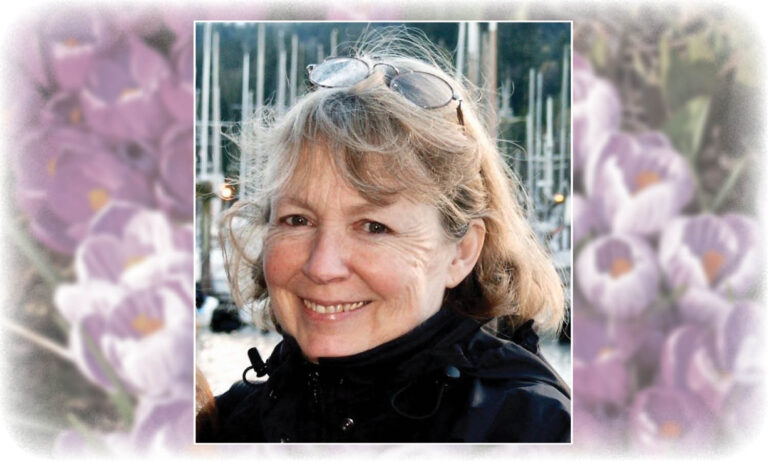
kIBBLE, Kathleen Sandra

Kathleen Sandra Kibble

Born 1943, died peacefully February 28th, 2022 at Lady Minto Hospital.

Kathleen was a beloved daughter, wife, and mother. Devoted to her family, she provided them with 
a lifetime of love, support, and inspiration. Kathie was endlessly creative. She was a theatre designer, children’s theatre director, fine artist, dressmaker, dollmaker, miniature maker, genealogist and gardener. She was warm, open, and disarming and made remarkable connections and friendships wherever she went.

Daughter of Wayne and Marguerite Pearce, she is survived by her husband Roger; sister Patricia (Tom); children Jeffrey (Angel), Steven (Leah), Aimee and Wendy (Russell); beloved cousins, extended family, and dearly cherished friends. Kathie adored being a grandmother; first to Kate and Andrew, then blessed by Alysha, Cameron, and Tyler, and lastly to Adelaide and Marguerite.  

In lieu of flowers, consider donations in Kathleen’s memory to a performing arts group in your community. A memorial celebration will be held later in the Spring. See tribute at Haywardsfuneral.ca

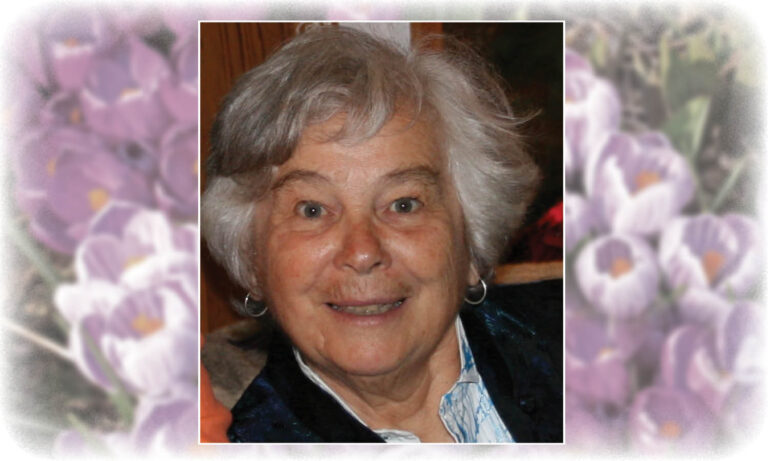
IRVING, Robin (Ruth Ann)

Robin (Ruth Ann) Irving
1939 – 2022

Robin was born on June 19, 1939 in Moncton New Brunswick to Maud and Vern Irving, (deceased) of Shediac Cape, New Brunswick.

Robin achieved a BA (Hon) in Philosophy, an MA in medieval French, a teaching certificate from the Ontario College of Education and a D. Juris from Osgood Hall Law School. She was an ESL teacher both in Toronto and in Vancouver where she also practised as a lawyer, specializing in Urban Law. She helped save Vancouver’s Chinatown from urban development and wrote the Strata Titles Act for the NDP government.

In 1973 she bought a house on Salt Spring and quickly became a full time resident enjoying boating, camping, gardening and eventually kayaking. In 1980 she and Anne (Zeller) became lifelong partners, and they were able to marry in 2006. During that quarter century she travelled to 6 continents with Anne as valuable support to Anne’s primatological research. She also became a real estate agent and property developer during the months, each year, she spent in Ontario.

Robin was very fond of all animals and often took the dog kayaking on weeks long trips in a specially designed spray deck. She kayaked in the Florida everglades, the Baja Peninsula, the Broken group and in local coastal waters. She loved to sail her racing catamaran as well as taking the small motor boat up the inside passage to Kingcome, Toba, Princess Louisa Inlet and many other places. Her last 4 years were spent in Lady Minto Extended Care where she was very well cared for. Thanks to the staff there and to Dr. Gummeson for all their support and kindness to her.

She was an adventurous soul, kind, generous, humerous, enthusiastic and will be missed by her many friends and her partner of 42 years.

If you wish to commemorate her, a donation to Lady Minto or to the SPCA would be very welcome.

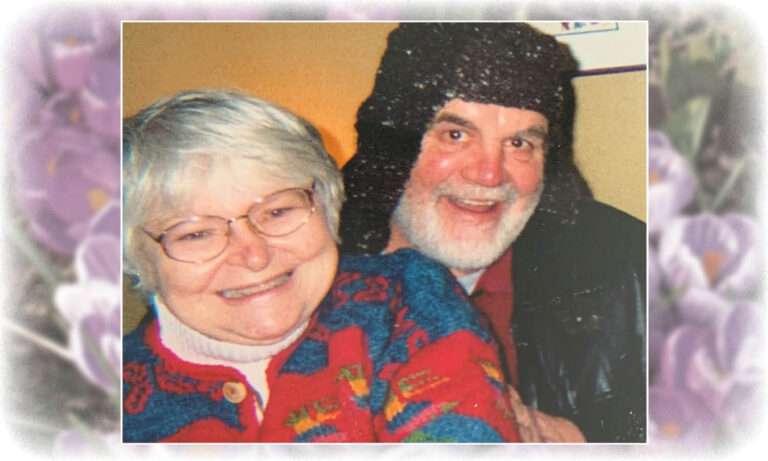
HUDSON, Janis Estelle

Janis Estelle Hudson

Janis Estelle Hudson will be fondly remembered by her children Lori (Bob), Kim, Tamara and Patrick, and her grandchildren, Jesse (Dan), Jamie (Ignat), Jordan, Liam and Maya. She died peacefully at home on Salt Spring Island, BC on March 3rd, 2022. The family would like to thank Dr. Applewaite, Mike Hubbard, Chris Griffiths and mom’s “ladies’, Carol, Barb, Angela, Lisa, Adele, Chris B., Salt Spring Embrace and Marnie, for the loving care they gave mom, making it possible for her to remain in the home she loved.

In the 1960s, she was an active organizer for the Yukon Sourdough Rendezvous Society, Whitehorse Toastmistress Club, and Whitehorse Tennis Club. In 1983 Jan and Buzz became hobby farmers on Salt Spring Island and learned to raise chickens, turkeys, sheep and vegetables. Jan’s blackberry pie was legendary. Jan will be remembered for how she loved being a wife, mother, and grandmother, and filled these roles with community, joy and adventure.

FLANNERY, Donna Patricia (Nee Cloutier)

Donna Patricia Flannery (Née Cloutier)
March 17, 1928 – January 9, 2022

FLANNERY, Donna Patricia passed away peacefully in Ottawa on January 9, 2022. Born in Wiseton, Saskatchewan in 1928, Donna moved to Montréal, Québec in 1938. Attending school and college in Montréal, she was working at Bell Canada when she met Gerald Alexander Flannery (B 1927, D 2005). Gerald and Donna were married in Montréal in 1950 and proceeded to have eight children. Robert (Valerie), Suzanne (John), Steven (Diane), Mary (Marc), Julie (B 1957, D 1979), Patrick (Brenda), John (Marian), Lorraine (Guy). Married for 55 years, they raised their children in both Ottawa, Ontario and Thompson, Manitoba, and then moved to Salt Spring Island, British Columbia for their retirement years. They were blessed with 17 grandchildren and many wonderful nieces and nephews. And following Gerald’s passing, “Granny” had the pleasure of knowing and being loved by an additional 17 great-grandchildren.

Donna was predeceased by her parents Julien and Roberta Cloutier and her brother Hubert (Barbara).

While raising her children, Donna was always active in her community, especially in Thompson where she was central to all the goings on and volunteer activities on Elk Bay, at the home that Gerald built. On her return to Ottawa, the Flannery residence was the go-to home for numerous celebrations and countless Sunday dinners.

She was proud to bring her bilingual heritage to her work on Parliament Hill, which was followed by a long career in the Federal Government. Donna remained a dedicated member of her favourite organizations, including La Clouterie ~ Les Cloutier d’Amérique, the Catholic Women’s League, and her beloved Girl Guide troop, attending annual meetings and reunions well into her eighties. She was an avid pianist, giving lessons all her life and often playing the organ at church. Donna was also a life-long learner. She graduated from the University of Ottawa in 1990 with a degree in History, and in her 70s, she embraced the arts scene on Salt Spring Island and learned the craft of painting with watercolors. Many of her original works hang proudly in her children’s homes today. and Donna was patient and extraordinarily generous, often opening her home to relatives from every part of the country. And she did not like to miss out on anything, especially if it involved outdoor skating or a swim in frigid oceans or lakes. She travelled miles to attend concerts, plays, and piano and singing recitals, performed by her many cherished grandchildren and great-grandchildren. In 2018, Donna hosted a party to mark her 90th year, bringing almost 100 family members to Ottawa from across the country. In her later years, Donna was well cared for by the staff at Chapel Hill Residence in Ottawa. Hers was a life well-lived. She steadied on to the end, with her faculties intact, “all her marbles” and her eternal sense of humour.