Home Blog Page 266

Input sought on Ciderworks’ plans for lounge and outdoor patio

0

Salt Spring’s local trust committee is asking residents for their input on Ciderworks’ plans to open a lounge with space for 40 patrons. 

 The local cider company which prides itself on making cider from Salt Spring Island-grown certified organic apples from their own orchard is now looking to open space for 20 patrons indoors and 20 on an outdoor deck. The application is an effort to make permanent what the cider company has been offering during the pandemic and what has been popular with guests. 

Ciderworks’ application to the Liquor and Cannabis Regulation Branch is to transition to a permanent lounge area from what is a temporary expanded service area (TESA), a government initiative during the COVID-19 pandemic that allowed establishments to keep serving patrons outdoors while complying with public health guidelines. 

Brian Webster, one half of the duo behind Ciderworks and the Salt Spring Apple Company which he runs together with Peri Lavender, said the expanded service areas were one good thing to come out of the pandemic. It allowed the cidery to serve their products on the patio, whereas service had previously been restricted to the smaller tasting room indoors. 

“Tasting rooms were all of a sudden allowed to have service outside as well, and so in the summer of 2020 and the summer of 2021 we took advantage of that being available. And not surprisingly, it was super popular,” Webster explained. 

The licensing change would allow Ciderworks to continue to offer patrons the same experience once the temporary expanded service area expires June 1. The lounge area would be in addition to a picnic service area. 

“It’s super clear that people being able to enjoy a flight of cider on the deck right off the tasting room is really important to them, and so it’s important to us,” Webster said. 

The LTC is holding a virtual open house tomorrow, with anyone affected by the application invited to attend. The meeting will take place Thursday, Jan. 27 at 5:30 p.m. via the following Zoom link: https://islandstrust.zoom.us/j/69336030250

People can also email written submissions to ssiinfo@islandstrust.bc.ca or by mailing or dropping off submissions to the Islands Trust office (#1-500 Lower Ganges Road, Salt Spring Island, BC V8K 2N8) by Feb. 14.  

One written submission in support of the application has already been received.

“We believe the proposed lounge area will be a lovely place to enjoy beverages in the pleasant weather, and to enjoy the view of the apple trees,” neighbours Zoe and James Sikora wrote. 

The application may then be considered at a Feb. 15 LTC meeting. 

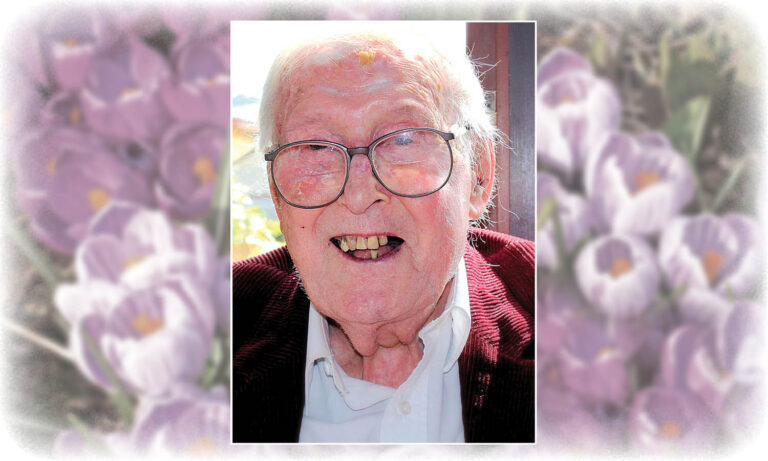
ETTEMA, Jan (John)

0

JAN (JOHN) ETTEMA
1922 – 2022

Born August 20, 1922 in Groningen, Amsterdam, and married Anna Marie Tiggelman in 1952.

Jan and his wife became Roman Catholic in 1955, and immigrated to Canada in 1957. They adopted 3 children.

Jan and Anna Marie were very actively involved in the church, and joined the third order of St. Francis.

Jan worked as a realtor in Canada, starting up two of his own businesses. He was a very hard worker, and if he wasn’t selling houses, he always had home improvement projects, both indoors and out. 

Jan passed away very peacefully, at age 99, at Lady Minto Hospital. 

Heartfelt thanks to all the staff at Lady Minto, not only for the support and caring given to my dad, but to me. I was always getting updates about my dad’s health from the doctors and nurses. 

Special thanks to Dr. Verheul for taking on my dad’s care.

Jan spent a very happy 14 months at Heritage Place, and would play his mouth harmonica every night after dinner in the dining room.

Huge thanks to Sandi Muller, director of care at Heritage Place, and all the staff who worked with my dad.

Many thanks to Father Scott, who regularly saw my dad, and who gave me an endless amount of support.

Also huge thanks to Pauline Hyde, for taking on the organizing of the mass, and to all the parishioners of St. Xavier Church who shared their love and support.

A beautiful mass was held at St. Xavier Church in Mill Bay, where Jan’s wife is also buried. 

Finally, a never ending thanks to my partner, Rudy Stam, and to all my friends and family. Jan is survived by his children Dominic, Francis, and Josina.

Jan’s sparkling blue eyes and engaging smile will be missed by so many hearts that he touched. 

We love you Papa!

Use of Quinitsa for Fulford-Swartz Bay summer runs promoted

0

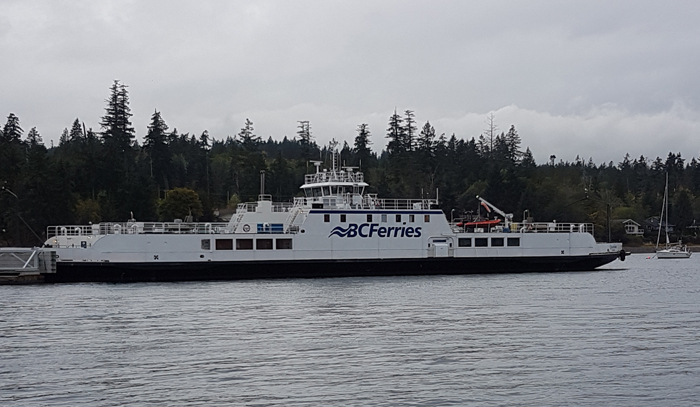
Following the submission of an online petition demanding two-ship service on the Crofton-Vesuvius ferry route, a second proposal to supplement Fulford-Swartz Bay summertime service has been made public.

Last week Salt Spring Island Ferry Advisory Committee (SSIFAC) chair Harold Swierenga released the committee’s suggestion that the MV Quinitsa, currently serving the Vesuvius-Crofton route (Route 6), be used to add extra sailings during peak times of the day in summer months between Fulford and Swartz Bay (Route 4).

The idea was submitted to BC Ferries in the form of a service request last August. (See sidebar below.)

In the meantime, Salt Spring resident David Courtney came up with the idea of using the Quinitsa as a second vessel continuously on Route 6 when the larger MV Quinsam becomes the permanent vessel on that route this spring. More than 1,900 people have supported that idea on a change.org petition site. Courtney has sought support from residents and politicians on Vancouver Island who are impacted by ferry-related traffic congestion in Crofton, as well as Salt Spring Islanders.

Brian Anderson, BC Ferries’ vice president of strategy and community engagement, has responded to Courtney’s idea on page 12 of this paper by stating that “Substantial service increases, such as adding a second ship onto a route, require investments in terminal infrastructure along with an amendment to the [Coastal Ferry Services] Contract. Dedicating a second ship to this route at this time is not feasible because there is no spare to deploy.” The corporation says it is also committed to other improvements on Route 6, in addition to making the Quinsam the year-round vessel, which can take 19 more vehicles than the Quinitsa and is easy to load.

“The SSIFAC does not consider the question of whether the Quinitsa or any other ferry could be better utilized on Route 4 or Route 6 to be an either/or question,” said Swierenga. “The Quinsam will provide a significant upgrade in service to Route 6 this spring, leaving the issues of Route 4 to be dealt with. When the ferry lineup in Fulford extends past the ‘pinch point,’ there is a whole village with hundreds of residents depending on one lane for traffic in both directions. There is, unfortunately, no other access and no side streets into which traffic can diverge. The non-ferry traffic going into Fulford is much heavier than the non-ferry traffic going down Vesuvius Bay Road toward the ferry terminal.”

He also said an additional danger point exists on Fulford-Ganges Road where it curves just past the Beaver Point Road turnoff when people are driving into Fulford.

“The road down to the terminal in Vesuvius is much straighter and motorists have a much clearer view of the entire traffic situation,” he said, adding that “Neither situation is acceptable from a safety standpoint, but there is at least some improvement coming to Route 6 this spring.”

Swierenga said “both Vesuvius and Crofton terminals are scheduled for redevelopment by the summer of 2027 and with the future coming of the twin Island Class ferries, there is an evolving solution to the vehicle lineup and ferry capacity problems on this route.”

BC Ferries has not stated its position on the SSIFAC proposal.

Courtney has expressed frustration about the SSIFAC position and is urging people who support his idea to express that to Swierenga, Salt Spring CRD director Gary Holman and local trustee Peter Grove.

Following is the Salt Spring Island Ferry Advisory Committee rationale for using the MV Quinitsa on Route 4 as a supplement to the Skeena Queen in summer months beginning in 2022, as submitted in a formal service request to BC Ferries on Aug. 4, 2021.

1) There has been a long recognized safety issue on the Fulford-Ganges Road when the ferry lineup extends past the “pinch-point.’ Although there have been discussions, studies and proposals over the past three decades to overhaul the Fulford terminal and increase parking availability, little substantive has changed and the challenges are very obviously still there. The problem is much more severe during peak season with the increased traffic and the much higher proportion of tourists unfamiliar with the situation. Our position is essentially that if there is no apparent possibility of increasing the supply of parking for the ferry lineup, then the option would be to reduce the demand for this parking by offering more capacity on the ferries. Although vehicle lineups past the pinch point do occur all year round, they are much more common during the peak season, which we are concerned with here. Not only would our suggestion greatly increase safety but it would also substantially reduce the need for traffic control personnel on the Fulford-Ganges Road.

We recognize that there are other terminals in the system where ferry traffic lines up to some extent on the travelled part of the road but the vast bulk of the traffic tends to be ferry related while in Fulford there is a village with commercial establishments as well as homes with, unfortunately, no other vehicle access.

2) There is significant anecdotal evidence that the overloading of the Skeena Queen and the resulting two-hour wait for the next sailing has resulted in ferry users utilizing Route 6 instead, resulting in the well-known overloading of that route. Increasing the capacity on Route 4 would also help reduce the demand on Route 6 and thereby reduce the overloading and lineups on that route as well.

3) Hourly service on Route 4 during the peak season would be a major benefit to Route 1/4 thrufare travellers. Travellers in the Route 4/1 direction who miss the Route 1 connection at SWB only have to wait an hour for the next Tsawwassen-bound sailing while travellers on the Route 1/4 direction who miss the Skeena (it is often full when you drive off the Route 1 ship in peak season) have a two-hour wait. Hourly service on Route 4 during the busy time of day would mean a wait of only one hour.

4) Hourly service on Route 4 during the peak season could very possibly eliminate the need for the traditional Saturday extra sailing of the Skeena.

5) The above measures to resolve the pressures on the Fulford terminal and the Skeena Queen would put off the need to significantly modify and expand the BCF presence on the ground at that location. Eventually, terminal improvements will be needed, but the current safety and traffic concerns would be significantly alleviated.

6) We recognize that the Quinitsa is a designated relief ferry to replace other ferries while they undergo maintenance or repair, but since most of that work is undertaken during the non-peak season, utilizing it on Route 4 during the peak season would not be a major disruption. It is also very conducive to this requested service in that the extra dock at Fulford is available to park the Quinitsa when it is not in service.

We would ask that BC Ferries consider that a peak season service by the Quinitsa would have it making the first Fulford-Swartz Bay sailing at 8:50 a.m., then leaving SWB at 10 a.m. and continuing the pattern 10:50, 12:50, 2:50 from Fulford and 12, 2 and 4 from SWB except on Fridays when the schedule would be two hours later to accommodate the heavier Friday evening traffic to Salt Spring.

We recognize that the Quinitsa is theoretically scheduled for retirement later in this decade and would suggest that consideration be given to its eventual replacement by an Island Class ferry.

The Skeena Queen provides admirable service on Route 4 and we are sure that peak season backup by the Quinitsa would solve many of the current issues of safety and capacity on this route.

By GAIL SJUBERG

DRIFTWOOD EDITOR

Following the submission of an online petition demanding two-ship service on the Crofton-Vesuvius ferry route, a second proposal to supplement Fulford-Swartz Bay summertime service has been made public.

Last week Salt Spring Island Ferry Advisory Committee (SSIFAC) chair Harold Swierenga released the committee’s suggestion that the MV Quinitsa, currently serving the Vesuvius-Crofton route (Route 6), be used to add extra sailings during peak times of the day in summer months between Fulford and Swartz Bay (Route 4).

The idea was submitted to BC Ferries in the form of a service request last August. (See sidebar below.)

In the meantime, Salt Spring resident David Courtney came up with the idea of using the Quinitsa as a second vessel continuously on Route 6 when the larger MV Quinsam becomes the permanent vessel on that route this spring. More than 1,900 people have supported that idea on a change.org petition site. Courtney has sought support from residents and politicians on Vancouver Island who are impacted by ferry-related traffic congestion in Crofton, as well as Salt Spring Islanders.

Brian Anderson, BC Ferries’ vice president of strategy and community engagement, has responded to Courtney’s idea on page 12 of this paper by stating that “Substantial service increases, such as adding a second ship onto a route, require investments in terminal infrastructure along with an amendment to the [Coastal Ferry Services] Contract. Dedicating a second ship to this route at this time is not feasible because there is no spare to deploy.” The corporation says it is also committed to other improvements on Route 6, in addition to making the Quinsam the year-round vessel, which can take 19 more vehicles than the Quinitsa and is easy to load.

“The SSIFAC does not consider the question of whether the Quinitsa or any other ferry could be better utilized on Route 4 or Route 6 to be an either/or question,” said Swierenga. “The Quinsam will provide a significant upgrade in service to Route 6 this spring, leaving the issues of Route 4 to be dealt with. When the ferry lineup in Fulford extends past the ‘pinch point,’ there is a whole village with hundreds of residents depending on one lane for traffic in both directions. There is, unfortunately, no other access and no side streets into which traffic can diverge. The non-ferry traffic going into Fulford is much heavier than the non-ferry traffic going down Vesuvius Bay Road toward the ferry terminal.”

He also said an additional danger point exists on Fulford-Ganges Road where it curves just past the Beaver Point Road turnoff when people are driving into Fulford.

“The road down to the terminal in Vesuvius is much straighter and motorists have a much clearer view of the entire traffic situation,” he said, adding that “Neither situation is acceptable from a safety standpoint, but there is at least some improvement coming to Route 6 this spring.”

Swierenga said “both Vesuvius and Crofton terminals are scheduled for redevelopment by the summer of 2027 and with the future coming of the twin Island Class ferries, there is an evolving solution to the vehicle lineup and ferry capacity problems on this route.”

BC Ferries has not stated its position on the SSIFAC proposal.

Courtney has expressed frustration about the SSIFAC position and is urging people who support his idea to express that to Swierenga, Salt Spring CRD director Gary Holman and local trustee Peter Grove.

Following is the Salt Spring Island Ferry Advisory Committee rationale for using the MV Quinitsa on Route 4 as a supplement to the Skeena Queen in summer months beginning in 2022, as submitted in a formal service request to BC Ferries on Aug. 4, 2021.

1) There has been a long recognized safety issue on the Fulford-Ganges Road when the ferry lineup extends past the “pinch-point.’ Although there have been discussions, studies and proposals over the past three decades to overhaul the Fulford terminal and increase parking availability, little substantive has changed and the challenges are very obviously still there. The problem is much more severe during peak season with the increased traffic and the much higher proportion of tourists unfamiliar with the situation. Our position is essentially that if there is no apparent possibility of increasing the supply of parking for the ferry lineup, then the option would be to reduce the demand for this parking by offering more capacity on the ferries. Although vehicle lineups past the pinch point do occur all year round, they are much more common during the peak season, which we are concerned with here. Not only would our suggestion greatly increase safety but it would also substantially reduce the need for traffic control personnel on the Fulford-Ganges Road.

We recognize that there are other terminals in the system where ferry traffic lines up to some extent on the travelled part of the road but the vast bulk of the traffic tends to be ferry related while in Fulford there is a village with commercial establishments as well as homes with, unfortunately, no other vehicle access.

2) There is significant anecdotal evidence that the overloading of the Skeena Queen and the resulting two-hour wait for the next sailing has resulted in ferry users utilizing Route 6 instead, resulting in the well-known overloading of that route. Increasing the capacity on Route 4 would also help reduce the demand on Route 6 and thereby reduce the overloading and lineups on that route as well.

3) Hourly service on Route 4 during the peak season would be a major benefit to Route 1/4 thrufare travellers. Travellers in the Route 4/1 direction who miss the Route 1 connection at SWB only have to wait an hour for the next Tsawwassen-bound sailing while travellers on the Route 1/4 direction who miss the Skeena (it is often full when you drive off the Route 1 ship in peak season) have a two-hour wait. Hourly service on Route 4 during the busy time of day would mean a wait of only one hour.

4) Hourly service on Route 4 during the peak season could very possibly eliminate the need for the traditional Saturday extra sailing of the Skeena.

5) The above measures to resolve the pressures on the Fulford terminal and the Skeena Queen would put off the need to significantly modify and expand the BCF presence on the ground at that location. Eventually, terminal improvements will be needed, but the current safety and traffic concerns would be significantly alleviated.

6) We recognize that the Quinitsa is a designated relief ferry to replace other ferries while they undergo maintenance or repair, but since most of that work is undertaken during the non-peak season, utilizing it on Route 4 during the peak season would not be a major disruption. It is also very conducive to this requested service in that the extra dock at Fulford is available to park the Quinitsa when it is not in service.

We would ask that BC Ferries consider that a peak season service by the Quinitsa would have it making the first Fulford-Swartz Bay sailing at 8:50 a.m., then leaving SWB at 10 a.m. and continuing the pattern 10:50, 12:50, 2:50 from Fulford and 12, 2 and 4 from SWB except on Fridays when the schedule would be two hours later to accommodate the heavier Friday evening traffic to Salt Spring.

We recognize that the Quinitsa is theoretically scheduled for retirement later in this decade and would suggest that consideration be given to its eventual replacement by an Island Class ferry.

The Skeena Queen provides admirable service on Route 4 and we are sure that peak season backup by the Quinitsa would solve many of the current issues of safety and capacity on this route.
Francis Bread seeks new retail bakery space

0

The owners of Salt Spring Island’s Francis Bread are looking for a new home for their bakery after deciding not to continue with a rezoning process for their location on Churchill Road. 

Meghan Carr and Peter Hunt began operating their bakery as a home-based business at 125 Churchill Rd. four years ago, on the family’s property in an area which felt very commercial with two of Salt Spring’s largest hotels and the marina nearby. As their bakery grew in popularity, Carr said they realized they were outgrowing their home-based business situation and began working with local government on a way forward. 

They had hoped to rezone their property from residential to commercial, making the bakery as well as two accommodation units on the property legal. With overwhelming community support at a Jan. 19, 2021 Local Trust Committee meeting, trustees allowed the bakery to keep operating without facing bylaw enforcement until their rezoning application was resolved. 

“We’re hearing loud and clear about the value of this business and a community amenity in your midst,” said LTC chair Peter Luckham, who added that he’d never seen as many letters of support for any application previously with close to 500 messages received. 

While the focus for Carr and Hunt has always been on the bread and wanting to provide a staple product to the community, their energy has for the past few years been spent on attempting to get the rezoning through the island’s unique governance system. Working with three governing bodies — the Islands Trust, North Salt Spring Waterworks District and the Capital Regional District — was a challenge Carr said. 

The bar is set quite high, she explained, with various requirements that are challenging to meet without access to unlimited finances.

“So we just had to make a decision as a small business to move on or keep going,” she said. “And it felt too financially and emotionally exhausting to be able to keep doing that.” 

Carr said she hopes to see a solution around the North Salt Spring Waterworks moratorium, as this is the main reason they abandoned their plans to continue the bakery on the current property. The property was serviced by the waterworks district, however, using that water for commercial uses was not allowed so the owners transitioned to bulk water supply for the bakery. But the bulk water solution is at variance with the Islands Trust Policy Statement concerning water as well as portions of the Salt Spring Island Official Community Plan. 

A staff report presented at a Jan. 18 LTC meeting noted that no precedent exists for a rezoning on the basis of bulk water, either within the Islands Trust or provincially, “likely due to the difficulty of ensuring provision of potable water from an approved source in perpetuity for increased intensity of use.” As a result, staff did not recommend proceeding with the application “on the basis of bulk water supply for the commercial uses on the lot.” 

“Unless we make really significant investments, without the guarantee of our zoning even going through, we’re stuck. We can’t go forward,” Carr said. 

In the LTC’s discussion of the rezoning Trustee Laura Patrick noted that while water is a critical consideration for the Islands Trust, “it is not the only value that we can be making our decisions on in a community.” 

The water issue on Salt Spring is one which ties into the broader issues of housing and business operations on the island, issues which Carr and Hunt never wanted to be involved in. 

“I didn’t realize how the community is fractured in some ways. I think we really wanted to be this community space,” Carr said.

When their business was growing in popularity and began being talked about in the media and at the Islands Trust, they began getting some negative feedback. 

“We never wanted to be controversial, we just wanted to make bread. But it felt like people were taking that out of our hands and making it about ‘How should the island be? Who should get to be here?’” she explained. 

“I don’t want to be known for zoning issues, I just want to be known for making delicious bread,” Carr said, who added that running the business is a lot of work even without the rezoning process. “I’m sure if anybody tried to learn how to make sourdough during the pandemic, they know how much work it is.” 

While Carr said disappointment and heartbreak is how it feels currently, she added that they are moving on with a positive attitude to find a space that works for them before the summer. That may prove challenging, as the bakery needs a kitchen and also a place to house the specialized baking equipment and wood-fired oven they use. 

At last Tuesday’s LTC meeting, trustees put the rezoning application into abeyance for six months, allowing Francis Bread time to find a new location. Carr said they appreciate the time they’ve been given to come up with a plan. They’re not leaving the island, she said, and want to continue to be a part of what makes Salt Spring the community and culture it is.

“I see Francis Bread as being part of that culture,” trustee Peter Grove noted in his support of the abeyance. 

Locals can purchase their products at the Salt Spring Mercantile, at The Woodshed, and by ordering at francisbread.com and picking up at the bakery.

“Basically we’ve turned the bakery into a farmstand kind of set up,” Carr said, in order to minimize traffic and business and to keep having a minimal impact.

Owners of the bed and breakfast units on the property, Nicholas Hunt and Celia Duthie, plan to continue to operate, and will be connecting with the waterworks district about their business, which was opened 15 years ago and before the water moratorium came into effect in 2014.

Viewpoint: Let’s restore the public square

2

By DAVID FULLBROOK

When the Fulford Inn closed in 2010, I did not see myself assuming ownership of the property. Far from it.

Something changed for me as the years of inaction passed by. I suppose I could say I lived nearby and would drive by it often, watching the impacts. I suppose I could say it was the murder of Joseph Birney in that area, or the noticeable decline of Fulford village life, or just the absence of a place that had a heartbeat and vibrancy that I was familiar with. I honestly don’t really know. In time, by about 2015 or so, however, I came to the view that the decline of the Fulford Inn was the loss of an essential gathering and meeting place to our community.

We may each of us feel tangible personal grief when considering the challenges our community faces — climate change, habitat loss, fishery decline, homelessness, income inequality, drug addiction — but these horsemen have always been lurking. No simple decision or plan will emerge which solves any of these problems. The only way we can meet the challenges of the future is to build and strengthen our community life, our connection and obligation to each other. We cannot defeat these horsemen, only face them, and that will be easier if we do it together.

Albert Camus wrote: “All great deeds and great thoughts had a ridiculous beginning. Great works are often born on a street corner or a restaurant’s revolving door.” This is the public square: the place where we gather and engage in a sharing of viewpoints, backgrounds and abilities. It is in the public square that ideas and opinions clash and wrestle and give rise to innovation, enterprise and opportunity. Literally and figuratively we inhabit a world today without a public square; it has been privatized “online” and called “speech.” Largely fuelled by division, drama and conflict, this private square is so antithetical to our shared history that we find ourselves in a world where complexity and intellect are frequently outmatched by emotion.

Much as it may feel better to hang on to a simple principle and hold true to that belief through to the bitter end, in the real world we must measure and weigh the practical benefits and costs and determine the best path forward on the basis of many outcomes. This does not come without often difficult compromise.

Much has been written of late in this newspaper regarding the Vortex project and the various reasons why the proposal should be denied by the Local Trust Committee. I share all of the concerns of the authors and I support their important voices for our island. Instead of debating, I hope to build understanding. For that purpose I created an easy-to-navigate website (www.saltspringvortex.com) to provide access to the technical information, design rationale, and various design plans that make up the basis of the application. I hope people will visit the website for themselves and inform their understanding of the proposal. While the Islands Trust hold the bar for development high, a view of the website will illustrate that we have well exceeded that bar.

As always, I thank the many neighbours and friends who have supported our efforts during this long campaign to rebuild the Fulford Inn. I look forward to the final decision and moving one step toward realizing the goal of reestablishing a community gathering space and public square at Fulford Harbour.

Nobody Asked Me But: Won’ts and don’ts could be as important as wills

0

Sooner or later, you will be in the position I found myself in a few weeks ago. You will realize that you have reached a stage in your life when it is time to consider what will happen to your stuff when you are no longer here. Even if previously you had the foresight to draw up a legal last will and testament, you may discover that times and situations have changed enough to make many of the declarations in your will outdated or even obsolete.

For instance, I found that many of the articles which had been so important to me at a younger age were no longer of any value or in much demand. My giant glass jar filled with copper pennies and my prized collection of bottle caps from all around the world, for example, had lost all meaning in a world obsessed with bitcoins and non-fungible tokens. Similarly, I was living so far back in time that my substantial contribution from my estate to The Society for Prevention of Cruelty to Dinosaurs was probably well past its “best before” date.

Just in case you didn’t know, a last will and testament is a document which explains and clarifies what will happen to your estate and property at the time of your death. Actually, “explains and clarifies” is a total misrepresentation because nobody, not even the lawyers who draw these things up, have a clue about what is actually stated in the will. This is because the language used in these documents is a legalese jargon that was imported from the planet Grrxxxl about 500 gazillion years ago before it was destroyed by a giant affidavit hurdling through space.

Just to get a taste of the language used in wills, why don’t we chew on this witty little paragraph: “A disposition to a person’s Issue alive at a particular time ‘per stirpes’ means the trustee must divide the estate or relevant part of it into a sufficient number of shares.” Sounds like a party about to break out, doesn’t it? It’s easy to see how the inhabitants of Grrxxxl were probably relieved by their imminent destruction.

Don’t get me wrong. I readily admit that leaving a will behind when it’s time to check out from this planet is a useful and probably necessary exercise. After all, you wouldn’t want those you leave behind to quibble and squabble over who gets to take home that heirloom chafing dish, would you? But is anyone going to really decipher that “the residue of the estate of the third party hereby relinquishes all gifts, inheritance, succession, and other death taxes” means that one of your deemed inheritors might refuse to wade through your unorganized tool shed to find out if you left anything of any real value in those tobacco cans filled with rusty nuts and bolts? Hey, if I had wanted to understand the language used in wills, I would have studied Egyptian hieroglyphics in college.

Many wills specify who will be designated to carry out the wishes of the deceased. This responsibility falls to the Trustee or the Executor. It’s important to differentiate between the two positions. Basically, your Trustee is someone you trust. It follows, therefore, that your Executor is someone you don’t trust. The name, Executor, comes from the same root as Executioner, who is sometimes affectionately referred to as the hangman or the fellow who pulls the lever on the guillotine.

Naming somebody to be your Executor is about the worst thing you can do to a friend or family member. You might as well ask your Executor to take a bullet for you or sip your portion from the poisoned chalice. Administering your estate will so complicate their lives that they will wish they had croaked first and will probably hate you long after you’ve departed from this earthly orb.

I think that there is a better idea than leaving behind a will that will probably satisfy none of your beneficiaries and create bad feelings among the ones you leave behind, which they are certain to take to the grave. I propose a legal document called a “Won’t” which would specify in very plain language who you don’t want to leave what to. The Won’t will prevent your good-for-nothing nephew from walking away with that old dependable chainsaw you knew he always craved.

Your Won’t should be divided into a series of sections called Don’ts. You can start off with a universal Don’t , which names all the friends, relatives and acquaintances to whom you leave absolutely nothing. This can be followed by a number of more specific Don’ts to make sure that certain people don’t inherit certain items. Each Don’t should identify a designated part of your estate and a particular eligible beneficiary you would like to see shut out.

For instance, you want to single out any and all ex-spouses and make sure that none of them get their sticky hands anywhere near your collection of vinyl records which would probably be worth an oil sheik’s fortune if only the labels hadn’t faded so badly that they can no longer be identified and the covers have been pressed against each other for so long that they are impossible to separate.

Not all Don’ts need to be material objects. You may have a neighbour who has been pestering you for ages to allow him to take down that hedge of tall, spindly cedars you planted decades ago on your side of the property line. Even after you are gone, your Won’t can deny your beneficiaries from giving him permission to cut your hedge just so he can have a better glimpse of the ocean. Who says you can’t derive satisfaction from the grave?

Nobody asked me but, whether you leave behind a Will or a Won’t, you are much better off than if you don’t. If you neglect to get your affairs in order, the authorities are bound to step in and probate your estate for you. When all is said and done, you may find that your life will be mismanaged after death much like it was while you were still alive.

Warming space gets reprieve, organizers say

1

Organizers behind Salt Spring Island’s warming space say they’ve been told they can stay in Mouat Park for now, after being instructed to pack up and leave or face eviction by the Capital Regional District (CRD) Friday. 

A space equipped with tents, seating, cooking and warming facilities was set up on Jan. 9 in Mouat Park and organizers said they received positive feedback and indications of support from agencies and organizations on the island. Then a 72-hour notice was served by the CRD’s bylaw division calling for the removal of the warming space by the morning of Tuesday, Jan. 25. 

When reached Tuesday, Warming Space Collective member Kajin Goh said after advocacy efforts he has received confirmation from a local bylaw officer that the space won’t be dismantled. 

The notice served to the space Friday stated that camping overnight at a community park was prohibited by Bylaw 3795 and that the CRD did not “consent to, permit or authorize” what they called an encampment within the park. The notice stated all tents, shelters and related camping equipment had to be gone by Tuesday at 8 a.m., otherwise the CRD would remove all of this equipment. 

“There’s a bit of a disconnect when the notice of removal was signed by someone who had very possibly received complaints and he has no real connection to the ground here on Salt Spring,” Goh said. The notice was signed by Mark Groulx, the CRD’s chief bylaw officer. 

“We called in all our friends and supporters and reached out to all the different agencies here to make an appeal to reverse that,” said Goh.

Urban and rural housing crises are different, Goh emphasized, as in larger municipalities warming centres are set up yet this hasn’t happened here. He noted that the recent BC Housing announcement that a supportive housing development is in the works for Drake Road is a positive development. 

“It’s a shift and it’s a positive thing to note that people are doing what they can,” he said. “Meanwhile, the warming space is going to keep going and it has been really important for people, not just the warmth, but nourishment, food, emotional support and everyone’s somehow becoming trained in peer support [by being] there and just being present.”

The warming space at Mouat Park is the second iteration of what was first a week-long effort that established a similar space at Peace Park on Jackson Avenue through the cold snap and the holidays. 

In a video shot on Friday by Upstream Media, Goh acknowledged that going forward it is tricky given that the warming space exists on public land.

“We want to respect our neighbours,” he said. “There’s also recognition that there’s rough edges to this process. There’s a lot of people here who are dealing with different very challenging life situations and we’re trying to create support for them. And this is an interim phase where some of our friends hopefully will find stable housing soon.”

The Driftwood has reached out to the CRD’s chief bylaw officer Mark Groulx and Salt Spring CRD director Gary Holman for comment. This story will be updated when we hear back. 

Trust too slow to respond to housing crisis, says head of housing task force

0

The chair of a task force set up to tackle the island’s affordable housing issue said it’s demoralizing to see work by the Islands Trust towards changing a secondary suites bylaw take so long.  

Speaking at a Jan. 18 meeting of the Local Trust Committee (LTC), Rhonan Heitzmann said Housing Action Program Task Force members were hoping to see a report by staff on updating the secondary suites Bylaw 461, which the task force recommended in August. Heitzmann said it’s disappointing that the report will be shown at a February meeting, “which will be six months after we proposed the recommendations, which was from the point of view of trying to have quick solutions to the housing crisis that the whole community is suffering from,” he said. 

Heitzmann said it’s demoralizing for the volunteers on the task force, who take time away from work and family life to do this work, to see things move so slowly. 

“The community was sceptical of this task force and this project from the beginning, seeing it as just another make-work project that leads to another report that gets put up on a shelf, that moves slowly,” Heitzmann said. “If this is how we move in response to a crisis, I don’t know if we understand what the definition of a crisis is . . . In the face of a crisis I don’t think business as usual cuts it.” 

LTC chair Peter Luckham noted there had been resource challenges with staff and other demands, yet he assured Heitzmann that the LTC does take the issue seriously. At a Nov. 9, 2021 meeting, the LTC asked staff to report back on potential bylaw amendments to allow accessory dwelling units in all zones on the island. 

“We’ve taken a little bit longer than intended, than desirable,” said regional planning manager Stefan Cermak of this specific bylaw. “And that’s because it’s difficult. We’re reviewing the legal opinions we’ve had, we’ve been trying to work with administrative staff from agencies to make sure that what we draft goes out and they move swiftly as opposed to being bogged down in the referral process.” 

Cermak said staff shared the same concerns as Heitzmann, and added that once they get to the legislative process of bylaws that is where some momentum will be seen.

Planner Louisa Garbo said the work includes speaking with the Salt Spring Island Watershed Protection Alliance, speaking with all First Nations with a territorial interest in the island, as well as a technical working group.

“And the bylaw still has some technical challenges that we need to work on. And once we feel it’s a defensible bylaw, we can bring it to LTC for their endorsement,” she said. 

Heitzmann said he was pleased to hear that work was being done on drafting a bylaw, as previously he had understood that only a report about the bylaw was being worked on.

“It makes a big difference to know there is actually work being done on drafting a bylaw,” he said. Cermak confirmed he recently reviewed a copy of the draft bylaw.

The task force also plans to reach out to the broader community. Trustee Laura Patrick said communicating better what is happening on housing is important as a lot of misunderstanding exists.

“We’re not talking about housing Canada on Salt Spring, we’re talking about housing the vibrant community we need here to maintain our lives here,” she said.  

Maxine Leichter attended the Jan. 18 LTC meeting as a delegate, urging trustees to “adopt policy that is based on analysis of data and prior experience.”

Leichter said the first step is to identify the causes of a lack of affordable housing, which she said are income inequality, cost of construction, low interest rates encouraging property investment, existing cottages and suites used as vacation rentals, and zoning restrictions in urban areas. 

“The most significant of these can only be addressed at the provincial and federal level,” she said. “If those factors are the most significant drivers of the problem, we all need to put responsibility for solutions on those levels of government.”

Leichter asked trustees what was happening with the crackdown on vacation rentals on the island. “What about enforcing that rule to stop vacation rentals from masquerading as B&Bs? There’s quite a few online.” 

Leichter also said zoning for more dense development is a solution to housing issues, yet this refers to urban areas and not to Salt Spring where water and sewer services are limited and keeping the island’s rural character is valued.

“Dense development is urban, not rural, and we have limited water and sewage treatment capacity,” she said, adding that previous efforts to rezone for more affordable housing haven’t worked. 

Elizabeth FitzZaland, representing Salt Spring Solutions, spoke at the Jan. 18 meeting and reminded trustees about the 20 years since the Islands Trust began working on the issue of secondary suites. Since then, FitzZaland said the secondary suites bylaw was initiated as a pilot project in 2012 and “then the moratorium really truncated the whole project.” FitzZaland was referring to the North Salt Spring Waterworks District 2014 moratorium preventing new hook-ups and by extension new developments on properties serviced by the district.

“We can keep consulting, we can keep doing data, research . . . but at some point we’ve got to be bold, we actually have to do something here. I think there’s broad community support for this,” she said.

Consultation and research have been ongoing for two decades, she said, and implementing a bylaw is “low-hanging fruit” and an action that can be taken now as the community works on more innovative ideas.

“This isn’t an innovative one, this is just getting to where the bar’s already been set 20 years ago,” she said. 

MARSHALL, Janet Barbara

1

Janet Barbara Marshall
April 4, 1947 – January 25, 2022

Sadly, our dear friend, Janet, has passed away, aged 74, at Lady Minto Hospital. She went peacefully, after a courageous battle with cancer.

Janet was predeceased by her parents, Edward and Claire Quinn, and is survived by her closest cousins, Judy, Carole and Diane. Born in Montreal, she spent her early years working with her father in his transportation business. She moved to Salt Spring in the early 80’s, and her parents followed her later.

Janet had a great love for Salt Spring, spending her first years, here, cooking for folks in a small deli. She then trained as a realtor and spent many happy years at Century 21. Later, she worked at Field’s, until it closed.

Janet loved to feed people, whether with a pot of soup or a bag of cookies. She took that role very seriously. Upon retirement she became a volunteer at the Lady Minto Thrift Shop and was a helping hand in Dan Hardy’s office and in the cafe at Country Grocer. When she wasn’t volunteering, she filled her days with crossword and sudoku puzzles, solitaire, old movies and game shows.

Janet would have liked to thank all of the staff at Lady Minto and at Braehaven for their excellent care over the last few years.

Tiny, but feisty, Janet will be missed and remembered by all who knew her.

If desired, donations in Janet’s name may be made to Lady Minto Hospital, 135 Crofton Road, SSI, B.C., V8K 2R8.

Permanent housing for Seabreeze tenants and people at risk of homelessness announced

0

After months of uncertainty for 18 tenants at the Seabreeze Inne, the B.C. government announced Thursday it will fast track the building of 28 homes on Drake Road to get people most at risk of homelessness into permanent housing.

Up to 28 permanent homes with supports will be built on the Capital Regional District site at 161 Drake Rd., as well as a shelter and programming space. The Lady Minto Hospital Foundation has also agreed to extend the lease of tenants at the Seabreeze until construction on Drake Rd. is completed, at which time the most vulnerable residents will move into the newly built homes operated by Salt Spring Island Community Services Society. 

With over 30 vacant positions at the hospital, the Lady Minto Hospital Foundation offered in the fall to purchase the 28-room Seabreeze Inne on Ganges Hill and transform it into 14-one bedroom apartments.

The foundation stepped in after plans by Community Services to buy the property fell through, as partners on the project BC Housing determined it didn’t meet their needs. “Despite their use an interim emergency measure, we know that hotels are not a suitable long-term solution for people experiencing homelessness,” the agency stated on the Drake Road project website.

Filling a need for hospital staff accommodation by buying the Seabreeze also meant the 18 current tenants, most of whom were on the verge of homelessness before moving there, would need to relocate. While the BC Housing lease of the Seabreeze was always meant to be a temporary measure ending at the end of the 2021 calendar year, the question of where the tenants would go remained unanswered for nearly two months until Drake Rd. plans were made public Jan. 20.

“The project will provide housing for people experiencing or at risk of homelessness in the community, including people who are living in Salt Spring’s temporary Seabreeze Inne and Fulford-Ganges shelters,” the news release from David Eby, Attorney General and Minister Responsible for Housing stated. 

Eby acknowledged that 28 units is not enough to house everyone at the Seabreeze and the shelter, which currently accommodates around 15 guests. BC Housing stated they will work with people to identify their needs. “The most vulnerable will be offered places at 161 Drake Road and we will work to find other housing solutions for those who require fewer supports,” the housing agency stated. “We are committed to ensuring that no one ends up back on the streets.”

Residents at Drake Rd. will be living independently, with supports including “daily meals, laundry, employment support, health supports, harm reduction and community programming” available. 

The province is using the authority it has under the Interpretation Act to fast track the project straight to construction. Preparing the site and construction of the “modular project” is set to start “in the coming weeks.” The province expects the building to be open in late summer 2022.

The hospital foundation has agreed to lease the Seabreeze to BC Housing on a short-term basis while Drake Rd. construction is finished.

Once construction is completed, the most vulnerable residents from the Seabreeze and the shelter operated by Community Services on Fulford-Ganges road will relocate there. “BC Housing will also provide rent supplements to shelter guests who are able to live independently and want to rent in the private market,” BC Housing explained. 

Eby praised the multiple organizations and agencies involved in making the project happen. “This successful collaboration between BC Housing, Capital Regional District, Islands Trust, Lady Minto Hospital Foundation, and Salt Spring and Southern Gulf Islands Community Services Society shows what we can accomplish when we work together,” he stated. “This outcome means health-care workers have a place to live on the island, and the most vulnerable residents of Salt Spring also have a home.”

BC Housing will be engaging with neighbours and the broader public in January. People can also submit their questions and comments on a website dedicated to the project or via communityrelations@bchousing.org.

For much more on this story, see the Jan. 26 issue of the Driftwood newspaper.