Home Blog Page 282

HUGHES, Cara Joy

0

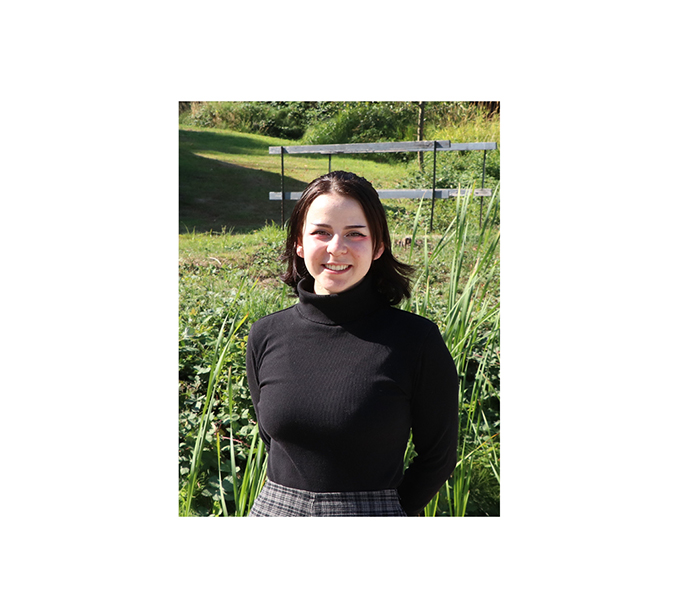
Cara Joy Hughes

Cara Joy Hughes died 20th October 2021, the way she had lived, independent and clear-eyed to the last, at home with her beloved dog Pedro, and with friends at her side. We will miss her, for we cherished her as a wonderful friend and neighbour. Over the last thirty years, in the course of determined daily walks with one of a succession of equally determined dogs, she always took time to exchange a few words with us. Had we only known more about her life and achievements, what conversations we might have had!
 
Cara Joy was born in Toronto in 1932. Her parents, Gordon R.  and Eva C. Hughes, soon moved the family which included two older brothers Gordon and Bill to Winnipeg. Cara Joy’s intelligence and unremitting curiosity about the world launched her studies, first at the University of Manitoba, where she received a B.Sc. (Hons) in 1954, and then at Harvard for a M.Sc in 1956 and a Ph.D. in 1968.  This, in the then-prevailing “men’s world” of mathematics and physics, was no minor achievement. Interspersed between graduate degrees was pioneering work in radio astronomy and computer programming. Settling briefly to teach computer science at the University of West Indies, she then took a position in the same field at the University of British Columbia. Always open to new pursuits, Cara Joy subsequently began law studies, and was called to the bar as a barrister and solicitor in 1981. She practiced mostly in family law.

Cara Joy retired to Salt Spring Island in 1991, but remained as active, resourceful, and indefatigable as ever, helping to deflect a developer from building an airfield in the Fulford Valley, supporting anti-logging camps and blockades at Burgoyne Bay, organizing a Shakespeare reading group for an offshoot of the University Women’s Club, driving for seniors, and gaining a name for herself as the ‘Scrabble lady’ for Greenwoods. Her energy and drive, her kindness, acute perception and humour have delighted a wide network of friends for many years.

 A Celebration of Life will be held and details will be announced later. In lieu of flowers, please donate to Eco Justice, David Suzuki foundation, Nature Trust, or the British Columbia World Wildlife Fund. The funeral home is www.dignitymemorial.com/funeral-homes/victoria-bc/first-memorial-funeral-services/3811and the cremation will be private.

Housing council concept fails to fly for now

0

The lack of affordable housing loomed large at last week’s Salt Spring Local Trust Committee meeting, despite not being on the formal agenda before the meeting began.   

Observing that the crisis and its impacts seem to deepen by the week, Salt Spring trustee Laura Patrick rustled around in the Islands Trust toolbox to see if there wasn’t something more the Trust could do to improve the situation. Patrick suggested that the LTC lead the revitalization of the long-dormant Salt Spring Housing Council, which was created in 2011 to address the shortage of affordable housing at that time. 

“I’ve talked to the housing advocates and I think we need to look at considering using the  delegated authority that we have to coordinate a housing council-like entity. There is a housing council on Salt Spring but it has been dormant. They don’t have funding. I was hoping the CRD would fund it but they haven’t so it’s sitting there.” 

Patrick explained that a housing council would be created under the same mechanism that spawned the  Salt Spring Island Watershed Protection Alliance, a coordinating body funded through a special property tax levy. She put forth a motion that would have had Trust staff prepare a 2022-2023 business case that could be taken to Trust Council for approval in the next budget cycle.

“This is an option we have — to facilitate the housing council — and to let [the council] continue to not work isn’t helping the community at a time when the housing situation is not getting better, it’s just getting worse,” she said.

While fellow trustees Peter Grove and Peter Luckham said they supported the idea, they did not see it realistically happening anytime soon. 

Luckham was concerned that staff resources were not available for such a major project, and Trust regional planning manager Stefan Cermak confirmed that is the case. Cermak recommended putting it on the work program for the following year instead.

Grove said it was not practical to ask staff to invest time in a new project when considerable resources had already been put into the Housing Action Program Task Force (HAPTF), which was created earlier this year.

“I see this as changing horses in mid stream and with only a year left in our term.”  

He observed that the Trust always appears to have much more power than it actually does, and suggested the CRD and provincial government could have more impact on the housing file. 

“Let’s just do one thing at a time and hear what the Housing Action Program Task Force has to say,” said Grove.

At its Aug. 19 meeting, the task force compiled a series of specific suggestions for trustees to consider, but the minutes of the meeting were not included in last week’s agenda package. 

HAPTF chair Rhonan Heitzmann addressed the Oct. 5 meeting and was upset about the missing minutes until being assured their omission was simply due to a staff error.  

Elizabeth FitzZaland, a member of the Salt Spring Solutions group that has been working on the housing issue for the past few years, pressed the LTC at the same meeting to adopt the Aug. 19 HAPTF plan, which she articulated as: 

• Deferring bylaw enforcement against long-term use of commercial and seasonal accommodation;

• Updating the standing resolution regarding unlawful dwellings to provide greater security for residents who are currently living in these homes and have nowhere else to go;

• Developing procedures to expedite approvals and permitting for affordable, supportive and social housing projects;

• And updating secondary suites Bylaw 461 to enable suites on more properties island-wide.

But not all voices at last week’s meeting were promoting an increase in housing units for the island. 

Maxine Leichter, president of the Salt Spring Island Water Preservation Society, made a delegation asking the LTC to not create a bylaw that would increase housing units on land zoned Agriculture 1 and 2, which is being considered. Leichter said too many additional densities had already been created through other bylaw changes that threatened to push the island over the 17,000 population limit set in the island’s official community plan. 

“To increase densities over what is allowed now will represent a further violation of our OCP, Trust policy and the Local Government Act,” she said.  

Also on the housing topic, Cermak shared results of a recent meeting with BC Housing officials, who stressed the importance of having land, water and zoning set for any projects they might fund. But the funding well is not a deep one, he noted. 

“They don’t think they can fund more than two projects in the whole Trust Area,” said Cermak. 

Housing will also be in focus when the Housing Action Program Task Force meets on Wednesday, Oct. 20 at 5 p.m. at the Salt Spring Baptist Church. 

Live performances return to island venues

By MARCIA JANSEN

DRIFTWOOD CONTRIBUTOR

It has been quiet in the theatres and music halls for a while, but things are opening up again.

Last week the ArtSpring Presents season kicked off with a dance performance by Wen Wei Dance, while Salt Spring musician Harry Manx performed with musical friends at Beaver Point Hall.

As British Columbia reopens safely and responsibly, audiences are welcomed to come and enjoy performances as they are meant to be seen — live and in person.

Although things are still a little bit different than they were before COVID-19, Cicela Månsson, ArtSpring executive and artistic director, is excited about the new season.

“Slowly but surely life is creeping back into the theatre,” she said on the day of the opening show in ArtSpring. “We had to close mid-March last year, opened up again in the fall of 2020 for six weeks when we had four shows before we were shut down again. Although there are some limitations, we are delighted that people can enjoy live performances again.”

ArtSpring has a slightly lower number of planned performances than usual.

“But we have a solid season ahead of us,” Månsson continued. “We are allowed to open with half of our normal capacity. That means that we can have about 129 visitors per show. We want art to be accessible for as many people as possible, so we booked performers two days in a row and effectively we have the same amount of seats.”

As required by law, everyone who wants to attend an ArtSpring event needs to show proof of vaccination and wear a mask.

“There won’t be intermissions for now, and when you book a seat, special software allows a free seat between every party. In the fall we had to do this manually, so this is much easier. The season has just started, but people have been good about those rules. They know that we don’t make the rules, and they can be assured that our theatre is a safe, comfortable place that they will hopefully want to come back to.”

Salt Spring musician Harry Manx, in conjunction with PitchFork Social, played Beaver Point Hall for four sold-out shows in September and October.

“We were so excited to have Harry play here,” said Elizabeth Zook, who is the booker for Beaver Point Hall. “He’s bringing back live music to the hall. We haven’t had that in a long time, even before COVID-19. Harry brought his PA system because we don’t have one, but we are planning to fundraise money so we can buy our own.”

Zook is also happy to see the hall coming back to life.

“Luckily, we were able to host some small weddings and birthdays past summer, but it has been quiet for a long time.”

Zook pointed out something positive that came from the COVID shutdown, though.

“After 84 years, the hall needed a new floor. Except for funding, the main problem was that we had to close the hall for a month or more to get the job done. The pandemic handed us the unoccupied time, and we managed to fundraise enough money. With the new floor, the hall is ready to host events so local community members can have a nice night out.”

Harry Manx will return to Beaver Point Hall in February and March. On Feb. 18 and 19 he plays with John Reischman, and on March 19 and 20 he will be accompanied by The Yaletown String Quartet. All shows are operating at 50 per cent capacity with social distancing rules in place. Go to www.pitchforksocial.com for more information.

The 2021-2022 ArtSpring season brochure can be perused at artspring.ca.

The Bach on the Rock (BOTR) chamber orchestra and choir is another group happy to be returning to in-person practice and performance, even if masks must be worn by the musicians and singers.

“It is what we have to do, to be able to do what we love, and to keep everybody safe,” said Joi Freed-Garrod, president of the board, and a member of the choir herself.

Since September, after a one-a-half-year hiatus, the orchestra and choir are back to rehearsing together again. “Everybody is double vaccinated, is wearing masks, we have the doors and windows open, and we are so thrilled to be able to sing together again. I know some choirs were rehearsing on Zoom, but that took all the fun out of it. You can only hear one other person and yourself sing, and it was difficult for the conductor to help. It is a real struggle, so we decided to not do that.”

This year’s BOTR season begins with a Nov. 6 concert at Fulford Hall, led by Marco Vitale, the first of three guest artistic directors.

“After the sudden passing of our director Michael Jarvis at the end of 2020, which was really devastating for us, we had to look for a new director. As it is hard to find the right person, we are welcoming three artistic directors this season who will be each responsible for one concert. At the end of the season, our members can vote and we will know who is the best fit for us, and hopefully, that person wants to stay as well.”

As well, Salt Spring Island resident Don Conley will lead the 10th-anniversary edition of the annual Sing-along Messiah on Nov. 28 at Fulford Hall.

“This community gathering, when everybody is welcome to sing along with us, is one of the highlights of our season,” said Freed-Garrod. “Unless the regulations change, everybody who wants to come and sing with us needs to wear a mask so it will be safe for everyone.”

Autumn an ideal time for wildfire prevention work

By MITCHELL SHERRIN

Special to the Driftwood

When is the best time to fix a roof leak? Not when it’s raining. The same adage stands true for wildfire prevention. 

Now that we’ve almost escaped fire season, autumn is actually a great time of year to assess your yard for wildfire safety. And if you are not sure where to apply your best efforts, you can get help from Salt Spring Island Fire Rescue (SSIFR).

As it happens, Salt Spring Island actually receives many brush fires in the autumn. So, it’s still vital to remain vigilant about wildfire. Have you assessed your home and yard for wildfire safety?

SSIFR has trained several members to make residential FireSmart assessments. To conduct a FireSmart assessment, FireSmart representatives walk around your yard and look at the types and volume of vegetation in proximity to your home with an eye toward reducing the risk of wildfire. These assessments are free of charge, and they will provide you with an array of optional recommendations.

In addition, island seniors (age 65 plus) and people with disabilities can be eligible for a $250 rebate through SSIFR when they hire contractors (landscapers, arborists, etc.) to mitigate fire hazards around their property.

A few themes appear in every FireSmart assessment: most yards can enhance fire safety by judicious pruning, thinning and removal of vegetation near the home. This doesn’t mean that you need to create a “moonscape.” A FireSmart yard can be an attractive and lush garden.

One of the advantages of conducting a FireSmart assessment in the fall is that this season is an excellent time for pruning and thinning (yes, you can use your chainsaw again). Autumn can be a great time to plant fruit trees, transplant native species, collect branches from the yard, and conduct open burning (backyard burns are still banned – but the prohibition will open soon, weather permitting).

Many home maintenance activities typically done in the fall also enhance fire safety. Cleaning gutters and roofs of debris reduces fire risk. Maintaining roof vents and soffits (no holes in screens or vents) can prevent embers from being drawn into an attic space. Raking leaves away from drains reduces fuel for wildfires. A clean inspected chimney by a certified sweep is another excellent idea. So, while you do the chores you’d planned anyway, you can pat yourself on the back for improving the fire safety of your home and your community.

To book a FireSmart assessment or to learn more information about FireSmart, contact SSIFR (250-537-2531), drop by the Ganges Fire Hall (105 Lower Ganges Rd.) or check the SSIFR website at  HYPERLINK “http://www.saltspringfire.com/firesmart-ssi/”www.saltspringfire.com/firesmart-ssi/.

The contributor is the local FireSmart coordinator and a fire captain with Salt Spring Island Fire Rescue.

Practise compassion along with freedom of speech

1

By JAQUELINE WIGHTMAN

Freedom of speech is very important in this day in age. It lets people know who you are as well as giving you a chance to voice your opinion. 

But there are ways freedom of speech can hurt other people, for example, by discrediting the existence of others, such as when people believe or say “being gay is a choice,” or by using what you are good at to make others feel insignificant.

Voicing opinions is a good thing. It can make people feel seen, and bringing up important topics that aren’t talked about enough can help people move forward. But often freedom of speech is used to put others down and arouse suspicion on perfectly normal things. Often, rousing suspicion is a perfectly normal response to being scared or not knowing how to ask the right questions, but nowadays with the internet the people who like creating chaos are using that fear and spreading it without consequence for themselves. 

For example, there is a lot of suspicion about COVID. Part of how conspiracies are made is from people being scared for their lives, not understanding how to ask the right questions as well as not understanding that this is a real and serious pandemic. There are also people who use the common fear of the unknown and feed it for their own amusement or, some individuals don’t want to be scared alone so they try to drive people against everyone else.

We as a world right now need to be empathetic and caring. This is a major issue right now, just like so many. We need to listen to all sides of each story and understand that not everything we have been taught is true. The world is full of the unknown and we need to discover it together as one world, and that takes understanding, patience and change. 

Freedom of speech is a very positive thing if used correctly. It can help spread awareness and knowledge for the Black, Indigenous and People of Colour issues that keep occurring. But the privileged people or people in power generally shut those kinds of things down. I am not saying privileged people are bad, I am saying there is generally an ignorance that goes with privilege.

We need to use the knowledge we have and compassion to teach what we know to others who don’t understand. This world is a confusing place and we need people in power to help everyone come together and create a better world.

The writer is a Grade 10 student at GISS.

Lady Minto Hospital Medical Staff Message

2

SUBMITTED BY THE LADY MINTO HOSPITAL MEDICAL STAFF ASSOCIATION

Thanksgiving gives us the opportunity to reflect on all the things we have to be grateful for. One of these is the fact the Salt Spring has so far been spared the worst impacts of the COVID pandemic.

However, we have not been immune to the presence of the SARS-CoV-2 (COVID) virus in our community. In fact, as the fourth wave of the pandemic has swept across B.C., September saw the highest number of confirmed cases of COVID on the island and already in October, we are seeing higher numbers of confirmed cases than previously. The Delta variant of COVID is proving to be much more easily transmissible with lower level of exposure and causes severe illness with lower levels of virus exposure than the original “wild type” COVID virus that was circulating this time last year.

Fortunately, the mRNA and viral vector vaccines are proving to provide high levels of protection against severe illness from the Delta variant, including hospitalization and ICU admission. They also decrease the amount of virus present and duration of ability to spread the virus to others in vaccinated people who do still catch the virus. In order to prevent serious illness and death, to prevent overwhelming our local health care services, and to limit the spread of the virus amongst family and friends, we urge all eligible people to get vaccinated if you have not already done so. The vaccines are safe, effective and a key component of the overall strategy to end the pandemic and return to normal life.

Since the vaccines do not offer 100 per cent immunity for individuals, and with the increasing number of cases on the island, it is crucial that we do not allow ourselves to become complacent and ignore the other control measures. We still need to wear an effective mask covering both nose and mouth at all times in public spaces to avoid spreading or inhaling viral particles, maintain physical distance from others to avoid coming into contact with viral particles, limit the size of gatherings (including family gatherings over Thanksgiving) to limit the number of people potentially exposed to the virus, and continue frequent hand washing to reduce contamination of surfaces and the spread of all viruses, including influenza and other respiratory viruses. If you have symptoms, including symptoms that you might otherwise think are a cold, get a COVID test, since vaccinated people may only have minor symptoms. And if you are ill, and especially if you have a positive COVID test, maintain self-isolation.

If we all keep going with these measures, and encourage our friends and neighbours to get vaccinated if they have not already done so, we will get through this pandemic. As your physicians, we want you to stay safe and healthy. We also want to be able to provide you with the care you need in the event of illness or accident and to have facilities, staff and equipment available if and when you need care.

Gulf Islands artists hone contemporary edge at Parallel Art Show

While the Salt Spring National Art Prize aims to bring the best contemporary art from across the nation to a small island outpost in the Pacific, the prize founders have always had the joint goal of bringing more exposure to the top-notch artists living and working in this place.

The Parallel Art Show at ArtSpring is therefore an important companion event to the SSNAP Finalists Exhibition, and one that has been evolving to include more stringent curatorial practices. This year the 52 participating artists were selected by a three-member jury. Once again entry was restricted to artists from the Southern Gulf Islands who submitted to SSNAP, with the Parallel Art Show jurists reviewing those same entries. The field of choice was a large one this time, with 150-plus artists submitting over 250 works. As SSNAP founding director Ron Crawford said at the opening reception last Sunday, this was by no means an easy show to get into.

In terms of technique, creativity and sophistication of expression, there is no doubt island artists stack up well against the national scene. At the same time, the islands’ unique demographics, geography and culture inspire some particular concerns and ways of looking at the world that both fit into the larger Canadian context and are tied to this specific place.

With our close connection to nature and Green-party supporting majority, it’s not surprising that climate change and the destruction of ecosystems are common issues arising in the show. Gillian McConnell treats the topic in Carbon Cycle, an acrylic and multimedia abstract work where black and grey tones underscore the harmful human disruption of organic processes. 

Karen Reiss’ sculpture A Pipeline Runs Through It depicts a fractured world in reassembled shards of broken ceramic tile, but with the hope that it’s possible to remake what’s not working. 

Jane Kidd’s stunning woven tapestry Forlorn deals with the unlearned lesson of the passenger pigeon and the human-caused extinction of species. Her sad pigeon lies breast-up against a brilliant blue sky darkened by a huge flock of birds about to disappear; decorative borders add a glibly cheerful contrast to the looming tragedy. 

Woven tapestry piece called Forlorn by Jane Kidd.

Amy Melious also provides a warning with Next Step. The delicately hand-tinted photo composite frames a tightrope act over a scene of clear-cut devastation. In the distance of this wasteland are tiny figures standing on a giant stump. The safety railing suggests this is an image of a tourist site where people marvel over what used to be.

Nature inspires other lines of inquiry as well, and serves as the base for deepening explorations into process and technique. Tree roots provide the metaphor for human introspection during the pandemic in Terri Bibby’s lovely textile sculpture Roots: Exposed. The roots radiate from the base in a star pattern in hand-dyed cotton, wool and raffia. 

Liljana Mead Martin has a beautifully rendered conceptual piece called The Listener. A charred black length of tree trunk hosts delicate translucent turquoise fungi, shapes that were in fact cast from the artist’s ear. The piece draws on speculative fiction and magic realism to consider “our current environmental conditions and the potential for learned exchanges with other forms of life.” At the same time as diving into these deep concepts, it is simply beautiful to look at.

Also beautiful in composition and execution is Rosie Schinners’ Land Sky Sea piece. Schinners has a distinct style of paper collage, giving well-chosen images more impact through sparing placement against a clean white background, and the application of intense colour saturation. Here, a series of three walking figures in an Eadweard Muybridge 1887 photo series provide the dynamic supports for a brilliant arc of animals and flowers, a joyful parade where the ideal of harmony is manifest.

Rosie Schinners’ Land Sky Sea.

The impact of the times we live in informs Pender artist Mimi Fujino’s luminous lino print Reflecting Back, a scene dominated by a window looking directly onto the slopes of a golden mountainside. 

Judith Walker (also from Pender) reflects fears of a dystopian reality in her expressive abstract painting A Cautionary Tale, which features a jarring tower of marks in vermillion over soft grey. Both Kazmear Johnston and John Hoyle express fears and grief of COVID isolation in moving sculptural form:  Johnston in a haunting ceramic depiction of a not-quite human face, and Hoyle with the heartbreaking slumped figure in copper pipe called Alone Again.

Alone Again, made from copper pipe by John Hoyle.

Younger artists in the show stretching their creative muscles with deep explorations of technique include Mayne Island’s April Winter, whose self-portrait photo tableau is a study in colour and clothing as false markers of identity. In this case, seemingly cheerful bright yellow clashes with the artist’s facial expression and the rainwear theme. 

Seb Evans tackles the theme of artisans in their workplaces in The Shoemaker in His Shop, based on a historic photo of Victoria. Evans’ incredibly detailed woodcut print captures the frenzy of the cluttered room with countless carved lines and the balanced use of positive and negative space.

On the other end of the spectrum according to age and experience, Susan Benson puts all of hers into a masterful installation that combines history, contemporary politics and the deeply personal. Her meticulous model of a bombed-out home in London speaks to her family’s terrifying time in the Second World War. Portraits of her family members in window panes surround the model along with scenes of bombers and Nazi symbols. As someone who can attest that pain and terror have multigenerational impacts, Benson was motivated by her absolute horror that anyone today has taken up Nazi symbols as emblems.

Susan Benson’s multimedia piece The Meaning of Symbols: The Meaning of Memories.

The Parallel Art Show runs daily from 10 a.m. to 4 p.m. to Oct. 17. The works are eligible for Juror’s Choice and Viewer’s Choice awards, which will be announced along with the SSNAP prize winners on Oct. 23.

Quinitsa replaces Bowen Queen as of Oct. 12

0

Regular travellers between Crofton and Vesuvius should be prepared for a change this Tuesday, Oct. 12 when the MV Quinitsa returns to the route.

The 61-car-capacity Bowen Queen has served Route 6 since April. BC Ferries lists the Quinitsa’s capacity as 44 cars.

BC Ferries says that while the overall capacity of the Quinitsa “is reduced from the vessel it is replacing, the Bowen Queen, it has more overheight vehicle capacity and is capable of loading and discharging the mix of commercial and passenger vehicle loads more efficiently. This will allow for shorter turnaround times in port, assisting the vessel to maintain the posted schedule throughout the winter.”

BC Ferries also notes that the MV Quinitsa has washroom facilities available on the car deck.

Finding Home: ‘Generation Squeeze’ Lives With Limited Options

By AINA YASUÉ

SS SOLUTIONS

Sigi Fraser grew up on Salt Spring, with parents who have lived here for the last 33 years. She is working towards obtaining her masters degree to become a professional librarian and plans to return to the island to settle.

“It’s what I’ve known my whole life,” she said. “The nature and sense of community here is special to me.”

However, accounting for student debt payments, annual tuition, rent, supplies and other essential needs for the next eight years (which she estimates as the duration of her schooling), she worries she won’t be able to afford housing here, even when she returns with her degree. 


Young people in B.C. are feeling squeezed by the cost of living, which for many includes housing and education. Generation Squeeze, a think tank working on inter-generational affordability, reports that debt is now three times higher for Canadians under age 45, compared to the 1980s. Currently, it typically takes a young person 13 years to save a 20 per cent down payment on an average-priced home in Canada. According to Gensqueeze.ca, this is more than double the time it took today’s seniors when they were young adults in the mid-70s. 

To manage costs, Sigi rents a room from her family at a discounted rate, which takes up 25 per cent of her income. If she were to move out, she would be spending at least double that on rent. Even with the support from her family, she works two part-time jobs while taking courses, to not get over-burdened in tuition debt. On the day of this interview, she had been working for nine days straight, and shared that it took six years to pay off debt accumulated by only 10 months of university tuition and supplies.  

Sigi has been searching by word-of-mouth for a year and has put up ads on the exchange about a month ago to grant her a quiet place where she can study after long hours in the service industry. None of the for rent ads she has reached out to have gotten back to her, and she hasn’t heard from renters except from a scam artist. 

She’s thankful for her family’s housing, otherwise she’d be forced to live in her car or off island. “That’s kind of the reality that I don’t think a lot of people have come to see. If our generation didn’t have our families to house us, we would be homeless. It would have to be leave the island, live on the street or live in your car.”

The above piece is the sixth in a series of profiles of islanders who are impacted by the lack of affordable housing, compiled and written by Aina Yasué of the Salt Spring Solutions community group.

Pathway network completion celebrated

0

Island Pathways hosted a joyful thank-you party on Friday, celebrating not only a new section of pathway near Portlock Park but also the completion of the Ganges Village Pathway Network. 

According to Jean Gelwicks, who chairs the Partners Creating Pathways (PCP) committee of Island Pathways, a much larger event had been planned before COVID hit. 

A pathway network has been a desired part of the Salt Spring Island Official Community Plan for years and the various volunteer, government, contractor and other partner groups finally made it happen, she said. 

“Island Pathways takes thanking people seriously,” said Gelwicks, “and we owe thanks to all the people from the past and into the present for their support.” 

An important part of Friday’s celebration was acknowledgement of the Shaw family, whose bequest to the Salt Spring Island Foundation has resulted in the Shaw Family Community Fund and several substantial grants being disbursed from it to the community. The pathway from Portlock Park to the beginning of St. Mark’s cemetery, spearheaded by Island Pathways, received a $100,000 Shaw grant from the foundation. New signage on the pathway by Portlock Park detailing the Shaw family was also unveiled on Friday, as was a commemorative bench built by Island Pathways/PCP member Donald McLennan. 

SSIF chair Brian Lawson also attended Friday’s event. 

“I know you are always thanking us, but we also thank you for having us partner with you. You guys do all the work. We just give out the money.”

Former Capital Regional District director Wayne McIntyre was also on hand at the celebration. He was acknowledged by Gelwicks for contributing $200,000 of Community Works gas tax funding to the pathway in its early stages. 

PCP work crew members were given special thanks by Gelwicks. 

“They are a bunch of no-nonsense, hard-working, positive, dedicated beyond belief, knowledgeable, capable and patient bunch of volunteers.” 

Jean Gelwicks, chair of the Partners Creating Pathways committee of Island Pathways, speaks at the Oct. 1 celebration to mark completion of the Ganges Village Pathway Network and the trail between Central and Baker Road.
Current Salt Spring Island Foundation president Brian Lawson, left, and a past president Kees Ruurs unveil the Shaw family panel, which provides a history of the family that left a substantial bequest to the Salt Spring Island Foundation. The Shaw Family Community Fund provided $100,000 of the funds needed to create the Central to Baker Road off-road pathway.
New panel by the Portlock Park portion of the Central to Baker Road trail. (Photo by Bob MacKie)
Standing, from left, are longtime Island Pathways members Wendy Webb, Philip Grange and Margaretha Nordine, with former CRD director Wayne McIntyre, left, and Gary Lehman, who is both an Island Pathways and SSI Transportation Commission member.