
Home Blog Page 6

Viewpoint: CRD partnerships valued

By GARY HOLMAN

SSI CRD DIRECTOR

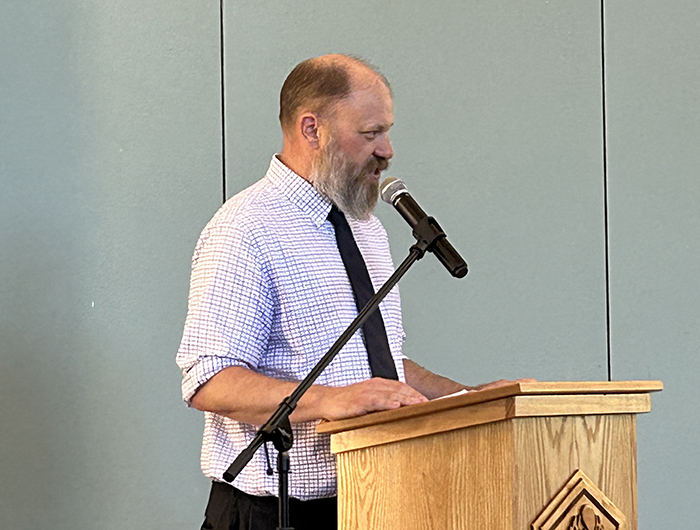
I’m writing to clarify recent Driftwood articles regarding recycling at School District 64 (SD64), the Burgoyne composting facility, and the CRD Regional Trail.

The CRD strongly incentivizes residential recycling. Recycling BC, the non-profit corporation responsible for residential recycling throughout the province, provides some funding for rural depots, but CRD funding comprises the lion’s share. My priority has been to ensure continuation of this funding, and the CRD Board has recently approved a five-year contract for the Rainbow Road depot with funding of over $400,000 annually, as they have done for years. 

Garbage disposal for all sectors is served by private haulers on a user-pay basis. Neither Recycling BC nor the CRD have any mandate from the province to fund recycling for commercial or taxpayer-supported institutional sectors. However, CRD does enforce bans on recyclables and other materials at the Hartland landfill, ranging from food waste to construction lumber, and also encourages recycling of these materials with its tipping fee structure.  

The CRD is addressing waste management at the regional scale in other ways, including by investing millions of dollars in the recapture of methane generated within the landfill, and selling renewable gas to Fortis BC. This is resulting in one of the single largest reductions in regional greenhouse gas emissions. In addition to material bans, the CRD is also investigating alternatives such as gasification in order to extend the life of the Hartland landfill and avoid the huge cost we would all bear of establishing a new landfill in the region. 

The CRD Board does recognize the gaps in our waste management system. In September 2025, CRD staff contacted all school districts in the region, including SD64, to invite discussion of ways to facilitate recycling. Staff will soon be bringing a report to the Environmental Services Committee, to present some of these options, and I look forward to future discussions with SD64. 

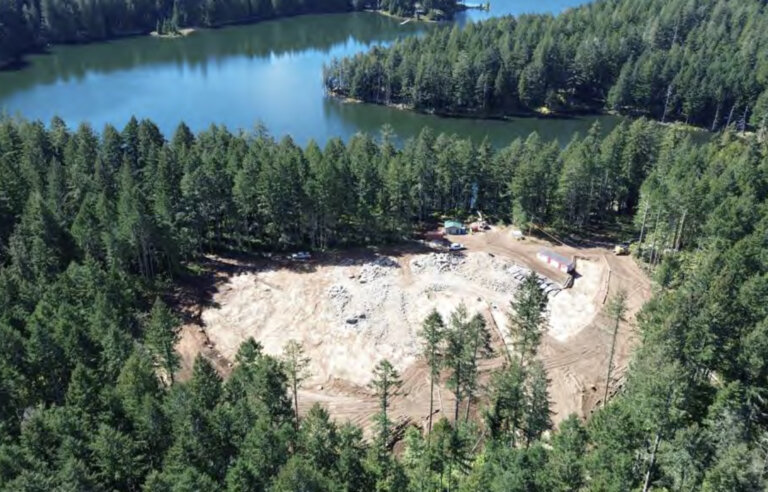
With respect to food and other organic waste, which is rightly banned from the Hartland landfill, the CRD has provided several hundred thousand dollars in funding to establish and take ownership of a commercial-scale composting facility at the Burgoyne Valley Community Farm, in collaboration with the Farmland Trust (land owner) and the Abattoir Society (compost operator). At its May 13 meeting, the CRD Board will approve an exemption, subject to a 30-day public consultation period, to its composting bylaw that is redundant to provincial regulations. This will enable the composter to receive a broader range of feedstock from offsite sources, including the school district. The Trust is also considering a Farmland Trust rezoning application, allowing for offsite sales, that will enhance viability and broader community benefits. 

These issues demonstrate that while I’ve raised concerns regarding equitable treatment of electoral areas, there are also important CRD services and partnerships from which Salt Spring benefits. The new regional transportation service is not one of those examples. But the good news is that for the first time, several million dollars in design and construction funding for the Salt Spring segment of the CRD Regional Trail is still retained in the CRD Parks capital plan. While trail design won’t be accelerated, CRD Parks will oversee design work in 2027 with no delays as a regional transportation plan is developed.
Library hosts adventurous Sueño Bay show 

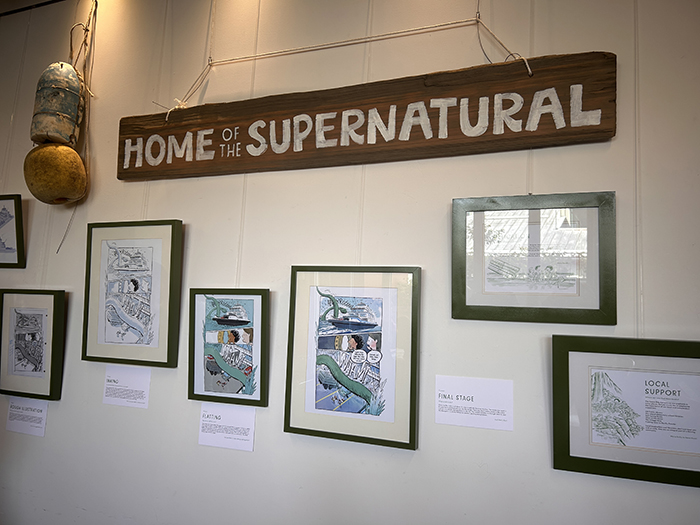
If you’ve ever wondered how a graphic novel is made, the answer is laid out in a fun and informative exhibition in the Salt Spring Public Library program room this month. 

Spend a Day in Sueño Bay opened Saturday, May 9, with friends and fans of Mike and Nancy Deas’ book series about the adventures of four unique island kids dropping by to check it out. Mike is the illustrator and Nancy the writer of six published books, with two more on the way. 

Mike grew up on Salt Spring, and Nancy on Mayne, and are now raising their family on Salt Spring.

The Sueño Bay Adventure Series follows friends Ollie, Kay, Jenna and Sleeves in their action-packed lives on a fictional island dubbed “Home of the Supernatural” for a reason: it’s famous for legendary “moon creatures” and mysterious crystals.

Nancy said Saturday that their original idea was to do four books, with each character being the lead in one of them. As the four kids have such diverse natures and personalities, the hope is that every reader will find one they can relate to. But as the books proved so popular, their publisher, Orca Book Publishers of Victoria, encouraged them to create more. 

The Sueño Bay Adventure Series books have been commended and nominated for numerous awards, and Candle Point, the fourth book, won first prize in the Sunshine Coast Writers and Editors Society awards for best children’s and youth book. The most recently published book — Howler Reef, the sixth — is a finalist for the Best Kids’ Book title in this year’s national Doug Wright Awards, which honours the best work in the comic genre. Mike is also a finalist in that competition as illustrator for Paisley & Peck: Jurassic Farm by J. Torres. Winners will be announced June 6. 

One wall of the library exhibition walks viewers through the book creation process with a description and illustration of each step, as well as a question for them to consider as if they were creating their own book.  

The eight books are summarized on another wall, and brief biographies and acknowledgements are in the far corner. 

The exhibit is as fun and creative as the books and their authors, and continues through May 30 during the library’s regular open hours, except when the program room is in use.

Release concert set for The Observer Effect

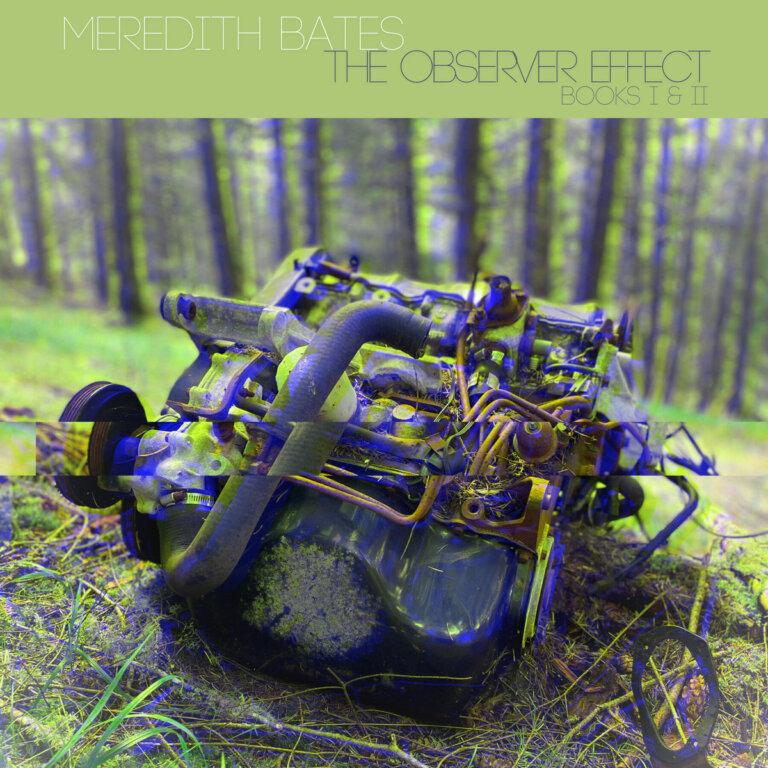
Award-winning musician Meredith Bates is promising an unforgettable night at All Saints After Dark on Thursday, May 21 when she unveils her new album The Observer Effect, along with special guests. 

Bates is an acclaimed Canadian violinist, violist and improvisor, and past member of Juno and Western Canadian Music Award-winning Pugs and Crows now living and making music on Salt Spring Island. 

Bates’ 2023 release Tesseract earned a Juno award nomination for Best Instrumental Music Album and received accolades such as Bandcamp’s Best Experimental Music. Bates says the new album builds on that foundation, unfolding over two expansive sections (or “books”) that total approximately 140 minutes of captivating music. 

The Observer Effect was released on March 13 on Phonometrograph and is available for streaming everywhere and purchase at meredithbates.bandcamp.com. 

“The Observer Effect invites listeners into an immersive experience, examining the interplay between observation and reality — a principle drawn from quantum mechanics and philosophy,” explains a press release. “Bates describes the album as an exploration of witnessing and being witnessed, an examination of emotional and political exchanges that shape our perceptions. Her compositions deftly probe themes of perception, illusion and metamorphosis, revealing the intricate dynamics that influence sound and identity.” 

This evening will also feature special guests Matt Robertson and Chris Gestrin, who will perform solo synth sets, elevating the concert with their distinct electronic artistry. 

Bates also thanked Of Sound Minds for event support, and WiL Shulba “for creating the magically immersive octophonic sound system.”

Since graduating with a film scoring degree from the prestigious Berklee College of Music in 1995, Vancouver native Gestrin has become an integral part of the Canadian music scene. As a versatile pianist and multi-keyboardist, composer, engineer and producer, he has worked on over 500 albums covering a wide range of musical styles. From experimental electronic improvisations to greasy soul organ music, introspective piano jazz to top-of-the-charts pop, rock and hip-hop, Bates said Gestrin is in high demand for his eclectic talents and ability to bring a high level of musical inspiration to any situation. 

Robertson is a three-times Grammy-nominated composer, producer and musical director. He’s worked with artists like FKA Twigs and Björk, and has released 11 solo albums blending ambient, techno and electronic styles. Bates said he combines synth-craft, classical composition and cinematic production. 

The May 21 event begins at All Saints by-the-Sea church at 7:30 p.m., with doors open at 7 p.m.

Tickets are available through Eventbrite

Bates’ work was also part of the recent innovative Digital Ecologies Spring Art Show at Mahon Hall. 

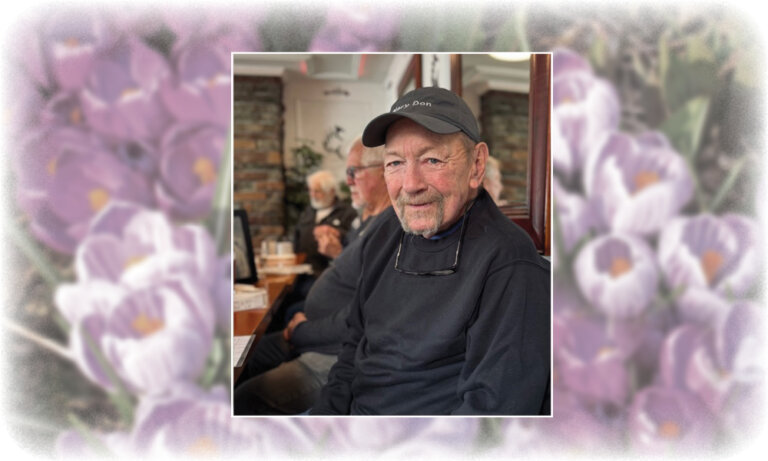
SMALL, Jay Donald

March 16, 1950 – May 2, 2026

Salt Spring has lost a long-time and deeply valued member of the community with the passing of our dear father, brother and great friend, Jay Donald Small.

Jay was an avid supporter of Legion Branch 92, where he served as President from 2013 to 2016. He could be found there the odd day, holding court with a wide circle of friends who gathered to share stories, news and plenty of laughs. Conversations ranged from local happenings and the weather to sports, crabbing, travel and work – always opinions, always good camaraderie.

After moving to Salt Spring in the early 1980s, Jay did a bit of everything: log salvage, construction, deckhand work and fishing charters with the Something Fishy. He ran scooter, car and boat rentals, a gutter business, did handyman work, owned a car wash and spent many hours on a ride-on mower. When he wasn’t on land, he was out on the water aboard the Mary Don, heading out weekly for crabbing or fishing with his crew.

Jay was well known, appreciated and respected throughout the community. He was someone people counted on, who showed up and was always there when needed. He will be truly missed and always close in our hearts.

A gathering to celebrate Jay’s life will take place at the Royal Canadian Legion Branch 92 on Saturday, May 23 at 2:00 p.m.

Eclectic Visions returns to Gallery 8

SUBMITTED BY SS PHOTOGRAPHY CLUB

Everyone is invited to join the Salt Spring Photography Club at Gallery 8 on Friday, May 15 from 5 to 7 p.m. for the opening reception of our annual Eclectic Visions photography show.

It’s an opportunity to celebrate local photographers’ work with a night of refreshments, appetizers (generously provided by Thrifty Foods and Country Grocer) and, of course, art!

Eclectic Visions runs during Gallery 8 hours (10 a.m. to 5 p.m. Mondays through Saturdays and from 11 a.m. to 4 p.m. on Sundays) from May 15 at 10 a.m. to May 28 at 3 p.m.

Eclectic Visions showcases the diversity of club members’ photographic talent. It is a perfect reflection of its membership, which includes everyone from professional photographers to enthusiastic beginners. All of the artwork is available for purchase, and there will always be a photography club member present to answer your questions. Come down to see some incredible photos, ask the photographers about their work, and vote on your favourite image for the People’s Choice Award.

The group is thrilled to welcome another student photographer in this year’s show. Eighth grader Judah Lyons won “Best Junior/Youth Photo” at last year’s Salt Spring Fall Fair. Presented by the Salt Spring Photography Club, this prize comes with exhibition space in Eclectic Visions. Lyons has a passion for photographing animals and action sports. Make sure to check out his work at the show while you’re there.

Founded in 2009, the Salt Spring Photography Club is a group of people sharing ideas and technical knowledge about photography. They meet every month for an informational talk or video followed by a themed slide show and feedback session for members’ images. The club has members ranging from beginners to retired professionals who are united by a common love of photography.

This will be the ninth year that the owner of Gallery 8, Razali May, has hosted the club for an exhibition. His artistic eye for colour, balance and theme always produces a pleasing and professional show.

“It is my great pleasure to host this annual exhibition that celebrates the unique vision of each photographic artist,” said May. “The Salt Spring Photography Club has accurately named its show Eclectic Visions because it covers a wide-ranging collection of photographic subjects that often have little in common other than being great photographs in themselves. It is a chance for our community to enjoy fine photography from local artists.”

Gallery 8 is located in Grace Point Square.

Lam, Erdmer elected to NSSWD board

0

A new trustee joined a successfully re-elected incumbent on the board of Salt Spring’s largest water district on Wednesday evening — and that may not have been the biggest news of the night. 

The handful of ratepayers that attended the North Salt Spring Waterworks District (NSSWD) annual general meeting May 6 were the first members of the public to learn the results of the board election, which brought incumbent trustee Steve Lam and newcomer Philippe Erdmer a victory with 293 and 267 votes, respectively. Jon Scott received 150 votes from among 387 ratepayers who cast a ballot, according to district financial officer Tammy Lannan.

But the evening’s news also included a somewhat coy announcement that, to a still-unspecified extent and thanks to the federal government, all 3,125 eligible district voters will see some relief from the cost to finance and build a new water treatment plant already underway.

NSSWD had applied for federal funding in December 2024, under a since-cancelled program called the Canada Housing and Infrastructure Fund (CHIF), now “rebranded” as the Build Communities Strong Fund. The original application had asked for $6.7 million to support both the new Maxwell Lake water treatment plant and an upgrade to the Crofton pump station.

And while details remained under wraps Wednesday pending an announcement from the federal government, NSSWD board chair Brian Pyper said in a prepared statement Pyper the program was a “significant opportunity” and promised additional information soon.

“[NSSWD] is pleased to share that our funding application to support the cost of the Maxwell Lake water treatment plant and Crofton pump station is currently in progress,” said a visibly delighted Pyper. “On behalf of the board and ratepayers, I would like to thank the Government of Canada, and district staff look forward to providing additional information in the coming weeks regarding this pending agreement.”

Construction of the new plant at Maxwell Lake was mandated by Island Health as part of efforts to remove more of the organic matter that reacts with chlorine treatment to create trihalomethanes (THMs), such as chloroform and bromodichloromethane. 

Health Canada has said the health risks of THMs are far lower than those from consuming water that has not been disinfected, but is nonetheless directing utilities — including NSSWD — to make every effort to keep THMs at the lowest levels possible, so long as they do so without compromising the effectiveness of disinfection.

The Crofton pump station upgrade project is meant to ultimately join the northern and southern “halves” of the NSSWD system into one, combining similarly treated water from Maxwell Lake and St. Mary Lake into a single more resilient source, according to the district. That, alongside the provincially funded $10-million project to raise the weir on St. Mary Lake at Duck Creek, is widely expected to eventually give the district more flexibility on capacity — and could result in freeing up additional new water connections. The district partially lifted what had been a decade-long moratorium on new taps just over a year ago, allowing the equivalent of 300 new connections — up to a maximum annual demand of 50,000 cubic metres — but only for properties on the Maxwell Lake side of the system. To date, according to Pyper, about 22 per cent of the available water supply from that policy change has been allocated.

Operations manager Ryan Moray said Wednesday that the trees had been cleared at the future plant’s location and ground preparation for the building’s foundation had already begun. Pyper added that the sale of timber from the site would bring about $70,000 to the district.

Pyper also said staff had made considerable planning progress on the weir-raising project, and that the NSSWD board would be reviewing the upgrade this summer before a required submission to the Government of B.C.

“The province will then take at least a year to review the application and receive feedback from lakeshore property owners and licence holders,” said Pyper. “Staff have provided several updates to property owners and water-right holders, and another update will come before the provincial submission is made.”

Pyper also thanked outgoing trustee Elizabeth FitzZaland for her three years of service. 

New and returning trustees will enjoy a modest bump in remuneration for the service on the board, thanks to a successful motion from the floor that added another $25 per month; regular board members will now receive $425, with the chair receiving $475. 

Regional trail decision delayed to 2027

0

A $300,000 slice of the regional budget already allocated to start a “missing link” pathway is now likely to sit idle well past next year, a consequence of uncertainty among officials as to whether the proposed Salt Spring Island Regional Trail (SSIRT) should be considered recreational or transportation-focused.

That distinction matters, at least to the Capital Regional District (CRD) Board, who have presided over considerable administrative friction on a long-imagined 21-kilometre bicycle and pedestrian route that would run from Fulford Harbour to Ganges, then on to Vesuvius — closing the last gap in a 186-kilometre regional network that connects trails in Victoria and the Cowichan Valley. 

The CRD Board had allocated that funding for design work for SSIRT, and the CRD’s Parks Committee — after an exhaustive multi-agency feasibility study concluded SSIRT represented a “significant opportunity” to enhance active transportation across Salt Spring — unanimously recommended the CRD Board refer “planning, implementation and operation” of all Gulf Islands regional trails to the nascent Transportation Committee.

The board did just that, but in January that committee referred the issue back to the board, largely over concerns SSIRT might be more recreational than transportation-oriented — and therefore less suited to be managed alongside $53.5-million plans for widening and lighting on the Galloping Goose and Lochside trails. 

Notwithstanding the 47-page SSIRT feasibility study report, the board agreed not to determine a designation without more information, and tasked CRD staff to return with their own report — on the “implications” of designating all Gulf Islands Regional Trails as regional trails under the transportation service.

Gulf Islands representatives seemed at their wits’ end over the process.

“At this point in time, regional trails in the Gulf Islands are still under the auspices of regional parks, [while] regional trails in the Greater Victoria Area are under the transportation service,” said Salt Spring CRD director Gary Holman at the CRD Board’s Committee of the Whole meeting Wednesday, April 29. 

“So when we talk about a regional plan, and a regional service, and a regional commission — do staff believe that we can resolve what are silos at this point, in terms of regional trail management within the CRD?”

Salt Spring property owners are expected to contribute some $175,000 this year to support the CRD’s Regional Transportation Service, roughly $26 per average residential property. If managed by that service, Holman has said, SSIRT would be the first local manifestation of a tangible benefit for Salt Spring; Holman, along with the island’s Local Community Commission (LCC), had opposed being part of the new service at all, given Salt Spring’s extant self-funded transit service. 

CRD general manager Kevin Lorette reiterated staff were performing the work asked of them by directors, and expected that report on implications — covering issues such as land authority and construction standards — will be part of the update to the Regional Transportation Plan, being brought to the board in September 2027. At that point, the board presumably will consider again how it wants to designate Gulf Islands regional trails. 

Southern Gulf Islands alternate director Robert Fawcett said he had concerns about the pace of the process, and given the only complete section thus far is a two-kilometre stretch on Mayne Island, finishing the rest could take years.  

“Currently, the residents on the Southern Gulf Islands don’t have any access to convenient, green, affordable multi-modal transportation at all — so I’m really glad that we’re looking at equity when we’re doing this,” said Fawcett.  “If we look at how much we’ve built so far through the Regional Trails Plan, to get to all of the Gulf Islands and all of the sections, we’re looking at many, many decades.” 

CRD regional planning and transportation senior manager Patrick Klassen clarified that a June transportation workshop will focus predominantly on “umbrella objectives” — broader vision and goals for the transportation service — with limited opportunities to discuss actions like how to define regional trails or how to build them out.

“There’s quite a bit of time that lies ahead to develop the plan itself,” said Klassen. “We are still in that earlier stage of developing the higher-level framework.”

Editorial: CRD funds need to go two ways

A Capital Regional District (CRD) report has confirmed that CRD electoral area residents pay more taxes to fund some regional services than they get back. 

Titled Regional Equity Investments (REI), the report arose from a request by Salt Spring electoral area director Gary Holman through the CRD Hospitals and Housing Committee. The resulting analysis found the three electoral areas provided 7.5 per cent of the requisition total and received two per cent in capital hospital funds and 1.5 per cent in housing over a 15-year period.  

Now what’s needed is a similar study undertaken for the rest of the CRD’s regional service spending.

We might feel differently if the CRD Board had not rebuffed a formal request for Salt Spring to be excluded from a new region-wide transportation service last fall. Salt Spring residents already pay for their own transportation and transit service, Holman and Local Community Commissioner Brian Webster told the board, and are unlikely to benefit from contributing to another one. The cost is $26 per average-assessed household this year, but is expected to rise to $100 per year. Then-board-chair Colin Plant said if we wanted a Fulford Harbour to Vesuvius regional trail, this service would be the way to go, adding it would be “untenable” for Salt Spring to not participate. But guess what happened when the Salt Spring Island Regional Trail concept hit the CRD Transportation Committee agenda? Members suggested that already earmarked design funds for the same trail Plant cited might more appropriately come from the regional parks budget. This is after the proposal was originally punted from the CRD Regional Parks Committee to the Transportation Committee late last year. A report on the matter has been commissioned and is due in September of 2027. . . unbelievable!

We understand the tendency is to spend funds to benefit the largest number of people. Building an urban apartment building or spending money on upgrading the wildly popular Galloping Goose Trail makes more sense than providing significant funds to a 20-unit housing complex on, say, Pender Island, or an off-road trail on Salt Spring.

But it does beg the question of what we are paying for, exactly, and why, when moving off the islands may be the only clear way to benefit.

GISS principal announces return to teaching role

0

The top administrator for the Gulf Islands’ largest school says he’s decided to step down from leadership — and is stepping back into the classroom.

Gulf Islands Secondary School (GISS) principal Ryan Massey has officially requested the move and, according to Gulf Islands School District (SD64) superintendent Jill Jensen, will engage in a full-time teaching position effective this September.

In an email to the school community Thursday, April 30, Massey said the decision came with much reflection upon, and gratitude, for his 18 years of educational leadership — the last six of which have been at the high school on Salt Spring Island.

“I am proud of the work we have been part of at GISS,” wrote Massey. “It is an amazing school, grounded in the values of learning, community and creativity, and I am thankful to have contributed to its growth alongside students, staff and families.”

Massey said that as he looked to the “latter part” of his educational career, he felt a strong pull to the classroom, noting the “extraordinary” level of dedication the principal role demands on one’s capacity. The change, he said, will allow him more space for his own “growth, connections and experiences as an educator,” while continuing to serve students in a purposeful, sustainable way.

“I am excited about this next phase of my career, and the chance to focus more directly on teaching and learning,” wrote Massey. “I trust the district process will find an excellent next principal, and they will have my full support through the transition into next year.”

Jensen said she joined the SD64 community in extending thanks to Massey for his years of service.

“During his time with the district, Mr. Massey has built strong relationships and shown a deep commitment to supporting students, staff and families,” said Jensen. “His steady leadership, care and dedication have made a meaningful difference in the school community, and his contributions are greatly valued.”

Jensen said she looked forward to continuing to work alongside Massey as he steps into his new role and wished him “every success in this next chapter of his professional journey.”

The GISS principal position has been posted, according to district staff, and the review of applications the district receives will begin May 15. The new principal is expected to start in August.

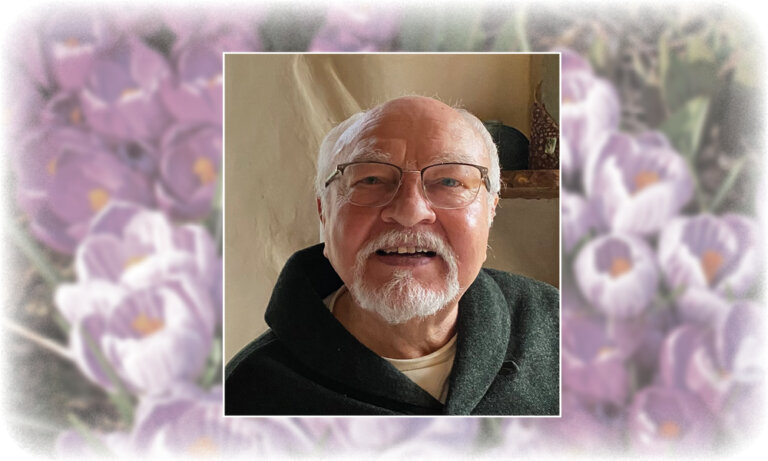
HILDEBRANDT, Edgar

April 14, 1942 – April 6, 2026

We want to celebrate the life of our dear Edgar. He was born in the Ukraine and spent half his childhood in Germany before emigrating to Canada with his family. They settled in Vancouver until he left on his worldwide travels.

After many adventures he met the love of his life in New Zealand, married and had three children. In 1980 he moved back to Vancouver with his family and ended up spending the last decade of his life on Salt Spring Island. He embraced life and everyone he met, but his greatest joy was living close to his three children and being Opa to his six grandchildren.

Forever remembered by his wife, Gloria, children, Adina, Adam and Gretta, and grandchildren, Cypress, Aidan, Chloe, Ezra, Summer and Nicholas.

We would like to thank Dr. Kalf and everyone at Lady Minto Hospital for their compassion and kindness to us all in his final days.

May he be remembered for his laughter, dad jokes and endless stories.