
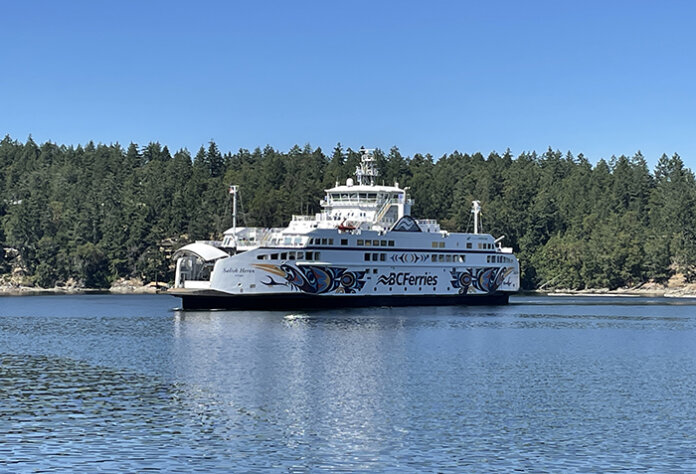
As the recently refitted Salish Heron returned to Tsawwassen–Southern Gulf Islands service at the beginning of the month, BC Ferries warned passengers the vessel’s potable water source would not be available for drinking or food preparation.
The announcement came Thursday, April 2 from the ferry company, the latest in a run of poor water conditions reported on vessels — including elevated lead briefly found in the drinking water aboard the Salish Raven and discolouration seen in potable water aboard the Queen of Cumberland. Ferry service will continue as scheduled, BC Ferries said.
“Bottled water will be available on board,” according to a statement, “and full food service will be offered with adjustments in place to ensure food is prepared safely.”
The move came after routine water quality testing identified elevated Total Plate Count (TPC) levels in an initial sample, according to BC Ferries, which noted that while Health Canada’s Guidelines for Canadian Drinking Water Quality do not prescribe a limit for TPC, BC Ferries follows “industry best practices” to keep levels low and takes precautionary action when results are flagged.
“Our approach goes beyond regulatory requirements and reflects our commitment to maintaining high water quality standards,” according to a statement. “We have restricted use of onboard potable water systems while follow-up testing and maintenance are underway.”
Ferry officials said the Salish Heron’s potable water systems will only be returned to normal use once results are confirmed safe, and insisted that despite poor water being found on several ferries, the problems weren’t indicative of a single fleet-wide issue.
“While this is more than we would typically expect to see in a short period, these cases have involved different types of test results and are not believed to be related,” according to BC Ferries. “In all of the other recent cases, follow-up testing confirmed water quality was safe, and there is no indication of a broader system issue at this time.”
Elsewhere in the fleet last month, drinking water tested aboard the Salish Orca and Queen of Alberni indicated the presence of E. coli bacteria on March 19, prompting water shutoffs. Subsequent testing came back negative for bacteria, and water service on those vessels was reinstated on March 24.