
SUBMITTED ARTICLE
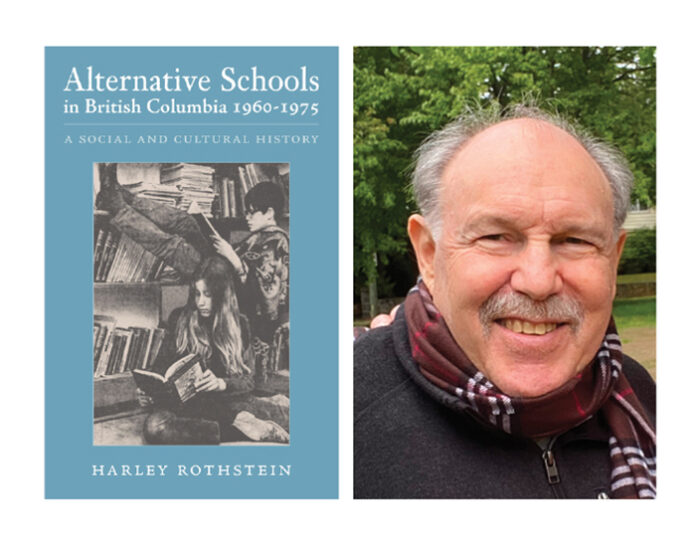
A bold experiment in alternative education on Saturna Island in the late 1960s and early ’70s is one of 10 that have been put under the microscope in a new book by Vancouver historian and retired educator Harley Rothstein.
Titled Alternative Schools in British Columbia 1960–1975: A Social and Cultural History (FriesenPress, 2024), Rothstein’s book tells the inside story of 10 ambitious B.C. schools that represented a broader countercultural movement against conventional education. Among these was the Saturna Island Free School, billed by its founder Tom Durrie as “the most radical free school in North America.”
Established in 1968 by Durrie and a few fellow teachers in a run-down 1890s farmhouse on 28 acres of rolling meadow and forest, the Free School housed up to two dozen students aged five to 17 at a time until its closure in 1971.
School staff were young, “chosen for their belief in human nature as a positive force,” and mostly worked unpaid; education was seen as a 24-hour informal project. There were few rules and no obligatory lessons, regular hours, or grading, but abundant opportunities to play, explore, discuss, question and create.
The Saturna Island Free School’s unusual approach generated intense interest from media, educators, politicians, authorities and the arts community. Durrie became a sought-after speaker on the alternative-education conference circuit, and a steady stream of visitors came to stay and observe his school in action. But while Durrie welcomed most visitors, he strongly discouraged requests from students of education.
“When people talk about methods and techniques I am at a loss to know how to answer because we simply do not think in those terms,” he wrote to one. “Since we don’t have classes here there would be little opportunity to observe teaching in progress.”
For some students, the Free School was a positive formative experience that developed their social skills, creativity and sense of agency. For others, it was an academic setback at best. Drawing on dozens of interviews with the school’s former students and teachers, Rothstein offers a frank and comprehensive account of what really happened at the Saturna Island Free School — and how its ideals ultimately collided with financial realities, ill-equipped staff, prejudice and well-founded concerns about student safety and academic effectiveness.
“My interviews with Saturna Island Free School students and teachers yielded many surprising stories,” said Rothstein, who also sourced more than 70 photos of B.C.’s alternative schools.
The book is available in digital and hard copy formats from books.friesenpress.com.
For more information about Rothstein, visit harleyrothstein.ca.