
Home Blog Page 40

Clothing swaps counter throwaway culture

Part of a youth edition of Transition Salt Spring’s Lighter Living series

BY Melody Silva

For Transition Salt Spring

Imagine a world where your back-to-school clothes shopping costs zero dollars. A world where you don’t have to waste your hard-earned summer job money on the latest fashion trends. 

It sounds idealistic and impossible; every parent and teen’s dream come true, but that could not be further from the truth. Enter clothing swaps: an economical practice that is taking the island by storm. 

You might be asking yourself — what exactly is a clothing swap? It’s actually quite straightforward. The first step is finding a group of friends, family, colleagues or anyone who wants to freshen up their closet. It works best with people who have similar size and taste in clothing. The next step is to go through your clothes and decide which ones to part with; get rid of anything that doesn’t “spark joy” in your life. Set a date and turn it into a fun get-together! This is not only a chance to get free clothes but catch up with friends and eat good food.

I recently went to a clothing swap organized by a friend and I have only good things to say about it! It is a great, low-effort way to take climate action, refresh your wardrobe and hang out with friends. When I arrived, the house smelled of fresh focaccia and cookies, and music was playing in the background. We dumped the clothes on the floor and set about digging through the pile, looking for hidden gems, and laughing when we came across the occasional out-of-date piece. With many of my friends moving away to university in a few weeks, they turned the tedious task of clearing out their closets into a super fun, eco-friendly gathering. 

As a teen growing up in a time when we are starting to feel the effects of climate change firsthand — think wildfires, droughts, heat waves and atmospheric rivers — it is easy to feel helpless. Climate anxiety is becoming increasingly common among teens. We are a unique demographic simply because of the fact that we have contributed to the climate crisis the least, but we will bear the brunt of its impact. 

The Journal of Climate Change and Health conducted a study on the impacts of the climate crisis on the overall wellbeing of 1,000 youth (people aged 16 to 25) and the results speak for themselves. Around 56 per cent of youth expressed “feeling afraid, sad, anxious and powerless” while 78 per cent reported that climate change negatively impacts their mental health.

To throw some more stats at you, the fashion industry causes at least eight to 10 per cent of global carbon emissions per year and that number is expected to keep rising. That is, unless we take action. This is where small lifestyle changes like only buying second hand come into play. Clothing swaps are not only a fun and economical thing to do, but an act of resistance against a world that urges us to constantly consume and discard. It also helps people to manage their climate anxiety because it is a way to control our personal environmental impact. 

Clothing swaps have had striking success on a higher scale as well, with Transition Salt Spring (TSS) – a local environmental non-profit — hosting them at least once a year. In 2024 alone, TSS served over 1,300 free shoppers at clothing swaps after a whopping 2,819 pounds of clothing was donated for the event. Another pro of the TSS community clothing swaps is that everyone can shop for free, even if they do not donate. Clothing swaps have also been adopted by the local high school Earth Club who organize at least two per year.  

I encourage everyone reading to try a clothing swap for themselves – whether that is taking part in a community swap with Transition Salt Spring, or organizing your own!  The next community clothing swap offered by TSS is scheduled for October.  Friday the 24th will be for clothing donations and Saturday October 25th will be a free shopping day, Everyone is Welcome!  Hope to see you there at Meadon Hall!

Sign up for more free access to Lighter Living content at tinyurl.com/Lighter-Living.

Banff fest screenings back at ArtSpring

By Megan Warren for ArtSpring

After selling out two years in a row, the Banff Centre Mountain Film Festival is returning to ArtSpring for its 2024/25 World Tour. This year, ArtSpring is doubling the adventure with two separate screening dates, each featuring a completely different roster of seven life-affirming films set against wild landscapes so alive as to be characters themselves.

On Friday, Oct. 10 at 7 p.m., the Quartzite program will take the screen. 

This truly international suite of films starts and ends in Switzerland, but takes viewers to Jamaica, Antarctica, Zimbabwe, Sweden and the Peruvian Andes along the way. Its thematic range is just as wide, from Sliding’s exhilarating day in the life of a skeleton slider in the Alps to The Last Observers’ familial and loving glimpse into the lives of Sweden’s last manual weather observers. 

On Saturday, Oct. 11 at 2 p.m., the Basalt program will be screened as a matinee. Among Basalt’s titles are two award-winners which explore very different ways of immersing oneself in the natural world. 

A former window salesman delves into the lives of hummingbirds in the wilds of his urban backyard in The Bird in My Backyard, while in Wild Days, four friends test their endurance, resourcefulness, and friendship during 50 days of self-sufficient adventure in the Denali massif. 

Though most films within each program are wildly different from each other, many of them share a profoundly human through-line. The films invite viewers to witness the evolution of their subjects’ relationships–with themselves, their families, their communities, and the wild landscapes that challenge and guide them. With remarkable characters, stunning wilderness settings, daredevil adventurers, and, of course, hummingbirds, this year’s lineup truly has it all.

Born in 1976, the Banff Centre Mountain Film and Book Festival takes place each fall in beautiful Banff, AB, before hitting the road for a year-long world tour. With stops in 45 countries across seven continents, it holds the title of the world’s largest adventure film tour. 

Whether this will be your first or your 49th year in the audience, prepare to be transported and inspired. And if you find yourself heading straight to the mountains after the credits roll, consider the festival’s mission accomplished–and be sure to bring a camera.

Quartzite’s first offering is a 2024 Canadian short film called Anytime, set in the Lenzerheide Bike Park. 

“Leave your preconceptions behind,” reads the program, “as these women prove they’re not just riding — they’re reigning.”

For full schedules visit artspring.ca.

Viewpoint: Trust seeks to urbanize

0

The following was sent to Islands Trust Council and the Driftwood for publication. 

By Erik Andersen 

In keeping with your invitation to comment, I offer the following.

Statistics Canada conveniently has the nation’s population divided into two categories. First is “urban” and second is “rural”. Statistics Canada produced a chart of these two categories titled Census of Population, 1851 to 2021. Over about 170 years the “rural” population that started at around 3 million, progressed to the less than an impressive of 7 million today. In total contrast, the urban population, almost non existent in 1851, now is about about 33  million, out of a total 40 million.

I think it is safe to say that along the way, around the 1940s, urbanites captured control of the parliament of Canada and have had a choke hold ever since.

That overwhelming dominance of Canada’s economy by urbanites need not be an issue, but was and is. From the Fraser Institute we fortunately have a record  of the Federal Government Net Debt, 1867 – 2015 in Billions of Dollars. The Fraser Institute chart shows the Canadian debt history  remained very reasonable until about 1975 when its vector  changed, from about $20 billion, going almost vertical to $692 billion by 2015.

 A correlation calculation could be done but I think it is not needed, since it is clear that the dominant urban population were making the running in Canada’s economic life from which we got far too much debt. This out of balance economy  is also demonstrated by the history of the division of Canada’s GDP, separated into two categories, “Goods” and “Services.” According to an Ottawa source at Finance, the ratio in the 1960s was about 60 per cent of total GDP came from “Goods” and 40 per cent from “Services.” Over the intervening 65 years Canada and BC have made a transition to about 20 per cent from “Goods” and 80 per cent from “Services”. The recent decisions by BC Ferries to buy new ferries from China and Eastern Europe is a current example of the economic model of getting what you need or want by sending out a lot of borrowed money and employment as well.

The dominant population category has taken Canada to an “order in everything we need or want” from the rest of the world economy model. This economic model has and is producing Government budget deficits (to be funded by borrowing) and the practice of “regressive” taxation, that is when citizens are required to pay taxes that do not relate to affordability. This practice has been brought into focus by a Fraser Institute Study, released July 22, 2025, having the opening headline, “Average Canadian families spent 42.3 per cent of income on taxes – more than on housing, food and clothing combined.” It is also behind the rising rates of substance addiction, deaths of despair and homelessness.

It is clear to me that the Trust is attempting to “urbanize” the “rural” islands in the Gulf of Georgia and it is my opinion that such a transformation would import very bad money habits, demonstrated by the urbanites, where our economy is turned into a new playground for the scammers and free-riders that now populate Canada’s urban centres. Hands off. “Preserve” and “Protect.”

The writer is a retired economist living on Gabriola Island.

Editorial: Getting together

0

In advance of the Fulford-Ganges Road improvement project, officials told us they’d counted more than 4,000 vehicles passing by the Driftwood office on busy days, and at the time we felt that number had to be a little on the high side. 

What a difference a year can make. After watching cars back up on either side of single-lane alternating traffic, we can all probably agree if anything that feels a little low.

Similarly, when we learned that the Islands Trust’s chief administrative officer counted 189 meetings for that organization last year — between various committees, Trust Council and the Islands Trust Conservancy — our first inclination was again of disbelief. But considering the amount of work laid before trustees and staff at those meetings, once again it feels like maybe that number isn’t high enough.

To be clear, this is not to suggest there should necessarily be more meetings; rather that perhaps in determining the scope of the Islands Trust’s work, we might all be better served by titrating it to a meeting schedule that’s workable for the kind of citizen governance we value.

A quick count of Capital Regional District meetings from their published calendar puts that body’s number — again, including committees and commissions — at around 300 per year. Obviously there are matters of scale at play, some meetings are longer than others and there are spectacular differences between how — and why — the two organizations operate. But apples and oranges are still both fruit; one might reasonably note that the Islands Trust executes a fraction of the CRD’s governance responsibilities, and in a public meeting tempo far closer to that of the larger body than one might expect.

We repeatedly hear from trustees post-election that the workload is higher than expected — making it even less likely for islanders holding down jobs to stand for these important positions. And staff are clearly working long hours right alongside them.

There surely is a solution more elegant than “do less.” But we worry about the impact on islanders if we choose, essentially, “meet more.”

Staff depart at twice provincial average: CAO

0

A public glimpse into Islands Trust operations offered by its chief administrative officer (CAO) painted a picture of an organization whose reach in many ways may be exceeding its grasp. 

And that situation is neither unique nor a surprise, according to Islands Trust CAO Rueben Bronee, who delivered a detailed verbal report to Trust Council at its quarterly meeting Tuesday, Sept. 16. Bronee said that since starting the job last year he’d heard a repeated message from both elected officials and staff that the Islands Trust was “overextended in its capacity to deliver on some of the work that is before it.”

“And as I dug into this a little bit more over the last couple of months,” said Bronee, “so far I unfortunately haven’t found anything to disabuse me of the notion.”

That capacity is seemingly strained despite a robust and growing number of staff employed by the Islands Trust; Bronee noted that although staff and benefits costs have remained relatively consistent as a share of the year-over-year budget, staff in 2024 were tasked to support a total of 189 meetings — or about one meeting every 1.25 business days — of Trust Council, various committees, the Islands Trust Conservancy and Local Trust Committees, 

“Over the past five years it’s averaged about 175,” said Bronee. “And again, this is important work, this is what you do and how we govern and fulfill the mandate of the Islands Trust.”

But, he added, that translated to 4,342 hours spent by administrative staff preparing for those meetings — things like logistics and agenda packages, Bronee said — and didn’t include time spent writing and researching material or the hours actually spent in those meetings.

“Those 189 meetings, if you’re interested, work out to about 640 hours of meetings,” said Bronee. “And almost always you’ll have multiple staff [attending].”

That’s close to 12,000 hours a year supporting meetings, he said — the equivalent of seven full-time positions spread across the Islands Trust’s 65 staff members.

And unfortunately, those staff members are also choosing to leave the organization at a higher rate than employees do elsewhere, even in the private sector. Bronee reported that out of 65 staff, there were 15 voluntary departures last year — including seven who left for jobs elsewhere in the provincial public service sector and three retirements — or an exit rate of about 23 per cent.

That’s against a backdrop of an average exit rate among all employers in Canada of 12 per cent, he said — and of just 8.5 per cent within B.C.’s public service sector. 

Perhaps paradoxically, Bronee said staff surveys indicated a higher percentage were satisfied with the Islands Trust as an employer than in comparable organizations, according to data gleaned from the provincial government, and Bronee said staff were “particularly passionate” about the organization’s mandate and the value of its work.

“And yet we nonetheless see that high turnover rate,” said Bronee. 

The resulting organizational instability of such a high departure rate is likely made worse — if perhaps with the best of intentions — by the Islands Trust’s tendency to fill empty positions by reorganizing current staff, usually in ways that advance their careers. Last year there were 87 total “staff movements,” he said, more than the total number of staff because each vacancy filled would usually precipitate another. 

“In my almost 30 years of public service, I have yet to find an organization where there isn’t more work than there is available time, money and staff to complete that work,” said Bronee. “I’d love to tell you that we have a plan, [but] we’re not there yet.”

Bronee said an “employee group” had been meeting in an effort to provide ideas to improve the experience of working for the Islands Trust, and that senior staff were working to identify areas for efficiency. Even so, he said, the underlying capacity problem could only realistically be solved two ways: either by adding capacity, or by doing less — stopping or delaying work, or refocusing on a narrower set of priorities.

“The most effective path is often a combination of both of these things,” said Bronee. “As I said, it’s 12,000 hours a year, but it’s also important, essential work; we just need to make sure it’s well spent.”

Salt Spring office to open in October

Trust Council also learned some 11th-hour grant funding may help the nearly-complete remodel of a Ganges retail space for the Islands Trust’s new Salt Spring Island office, according to staff, who said the space could open to the public as soon as this month.

The Islands Trust’s Accessibility Committee (AC) held a special meeting in September on a staff proposal seizing an opportunity for potential provincial Local Community Accessibility Grant program funding — which can provide a one-time grant of up to $25,000 to help local and regional governments remove barriers for people with disabilities. 

The relatively-new committee signed off for a letter of support for the grant, which legislative and information services director David Marlor said would be turned around and submitted quickly.

“We expect [the remodel] to be completed by October,” Marlor told AC members. 

Eelgrass map plans shelved, satellite data incoming

0

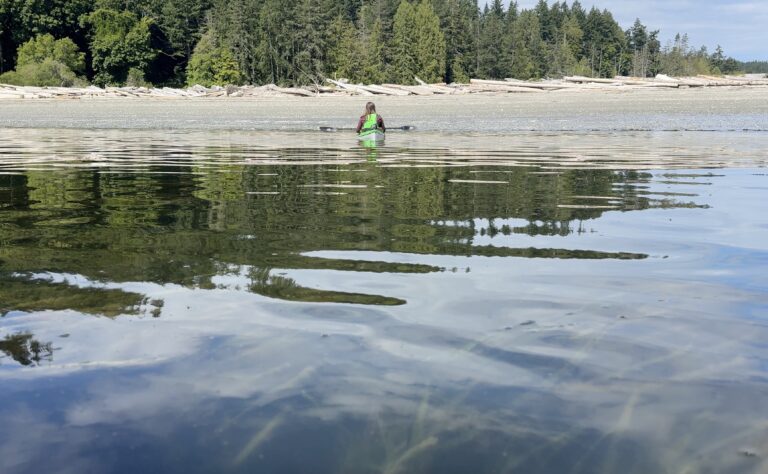
The Islands Trust’s on-again, off-again funding relationship with mapping the underwater beds of eelgrass within its boundaries is back off — this time because senior governments are already doing the work.

In fact, according to staff, there are several groups mapping eelgrass and kelp forests in the Gulf Islands, including numerous local NGOs conducting both mapping and restoration of the ecologically sensitive habitats — using extant Islands Trust mapping as a baseline, trustees heard at the Regional Planning Committee meeting Monday, Sept. 8. There has also been “relevant but limited” mapping work done recently through Malahat First Nation, Snuneymuxw First Nation and Tsawout First Nation efforts.

But most significantly, according to planning services director Stefan Cermak, there are at least two large eelgrass mapping projects being planned at the federal level — one to quantify so-called “blue carbon” in the area, and the other developing what a staff report called an “Eelgrass Explorer” system, designed to monitor healthy ecosystems to inform fisheries-related regulatory decisions.

Cermak said he’d had an “extended conversation” with Fort St. John eco-consultancy firm Hatfield Consultants, which had recently been awarded an $800,000 federal grant to map eelgrass beds in B.C.

“They’re going to make data publicly available in May of 2027, and that’s going to be eelgrass mapping at a 10-metre resolution,” said Cermak. “They’re using one satellite to do that, and a different satellite to map at a three-metre resolution, but that’s commercial data.”

The current proposed draft of the Islands Trust Policy Statement includes directive policies surrounding marine shorelands that would instruct Local Trust Committees to, in enacting bylaws, prohibit moorage of vessels in sensitive marine areas — specifically including eelgrass and kelp forests. 

ICS turns 50, hears concerns at AGM

0

Using a little less than an hour, the board of what is perhaps Salt Spring Island’s most visible non-profit navigated a potentially turbulent annual general meeting (AGM), with directors and staff by the end delivering operational and financial reports — and a little history — to a space-limited but engaged public audience.

Island Community Services (ICS) — which still receives correspondence under its old name, the Salt Spring and Southern Gulf Islands Community Services Society — turned 50 this year, according to executive director Rob Grant; Grant presented a report Thursday, Sept 25, highlighting some of the charitable organization’s historical high points and hopes for the next half-century.

A recap of ICS’ fiscal picture followed, showing what finance committee chair Darryl Martin called a “return to stability after the tumultuous Covid years” — with last fiscal year’s operational budget closing out with a modest surplus against a two per cent decrease in revenues. Martin said donors were increasingly giving stocks and other securities, as well as committing to ongoing periodic donations; just five per cent of SSICS’ revenue came from donations, he added, with the lion’s share coming from governments and government-related sources through service agreements. 

The largest funder was — as it had been for the last five years — BC Housing, which he said made up 21 per cent of the total budget. 

“The trend continues of the largest portion of ICS’ budget going towards the basic needs program areas,” said Martin. “Food, shelter and housing made up 46 per cent of expenses.”

Martin said that SSICS owns half of the 14 properties it operates, assets valued at about $20 million, and between BC Housing operating agreements, forgivable loans and operating revenue from some properties, the nonprofit reduced its mortgage debt last year.

“We enter the 2025/26 year with some caution due to continued inflation, projected provincial government deficit, provincial labor and union wage demands and a general economic unease,” said Martin. “ICS has only modest cash reserves, so operational expenses will be managed carefully.”

Re-elected by consensus of members were returning directors Jennifer Lannan and Gary McNutt, as well as relative newcomer Colin How, recruited six months ago and now beginning his first full two-year term. 

In response to a question from How, Lannan confirmed that the board of directors themselves constituted a majority of ICS’ current membership. Directors recently adopted a membership process that required 20 hours of volunteer service with ICS each year, in addition to director approval — a change that roiled community members who felt their attempts to participate in guiding the society’s future were being stymied. 

Indeed, among the handful of non-members allowed into what they were told was a 25-person-capacity room were several who expressed displeasure, particularly with the board’s initial insistence that only members be allowed to ask questions. 

Directors relaxed that policy as the meeting went on, and heard public concerns on issues ranging from inadequate safety for frontline staff and affordable housing tenants to broader notions of accountability.

How calmed some tense early moments by promising non-members that he and Martin would be hosting a “public Q&A” soon, and later by further expressing his earnest willingness to improve ICS.

“Six months ago, I joined this board because I was concerned,” said How, “There has definitely been a history of challenges with [ICS] that I couldn’t possibly wrap my head around. And I’m not going to deny it or act like some of those things didn’t happen or aren’t happening — but what I can say to you, with all of my heart and effort, I’m committed to the idea that this organization is going to be running properly going forward. And so are all of my board mates.”

ICS’ full annual report is available at its website, saltspringcommunityservices.ca.

This article has been updated since publication; an earlier version of this story misspelled the name of director Colin How.

Natural world in focus at Cello Landscapes

Submitted by SS Baroque

Salt Spring Baroque is delighted to welcome back Victoria Baroque for their upcoming program called Cello Landscapes. 

The Sunday, Oct. 4 concert beginning at 4 p.m. at All Saints by-the-Sea explores the warm, expansive, bass frequencies of the cello and bassoon, in conversation with the natural world.

The concert will feature soloists cellist Diederik Van Dijk, cellist Amy Laing and bassoonist Katrina Russell. Together, they will perform a selection of Baroque concertos, including Antonio Vivaldi’s evocative Concerto for Cello and Bassoon, RV 409 — a work that paints musical landscapes reminiscent of his iconic Four Seasons. This fascinating and unconventional concerto showcases Vivaldi’s flair for inventive textures and dramatic contrasts.

The program also features new works by Canadian composers Cris Derksen and Emily Doolittle. Derksen is a two-spirit Juno Award nominated Cree cellist and composer from the North Tallcree reserve near Fort Vermillion, Alta. She is known for her unique musical sound that blends classical music with traditional Indigenous music.  Her music is often described as “electronic cello” or classical traditional fusion. Victoria Baroque will perform her piece Land Bach, a creative response to the timeless music of Bach’s Cello Suites.

Halifax-born Doolittle has an ongoing research and musical interest in zoomusicology (the study of music-like aspects of animal songs) and finds inspiration in sounds of the natural world such as bird song, whale song, the sound of rainfall or the slow growth of trees. Her composition called Utah, 1996 is based on two decades of research into the shapes and patterns of the song of the hermit thrush, exploring the intersection of human music and nature.

To balance the bass, and add some higher frequencies to the program, Soile Stratkauskas will perform Vivaldi’s flute concerto Il gardellino, a vivid example of program music that describes the lively song of the goldfinch.

The concert will conclude with Diederik Van Dijk’s performance of Porpora’s magnificently lyrical cello concerto. Tickets are available at saltspringbaroque.com, artspring.ca and at the door.

RITCHIE, Mark Elliot

After a short but brutal battle with cancer, Mark died Sept. 1 at the age of 66.

Mark was born in Fredericton, New Brunswick. The family of seven moved to Pierrefonds Quebec in 1967. After high school he attended culinary school, worked in a few Montreal restaurants and was an Electrolux repairman among other jobs. Mark was married to Maha (Sourour), the love of his life on April 16th, 1994 in Montreal until her untimely passing in 2003. He was pre-deceased by older brothers Bruce and Glenn and parents Robert & Jacqueline.

He decided to make Salt Spring Island home after setting foot on it for the first time to visit his sister Judy. Mark convinced his mom to go with him in 2005, Jacqui loved her life there and happily left the snow behind.

Mark joined the Lions soon after his move as he wanted to be involved with the community, he built a homemade trebuchet for the Lions ‘Game of Throws’ pumpkin toss event, ran the weekly garage sale for a number of years and worked at Pioneer Village. He also enjoyed his time as a ranger at Ruckle Park and being outside.

The friends he made at the Lions became his treasured second family. His wicked sense of humour, easy laugh, larger than life presence, enveloping bear hugs and gentleness will be sorely missed by them, his good neighbours and anyone who was fortunate to know him.

Mark is survived by his beloved Island family, sister Judy, brother Eric and sister-in-law Virginia. A Celebration of Mark’s life will be held at the Lions Hall (103 Bonnet Avenue) on Sunday October 12th from noon to three p.m. Please come and share your stories and remembrances.

BRAUN, George

It is with great love and sorrow that we announce the passing of our beloved husband, father, father-in-law, and grandfather, George Braun, who left us on Sunday, September 21, 2025, in Langley, BC. George was 73 years old. He is survived by his wife of nearly 53 years, Sheri (Townsend) Braun and his mother, Margaret (Siemens) Braun.

Born at the Menno North colony in Neuhof, Paraguay on February 24, 1952, George lived honestly and authentically in a way that connected with all who met him. George and Sheri first met in high school and were married a few years later. Their deep love and affection for one another was readily apparent to all who met them, right until the very end.

Never one to slow down or rest, George had a wide array of careers and adventures during his life with Sheri, starting as a truck driver in BC, then expanding the family railroad business into Alberta and beyond, then “retiring” to a working cherry orchard in Kelowna before moving to Salt Spring Island to found Canada’s only olive oil producing farm. In between he always found time to serve his family, community and church in many roles during the 21 years he lived in Cochrane, AB. George participated in Scouting activities with his son, ferried horses across the country for his daughter, and travelled the world with Sheri visiting places such as Spain, Italy, Thailand, the United Arab Emirates, Saudi Arabia, Israel and Jordan. George also rode many thousands of miles on motorcycle adventures across the continent with friends.

George was a kind and loving father and fatherin- law, and a doting and proud grandfather, leaving behind his two children, George C. Braun and Shayla Colburn (spouse, James Colburn) and four grandchildren, Ashin Colburn (19), Zohie Colburn (17), Zahra Braun (16) and Ella Braun (13) and many loving relatives. He was predeceased by his father, George Braun, and his younger sister, Erica (Braun) Heppner.

A celebration of life will be held at Living Waters Church in Fort Langley at 12:30pm on Friday, October 3, 2025. All close friends and family are welcome. The family asks that donations to Acts for Water be made in George’s memory instead of flowers or other gifts.